Four Courts Opened Over One Human Year of Judgment
Abaye sent a man to sow the fast grain while the slow crop still thrived. A sick scholar's friends kept praying. The court might still be open.
Table of Contents
The sick man was still breathing when the lamp guttered. His friends did not wait for Rosh Hashanah. They stood around the bed and cried out anyway, because Rabbi Joseph had said a decree might not have shut yet, and a voice could still get in.
 Click for full size
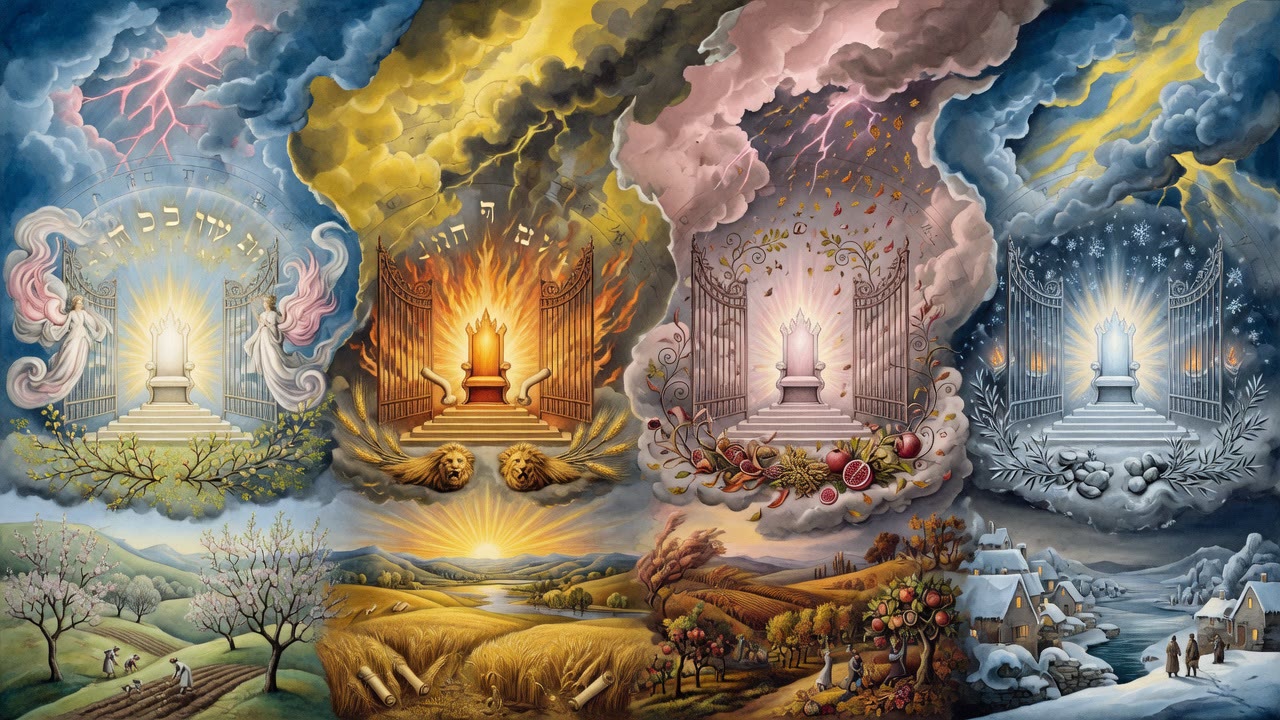
Outside, in a field that did not care about the bed, Abaye watched the slow grain thrive and sent a man to sow the fast kind before the next court could weigh a seed still hiding. A crop already up has already passed one sitting. The seed in the bag has not.
The Seed Went Under First
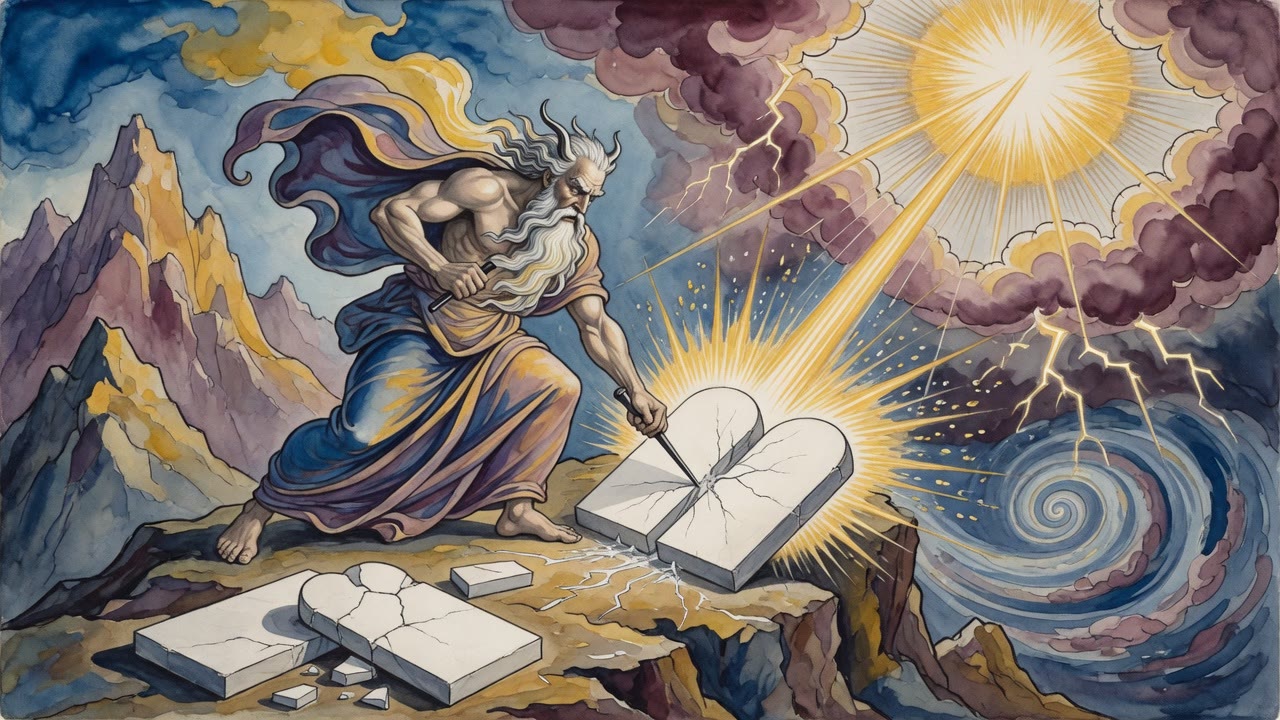
On Passover the court was not looking at stalks already hardening toward harvest. Those had survived their accidents. The ruling fell on what had just been sown, the tender future still under soil. A farmer could sharpen the sickle and mend the cistern roof. He could not talk the court off the row he had just covered with his heel.
Raba said judgment on grain comes twice, at sowing and before reaping, so a blight before Passover and a blight after it are not the same paper. Abaye took that as work, not as a theory. He saw the slow grain thriving and shoved the fast seed in, so that by the time the next sitting opened the plant would already have begun and would not stand there naked as a new case.
On Shavuot the fruit stood in. Branches held their small green promises, and heaven measured what sweetness would reach a mouth months later. On Sukkot the water entered. Rain, cisterns, rivers, the thirst of beasts and children, all waiting on one decree. The field, the orchard, and the cloud could not speak. Their futures were being weighed anyway.
The Line Moved Like Sheep
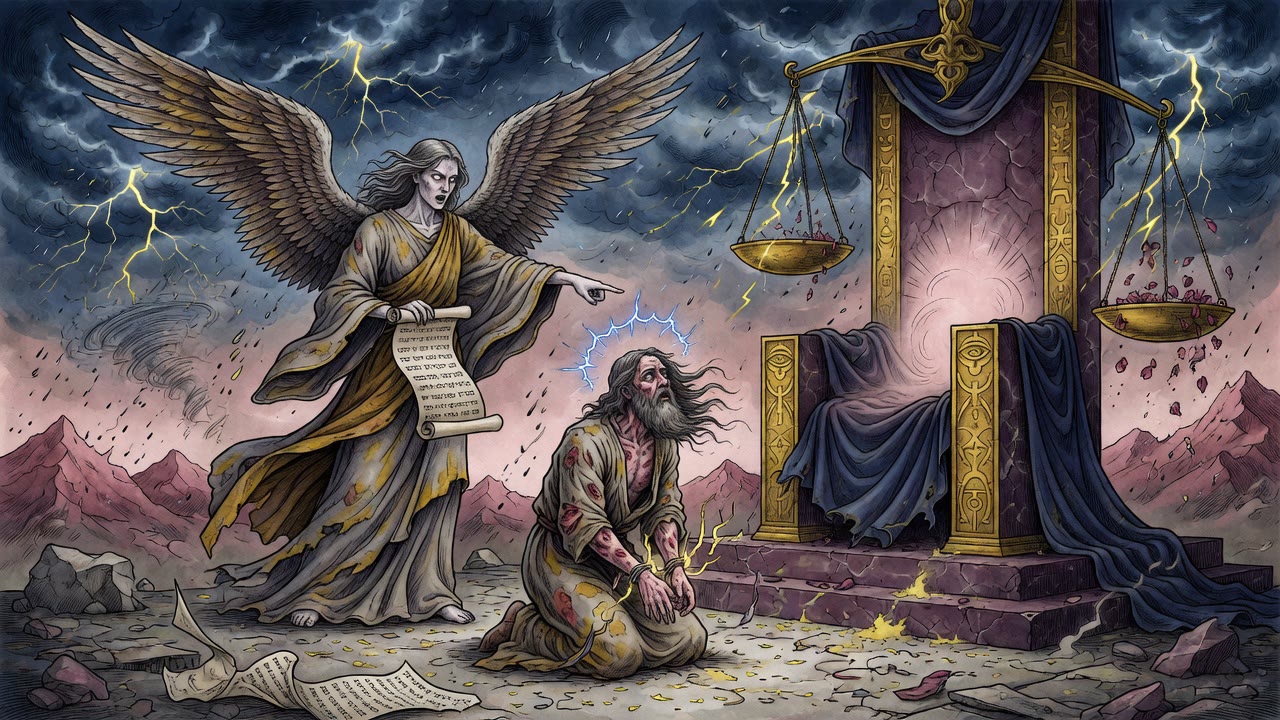
Then came Rosh Hashanah. Human beings passed before God as sheep before a shepherd, one by one, heart by heart. The One who fashioned all hearts understands all their works (Psalm 33:15). Nothing had to be explained. No witness needed to be called. A person could hear the shofar (שופר), the ram's horn, and know the file had been opened on him.
Rabbi Meir gave the cleanest rhythm. Everyone is called to account on the New Year, and the sentence is fixed on Yom Kippur. The horn opens the court. The fast seals it. A person can hear that and know where to stand, when to plead, when to tremble, when to change. The sinner is not hunted by surprise. The calendar itself becomes a summons, and the summons gives time to return before the seal descends.
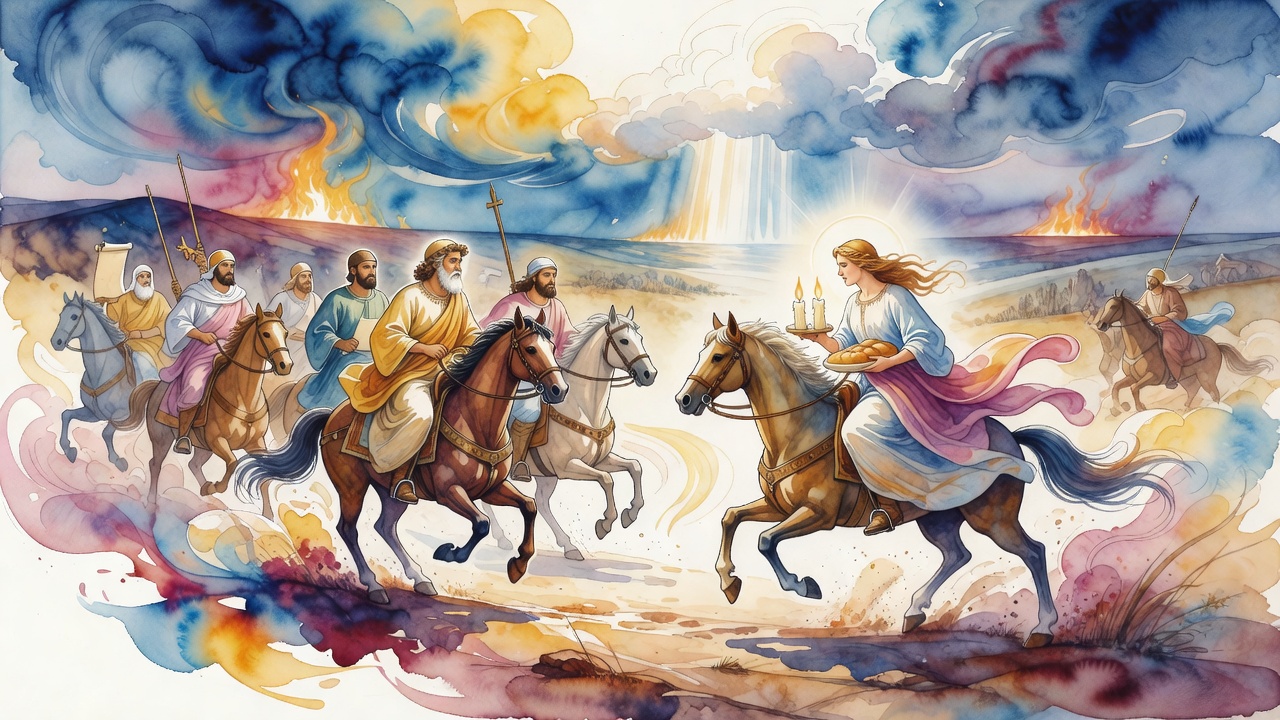
Rabbi Joshua accepted the yearly summons but divided its consequences by season. Grain at Passover. Fruit at Shavuot. Rain at Sukkot. Human fate completed on Yom Kippur. He would not let bread, fruit, water, and breath share one date as if they were one body. Each had to come up in its hour.
He Woke and the Court Was Open
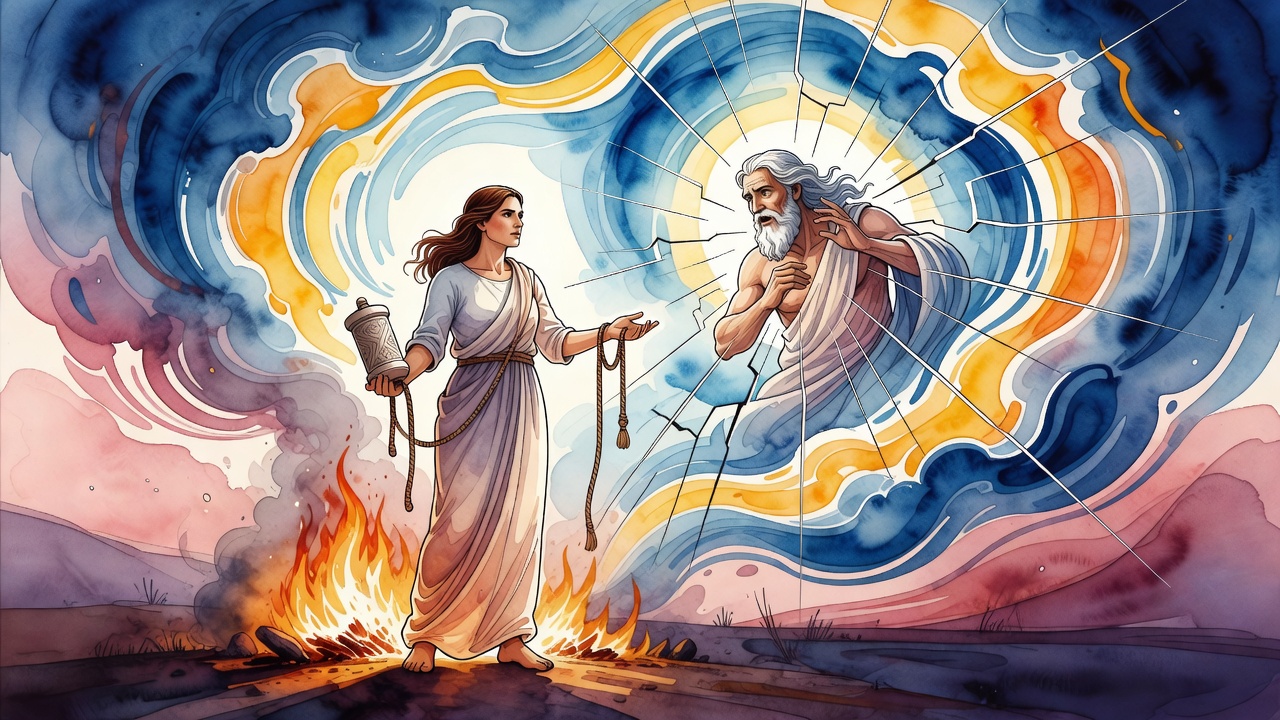
Rabbi Jose would not leave a life inside appointed festivals. He lifted Job's words and set them at the bedside. "You remember him every morning" (Job 7:18). A person wakes, and the court is already open. Before bread. Before speech. Before the day's first excuse.
Rabbi Nathan pressed the verse even closer. God tests a person every moment. Not yearly. Not daily. Breath by breath the scale is alive. Jose would not borrow Nathan's verse, because trying is not the same as judging. He took another line instead, the one that asks God to maintain the cause of His servant and the cause of His people Israel every day (1 Kings 8:59). Every day. The king first, then the people, so the king does not sit outside while the court works itself into anger.
A student asked Jose whether a man could sleep through a morning and still claim he was waiting for Tishrei. Jose did not answer with a date. He pointed at the window, where the light was already up, and told the student to wash and pray as if the file had been pulled overnight. The student washed. He did not eat first.
They Prayed After the Decree
Back at the sickbed the friends were still crying out. Rabbi Joseph had named the reason they were allowed to. If Jose is right, and a man is judged every day, then prayer for the sick still has room to enter. A decree may be near. The door has not necessarily shut.
Rabbi Isaac made the door wider. Crying out is good before the decree and after it. A person does not know which court has convened, which paper has been signed, which mercy is waiting for a voice. The year is not a machine. It is a series of openings. The grain waits. The fruit waits. The rain waits. The sick person waits while friends pray at the bedside, and none of them can see which sitting they are standing in.
The man on the bed did not hear Meir's clean calendar or Nathan's every moment. He heard voices in a small room and the scrape of a stool. He breathed. The friends kept at it because Joseph had refused to tell them to wait for autumn. Outside, Abaye's fast seed was already in the dirt, racing a court the sick man would never walk to. Bread, fruit, rain, and breath were under different dates, and still the same pressure. Someone wanted a door that had not closed. Someone else wanted a crop that had already begun. The year turned with both of them in it, and no single hour held the whole weight.
← All myths