4 min read

The Galilean Pilgrim Who Shamed the Wrong Man

A Galilean accused the wrong Jerusalemite of holding his two hundred dinars, then stood in the same market to take the shame he had given.

Curated by Arthur · Told by Maggid ·
Table of Contents
  1. The Wrong Face in the Market
  2. The Right Face and the Full Purse
  3. Three Times the Injury
  4. How a Question Climbs
  5. Justice With a Human Face

The man from the Galilee left two hundred dinars in Jerusalem rather than carry the weight home on bandit roads. He pressed the coins into a stranger's keeping and named the next pilgrimage as the day of return.

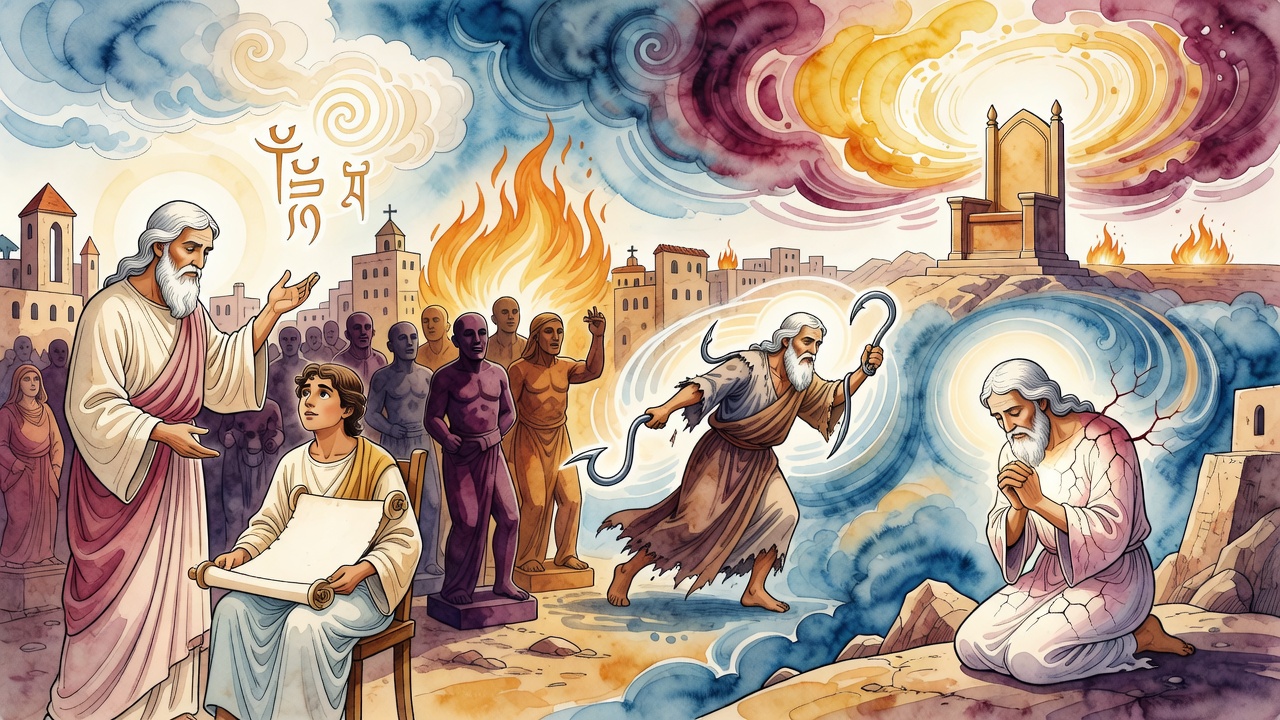
The Galilean Pilgrim Who Shamed the Wrong Man Click for full size

Business then dragged him to Babylonia. Years ate the faces in his memory.

The Wrong Face in the Market

When he finally came back he could not be sure which man held his savings. He stopped a Jerusalemite who looked close enough and demanded the money. "You are holding my two hundred dinars. Return them."

"I do not know you," the man said. The Galilean raised his voice. A crowd thickened. He called the stranger liar and swindler and stormed off, shame already sown in the wrong field.

Spittle of accusation is cheap in a crowded square. Faces blur after years on the road. He wanted his coins more than he wanted precision, and the market paid for that hunger with an innocent man's name.

The Right Face and the Full Purse

Later that day another face resolved from the crowd. Recognition hit like cold water. This was the custodian. The Galilean spoke politely. The man handed over every dinar without argument.

Then the pilgrim understood what his mouth had done. He returned to the marketplace, gathered the same public, and stood still while they called him what he had called the innocent man. He did not defend himself. He took the measure he had given.

Two hundred dinars sat heavy in his bag. Six hundred more would leave it. The money was the smaller cost.

Three Times the Injury

The court heard the matter and awarded the wronged Jerusalemite six hundred dinars, three times the sum he had been accused of stealing. The Galilean paid without protest. Public shame is not a small sin. Restitution is measured to the injury, and repentance is not a sentence said in private. It is accepting the same heat you poured on another body.

People who had jeered once jeered again on command. He stood and let the sound finish its work. The Exempla keeps the scene short because the shock is the teaching's edge.

How a Question Climbs

Not every quarrel ends in a marketplace spectacle. Rabbi Yossi remembered the ladder of courts. In each city a bench of twenty-three heard contracts, purity, and hard puzzles. If they could not decide, the case moved to the neighboring city. If both failed, judges rose together and walked the roads of Judea to the Temple Mount.

At the entrance to the Har ha-Bayit sat another court of twenty-three. At the entrance to the Azarah sat a third. Only if all these failed did the question enter the Lishkat ha-Gazit, the Chamber of Hewn Stone, where seventy-one judges of the Great Sanhedrin closed the matter by majority. Contention was absorbed step by step on the way up.

Seldom, Rabbi Yossi said, was there contention left in Israel at the top, not because people never disagreed, but because the structure ate disagreement level by level.

Justice With a Human Face

The Galilean's case could have climbed that ladder if pride had hardened. Instead he made himself the defendant in the same square where he had been the accuser. The structure of courts exists so questions do not die in one man's anger. The pilgrim's penance shows what a court cannot force: a man volunteering to wear the shame he sewed.

Two hundred dinars returned. Six hundred paid for a ruined name. The roads between Galilee, Babylon, and Jerusalem keep both numbers. A wrong face taught him the price of a rushed mouth.

Whoever watched from the side learned the shape of courage without a speech about courage. The shape was simply staying put when leaving would have been easier.


← All myths

From the tradition

Sources

2 sources

The texts behind this telling. Some cards carry a translation of the source; others are our own retelling of it, and each card says which. Every card links out to the original.

Gaster, Exempla no. 325The Exempla of the Rabbis (1924)

Retold in our words. Read the original at the link below.The Exempla of the Rabbis, Moses Gaster (1924) · PD-US-pre-1929

A man from the Galilee once traveled to Jerusalem for the three festival pilgrimages. On his way home, rather than carry all his coin across the dangerous roads, he entrusted two hundred dinars to a man he had met in the city, asking him to hold the money until the Galilean returned on the next pilgrimage.

Some months later the Galilean's business took him farther still, all the way to Babylonia. And years passed before he came back.

When at last he returned to Jerusalem and went looking for the man with whom he had left his savings, he could not remember his face clearly. He stopped a certain Jerusalemite he thought was the one, and demanded his money back. "You are holding my two hundred dinars," he said. "Return them."

"I do not know you," the man said, puzzled.

The Galilean, assuming he was being cheated, raised his voice. A crowd gathered. In front of the whole marketplace, he accused the stranger of theft. He called him a liar and a swindler and stormed off.

Later that day the Galilean saw a different face in the crowd. And recognized him. This was the man with whom he had deposited the money. He went up to him politely, and the custodian handed over the full two hundred dinars without argument.

The Galilean understood at once what he had done. He had publicly shamed an innocent man. He returned to the marketplace, called the townspeople together again, and submitted himself to the same public abuse he had laid on the stranger. He stood there while they called him a liar, and he did not defend himself. He bore the shame he had inflicted.

The court, hearing what had happened, awarded the innocent man six hundred dinars in compensation, three times what he had been accused of stealing. The Galilean paid it without protest.

The Exempla keeps the story to teach two things at once. First, public shame is not a small sin: the Torah requires restitution measured to the injury. Second, the mark of a repentant person is not that he says he is sorry but that he accepts the same measure he gave.

(From The Exempla of the Rabbis, Moses Gaster, 1924, no. 325, from Codex Gaster 185.)

Full source
Talmud, SanhedrinHebraic Literature (1901)

Retold in our words. Read the original at the link below.Project Gutenberg eBook #14368, Hebraic Literature · PD-US-pre-1929

The Sanhedrin of seventy-one was not a single institution. It was the top of a ladder, and Rabbi Yossi remembered the steps.

In each city of Israel sat a provincial court of twenty-three. When an ordinary Israelite had a question, a contract dispute, a difficult halakhic puzzle, a ruling on ritual purity, he brought it to his local bench first. If the twenty-three understood the case, they settled it on the spot.

If they could not decide, they forwarded it to the court of the nearest city. Two courts of twenty-three, side by side, often saw what one had missed.

If the neighboring court also failed, all the judges rose together and carried the case up the roads of Judea to the Temple Mount itself. There, at the entrance to the Har ha-Bayit, sat a second rabbinic court of twenty-three. Inside, at the entrance to the Azarah, the inner courtyard, sat a third court, also of twenty-three.

Only if all these benches failed did the case pass through the gates and into the Lishkat ha-Gazit, the Chamber of Hewn Stone, where the seventy-one judges of the Great Sanhedrin sat. There the vote of the majority closed the question.

"Seldom," Rabbi Yossi said, "was there contention in Israel", not because disagreement was rare, but because the structure absorbed it at every level on the way up.

Full source