5 min read

Rabbi Jonathan Cursed the Bones of Those Who Set a Messiah Date

When sages circled a year for the Messiah, Rabbi Jonathan cursed their bones, fearing despair would follow a date that came and went empty.

Curated by Arthur · Told by Maggid ·
Table of Contents
  1. The Arithmetic of Despair
  2. The Name Written Before the Sun
  3. When God Turns His Face Home
  4. Bones and Calendars

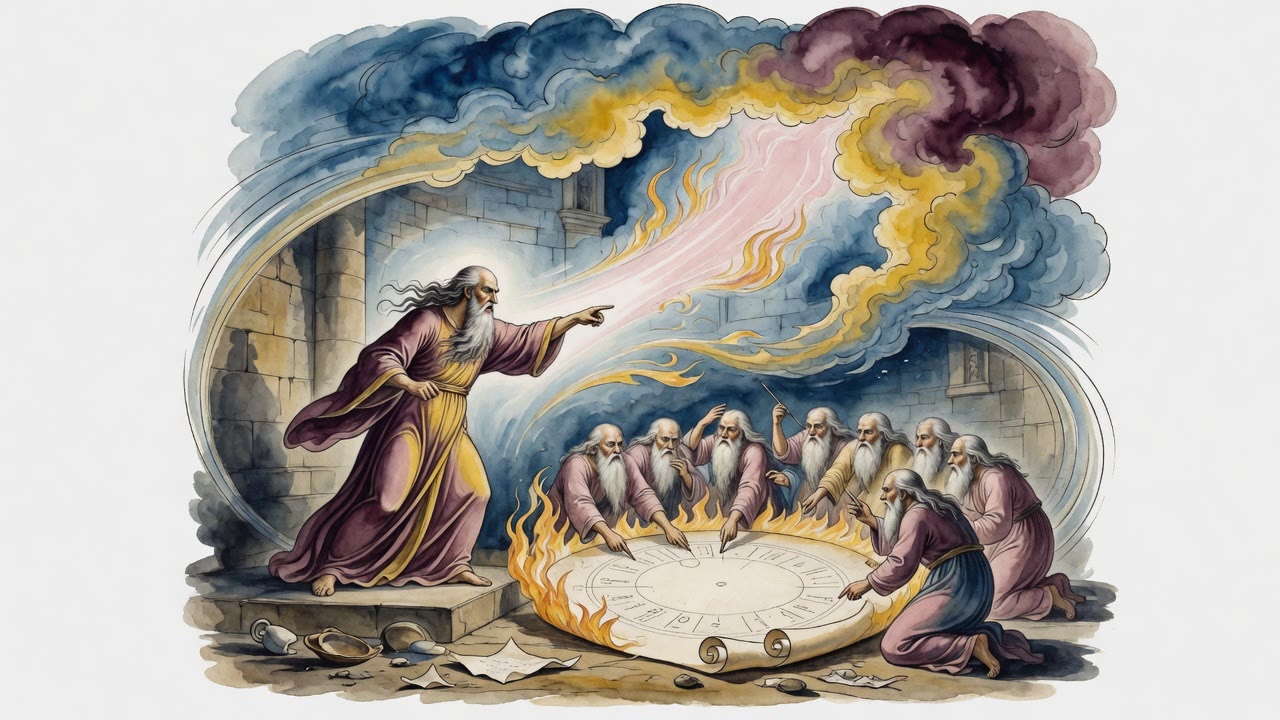
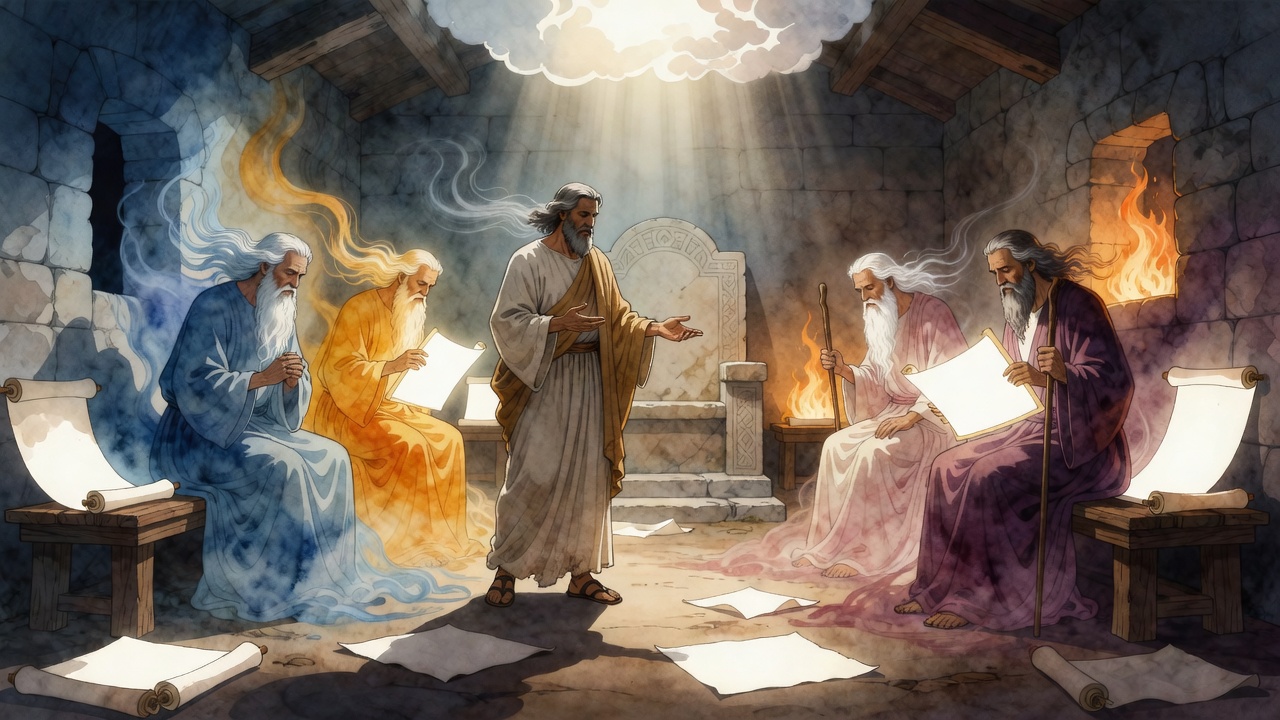
Rabbi Jonathan did not raise his voice for sport. In the study house someone had already named a year. Four thousand two hundred ninety-one from creation. Wars of dragons finished. Wars of Gog finished. What remained would be the days of the Messiah, and after seven thousand years the Holy One would renew the world.

Rabbi Jonathan Cursed the Bones of Those Who Set a Messiah Date Click for full size

Jonathan heard the numbers settle like a lid on hope. He spoke the curse that still startles the page. "May the bones of those who compute the latter days be blown away."

The Arithmetic of Despair

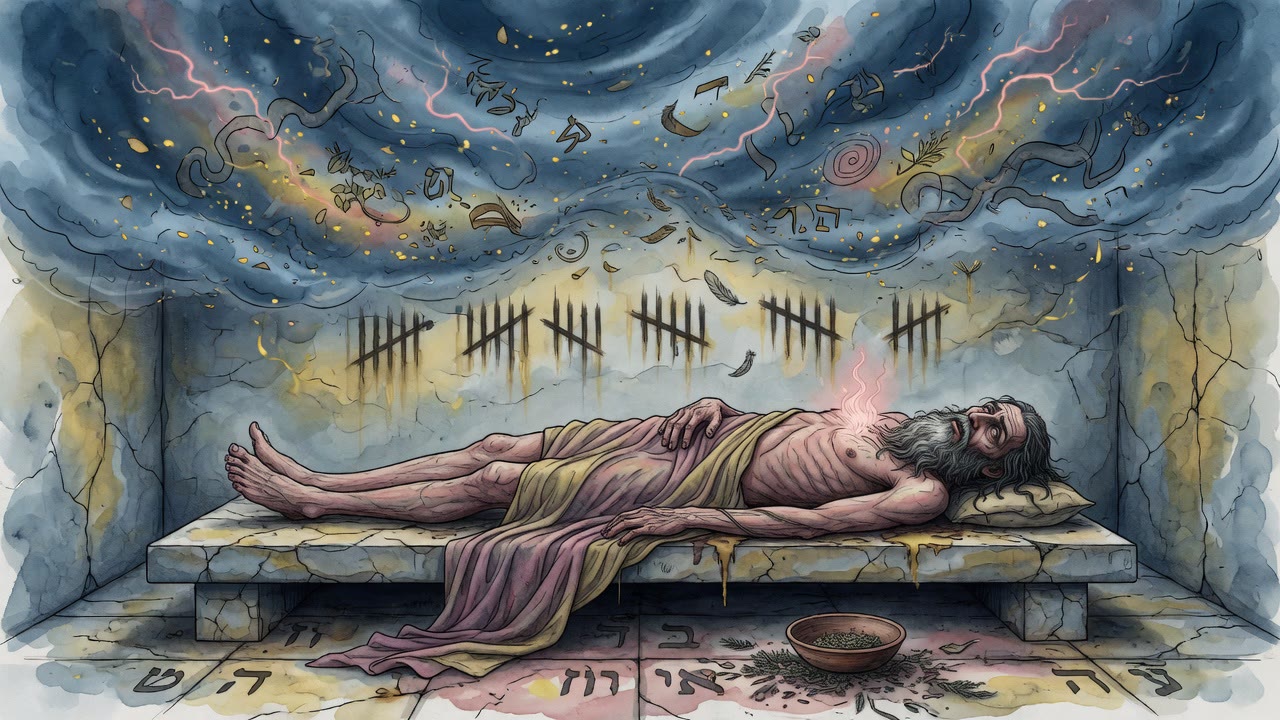
He did not fear the math. He feared the morning after the date. When the year arrives and no horn sounds, people do not say the calculation was crude. They say the promise was a lie. "Since the time has come and he has not, he will never come." Hope that was nailed to a calendar becomes a corpse when the nail pulls free.

So he pointed them back to the prophet who refused clocks. "Though He tarry, wait for Him" (Habakkuk 2:3). And if a heart objects that Israel waits while Heaven seems idle, let it answer with another verse. "Therefore will the Lord wait, that He may be gracious unto you" (Isaiah 30:18). Waiting, in this telling, is mutual. The Holy One waits for Israel while Israel waits for Him.

The Name Written Before the Sun

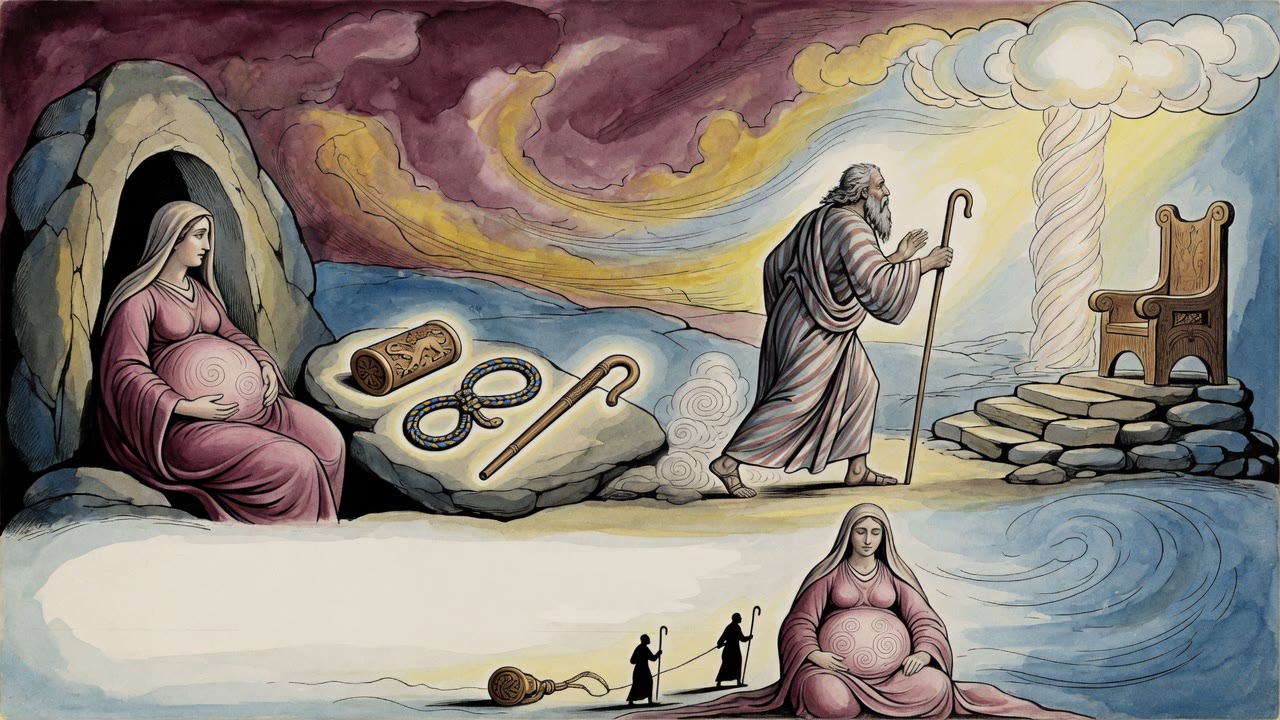
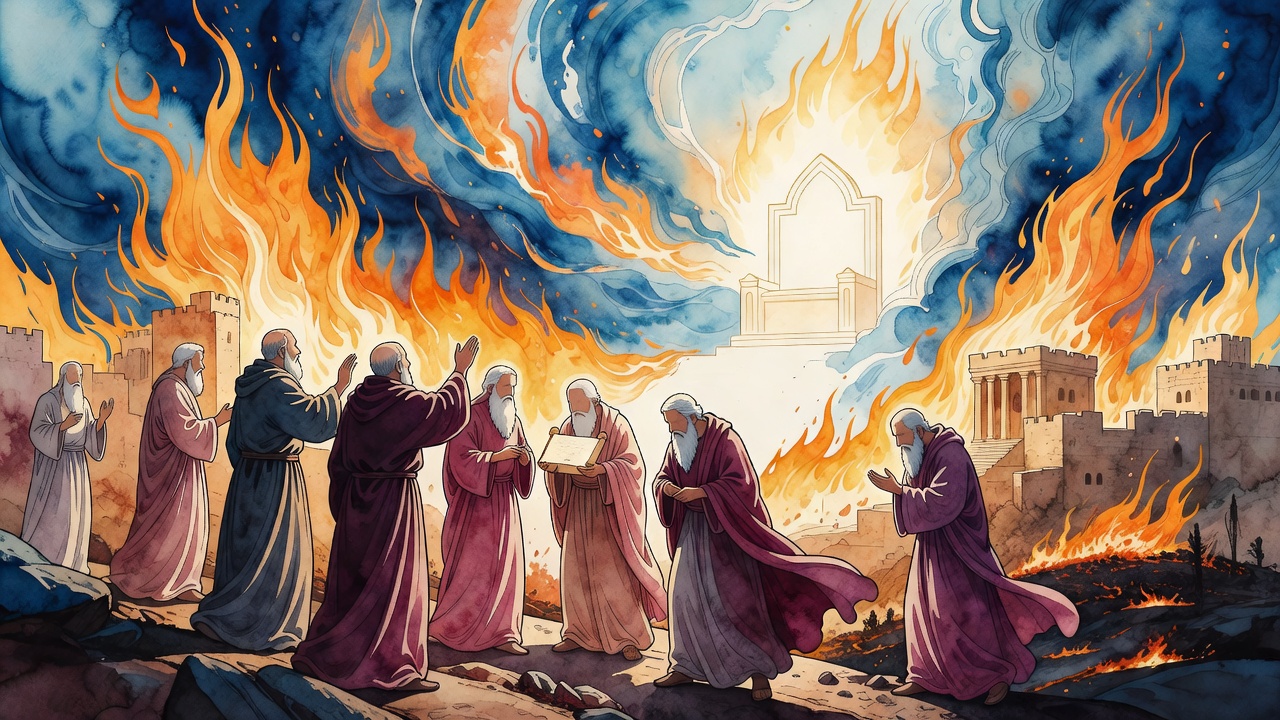
Long before Jonathan's curse, another tradition said the Name of the Messiah was already spoken before the sun had a name. Seven things stood ready before the world: Torah, Gehinnom, the Garden of Eden, the Throne of Glory, the Temple, Repentance, and that Name. "Before the sun Yinnon was his name" (Psalm 72:17). The ruler whose origins reach "to the days of old" (Micah 5:2) was not invented by a calculator's slate.

Repentance itself, the sages said, was prepared before the mountains. The path home existed before the first foot went wrong. A Messiah whose name predates daylight does not fit inside a year that men can circle in chalk.

When God Turns His Face Home

Another midrash hears a different ledger. "I will turn toward you," the verse promises, and the Holy One speaks like a master closing accounts. First He turns His face from the nations on whom vengeance has already fallen. Then He turns home. Good work is paid a good wage. The climax is not wages. "I will cut for you a new covenant that will not be broken." Jeremiah had already heard the same seal for Israel and Judah together (Jeremiah 31:31).

The bond is not dated on a wall. It is cut against rupture. Failed covenants of the past had shattered under human hands. This one is spoken as a pledge that betrayal cannot undo.

Bones and Calendars

In the study house the chalk year still hung in the air. Jonathan did not erase curiosity about the end. He erased the right to make despair from a missed appointment. The Name older than the sun does not punch a clock. The covenant that will not break does not expire when a tablet cracks.

Outside, ordinary years kept their ordinary pace. Inside, the sages returned to waiting without a deadline, which is harder work than any calculation. The curse stayed on the table like a warning brand. Better unbroken bones and an open road than a date that kills the hope it promised to deliver.

The year 4,291 was not chosen at random by idle men. It grew from a reading of history as a clock, dragons and Gog as hands that would stop. Jonathan did not mock the hunger under the chalk. He mocked the arrogance that treats redemption like a delivery date that can be missed and then discarded.

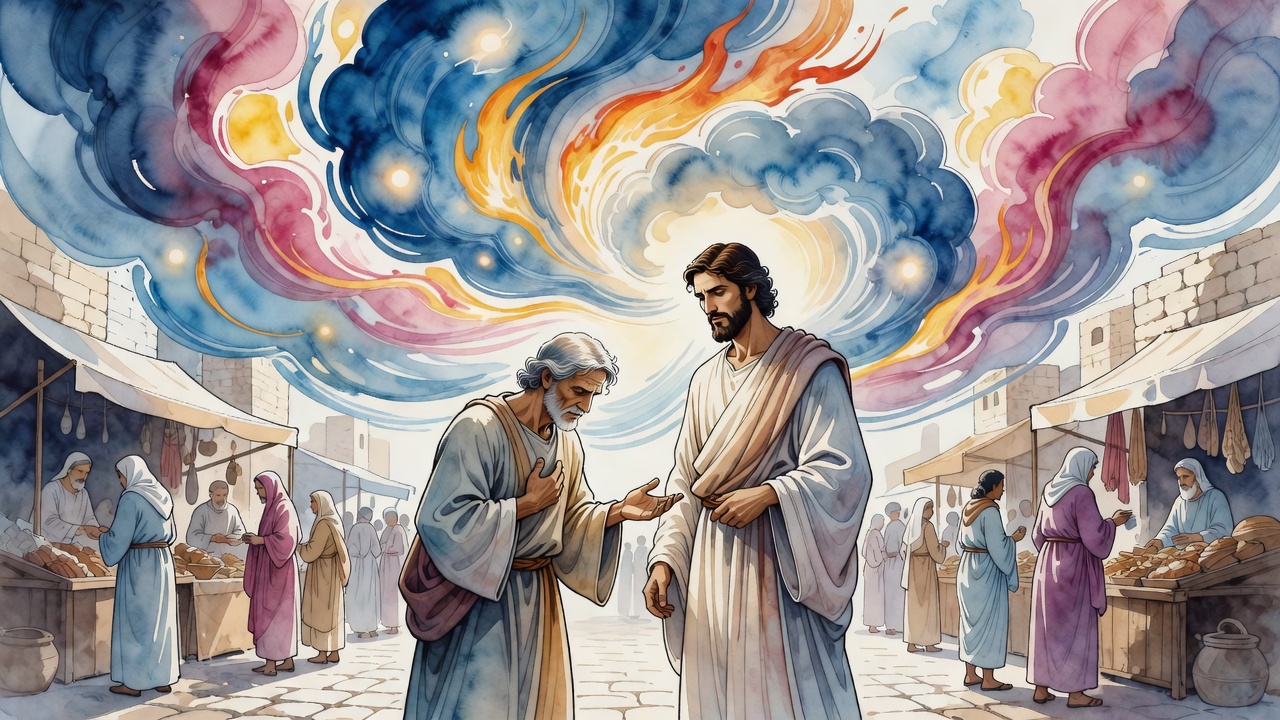
Imagine the morning after. Markets open. Children still need bread. The Messiah has not come. The calculator shrugs or doubles down. The ordinary listener, who trusted the circle on the wall, walks out of the study house with a colder faith than he entered with. That cold is what Jonathan tried to kill before it was born.

The seven things created before the world do not schedule themselves by human boards. Torah as blueprint. Eden as planted "of old." The Throne established "of old." Repentance available before the mountains. The Temple as a place set high from the beginning. Gehinnom (the realm of judgment after death) as consequence ready before crime. And the Name of the Messiah spoken before the sun. A calendar that pretends to master that list has already mistaken hope for inventory.

When God turns toward Israel and speaks of a covenant that will not be broken, the turn is not a date. It is a face. Faces do not arrive on appointment slips. They arrive when the long mutual waiting of Isaiah and Habakkuk has done its work on both sides of the sky.


← All myths

From the tradition

Sources

3 sources

The texts behind this telling. Some cards carry a translation of the source; others are our own retelling of it, and each card says which. Every card links out to the original.

Sanhedrin 97bHebraic Literature (1901)

Retold in our words. Read the original at the link below.Project Gutenberg eBook #14368, Hebraic Literature · PD-US-pre-1929

The Sages of the Talmud were obsessed with the question of when the Mashiach would come. And fiercely allergic to anyone who tried to nail it to a date. Sanhedrin 97 preserves both impulses at the same time.

One opinion pins the hour precisely: in the year 4,291 after creation, the wars of the dragons and the wars of Gog and Magog will cease. What remains of time will be the days of the Messiah. Then the Holy One, blessed be He, "will not renew His world until after seven thousand years."

Rabbi Jonathan's Imprecation

Against that kind of calculation, Rabbi Jonathan spoke with uncommon heat. "May the bones of those who compute the latter days be blown away!" he said. His reasoning was pastoral, not mystical.

When a calculated date passes and the Messiah does not come, people draw a conclusion they were never supposed to draw: "Since the time has come and he has not, he will never come." The arithmetic, meant to produce hope, produces despair.

Instead, he urged, "wait for Him," drawing on (Habakkuk 2:3), "Though He tarry, wait for Him." And if your soul objects that you wait while He does not, learn to say with (Isaiah 30:18), "Therefore will the Lord wait, that He may be gracious unto you."

The redemption, in this reading, is not late. It is patient. And the patience is mutual. The Holy One is waiting for Israel at the same moment Israel is waiting for Him.

The person who circles a date on a calendar has misunderstood both sides of the relationship.

Full source
Pirkei DeRabbi Eliezer 3:4Pirkei DeRabbi Eliezer

Retold in our words. Read the original at the link below.Pirke de Rabbi Eliezer, trans. Rabbi Gerald Friedlander, London (1916) · CC-BY

Pirkei DeRabbi Eliezer, an early medieval collection of biblical narratives and expansions, dives headfirst into this very question. It proposes that seven things were created before the world as we know it. Before the stars, before the mountains, before even the concept of "before" had any real meaning. What could possibly predate all of that?

In Pirkei DeRabbi Eliezer, these seven primordial entities are: The Torah, Gehinnom (hell), the Garden of Eden, the Throne of Glory, the Temple, Repentance, and, perhaps most surprisingly, the Name of the Messiah. a little. The text itself doesn’t just make these claims, it backs them up with verses from the Hebrew Bible. Take the Torah, for example. The verse from (Proverbs 8:22) states, "The Lord possessed me in the beginning of his way, before his works of old." The phrase "of old," the text argues, signifies before the creation of the world. The Torah, in this view, isn't just a book; it's the very blueprint of creation.

What about the Garden of Eden? (Genesis 2:8) tells us, "And the Lord God planted a garden of old." Again, that phrase "of old" suggests a time before time, a primordial state.

The Throne of Glory is similarly situated. (Psalm 93:2) declares, "Thy throne is established of old." This isn’t just any throne; it’s the seat of divine authority, existing even before the universe itself.

Then there’s Repentance. This one’s particularly interesting. (Psalm 90:2-3) states, "Before the mountains were brought forth, or ever thou hadst formed the earth and the world… Thou turnest man to contrition." The connection drawn here is powerful: even before the physical world existed, the possibility for humans to turn back to God was already present.

The Temple, too, is presented as a pre-creation concept. (Jeremiah 17:12) calls it "A glorious throne, set on high from the beginning… the place of our sanctuary." It wasn't just a building in Jerusalem; it was a concept, a divine dwelling place, existing from the very beginning.

And finally, we arrive at the Name of the Messiah. (Psalm 72:17) states, "His name shall endure for ever; before the sun Yinnon was his name." Yinnon, the text asserts, existed even before the sun, before the cosmos. (Micah 5:2) further reinforces this idea, speaking of the ruler of Israel "whose ancestry belongs to the past, even to the days of old."

What does it all mean? It's easy to get lost in the poetic language and the ancient interpretations. But perhaps the core idea is this: that certain fundamental principles, certain divine attributes, existed prior to physical creation. These aren't just things that God created for the world; they're aspects of God's very being that were present from the ultimate beginning. The Torah as the blueprint for creation, the Garden of Eden as the ideal state, the Throne of Glory as divine authority, Repentance as the inherent possibility for redemption, the Temple as the divine dwelling place, and the Messiah as the ultimate hope – all existing before time itself. It’s a powerful and profound idea that invites us to consider the very nature of existence and the divine plan for humanity. What do you think it means?

Full source
Midrash Aggadah, Leviticus 26:9Midrash Aggadah

Translation of the source text.Midrash Aggadah (Buber), Public Domain, on Sefaria · CC-BY-SA

"And I will turn toward you" (Leviticus 26:9). I have a great reckoning with you. He means to say: I will turn away from the nations upon whom I wrought vengeance, and I will return to you. He will give you a good reward for your good deed, and I will cut for you a new covenant that will not be broken, as it is said, "Behold, days are coming, says the LORD, and I will cut with the house of Israel [and with the house of Judah a new covenant]" (Jeremiah 31:30).

Full source