The Elder Who Taught Against the Sanhedrin
In Jerusalem the high court ruled, and an elder went home teaching the opposite on purpose. They called him zaken mamre. Willful teaching ends in death.
Table of Contents
 Click for full size
The Ruling From the Place God Chose
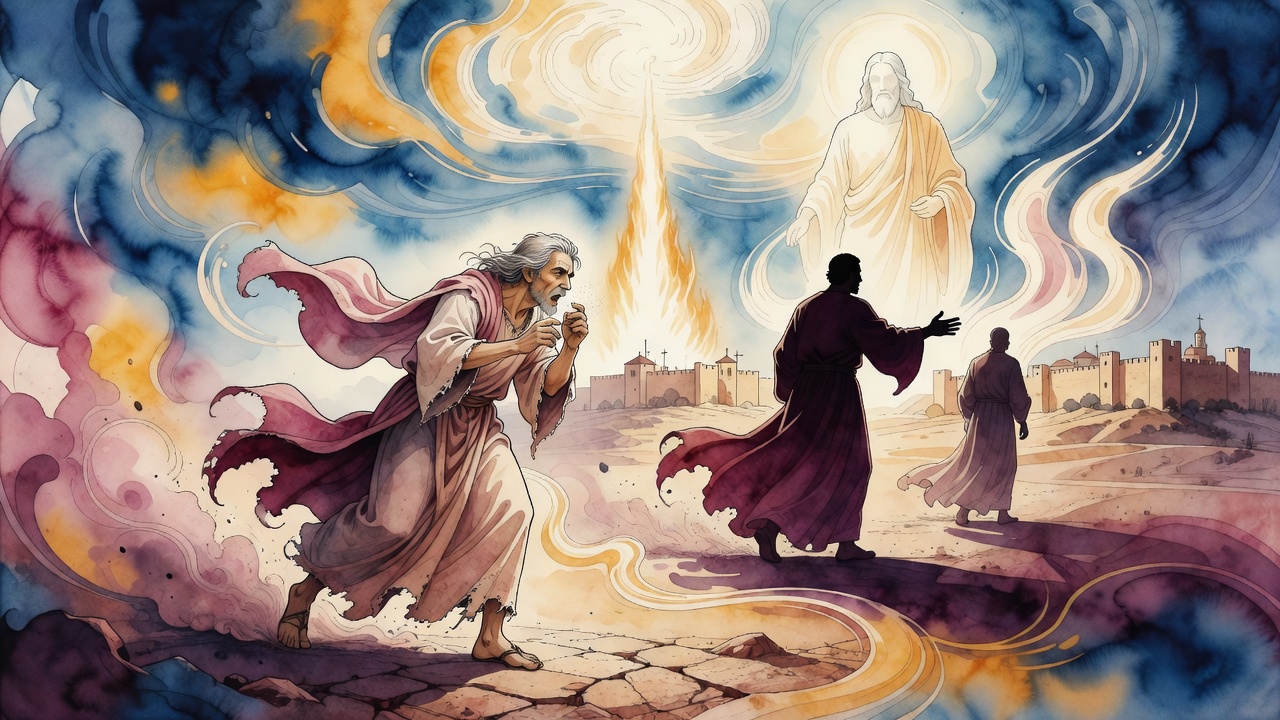
Jerusalem held the great court, not Yavneh, when death hung on a judgment. An elder who had argued hard in the chamber heard the final word and felt heat climb his neck. To him the court had named left as right and right as left. The Torah still said, listen. Even then, listen.
"You shall not turn aside from the thing that they tell you," the verse pressed, and Sifrei heard both a positive command to do as they say and a negative command not to swerve. The fine points of judgment came down from that place. A local court could not mint a capital sentence the way the Sanhedrin (the great court of seventy-one sages) in Zion could. He knew this. Knowledge did not cool him. He left the chamber with his jaw set and his students waiting in the courtyard like a second opinion already forming.
Disagreement Was Not Yet Death
He could have gone home bitter and quiet. Private dissent is not the crime the midrash hunts. Liability begins when a man teaches others to act against the high court's word, when will replaces accident, when "the man who shall do wilfully, not to listen" becomes a program of instruction whispered in kitchens and written on scraps.
He taught. Students wrote. Households began to follow his cut of the law as if Jerusalem had never spoken. He was not confused. Witting, not unwitting, is the threshold. He knew the Sanhedrin's sentence and raised a second Torah in its teeth. A woman asked which ruling to follow for her vow. He told her his. A merchant asked about a border case. He smiled as if Zion had been a rehearsal.
In the study house his voice still carried the old authority. That was the danger. Authority without obedience is a crack that looks like a door.
Words of Torah, Not Scribal Fringe
The net did not catch every quarrel about scribes' fences. The rebellious elder incurs death for controverting words of Torah, the Written Law's core, not for every clash over the scribes' elaborations alone. That limit made the crime sharper, not softer. He was not dying for a footnote. He was dying for splitting the spine of instruction that holds the people to one practice when practice is life and death.
"According to the Torah that they teach you" and "the judgment that they tell you to do" closed around him. Right or left no longer meant his eyes' private map. It meant the court's map, even when his eyes burned and his memory of the chamber argument still felt winning. The midrash does not ask him to enjoy the ruling. It asks him not to draft a nation into his enjoyment of being right.
Priest Standing, Court Standing
The same chapters that bind the elder bind the priest who serves only standing. Service sitting is invalid. Authority has posture. The elder who refuses to hear "the priest who stands to serve" and the court beside him is not refusing a mood. He is refusing the standing structure of Israel's decision, the spine that keeps twelve tribes from becoming twelve religions of clever men.
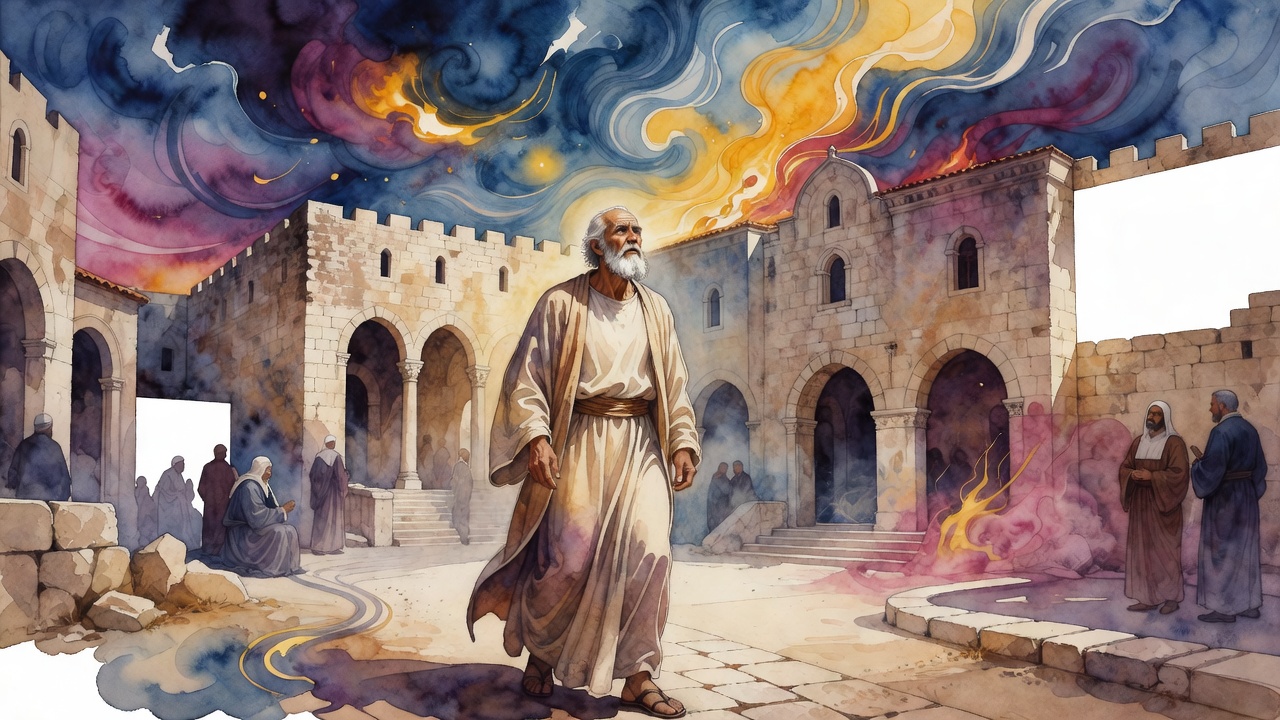
Messengers went out from Jerusalem. The man who had once worn honor as a sage now wore the name zaken mamre, rebellious elder. Neighbors who had sought his rulings stepped back from his door. Teaching that once felt like courage began to smell like a crack in the wall of a city under siege from within. His wife heard the new name in the market and brought it home like a fever.
The End of Wilful Refusal
Wilful refusal is a door that swings one way. He had walked through it when he opened his mouth to command action against Zion's word. The court that rules from the place the Lord chooses does not exist to flatter brilliant men. It exists so the people do not shatter into a thousand sanctuaries of ego, each with a teacher who lost a vote and won a following.
When judgment fell, it fell for the teaching, not for the private thought he might have kept forever under his tongue. Students learned a colder lesson than any sugya (a Talmud passage). Brilliance without obedience can become a capital fact. The elder who would not listen left the world as a warning carved into procedure, a body that proved the court in Jerusalem was not a debating club but the hinge of life and death for a people that survives by shared practice.
Somewhere a lesser court still argued fine points. None of those points included the right to unmake Zion by classroom mutiny. The midrash keeps the story hard because soft authority cannot carry capital law, and capital law without a center becomes every strong voice with students.
← All myths