Hananiah Stopped Fixing the Calendar Abroad
From Babylonia he added leap months on his own authority, until two messengers from the land undid every ruling he made.
Table of Contents
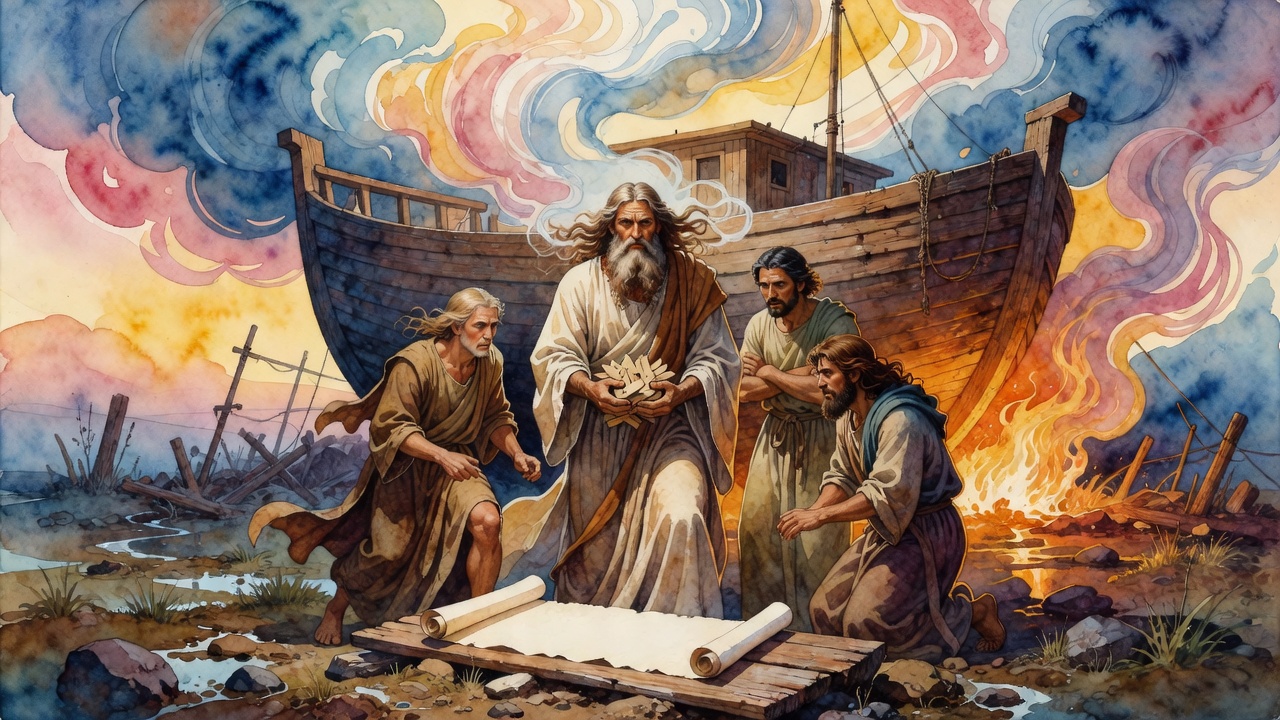
Hananiah, nephew of Rabbi Yehoshua ben Chananiah, stood in a Babylonian study house and named the new moon as if the hills of Jerusalem were under his window. He added a leap month with a steady voice. He fixed festival dates that had not yet been declared by the court in the Land of Israel. In the second century CE the Jewish year, in his hands, began to tilt.
 Click for full size
The Year That Split in Two
The calendar was not a printed chart then. Witnesses still came to the Sanhedrin (the high rabbinic court in the Land of Israel) with news of the thin crescent. Judges still consecrated the month aloud. Pesach, Rosh Hashanah, and Yom Kippur hung on that declaration the way a lamp hangs on a single hook. If one sage abroad could intercalate on his own, every diaspora town could eventually keep a private year. Fast days would fall on different suns. Families would break bread while cousins still sat hungry. Weddings would land on days another city still called forbidden.
Hananiah was not a fool. He was learned, and Babylonia already held more Torah than many in the west expected. Distance made him bold. The court in the land, he reasoned, was far, and the people near him needed dates for market and for mourning. So he gave them dates. Students wrote them down. Households began to live by his sky.
Two Messengers and Quiet Undoing
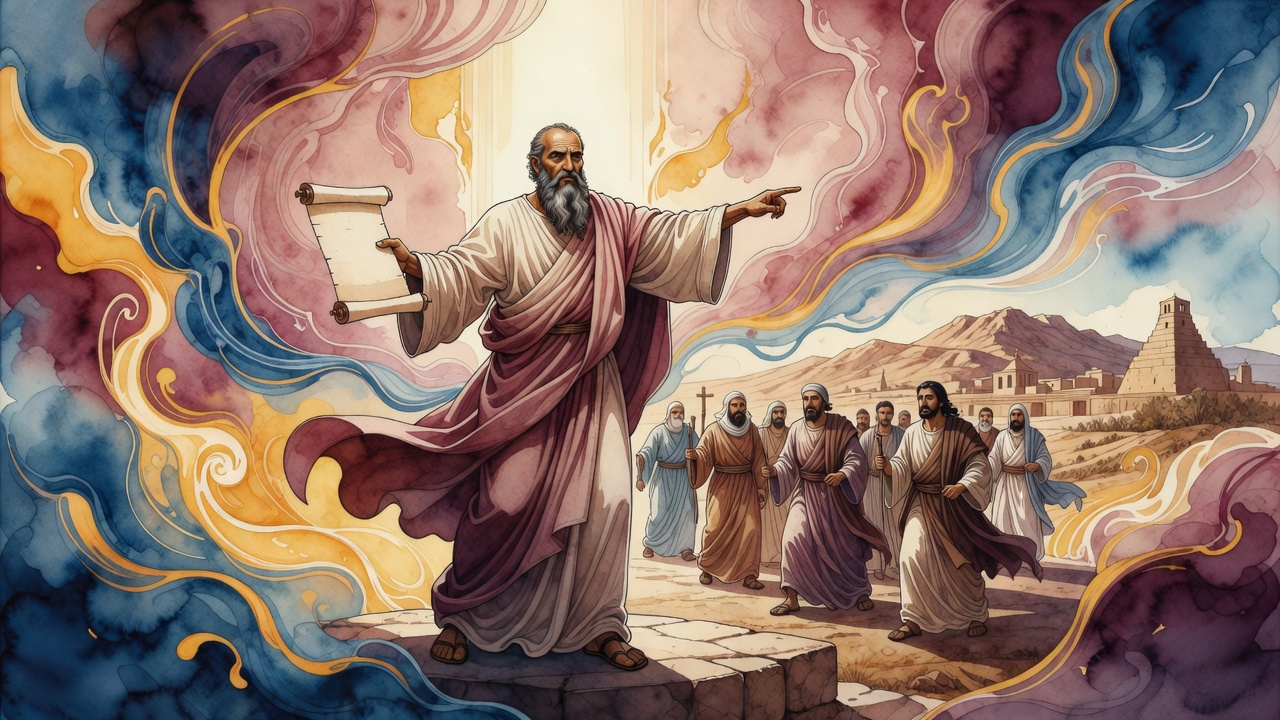
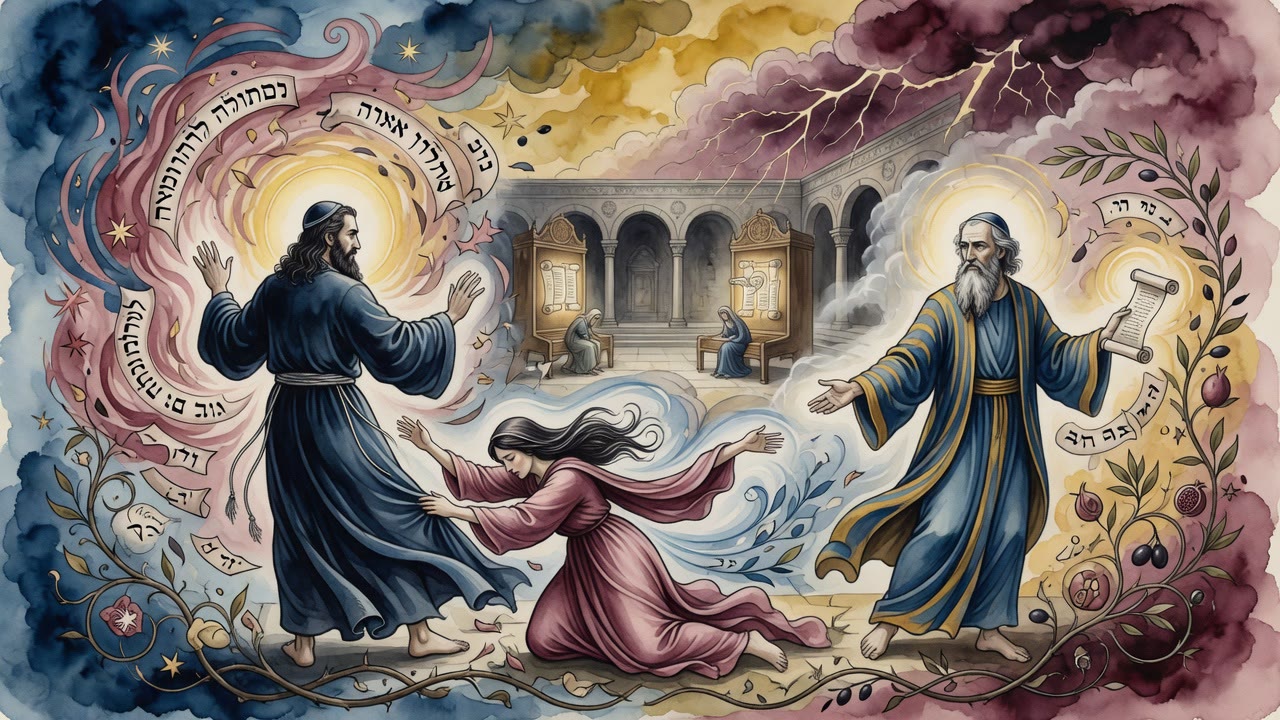
The Sanhedrin did not send soldiers. It sent two men. They arrived dusty, sat with Hananiah, and matched him ruling for ruling, always the other way. He permitted a food; they forbade it. He declared water pure; they called it impure. He set a time; they unsettled the room around that time. Day after day they eroded his authority without shouting.
At first he argued from learning. Then he watched the benches. Students who had followed his calendar began to glance sideways toward the messengers. A master who cannot hold a single clean decision loses the year with it. Merchants who had trusted his leap month asked which table they should keep. Hananiah felt the floor move under his chair.
He dropped the intercalation. He named the court in the land as the source of Jewish time. The split year closed like a wound stitched carefully, still tender, no longer open.
What the Land Keeps
The story is not only about power. It is about where time is born. The moon is seen over Judean ridges. Dust of that land sits under the judges' feet when they say, "It is sanctified." Exile can learn, trade, argue, and flourish. Exile cannot invent its own sky without becoming many peoples who only share a memory of once having shared a calendar.
Later sages said there is no love like the love for the Torah, no wisdom like the wisdom of the Land of Israel, no beauty like the beauty of Jerusalem. A teacher who leaves that air, they taught, loses merit even if he remains greater than the meritorious of other places. Iron from India, once shipped across the sea, still outranks ordinary metal, but it is no longer what it was in the forge that first knew its heat. The calendar is that iron. It keeps strength only while it answers to the land that first taught Israel how to count holiness by moon and court together.
The Gift Exile Must Receive
Hananiah's failure became a fence for generations. Jews in distant markets waited for word from the west. Couriers carried new moons in their mouths and in sealed notes. Communities that could have drifted stayed yoked to one set of festivals. Unity of the year was not nostalgia. It was survival of a people that refused to become many peoples by accident of longitude.
When a child in Babylonia asked why the holiday fell on this day and not that one, the answer pointed past the local sage to a court that sat where the first temples stood and where witnesses still climbed hills to catch the first silver edge of the month. Jewish time flows from a place, not from whichever scholar happens to be nearest the market square.
Hananiah returned to being a nephew and a teacher, not a second Sanhedrin. The messengers went home. The year, for a while, had only one face again.
In the markets of Babylonia a woman who had already bought meat for a festival found herself asking whether the festival was real. A neighbor three courtyards away kept a different count. The messengers had not come to humiliate Hananiah for sport. They had come because two tables of holy time cannot sit in one people without tearing the cloth between them. When he yielded, the tear stopped spreading. Students who had written his dates scraped their boards and waited for the next courier from the west. The year felt heavier then, and more shared.
Rabbi Nathan's praise of the land's wisdom is not tourism. It is a claim that some goods do not travel well. Climate of holiness, they said, makes a person wise. Export the sage without the soil and something thins, even if the mouth still speaks Torah. Hananiah learned the calendar version of that thinning. He could teach abroad. He could not crown months abroad without opening a second Israel in the sky.
← All myths