Parshat Yitro5 min read

Moses Waited Six Days Before the Cloud Called

Glory covered Sinai for six silent days. Moses waited. God spoke first to the women of Jacob's house. Limits held the mountain so the people would not die.

Curated by Arthur · Told by Maggid ·
Table of Contents
  1. Six Days Under Glory
  2. Speak First to the Women
  3. The People Cannot Climb
  4. When the Seventh Day Opened
Moses Waited Six Days Before the Cloud Called Click for full size

Six Days Under Glory

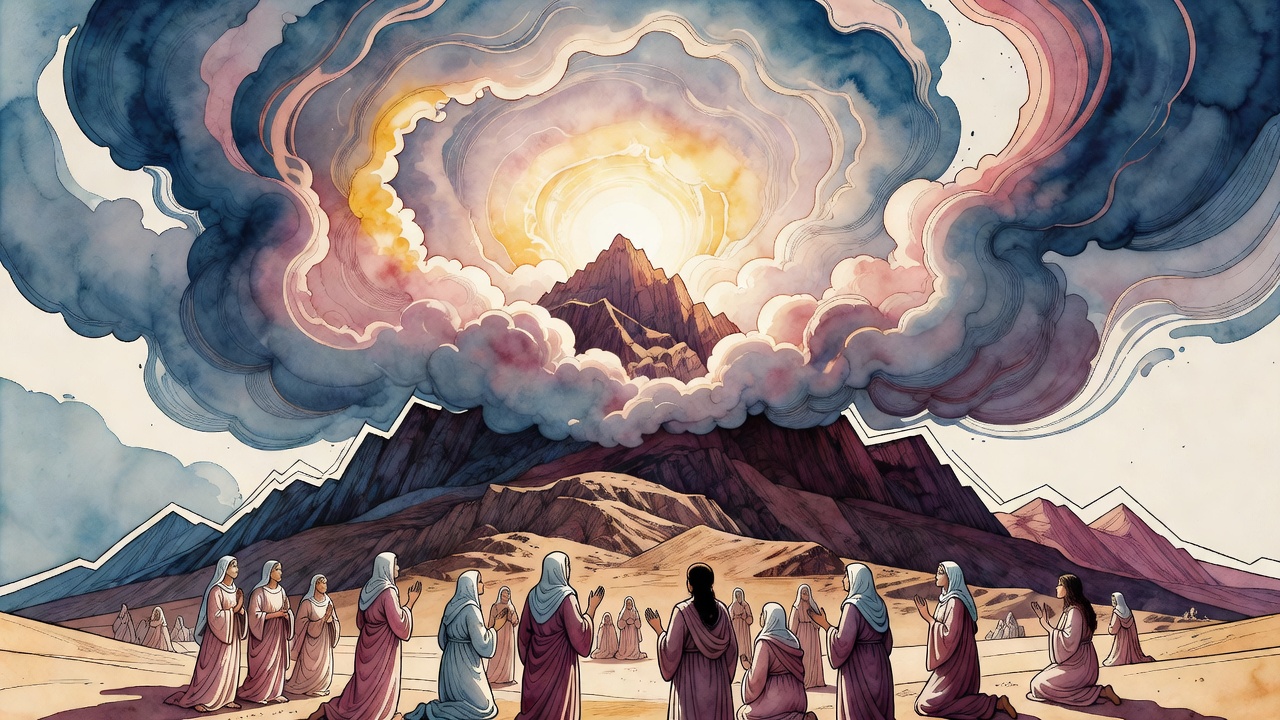
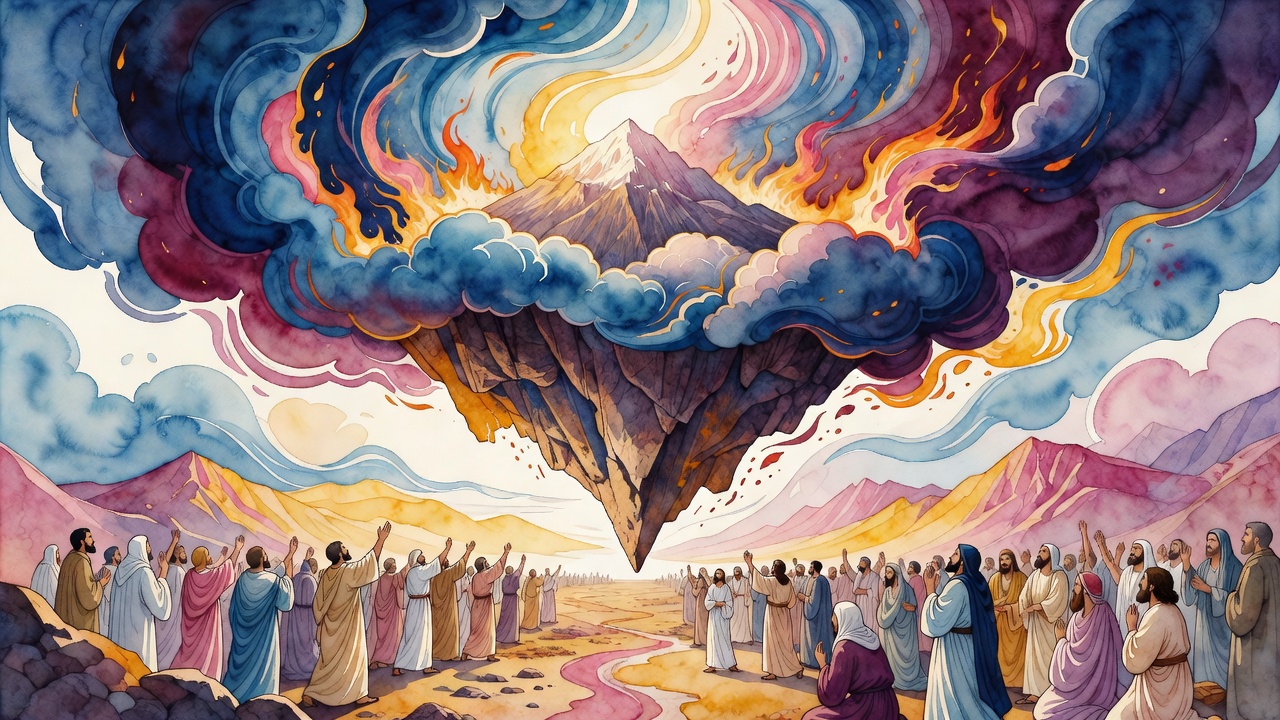
The glory of the Lord's Shechinah (the Divine Presence) rested on Mount Sinai, and the Cloud of Glory covered it for six full days. Only on the seventh did God call to Moses from the midst of the cloud.

Six days of waiting. Six days in which Moses stood at the edge of a mountain that would not yet open its mouth. The camp below watched a peak wrapped in weight, a darkness that was not night but presence. No voice. No summons. No shortcut for the man who had already spoken with God at a bush that burned. The prophet who would later speak face to face first learned the discipline of standing still while Heaven took its time.

On the seventh day the call came. Not early. Not late. After a full week of silence thick enough to taste. Revelation, it turns out, has a calendar. Even Moses does not force the door. In the camp the six days felt longer than six. Children asked when the mountain would speak. Elders remembered Egypt's noise and found this silence heavier.

Speak First to the Women

On the second day Moses went up to the summit, and the Lord called to him from the mount with an order of address that still startles.

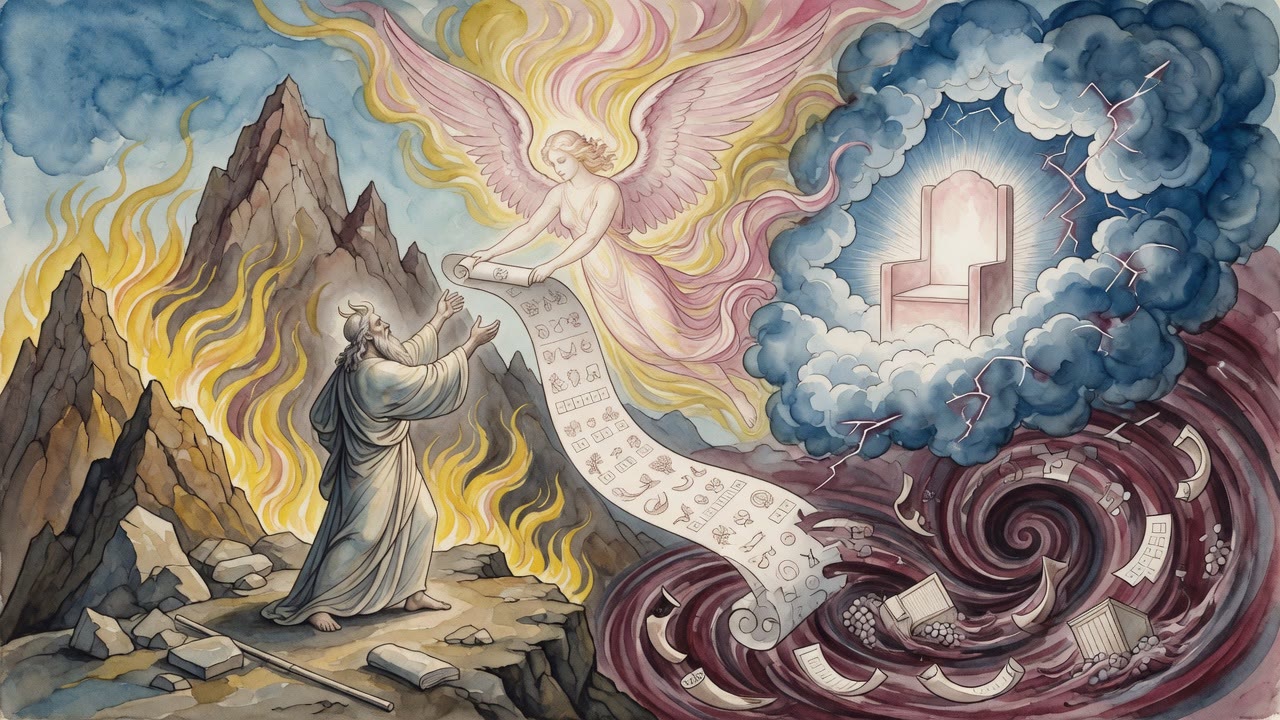
"This shalt thou speak to the women of the house of Jacob, and instruct the house of Israel."

Women first. Then the house of Israel as a whole. The order is not decoration and not a courtesy line. The mothers and daughters of the people hear the terms before the general assembly is drilled. Covenant enters through the tent as well as through the ranks. A nation that receives Torah without its women receiving first is not the nation this mountain wanted.

Moses carried that sequence down the slope like a sealed packet: house of Jacob's women, then the nation. In the camp, the message would land in kitchens and courtyards before it landed in formal rows. The God who covered the mountain for six days also measured who must hear first when the silence finally broke into words.

The People Cannot Climb

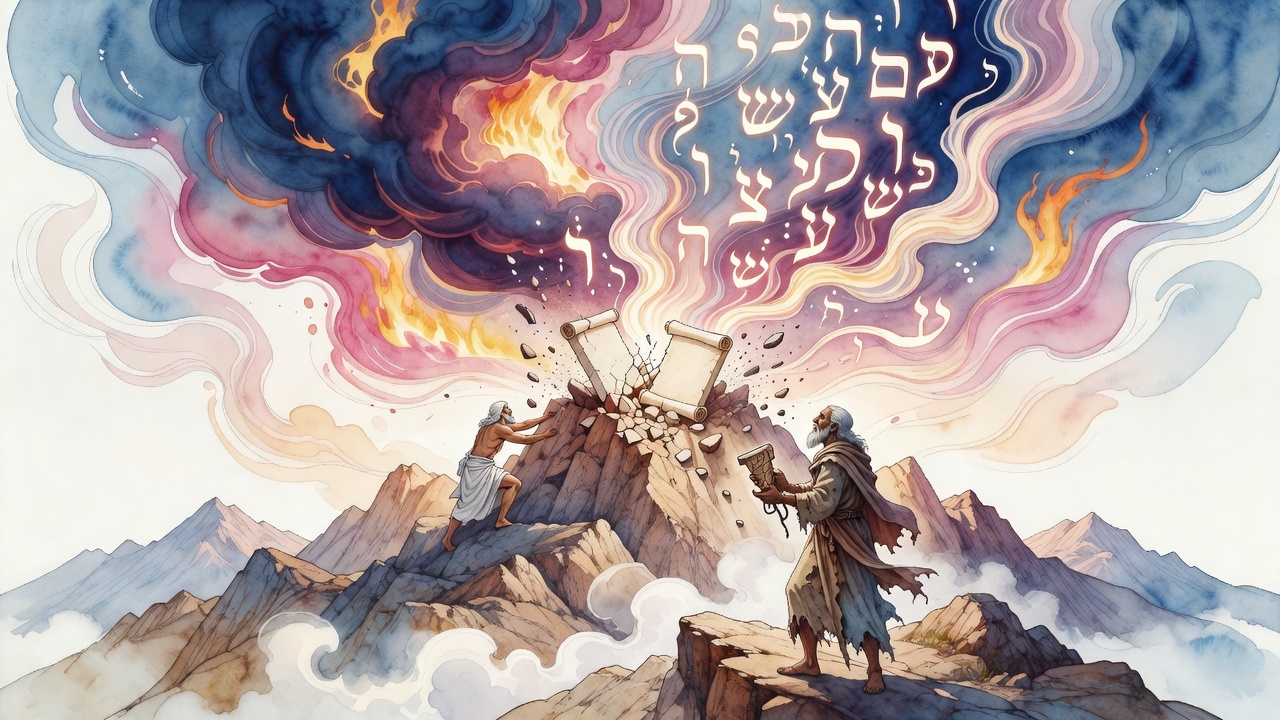
Before the Ten Words were spoken, Moses did something sharp. He spoke back. Not in rebellion. In protection.

"The people cannot come up to Mount Sinai, because You Yourself instructed us, saying, Make limits to the mount, and sanctify it."

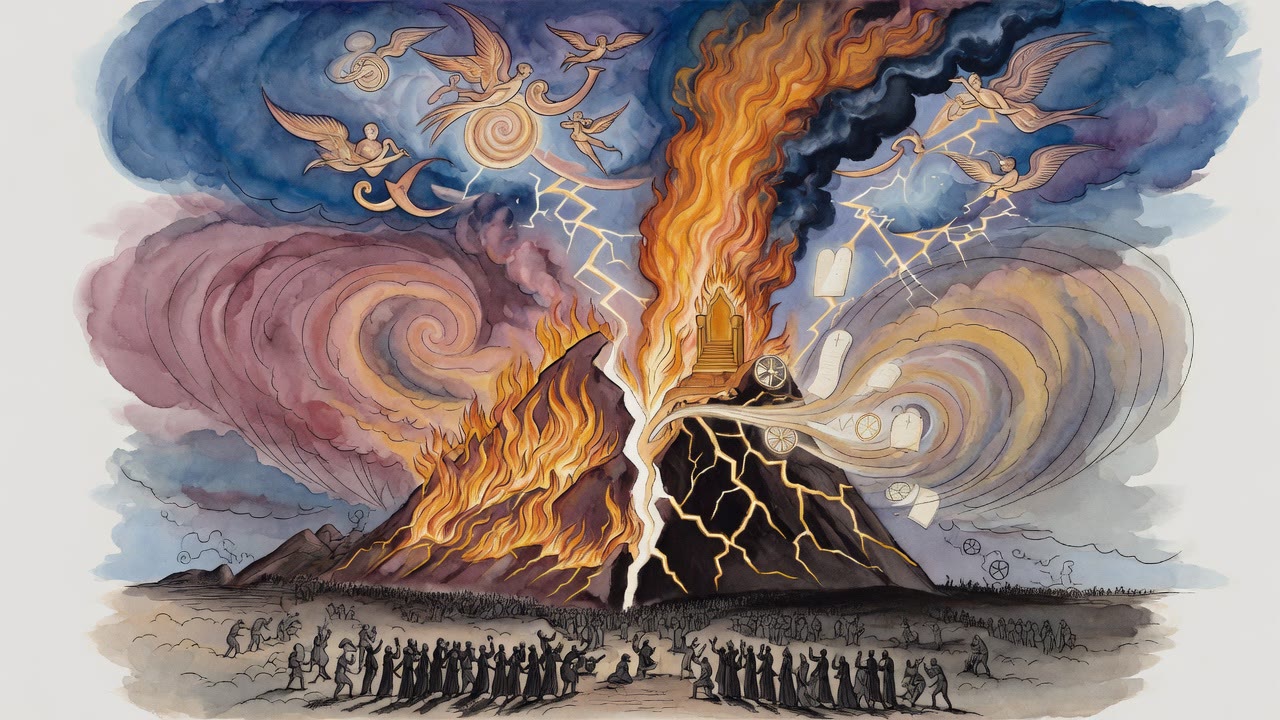
He reminded God of God's own fence. Bounds had been set. Sanctity had a perimeter. If the people rushed the cloud in their hunger for nearness, they would die on the stones. The prophet's loyalty was not only ascent. It was defense of the camp from a holiness that could kill the unprepared. Limits were mercy shaped as a line in the dirt and a warning shouted down the slope.

Some leaders flatter a crowd by promising free access to fire. Moses marked the boundary again and held it, even in conversation with the One who had drawn it. The mountain remained approachable only by the called, and the people remained alive long enough to become a people of the heard word.

When the Seventh Day Opened

After the six silent days the voice that had waited finally took him in. After the instruction to the women the nation received its charge. After the warning about the bounds the mountain held its fire long enough for words to be spoken without a stampede into death. Three disciplines braided into one ascent: patience, order of hearing, and the fence.

Moses moved between cloud and camp, between silence and speech, between a God who covers a peak for a week and a people who must not touch that peak. The seventh day did not erase the six. The six taught him that revelation has a calendar. The women's hearing taught him that revelation has an order. The bounds taught him that revelation has a fence, and that love of the people sometimes means refusing them the climb they think they want.

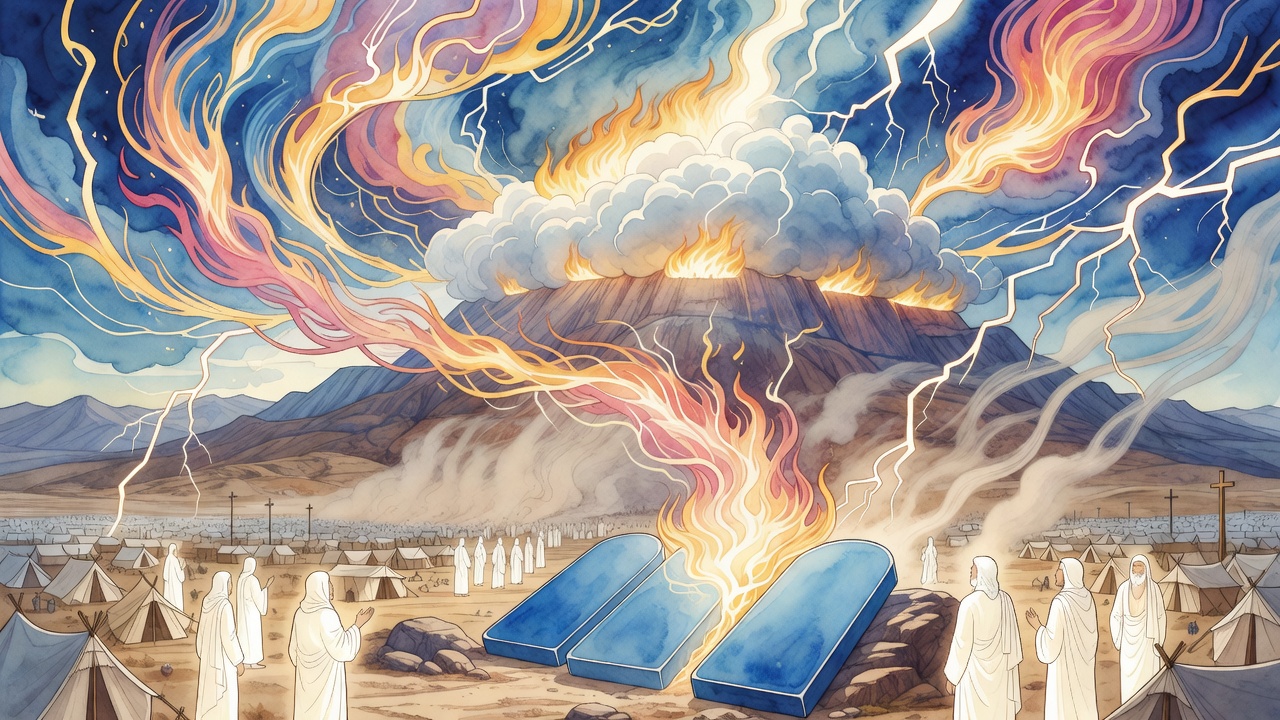
Below, Israel stood at a distance measured in fear and longing, children held back by sleeves, elders squinting at a cloud that would not part on human schedule. Above, a man who had waited six days stepped into a call that only patience had unlocked. The cloud that had refused him for a week became the room where the next commandments would be born, and the limits he had defended kept the people alive long enough to hear them and answer. Sinai's first lesson was not a law carved in stone. It was a week of standing still, a word to the women first, and a line no foot should cross until Heaven itself said the hour had come.


← All myths
From the tradition

Sources

3 sources

The texts behind this telling. Some cards carry a translation of the source; others are our own retelling of it, and each card says which. Every card links out to the original.

Targum Pseudo-Jonathan on Exodus 24:16Targum Pseudo-Jonathan on Exodus

Retold in our words. Read the original at the link below.The Targum of Jonathan ben Uzziel, trans. J. W. Etheridge, London, 1862 · Public Domain

The Targum on (Exodus 24:16) preserves a detail that the plain text rushes past. The glory of the Lord's Shekhinah rested on Mount Sinai, and the Cloud of Glory covered it for six full days. Only on the seventh did God call to Moses from the midst of the cloud.

Six days of waiting. Six days in which Moses stood at the base of the mountain, watching the cloud burn and shift, hearing nothing. The Sages of the Talmud (Yoma 4b) wrestle with what those days were for. One view says the cloud was cleansing Moses, stripping away the last residue of earthly food and ordinary speech so he could stand in the presence of the Holy One. Another says the days were a preparation in the opposite direction: God was giving Moses time to decide whether he truly wanted to enter.

The Targum does not explain. It simply lingers on the number. Six and then seven. The rhythm is unmistakable. It is the rhythm of creation, where six days of labor open out into Shabbat. Moses's ascent is cast as a second Genesis. What came into being in six days of silence was not a world but a prophet ready to receive the Torah.

When the voice finally came on the seventh day, it called Moses by name, out of the fire and out of the cloud. He had not been abandoned in those six days. He had been formed by them.

Every Shabbat rehearses this pattern. The week of labor is not empty waiting. It is the making of the one who will finally hear the call.

Full source
Targum Pseudo-Jonathan on Exodus 19:3Targum Pseudo-Jonathan on Exodus

Retold in our words. Read the original at the link below.The Targum of Jonathan ben Uzziel, trans. J. W. Etheridge, London, 1862 · Public Domain

The Targum Pseudo-Jonathan preserves one of the most surprising details in the entire Sinai narrative: "Moses on the second day went up to the summit of the mount; and the Lord called to him from the mount, saying, This shalt thou speak to the [women] of the house of Jacob, and instruct the house of Israel" (Exodus 19:3).

The Aramaic inserts women explicitly. The Hebrew has the famous phrase "thus shall you say to the house of Jacob, and tell the children of Israel," and the classical midrash, preserved in Mekhilta d'Rabbi Yishmael and echoed by Rashi, reads "the house of Jacob" as the women, and "the children of Israel" as the men.

Why were the women addressed first? Several answers circulate in the rabbinic tradition. Because women are the transmitters of tradition in the home. Because the Torah would not be accepted without their consent. Because at the golden calf, it would be the women who refused to donate their jewelry, and God was honoring in advance their faithfulness.

The Targum's version of (Exodus 19:3) makes this reading native to the verse. Before Torah was given to anyone, it was spoken to the women of the house of Jacob. That ordering is theology in grammar.

The takeaway: the covenant was not delivered above women's heads. It was delivered into their hands first, and only then into everyone else's.

Full source
Targum Pseudo-Jonathan on Exodus 19:23Targum Pseudo-Jonathan on Exodus

Retold in our words. Read the original at the link below.The Targum of Jonathan ben Uzziel, trans. J. W. Etheridge, London, 1862 · Public Domain

Before the Ten Words were spoken, Moses did something remarkable, he spoke back to God. "The people cannot come up to Mount Sinai," he said, "because You Yourself instructed us, saying, Make limits to the mount, and sanctify it" (Exodus 19:23, Targum Pseudo-Jonathan).

The Targum Pseudo-Jonathan makes this reply almost legalistic. Moses is reminding God of God's own command. The boundary had already been drawn. A barrier of holiness encircled Sinai, and any Israelite who crossed it would die. So when the Lord tells Moses to descend and warn the people again, Moses pushes back: they already know. The fence is already in place. They will not climb.

The midrashic tradition sees in this exchange the paradox of Sinai. God says go down and warn them; Moses says they are already warned. And God insists anyway. Why? Because holiness is not a single warning. The fence must be repeated, remembered, renewed. A boundary that is only drawn once is a boundary that will be forgotten.

There is also something tender here. Moses, the shepherd, is defending his flock. They will not transgress, he tells God. He trusts his people even when God warns him not to.

The takeaway: the fences around holiness are not drawn because people are reckless, they are drawn because forgetting is easy.

Full source