Parshat Mishpatim6 min read

The Reckoning of Days an Angel Gave Moses on Sinai

On Sinai an angel gave Moses the heavenly count of days, then showed him the age when one stolen month would drown every festival in chaos.

Curated by Arthur · Told by Maggid ·
Table of Contents
  1. The Cloud Swallowed the Mountain
  2. The Tablets That Counted Every Day
  3. The Angel Showed Him a Ruined Season
  4. When the Moon Dragged the Feasts Astray
  5. The Day Holiness and Filth Changed Places
  6. The Charge He Carried Down the Mountain
The Reckoning of Days an Angel Gave Moses on Sinai Click for full size

The Cloud Swallowed the Mountain

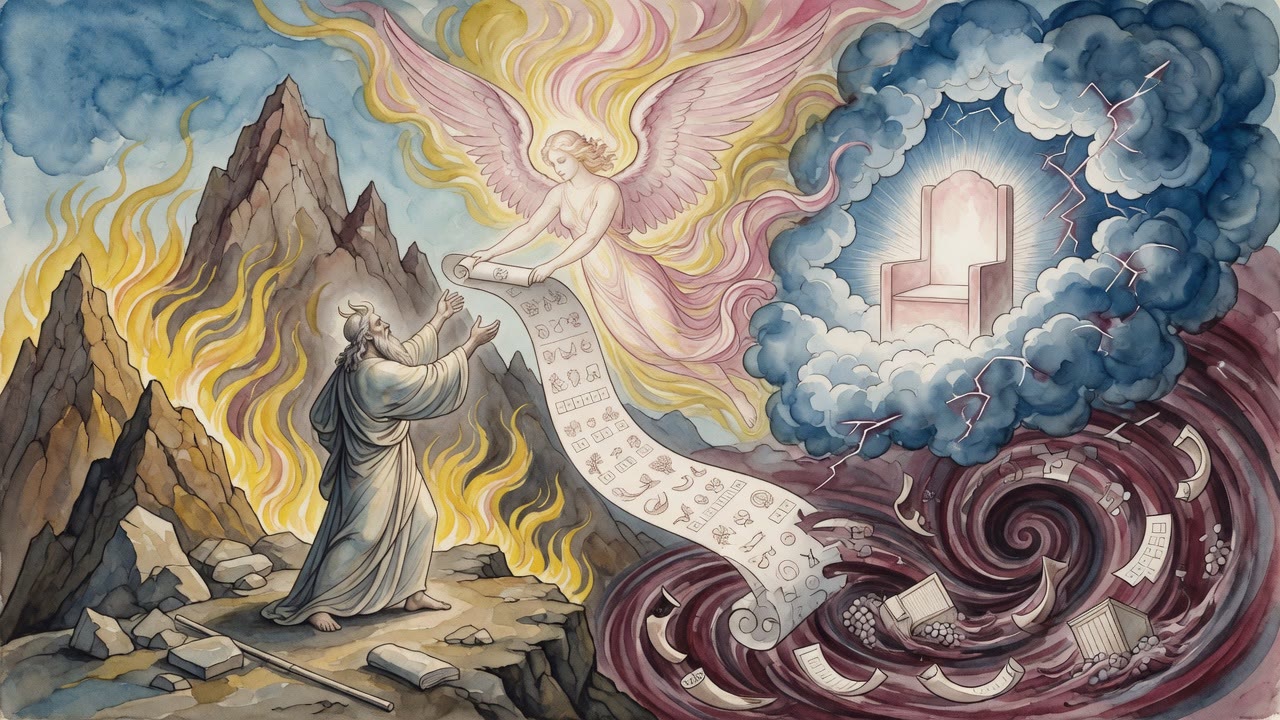
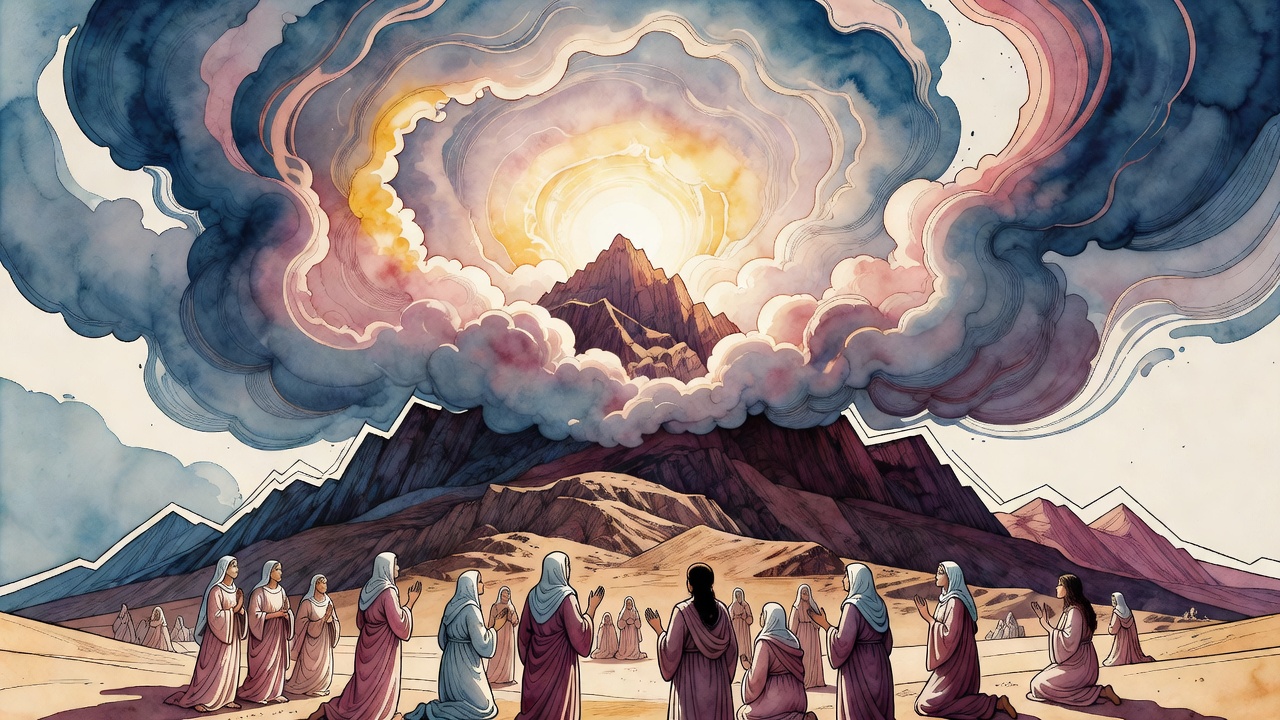
The cloud closed over Sinai and did not lift. For six days it churned across the summit, and on the seventh a voice called Moses up out of the camp and into the smoke. He climbed until the rock gave out beneath his palms and there was only brightness, and standing in that brightness was an angel who did not burn like the others. The seraphim above him blazed and turned their faces away. This one stood still.

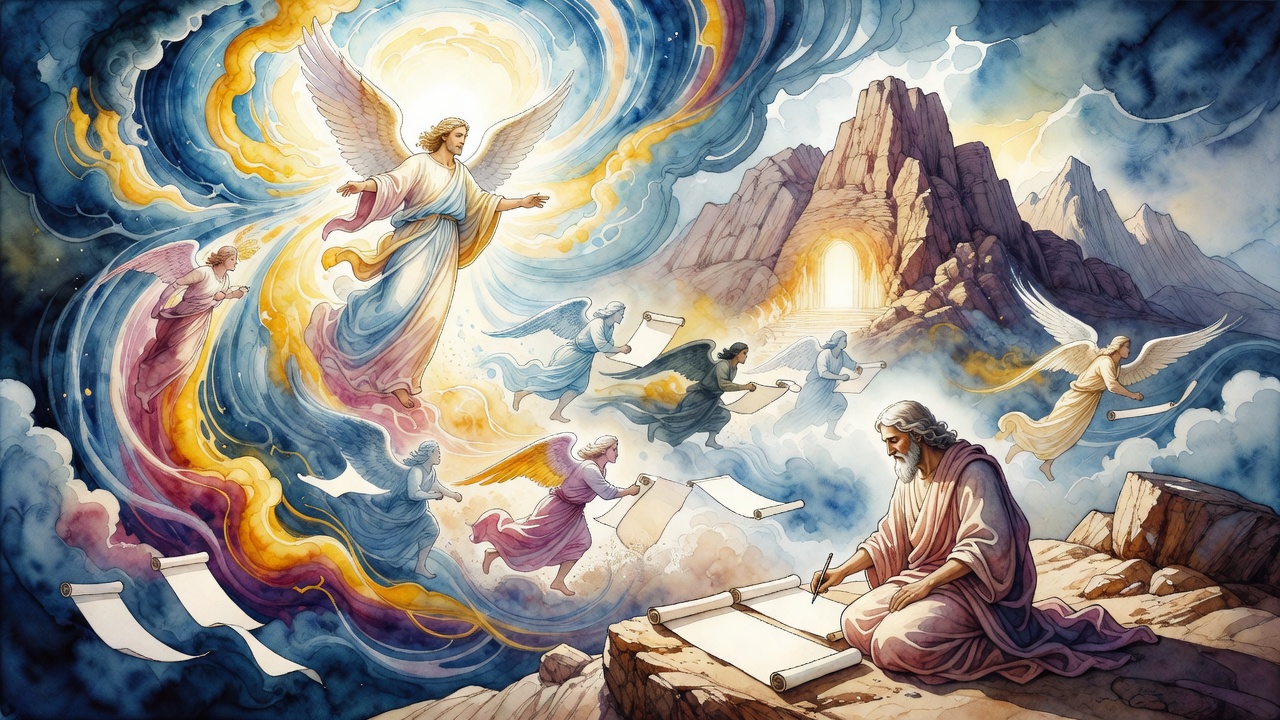
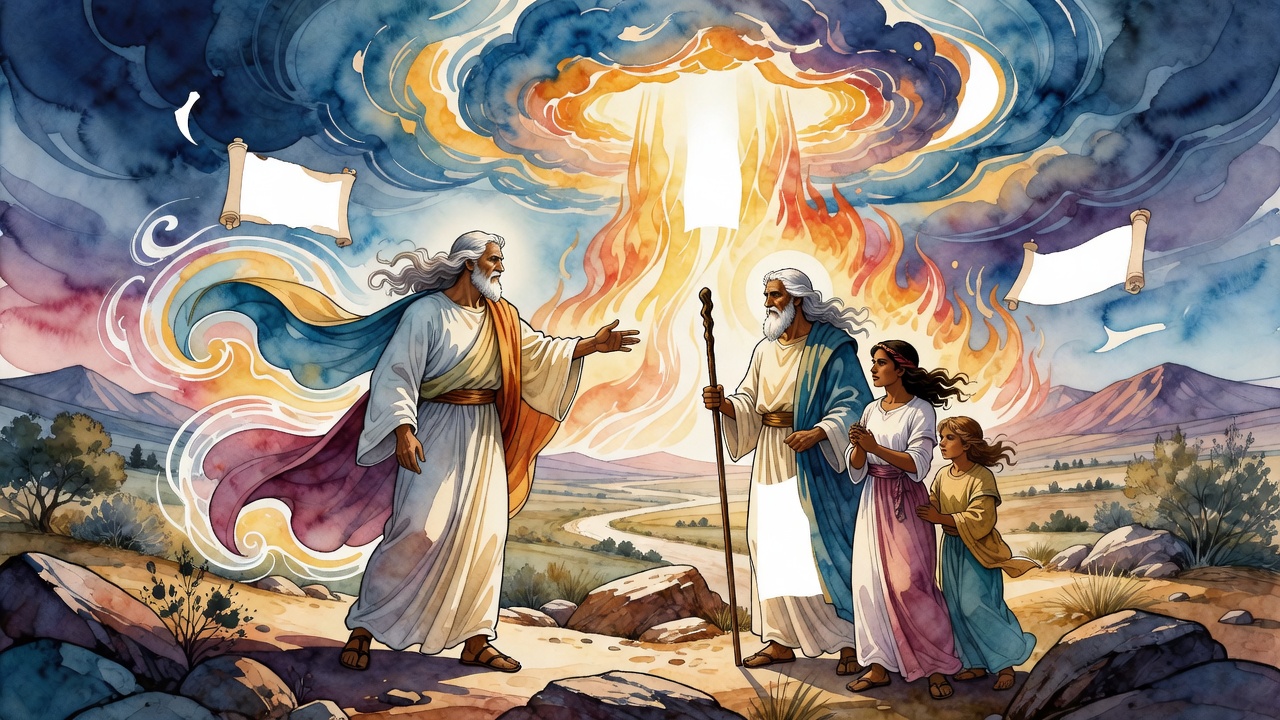
"Come higher," the Angel of the Presence said. "There is a thing older than the law you have already carried down, and you will write it while I speak."

The Tablets That Counted Every Day

The angel lifted a set of tablets Moses had not seen among the two he had broken and recut below. On them ran a reckoning of days, ordered and closed, a year divided into its seasons and weeks and sabbaths so that no morning fell outside the count.

"Do not think I invented this," the angel said. "The book lies written before me, and on the heavenly tables the division of the days is ordained. Three hundred and sixty-four days I give you for the year, and on this count every feast of the covenant hangs. Everything will fall out in its day according to their testimony. They will not leave out a single day. They will not disturb a single feast."

Moses wrote. The tablets were plain and terrible in their order. The festivals were not decorations laid on top of time. They were the joints that held time together, and the count was the bone beneath them. Seven days made a week, and seven weeks of years piled one on another until they reached a jubilee, and the fiftieth year sat at the top of the reckoning like a keystone. Pull one stone loose and the arch would come down.

The Angel Showed Him a Ruined Season

Then the brightness dimmed, and the angel turned the vision forward into years Moses would not live to see.

Far down the generations his own people lost the thread. They forgot the new moons. They forgot the seasons and the sabbaths. The years came loose from their order and slid, one against another, until no one below could find the path of the years at all. They went wrong as to the months and the sabbaths, the feasts and the jubilees. The fiftieth year that should have opened every prison and returned every sold field to its family passed by unnoticed, its trumpet never blown, its freedom never declared.

"After your death your children will disturb it," the angel said. "They will go wrong as to all the order of the years."

When the Moon Dragged the Feasts Astray

Moses looked closer and found the cause. Men stood on rooftops watching the moon, taking their count from its thin returning horn instead of from the tablets under his hand.

"There will be those who make their observations of the moon," the angel said, "and the moon disturbs the seasons and comes in from year to year ten days too soon."

Ten days did their quiet damage. A feast set by the moon slid loose from the day the heavens had fixed for it. Then it slid again, and again the year after, ten days at a time, a small theft repeated until it added up to a stolen month. Within a lifetime the appointed times had wandered far off their marks, and the people kept them anyway, blind to how far they had drifted, walking after the feasts of the nations around them as though those had always been their own, in their error and in their ignorance.

The Day Holiness and Filth Changed Places

The vision sharpened into its worst hour. A generation stood there that could no longer tell one kind of day from another.

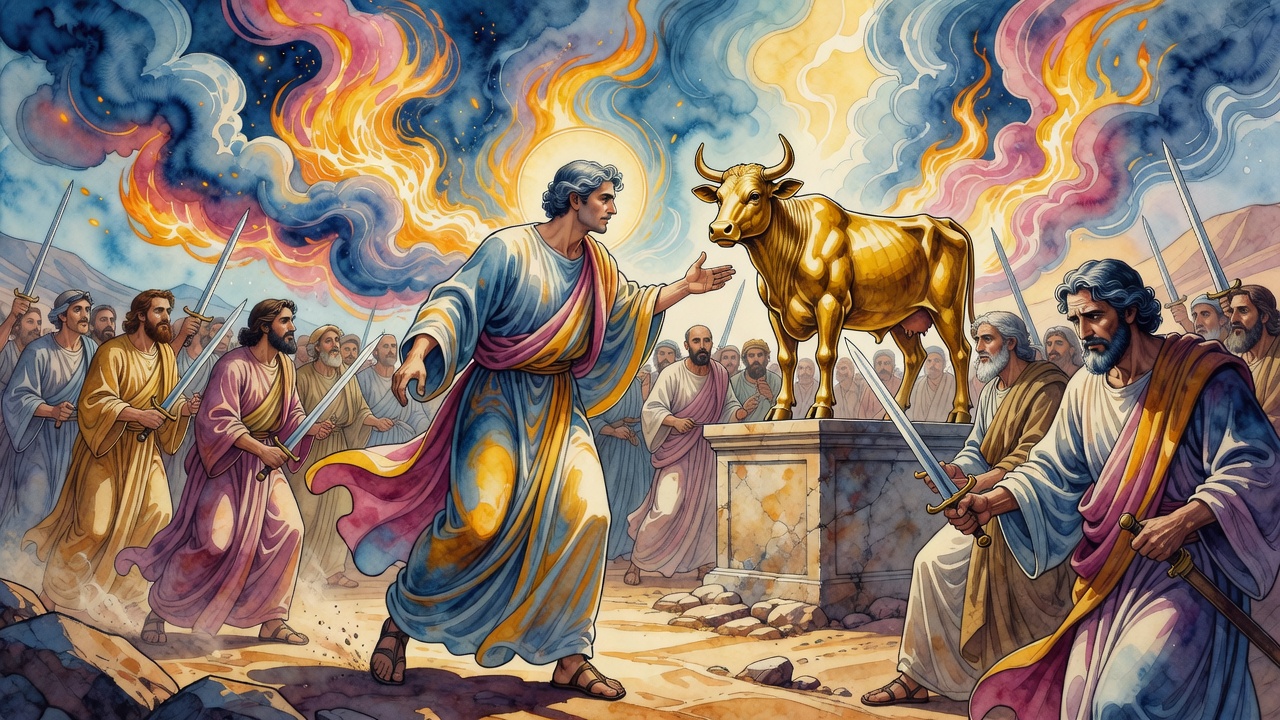
They made the abominable day into the day of testimony. They made an unclean day into a feast. They confounded all the days, the holy with the unclean and the unclean with the holy, until the words had no edges left. Once the days blurred, the rest blurred with them. At one table Moses watched them eat all kinds of blood with all kinds of flesh, the forbidden and the permitted swallowed together, because a people that had lost the line between a feast and a fast no longer trusted any line at all.

The Charge He Carried Down the Mountain

The angel let the vision close. The brightness returned, and the tablets lay finished under Moses' hands.

"For this reason I command you and testify to you," the angel said, "that you may testify to them. Guard the count. Bind it on your children. A single month reckoned wrong will not stay a single month. It will drag every feast off its day and every day off its name, until the whole order dissolves and the appointed times are lost forever."

Moses came down carrying two burdens now. One was the law the people below were waiting to hear. The other was a number, small enough to forget in a hard season, and he had just watched a hard season swallow it whole.


← All myths
From the tradition

Sources

3 sources

The texts behind this telling. Some cards carry a translation of the source; others are our own retelling of it, and each card says which. Every card links out to the original.

Book of Jubilees 6:52Book of Jubilees

Retold in our words. Read the original at the link below.Sefaria Community Translation · CC-BY

The Book of Jubilees, a text not found in the Hebrew Bible but considered scripture by some, gets pretty specific about the calendar. It envisions a perfectly ordered world, where time itself is evidence of divine harmony. But, and this is a big but, it all hinges on us getting it right.

The verse reads, "for everything will fall out in them according to their testimony, and they will not leave out any day nor disturb any feasts." This is a stunning claim! It puts humanity in a crucial role, almost as if we are the guardians of time itself.

What happens if we mess it up? What if we do neglect the calendar, ignore the appointed times, and generally lose track?

That's when things get dicey. According to Jubilees, "if they do neglect and do not observe them according to His commandment, then they will disturb all their seasons, and the years will be dislodged from this (order)." Yikes!

And the consequences? They ripple outwards, affecting everything. "[and they will disturb the seasons and the years will be dislodged] and they will neglect their ordinances." It's like a domino effect, a cosmic calendar catastrophe!: our actions, our choices, have the power to either maintain or disrupt the very fabric of time. Heavy stuff. The passage continues with a stark warning: "And all the children of Israel will forget, and will not find the path of the years, and will forget the new moons, and seasons, and sabbaths, and they will go wrong as to all the order of the years." We forget the Rosh Chodesh, the new moons, the Shabbatot (the Sabbath), the Sabbaths. We lose our way in the grand sweep of time.

It is a pretty sobering thought. Jubilees isn't just talking about a simple scheduling error. It suggests that neglecting the calendar, neglecting the sacred times, leads to a deeper forgetting – a forgetting of our connection to something larger than ourselves, to the rhythms of the universe itself.

So, what do we make of all this? Is Jubilees being overly dramatic? Maybe. But it certainly gives us pause. It invites us to consider the profound significance of time, and our role in honoring it. Maybe paying a little more attention to the calendar, to the cycles of the moon and the seasons, isn't just about keeping appointments. Maybe it's about keeping our place in the cosmos.

Full source
Book of Jubilees 6:56Book of Jubilees

Retold in our words. Read the original at the link below.Sefaria Community Translation · CC-BY

This fascinating book, considered apocryphal (meaning not part of the Jewish biblical canon) by many but still deeply influential, claims to reveal secrets given directly to Moses on Mount Sinai, alongside the Torah. It’s essentially a retelling of Genesis and the early parts of Exodus, but with a very specific agenda: to emphasize the importance of keeping time according to a precise, divinely ordained calendar.

Chapter 6 opens with a powerful declaration: "For I know and from henceforth shall I declare it unto thee, and it is not of my own devising; for the book (lieth) written before me, and on the heavenly tables the division of days is ordained..." Jubilees is telling us this isn't just some human invention. This calendar, this division of days, is written on heavenly tablets. It’s the real deal, divinely ordained, and not open to interpretation!

Why all the fuss about a calendar? Because, the text argues, getting the calendar wrong leads to…well, everything going wrong. The passage continues, "lest they forget the feasts of the covenant and walk according to the feasts of the Gentiles after their error and after their ignorance." The fear is clear: a faulty calendar will cause the Jewish people to forget the sacred holidays, the moedim, the appointed times, and instead, adopt the practices of other nations. A slippery slope, indeed!

What’s the culprit messing everything up? The moon. "For there will be those who will assuredly make observations of the moon--now (it) disturbeth the seasons and cometh in from year to year ten days too soon." The Book of Jubilees is arguing against a lunar calendar, which, let's face it, is a bit wonky. Lunar cycles don't perfectly align with the solar year, leading to discrepancies and the need for adjustments.

The core argument of Jubilees is for a solar calendar. It wanted a fixed, unchanging system that avoids the perceived instability of lunar observations. But why?

Because, according to Jubilees, messing with the calendar has dire consequences. The text warns, "For this reason the years will come upon them when they will disturb (the order), and make an abominable (day) the day of testimony, and an unclean day a feast day." Imagine celebrating Passover on the wrong day! Or observing a solemn fast on what should be a joyous holiday! That's the level of chaos Jubilees is warning against. It would mean turning the sacred order on its head, rendering the very act of worship meaningless.

So, what does this all mean for us today? Well, the debate over calendars might seem a bit arcane, but it highlights a fundamental human concern: the need for order, meaning, and connection to something larger than ourselves. Jubilees believed that a divinely ordained calendar was essential for maintaining that connection. It's a reminder that even something as seemingly mundane as keeping track of time can be deeply intertwined with our spiritual lives. It forces you to think: What structures do we rely on to give our lives meaning and purpose? And what happens when those structures are challenged or broken?

Full source
Book of Jubilees 6:60Book of Jubilees

Retold in our words. Read the original at the link below.Sefaria Community Translation · CC-BY

The Book of Jubilees, a text not found in the Hebrew Bible but considered scripture by some, grapples with this very issue. It warns about a future where people will "confound all the days, the holy with the unclean, and the unclean day with the holy."

Why this blurring? According to Jubilees, it all boils down to messing with the calendar. The text insists on a very specific solar calendar of 364 days. Why this number? Well, the Book of Jubilees believed it was divinely ordained, perfectly aligning with the cycles of the sun and the structure of the cosmos.

What happens if we deviate from this "perfect" calendar? The text doesn't mince words. It claims that people will "go wrong as to the months and sabbaths and feasts and jubilees.": the very anchors of Jewish life – Shabbat, the festivals, even the Jubilee year – thrown into disarray.

The consequences aren't just about keeping the wrong dates. The text goes even further, suggesting moral and spiritual decay. It says that because of this calendar confusion, people "will eat all kinds of blood with all kinds of flesh." This isn't just a dietary concern; it's a symbol of a society that has lost its way, blurring the lines between what is permitted and what is forbidden.

The text highlights the slippery slope. A seemingly small change – a tweak to the calendar – can have profound and far-reaching consequences, impacting not only our schedules but also our spiritual and ethical lives.

The Book of Jubilees is presented as a direct command from God to Moses. It's a warning passed down through generations. "For this reason I command and testify to thee that thou mayest testify to them," it says, "for after thy death thy children will disturb (them)." It's a call to preserve the integrity of time, to guard against the forces that would blur the sacred and the profane.

So, what does this all mean for us today? Are we in danger of "confounding the days"? Perhaps not in the literal calendar sense envisioned by the Book of Jubilees. But maybe in a more subtle way. In a world of constant connection and relentless demands, do we still honor the rhythms of rest and celebration? Do we protect the boundaries between the sacred and the mundane?

The warning in Jubilees invites us to reflect on how we structure our time, and whether our choices reflect a deep connection to what truly matters. Perhaps the most important thing we can glean from this ancient text is the vital importance of maintaining and observing the holy days, lest we lose our way.

Full source