5 min read

The Fifteenth of Nisan Held Every Liberation

God cut the covenant with Abraham one spring night. On that same date angels told him Sarah would bear Isaac, and later Israel walked out of Egypt.

Curated by Arthur · Told by Maggid ·
Table of Contents
  1. One Term for All
  2. From Spring to the Mountain
  3. Tablets Break, Then Mercy Dates Itself
  4. Merit Rolls Onto a Day of Merit
  5. Hands That Build After Pardon

Moses stood before a bush that burned and would not turn to ash, and for seven straight days he argued with God about his own mouth. "I am not eloquent, neither yesterday, nor the day before, nor since You have spoken to Your servant" (Exodus 4:10). Three "neithers," plus the day of speaking: seven days of refusal on the edge of spring.
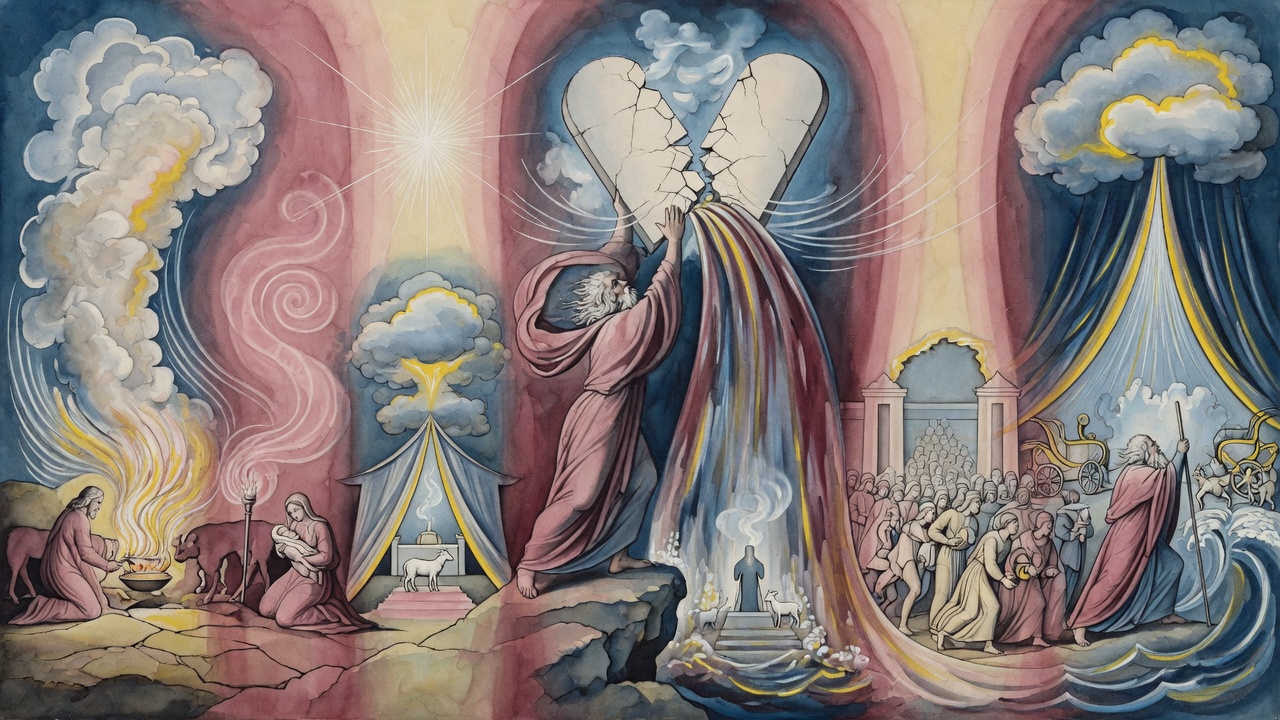
The Fifteenth of Nisan Held Every Liberation Click for full size

Seder Olam pins that quarrel to Passover's hinge. The calendar was already writing a date into him before he ever left Midian.

One Term for All

On the fifteenth of Nisan, God made the Covenant Between the Pieces with Abraham, the pact that foretold four hundred years of slavery followed by liberation. On the fifteenth of Nisan, angels visited Abraham to announce that Sarah would bear a son. The following year on that same date, Isaac was born: "At the appointed time I will return to you, and Sarah shall have a son" (Genesis 18:14).

One year after the bush, on that same date, the Children of Israel walked out of Egypt, "on the selfsame day, all the hosts of the Lord went out from the land of Egypt" (Exodus 12:41). Covenant, birth of the promised son, liberation from bondage: one term for all.

The rabbis treated the date like a hinge on which salvation kept swinging open.

From Spring to the Mountain

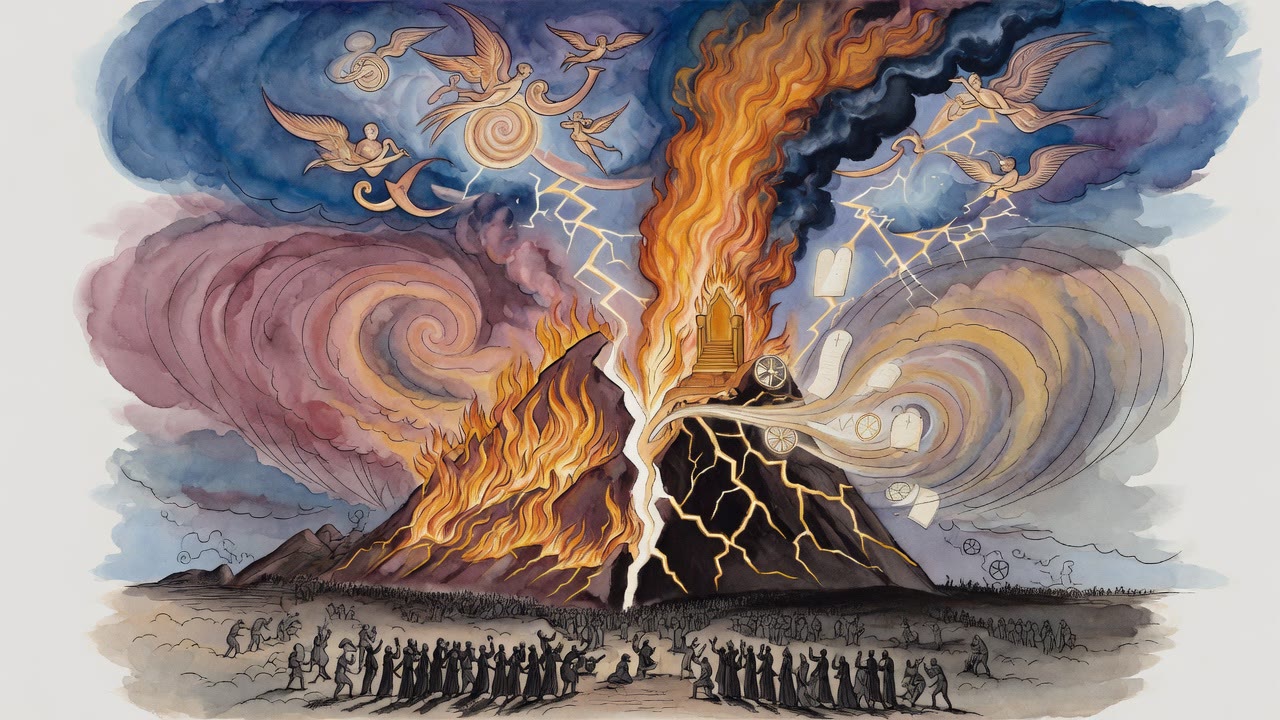
The pattern continued through the wilderness. Israel arrived at Sinai on the first day of the third month (Exodus 19:1). Moses ascended each morning at dawn, never twice in one day. On the sixth of Sivan, a Shabbat, the Ten Commandments were given. Torah descended on the day of rest, because the purpose of revelation was not labor but listening.

God completes the years of the righteous from day to day and month to month: "I will fulfill the number of your days" (Exodus 23:26). Nothing in sacred history is loose change in time's pocket.

Tablets Break, Then Mercy Dates Itself

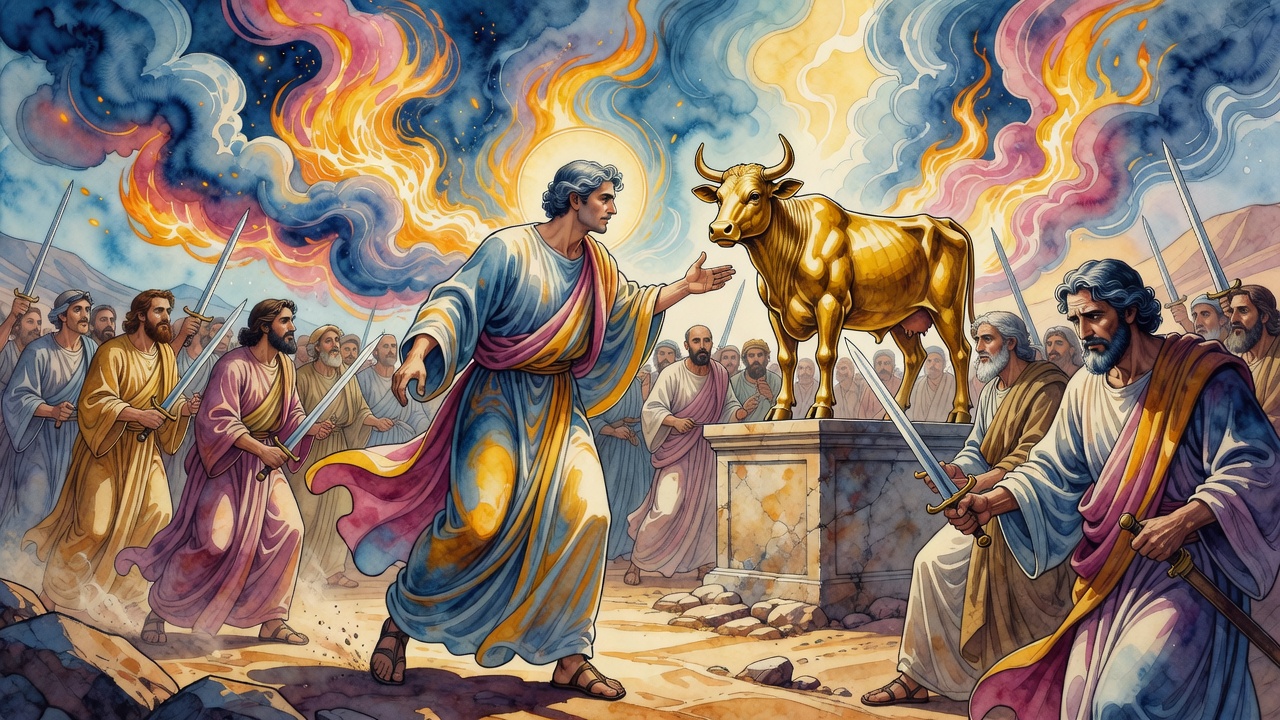
Moses entered the cloud after six days of preparation and stayed on the mountain forty days and forty nights. On the seventeenth of Tammuz he came down and shattered the tablets. The next day he went back up. For forty days he pleaded for Israel, an ascent remembered as anger. Then God sent him up again with the second tablets.

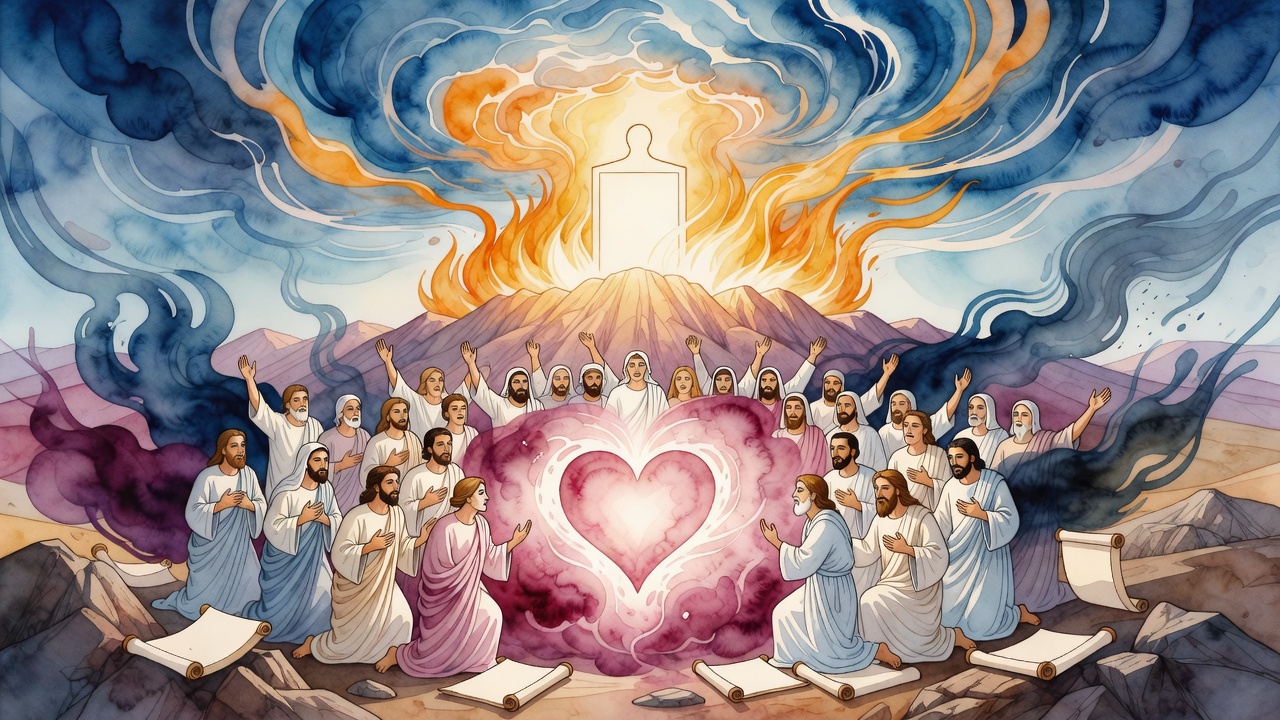
Those final forty days were a return to favor. Moses descended on the tenth of Tishrei, the day that becomes Yom Kippur, and announced that Israel had been forgiven before the Omnipresent. A day of broken tablets became a day of atonement because Moses would not leave Israel under the weight of the sin.

Forgiveness turned into building. He commanded the Tabernacle. When the work finished he blessed them: may the Shekhinah (God's indwelling presence) rest in the work of your hands.

Merit Rolls Onto a Day of Merit

Seder Olam carries the same logic to the end of prophecy. Nehemiah spends twelve years on Jerusalem's wall. Ezra's generation keeps Sukkot (the autumn festival of booths) with such force that the return feels like Joshua's first entry. Then prophets fall silent, and Israel must listen to the sages. Rabbi Yose gives the line that makes the calendar feel dangerous: merit is rolled onto a day of merit, and liability onto a day of liability.

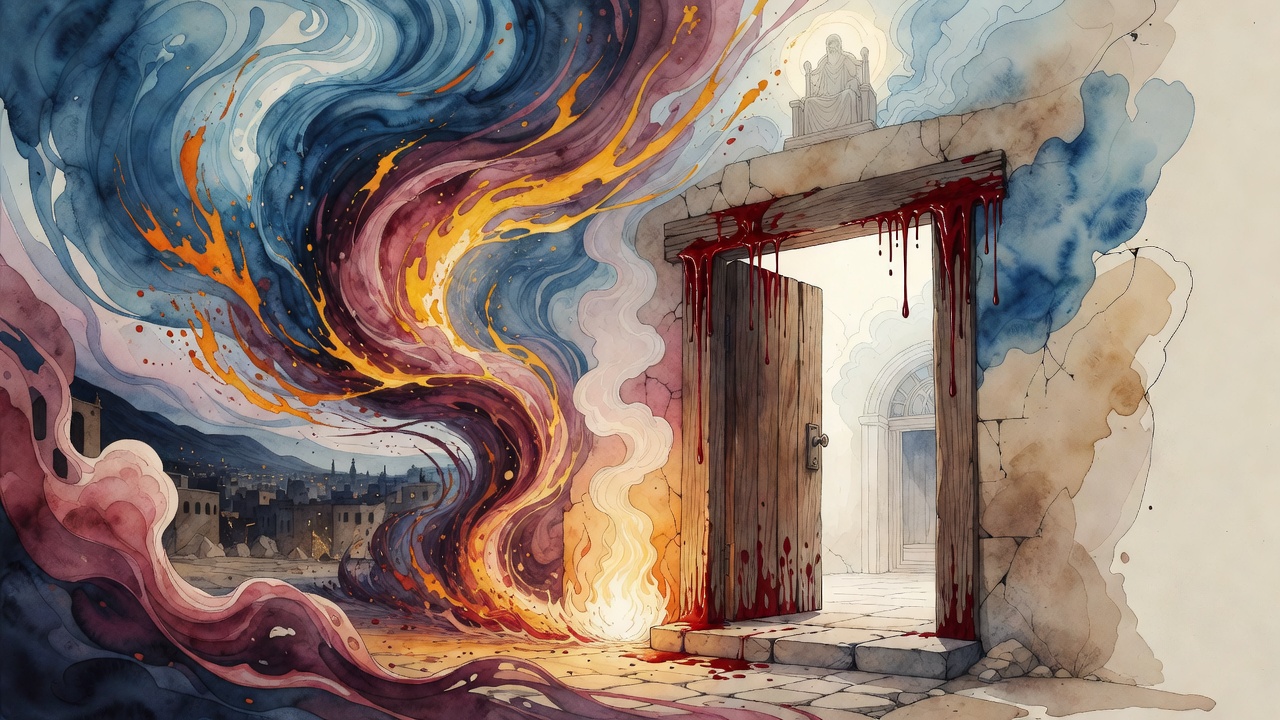
The First Temple fell after Shabbat, after a sabbatical year, during the watch of Jehoiarib, on the ninth of Av. So did the Second. In both destructions the Levites stood on their platform and sang, "He will turn their iniquity upon them" (Psalms 94:23).

The fifteenth of Nisan kept liberation. The ninth of Av kept ruin. Moses's Yom Kippur kept repair between them. History, in this counting, is not only what happens. It is when it is allowed to happen.

Hands That Build After Pardon

When Moses blessed the finished Tabernacle, pardon stopped being only a decree spoken on the tenth of Tishrei. It became wood, gold, curtains, and a people working with hands that had once made a calf. "May the Shekhinah (the Divine Presence) rest in the work of your hands" is not a soft wish. It is the claim that presence returns to labor done after broken stone.

Rabbi Meir preserves another version of the blessing: that Israel multiply and merit the chosen House. Either way the calendar of rupture ends in a calendar of building. The seventeenth of Tammuz keeps the shatter. Yom Kippur keeps the descent with second tablets. The spring date of Nisan keeps the exits from Midian, from Egypt, from childlessness, from the furnace of the covenant pieces.

Later ages would watch Levites sing on the ninth of Av while fire took what hands had raised. Seder Olam does not hide that symmetry. It teaches Israel to read days the way it reads verses: carefully, knowing some dates open doors and some dates close them, and that Moses spent one hundred twenty mountain days so one autumn day could hold forgiveness forever.


← All myths
From the tradition

Sources

3 sources

The texts behind this telling. Some cards carry a translation of the source; others are our own retelling of it, and each card says which. Every card links out to the original.

Seder Olam Rabbah 5Seder Olam Rabbah

Translation of the source text.Seder Olam, Warsaw 1904 + JewishMythology.com faithful English Beta translation · Public Domain

Chapter 5. All seven days the Holy One, blessed be He, spoke with Moses at the bush, as it is said, "Moses said to the LORD: Please, my Lord, I am not a man of words, neither since yesterday, nor since three days ago, nor since You have spoken to Your servant" (Exodus 4:10). "Since three days ago" gives three days; the three repeated words "also" add three more; and the day on which He was speaking makes seven days. It was the season of Passover, and they align it with the fifteenth of Nisan. At that same time in the following year, the children of Israel went out from Egypt. Likewise, on the fifteenth of Nisan He spoke with Abraham our father between the pieces. On the fifteenth of Nisan the angels came to Abraham our father to announce the birth to him, and at that same season in the following year Isaac our father was born, as it is said, "At the appointed time I will return" (Genesis 18:14). On the fifteenth of Nisan Israel went out from Egypt, as it is said, "It came to pass at the end of thirty years..." (Exodus 12:41), one endpoint for all of them.

On the fourteenth day of that month, Israel slaughtered their Passover offerings in Egypt, and it was the fifth day of the week. That night the firstborn were struck. "On the morrow after the Passover," it was the eve of Shabbat, they traveled from Rameses, as it is said, "The children of Israel traveled from Rameses to Sukkot" (Exodus 12:37), and it is written, "They traveled from Rameses in the first month, on the fifteenth day of the month" (Numbers 33:3), and it is written, "The Egyptians were burying..." (Numbers 33:4). From Rameses they traveled to Sukkot, from Sukkot to Etham, and from Etham to before Pi-hahiroth. These are three days. On the fourth day, "it was told to the king of Egypt that the people had fled" (Exodus 14:5). On the fifth and sixth, "the Egyptians pursued..." (Exodus 14:9). At the light of the seventh day they went down into the sea, as it is said, "The cloud and the darkness came, and it lit up the night" (Exodus 14:20). In the morning Israel came up from the sea and the Egyptians sank. At that hour Israel sang the song, as it is said, "Then Moses sang..." (Exodus 15:1). It was the fifth day of the week, and it was the last festival day of Passover.

From the Sea of Reeds they traveled to Marah, as it is said, "They came to Marah..." (Exodus 15:23), and Scripture says, "There He set for him a statute and a judgment" (Exodus 15:25). There ten commandments were given to Israel. Seven were among those that the children of Noah had already been commanded, as it is written, "The LORD God commanded the man, saying: From every tree of the garden you may surely eat" (Genesis 2:16). "Commanded" refers to laws, and so it says, "For I have known him, so that he will command..." (Genesis 18:19), and it is written, "to do righteousness and judgment" (Genesis 18:19). "The LORD" refers to blessing the Name, as it is said, "Whoever blasphemes the name of the LORD..." (Leviticus 24:16). "God" refers to idolatry, as it is said, "You shall have no other gods before Me" (Exodus 20:3). "The man" refers to bloodshed, as it is said, "Whoever sheds the blood of man, by man shall his blood be shed" (Genesis 9:6). "Saying" refers to sexual immorality, as it is said, "Saying: If a man sends away his wife, and she goes from him and becomes another man's, shall he return to her again? Would not that land be greatly polluted? But you have played the harlot with many companions; yet return to Me, says the LORD" (Jeremiah 3:1). "From every tree of the garden" refers to robbery, as it is said, "or anything about which he swore falsely; he shall restore it in full, and add a fifth to it" (Leviticus 5:24). Rabbi Hiyya taught: That which is guarded on a roof is forbidden because of robbery, and that which is not guarded on a roof is permitted with respect to robbery. "You may surely eat" refers to a limb from a living animal, as it is said, "But flesh with its life, its blood, you shall not eat" (Genesis 9:4).

At that time Israel added three commandments to those seven: Shabbat, laws, and honoring father and mother. From Marah they traveled to Elim, as it is said, "They traveled from Marah and came to Elim..." (Numbers 33:9). From this we learn that Israel camped only by water. From Elim they traveled to Alush, as it is said, "They traveled from Elim, and all the congregation of the children of Israel came to the Wilderness of Sin" (Exodus 16:1). This is Alush. It was "on the fifteenth day of the second month after their departure from the land of Egypt" (Exodus 16:1), and it was the first day of the week. From this we learn that the new moon of Iyar fell on the first day of the week. We also learn that Israel ate from the cake they had brought out in their hands from Egypt for thirty full days. On that day it ran out. In the evening they ate the quail, and in the morning they gathered the manna. At Alush the Shabbat was given to them, and there they kept the first Shabbat, as it is said, "The people rested on the seventh day" (Exodus 16:30). On the first day of the week, the twenty-third of Iyar, they traveled from Alush and came to Rephidim. There the well was given to them, they fought with Amalek, and there they kept the second Shabbat. They traveled from Rephidim and came to the Wilderness of Sinai, where they found the clouds of glory. During all five days Moses would go up to the top of the mountain and come down, telling the people the words of the Omnipresent and bringing their words back before the Omnipresent. In the third month, on the sixth day of the month, the Ten Commandments were given to them, and it was Shabbat.

Full source
Seder Olam Rabbah 6Seder Olam Rabbah

Translation of the source text.Seder Olam, Warsaw 1904 · Public Domain

Chapter 6.

On the seventh day after the Ten Commandments, Moses ascended the mountain, as it is said, "And the glory of the LORD abode upon Mount Sinai, and the cloud covered it six days" (Exodus 24:16), to purify Moses. "And He called to Moses on the seventh day out of the midst of the cloud" (Exodus 24:16), and so on. "And Moses went into the midst of the cloud and ascended the mountain, and Moses was on the mountain forty days and forty nights" (Exodus 24:18).

On the seventeenth of Tammuz he descended and broke the tablets. "And it came to pass on the next day, that Moses said to the people: You have sinned" and so on (Exodus 32:30). He ascended on the eighteenth of Tammuz and sought mercy for Israel, as it is written, "And I fell down before the LORD the forty days and the forty nights that I fell down, because the LORD had said" and so on (Deuteronomy 9:25). At that hour the Holy One, blessed be He, was reconciled to Israel and told Moses to carve the second tablets and ascend, as it is said, "At that time the LORD said to me: Carve for yourself two tablets of stone like the first, and come up to Me into the mountain, and make yourself an ark of wood" (Deuteronomy 10:1).

He descended on the twenty-eighth of Av and carved the second tablets, as it is said, "And he carved two tablets of stone like the first, and Moses rose early in the morning" and so on (Exodus 34:4). He ascended on the twenty-ninth of Av, and the Torah was taught to him a second time, as it is said, "And I stayed on the mountain like the first days, forty days and forty nights" and so on; "the LORD would not destroy you" (Deuteronomy 10:10). "Like the first days": just as the first ones were in favor, so the second ones were in favor. Say from now: the middle ones were in anger.

He descended on the tenth of Tishrei, which was the Day of Atonement, and announced to them that he had been reconciled before the Omnipresent, as it is said, "And pardon our iniquity and our sin, and take us for Your inheritance" (Exodus 34:9). Therefore it was established as a fixed statute and remembrance for generations, as it is said, "And this shall be an everlasting statute for you" (Leviticus 16:34).

"And it came to pass, when Moses came down" and so on; "and they returned to him" and so on; "and afterward all the children of Israel came near, and he commanded them" and so on (Exodus 34:29-32). What did he command them? He commanded them to make the Tabernacle. They began to occupy themselves with the work of the Tabernacle: "And they came, every one whose heart lifted him" and so on (Exodus 35:21). "And Moses saw all the work, and behold, they had done it; as the LORD had commanded, so had they done it. And Moses blessed them" (Exodus 39:43). What blessing did he bless them with? He said to them: May it be His will that the Shekhinah rest in the work of your hands. And they said, "Let the beauty of the Lord our God be upon us" and so on (Psalms 90:17).

Rabbi Meir says: He did not say that to them. Rather, he said, "The LORD God of your fathers make you a thousand times so many more" and so on (Deuteronomy 1:11). He said to them: Happy are you, Israel, that you merited the service of the Tabernacle. And just as you merited this, so may you merit that the chosen House be given to you and that the Shekhinah rest among you, as it is said, "And let them make Me a sanctuary, that I may dwell among them" (Exodus 25:8).

Full source
Seder Olam Rabbah 30Seder Olam Rabbah

Translation of the source text.Seder Olam, Warsaw 1904 + Sefaria Community Translation · Public Domain

Chapter 30

"The words of Nehemiah son of Hacaliah" (Nehemiah 1:1). He spent twelve years in the land of Israel repairing the wall and returning each Israelite to his city and to his inheritance. So it says, "But in all this I was not in Jerusalem; for in the thirty-second year of Artaxerxes the king [etc.], I came to Jerusalem" (Nehemiah 13:6-7). From the twentieth year until the thirty-second year is twelve years.

It says, "And the elders of the Jews built and prospered" (Ezra 6:14). You find only two kings for Persia, Cyrus and Darius, and two for Media, Darius and Ahasuerus. Rather, he is Cyrus, he is Darius, he is Artaxerxes, because the whole kingdom is called Artaxerxes. All the years of the kings of Media and Persia were fifty-two years. "So the priests, the Levites, the gatekeepers, the singers, some of the people, the temple servants, and all Israel settled" (Nehemiah 7:73). "And all the people gathered as one man" (Nehemiah 8:1). And it says, "And all the congregation who returned from captivity made booths and dwelt in booths, for they had not done so from the days of Joshua" (Nehemiah 8:17). Can this be said literally? Rather, Scripture compares their coming in the days of Ezra to their coming in the days of Joshua. Just as in the days of Joshua they became obligated in tithes, sabbatical years, and jubilees, and they sanctified walled cities, so too in the days of Ezra they became obligated in tithes, sabbatical years, and jubilees, and they sanctified walled cities. They rejoiced and were glad before the Omnipresent, blessed be He, as it is said, "and there was very great gladness" (Nehemiah 8:17).

So too it says, "And the LORD your God will bring you into the land which your fathers possessed, and you shall possess it" (Deuteronomy 30:5). Scripture compares your possession to the possession of your fathers. Just as your fathers' possession came with the renewal of all these matters, so too your possession comes with the renewal of all these matters. Could there be a third possession for you? Scripture therefore says, "and you shall possess it." You have a first and a second; you do not have a third.

"And the rough goat is the king of Greece... he is the first king" (Daniel 8:21). "And a mighty king shall arise... and when he has arisen, his kingdom shall be broken" (Daniel 11:3-4). This is Alexander the Macedonian, who reigned twelve years. Until here the prophets prophesied through the Holy Spirit. From here onward: "Incline your ear and hear the words of the sages" (Proverbs 22:17), as it is said, "for it is pleasant if you keep them within you" and "that your trust may be in the LORD" (Proverbs 22:18-19), and it says, "Have I not written to you thirty things" and "to make you know what is right" (Proverbs 22:20-21). So too it says, "Ask your father and he will tell you, your elders and they will say to you" (Deuteronomy 32:7). Could this mean the elders of the marketplace? Scripture says, "and they will say to you." Thus you learn that an elder is one who has acquired wisdom.

Rabbi Yose says: the Persian kingdom stood before the Temple for thirty-four years, the Greek kingdom for one hundred eighty years, the Hasmonean kingdom for one hundred three years, and the Herodian kingdom for one hundred three years. From here onward, go out and count toward the destruction of the Temple. In the exile they write documents according to the Greek era, one thousand. These are the eight Greek kings: Alexander the Macedonian, Pirton, Shalimon, Seleucus, Santerok, Antioch, Antiochus, and Gaskalgas. From the war of Asuvarus Pol until the war of Vespasian was eighty years; these were before the Temple. From the war of Vespasian until the war of Titus was twenty-four years, and from the war of Titus until the war of Ben Koziva was twenty-six years. The war of Ben Koziva lasted two and a half years, fifty-two years after the destruction of the Temple.

Rabbi Yose used to say: merit is rolled onto a day of merit, and liability onto a day of liability. You therefore find that when the First Temple was destroyed, that day was after Shabbat, after the sabbatical year, during the priestly watch of Jehoiarib, and it was the ninth of Av. So too with the Second Temple. In both cases the Levites were standing on their platform and reciting song. What song did they recite? "He will turn their iniquity upon them" (Psalms 94:23). "In the fourth month, on the ninth day of the month, the city was breached" (Jeremiah 39:2) in the First Temple, and in the Second it was breached on the seventeenth of that month.

"Blessed be the LORD God of Israel from everlasting to everlasting, and let all the people say, Amen. Hallelujah" (Psalms 106:48). "Blessed be the LORD God, the God of Israel, who alone does wonders; and blessed be His glorious name forever" (Psalms 72:18-19). "He changes times and seasons" (Daniel 2:21). "Times" refers to the season of Sodom; "seasons" refers to the season of Jerusalem. May it be rebuilt soon, and let them say, Amen. "He removes kings" (Daniel 2:21), this is Jehoiakim; "and sets up kings," this is Nebuchadnezzar king of Babylon. "He gives wisdom to the wise," this is Moses our teacher, father of wisdom and father of understanding; "and knowledge to those who know understanding," this is Joshua son of Nun, as it is said, "And Joshua son of Nun was full of the spirit of wisdom" (Deuteronomy 34:9). Another interpretation: "He gives wisdom to the wise," this is Joseph the righteous, of whom it is said, "there is none so discerning and wise as you" (Genesis 41:39); "and knowledge to those who know understanding," this is Daniel and his companions, as it is written, "Then the secret was revealed to Daniel in a night vision" (Daniel 2:19).

"He reveals deep and hidden things" (Daniel 2:22). "Deep things" refers to the depth of the Chariot; "hidden things" refers to the work of Creation. "He knows what is in darkness" (Daniel 2:22), this is the giving of punishment to the wicked in Gehinnom. "And light dwells with Him" (Daniel 2:22), this is the giving of reward to the righteous in the future to come. Another interpretation: "He gives wisdom to the wise," this is Joshua son of Nun, as it is said, "Joshua son of Nun was full of the spirit of wisdom" (Deuteronomy 34:9); "and knowledge to those who know understanding," this is Jeremiah, as it is said, "Before I formed you in the belly, I knew you" (Jeremiah 1:5).

Could this mean only in its time? Scripture therefore says, "This is the book of the generations of Adam" (Genesis 5:1), teaching that the Holy One, blessed be He, showed Adam the first man every generation and its leaders, every generation and its prophets, every generation and its interpreters, every generation and its sages, [every generation] and its providers, every generation and its judges, the sages of each generation, the prophets of each generation, the righteous of each generation, the number of their names, the count of their days, the reckoning of their hours, and the sum of their steps, as it is said, "For now You count my steps" (Job 14:16). And it says, "This was still a small thing in Your eyes, Lord GOD" (II Samuel 7:19). And it says, "Your eyes saw my unformed substance" (Psalms 139:16). And it says, "How precious are Your friends to me, God" and "If I count them, they are more numerous than sand" (Psalms 139:17-18).

The baraita of Seder Olam Rabbah is completed.

Full source