Parshat Yitro5 min read

The Angel of the Presence Dictated All Time to Moses at Sinai

On Sinai a radiant angel orders Moses to write the first thing and the last, then unrolls the hidden angels who run frost, thunder, and time itself.

Curated by Arthur · Told by Maggid ·
Table of Contents
  1. The Cloud Closed Over the Mountain
  2. Write the First Thing and the Last
  3. The Tables Unrolled From Creation
  4. The Angels Who Run the Weather
  5. The One Who Walks Before the Camp
The Angel of the Presence Dictated All Time to Moses at Sinai Click for full size

The Cloud Closed Over the Mountain

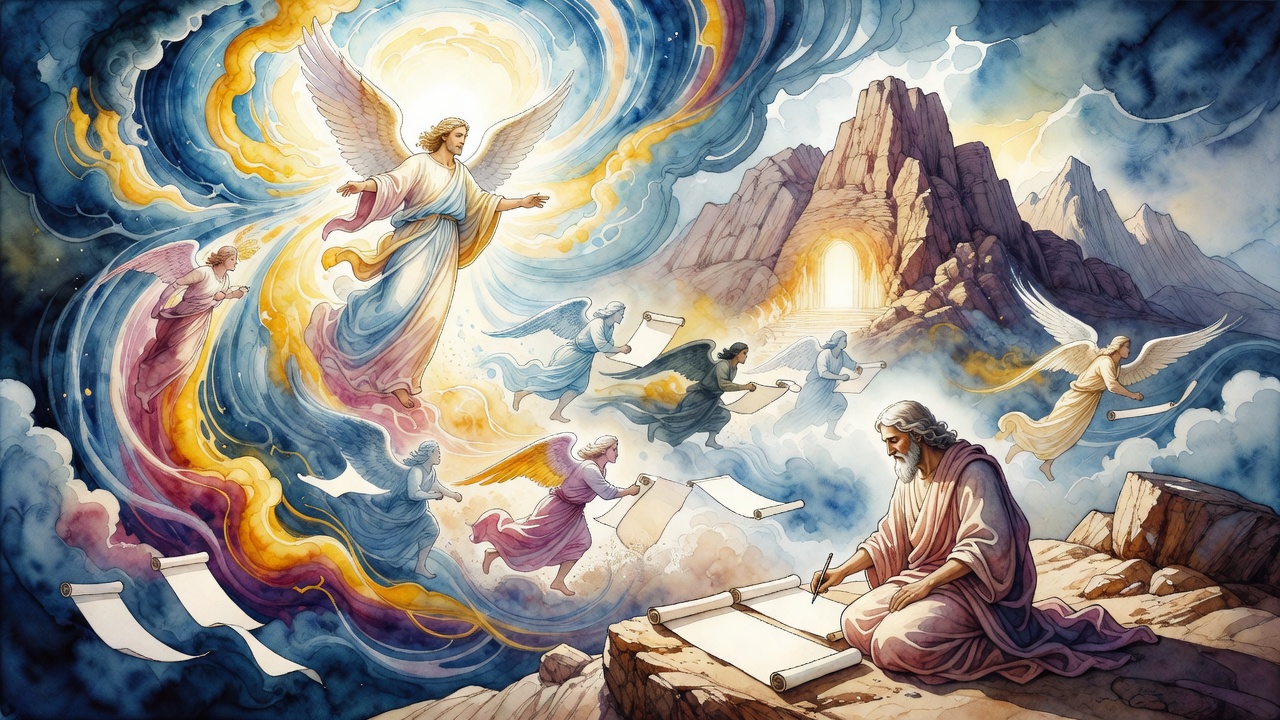
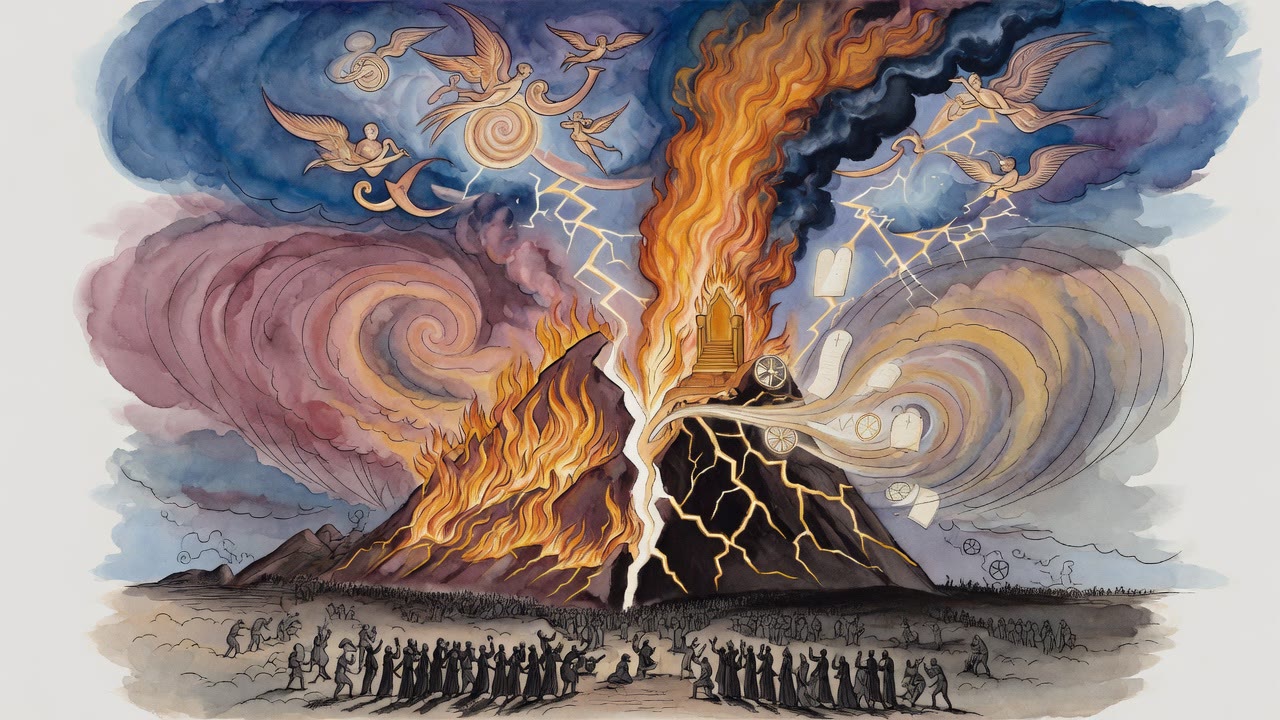
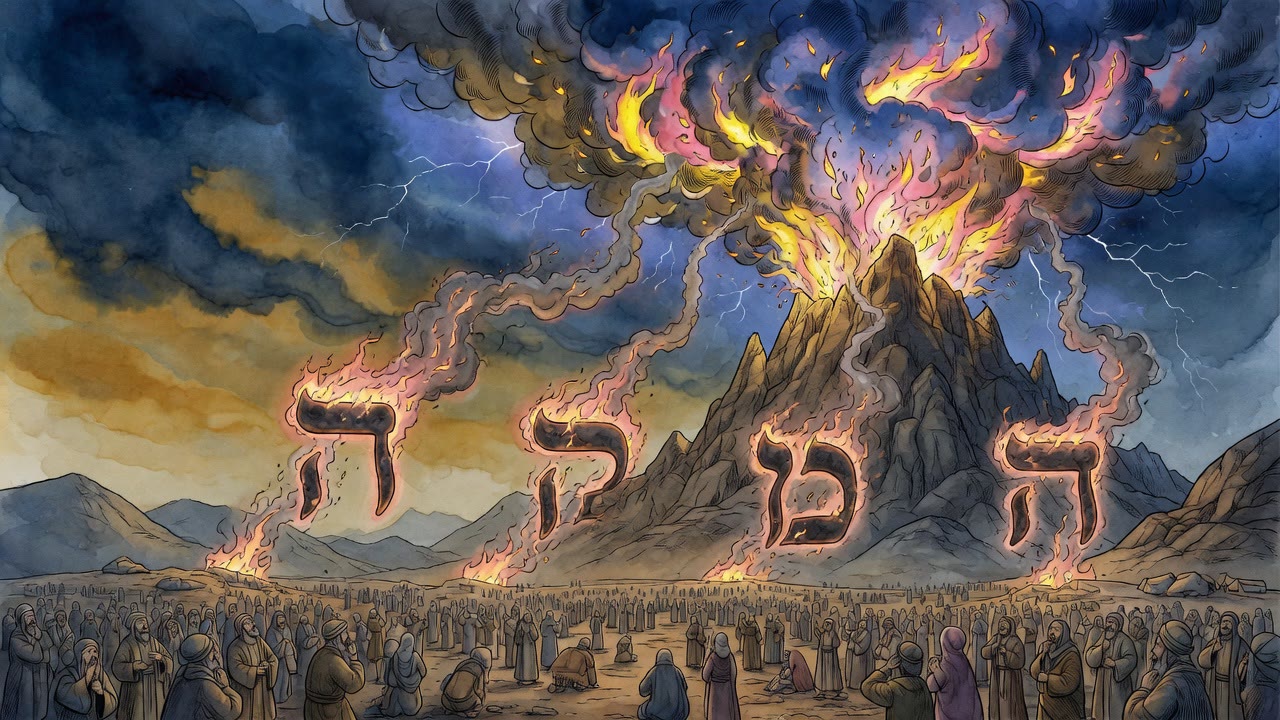
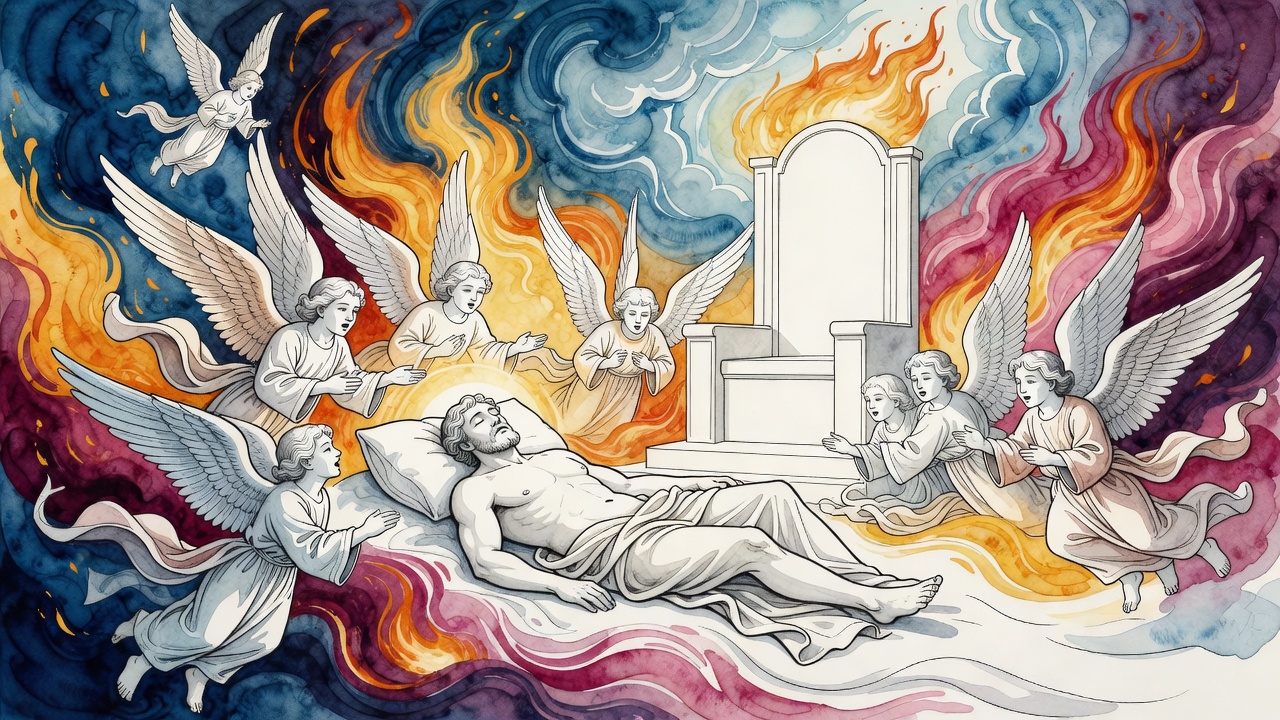
Moses climbed into the cloud on the sixth day, and it swallowed the top of the mountain the way water closes over a dropped stone. Below him the camp of Israel had gone silent. Above him the fire on the summit burned without touching the rock. In the middle of that fire stood a figure Moses would afterward have no plain word for, brighter than the flame behind it. This was the Angel of the Presence, the one who stands nearest the Throne and is sent out from before God's own face.

The angel did not greet him. It gave him an order.

Write the First Thing and the Last

"Write down for yourself all these words which I declare to you on this mountain," the angel said, "the first and the last." Not the first commandment and the last commandment. The first thing and the last thing. All of it. From the day the light was cut away from the dark to the day a house for God would rise and never again fall.

Moses had climbed the mountain expecting law, a tablet of commands he could carry back down. He was being handed the whole span of time instead. Where does a man even begin to write down "the first"? The angel answered before he could shape the question. It reached out and unrolled something that was neither paper nor skin, and the writing already stood on its surface, letter after letter, in a hand no scribe in the camp below could have set.

The Tables Unrolled From Creation

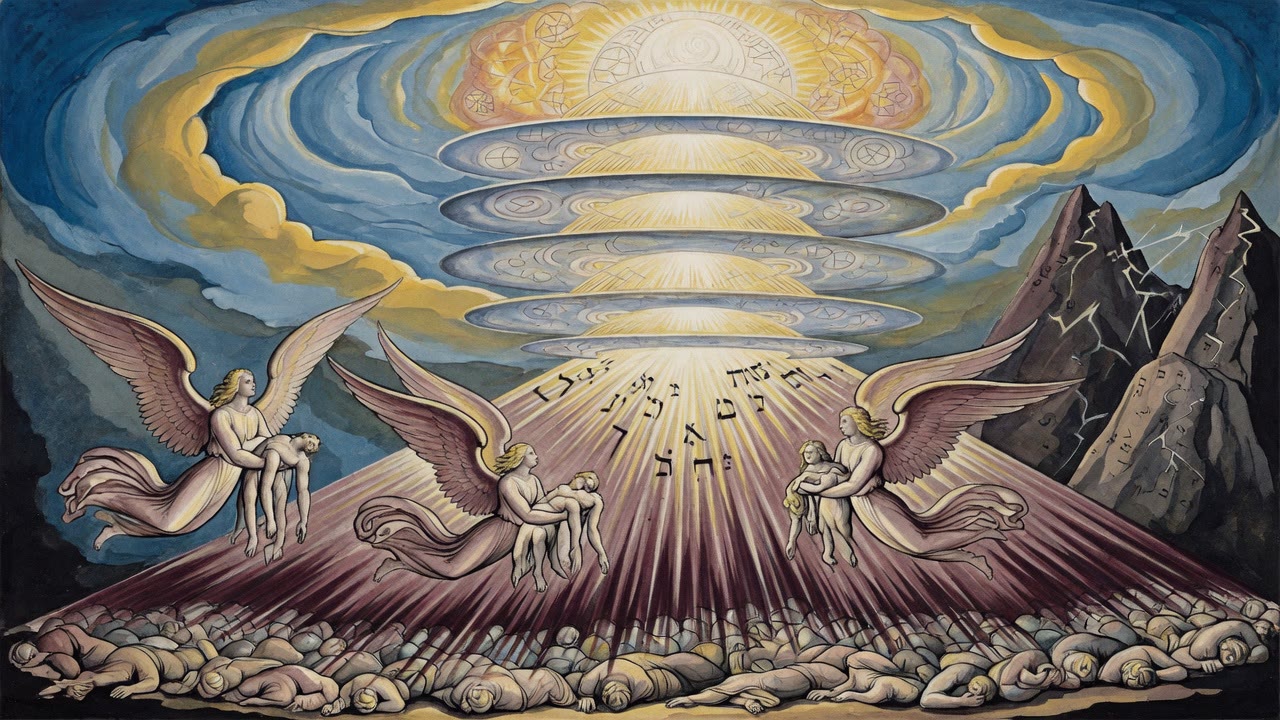
These were the tables of the divisions of the years. On them time lay ordered like a field cut into rows, weeks of years, and sevens of those weeks, and the fiftieth year closing each count. That fiftieth year was the jubilee, when debts drop away and every man walks back to the land of his fathers. Moses knew the jubilee from the law he would carry down the mountain (Leviticus 25). He had not known it was older than Israel, older than Egypt, a seam sewn into creation itself and running forward to a renewed heaven and a renewed earth.

The angel named the reach of the record. "Write from the beginning of creation," it said, "until My sanctuary has been built among them for all eternity." First and last. The opening act was the dividing of the light. The closing act was a sanctuary standing on Mount Zion, and the Lord appearing to the eyes of all, so that everyone alive would know the God of Israel and the Father of the children of Jacob reigning there. Between those two points ran the entire history Moses was now to set down.

The Angels Who Run the Weather

Then the angel showed him what held the long middle together, and the sky came apart into its workers.

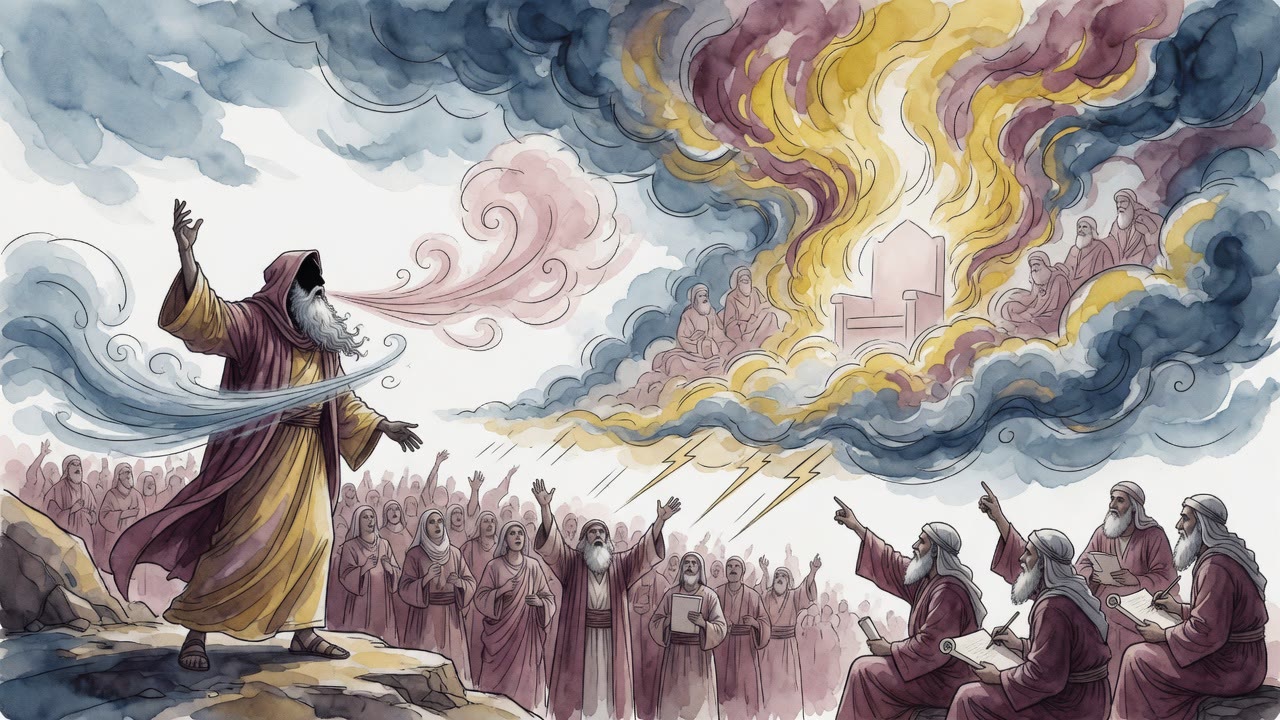
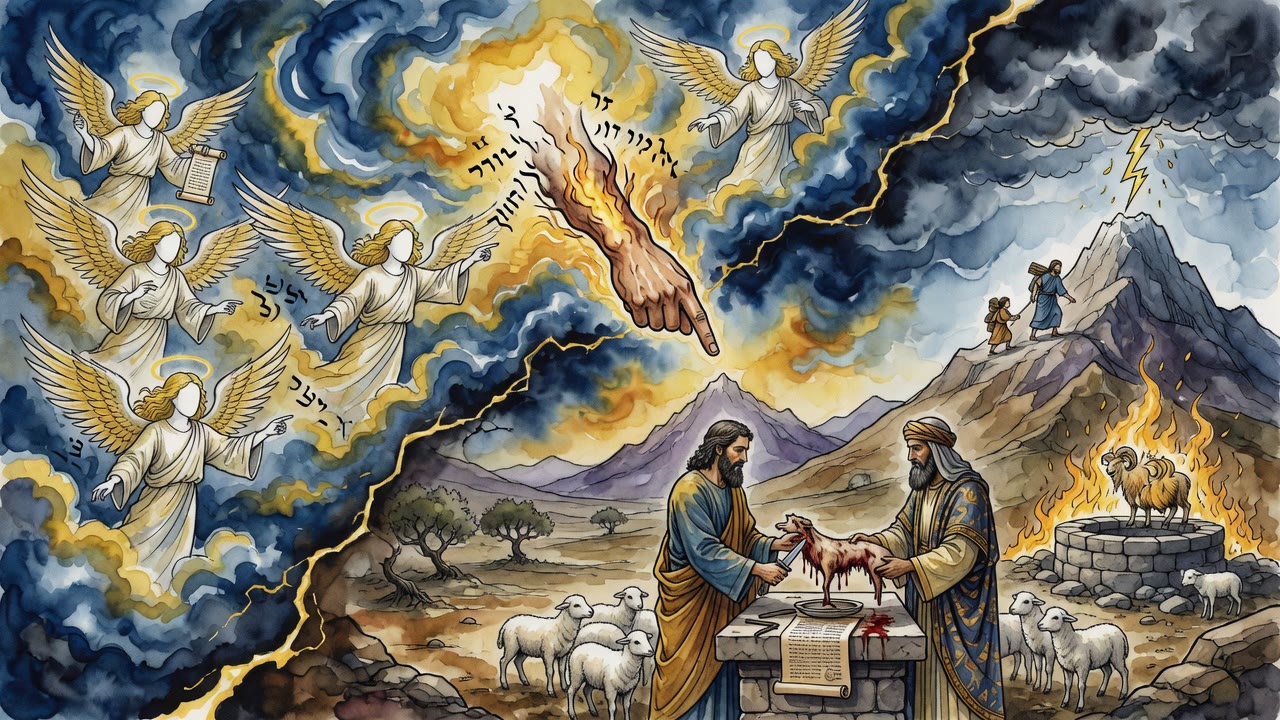
Nothing in the world ran itself. Spirits were set over the fire that never goes out and spirits over the winds, spirits over the great deep and spirits over the darkness. There was an angel of the snow and an angel of the hail, and beside them one for the hoar frost that whitens a field before dawn. The thunder had its own keepers, the angels of the voices, and the lightning flashed out at their side with keepers of its own. Angels of cold and angels of heat adjusted the world between them, and four more stood over winter, spring, autumn, and summer, each one turning its season on when its turn came round.

None of it was decoration. The abysses had spirits. The night had spirits, and so did the light, and the dawn between them, and the day. God had made every one of them on the first day, seven great works before the first evening came, and prepared them, the record said, in the knowledge of His own heart. When the angels first saw the finished works they broke into praise, and they had not stopped since. The thunder Moses had heard rolling over the tents was one of them, still at its post.

The One Who Walks Before the Camp

Moses understood, with the reed still in his hand, that the being dictating to him was no stranger to the desert below. This was the same Angel of the Presence that went before Israel on the march, ahead of the pillar, unseen at the head of the column. The hand ordering the frost and the hand leading the tribes to water were one hand. The keeper of the seasons and the guide of the wandering tribes wore the same light.

So he wrote. He wrote the first thing and the last and the long middle, the divisions of the days and the weeks and the jubilees unto eternity, while the angel spoke and the fire stood without burning and the camp slept under a sky he now knew was crowded with keepers. One mortal scribe, copying the account of everything from a being of light, and every angel he set on the scroll was at that moment somewhere out over the world, running its own corner of it.


← All myths
From the tradition

Sources

3 sources

The texts behind this telling. Some cards carry a translation of the source; others are our own retelling of it, and each card says which. Every card links out to the original.

Book of Jubilees 1:39Book of Jubilees

Retold in our words. Read the original at the link below.Sefaria Community Translation · CC-BY

Book of Jubilees turns to God Commands Moses to Write Down All History.

God commands Moses, "Write down for thyself all these words which I declare unto thee on this mountain, the first and the last." "The first and the last." From creation itself, all the way to… well, to the end of time! And it's all organized, meticulously, into "the divisions of the days in the law and in the testimony and in the weeks and the jubilees unto eternity." It's like a divine calendar, marking out significant moments in history, all leading to a grand culmination.

Just in case Moses is feeling a little overwhelmed, God enlists some heavenly help. "Write for Moses from the beginning of creation till My sanctuary has been built among them for all eternity," He tells an angel. This isn't just about laws and commandments; it's about the whole story, the entire narrative arc of God's relationship with humanity. And crucially, it centers on the building of the Mikdash, the Sanctuary, a place for God to dwell among us.

Where is this all heading? What's the ultimate goal? The Book of Jubilees offers a powerful vision: "And the Lord will appear to the eyes of all, and all will know that I am the God of Israel and the Father of all the children of Jacob, and King on Mount Zion for all eternity. And Zion and Jerusalem will be holy."

Think about the implications! A moment when God will be undeniably present, when everyone will recognize Him as the God of Israel, the father of Jacob’s descendants. And not just a distant, abstract deity, but a King reigning from Mount Zion, the heart of Jerusalem. The promise that Jerusalem, the city of peace, Ir Shalom, and Zion will be utterly, completely holy.

A vision of ultimate redemption, a world where God's presence is palpable and undeniable. And it all starts with a command to write, to record, to remember. Perhaps the act of writing itself, of preserving these stories and prophecies, is a crucial step in bringing that vision closer to reality. Maybe by studying these ancient texts, we, too, can catch a glimpse of that grand plan and play our part in its unfolding.

Full source
Book of Jubilees 1:41Book of Jubilees

Retold in our words. Read the original at the link below.Sefaria Community Translation · CC-BY

Our story begins not just at the beginning of time, but with the very blueprint for it.

The Israelites are wandering in the desert, led by more than just Moses. The text says that the "angel of the presence"– some powerful divine being – is there too, guiding them. And this angel? According to Jubilees, he wasn’t just keeping them safe; he was also handing down the secrets of time itself.

The angel delivers "the tables of the divisions of the years," a record spanning from the creation to… well, to a renewed creation. What are these "tables?" They are nothing less than the divine ordering of time, a system of weeks, years, and jubilees, all meticulously structured.

A jubilee is a period of 49 years, followed by a 50th year of rest and renewal. It’s a concept deeply rooted in the Torah (Leviticus 25), symbolizing release from debt and a return to ancestral lands. But here, in Jubilees, the jubilee isn’t just a social concept; it’s a fundamental unit of cosmic time.

The text emphasizes that this system is based on "the law and of the testimony." This is key. Time, in this view, isn’t just a neutral backdrop against which events unfold. It’s intertwined with God's law, with the covenant between God and humanity. It’s infused with meaning.

And it stretches forward, past the present moment, towards a future "when the heavens and the earth shall be renewed." A new creation, a cosmic reset.

What does it mean to receive the very structure of time itself? What does it mean for time to be tied to divine law? It suggests that time isn’t just something we experience; it’s something we participate in. Our actions, our choices, they matter in the grand scheme of things. They resonate within this divinely ordained framework. They contribute to, or detract from, the ultimate renewal of creation.

So, the next time you mark a birthday, celebrate a holiday, or simply watch the sun rise, remember this: You’re not just experiencing another moment in time. You’re participating in a story that began at creation and stretches towards a future filled with hope and renewal. It's a story written in the very fabric of time itself.

Full source
Book of Jubilees 2:7Book of Jubilees

Retold in our words. Read the original at the link below.Sefaria Community Translation · CC-BY

Book of Jubilees turns to Angels Assigned to Every Element of Nature.

Take the elements, for instance. The Book of Jubilees, a fascinating text considered canonical by some but excluded from the standard Hebrew Bible, gives us a peek behind the curtain. It reveals a whole host of angelic beings running the show.

This isn't just a casual mention,. Jubilees meticulously lists these angelic divisions. There are angels specifically for darkness, for snow, for hail, even for hoar frost. And it doesn’t stop there.

We're talking about the "angels of the voices," the ones responsible for thunder, and their electrifying colleagues, the "angels of the lightning." You’ve also got the “angels of the spirits of cold and of heat." Think of them as the celestial thermostat adjusters! And just to round it out, angels are specifically assigned to winter, spring, autumn, and summer.

According to Jubilees, these aren't just abstract concepts. Each one has its own angelic overseer. It’s a world where everything, from the grandest storm to the tiniest snowflake, operates under divine management.

But it gets even more expansive. Jubilees tells us that He created all the spirits of His creatures in the heavens and on the earth. This includes the abysses, the darkness, eventide (night), light, dawn, and day. All of it, meticulously prepared “in the knowledge of His heart.” It’s a vision of creation as an incredibly detailed, divinely orchestrated plan.

And what was the reaction to all this divine activity? The text continues, "And thereupon we saw His works, and praised Him, and lauded before Him on account of all His works; for seven great works did He create on the first day.”

It’s a reminder that creation isn’t just a past event. It’s an ongoing process, a continuous display of divine artistry. And the angels? They're not just stagehands; they're part of the performance, constantly working to maintain the balance and wonder of the cosmos. The next time you hear thunder or feel the warmth of the sun, maybe, just maybe, you're catching a glimpse of these unseen forces at work.

Full source