Parshat Ki Tisa5 min read

The Letters Flew Home When Moses Broke the Tablets

Moses asked God one question about a defiled priest and got silence. His face changed. The answer came years later, and it was a handful of ashes.

Curated by Arthur · Told by Maggid ·
Table of Contents
  1. A Small City Under Siege
  2. The Question That Got No Answer
  3. The Letters Went Home
  4. Ashes for an Answer
  5. Do Not Speak to Me About This Again
  6. No One Remembered the Poor Man
The Letters Flew Home When Moses Broke the Tablets Click for full size

A Small City Under Siege

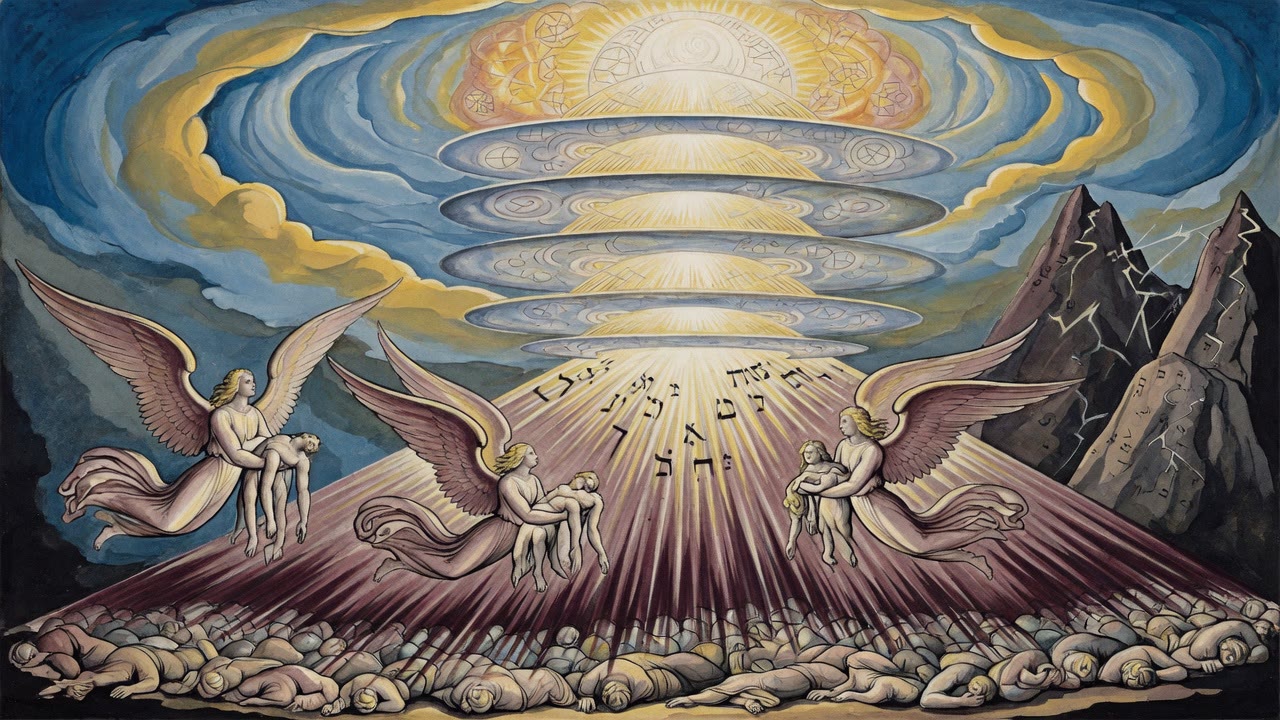
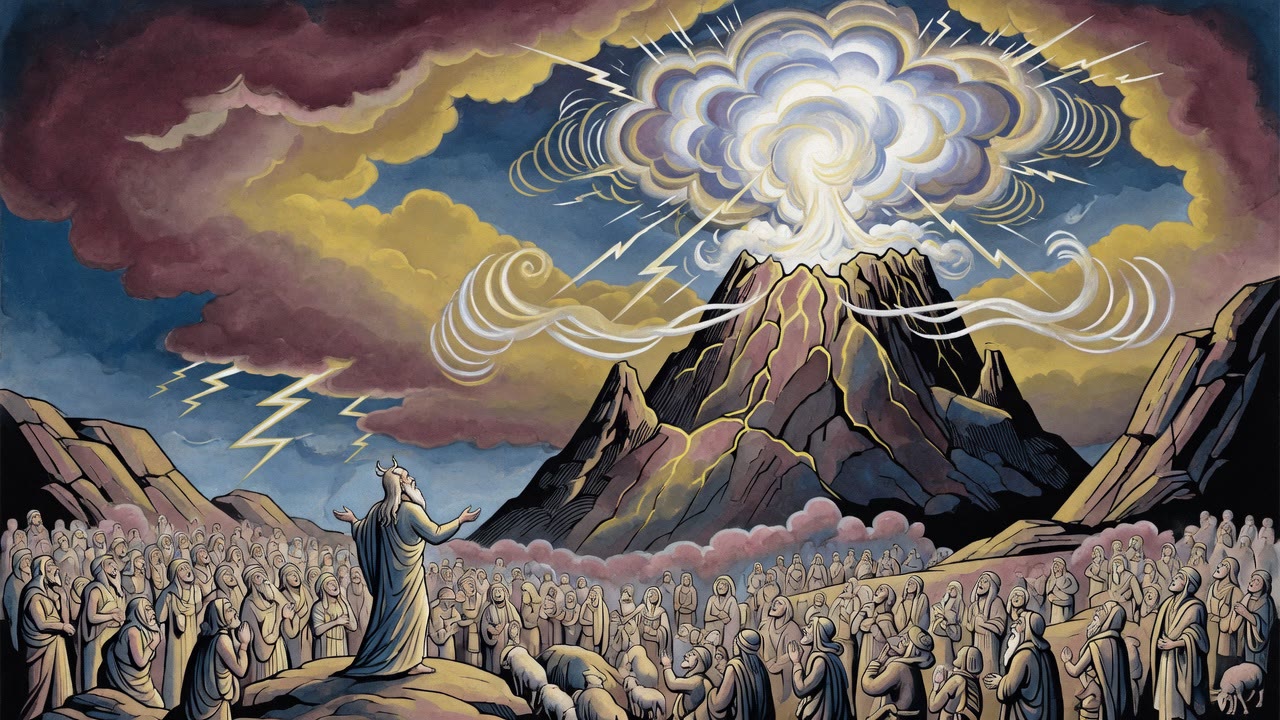
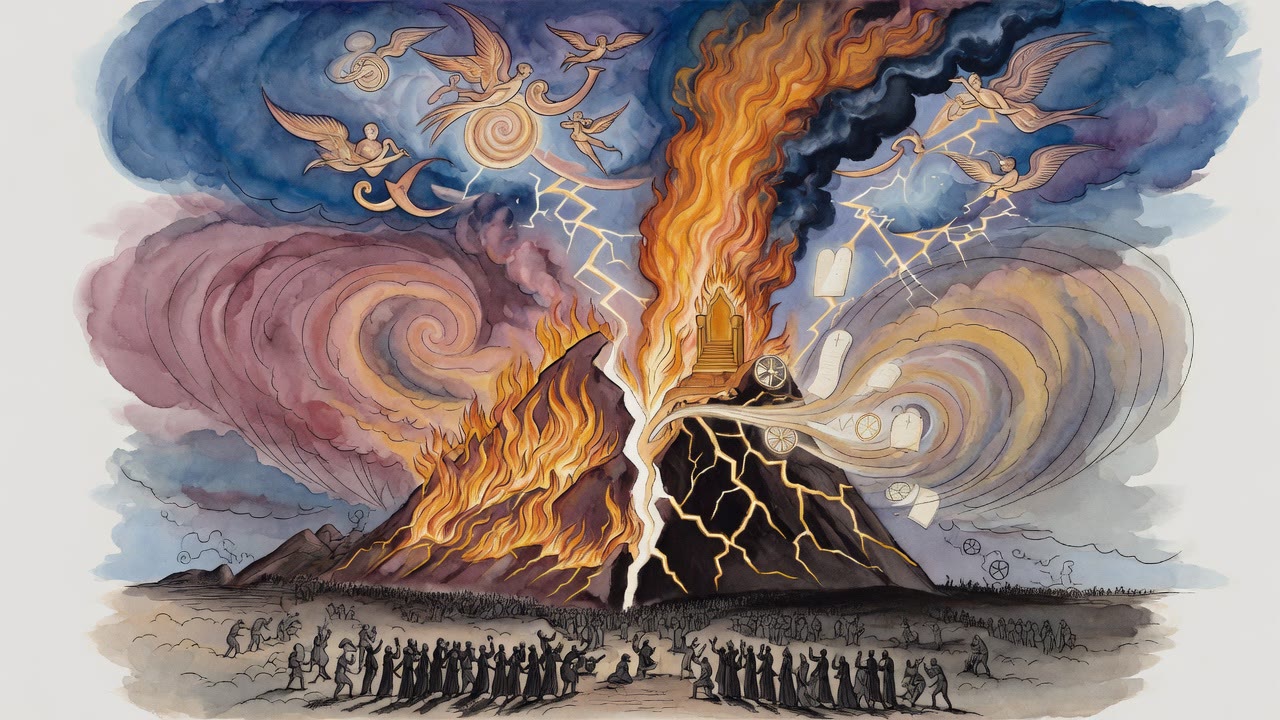
Moses spent the last morning before the revelation walking a line around the foot of the mountain and telling the people that the ground on the far side of it would kill them. No hand touches it. Whoever touches the mountain dies.

The sages later set that morning beside a line in Kohelet about a small city with very few men in it, and a great king who came up against it and threw a siege wall around it. The city was the mountain. The few men were Israel. The great king was the King of kings, and the siege works were six hundred and thirteen commandments, two hundred and forty-eight of them saying do and three hundred and sixty-five saying do not. Inside the walls the king found one poor wise man, and the poor wise man saved the city with a boundary line and a threat.

The Question That Got No Answer

Then he went up. Who is like the wise man, Kohelet asks, and the sages hand the title to Moses, the one who went up against the city of the mighty and came back down able to explain what he had been given.

Rabbi Mana of Shaab said in the name of Rabbi Yehoshua ben Levi that God never handed Moses a matter without handing him its uncleanness and its cleansing in the same breath. This is how a man is defiled. This is how he gets clean again. Every single time, for forty days.

Then they reached the priests. Speak to the priests, the sons of Aaron, that none of them shall make himself unclean for a dead body among his people.

Moses asked the obvious question. "Master of the universe. And if one of them does become unclean, how is he cleansed?"

Nothing came back.

Moses' face changed. He had been given the way back from every other kind of defilement, and this was a priest, and the answer simply stopped. They went on to the next matter, and the next, and the silence stayed where the answer should have been.

The Letters Went Home

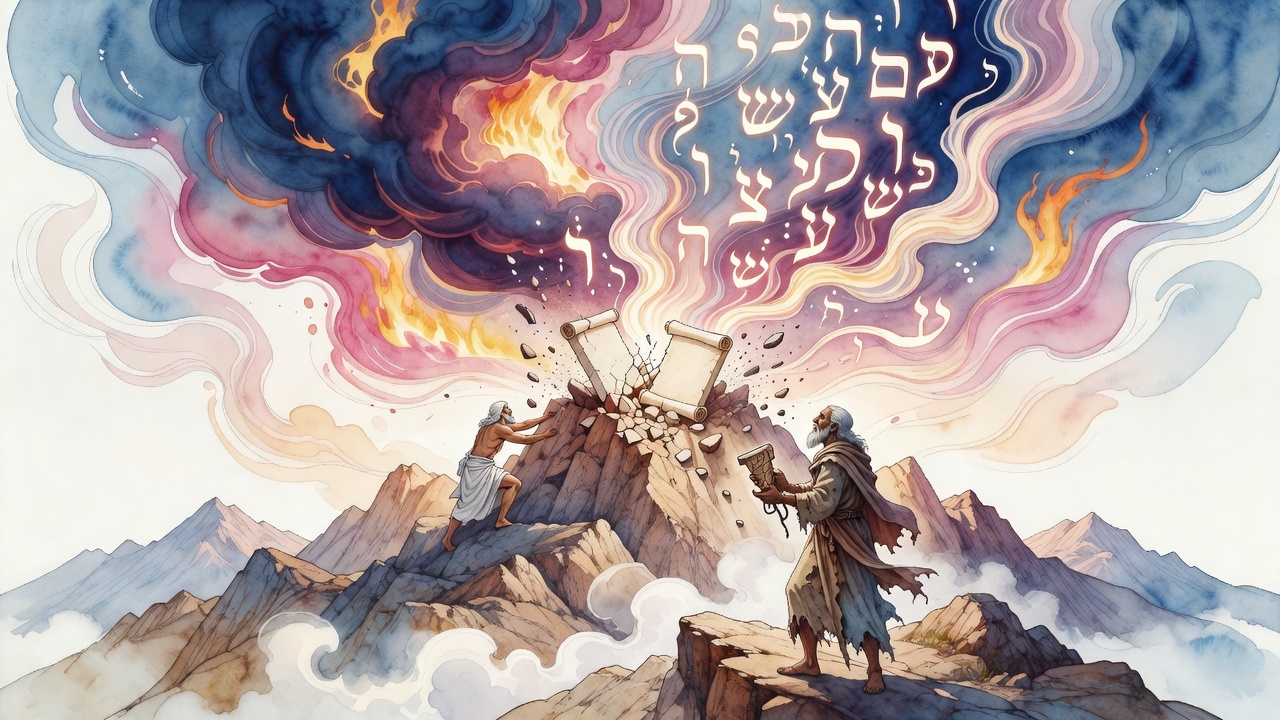
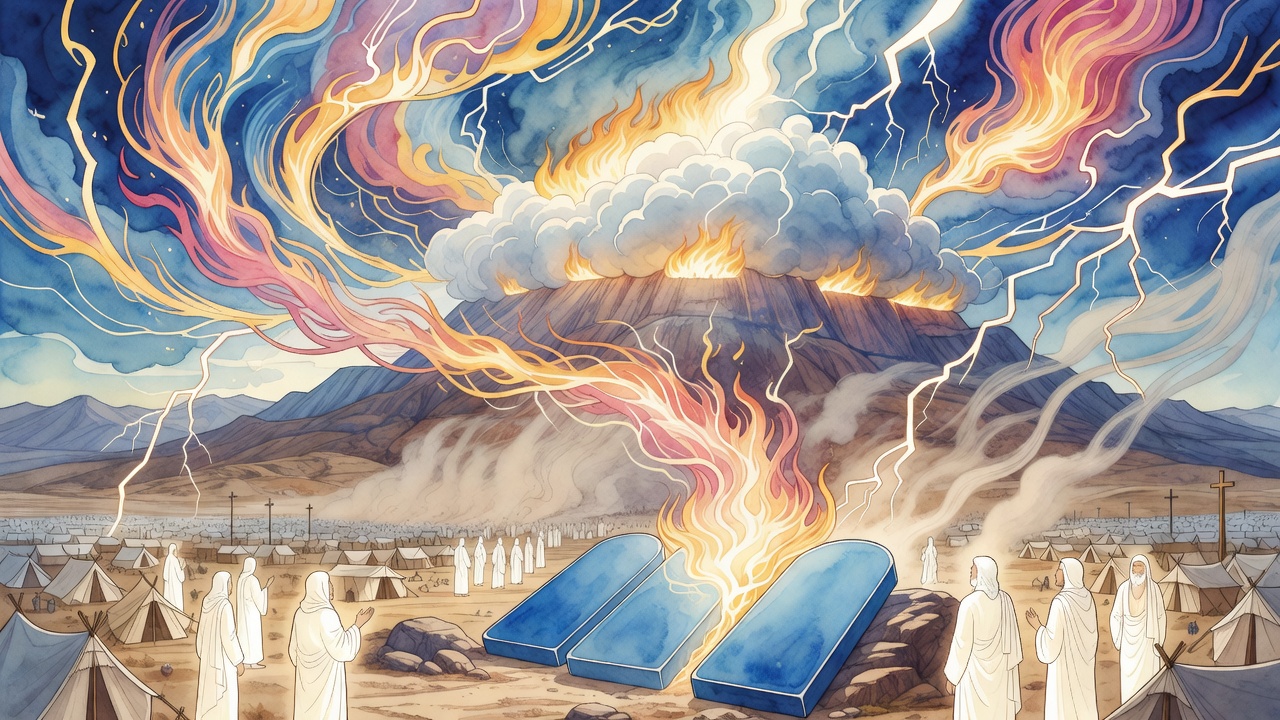
While he was still up there the camp below went a different way. He came down around the shoulder of the rock carrying two stones with writing cut into them and walked into the noise of a people dancing around a calf of gold.

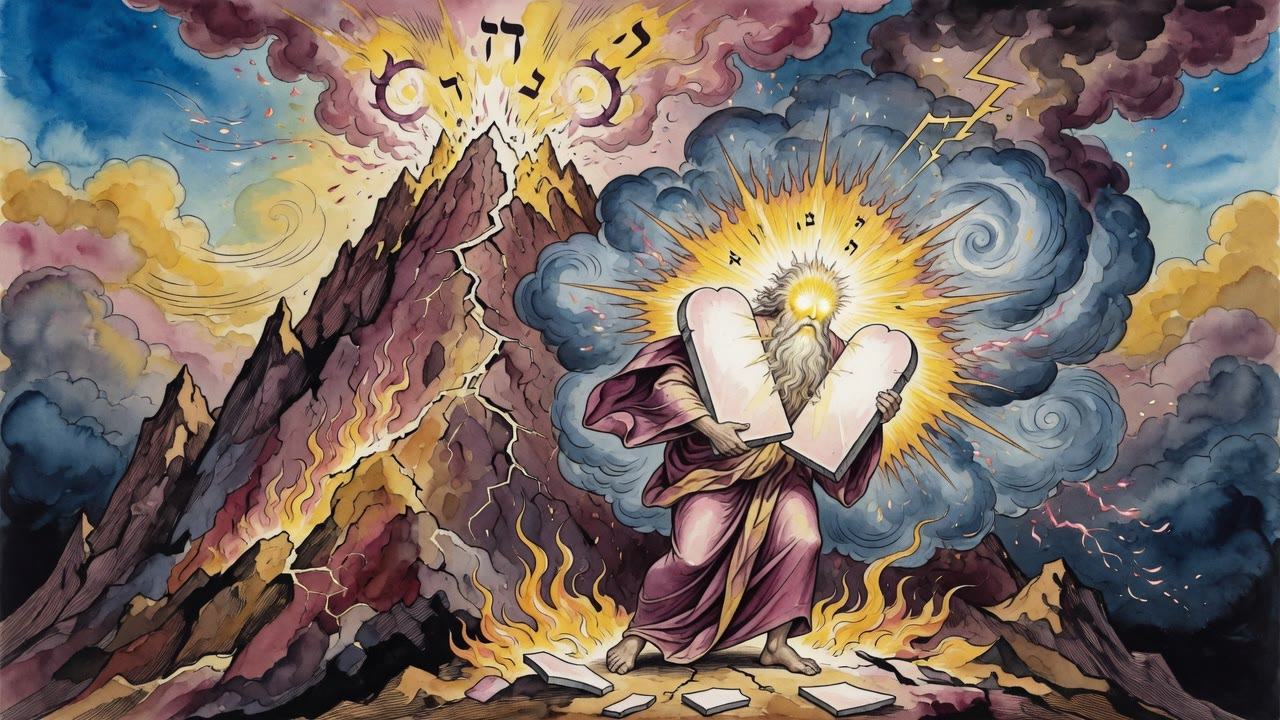
He threw the tablets at the ground. They broke.

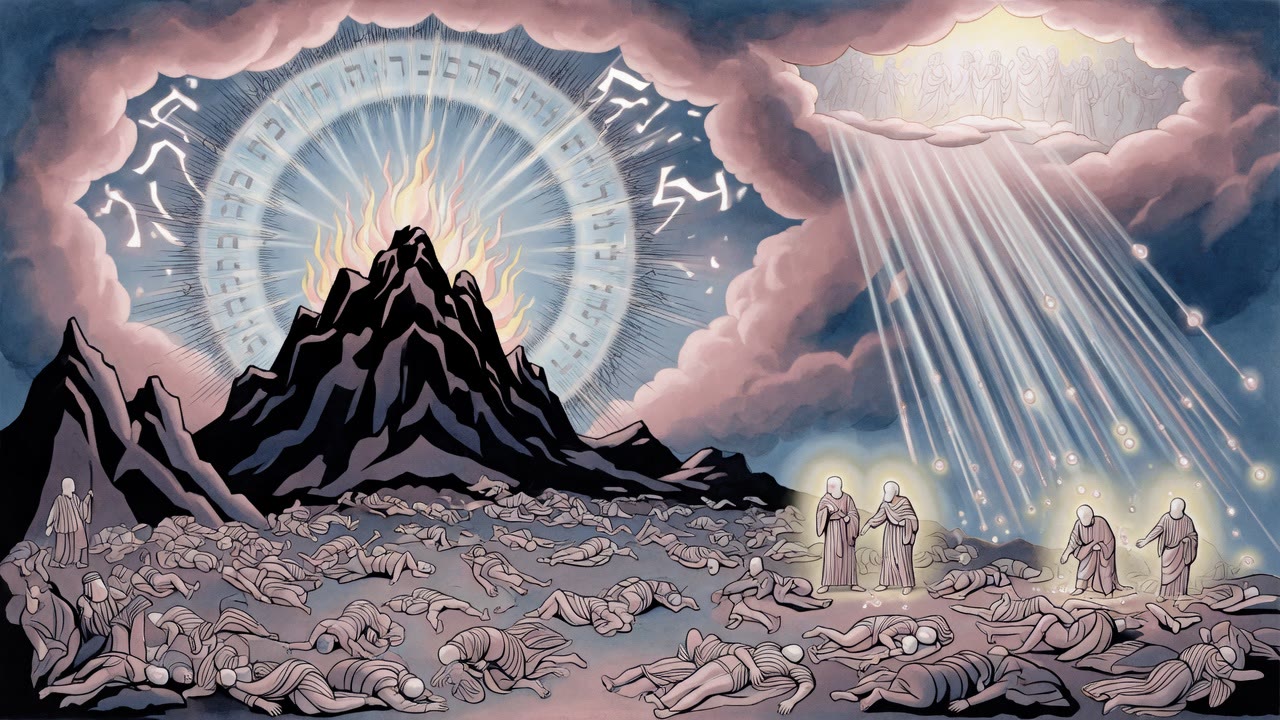
The letters did not break with them. They came up off the stone and flew, the way Proverbs says a man's wealth sprouts wings and goes up to heaven the moment he takes his eyes off it, and they went home. What stayed in the dust was rock.

Ashes for an Answer

When they came at last to the portion of the red heifer, God went back to the thing He had left lying between them.

"That matter I gave you, speak to the priests, and you said to Me, how are they cleansed, and I did not answer you. This is their cleansing. They shall take for the unclean some of the ashes of the burning of the purification, and put running water on them in a vessel."

Moses stood with that in front of him. A cow burned to powder. Ash and water on a man who has touched a corpse.

"Master of the universe. Is that purification?"

"It is a statute," God said. "I issued a decree, and no creature born can get to the bottom of My decree."

Do Not Speak to Me About This Again

At the end of his life Moses stood on the wrong side of the Jordan and asked to cross. He asked in the morning and he asked again, and he kept asking, laying out every reason a man could lay out.

Rabbi Berekhya said in the name of Rabbi Simon that the line about the fool who multiplies words was written for that hour.

"I wrote of you that you are wise," God said to him. "And here you stand, talking on and on, and in this you are not wise. Do not speak to Me again about this matter."

He had asked one question at the mountain and waited years for an answer that turned out to be a wall. Now he asked for a country and got a door shutting.

No One Remembered the Poor Man

The verse about the small city does not end well. The poor wise man saved the place, and afterward nobody remembered him.

You did not remember him, the Holy One said. I remember him. Remember the Torah of Moses My servant.

The first letters had gone back up. The second stones were cut and carried down and kept. The man who drew the line in the dirt was buried where nobody could find the grave, on the wrong side of a river he never crossed, and the only one still saying his name out loud was the King who had refused him.


← All myths
From the tradition

Sources

4 sources

The texts behind this telling. Some cards carry a translation of the source; others are our own retelling of it, and each card says which. Every card links out to the original.

Kohelet Rabbah 1:5Kohelet Rabbah

Retold in our words. Read the original at the link below.The Sefaria Midrash Rabbah, 2022 · CC-BY

The ancient rabbis certainly did. They wrestled with the complexities of Jewish law and tradition, seeking not just to follow the rules, but to truly understand them. And in the process, they offered some incredible insights.

Take Moses, for example. Kohelet Rabbah, a fascinating collection of rabbinic interpretations on the Book of Ecclesiastes, sees him as the ultimate wise man. It references (Proverbs 21:22), "A wise man ascended against the city of the mighty," interpreting it as an allusion to Moses ascending to heaven to receive the Torah. Moses, single-handedly scaling the celestial heights to wrestle divine wisdom from the angels!

Wisdom isn't just about receiving the Torah; it’s about explaining it, making it accessible. Kohelet Rabbah continues, “And who knows the meaning of a matter – as he explained the Torah to Israel."

Rabbi Mana of Shaab, quoting Rabbi Yehoshua ben Levi, adds another layer. He says that for every matter God told Moses, He also explained its tumah (ritual impurity) and taharah (ritual purity) – its ritual impurity and purity. Think of it: a complete understanding of not just what is unclean, but also how to become clean again. What a profound gift!

But here's where things get really interesting, and where we see the limits of even Moses's understanding. When Moses reached the portion of the Torah dealing with priests and their potential exposure to impurity from a corpse (found in Leviticus 21:1), he asked God a very practical question: "Master of the universe, but if they do become impure, in what manner is their purification?"

And God... remained silent.

The greatest prophet, the lawgiver, the one who spoke to God face to face... stumped. He couldn't understand how a priest could become ritually pure after being in contact with death.

Then comes the portion of the parah adumah, the red heifer (Numbers, chapter 19). This is a particularly strange ritual. The ashes of a red heifer, burned in a specific way, are used to purify someone who has come into contact with a corpse. Ashes, a symbol of death, used for purification?

God then reveals to Moses, "That statement that I said to you: “Say to the priests,” and you said to Me: ‘In what manner is their purification,’ and I did not respond to you; this is their purification: “They shall take for the impure from the ashes of the burning of the purification." In other words, the red heifer is the answer.

But Moses still doesn't get it. “Master of the universe, is that purification?” he asks, incredulous.

God's response is powerful: “It is a chukah, a statute, and I issued a decree, and no creature can comprehend My decree,” as it is written: “This is the statute of the Torah” (Numbers 19:2).

A chukah. A law that defies logic. A divine decree that we, with our limited human understanding, cannot fully grasp. The Zohar, a central text of Kabbalah, delves deeply into the mysteries surrounding the red heifer, seeing it as a profound secret of creation and spiritual renewal.

So, what does this all mean? Is it frustrating that even Moses couldn't understand everything? Or is there something liberating in the idea that some things are simply beyond our comprehension? Perhaps the point isn't to understand everything, but to accept that there are mysteries in the universe, and to trust in a wisdom greater than our own. Maybe, just maybe, that's a kind of wisdom in itself.

Full source
Mekhilta Tractate Amalek 1:10Mekhilta DeRabbi Yishmael

Retold in our words. Read the original at the link below.Mechilta, translated by Rabbi Shraga Silverstein · CC-BY

When Moses shattered the two tablets of the covenant at the foot of Mount Sinai, something extraordinary happened to the sacred letters engraved upon them. According to the Mekhilta, the letters did not simply fall to the ground with the broken stone. They flew upward, returning to Heaven from where they had come.

The rabbis found a proof-text for this remarkable tradition in (Proverbs 23:5): "If you turn your eyes from it, it is gone... and flies to Heaven." The verse speaks of wealth that sprouts wings and vanishes, but the sages read it as a description of Torah itself. The moment Moses averted his gaze from the tablets, the moment he let go and hurled them downward, the holy letters detached from the stone and ascended back to their divine source.

This teaching carries a profound implication. The tablets were not merely stone with writing carved into them. The letters were living things, spiritual entities that had descended from Heaven to dwell in physical form. When their vessel was destroyed, they returned home. The stone was just a container. The real Torah was the letters themselves.

The Mekhilta places this tradition alongside another loss Israel suffered that day: the wealth of Egypt, which they had carried out during the Exodus. Just as material riches can vanish in an instant, so too can spiritual riches. Both the writ of Heaven and the gold of Egypt proved impermanent in the hands of a people who had turned to worship the Golden Calf.

Full source
Kohelet Rabbah 9:14Kohelet Rabbah

Retold in our words. Read the original at the link below.The Sefaria Midrash Rabbah, 2022 · CC-BY

Kohelet Rabbah looks at a small city with few men and sees Sinai, with Moses standing against everything that threatens Torah.

The passage starts with an allegory, a little parable nestled within the larger text. It speaks of a "small city, and few men in it." Who could this be? Well, the Rabbis tell us it's Sinai. Yes, that Sinai. The very mountain where revelation took place.

"And a great king came against it," the story continues. Now, who could that be? No earthly ruler, of course! This, God Himself. And what does this King do? He "surrounded it and built a great siege upon it. But the commentary gives us a clue. This siege, this overwhelming force, represents the sheer weight of mitzvot, the commandments. All 248 positive commandments and 365 negative commandments that make up Jewish law. That's a lot Like a siege on the senses, maybe?

Here's where the story gets really interesting. "He found in it a poor, wise man." Aha! Our hero emerges. And who is this unlikely champion? Moses himself!

The text references (Exodus 19:13), "No hand shall touch it.." referring to the boundary set around Mount Sinai. Moses, in his wisdom, understood the need for boundaries, for limits. He grasped the awesome power of the moment and guided the people, protecting them from being overwhelmed by the Divine Presence. As it says in (Exodus 19:12), "Anyone who touches the mountain shall be put to death." Moses saved the city – saved the Israelites – through his wisdom.

So, Moses saved the day. End of story. Not quite.

"But no one remembered…" the text laments. After all that Moses did, after his pivotal role in the revelation, the text suggests he was…forgotten.

But don't despair! The Holy One, blessed be He, does remember. The passage concludes with a powerful reminder, quoting (Malachi 3:22): "Remember the Torah of Moses, My servant…"

What's the takeaway here? The quiet, wise individuals who guide us, who protect us, who help us work through the complexities of life. Or maybe it’s a reminder that even when we forget, God remembers. God sees. God appreciates. And perhaps, that's the most comforting thought of all.

Full source
Kohelet Rabbah 10:14Kohelet Rabbah

Retold in our words. Read the original at the link below.The Sefaria Midrash Rabbah, 2022 · CC-BY

Even Moses, the great lawgiver himself, apparently had that problem!

The book of Ecclesiastes, or Kohelet, a book known for its philosophical musings, contains the line, "The fool will increase words; man does not know what will be, and what will be after him, who can tell him?” (Ecclesiastes 10:14). It seems straightforward enough. Don't be a chatterbox. But as is often the case with Jewish texts, there's a deeper layer waiting to be uncovered.

Kohelet Rabbah, a midrashic (rabbinic interpretive commentary) commentary on Ecclesiastes, takes this verse in a surprising direction. Midrash, from the Hebrew root darash meaning “to seek” or “to inquire,” is a method of interpreting biblical texts by exploring their underlying meanings. In this particular midrash, Rabbi Berekhya, quoting Rabbi Simon, uses this verse to comment on none other than Moses.

God says to Moses, "I wrote in your regard that you are wise, but you are standing and speaking extensively, and you are not wise, 'do not continue to speak to Me further about this matter'" (Deuteronomy 3:26).

Ouch.

Now, why would God say this to Moses? What was he going on about? The context here is Moses pleading with God to let him enter the Promised Land. He's begging, arguing, laying out all the reasons why he deserves to go. And, according to this midrash, he's overdoing it.

We tend to think of Moses as this towering figure, the ultimate prophet. But here, he's portrayed as… well, a bit of a windbag.

But perhaps there's more to it than just a simple rebuke. Maybe the message is about knowing when to stop, when to trust in God's plan, even when we don't understand it. Moses, despite his wisdom, was struggling to accept God's decree. His excessive words weren't a sign of foolishness, but of his very human desire to control his own destiny.

So, the next time you find yourself talking a mile a minute, maybe take a breath and remember Moses. Sometimes, less is more. Sometimes, wisdom lies not in the quantity of our words, but in the quality of our trust.

Full source