5 min read

Gehinnom Feared Jacob Would Be Buried in Egypt

Jacob refused an Egyptian grave because death still had geography. His funeral carried merit, danger, and old vows back to Canaan.

Curated by Arthur · Told by Maggid ·
Table of Contents
  1. Egypt Was the Wrong Ground
  2. Egypt Mourned Its Lost Protection
  3. The Funeral Filled the Road
  4. Machpelah Still Had Teeth
  5. Beth-El's Vow Still Burned

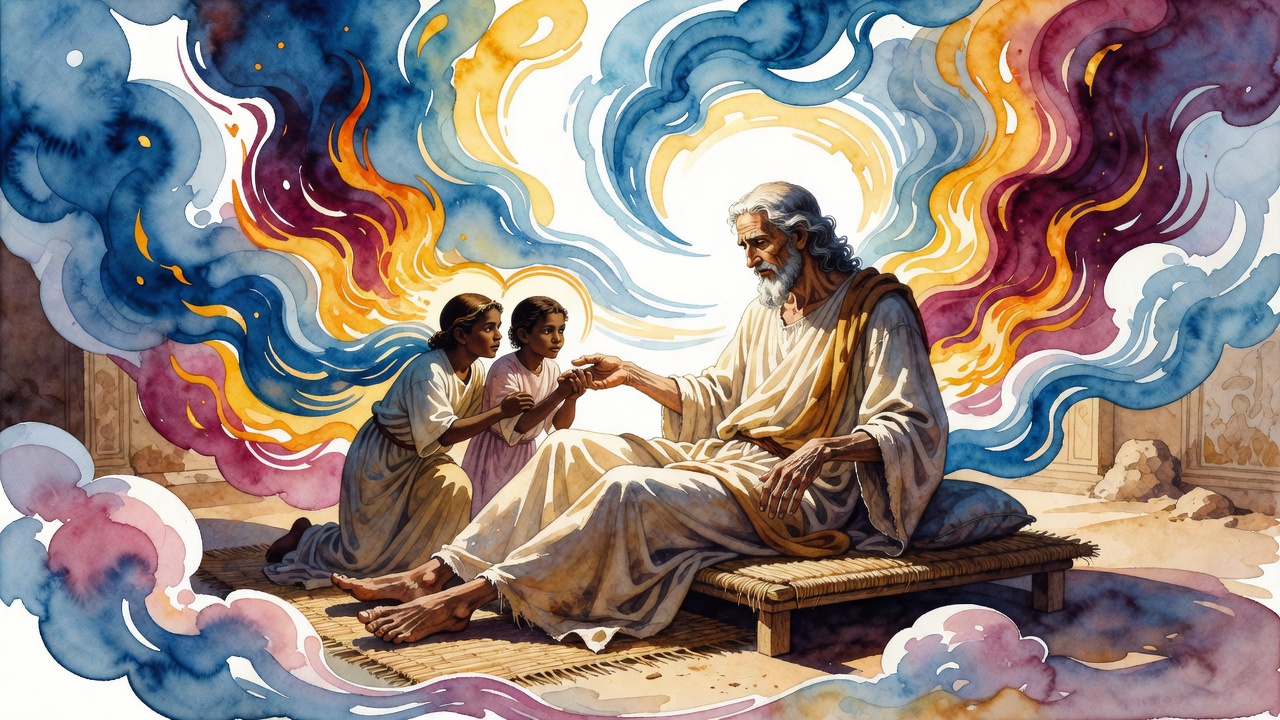
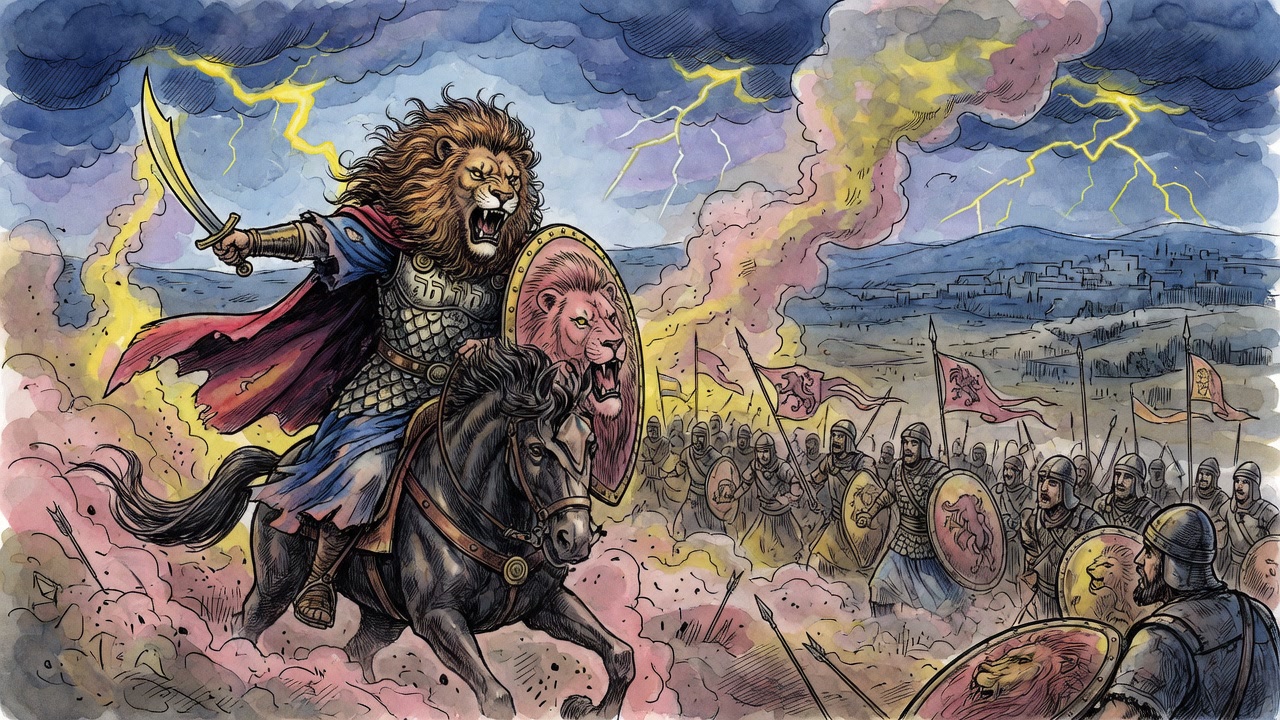
Jacob made Joseph swear before the embalming spices, before the Egyptian mourning, before kings mistook a funeral for an army.
Do not bury me in Egypt.

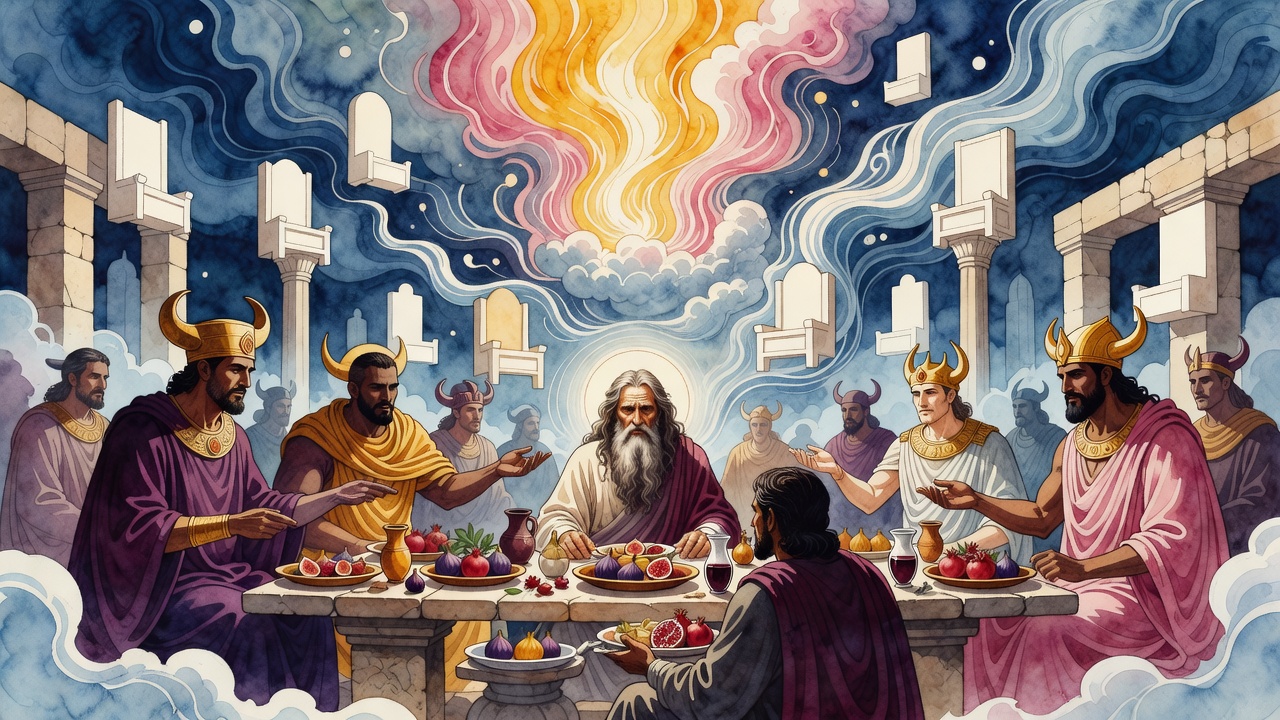
It was not sentiment. Jacob had lived long enough to know that soil can teach a lie. Leave his bones in Egypt, and his children might look at the grave and decide the land of their exile had become holy because their father rested there.

Jacob would not let Egypt borrow his sanctity.

Egypt Was the Wrong Ground

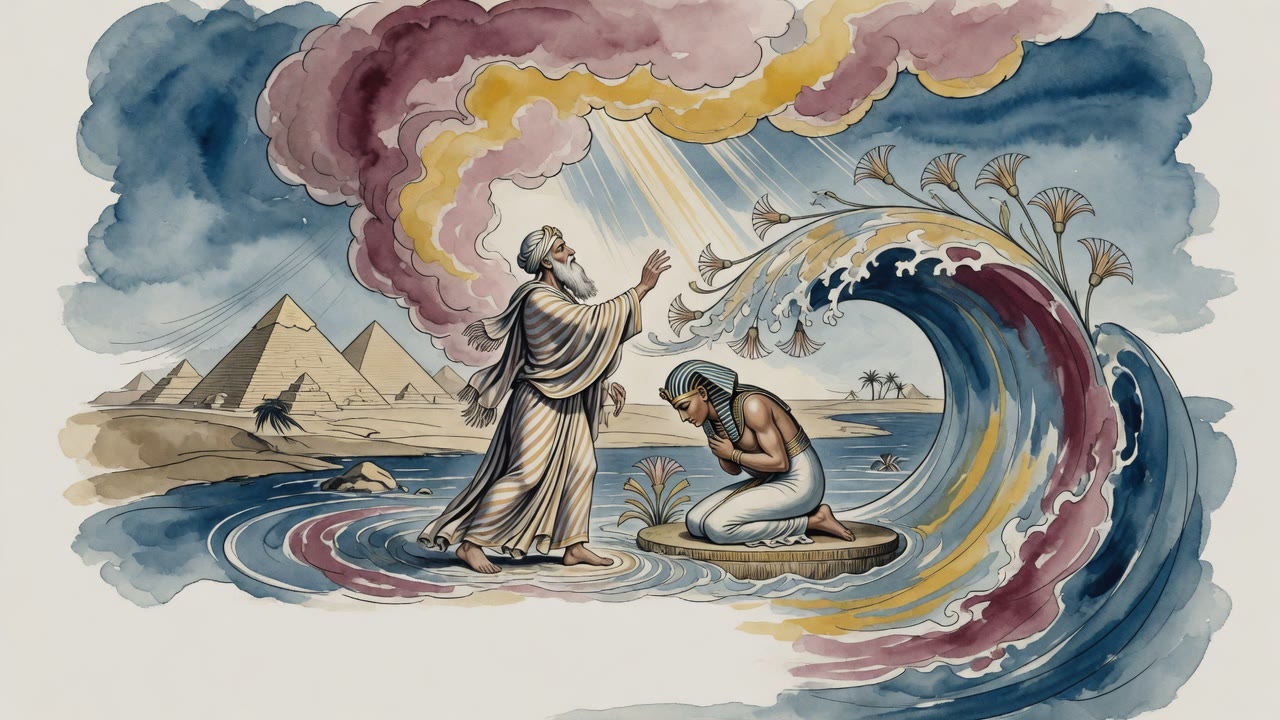
He feared impurity. He feared the crawling things that would one day overrun the land. He feared the plagues that were destined to strike Egypt and the desperate prayers Egyptians might bring to his tomb when their own gods failed them.

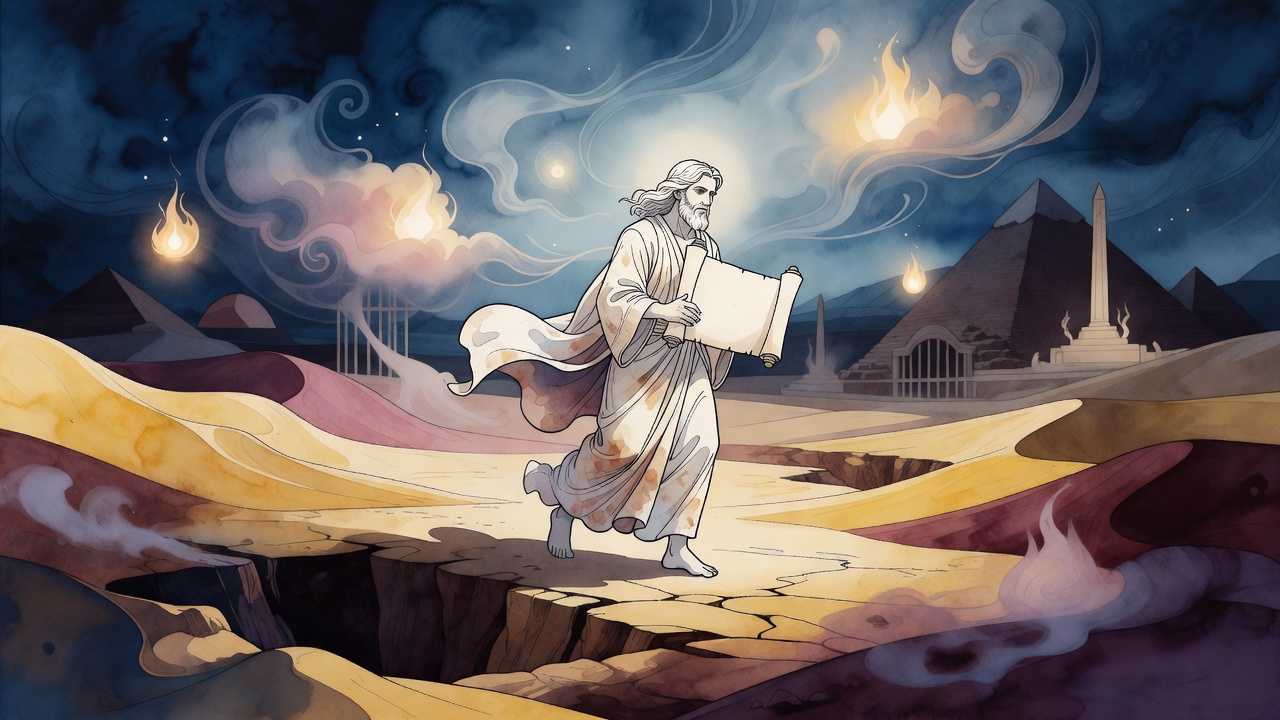
Most of all, he feared the passage of the dead. The righteous buried outside the Land of Israel would have to roll through the earth's hidden channels at the resurrection. Jacob had crossed too many roads in life to choose pain in death. He wanted to begin the final rising from the ground that had been promised to his fathers.

So he put the oath into Joseph's mouth.

Egypt Mourned Its Lost Protection

When Jacob died, Egypt mourned him for seventy days. The grief was not only courtesy to Joseph. The Egyptians understood what had departed. The famine had been decreed for forty-two years, but Jacob's merit had shortened it to two. His presence had stood between Egypt and forty more years of hunger.

Joseph ordered the physicians to embalm his father. Love moved the order, but heaven heard a flaw inside it. Could God not preserve the body of a righteous man without Egyptian technique? Joseph's care became a small failure of trust, and the tradition made him pay with years of life.

The Egyptians, strangely, received merit for their honor.

The Funeral Filled the Road

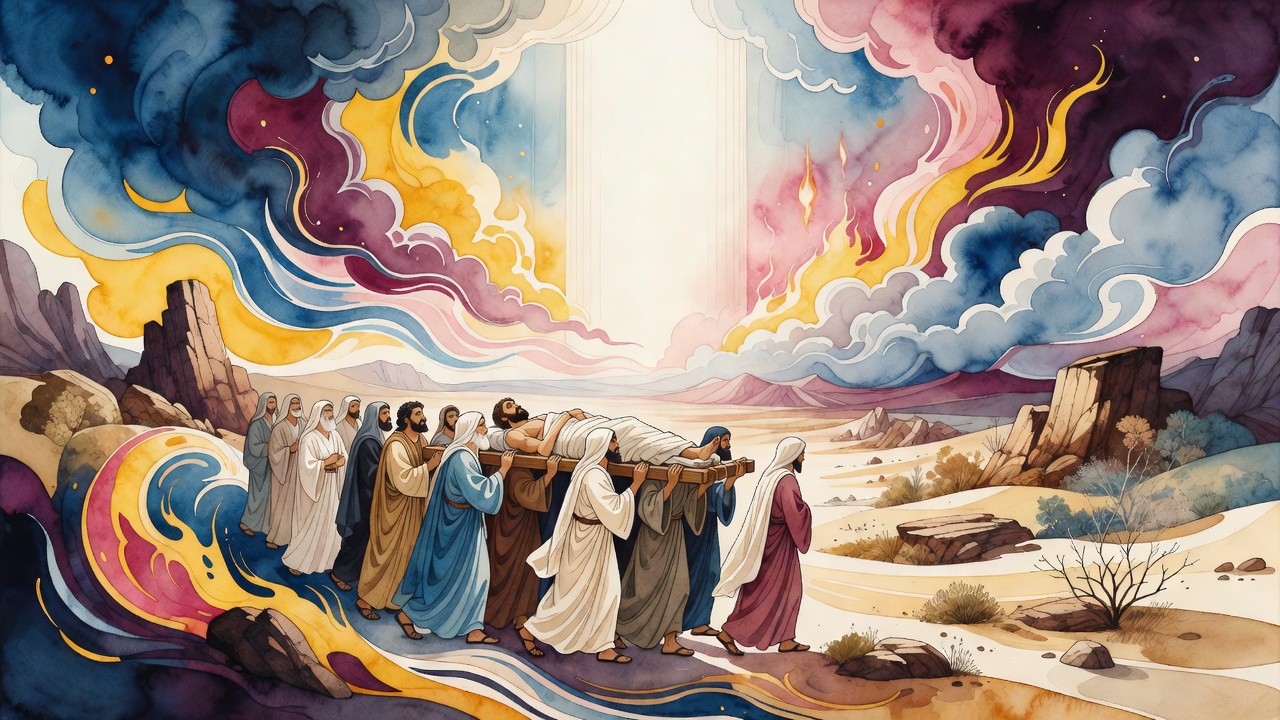
Jacob's body rode north on a couch of ivory, overlaid with gold, studded with gems, wrapped in byssus and purple. His sons walked in formation. Tribal banners rose around the bier. Pharaoh's elders came. The great men of Egypt came. The road to Canaan filled with the sound of mourning and power moving together.

Canaanite kings saw the procession from a distance and panicked. They thought an army had entered the land. When they learned it was Jacob's funeral, they bowed instead.

A dead patriarch made nations lower their heads.

Machpelah Still Had Teeth

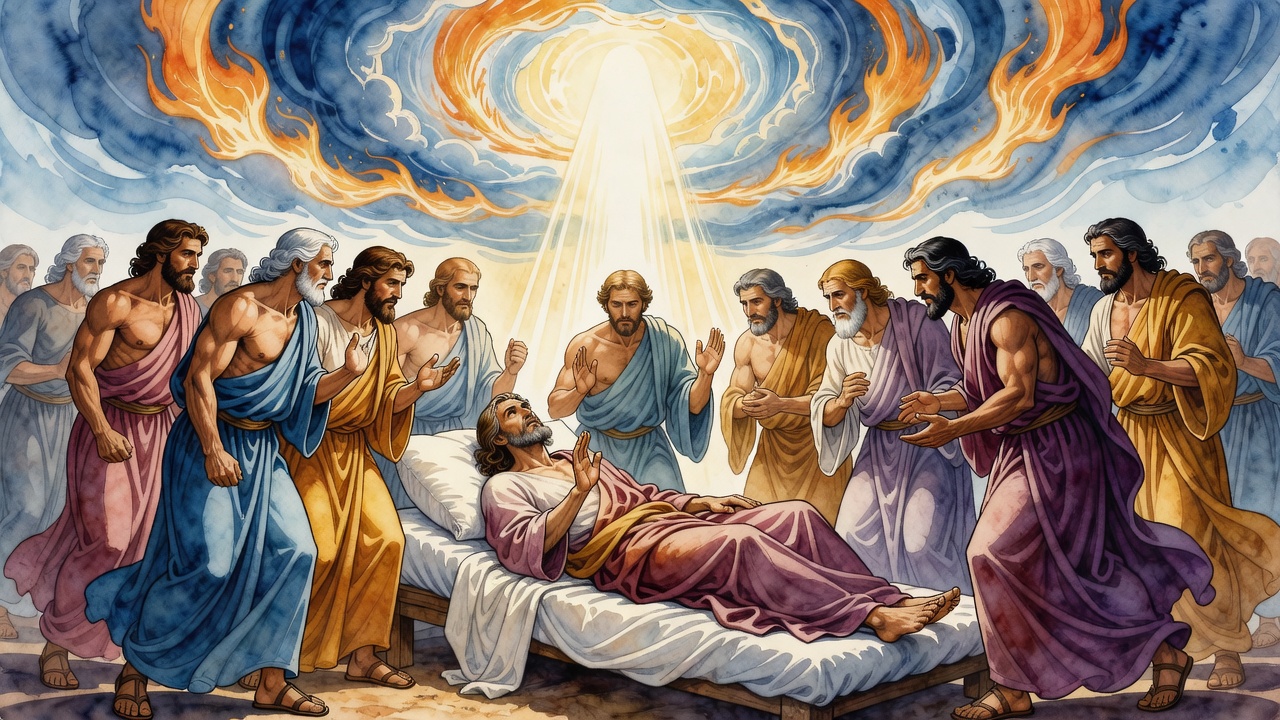
At the cave of Machpelah, the burial stalled. Esau appeared and claimed the plot. The old rivalry had followed Jacob all the way to the grave. Arguments rose over portions, rights, memory, and inheritance while Jacob's body waited above the earth.

Hushim son of Dan could not hear the words. He saw only the insult. His grandfather lay unburied while men debated ownership at the mouth of the cave. Hushim lifted a weapon and ended the delay. Esau's head rolled into the cave. His body stayed outside.

Even at burial, Jacob's life drew old conflicts to their final shape.

The delay at Machpelah made the oath to Joseph sharper. Jacob had not asked for a decorative burial. He had asked to be carried out before Egypt could claim him, before sons and kings and old enemies could turn his body into an argument. Every hour above ground was a violation pressing against the promise Joseph had made at the bed.

Hushim's blow was brutal, but the funeral had already become brutal. A patriarch's honor was caught between property claims and family wounds. The cave opened only after blood answered blood.

Beth-El's Vow Still Burned

Another old debt hovered behind the funeral. Long before Egypt, Jacob had vowed at Beth-El and delayed too long in fulfilling it. The delay brought consequences: Dinah's suffering, Shechem's blood, idols hidden in the household. Vows do not rot quietly. They leak danger into the lives around them.

Jacob eventually rose, destroyed the idols, buried them under the oak, and returned to the place of his vow. By the time his sons carried him to Machpelah, the account had been faced. Gehinnom had reason to know his name, but not as prey.

Jacob had chosen the right ground, kept the final oath, and made even death carry him home.

By the time the cave received him, Jacob's body had crossed the same boundary his descendants would later cross in reverse. He left Egypt first as a corpse so Israel could one day leave it alive.


← All myths
From the tradition

Sources

4 sources

The texts this telling draws on, in full. Open a card to read inline, or expand it for a wider, quieter read.

Legends of the Jews 1:359Legends of the Jews

The story of Jacob's burial gives us a fascinating glimpse into those questions.

Jacob, also known as Israel, had very specific ideas about where he didn't want to be buried: Egypt. It wasn't just a matter of preference; it was a deeply considered decision based on his understanding of holiness, destiny, and the relationship between his family and God.

Why Egypt? Well, for starters, Jacob was concerned about purity. He believed that the land of Egypt would eventually be overrun with, shall we say, unpleasant creatures. The thought of his body being exposed to such impurity was naturally distasteful.

There was more to it than that. Jacob worried about the spiritual implications. He feared that if he were buried in Egypt, his descendants might mistakenly believe that Egypt was a holy land. "If our father Jacob is buried there," they might reason, "then it must be a special place!" And as Legends of the Jews, that wonderful compilation of midrashic (rabbinic interpretive commentary) and aggadic traditions by Louis Ginzberg, retells it, Jacob wanted to ensure his descendants did not choose Egypt as a permanent home.

And then there's the tricky question of divine justice. Jacob knew that Egypt was destined to suffer the ten plagues. What if the Egyptians, in their desperation, turned to his grave and begged him to intercede with God? the verse says, Jacob feared that if he prayed for the Egyptians, he would be advocating for the Lord's enemies. But if he refused to pray, God's name would be profaned among the nations, who might say, "Jacob is a useless righteous one!" It was a real catch-22.

Jacob was also concerned that God might see him, the "scattered sheep" of Israel, as a kind of sacrifice to appease the divine anger toward the Egyptians and remit their punishment. A heavy burden for one man to bear. And perhaps most strikingly, Jacob had a profound understanding of human nature, specifically his own people's potential for misdirected devotion. He feared that his grave might become an object of idolatrous veneration. He knew the temptation to turn to physical objects for spiritual solace, and he didn't want to become the focus of misplaced worship. As we find in the Talmud (Megillah 25b), the punishment for worshiping idols is the same as the punishment for the idolaters themselves!

So, what does this all mean? Jacob's request wasn't just about a burial plot. It was about maintaining the purity of his lineage, ensuring the proper relationship between his descendants and God, and preventing the rise of idolatry. It’s a story that reminds us to be mindful of the places we choose to call home, the objects we choose to venerate, and the legacy we leave behind. What places and objects do we imbue with holiness, and why? And what responsibility do we have to guide future generations toward a true understanding of the sacred?

Full source
Legends of the Jews 1:417Legends of the Jews

The Egyptians, according to Legends of the Jews, actually mourned Jacob. Why? Because they believed his presence had lessened the severity of the famine. Instead of lasting the divinely decreed forty-two years, it only lasted two, thanks to Jacob's merit!

Joseph, Jacob's son and a powerful figure in Egypt, ordered the physicians to embalm his father's body. Now, it first appears that's a sign of respect. But in the story, this act displeased God. The text quotes God as saying, "Have I not the power to preserve the corpse of this pious man from corruption? Was it not I that spoke the reassuring words, Fear not the worm, O Jacob, thou dead Israel?" In other words, Joseph's embalming showed a lack of faith, a lack of trust in God's ability to protect His righteous servant. The reward that Joseph receives for this lack of faith is that he is the first of Jacob's sons to die.

It's a stark reminder of the delicate balance between human action and divine will.

What about the Egyptians? They spent forty days embalming the corpse and preparing it for burial. This act of veneration, surprisingly, was rewarded. the verse says, God gave the Ninevites, whose king was the Pharaoh of Egypt, a forty-day respite before destroying their city, as a merit for the Egyptians' treatment of Jacob's body.

The story doesn’t end there. The Egyptians also mourned Jacob for seventy days. And for this mourning, they were recompensed during the time of Ahasuerus (as mentioned in the Book of Esther). From the thirteenth of Nisan (the first month of the Jewish calendar) until the twenty-third of Siwan (the third month), they were permitted to enjoy absolute power over the Jews. This refers to the period when Haman's decree ordering the extermination of the Jews was in effect, before Mordecai intervened and the decree was overturned.

What's the takeaway? It's not just about individual piety, but also about how we treat the righteous, even in death. The Egyptians, despite not being part of the covenant, were rewarded for showing respect. Their reward was being given authority over the Jews, during the time between Haman's decree and Mordecai's recall of it.

As we find in Midrash Rabbah, God measures reward and punishment with incredible precision. Every action, every intention, has a consequence, rippling outward in ways we can't always foresee. This story reminds us to be mindful of our actions, to trust in the divine, and to always, always show respect for those who have lived righteous lives.

Full source
Legends of the Jews 1:414Legends of the Jews

Sometimes, the stories we tell about those moments, those final farewells, reveal even more about the living than they do about the dead.

Take, for instance, the story of Jacob's funeral. Think about the weight of that moment. Jacob, or Israel as he was also known, is gone. The patriarch, the father of the twelve tribes, the man who wrestled with angels… his life, a tradition of hardship and triumph, has come to an end.

In Legends of the Jews, that monumental work by Louis Ginzberg that compiles so many of our traditions, Joseph doesn't just bury his father quietly. Oh no. This is a statement. Joseph commands that Jacob's body be placed on a lavish couch. Not just any couch,. The scene is opulent, almost overwhelming. Fragrant wine is poured out, aromatic spices are burned. It's a sensory explosion designed to honor the enormity of Jacob's life.

Who are the mourners? Not just family. Ginzberg tells us that heroes from the house of Esau (Jacob's brother!), princes from the family of Ishmael (Abraham’s son!), and, of course, the mighty Judah, stand guard around Jacob’s bier. Can you picture it? Former rivals, distant relatives, all united in their recognition of Jacob’s significance.

But it's Judah's words that really strike me. He proposes planting a cedar tree at the head of Jacob's grave. But not just any cedar tree. This tree, Judah says, will be massive. Its top will reach the heavens, its branches will shade the entire earth, and its roots will plunge down into the abyss. Now, what's that all about?

Judah explains: "For from him are sprung twelve tribes, and from him will arise kings and rulers, chapters of priests prepared to perform the service of the sacrifices, and companies of Levites ready to sing psalms and play upon sweet instruments."

The tree, in this context, isn't just a tree. It's a metaphor. It represents Jacob's legacy, his enduring influence on the future of the Jewish people. A lineage that stretches from the earthly realm to the divine. Kings, priests, Levites – all stemming from this one man. It’s a potent symbol of continuity and hope.

So, what does this all mean for us? It’s more than just a description of a fancy funeral. It's about how we remember, how we honor, and how we understand the legacies of those who came before us. Jacob's funeral, as described in Legends of the Jews, is a reminder that our actions, our families, our stories… they ripple outwards, impacting generations to come. Just like that cedar tree, planted with intention, reaching for the sky. What kind of tree are we planting with our lives?

Full source
Legends of the Jews 6:255Legends of the Jews

The sages tell us that Jacob made a vow at Beth-el (the House of God) long ago. But he didn't fulfill it promptly. And according to the legends, this had dire repercussions. The rabbis don't mince words: failing to fulfill a vow in good time can lead to three grave sins: idolatry, unchastity, and bloodshed.

The text from Legends of the Jews draws a direct line: Jacob’s delay in fulfilling his vow led to the dishonoring of his daughter Dinah, the violent slaughter of the men of Shechem by his sons, and the family holding onto idols taken as spoils. Big stuff. We find this idea echoed and elaborated upon in various Midrashic (rabbinic interpretive commentary) sources. The idea is clear: vows are serious business.

So, what did Jacob do? After the horrific events in Shechem, when Jacob prostrated himself before God, he received a direct command: "Arise, go to Beth-el, and fulfill the vow that you vowed there." It was time to make things right.

Before heading to this holy place, Jacob took decisive action. He gathered all the idols his sons had acquired, as well as the teraphim (household idols) that Rachel had famously taken from her father, Laban. And he destroyed them.

The text paints a powerful image: Jacob shatters the idols into pieces and buries them under an oak tree on Mount Gerizim. And here's where it gets even more dramatic: he uproots the tree with one hand, conceals the idol fragments in the hollow left in the earth, and replants the oak with the other hand! That's quite a visual, isn't it? A complete and total removal of idolatry. A forceful act of purification.

What does this story tell us? Perhaps it's a reminder of the importance of keeping our promises, not just to God, but to ourselves and to others. Maybe it's a lesson about the lingering consequences of our actions, and the necessity of confronting our mistakes head-on. And maybe, just maybe, it's about the power of repentance and the possibility of renewal, even after terrible events. Because even after the violence and the idols, Jacob, with his own two hands, planted a new seed.

Full source