God Counted Levi for the Redeemers They Raise
A Roman matron asked what God does after creation. He arranges marriages so redeemers can be born. Then He counted Levi with love.
Table of Contents
A Roman matron cornered Rabbi Yose ben Halafta with a question that sounded like mockery and was not.
 Click for full size
"In how many days did the Holy One make the world?"
"Six," he said, as Scripture says.
She leaned in. "And since that work was finished, what does He do with His days?"
"He sits and arranges marriages," the Rabbi answered. "This one shall marry that one."
She may have smiled. He did not. The whole rescue of Israel, he knew, hung on a single such match.
Amram and Jochebed Under Heaven's Hand
Heaven drew Amram and Jochebed together, two solitary souls set into one home, so that from their bed a redeemer might rise for a people drowning in clay and bricks, and high priests might stand before the Holy One in generations to come. From that union came Moses, and the line of the priesthood.
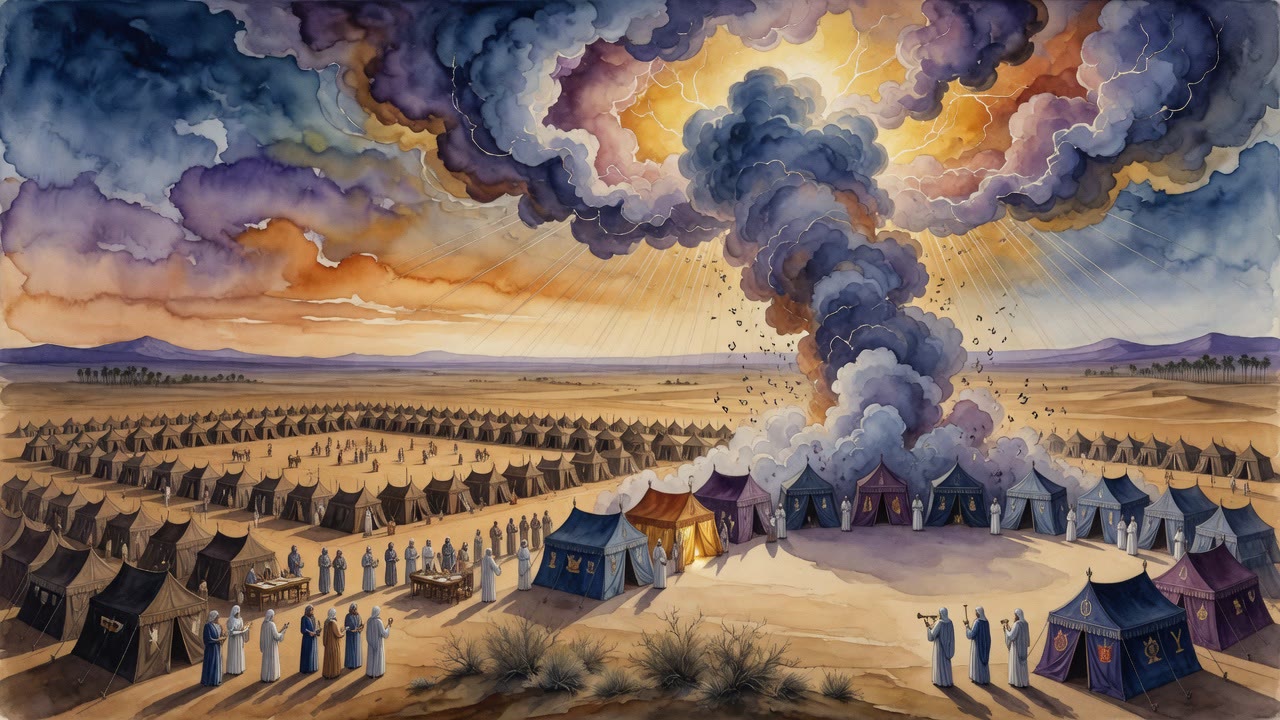
So when the command fell, "Enroll the children of Levi," the sages heard more than administration. They heard God settling the solitary in a home, then lingering with love over the family that had given Israel its rescuer. The counting of Levi was not a cold census. It was attention. It was the Holy One numbering the tribe practiced in raising redeemers.
Sixty Valiant Men Around the Bed
In the Song of Songs the midrash hears a bed, mitato, and hears tribes, matotav, in the same sound. Sixty valiant men surround it. Who are they? Not only muscle.
Rabbi Ze'eira and Rabbi Yehuda, quoting Shmuel, say the valiant ones are Torah scholars who taught the priests the fine work of slaughter and the laws of collecting and sprinkling blood. Rabbi Yitzchak, citing Rabbi Ami, adds the inspectors of blemishes in sacrificial animals, paid from the chamber's collection, the half-shekel fund of ordinary people. Judges who handled robbery cases took wages from the same chest. Women who wove the parochet, the curtain before the Holy of Holies, were paid from it as well, depending on which sage you ask.
Levi's count opens a network. Redeemers are born in bedrooms. Sanctuary work is held up by teachers, inspectors, judges, and weavers whose names the parade never chants.
The Kehatites and the Princes
When the census reached the sons of Kehat, the weight changed. These were the carriers of the holiest furniture, the ark and the vessels that could kill a careless hand. The princes of Israel appear in the numbering not as spectators but as those who organize, donate, and stand surety for the work of transport through the wilderness.
Every board and socket of the earlier Tabernacle story returns here as human assignment. Who lifts. Who covers. Who walks first when the cloud rises. The tribe God counted for love is the tribe that will break its shoulders under sacred wood and gold so the camp can move without the Presence being left behind in the dust.
Love That Looks Like a List
From the outside, a census is a list. Names, ages, clans, totals. From inside the midrash, the list is a caress. God who arranges marriages so Moses can be born is the God who later says: number the tribe that produced him. Do not skip them because they camp differently. Do not leave the carriers of the ark uncounted as if they were furniture themselves.
The Roman matron asked what God does all day. The answer was matches and, by extension, the long patience that turns a match into a redeemer and a redeemer into a counted people who keep a sanctuary alive with half-shekels and hidden labor.
In the wilderness camp the Levites would pitch closer to the mishkan (the Tabernacle, Israel's portable sanctuary) than the other tribes, a living fence around holiness. The census that looked like love on one day became duty on the next: carry, guard, teach, inspect, weave, judge. Redeemers are raised in houses, then the houses are enrolled, then the enrolled become the quiet machinery of a sanctuary that cannot run on charisma alone.
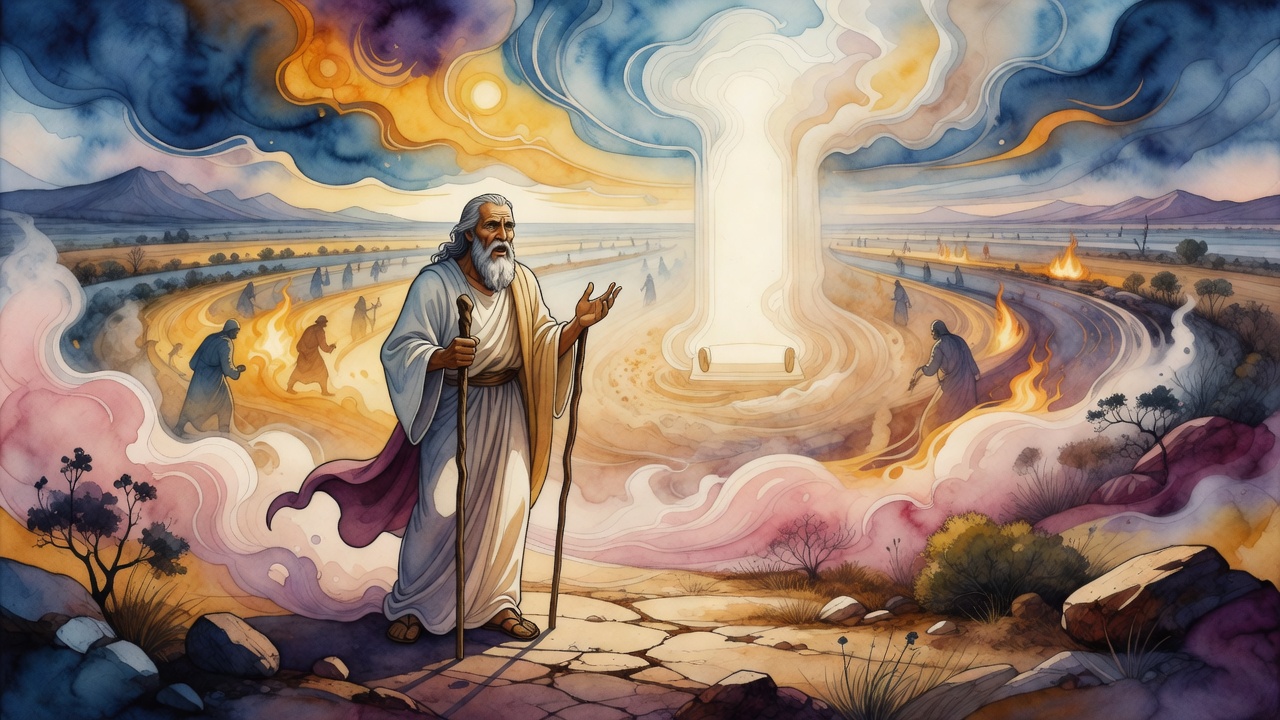
The Roman matron wanted a God who finishes work and retires. Rabbi Yose gave her a God who keeps arranging lives so that, years later, a basket on the Nile can hold a baby the world needs. When that baby's tribe is counted, heaven is still in the same business: noticing the family lines that keep rescue possible. Half-shekels from farmers pay the blemish-inspector. A scholar teaches a priest how not to waste blood. A woman knots the last thread of the curtain. Levi's number includes all of them, even when the scroll only prints clan names.
Count them, God said, because redeemers do not grow from unwatched soil.
← All myths