Why God Counts Israel Like Heaps of Wheat
A love-song calls Israel a heap of wheat hedged with lilies, and the sages saw the Sanhedrin as the navel at the center of a people Heaven keeps counting.
Table of Contents
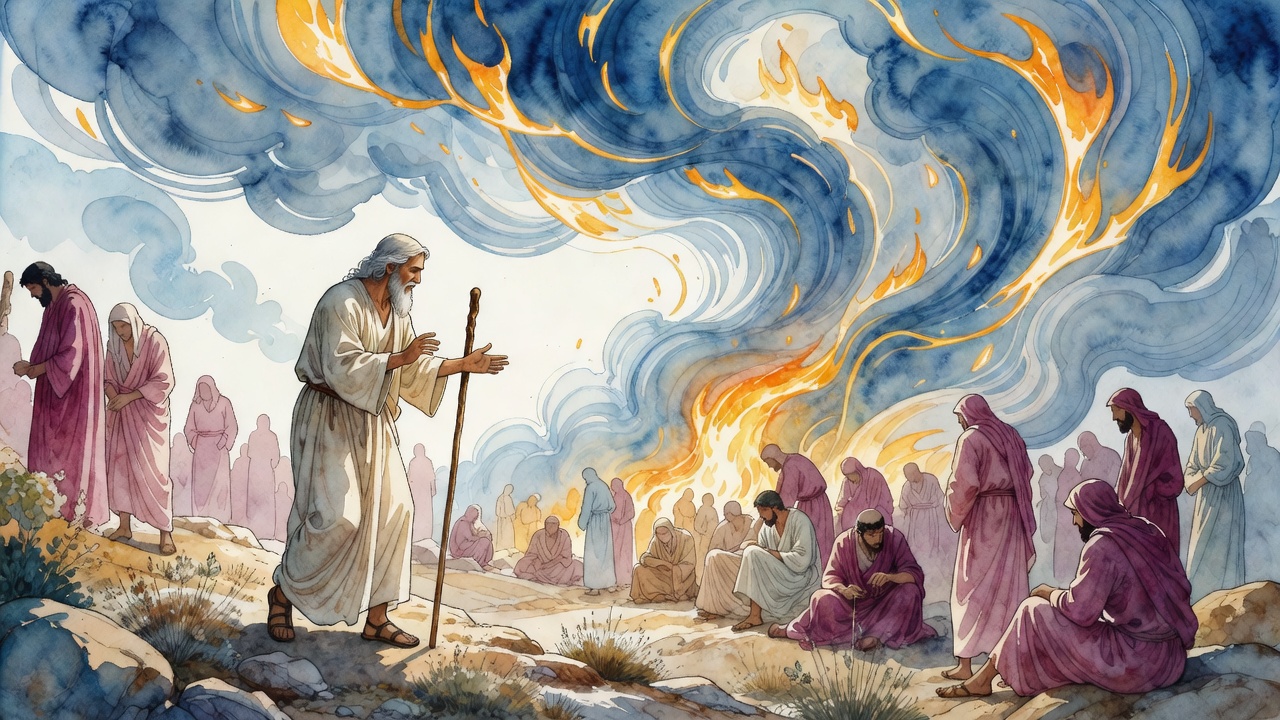
The counters moved through the camp with tablets and tired eyes. Another census. Another tally of names that God already knew. A woman watching from a tent flap asked the old question out loud. Why does Heaven keep counting us as if we might vanish between one number and the next?
 Click for full size
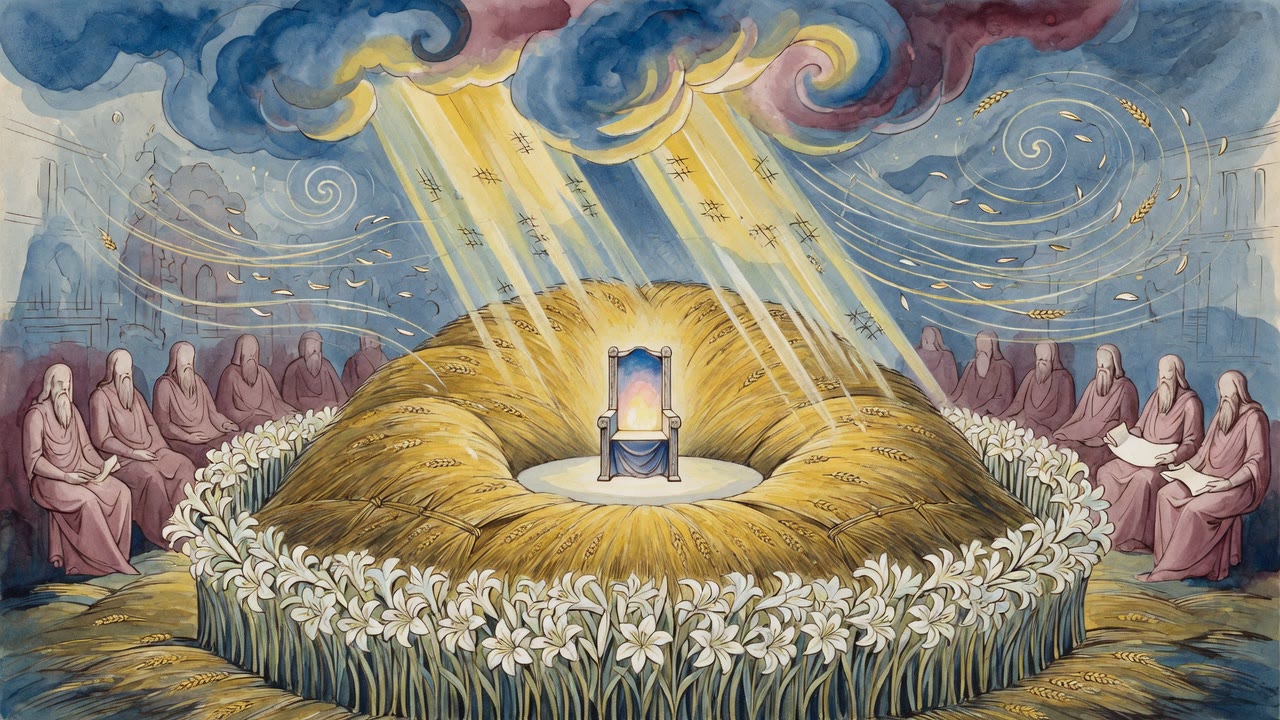
A teacher nearby answered with a verse of love, not a ledger. "Your navel is a round goblet that never lacks blended wine. Your belly is a heap of wheat hedged about with lilies." The navel sits at the body's center. So the Sanhedrin (Israel's supreme court) sat at the center of the Temple, in the Chamber of Hewn Stone, watching the people the way a navel holds the body together.
Wheat, Not Dust
Israel is counted like wheat, the reading went, not like chaff. Wheat is gathered, measured, guarded, stored against famine. Chaff is left to wind. A heap of wheat hedged with lilies is abundance fenced by beauty and law. Each count is not suspicion. It is ownership. What you love, you number. What you number, you refuse to let scatter without notice.
The Sanhedrin's watch was the human face of that care. Seventy-one pairs of eyes on the center, deciding blood and calendar and the hard cases that rose from the tribes. When the court sat, the navel held. When exile later emptied the chamber, the people still told the metaphor, as if memory could keep a center the stones had lost.
A counter paused at a tent where a baby had been born at dawn and added a name with a smile he tried to hide. The woman at the flap saw it and understood. This is not tax only. This is being seen.
Honor for the Elders
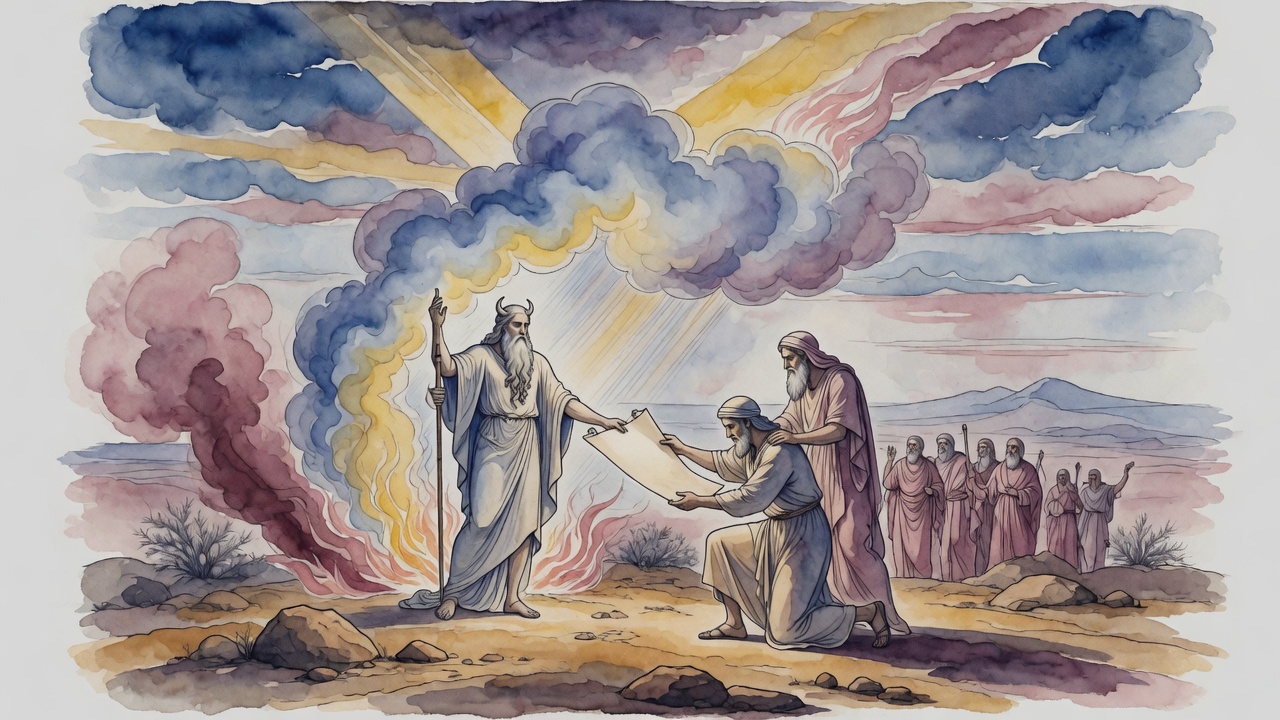
"Go and gather the elders of Israel," God told Moses before the first confrontation with Pharaoh. From that small order the sages drew a long line. The Holy One honors the elders from Sinai to the end of days. Not only the young heroes. Not only the fighters. The ones whose knees are slow and whose memory is long.
In the camp, an elder who could no longer carry a spear still carried the count of families and the stories of Egypt. When younger men brushed past him, a voice from the teaching stopped them. Heaven set honor on that head first. A people that shoves its elders aside has already begun to uncount itself.
Moses had needed the elders' presence when he first spoke of freedom. The end of days, the midrash insists, will still need that same honor. Redemption that humiliates the old is a counterfeit.
Everyone Gives, Even the Poor
The same body that is wheat must feed its own hungry grains. Communal teaching insisted that every person give charity, even a poor person who himself receives. Tzedakah is justice, not spare kindness. Medieval towns built the kuppah and sent collectors door to door. Courts could compel the stubborn, because refusal was law-breaking, not mere rudeness. A single coin still counts. No one is too empty to participate in righteousness.
A widow with three coins put one in the box and kept two for bread. The collector did not sneer. The teaching had already named her act as the structure of the world, not a footnote. A rich man who gave only when praised was told his gift lacked the anonymity that keeps justice from becoming theater.
In the camp's simpler form, the same principle already lived. The gleaning corners, the shared manna stories, the refusal to let a household starve while neighbors ate full. The later kuppah only gave the rule a box and a ledger.
Why the Numbers Keep Coming
So the census, the court at the navel, the honor of elders, and the forced generosity of every hand form one posture. God counts because God claims. The Sanhedrin watches because a body needs a center. Elders are gathered because memory is a kind of census. Charity runs through every rank because a heap of wheat that does not feed itself rots from within.
Night fell on the camp. The counters inked the last name. Somewhere a lily-hedge of law still held the grain. The woman at the tent flap slept knowing her household had been seen. She dreamed of a goblet that never lacked wine, and woke to the sound of an elder blessing the morning with a voice that still held Sinai's dust.
The next count would come. She would not ask why again. She would answer the younger women. Because wheat is loved, and love keeps measure.
← All myths