5 min read

God Shut Noah In Before the Waters Found the Door

Noah cut every board of the ark and pitched every seam. The one join that had to hold for a year was closed by a hand he could not reach.

Curated by Arthur · Told by Maggid ·
Table of Contents
  1. Shut From the Outside
  2. A Coat Made for a Body
  3. Twelve Months of Being Thrown
  4. The First Vineyard
  5. He Drank of the Wine

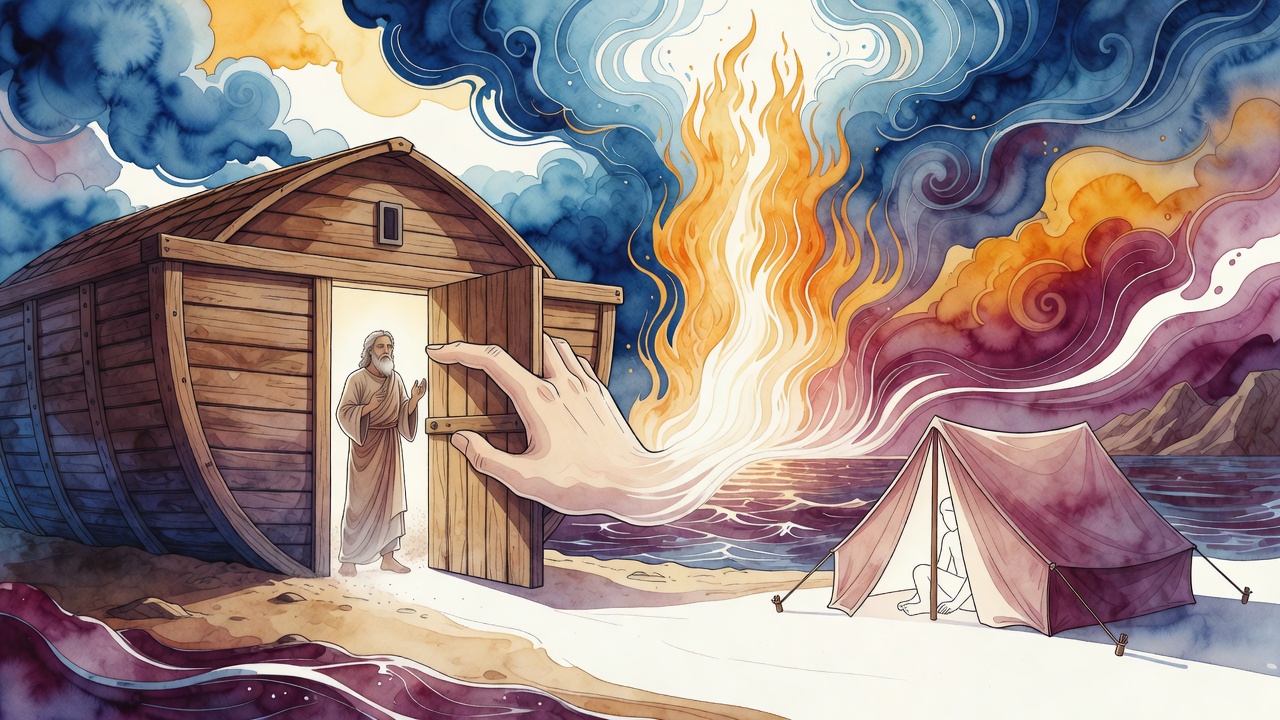
The rain was already finding the seams when Noah stood in the doorway of the ark with his hand on the frame.
God Shut Noah In Before the Waters Found the Door Click for full size

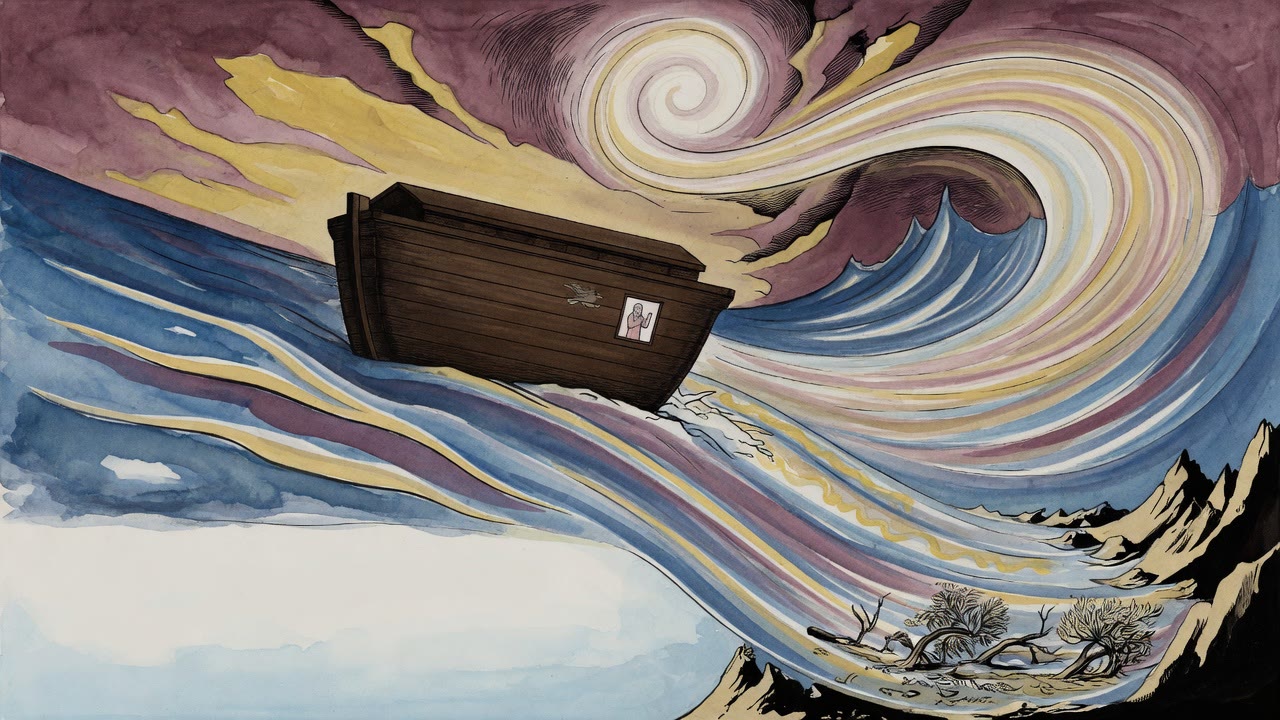
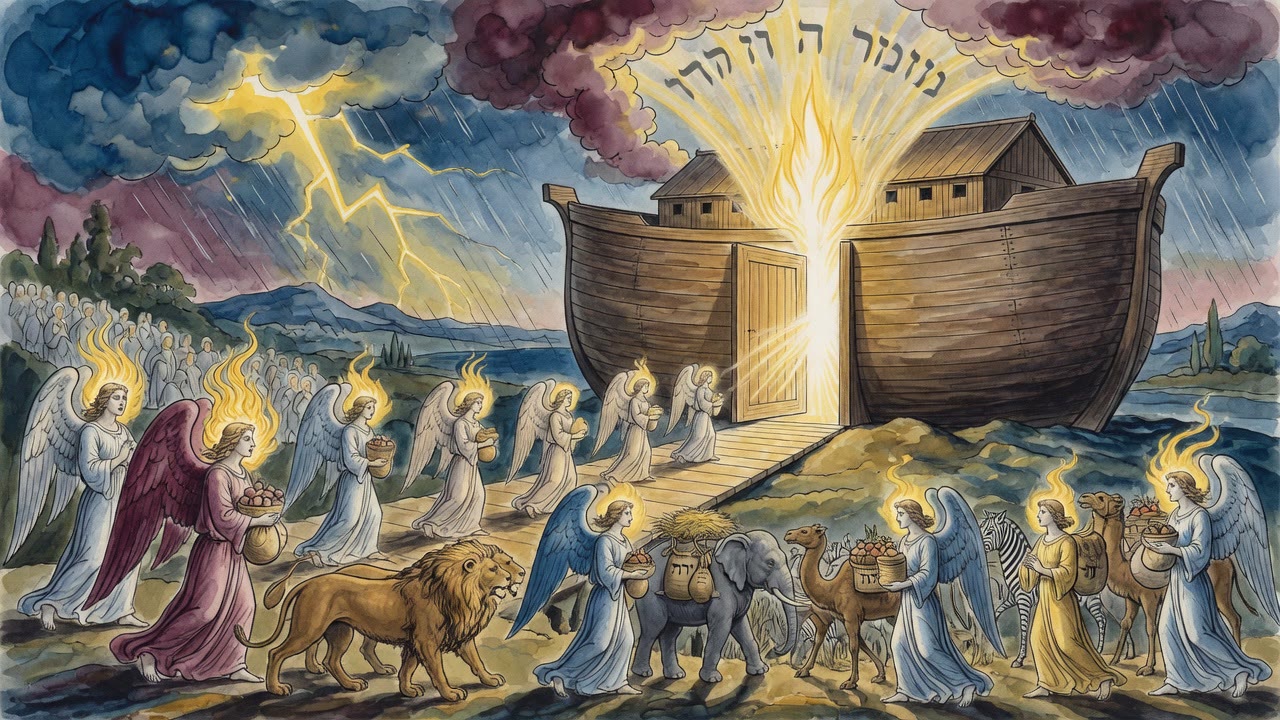
Then the door moved without him. It came across under a pressure that was not rope or peg or anybody's shoulder, the last strip of gray daylight narrowed and went out, and the Lord shut him in (Genesis 7:16).

Shut From the Outside

He stood in the new dark with his palm still raised where the opening had been. Behind him an animal shifted its weight and a chain rang once against wood. His wife laid a hand flat on his back. Nobody spoke.

Outside, the waters found the hull and ran the length of it and found no way past the door. The seal was not his. That was the whole of it. He had cut every board of the thing and smeared every seam with pitch inside and out, and the one join that had to hold for a year was made by a hand he could not reach. He would not be opening it again. He had not been given a latch.

A Coat Made for a Body

What he was standing inside was a body.

A man comes wrapped, all the way round, in one hard dense covering that runs over every part of him without a gap. Nothing was left uncased. It is a coat, and it was put on him so that cold could not get at him and heat could not get at him and whatever was outside would stay outside. Strip that covering off a man and he does not last a night.

The ark had the same design at a larger size. Timber for the skin, pitch for the sealing of it, one door, and past that door a year of weather that would kill anything it touched. So the door had to be closed carefully and it had to be closed by something stronger than a carpenter, because the whole vessel was going to be thrown about for twelve months and one seam giving way at any point would have finished all of them.

Twelve Months of Being Thrown

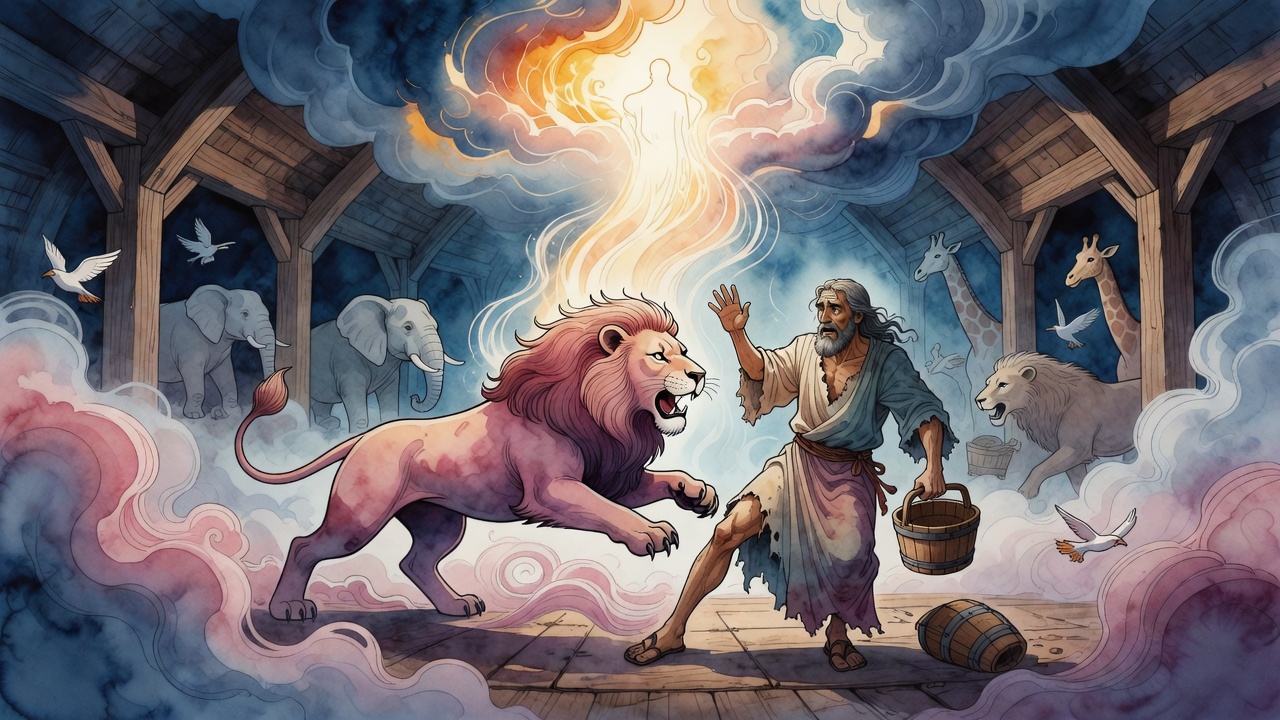
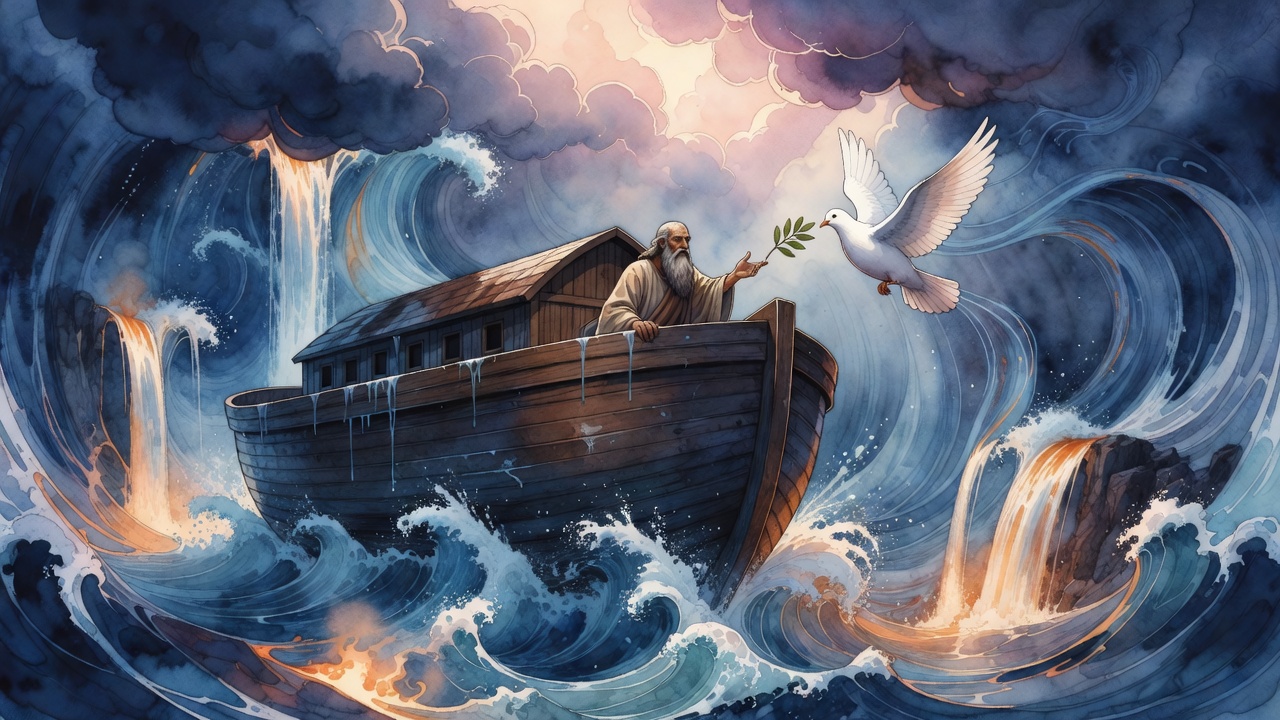
The pitching started within days and never fully stopped. Water came up the sides in slabs and fell back. The hull groaned in its joints at night, and every groan ran through the boards and into the bones of the people lying against them.

God had not sealed a box. He had sealed a household. Noah fed and watered and shovelled and slept in pieces, and in all that time the one thing he never did was test the door with his shoulder to see whether it would give. He knew it would not. He knew who had shut it.

Then the water went down, and the hull scraped a mountain and stopped, and eventually a word came and the door opened, and the household walked out onto a world with nothing on it.

The First Vineyard

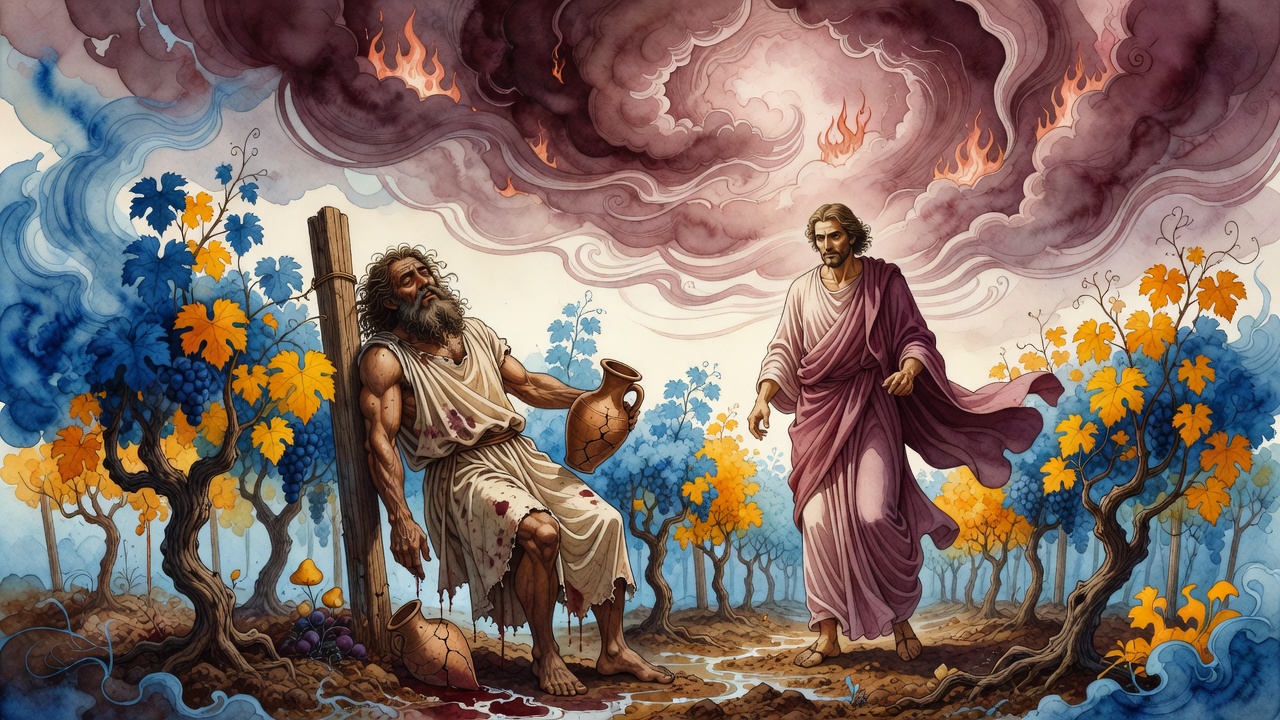
He became a man of the soil and planted a vineyard (Genesis 9:20). It was the reasonable thing to plant. Grapes want a hillside and there was nothing but hillside left, and a vine asks for patience rather than for good ground, and Noah had learned patience the hard way.

The vine took. The fruit came. He crushed it, and let it work, and in time there was wine in the house of a man who had spent a year drinking rain caught off a roof.

He Drank of the Wine

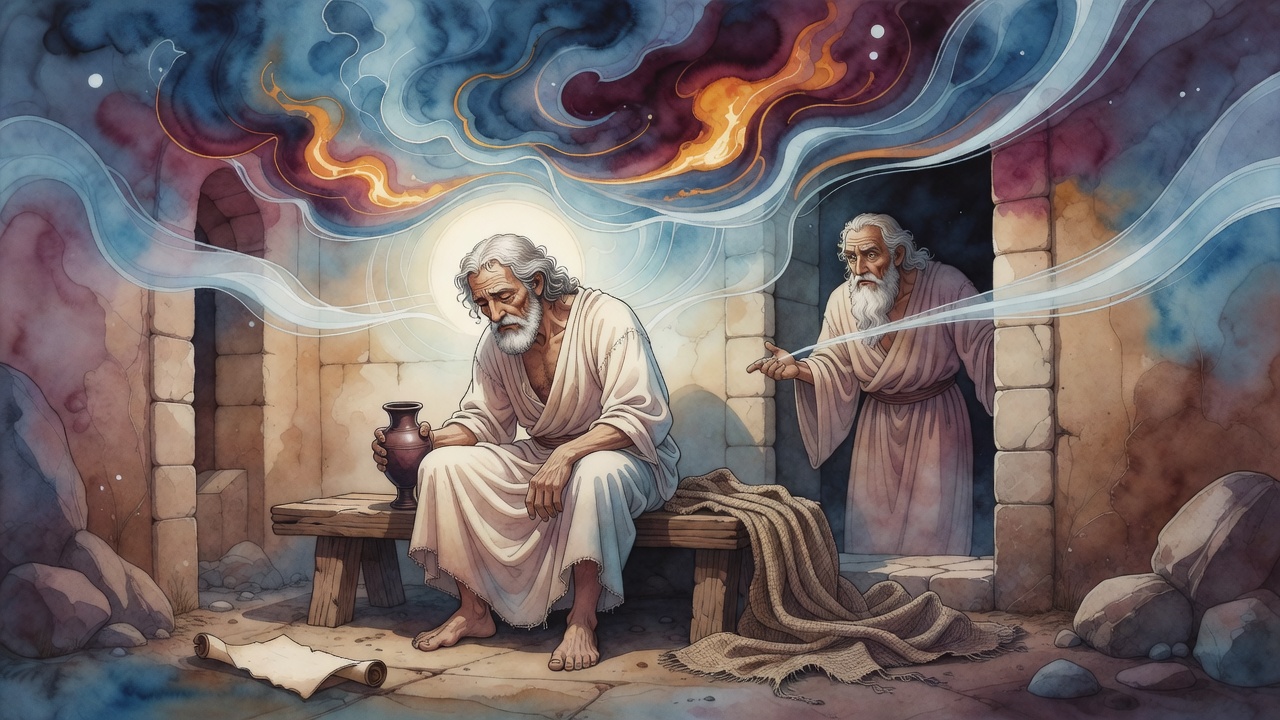
He drank of the wine and was drunken, and he lay uncovered inside his tent (Genesis 9:21).

Read the first half of that slowly, because it is precise. He drank of the wine. Not the wine. A portion of it. There is a kind of man who does not leave the room while any liquid remains in front of him, who finishes what is there because it is there, and everyone has seen him. That is not the sentence. This one took what a meal requires and stopped, the way a sober man takes bread.

There are two ways to be called drunken and only one of them is a charge. The first is sottishness, the misuse of the thing, and it belongs to men who have already gone wrong in other rooms of their lives. The second is simply the use of wine, which belongs to the wise, who drink and are said to have drunk and are not thereby accused of anything. Noah is drunken in the second way. He used the wine. That is all the word is carrying here.

The man who had ridden out a whole year behind a door he could not open sat in his own tent on dry ground with a cup he could set down whenever he wanted, and set it down.


← All myths

From the tradition

Sources

4 sources

The texts behind this telling. Some cards carry a translation of the source; others are our own retelling of it, and each card says which. Every card links out to the original.

The Midrash of Philo 16:1The Midrash of Philo

Retold in our words. Read the original at the link below.The Works of Philo Judaeus, trans. C. D. Yonge, London, H. G. Bohn, 1854-1890 · Public Domain

The Midrash of Philo asks: What is the meaning of "And the Lord shut him in, closing the doors of the ark"? (Genesis 7:16).

The source holds the question on God's sealing of the ark. Interior scenes are not added here.

Full source
The Midrash of Philo 16:2The Midrash of Philo

Retold in our words. Read the original at the link below.The Works of Philo Judaeus, trans. C. D. Yonge, London, H. G. Bohn, 1854-1890 · Public Domain

It might sound a bit out there, but ancient wisdom suggests there's more truth to that feeling than it first appears.

Philo, the 1st-century Jewish philosopher from Alexandria, saw deep symbolism in the Torah. And one fascinating idea, found in The Midrash of Philo, connects the ark Noah built to something incredibly personal: our own bodies. The ark was a vessel, designed to protect life during a catastrophic flood. What protects us? Our bodies, of course! Philo suggests the ark isn't just a story about a historical event, but also a powerful metaphor for the human form.

He points out that just as the ark had a structure, a specific design, so too does the human body. And what about the outside? The ark was sealed tight. What's the outer layer that protects us from the elements? Our skin! Philo describes it as a "hard and dense skin...a sort of coat, to prevent either cold or heat from being able to do man injury."

It’s a pretty straightforward idea. Nature gave us this amazing covering to shield us.

Philo emphasizes the ark's door being carefully shut "by divine virtue for the sake of security." Why? "Lest the water should enter in at any part, as it was to be tossed about by the waves for an entire year." The image is striking: the ark, vulnerable to the chaos outside, depends on its sealed enclosure for survival.

And so do we! Our skin, our physical boundaries, are constantly working to keep the outside world out. To maintain our inner balance, our health, our very lives.

Remember that you, in a way, are also an ark. You are a vessel, carefully constructed and divinely protected, working through the waves of existence. And maybe, just maybe, recognizing this connection can offer a little comfort, a little strength, as we sail on.

Full source
The Midrash of Philo 21:1The Midrash of Philo

Retold in our words. Read the original at the link below.The Works of Philo Judaeus, trans. C. D. Yonge, London, H. G. Bohn, 1854-1890 · Public Domain

The Midrash of Philo preserves this as a question on Scripture, not a finished ruling:

What is the meaning of the statement, "He drank of the wine and was drunken?" (Genesis 9:21).

The entry records the question Philo poses. It does not supply an answer the source does not give.

Source: The Midrash of Philo 21:1.

Full source
The Midrash of Philo 21:2The Midrash of Philo

Retold in our words. Read the original at the link below.The Works of Philo Judaeus, trans. C. D. Yonge, London, H. G. Bohn, 1854-1890 · Public Domain

The familiar story centers on the Ark, but what happened after the flood?

That Noah planted a vineyard and "drank of the wine, and was drunken" (Genesis 9:21). A simple statement. But the rabbis of old, ever eager to find layers of meaning, weren't so sure. Was Noah simply indulging, or was something more profound happening?

The Midrash of Philo grapples with this very question. The text makes a key distinction: Noah, a "just man," didn't drink all the wine, but only a portion. Isn’t that something we should all strive for?

A debauched man, the text argues, won't stop until the bottle (or cask!) is empty. He’s driven by excess. But the religious and sober person? They use what's necessary in moderation.

But here's the kicker: The Midrash of Philo suggests that even the word "drunken" needs a second look.

There are, it says, two ways to be "drunken." One is the "intemperate sottishness" of the wicked, misusing wine and losing control. The other is simply "the use of wine," and this belongs to the wise. According to this interpretation, Noah wasn’t wallowing in drunken abandon. Instead, he used wine wisely; as a part of life.

So, when the Torah says Noah "was drunken," it's not necessarily a condemnation. It's an observation that he used wine.

It's not about abstinence; it's about intention and moderation. It’s about using something powerful, like wine, with awareness and respect. It pushes us to think: how do we Are we controlled by them, or do we control them?

Perhaps Noah's post-flood experience isn't just a cautionary tale about the dangers of alcohol. Maybe it's a lesson about how we approach pleasure, responsibility, and the delicate balance between enjoying the world and being consumed by it.

What do you think?

Full source