God Stopped Playing With Leviathan After the Temple Burned
The sages gave God a daily schedule, but after the Temple burned, the last hours no longer belonged to play with Leviathan.
Table of Contents
The afternoon once belonged to play.
 Click for full size
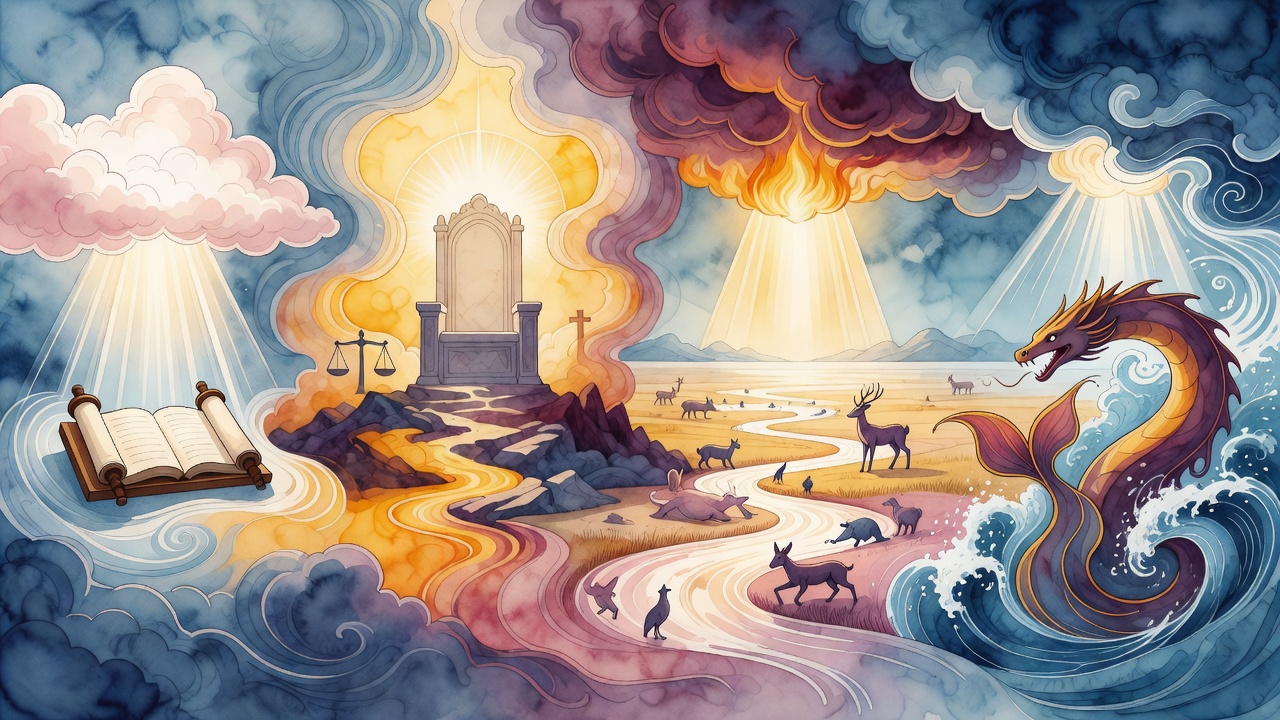
After the first three hours of Torah, after the second three hours of judgment, after the third three hours of feeding every living creature from the horns of wild oxen to the eggs of lice, the last quarter of the day opened like a sea.
There, in the deep, Leviathan waited.
God had formed the great creature not only for terror, not only for the future feast, but for sport. The verse said Leviathan was made to play with, and the sages took the sentence seriously. In the ninth through twelfth hours, divine time bent toward delight.
The Creature Left Alone
Leviathan was not born solitary.
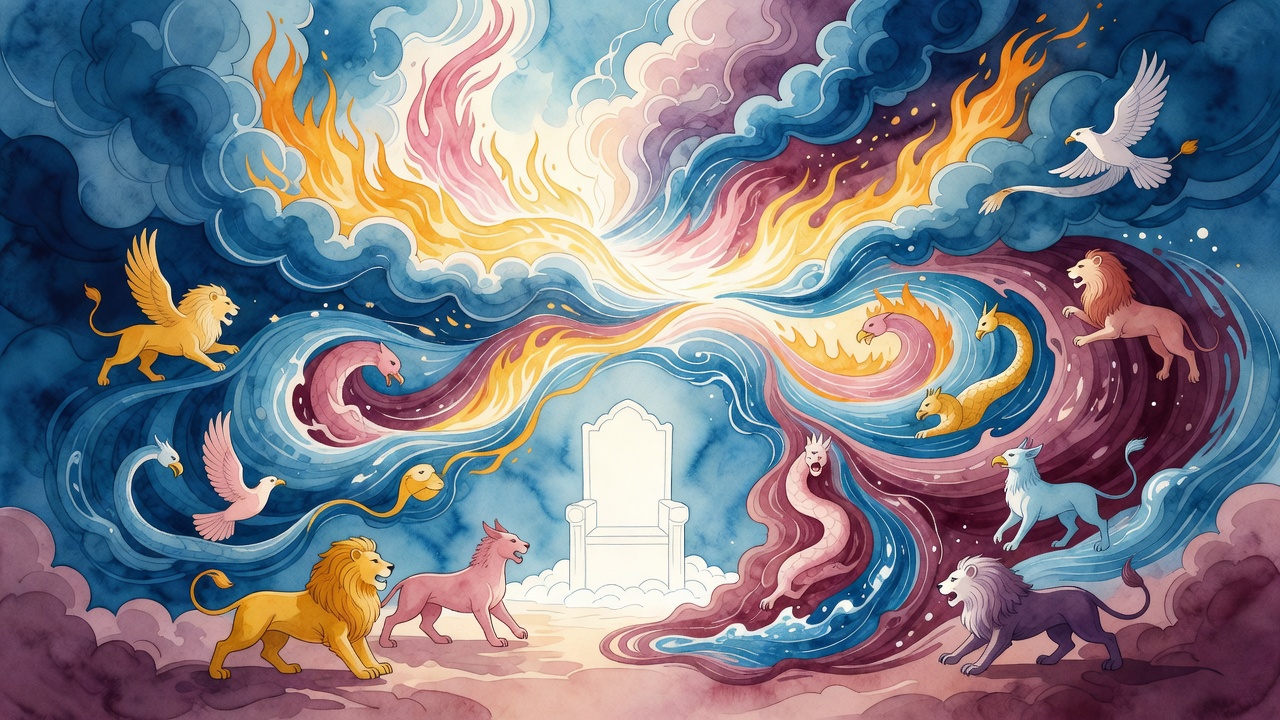
The creature had a mate. Male and female, the pair would have filled the waters with a force the world could not survive. So God killed the female, salted her flesh, and stored it for the banquet of the righteous in the World to Come. The male remained alive in the sea, vast and unmatched.
Every afternoon, God came to the last one.
The image is almost too tender for a monster. The sea beast that could have shattered creation became God's companion in the hour after judgment and feeding. The world had been judged, sustained, and arranged. Then heaven went down to the water.
The Temple Burned and the Game Ended
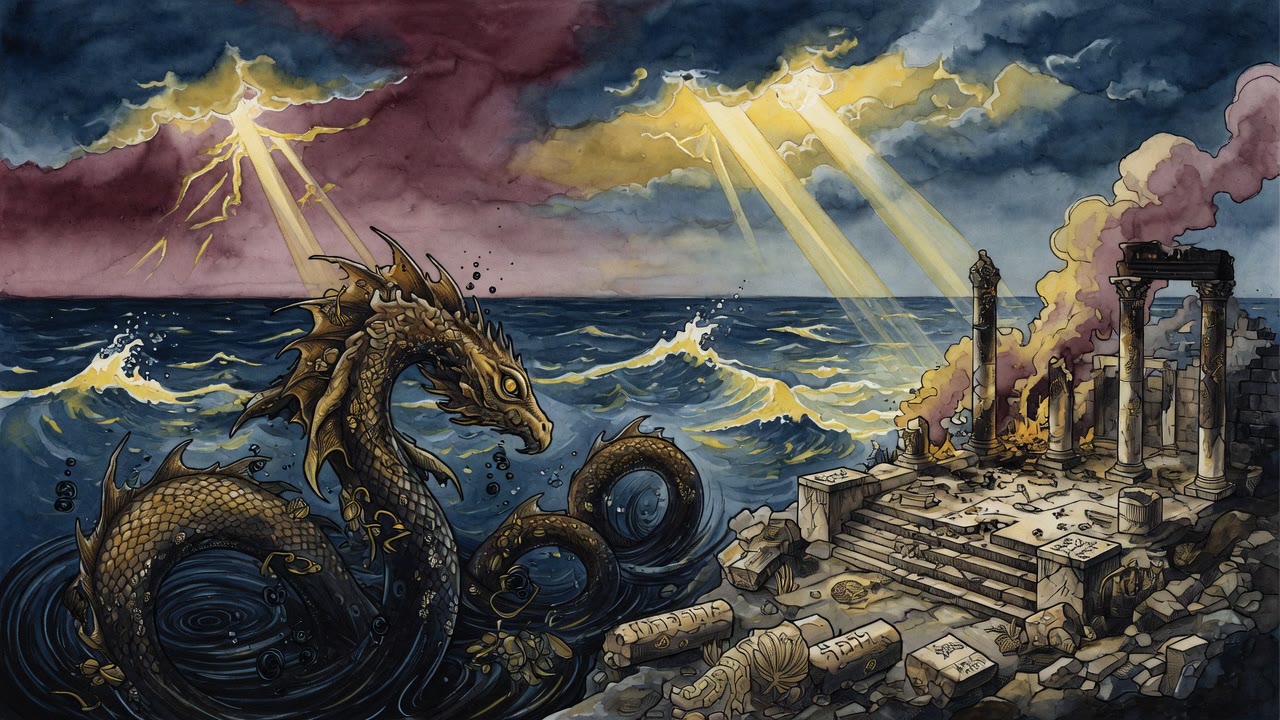
Then the Temple fell.
God stopped playing with Leviathan after the Temple burned. The sentence is as stark as a closed gate, and the sages leave it standing inside the schedule of heaven.
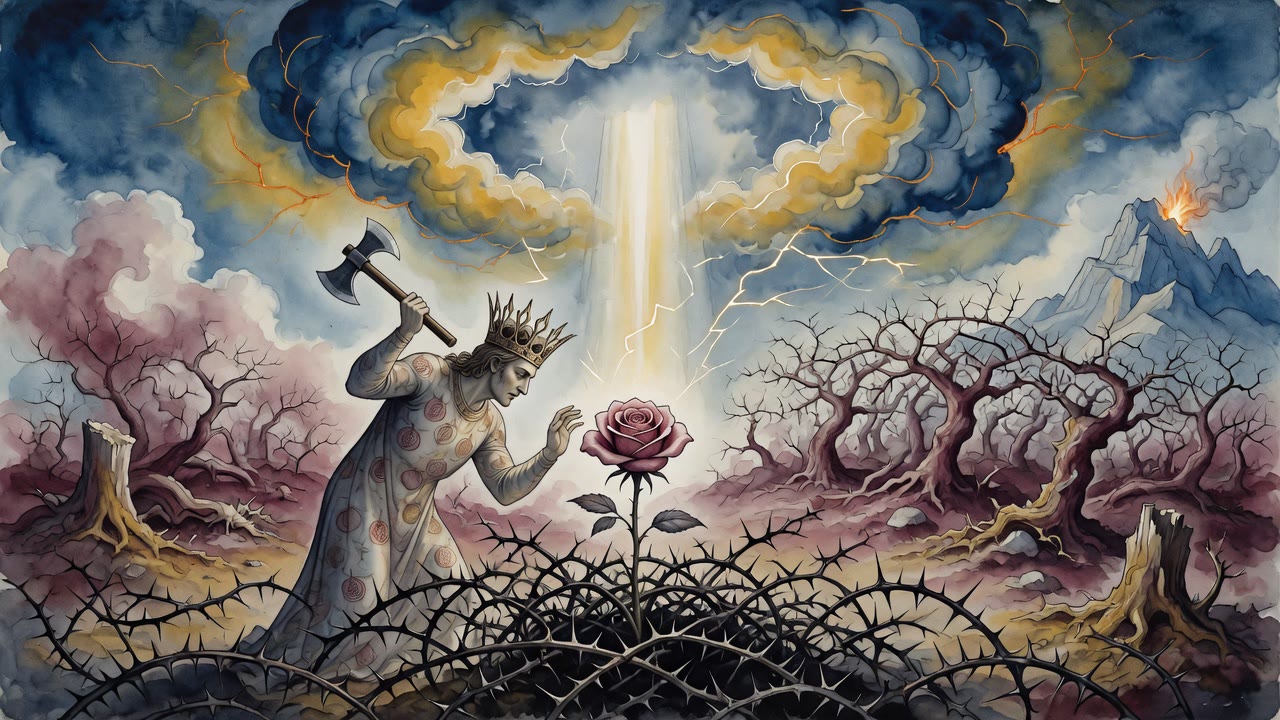
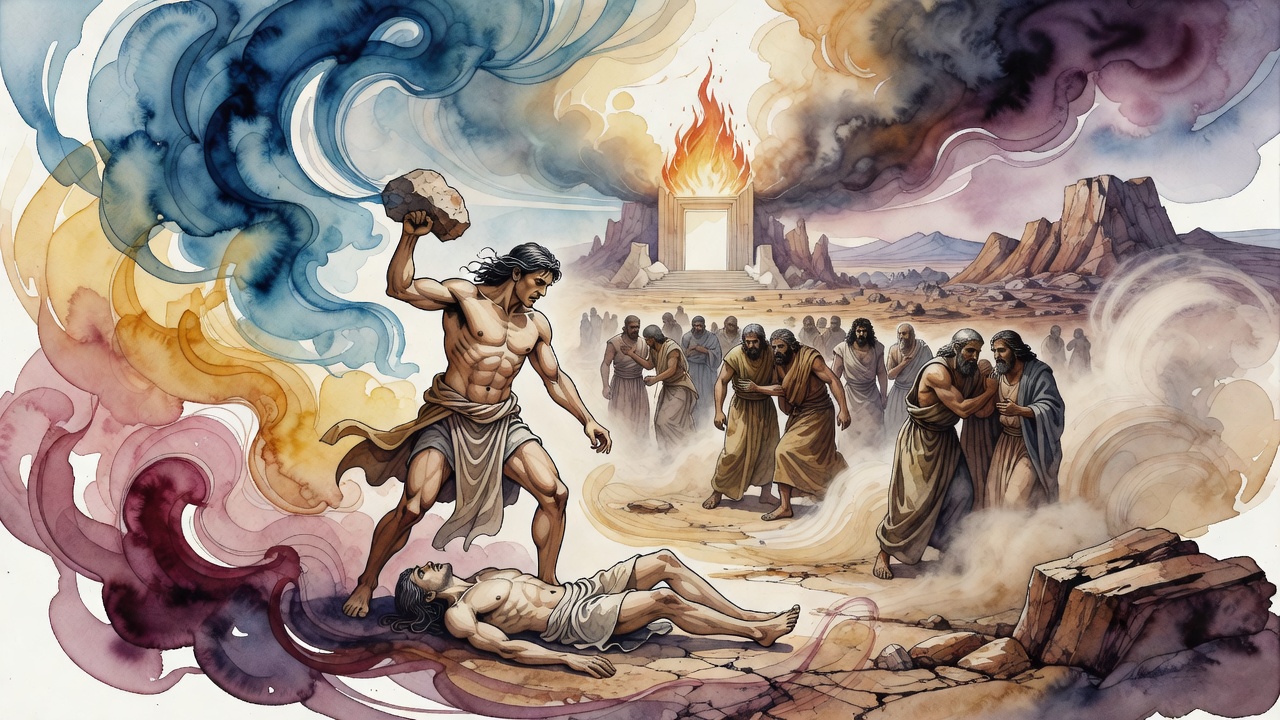
Smoke rose from Jerusalem. Stones blackened. The place where offerings climbed toward heaven became ash and memory. After that, the sages said, God no longer played with Leviathan in the final quarter of the day.
Something in heaven's schedule changed because something on earth had been broken.
The last hours did not become empty. God used them to teach Torah to schoolchildren. The play of the sea was replaced by the voices of children learning letters and verses. Joy did not disappear, but it moved into a smaller room, closer to the mouths that would keep Israel alive after the sanctuary was gone.
The shift makes the destruction reach upward. The fire did not only consume cedar beams, gold, and stone. It rearranged what God did with time. Afternoon delight yielded to instruction because the next generation had to learn how to live without the building that had organized the nation's service.
The Courtroom at the End of Days
The same teaching opens another scene.
At the end, the nations stand before God and ask for another chance with Torah. "Give us a commandment," they say, "and we will keep it." God gives them a simple one: sukkah. Build a booth. Sit in its shade.
They build. Then God makes the sun blaze. The booths grow unbearable. The nations leave and kick them on the way out.
Heaven laughs only on that day. The laughter is not petty. It is judgment exposed. A commandment does not become false because heat presses against it. The booth reveals whether attachment is real when comfort goes away.
The Children Took the Afternoon
The schedule holds both images together.
Before destruction, the final hours carried God into the sea with Leviathan. After destruction, they carried God into the schoolroom. The change does not make Leviathan vanish. The creature remains in the deep, the salted flesh remains for the righteous, and the old play waits inside the memory of the text.
That makes Leviathan lonelier and the children more urgent. The monster keeps the sea. The children keep the covenant's voice moving from mouth to mouth.
But the Temple's burning moved divine attention toward children.
Letters had to survive. Voices had to rise where fire had left silence. The afternoon that once belonged to cosmic play became the hour when the Holy One sits with beginners. The sea monster lost its daily companion because Israel's children needed one.
In that exchange, the sages made grief enormous and intimate at once. A destroyed sanctuary changed the timetable of heaven. A child's lesson filled the place where Leviathan had waited.
That is why the schedule hurts. It does not say God forgot joy. It says grief redirected joy toward children who still needed letters, teachers, and the discipline of beginning again after fire. The afternoon changed shape.
← All myths