5 min read

God Kept Israel an Eighth Day After the Nations Went Home

Seven days of Sukkot burned seventy bulls for the seventy nations. When the last one went up, Israel refused to go home and started arguing.

Curated by Arthur · Told by Maggid ·
Table of Contents
  1. The Seventieth Bull
  2. The Ledger
  3. Detained
  4. Clear and Ruddy
  5. The Beloved Who Is Fire
God Kept Israel an Eighth Day After the Nations Went Home Click for full size

The Seventieth Bull

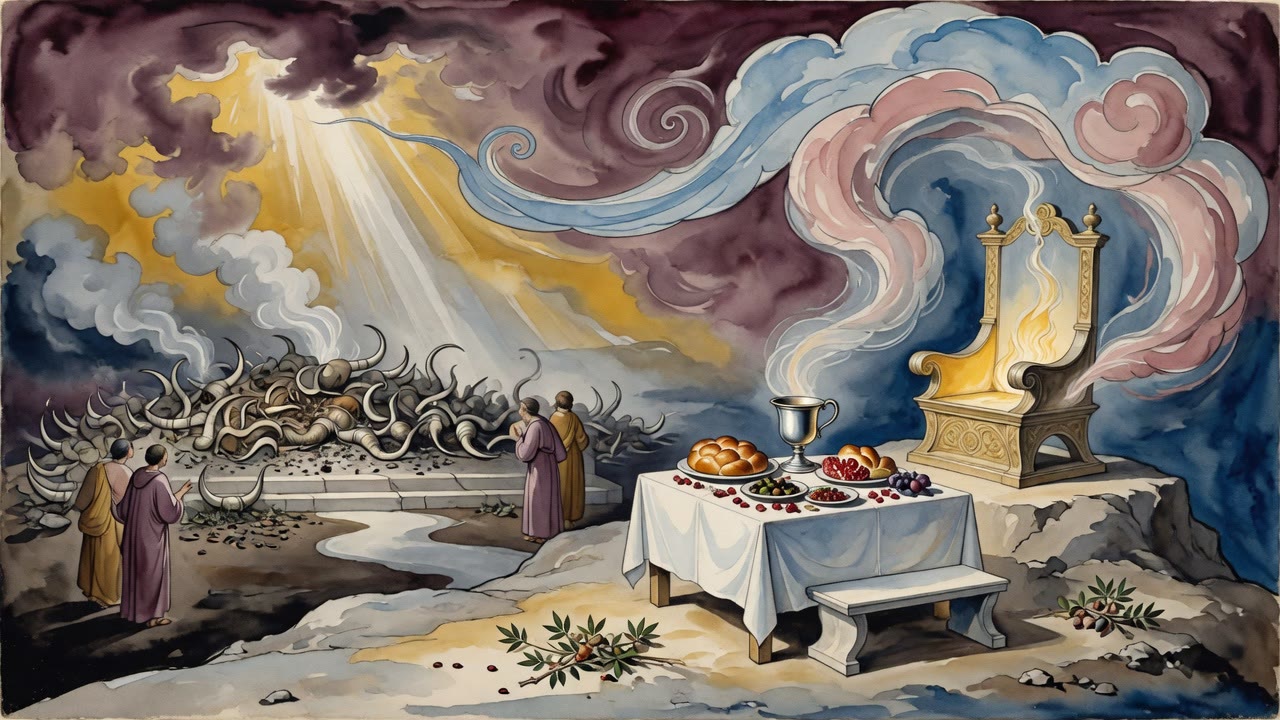
Seven days of the festival, and every day fewer bulls on the altar than the day before, until the count ran out. Thirteen. Twelve. Eleven. Down and down to seven, and seventy in total, one for each nation on the earth.

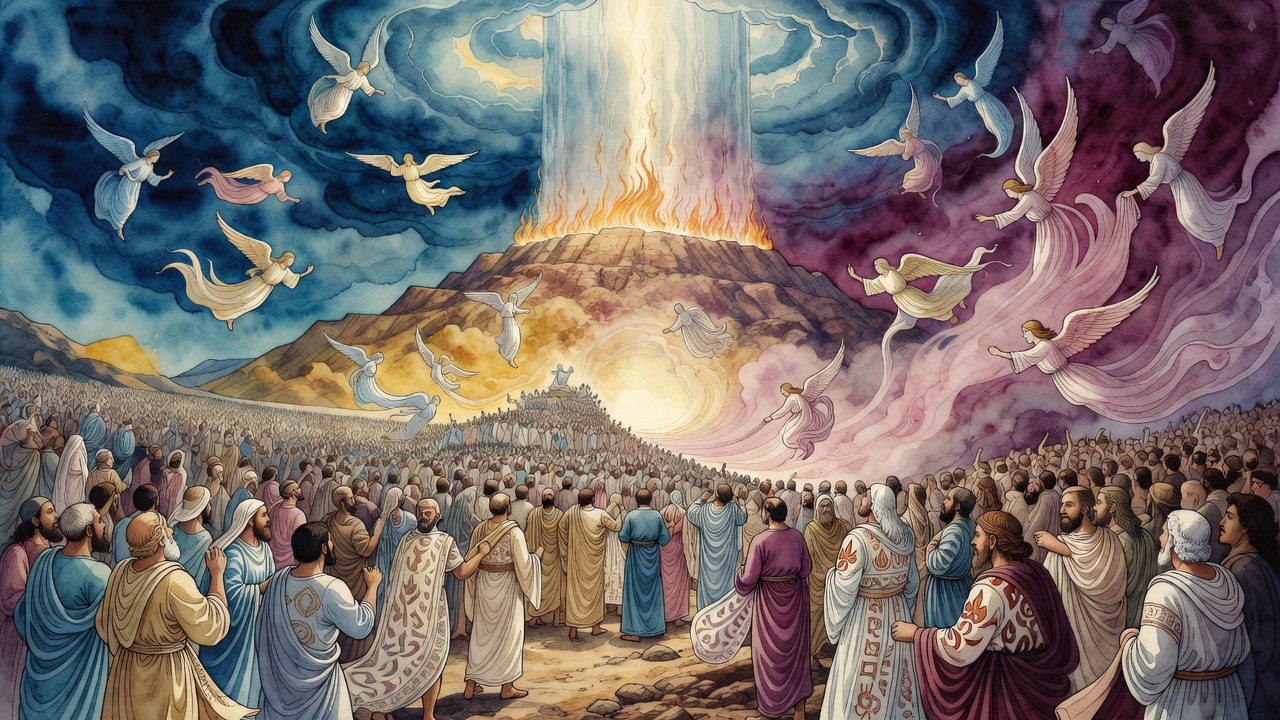
The last of them went up in smoke and the courtyard should have emptied. The booths were already coming apart. The myrtle was dry. The priests were finished, and the smell of burnt fat still hung in the air over the whole city, and nobody moved toward the gates.

Then Israel opened its mouth and said the thing a guest is not supposed to say to a host.

The Ledger

"Master of the universe. Did You add peace to the generation of the Flood? Did one of them bring You a single bull? A single ram?"

It went on from there and it got worse. The men who built the tower and said to each other, come, let us build ourselves a city. Sodom. Pharaoh. Sennacherib. Nebuchadnezzar. Not one animal on an altar from any of them, and it was not only that they failed to sacrifice. They spent their lives making God angry, and they had their tranquility anyway, whole reigns of it, cities and armies and years.

Then the accounting turned to the other side of the page. "We were given the festivals and we kept them. New moons. Passover. The day of the horn. The day of atonement. This week of booths. Not one of them abolished, not one of them let go, and an animal for every one.

So to whom is it fitting for You to add?"

The nerve of it is hard to overstate. Israel had just spent a week burning seventy bulls for the benefit of nations that had, several of them, tried to erase Israel from the map. Now the congregation stood in the smoke of that generosity and asked for something back, and the ask was not for rain or victory or bread. Add a day. Add a festival. We will bring the offering.

Detained

The answer came back as a promise about the calendar. Nothing would be taken away. Something would be added.

What arrived was Shemini Atzeret, the eighth day, and the word in its name means a holding back. A detention. The seventy bulls were spent and the nations were sent off to the ends of the earth with what they came for, and one people was kept behind after the large banquet, for a smaller one.

The offering that day is not seventy of anything. It is one bull and one ram. A private table after a public feast.

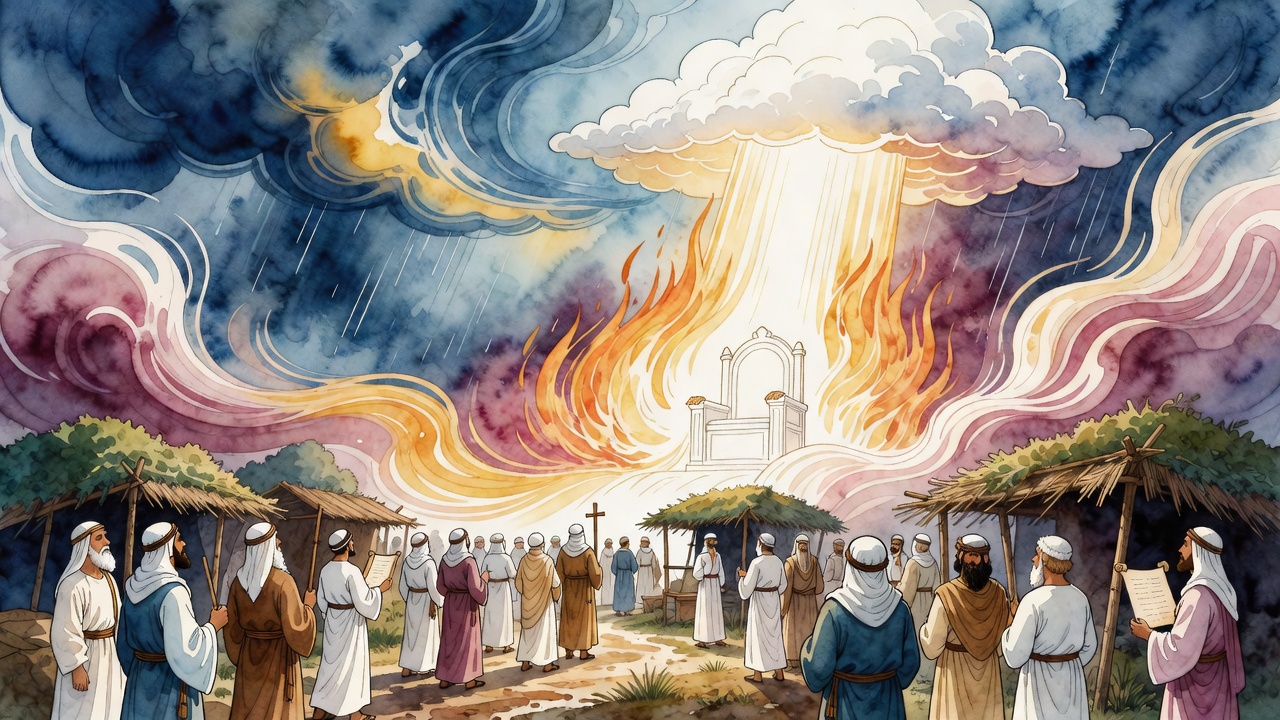
The booths come down. Everything that made the week visible from the street gets carried in and stacked. The intimacy is the part that does not fold up.

Clear and Ruddy

There is a second conversation in the sources, and it starts with an insult dressed as a question. The nations ask Israel's daughters what is so special about this beloved of yours. How is he more than any other beloved, that you make us swear oaths about him.

The answer comes back in two colors. My beloved is clear and ruddy.

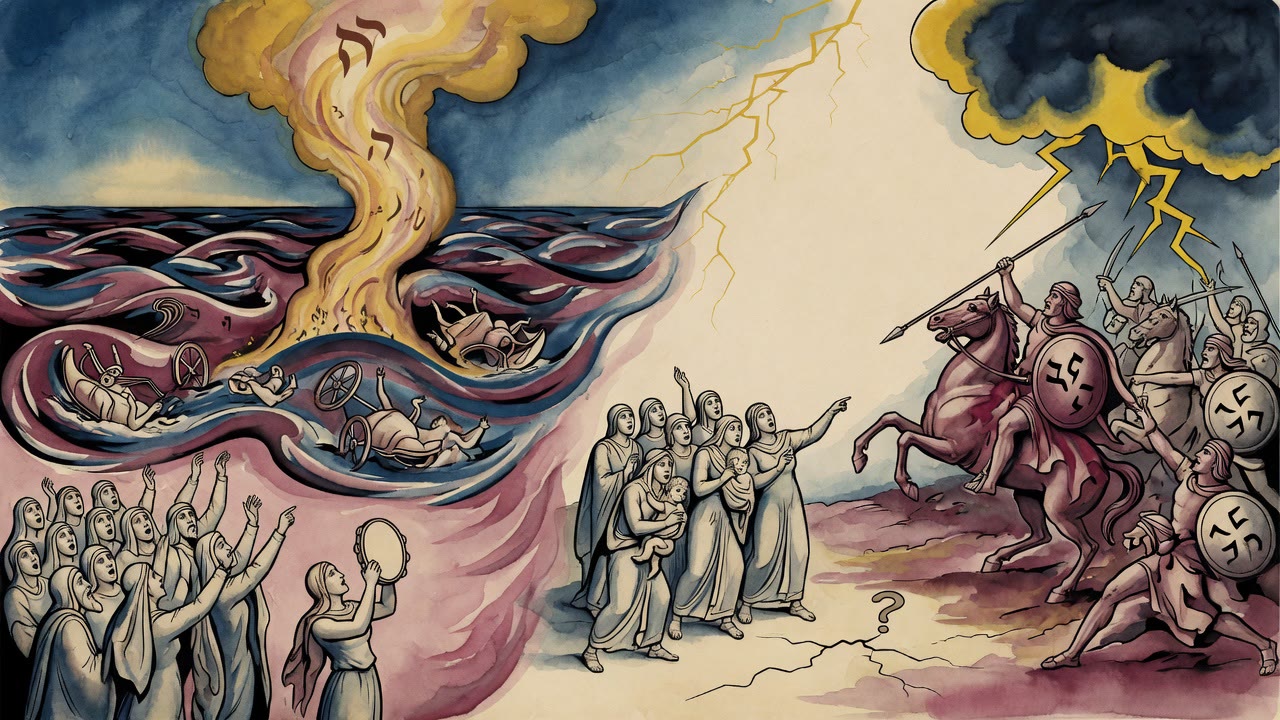
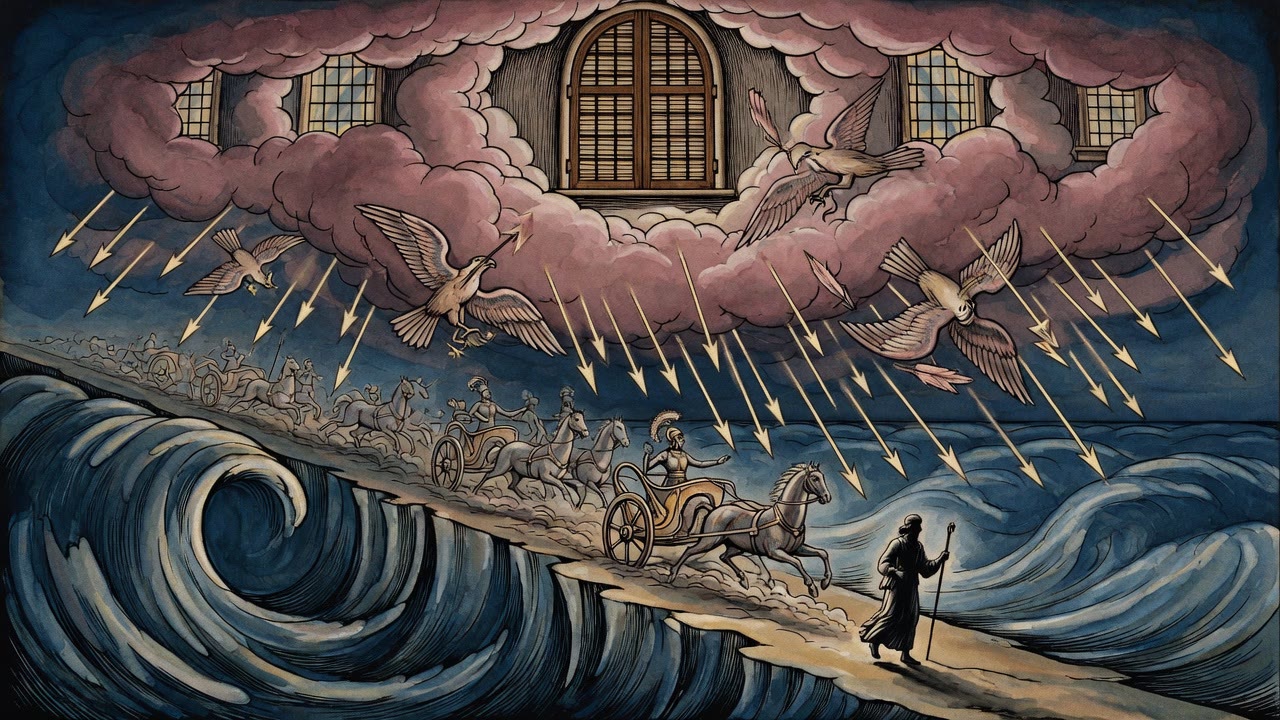
Clear is mercy. Ruddy is judgment, and the sources do not soften what that means. On one night in Egypt the same God was clear over the doorposts smeared with blood and red through every Egyptian house where a firstborn slept. At the sea a few days later He was clear for the people walking on dry ground between the walls, and red for the chariots when the water came back down on them. One will, one night, two colors, and the difference between them was which side of the doorpost a man stood on.

This is not a soft beloved. Israel is not describing a comfortable arrangement. Israel is saying that the one who kept the doorposts is the one who closed the sea, and that both hands belong to the same body.

The Beloved Who Is Fire

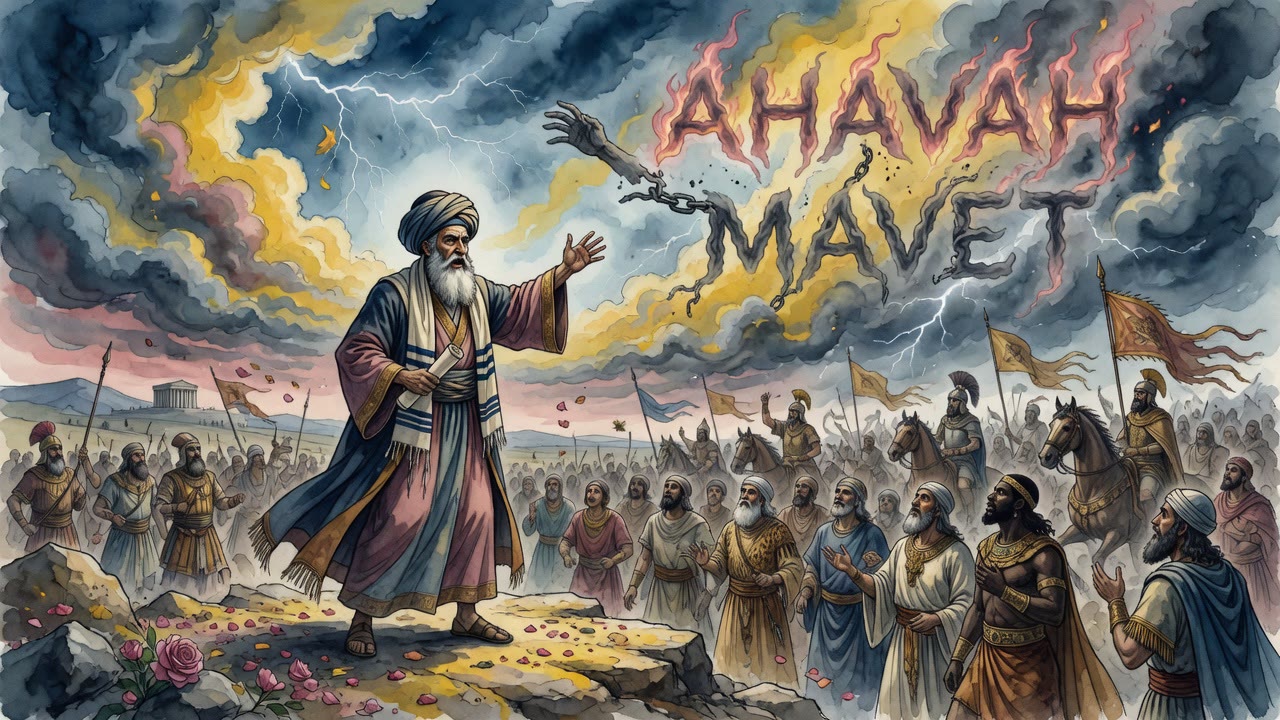
Rabbi Levi bar Haita ran the two colors through an ordinary year and did not flinch at the result. Clear in the world that is coming, red in this one. Clear on the Sabbath, red on the six days. Clear on the day of the horn, red across all the ordinary months in between. Hardship might be punishment. It might be a correction. It might be a payment held back and stored somewhere out of sight. He would not choose between those and he would not pretend the red away.

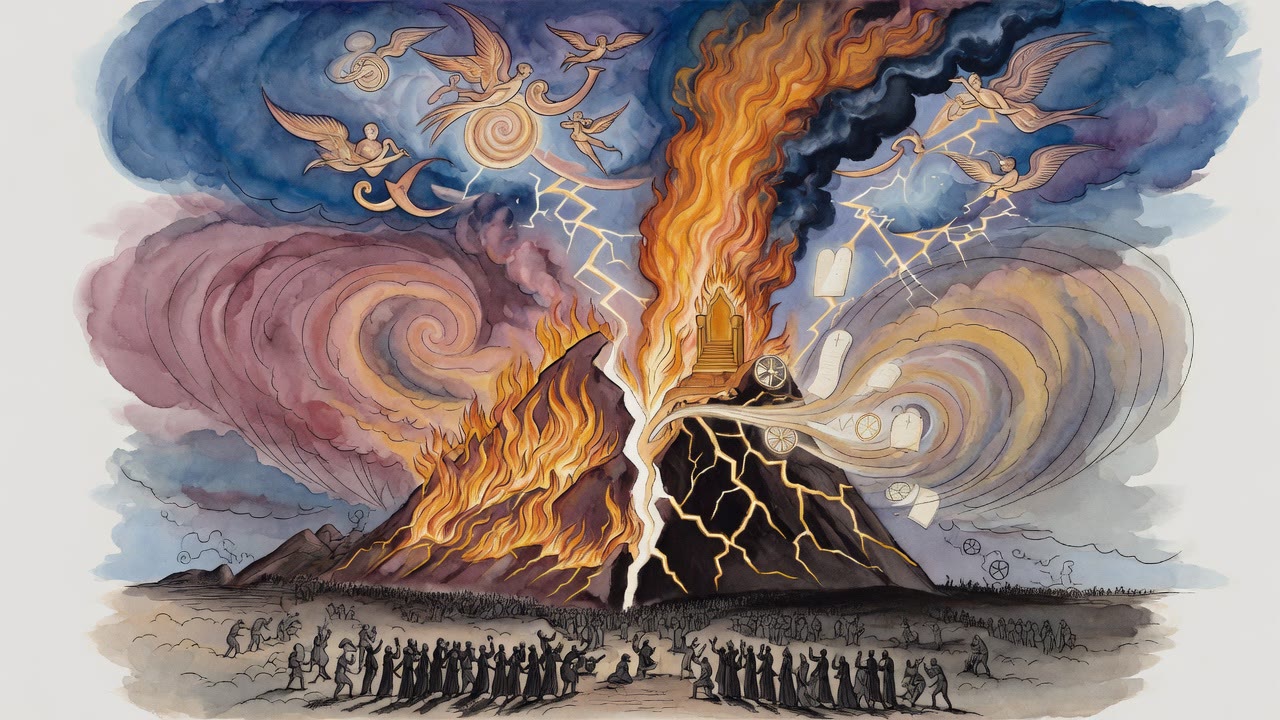
Rabbi Abba bar Kahana took the last line of the answer, more than ten thousand others, and made it physical. An earthly king is known by his clothes. Take the purple off him and he is a man in a room. This one has no clothes. He is fire, and the servants standing around Him are fire, and the law came out from His right hand burning.

That is who kept them an extra day. Not a mild host with a warm table. Fire, holding a people back after the guests have gone, for one bull and one ram and a morning with nobody else in the courtyard. God's own feast, and only one guest at it.


← All myths
From the tradition

Sources

2 sources

The texts behind this telling. Some cards carry a translation of the source; others are our own retelling of it, and each card says which. Every card links out to the original.

Bamidbar Rabbah 21:23Bamidbar Rabbah

Retold in our words. Read the original at the link below.The Sefaria Midrash Rabbah, 2022 · CC-BY

Like after all the hard work, the dedication, the striving. shouldn't there be a bonus round of celebration? Well, Jewish tradition understands that feeling perfectly. to a fascinating passage from Bamidbar Rabbah, specifically section 21, which explores this very idea through a lens of divine reward and the unique relationship between God and Israel. The verse But what does this "eighth day" really signify?

The text cleverly connects this verse to another, seemingly unrelated one from (Isaiah 26:15): “You added for the nation, Lord." See, the Israelites are essentially having a conversation with God, a sort of divine negotiation, if you will.

The context is important. (Isaiah 26:14) precedes this verse, speaking of the dead who will not rise and the spirits who will not live. It talks about how God reckoned with and destroyed the wicked, like the generation of the Flood, the people of Sodom, Pharaoh, Sennacherib, and Nebuchadnezzar. The key point? None of these groups honored God with sacrifices.

In Bamidbar Rabbah, the congregation of Israel comes before the Holy One, blessed be He, and asks a poignant question: “Master of the universe, have You added tranquility to the generation of the Flood? Did they, perhaps, sacrifice one bull or one ram?” In other words, why should these undeserving nations receive any blessings or rewards? They actively defied God!

The Israelites continue, "It is not enough for them that they did not respect You, but they said: “Come, let us build us a city” (Genesis 11:4); and likewise the people of Sodom, and likewise Pharaoh, and likewise Sennacherib, and likewise Nebuchadnezzar? Did any of them, perhaps, sacrifice one bull or one ram? It is not enough that they did not sacrifice, but they angered you. To whom is it appropriate for You to add tranquility and honor? It is to Israel.."

Bamidbar Rabbah emphasizes that it's Israel who deserves the added blessings, the extra celebration. Why? Because they did make sacrifices. They did honor God. As the text says, “You added for the nation [goy], Lord,” and goy, in this context, refers to Israel. We even see scriptural support for this claim in II (Samuel 7:23): “Who is like Your people, like Israel, one nation [goy] on earth?”

The Israelites essentially remind God: "Master of the universe, it is incumbent upon You to give us the festivals, and it is incumbent upon us to sacrifice offerings before you as appropriate." They recount all the festivals – New Moons (Rosh Chodesh), Passover (Pesach), New Year (Rosh Hashanah), Yom Kippur (the Day of Atonement), Sukkot – and emphasize that they upheld their end of the bargain. They didn't abolish even one festival!

And so, they ask for more! "You should add festivals for us, and it is incumbent upon us to sacrifice before You and honor You." This idea is powerfully illustrated in the verse "You added for the nation; You are honored; You distanced them to all ends of the earth” (Isaiah 26:15).

A fascinating commentary on this passage, the Radal, explains that the other nations, for whom the seventy bulls were sacrificed, were ultimately distanced from God. In contrast, Israel was honored and given an extra festival.

Finally, the Holy One, blessed be He, responds, promising not to retract holidays but to add festivals, times of rejoicing. And this, according to Bamidbar Rabbah, is the significance of the "eighth day..an assembly." It's an extra dose of joy, a divine reward for faithfulness.

So, the next time you're celebrating a Jewish holiday, remember this story. It's a reminder that our traditions are not just about rituals and observances, but about a deep and ongoing conversation with the Divine. And sometimes, that conversation leads to an extra day of joy, a little something extra for all the effort. A evidence of the enduring bond between God and the Jewish people.

Full source
Shir HaShirim Rabbah 5:9Shir HaShirim Rabbah

Retold in our words. Read the original at the link below.The Sefaria Midrash Rabbah, 2022 · CC-BY

How is your beloved more than another beloved, that you administer an oath to us so?" (Song of Songs 5:9-10).

Essentially, they're asking, "What makes God so special? What makes Him different from all the other gods people worship?" It’s a question that echoes through the ages, and Israel's response is both simple and deeply powerful.

"My beloved is clear and ruddy," Israel replies, "more eminent than ten thousand" (Song of Songs 5:10). But what does that even mean?

Here, the commentary dives into the imagery. "Clear and ruddy" – these aren't just pretty words. They're metaphors. Shir HaShirim Rabbah explains that "clear" represents the attribute of mercy, while "ruddy" signifies the attribute of justice.

Think about the Exodus from Egypt. As we find in this Midrash (rabbinic interpretive commentary), God was "clear" – merciful – to the Israelites, shielding them from the plagues. "I will pass through the land of Egypt… and I will pass over you" (Exodus 12:12-13). But for the Egyptians? God was "red" – bringing justice upon them as it is stated, "The Lord hurled the Egyptians in the midst of the sea" (Exodus 14:27).

The same pattern repeats at the Red Sea. "Clear" for Israel, who walked through on dry land (Exodus 14:29). "Red" for the Egyptians, swallowed by the waves (Exodus 14:27). It's a vivid picture of a God who acts differently towards those who are faithful and those who are not.

But it doesn't stop there. The text goes on to say that God is "clear" in the World to Come, and "red" in this world. Why would God bring hardship upon the righteous in this world?

Rabbi Levi bar Ḥaita offers a few perspectives. Perhaps God uses hardship to punish us for our sins, or to motivate us to become better people. Perhaps the reward for the righteous is reserved for the World to Come. He continues, "It is clear for me on Shabbat, and it is red for me all the days of the week. It is clear for me on Rosh HaShana, and it is red for me the rest of the year." These are powerful reminders that even in times of difficulty, moments of clarity and grace exist.

Finally, the text circles back to the idea of God being "more eminent than ten thousand." Rabbi Abba bar Kahana makes a striking comparison: earthly kings are known by their royal garb, their external displays of power. But God? He is fire. His very servants are fire! As (Deuteronomy 33:2) says, "He came [ve'ata] from the holy tens of thousands, [from His right, a fiery law to them] – it is a sign [ot] from the midst of the holy tens of thousands." It is a sign of His very Essence.

So, what's the answer to the nations' question? How is God different? It's not just about miracles or displays of power. It's about a complex relationship, a balance of mercy and justice, a constant presence in both our triumphs and our struggles. It's about a God who is so much more than any earthly comparison, a God whose very essence is fire.

And maybe, just maybe, the question isn't really about proving God's superiority, but about recognizing the unique and deeply personal connection each of us has with the Divine. What does "clear and ruddy" mean to you?

Full source