Haggai Mapped a Larger Altar on Holy Stone
Rebuilding turned up a skull in the dust: Araunah, who sold David the threshing floor. The priests could not say how far the bone defiled.
Table of Contents
 Click for full size
Three Prophets and a Larger Altar
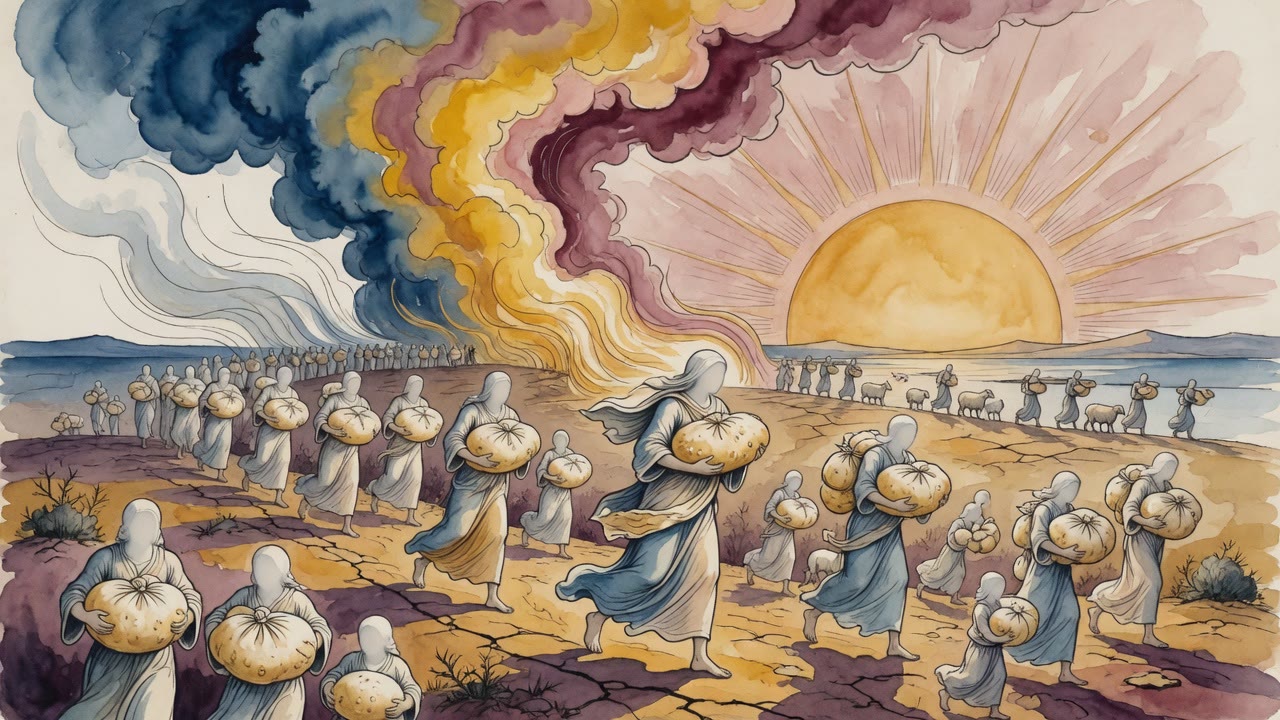
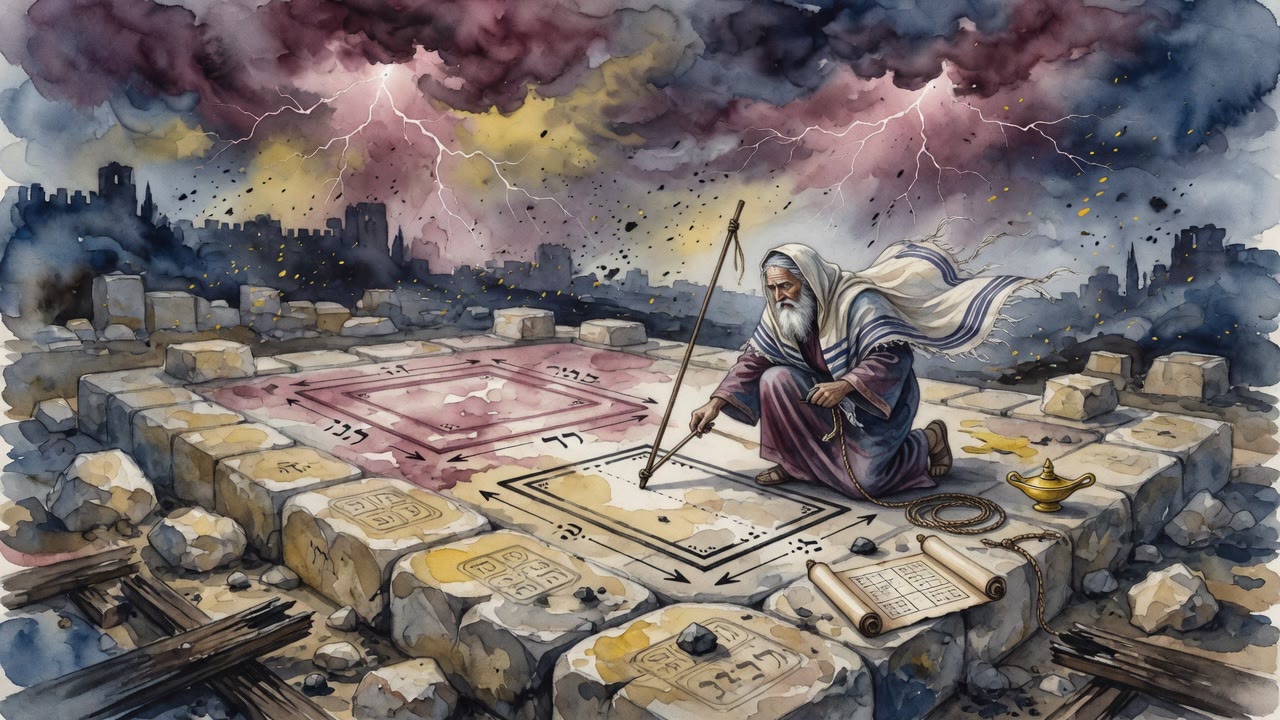
After decades of exile a thin column of Jews reached Jerusalem again. Among them walked three voices the tradition will not let blur: Haggai, Zechariah, and Malachi. Haggai revealed the blueprint for the new altar, and the measure was larger than the altar of Solomon's Temple. Zechariah fixed the exact place. Malachi taught that sacrifices could rise on the holy site even before the full house stood. Urgency outran stone. The people needed smoke and blood and law before the last beam settled.
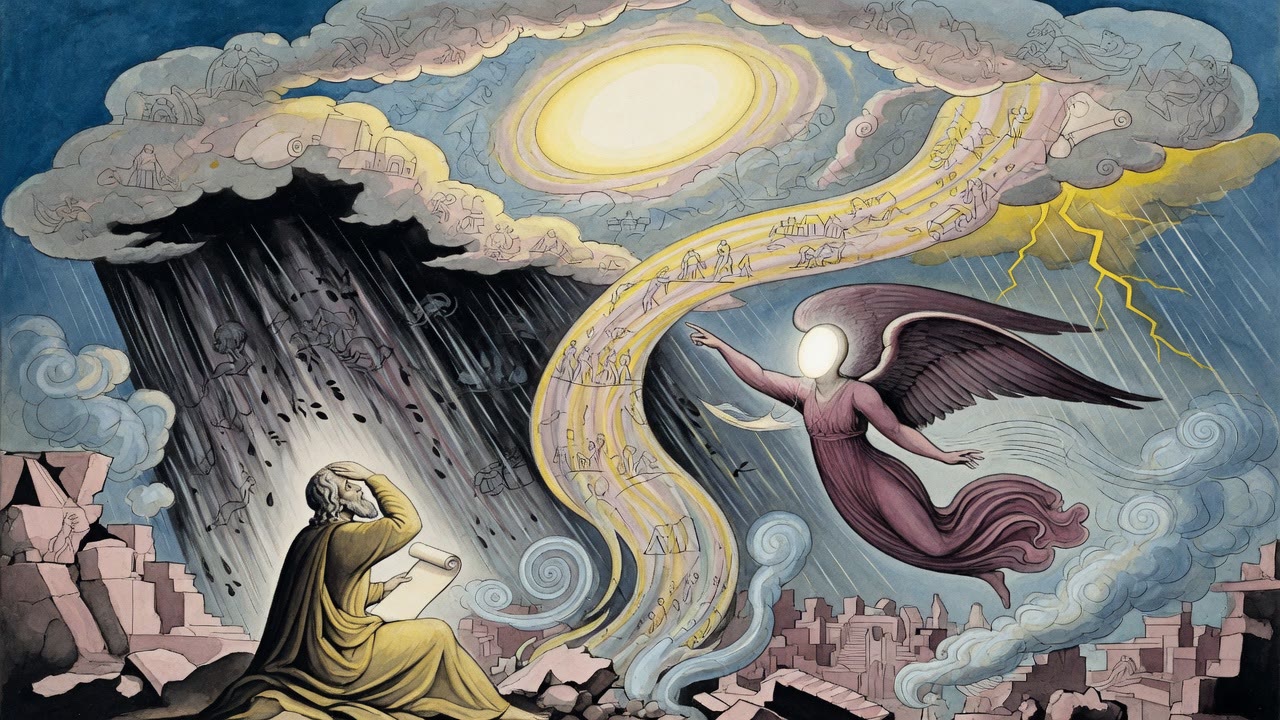
One of these prophets, the sources do not pin which, authorized a change that still shapes every Torah scroll. The returnees left Ktav Ivri, the old Hebrew script, and took up the Assyrian letters, the Aramaic forms still used for sacred writing. Exile had rewritten their hands. The prophets blessed the new shapes so Torah could be read by mouths that had learned Babylon's strokes.
A larger altar is ambition under rubble. It says the second house will not apologize for being second by shrinking the fire. Script change is another kind of courage. Continuity of meaning accepts discontinuity of letters. The people who came home did not pretend the exile never trained their fingers. They asked heaven to bless the new strokes so the old words could still command.
A Skull on Araunah's Floor
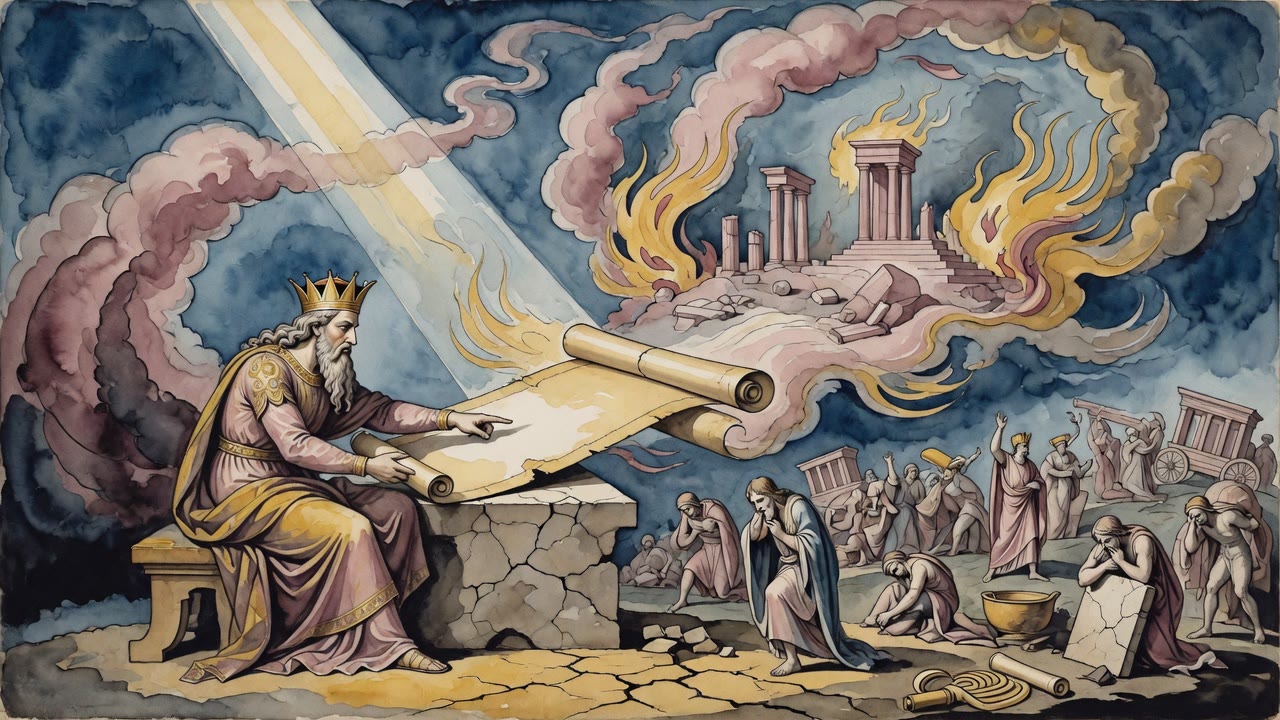
Work on the holy site uncovered a skull. Not a nameless bone. The skull of Araunah, also called Araniah or Aravnah, the man from whom King David bought the threshing floor that became the Temple mount. Priests faced a purity crisis they were not trained to solve. The legends call them unlearned for that hour. Did the bone defile the place? How far did the tumah reach?
A sharp voice poured reproach on their ignorance. Sacred rebuilding does not erase human thinness. The man who sold David the ground returns as a skull that interrupts the schedule. Holiness is not a clean construction site. It is a floor that remembers every owner and every law about the dead.
David paid full price for that floor so that the altar would not stand on a gift that could be revoked. Now the seller's bone demands another payment: knowledge. Priests who can lift knives must also lift questions of impurity. The return is tested not only by Persian politics but by a single skull in the dust of the most expensive field in Israelite memory.
Ezra Delays for a Teacher
Ezra, whom some equate with Malachi, was central to resettling the land, yet he was not present for the first attempts to rebuild the sanctuary. He would not leave his teacher Baruch, too old for the hard road from Babylonia. Loyalty to a master postponed a national mission. The tradition praises the delay. A generation that rebuilds altars without honoring teachers builds on sand.
When Ezra's work in the land was done, he did not die there. He died in Khuzistan in Persia on a journey to see King Artachshashta. A synagogue in Raccia of Mesopotamia was later remembered as his foundation on the road between Babylonia and Palestine. The scribe's feet kept drawing maps even after the Temple work paused.
That death abroad is not failure. It is the geography of a man who belonged to both centers, study in the east and altar in the west. The journey to the king mirrors the journeys of decrees that once allowed return. Ezra dies still moving between courts and communities, still a bridge of flesh between empire and Zion.
Fire Over a Grave
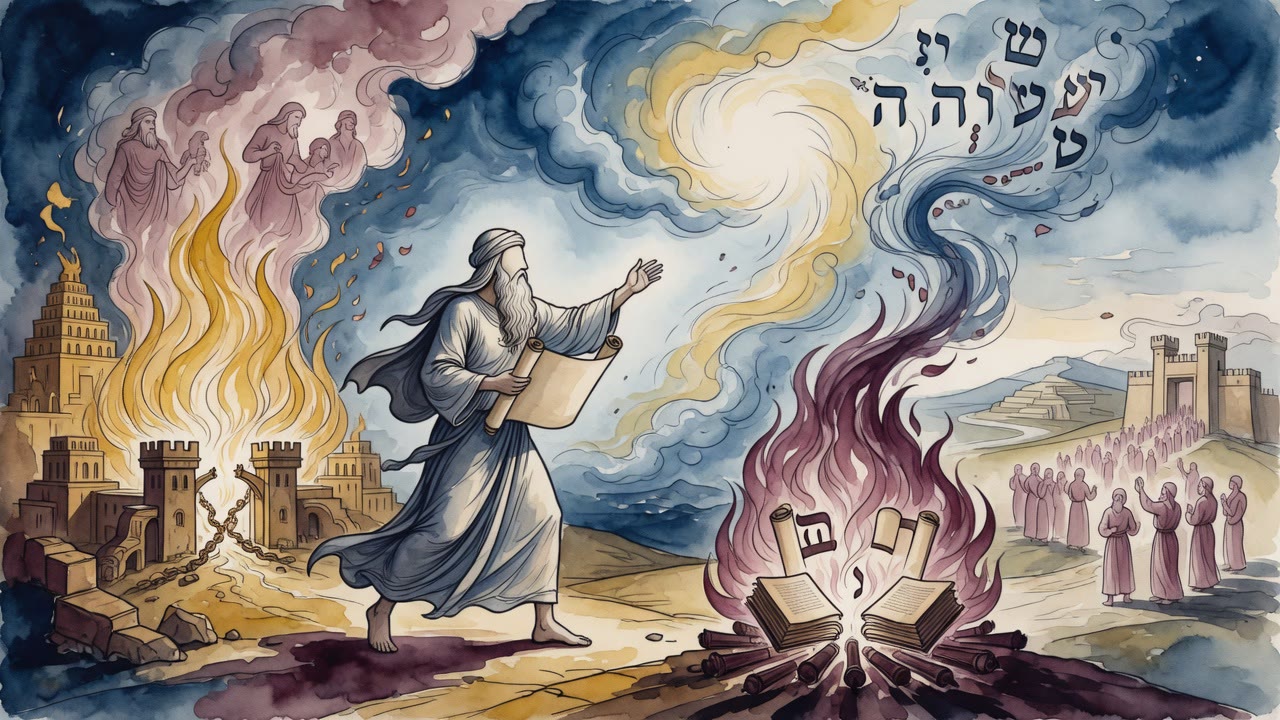
Over Ezra's burial place columns of fire were often seen at night. A shepherd sleeping nearby dreamed that Ezra ordered the community to move his grave. If the local leader refused, disaster would strike. The leader refused. Non-Jewish neighbors fell ill in numbers. When permission was finally granted and the grave opened, the plague stopped. The dead scribe still negotiated terms.
From larger altar to skull to fire the return is never a simple ribbon cutting. Prophets enlarge the measure of sacrifice. A Jebusite seller's bone tests priestly learning. A teacher keeps Ezra in exile an extra season. A grave relocates under threat of plague. Second Temple dawn is stubborn, human, and lit from more than one direction.
The fire columns are not decoration. They mark a man whose authority did not end at death. The plague that lifts when the grave moves says the community's stubbornness had become a public danger. Ezra, who taught Torah to a battered people, continues to teach by dream and by consequence. The altar in Jerusalem and the grave in Persia answer each other. One restarts public sacrifice. The other refuses a quiet, forgotten burial for the scribe who would not abandon his master even for the first beams of the house.
← All myths