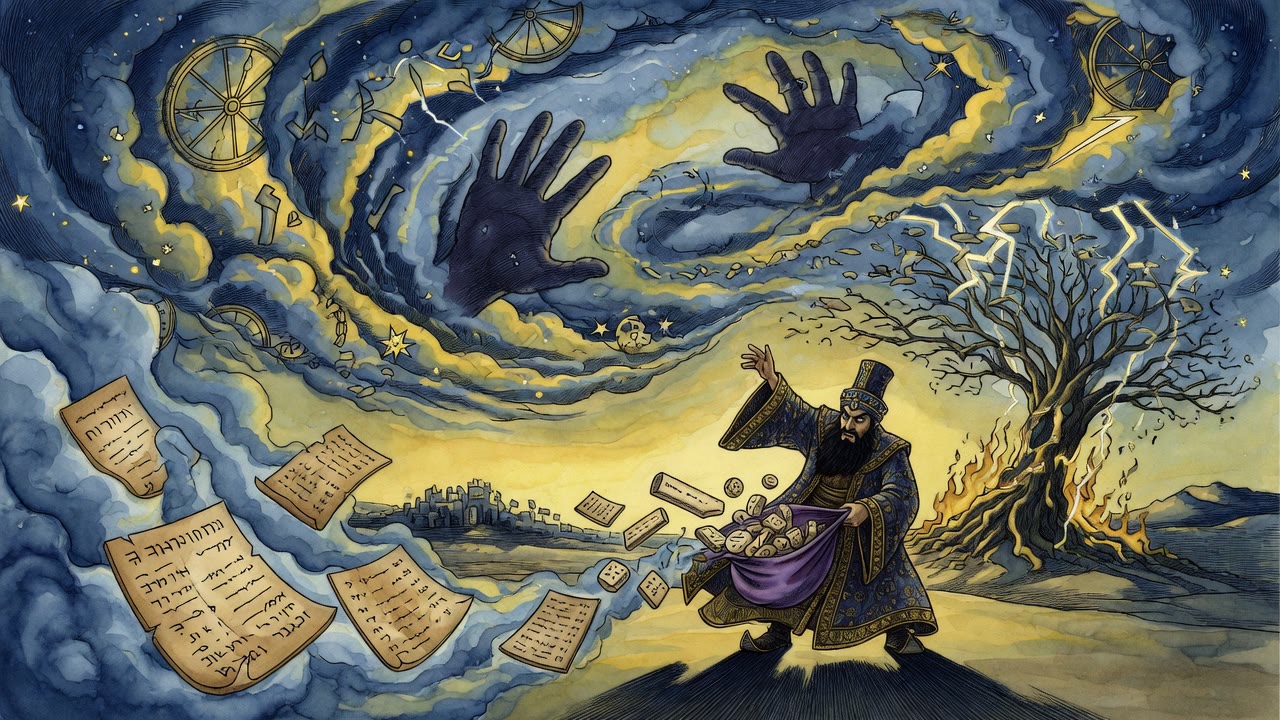
Haman Rose Higher So His Fall Could Be Seen
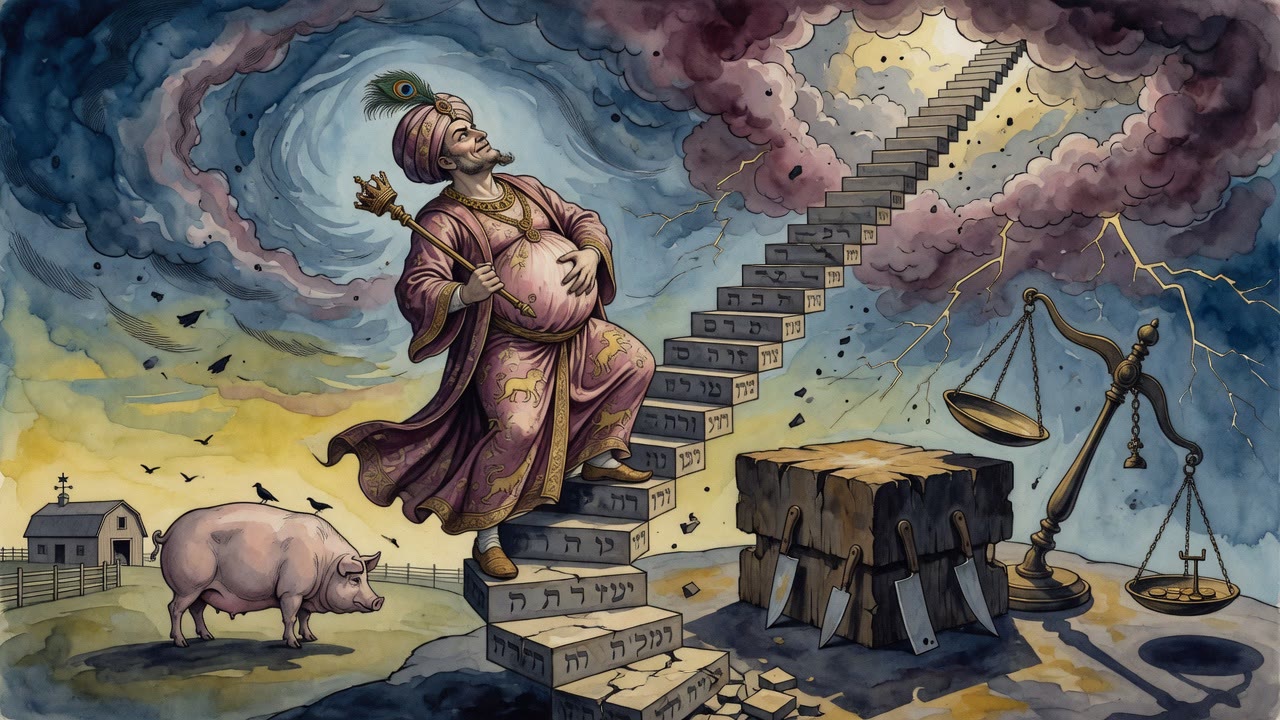
Haman's chair sat higher than every prince. In the yard the sow ate without limit, and the donkey already knew what the extra feed was for.
Table of Contents
The chair was taller than the chairs around it, and Haman liked the way the room had to look up.
 Click for full size
King Ahasuerus had set that seat above every prince. Servants bent at the door. Haman walked as if the empire had finally found the correct angle for its neck.
He could look down from that height and believe the world had arranged itself around his appetite.
The Grass Grew for the Blade
Outside the court, grass came up fast after rain. It took the sun. It took the space. For a week the field looked as if it had chosen the weeds.
Then the sickle went through, and the height was only a convenience for the cut.
Haman did not watch fields. He watched bowing. He had already gone down to Ahasuerus once and told him to stop the rebuilding of the Temple in Jerusalem. If he had been struck then, he would have vanished as one more hostile adviser. A nameless man dies, and a court shrugs.
So he was lifted. Officer. Commander. A public man. The higher chair was already leaning toward a rope.
The King Promoted the Soldier First
A common soldier cursed the king's son in the yard. The king could have killed him against the wall. No one would have remembered a common death.
The king made him an officer instead. Then a commander. Then, in front of the whole realm, he took the head.
Haman walked that same sequence without seeing the last office. God let him become famous so the provinces would have a name to remember when the rope took him. He had to sit where every messenger could describe the seat. Then every messenger could describe the empty air.
The Sow Ate Without Measure
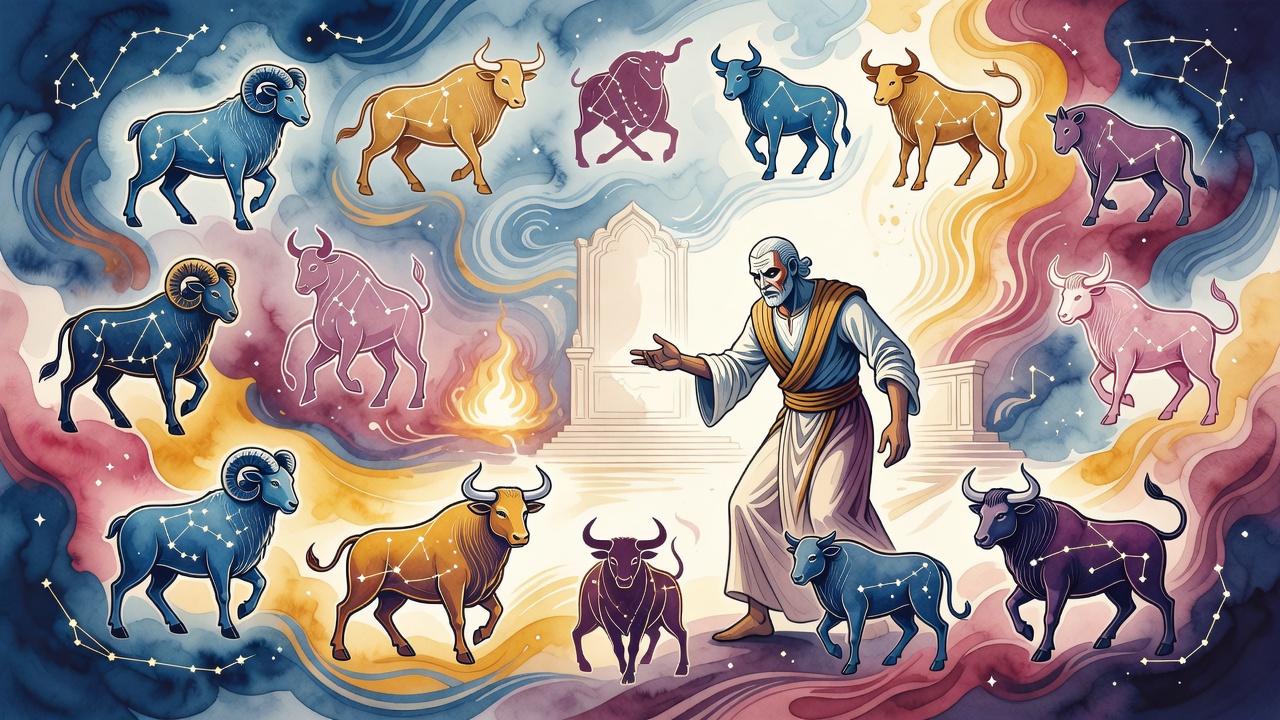
In a yard Haman never visited, a man kept a filly, a donkey, and a sow. The working animals got measured grain. The sow ate without limit and grew heavy in the shade.
The filly stamped. "We pull. She lies there. Why does the idle one eat better?"
The donkey already knew. "They are not feeding her for honor. They are feeding her for the knife."
When the feast day came, they took the sow and slaughtered it. Barley was set before the filly. She blew on it and would not eat. Her mother said it was not the food. The idleness had been the warning.
Haman's banquet world ran on the same feed. Invitations. Gold. The nearness of the king and queen. Every extra plate looked like blessing from inside the room. From the yard it was weight being added to a fall.
He Built Height for Someone Else
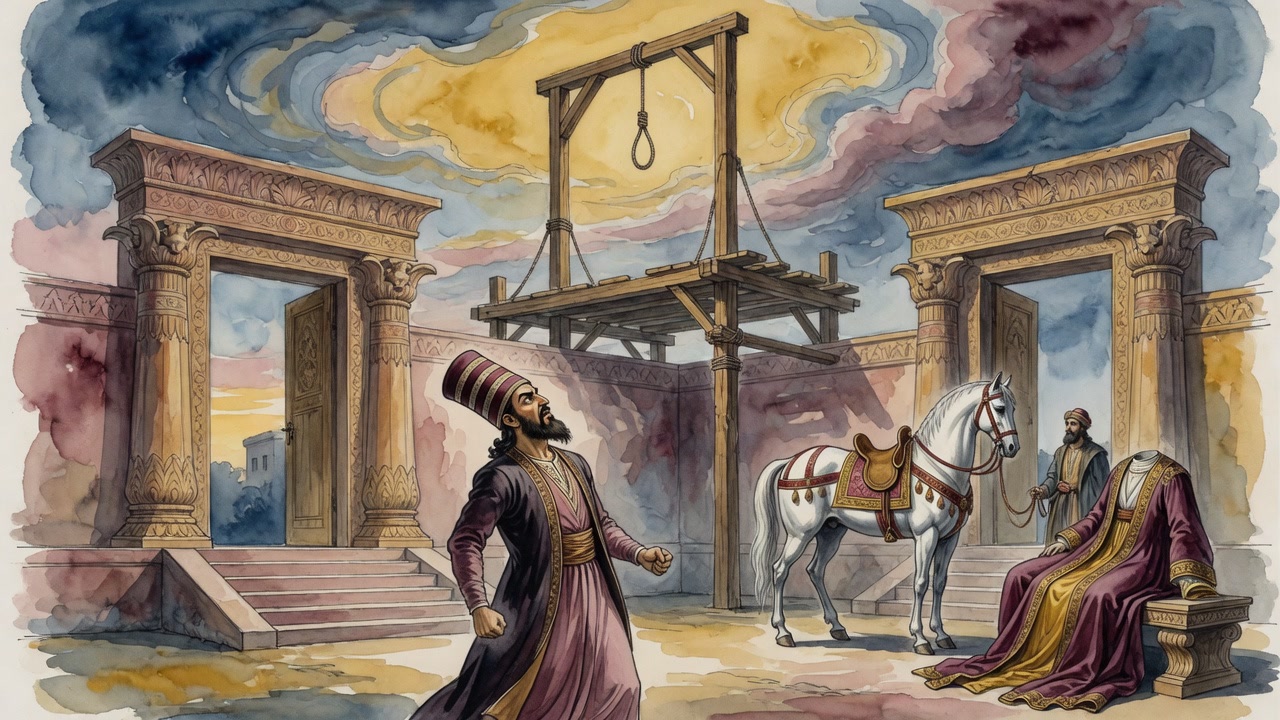
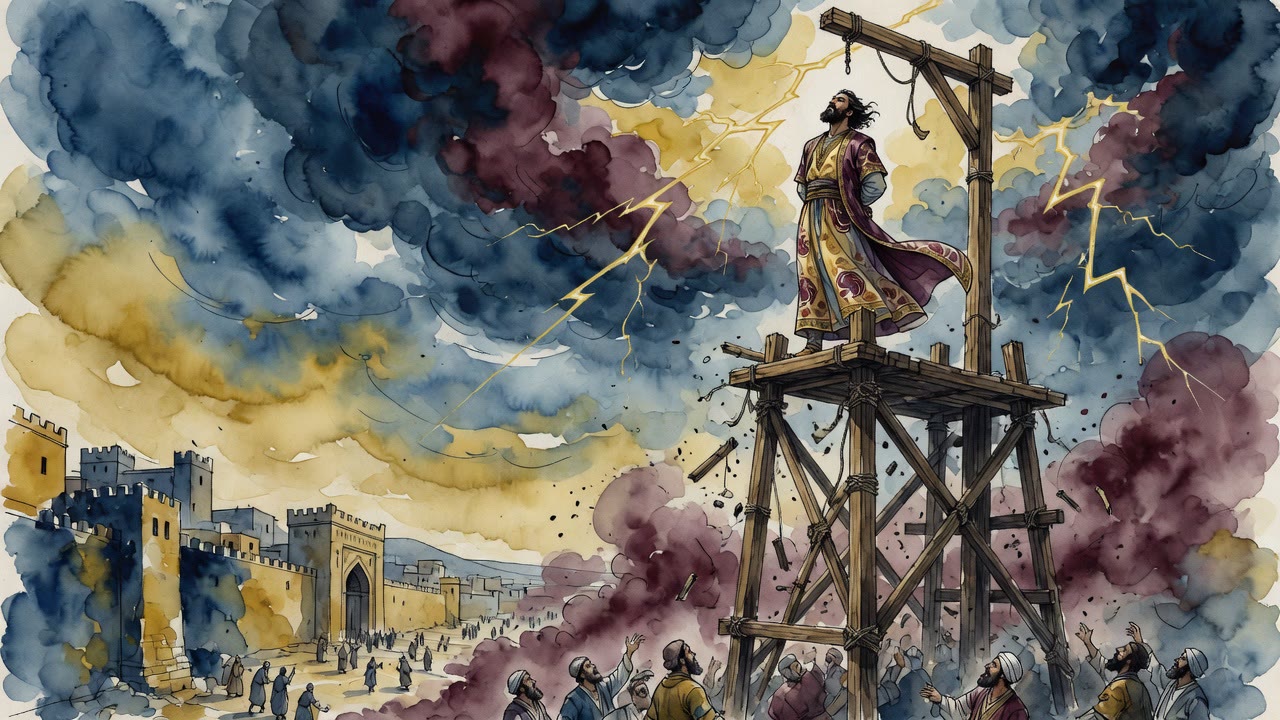
Haman built a gallows for Mordechai, fifty cubits high. Even his revenge needed altitude. He wanted the man at the gate lifted so the city would have to watch him lose.
He asked the king what should be done for the man the king wished to honor. He described the royal robe, the horse, the public leading through Shushan. He was naming his own hunger. The king gave that parade to Mordechai.
Haman walked the Jew through the streets and heard the proclamation leave his own throat. The bridle was in his hand. The height had already changed owners.
The Rope Found the Chair
When Queen Esther named him in the banquet hall, there was nowhere left to climb. They hanged Haman on the wood he had cut for Mordechai. The fifty cubits did the work they had been built to do. The whole kingdom could see it.
Nothing in the middle of the rise had told the court that the sentence had already begun. He received more room, more food, more access, more height. Servants mistook it for permanence. Haman mistook it for proof.
Mordechai still sat at the gate while the chair was rising. Esther was still hidden in the palace. The decree still moved through the provinces. The ladder did not feel like rescue from below.
Only afterward did the raised things read as one motion. The chair. The banquet. The horse. The fifty cubits of wood. He rose until the fall could be seen from the far end of the city. Haman wanted others beneath him. Heaven gave him height because the fall needed witnesses.
← All myths