Haman Was Fattened for Slaughter, Not for His Own Good
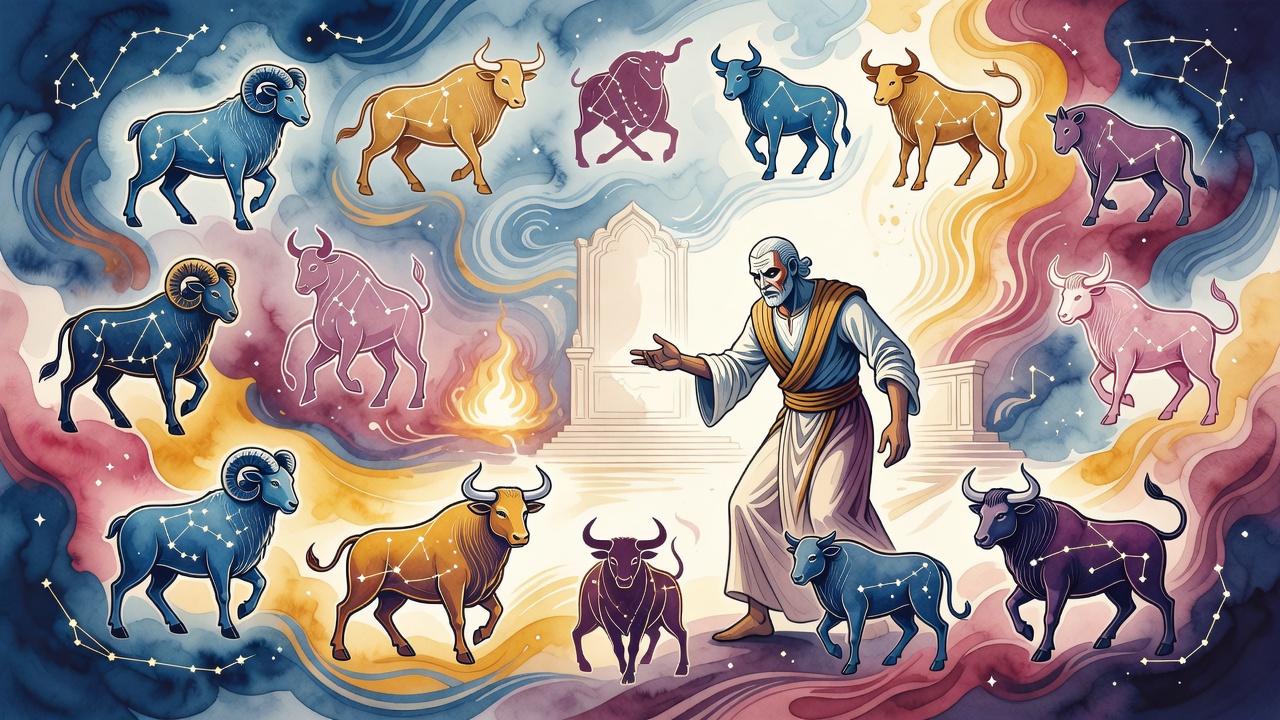
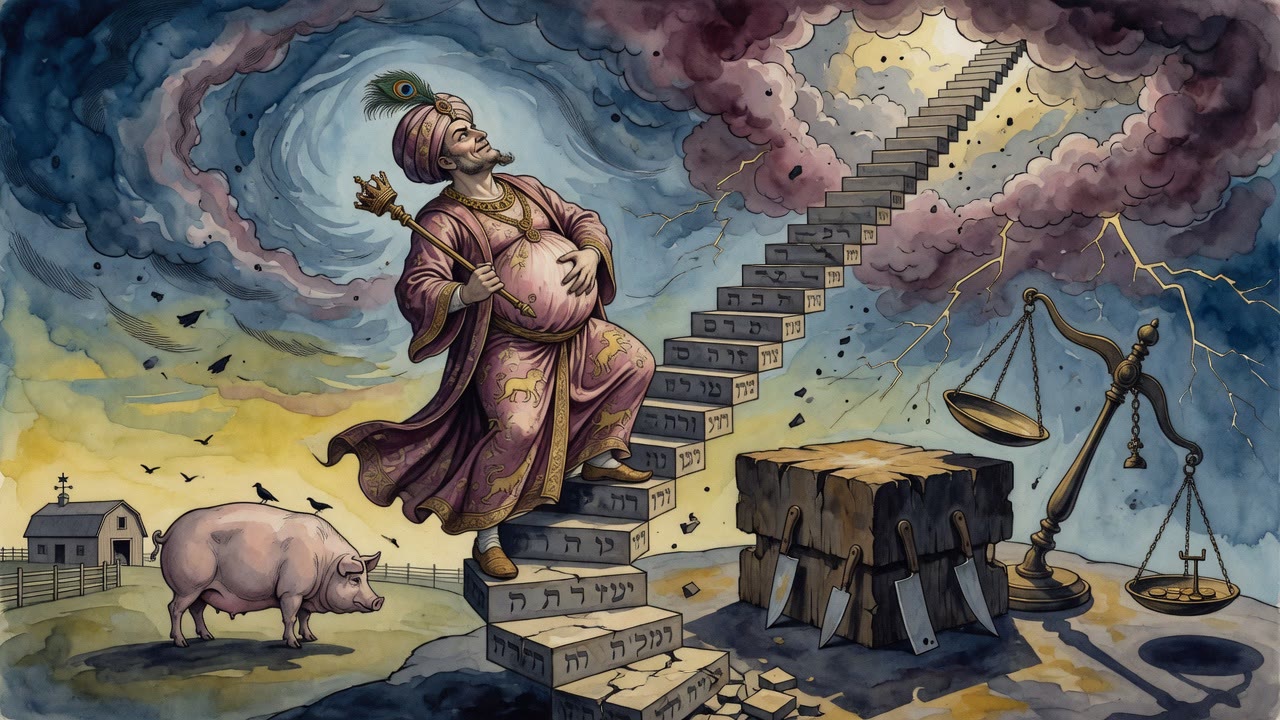
The sow ate without a measure. The filly hauled all day for a counted scoop. On the feast they took the fat one out and cut her throat.
Table of Contents
The sow ate all day.
 Click for full size
She ate while the filly hauled and the donkey carried, and when those two came in at evening there was a measured feed waiting, a fixed amount, counted out. The sow had no measure. Her trough was simply full again.
"What is the fool doing?" the filly said to her mother. "We do his work and he counts out our barley. She does nothing and he gives her everything."
"Wait," the donkey said. "You will live to see her go down. What he puts into her is not for her good."
The Trough Without a Measure
On the first of the month, when the feast day came, they took the fattened sow out to the slaughter and cut her throat.
Afterward they set barley in front of the filly and she blew on it and would not touch it. Her mother said, "It was not the eating that did it, daughter. It was the standing around."
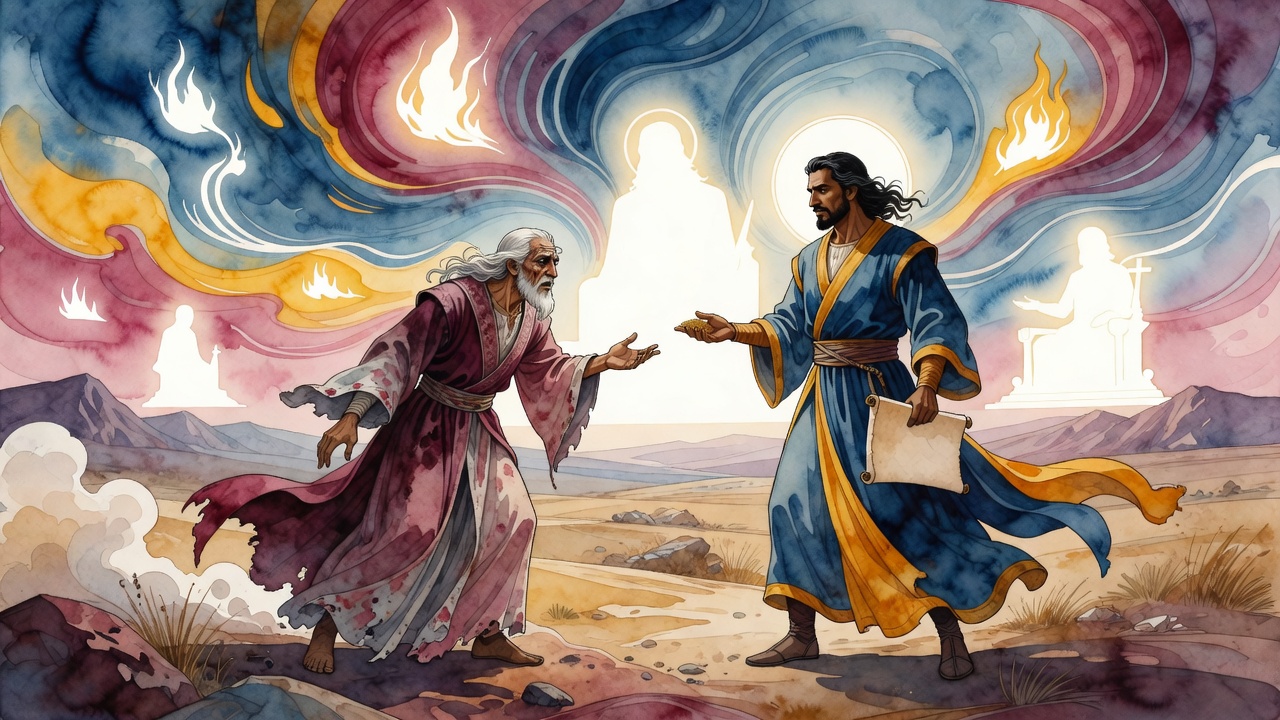
In Shushan a man was being fed the same way. Ahasuerus promoted Haman son of Hammedatha the Agagite, lifted him up, and set his chair above every prince in the empire. Above the ones who had bled for the crown. Above the ones with land and lineage. The wicked perish like the fat of rams, and the fat of a ram is not the animal's good fortune. It looked like the top of the world. It was a trough.
The Man Who Would Not Bend
He rode out through the king's gate and the whole courtyard went down on its face except one man.
Mordecai stood. That was the entire offense. He did not shout. He did not spit. He stood there while everyone around him flattened himself into the dust, and Haman looked at him, and the looking put a rage in him that never came out again.
Looking is how that kind of man goes down. Abraham lifted his eyes and found three guests at his tent. Haman looked at a man who would not bend, and the look took him down toward Gehenna, the pit of judgment. He went home with the whole empire under him and one upright spine in his eye, and he could not swallow either of them.
He Told the King That God Was Asleep
"There is a certain people," he said, "scattered and spread through the peoples in every province of your kingdom. Their laws are different from everyone's. They do not keep the king's laws. It is not worth the king's while to tolerate them."
Heaven heard more than a census. Heaven heard a charge that their God was asleep on the job.
It was heard. "There is no sleep in front of Me. The guardian of Israel does not slumber and does not sleep. You say I sleep? By your life, I will wake up against that man and take him out of the world."
Every word Haman spoke in the throne room downstairs was being answered upstairs, sentence for sentence, by Michael. "Master of the universe," Michael said. "Your children are being denounced down there. Not for idols. Not for licentiousness. Not for bloodshed. They are being denounced for keeping Your laws."
"I have not abandoned them and I will not." Guilty or innocent made no difference to the answer. The world cannot stand without Israel in it.
The Holidays He Counted Against Them
Haman was not finished. He warmed to it.
"Their teeth are big," he said. "They eat, they drink, and they call it delight in the Sabbath, delight in the festival. They bleed the assets of the world. One day in every seven, gone. One day in every thirty for the new moon. Passover in Nisan. Shavuot in Sivan. In Tishrei the new year, and the great fast, and then a whole week living in booths."
"That is what their Torah commands them," the king said.
"If they kept their days and ours as well, fine. They hold yours in contempt. They do not keep the calends. They do not keep the Saturnalia."
That was the sentence that finished him. "You are running down their festivals," God said. "I will bring you down in front of them, and they will add one more festival on top of the ones you just counted, and it will be about your fall."
A fool's mouth is his own ruin. Haman counted holy days as theft. Heaven began counting a day named for the trough he was still sitting in.
Silver Already Numbered the Gallows
Haman put ten thousand talents of silver on the table for the permission he wanted. A man can offer all the wealth of his house and still be laughed out of the room, and the king did not even take the money. He pulled the ring off his own finger. "The silver is yours, and the people are yours, do what you like with them."
The silver, hakesef. Count the letters: five, twenty, sixty, eighty. A hundred and sixty-five.
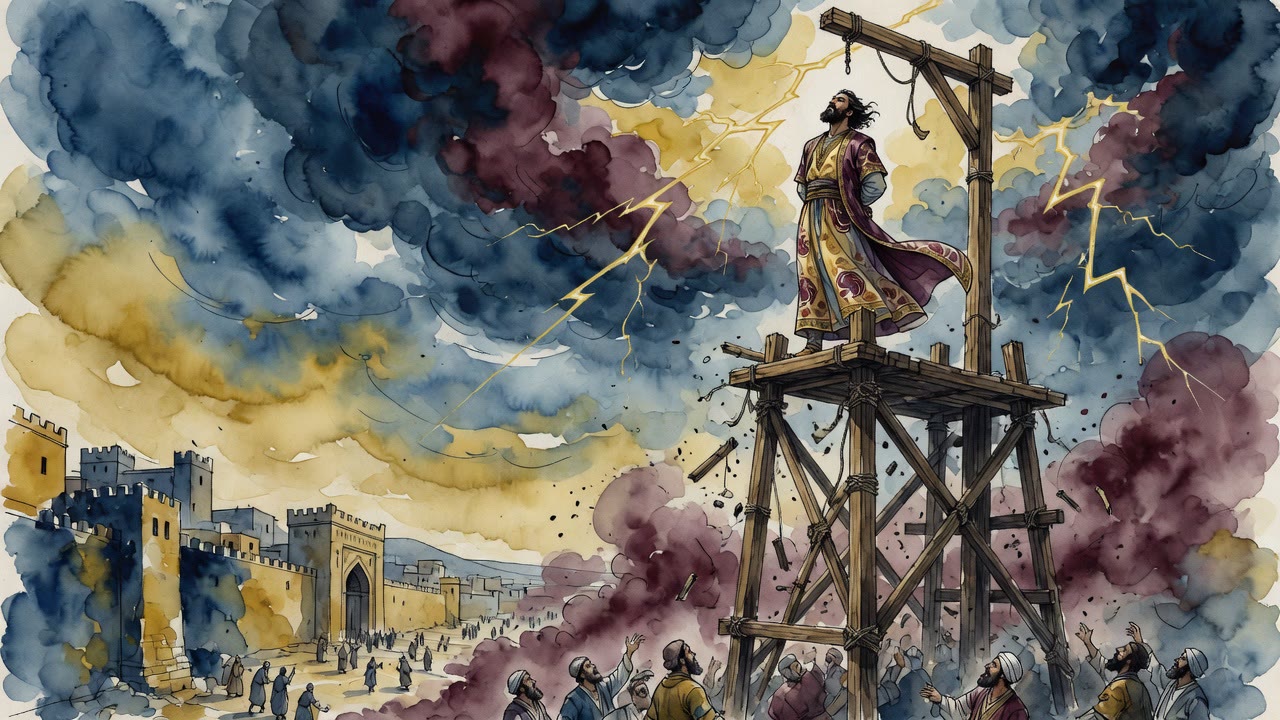
The gallows, haetz. Five, seventy, ninety. A hundred and sixty-five.
The bribe and the beam came out to the same number. Before the year was out Haman had a gallows fifty cubits high standing in his own courtyard, and he had built it for another man. The sow had already gone out to the feast. The filly, when they set barley in front of her, still would not eat.
← All myths