Hanina Carried the Stranger Who Tested Him
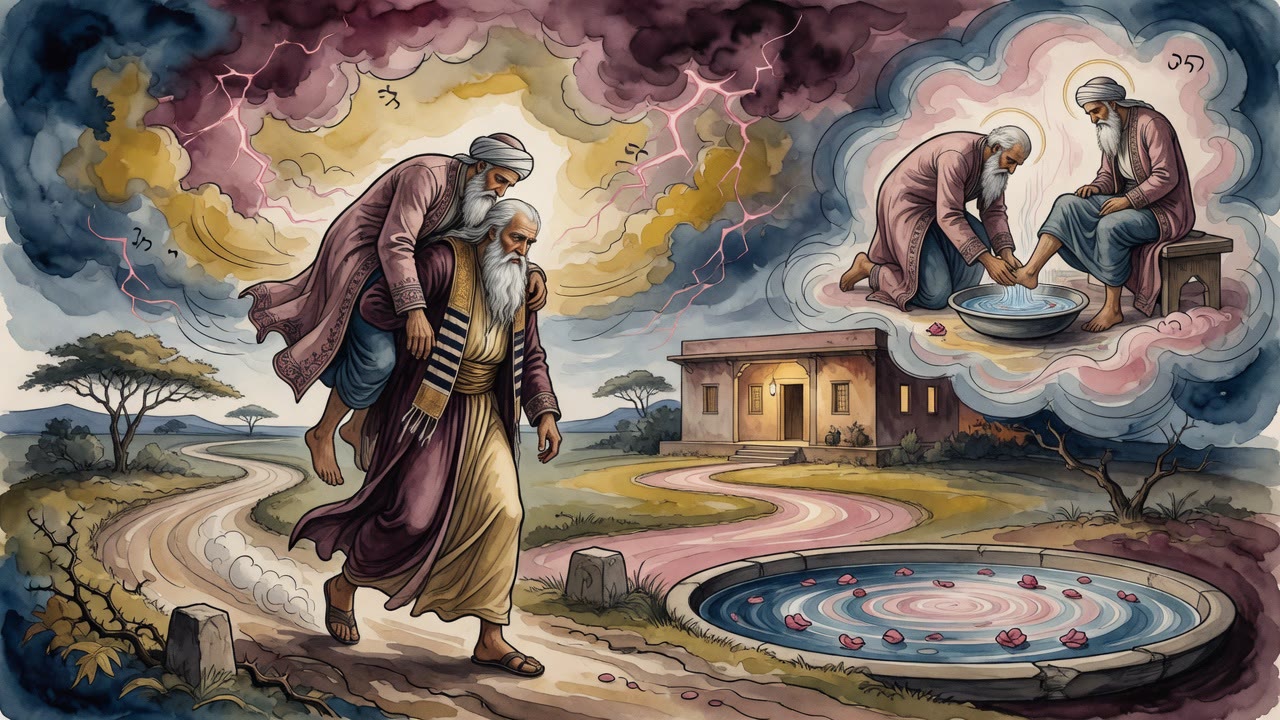
The official's weight sat on Rabbi Hanina's neck the whole walk home. At the basin he washed the man's feet himself.
Table of Contents
The official's boot was already dusty when Rabbi Hanina ben Dosa bent. Rank sat in the cut of the man's clothes. Heat sat on the road. That morning Hanina had told the people, "Receive every man with a friendly face." The words had drawn easy nods. Now the teaching had a body, and the body needed a back.
 Click for full size
A Hegemon, a man who could have claimed a servant, stood needing help more than ceremony. Hanina did not send a student. He took the stranger's weight onto his own shoulders and started for home.
The Walk That Did Not Ask a Name
The path was not short. Sweat found his eyes. The guest's silence sat heavier than the guest. Hanina kept walking without counting steps. He did not store the labor for later praise.
Dust stuck to his tongue. The Hegemon's hands rested at Hanina's collarbone. Hanina shifted the weight once. Honor, if it was going to be real, had to have a temperature. The sun did not ease. The stranger did not speak. Hanina's knees took the hill as if a back were a lawful kind of welcome.
At the door he paused to get a better grip, then carried the man across the threshold. The house was cool. The load came off his shoulders and left a heat that did not leave with it.
Water, Bread, and the Road Back
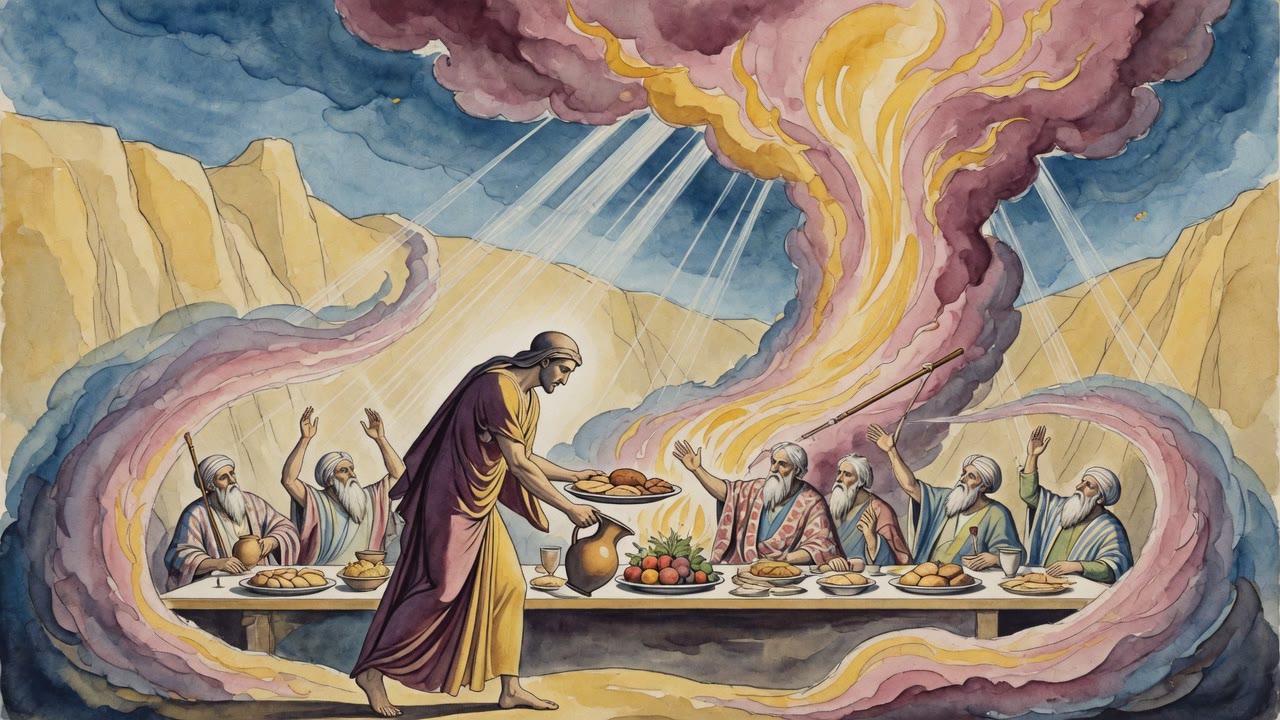
Hanina brought a basin. He knelt. He washed the Hegemon's feet. Dirt came off in the water and clouded the bowl. He set bread and a good dish before the guest and watched him eat without measuring the meal against usefulness. No speech about hospitality while the bowl stayed empty.
When the meal ended he lifted the guest again and carried him back to the place from which he had come. The circle closed. The house smelled of bread and wet stone. Hanina's shoulders remembered the weight on both roads.
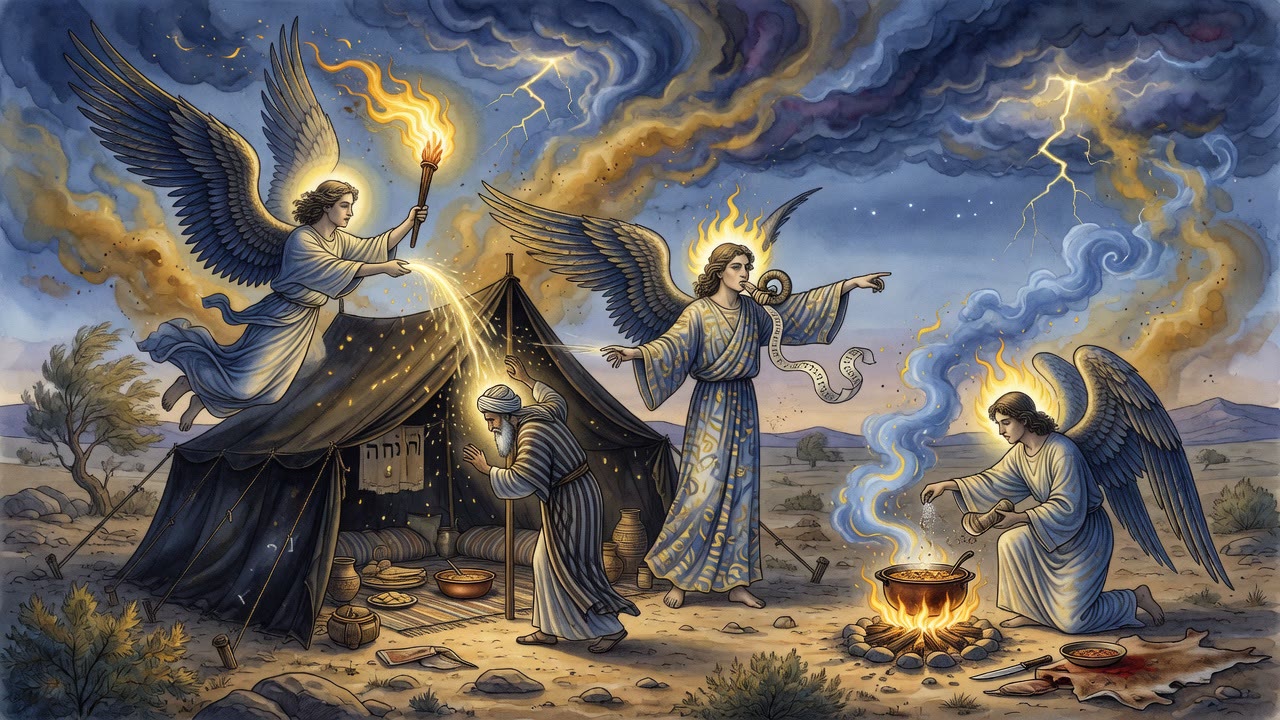
Only afterward did heaven open the disguise. The Hegemon straightened. The clothes of rank fell away like a costume. An angel stood in the road where an official had sat. He had been sent to test whether the sage's private hands matched his public teaching. Hanina was found perfect. The kindness he preached had weight enough to carry a stranger up a road and down it again with no audience taking notes.
The angel left no coin on the table. Hanina stood in an empty road with his shoulders still remembering the weight. The stranger who had tested him was gone. The basin still sat wet.
Stones Thrown at Merkulis
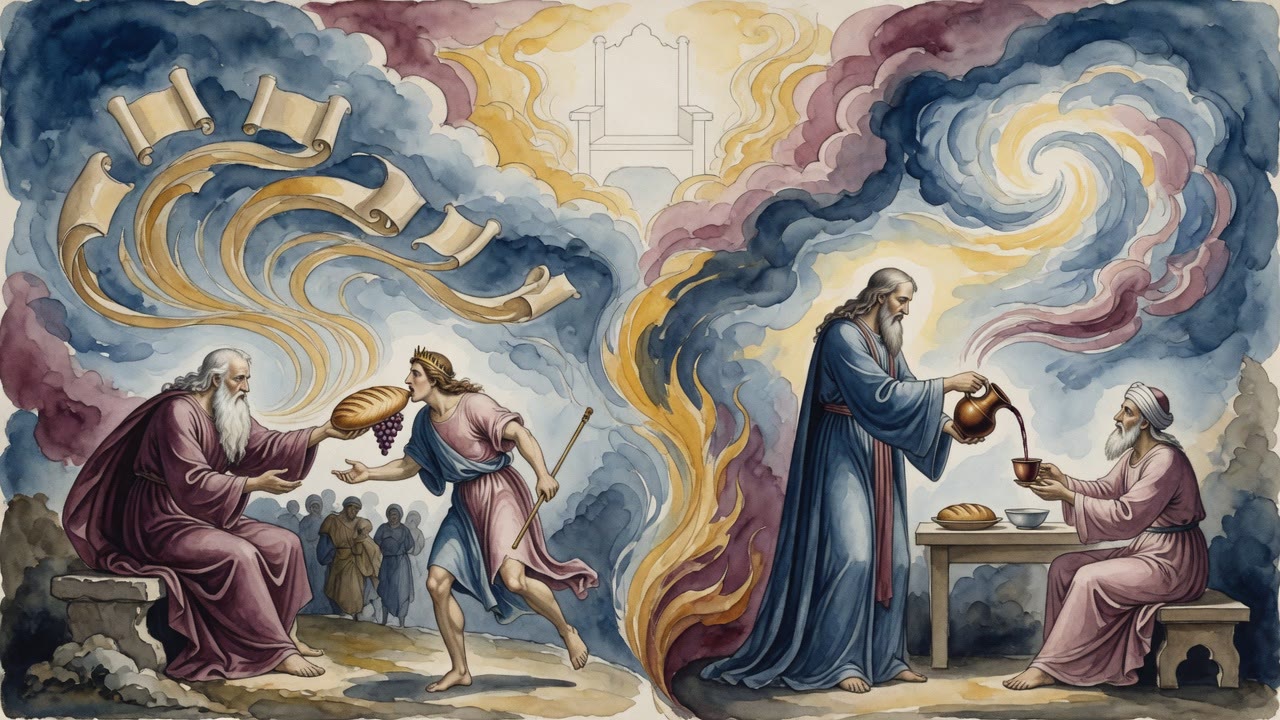
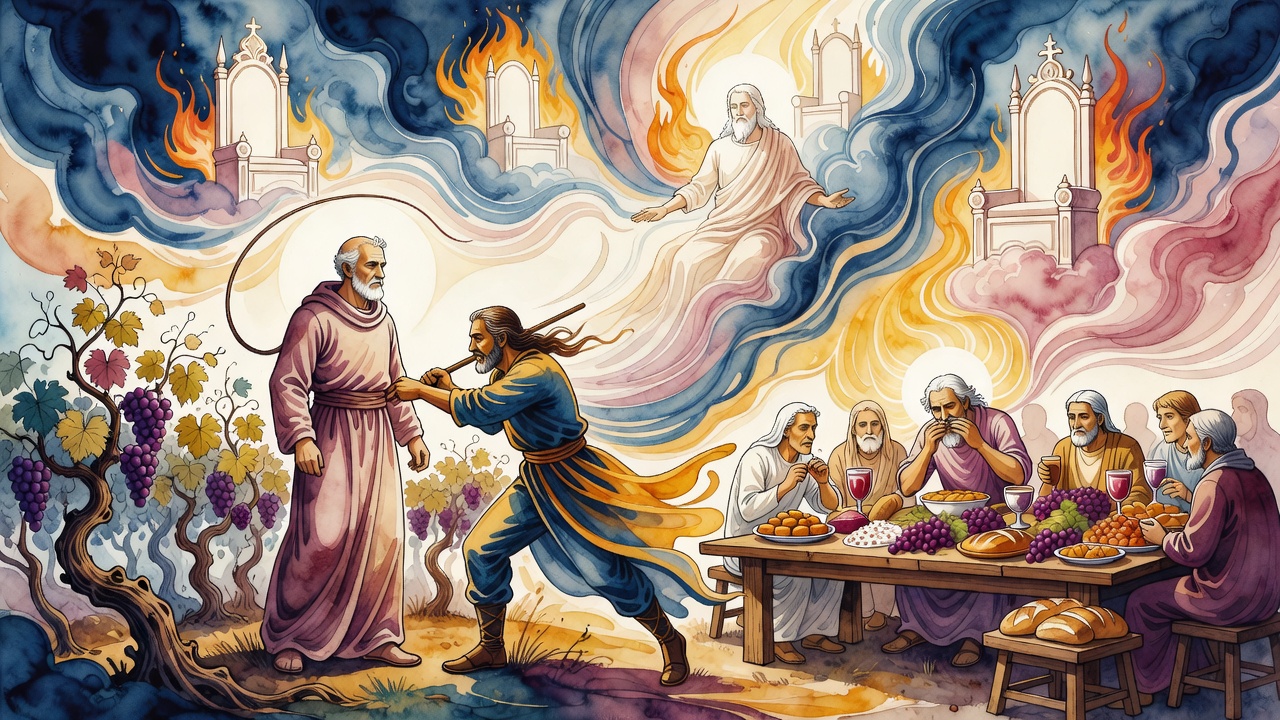
In another street, in another generation, a crowd gathered around a fool who had said something empty and said it loudly. Praise came fast. Each compliment landed like a stone. The heap grew. The fool smiled as if the stones were offerings.
Rabbi Alexandrai watched the pile rise and would not add to it. He picked up one of the stones and held it. "Whoever gives honor to a fool," he said, "is like one who throws a stone to Merkulis." Merkulis was an idol that thrived on stones hurled at it. The gesture pretended respect. It fed emptiness. The heap became a landmark. The young learned what to bow toward when they grew bored of truth.
He set the stone down without throwing it. Hanina's road and the fool's heap stood on opposite sides of the same craft. One man spent strength on a guest who could not repay him. A crowd threw praise at a hollow figure until folly looked like a shrine.
Three Cases, Not Twenty-Four
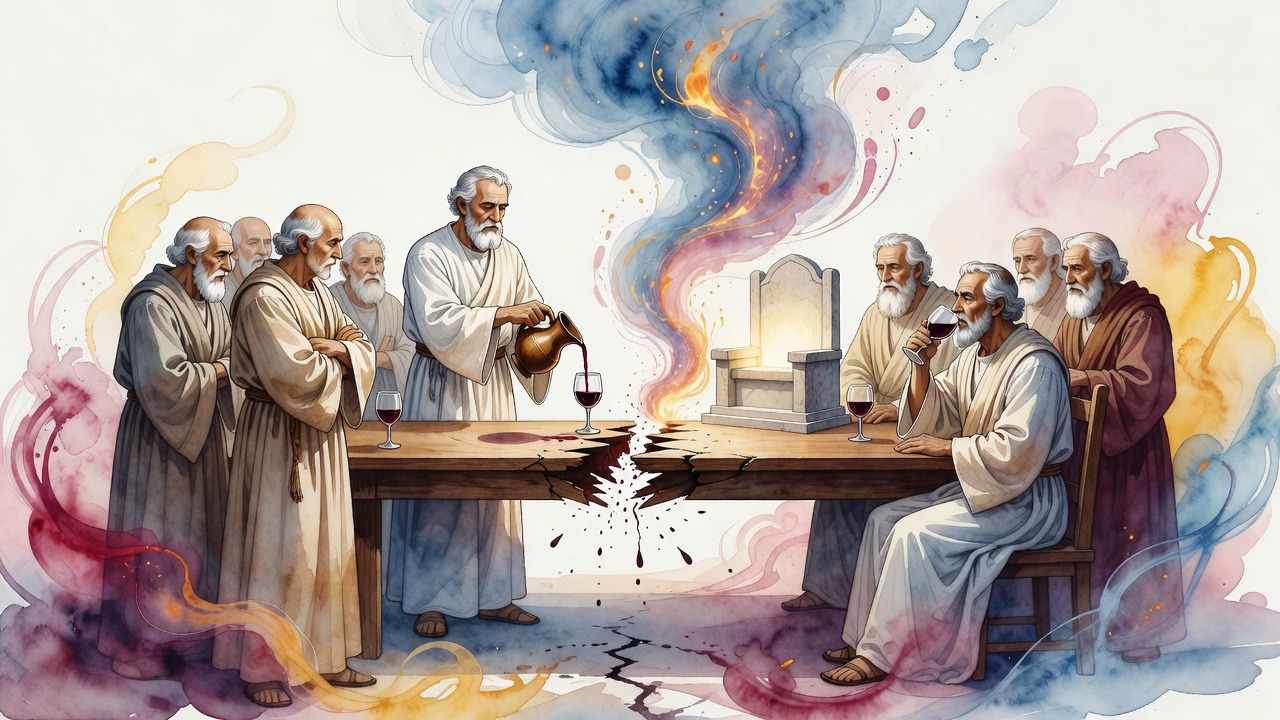
Rabbi Yehoshua ben Levi made a large claim in the study house. The tribunal, he said, excommunicates for a rabbi's honor in twenty-four cases, all laid out in the Mishnah.
Rabbi Elazar heard it and did not nod. "Where are they?"
"Go and seek, and you shall find."
Elazar went. He opened tractate after tractate. His finger traveled the columns. Lamp oil burned down. He came back with three. One: the man who makes light of the washing of hands. Two: the man who whispers slander behind the bier of a disciple of the wise. Three: the man who behaves haughtily toward the wise.
Round numbers comfort the mind. Three hard cases discipline it. Hanina's angel had needed no decree of niddui, the ban that cuts a person from the community. The fool's heap had needed many admirers. Elazar closed the Mishnah on three cases. Somewhere a basin still sat wet. The angel had not needed a ban. He had needed a back.
← All myths