He Ran Into the Levite Camp With Blood on His Hands
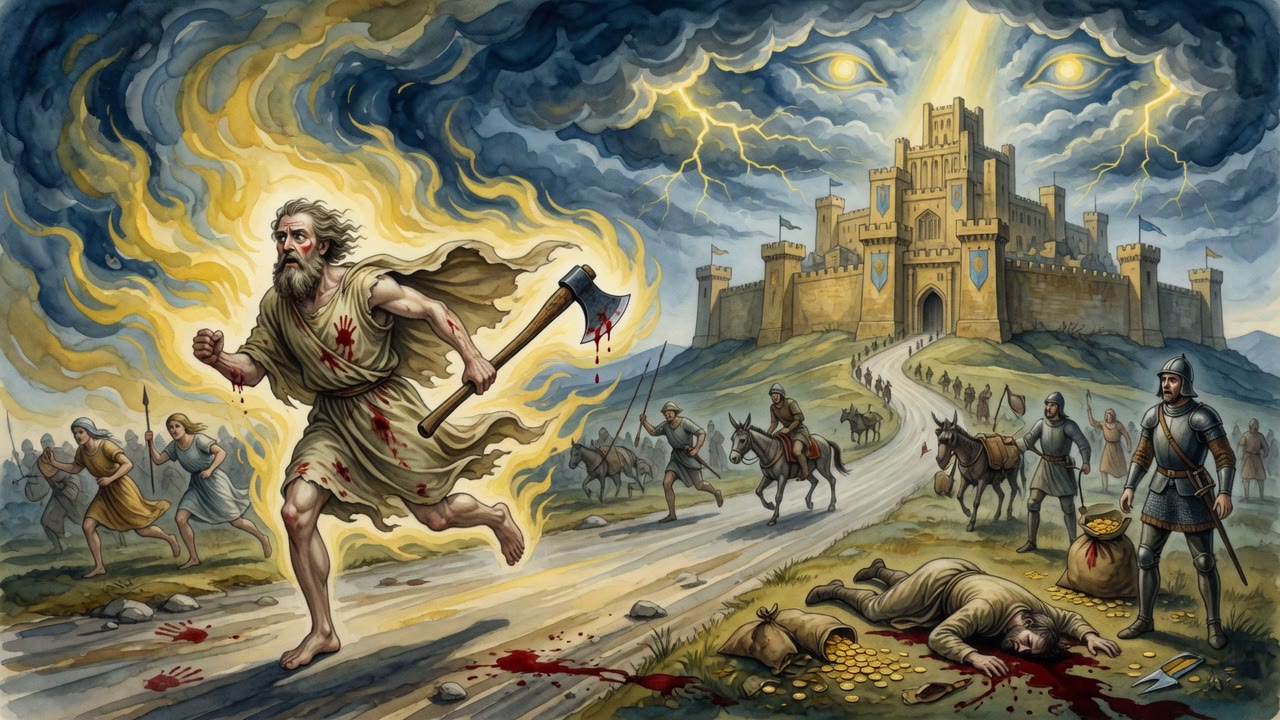
The axe head left the handle. A man went down in the wood chips. The one who had been chopping already heard the avenger behind him.
Table of Contents
The head of the axe came off in the middle of the swing. It struck the other man below the ribs. The one who had been chopping did not mean death. His hands knew that before his mind did. Then he saw the blood, and the wilderness stopped being wide enough.
 Click for full size
The Promise Had No City Yet
God had already spoken a place where he shall flee (Exodus 21:13). The trouble was time. The land of cities still waited beyond the Jordan. No walls. No gates. No named towns of sanctuary. Only dust, tents, and the blood-avenger already counting strides.
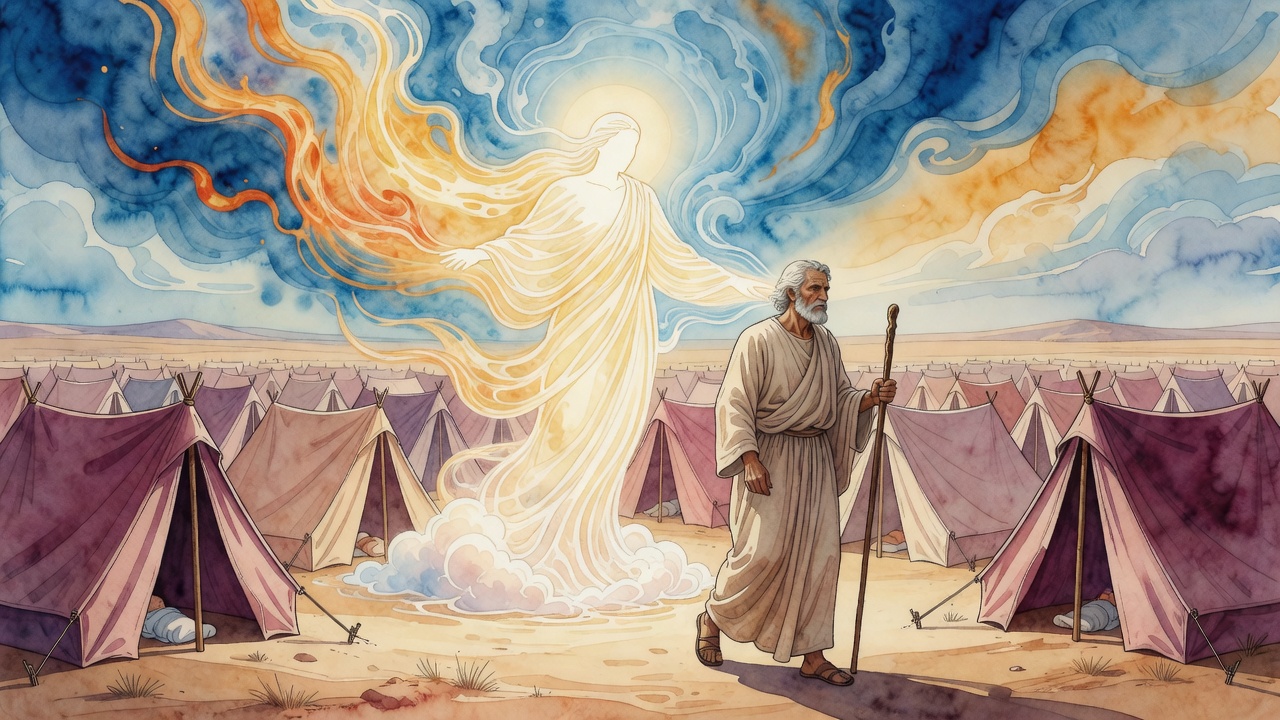
The accidental killer ran with iron taste in his mouth. Behind him, kin of the dead man ran with purpose. He did not have a map. He had a cloud over a Tent, and he ran toward that height because it was the only thing on the plain that looked like a wall.
The verse had said even now. Not after conquest. Not after surveyors. Not after stone. A man cannot hide inside a future city. Panic does not wait for blueprints.
He Crashed the Levite Ring
Around the Tabernacle the Levites pitched in a living wall. They owned no broad fields to plow for private wealth. Their inheritance was service, fire-offerings, the portions that rose to heaven and returned as food for those who carried the holy.
Into that ring the fleeing man crashed, lungs burning. A Levite blocked him with an arm that smelled of incense and sheep. "State it," the Levite said. The runner could barely speak. Accident. Axe. No hate. The Levite looked past him at the dust trail of the avenger and made a decision older than any courthouse.
"Inside," he said. "While you breathe inside our camp, his knife does not."
Children peered between guy-ropes. A woman drawing water set her jar down hard enough to crack a lip of clay. The accidental killer sat on packed earth and watched his stained hands as if they belonged to a stranger who had borrowed his life for one bad swing.
The Avenger Stopped at the Ropes
The blood-avenger arrived with dust on his teeth. He saw the man he wanted and the line of Levite tents. He could kill outside that ring and call it family duty. Inside, the accidental killer stood under a different sovereignty.
No one sang. The Tabernacle's curtains moved in a dry wind. The avenger shouted the dead man's name until his voice broke. A senior Levite answered without raising his own. "The place holds him. Bring your case when the court can hear intent. Not here. Not with a blade already decided."
The avenger stepped to the nearest guy-rope and put his foot against it. The rope hummed. He did not lift the foot over. Duty and rage hate waiting. Still he did not cross.
He Slept Inside the Fire's Share
Night came down on both sides of the rope. Outside, the avenger built a small fire and sat with the hilt across his knees. Inside, the Levites ate from the day's fire-offerings, meat that had gone up in smoke and come back as their portion, because they had no field to harvest.
Someone held out bread to the runner. He could not take it. He sat with his stained hands in his lap and listened to Levitical voices reviewing the day's service, as if the holy work had not been interrupted by a man who had killed without hatred.
He slept in snatches. Every footstep outside made him flinch. At first light he pressed his palm to the earth of a camp that owned no private field. He still smelled of woodchips and terror. He was still guilty of a death he did not choose. He was also still alive.
The avenger's fire had gone out. The rope still held.
← All myths