Heaven Kept the Messianic Line Moving in Secret
A moon punished and promised future glory, a wrestling match with an angel, a scandal that turned out to be a divine appointment. Heaven was running traffic.
Table of Contents
 Click for full size
The Moon Asked the Wrong Question
On the fourth day of creation, when God hung the two great lights in the sky, the moon had an ambition it could not keep quiet. It asked about the letter the world had been built on. It asked which of the two lights would be greater. Heaven heard both questions, and the second one answered the first. The moon had just shown God exactly what it wanted, and God cut its light to one-sixtieth of what the sun would carry.
The moon protested. Its case had weight. God listened long enough to make a promise that planted something inside the creation: in the future world, the moon's light would be restored. It would shine as the sun shines. And the sun would be seven times what it is now. Two diminished lights, both promised enlargement, both carrying that promise forward through every night the world had yet to live through.
The messianic age did not wait at the end of a timeline. It was sealed inside the fourth day, folded into a divine promise made to a moon that asked too much. Every night since then, the smaller light has crossed the sky carrying a covenant the world does not yet know how to cash, a thin curved coin of borrowed brightness paid out toward a debt no one alive remembers signing.
Jacob Wrestled the Wrong Being
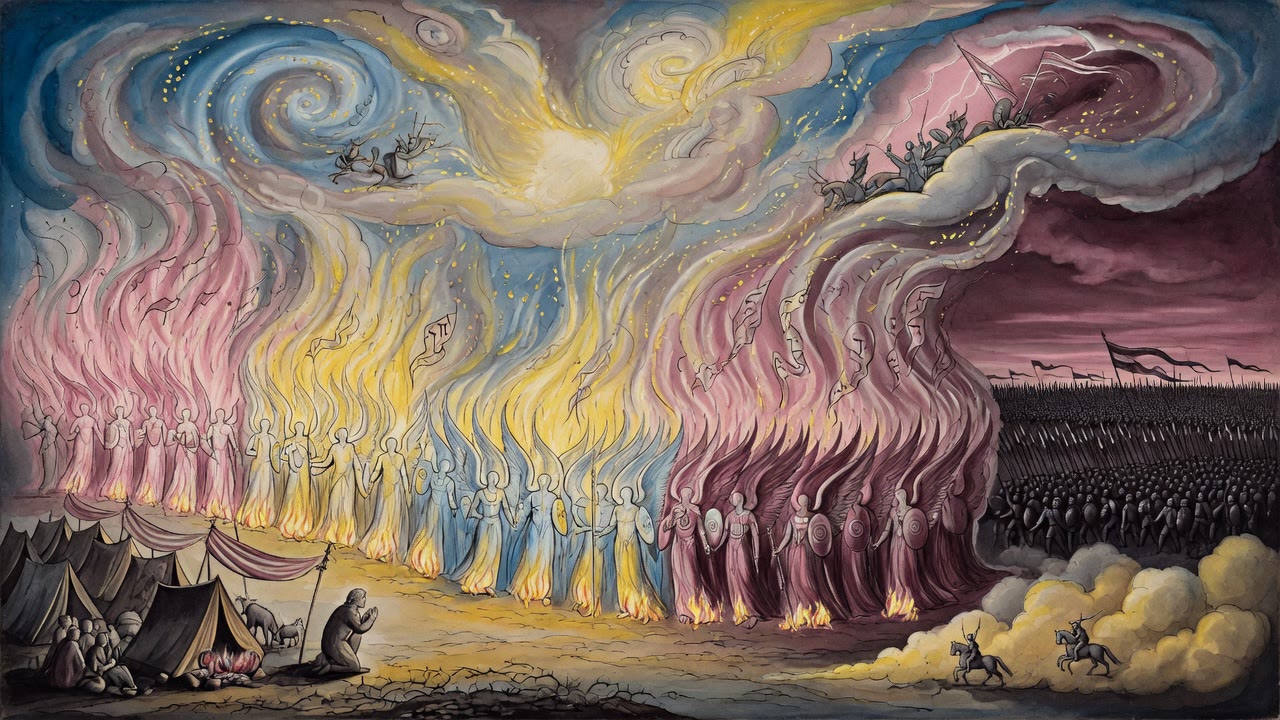
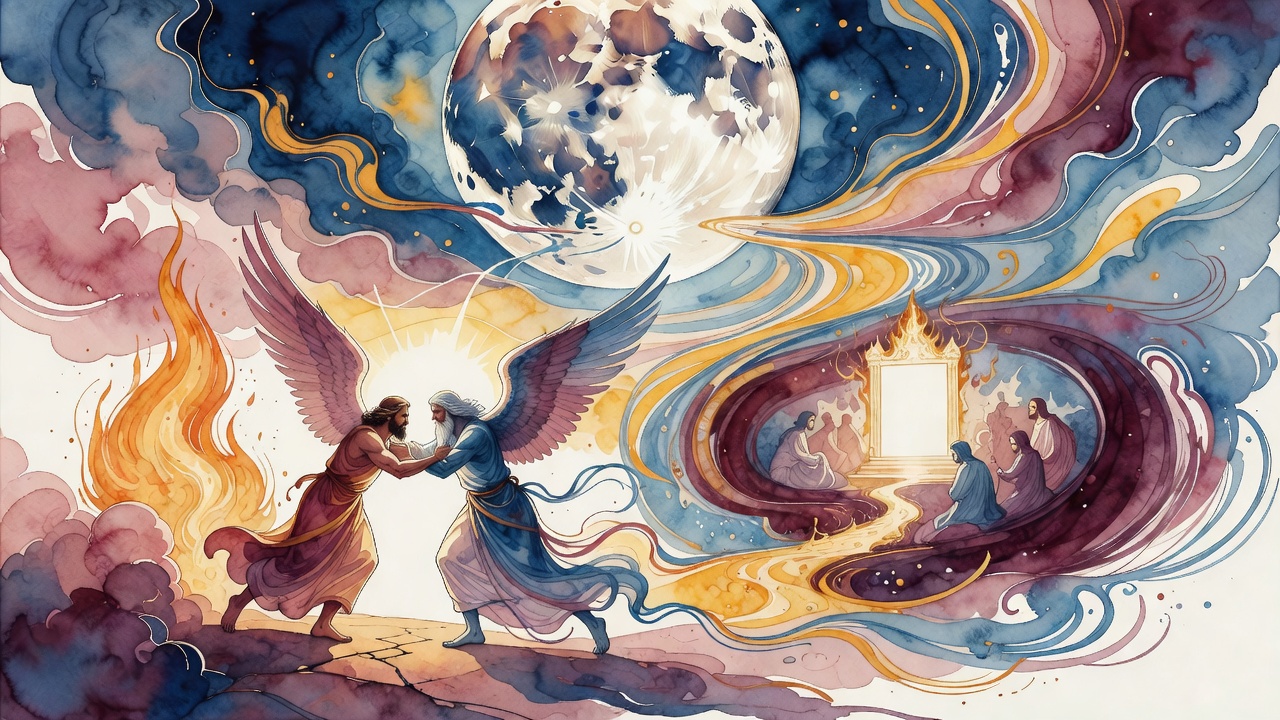
Years later, a man who had spent his life gripping things, his brother's heel, his father's blessing, his father-in-law's daughters, stood at a river ford in the middle of the night and found something gripping him back. The Torah calls it a man. The tradition said it was the angel of Esau, the guardian of the power that had been trying to displace Jacob since before either of them was born.
They fought until dawn. Jacob took a wound in the hollow of his thigh and kept fighting. The angel could not prevail. And when the light came, the angel asked to be released, because it could not let daylight find it still below the sky. Jacob refused to let go until he received a blessing. The angel gave him one. He gave him a new name, Israel, a name that means one who struggles with God and prevails.
The hollow of the thigh was the place from which Jacob's line would descend. Every child born after that night was born from a body that had been touched by the adversary and survived. The messianic line was not protected from suffering. It was shaped by it. The wound was part of the inheritance, limped forward into every generation that walked out of him.
What Judah Did Not Know He Was Starting
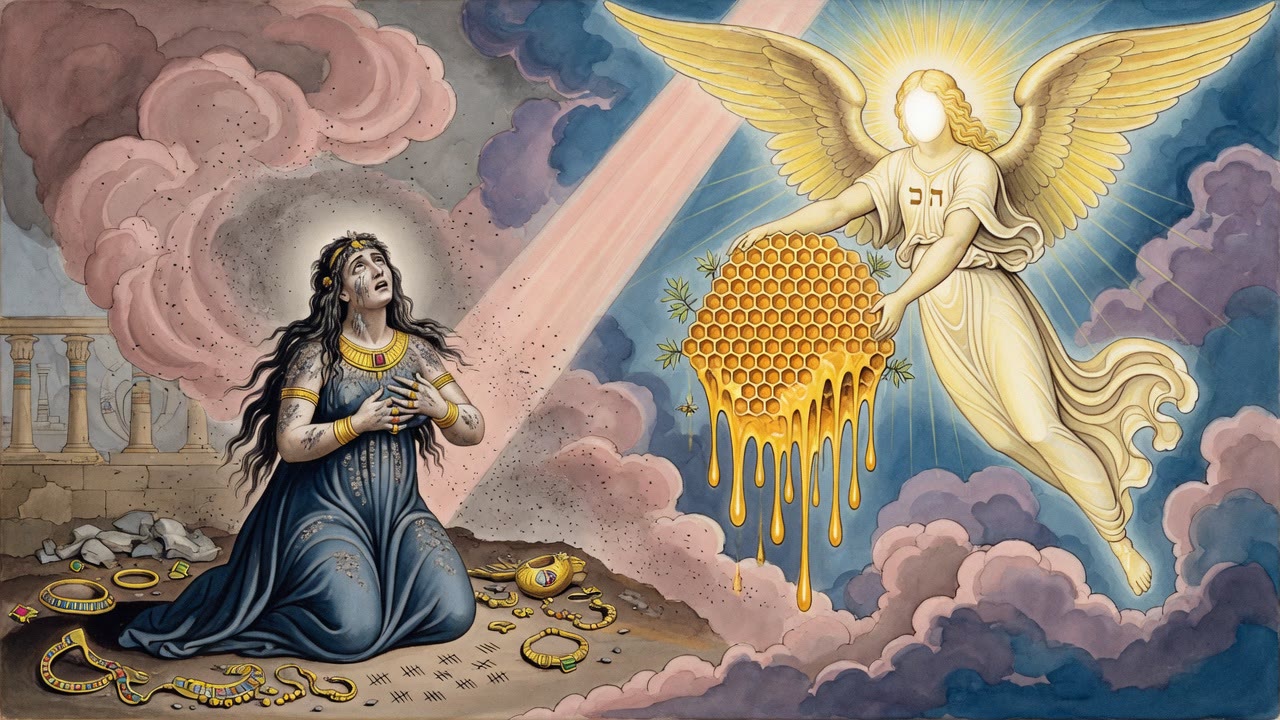
Some years after that, in a story the Torah tells with uncomfortable directness, Judah mistook his own daughter-in-law for a roadside prostitute. Tamar had dressed herself in a veil and waited for him at a crossroads because she knew that ordinary means had failed her. Her first husband had died. Her second had died. Judah had withheld his third son. She needed the line continued, and she was going to continue it herself.
When Judah discovered what had happened, he did not punish her. He said the words the rabbis never forgot: she is more righteous than I. From that union came Peretz, and from Peretz came a line that ran through Boaz and Ruth all the way to Jesse and then David. The greatest scandal in the patriarchal family turned out to be the moment heaven had been steering toward. Tamar's veil was not a deception. It was a tool in the hands of a larger plan.
The Kabbalist Who Was Told It Was Not Enough
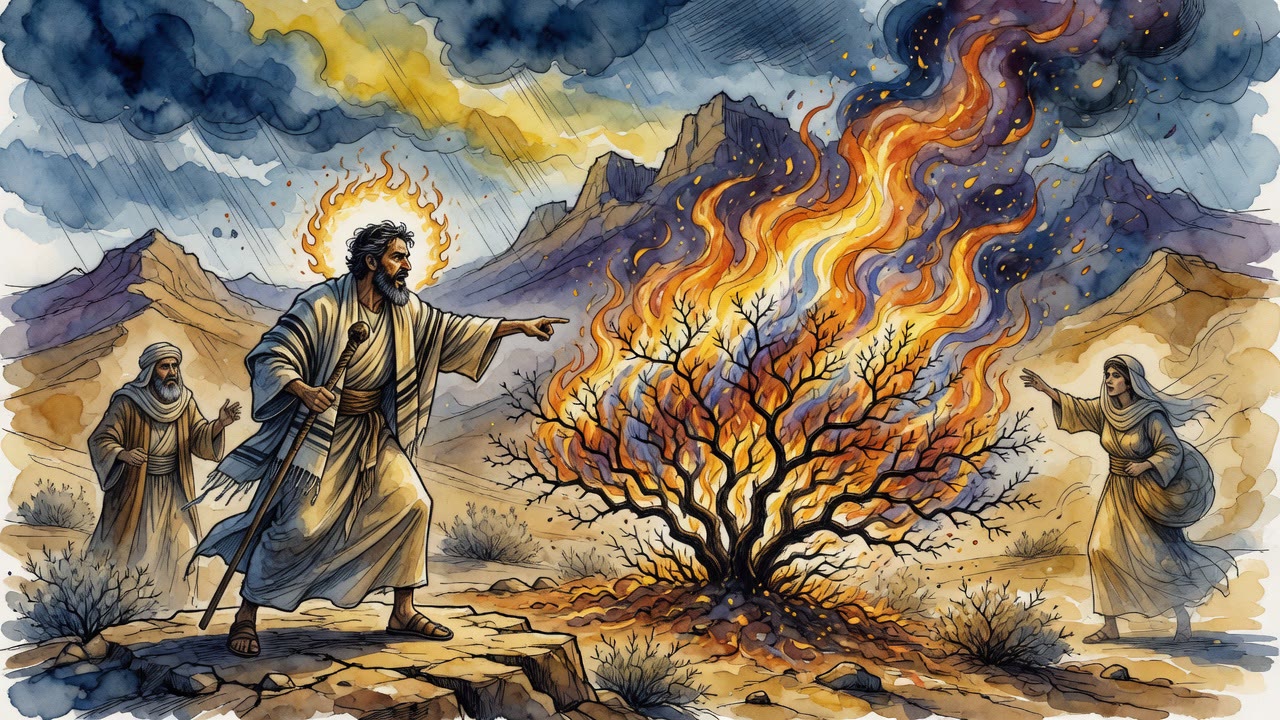
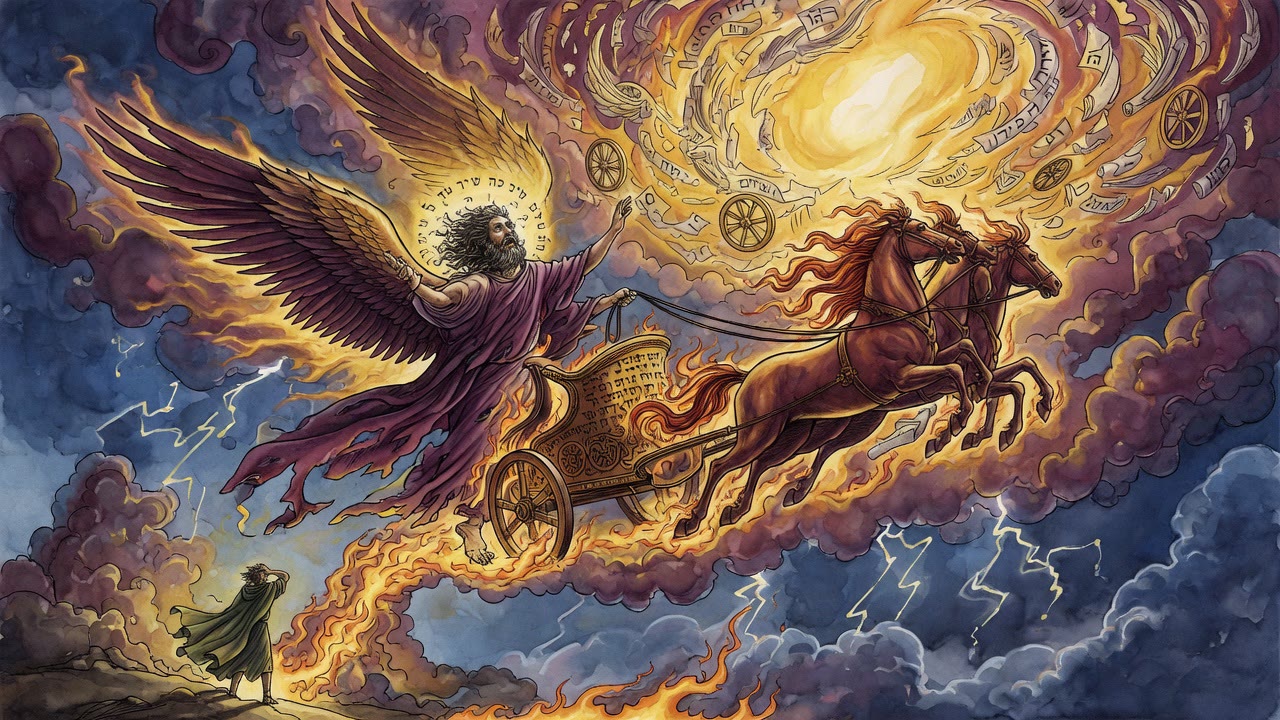
Much later, in Safed in the sixteenth century, a kabbalist was praying at a tomb when a heavenly voice reached him. It told him that his righteousness was immense. It told him that he had done more than most human beings in any generation. And then it told him that the Messiah would not come until he had done more still.
He left that encounter not deflated but enlarged. The voice had not threatened him. It had calibrated him. The distance between where he stood and where the arrival required was not infinite, but it was real, and now he knew it. Heaven had been patient through four thousand years of failed approaches. It could afford to name the gap precisely.
Four scenes. A punished moon carrying a promise. A wounded patriarch carrying a blessing. A veiled woman carrying a dynasty. A praying kabbalist carrying the weight of an unfinished task. Heaven was not absent from any of them. It was present in the exact form the moment required, quiet enough to be missed and persistent enough to be found by anyone who traced the pattern.
← All myths