5 min read

Hezekiah Recovered and the Sun Stalled Ten Hours

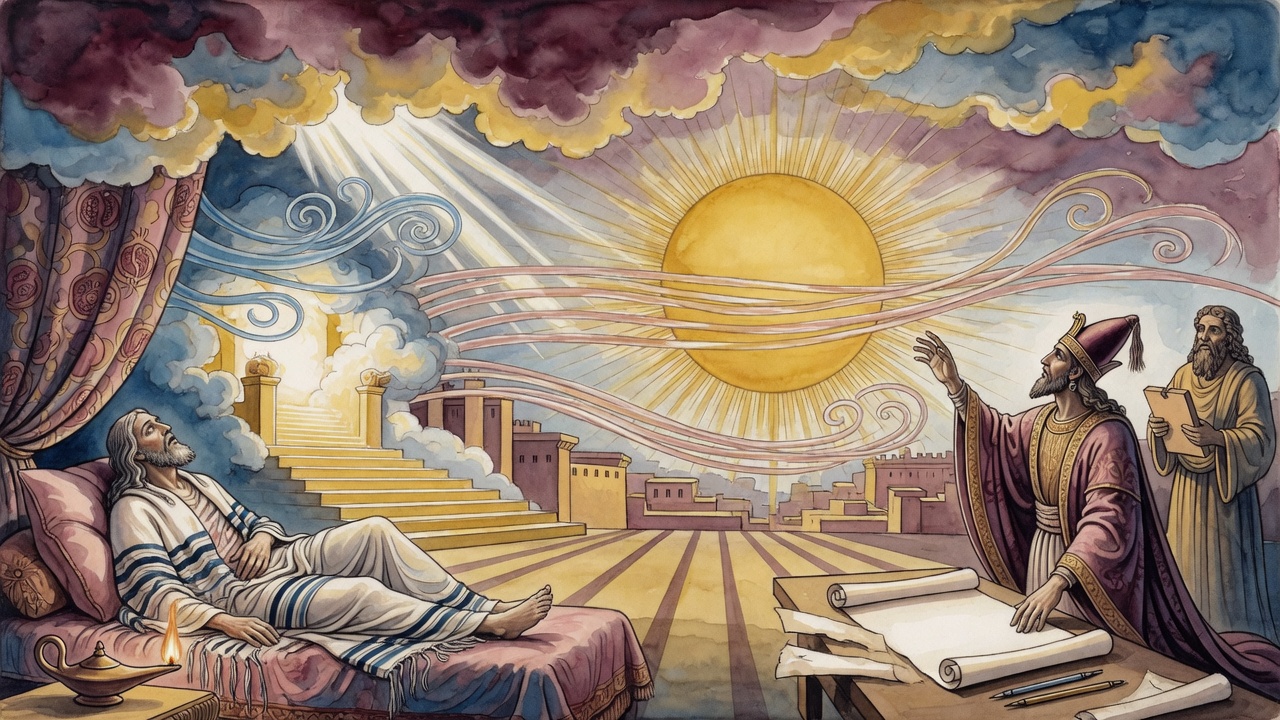
Before Hezekiah, illness meant death. God began recovery with him, stretched the day ten hours, and taught Babylon's prince to rewrite a letter.

Curated by Arthur · Told by Maggid ·
Table of Contents
  1. The First Man to Rise From a Sickbed
  2. Baladan Wakes to a Wrong Noon
  3. The Empire That Came From a Corrected Letter
  4. Ten Extra Hours and Their Shadow
Hezekiah Recovered and the Sun Stalled Ten Hours Click for full size

The First Man to Rise From a Sickbed

Before Hezekiah, illness ran one way. Sickness ended in death. Hezekiah himself had asked God to change the order so that restoration after disease might push people toward penance. God answered that the new order would begin with him.

The king recovered. The day of that recovery carried a second wonder. The sun shone ten hours longer than its habit. Distant lands stared at a sky that refused to clock out. Babylon noticed.

Illness had been a sealed corridor. Hezekiah walked back out into light that overstayed. The first recorded recovery in this legend stream was not quiet. It bent the day.

Baladan Wakes to a Wrong Noon

Baladan ruled Babylon in practice while his father's face, the tale says, had changed into a dog's. The son dined at noon and slept until three. On Hezekiah's day he woke to a sun still high and nearly executed his guards for letting him sleep through afternoon and night.

They told him of Hezekiah's recovery and the stretched day. Baladan understood that Hezekiah's God outranked the sun he treated as power. He sent greetings. The first letter said, "Peace be with Hezekiah, peace with his great God, and peace with Jerusalem."

After the messengers left, he caught the insult in the order. Hezekiah's name had stood before God's. He called the runners back. He rewrote the letter so the Name came first. Three steps of honor, the midrash counts, earned three world-monarch descendants. Nebuchadnezzar, Evil-merodach, and Belshazzar would be known from one end of the earth to the other.

The Empire That Came From a Corrected Letter

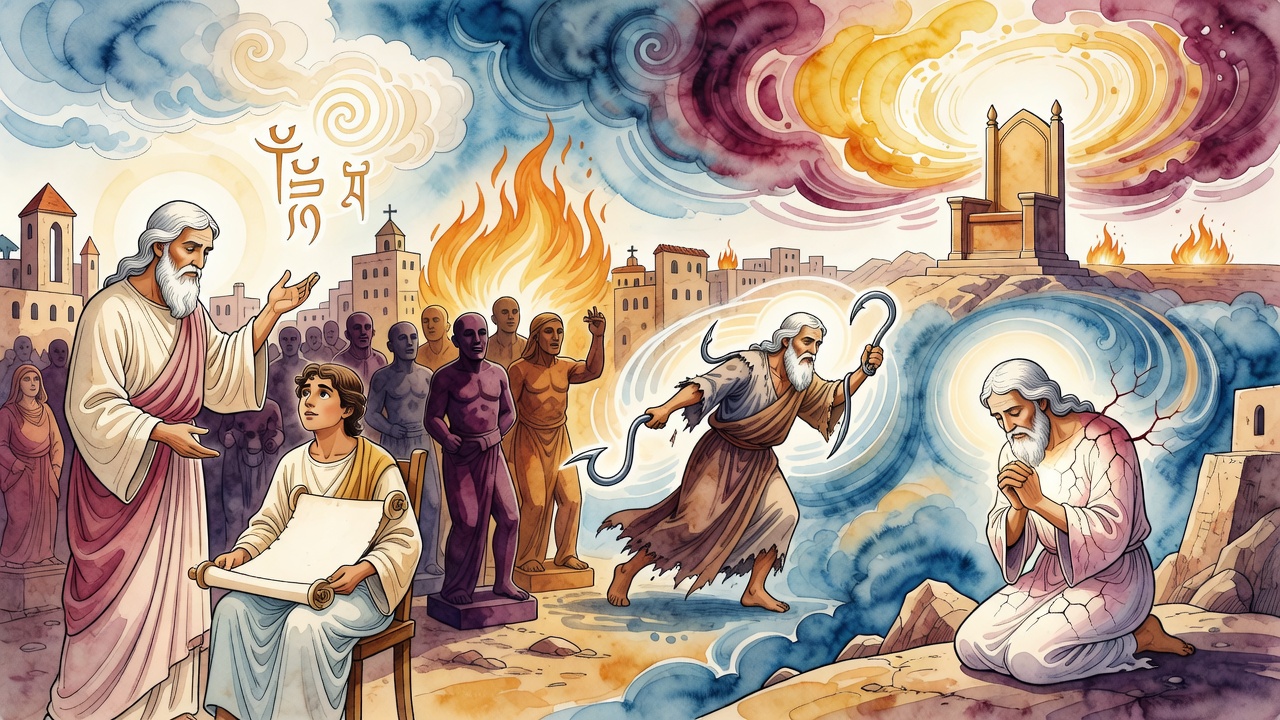
Generations later Nebuchadnezzar would burn and exile, a fire so cruel that even Nebuzaradan flinched. If Jews paid so heavily for a single life on their conscience, what of his own? He left Nebuchadnezzar and became a proselyte in the legend's turn.

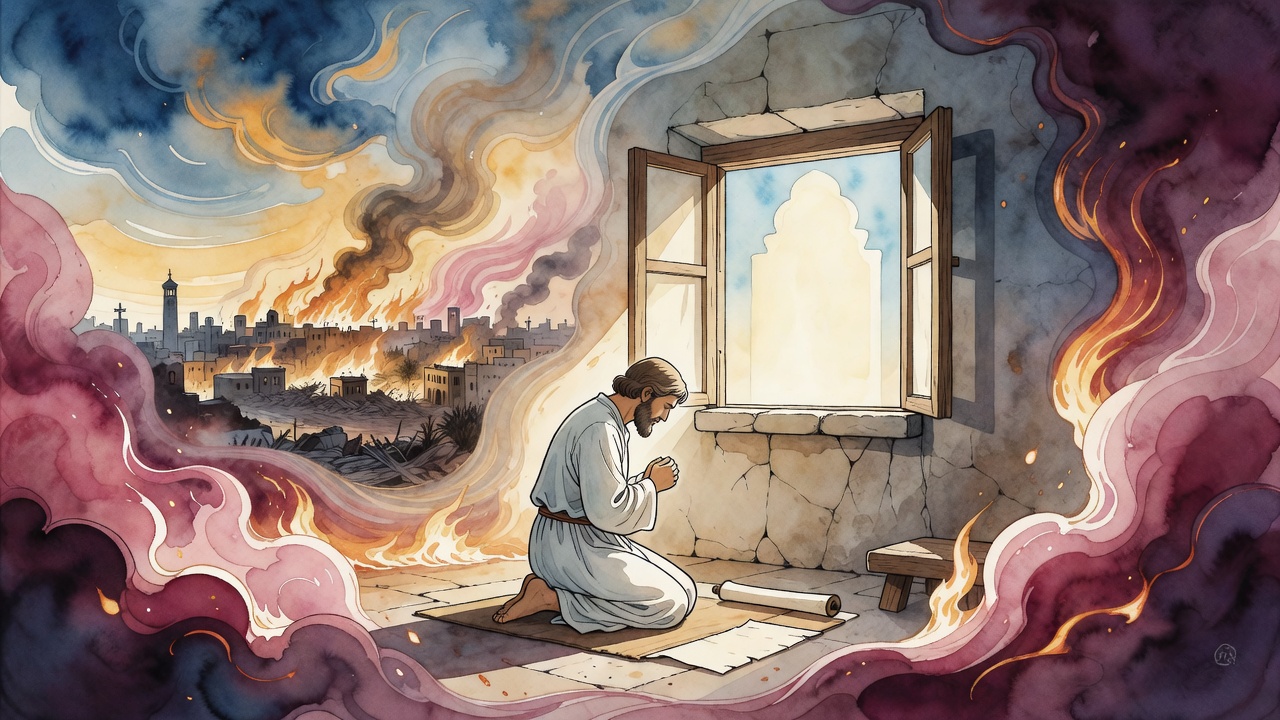
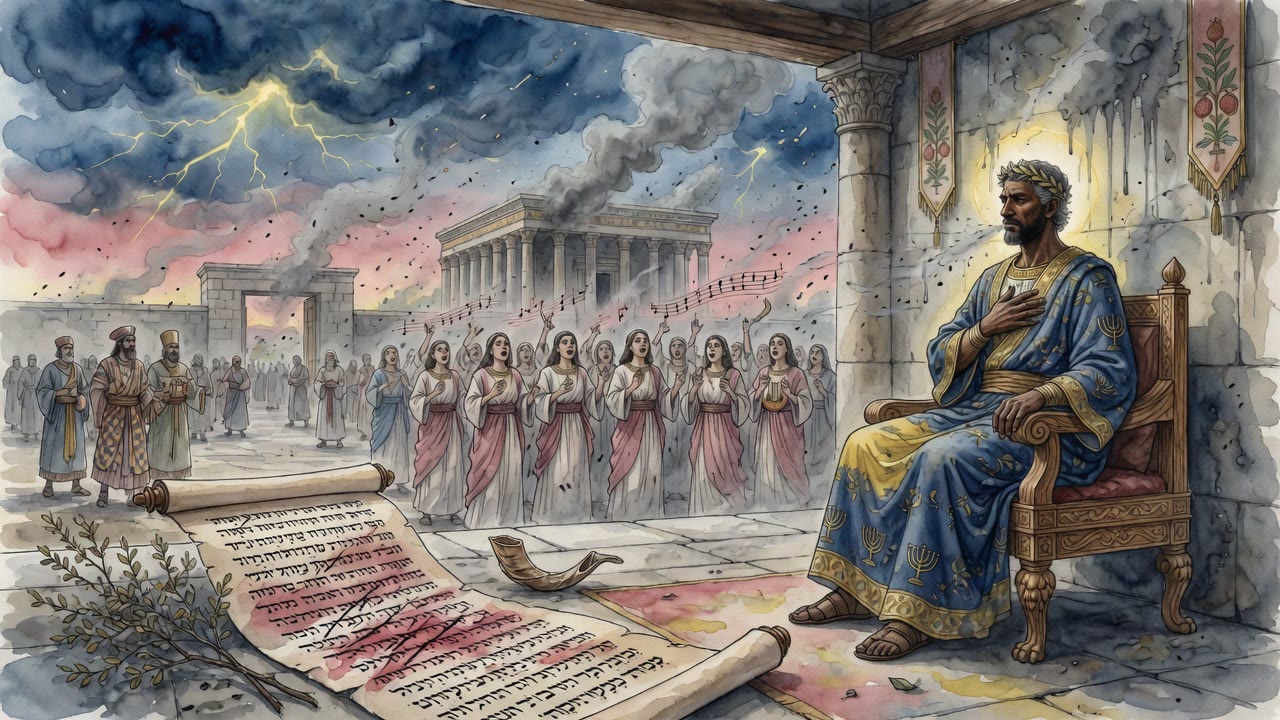
Jeremiah, returning from Anathoth, saw smoke on the Temple mount and hoped for a moment it was incense of repentance. Inside the walls he knew the truth. The house had fallen to flame. "O Lord, Thou didst entice me, and I permitted myself to be enticed," he cried, sent out so the house could be destroyed.

Hiram of Tyre, Nebuchadnezzar's contemporary in these tales, built fake heavens on iron pillars in the sea, glass and gold plates, thunder stones and diamond lightning, a theater of divinity. The same age that began with a sun held for Hezekiah's recovery ended with kings cosplaying as sky.

Ten Extra Hours and Their Shadow

Hezekiah's stretched day was mercy and sign. Baladan's rewritten letter was fear trained into honor. The descendants of that honor became engines of exile. The first recovery did not cancel future furnaces. It proved God can reverse a body and a clock.

Jerusalem's king lived. Babylon's prince learned to put God before a human name. The sun, which Baladan had treated as a god, became evidence against itself when it hung in the sky for another man's healing.

Later smoke on the Temple mount would not be a second sun miracle. It would be ending. Between those poles stands a sick king who asked that illness not be a one-way road, and a God who began the answer in his bones.

Courtiers in Jerusalem counted the extra hours. Farmers in far provinces argued about the light. In Babylon a nap turned into a theological crisis. Hezekiah, still weak from the bed, already lived in a world where recovery was possible and empires could be born from three careful steps across a floor to fix a letter.

Hezekiah had watched too many die without a second chapter. His petition was almost administrative. Let illness teach penance by having an exit. God accepted the reform and wrote Hezekiah's name on the first page of recoveries. The king's body became a policy change for the human race in the legend's bold claim.

Ten extra hours of sun scrambled every sundial from Judah to the rivers of Babylon. Farmers argued. Priests recalculated. Messengers ran with contradictions in their mouths. Baladan's nap turned into a diplomatic crisis because the sky refused to match his kitchen schedule.

Rewriting the letter was a small physical act. Stand. Take three steps. Order new words. Put God first. Heaven, in Ginzberg's chain, paid that punctiliousness with three descendants who would shake the earth. The irony is sharp enough to cut. Honor in a letter helped birth monarchs who burned the Temple and exiled the people of the king whose recovery started the whole exchange.

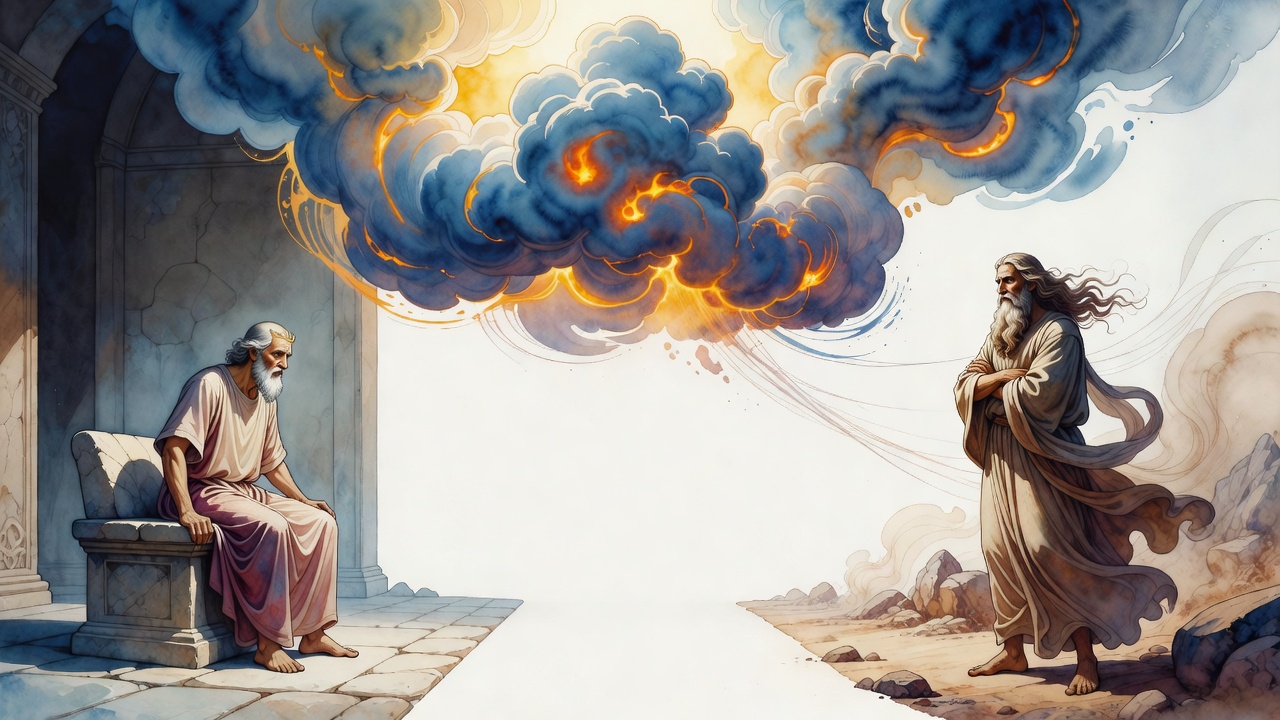
Nebuzaradan's conversion later, spurred by fear of measure-for-measure blood, sits in the same anthology room. Even a destroyer's officer could flinch. Jeremiah's misread smoke, joy turning to grief in a few hundred steps, shows how easily hope and ash share a skyline. Hiram's fake heavens of glass and gold mock the real sun that once stalled for Hezekiah. Counterfeit sky versus stretched day. One is theater. One is intervention.

Hezekiah lived. The sun moved on. Babylon's future kings grew in the shadow of a corrected salutation. Recovery never promised that history would stay gentle. It promised that death would not own every fever from then on, and that a Name placed first in a letter still matters to the Judge who reads correspondence and empires alike.


← All myths

From the tradition

Sources

3 sources

The texts behind this telling. Some cards carry a translation of the source; others are our own retelling of it, and each card says which. Every card links out to the original.

Legends of the Jews 9:37Legends of the Jews

Retold in our words. Read the original at the link below.The Legends of the Jews by Louis Ginzberg (1909) · Public Domain

Take the story of King Hezekiah.

Hezekiah's recovery from a life-threatening illness was miraculous in itself. According to Ginzberg's retelling in Legends of the Jews, it was actually the first recorded instance of someone recovering from a disease that was expected to be fatal. Before this, sickness invariably led to death. Hezekiah, recognizing the potential for spiritual growth, had pleaded with God to establish a new order – one where illness followed by recovery would inspire people to repent and return to the right path. God agreed, declaring that this new order would begin with Hezekiah himself.

The miracles didn’t stop there. The day Hezekiah recovered, something even more extraordinary happened: the sun shone for ten extra hours! News of this incredible event spread far and wide, reaching even the distant kingdom of Babylon.

The ruler of Babylon at the time was Baladan. But here's a twist: Baladan wasn't actually the king. His father was, but his face had been transformed into that of a dog! So, Baladan managed the kingdom, known by both his name and his father's. Baladan had a routine: he'd eat lunch at noon and then nap until 3 PM. On the day of Hezekiah’s miraculous recovery, he woke up and saw the sun still high in the sky. He was furious! He thought his guards had let him sleep through the entire afternoon and the following night. He was ready to have them executed!

Fortunately, before any heads rolled, he learned about Hezekiah’s miraculous recovery. He realized that the God of Hezekiah was more powerful than his own god, the sun. Immediately, Baladan decided to send a congratulatory embassy to the Jewish king.

The initial letter read: "Peace be with Hezekiah, peace with his great God, and peace with Jerusalem." But then, Baladan had second thoughts. He realized that Hezekiah was mentioned before God. Was that proper? He had the messengers called back and ordered a new letter to be written, correcting the order.

According to the Legends of the Jews, Baladan's meticulousness was divinely rewarded. God declared, "Thou didst arise from thy throne, and didst take three steps to do Me honor, by having thy letter re-written, therefore will I grant thee three descendants who shall be known from one end of the world to the other.” These descendants were none other than Nebuchadnezzar, Evil-Merodach, and Belshazzar – all powerful world monarchs in their time.

So, what does this tell us? That even small acts of respect and reverence can have profound and lasting consequences. That miracles aren't just isolated events, but can trigger ripples of change across the globe. And perhaps most importantly, that recognizing something bigger than ourselves, even in the face of our own routines and assumptions, can open the door to unexpected blessings.

Full source
Legends of the Jews 10:28Legends of the Jews

Retold in our words. Read the original at the link below.The Legends of the Jews by Louis Ginzberg (1909) · Public Domain

He was, to put it mildly, a key player in a pretty dark chapter of Jewish history. As Nebuchadnezzar's captain of the guard, he was instrumental in the destruction of the First Temple and the exile of the Jewish people. You’d think he was just following orders. A cog in the machine. But something profound happened.

The Legends of the Jews, as retold by Ginzberg from various Midrashic (rabbinic interpretive commentary) sources, tells us that Nebuzaradan was struck by a terrifying thought. He saw the devastation, the suffering inflicted upon the Jews. And he realized that if they, who bore the guilt of only a single life (presumably a reference to the prophets they had persecuted), were being punished so severely, what awaited him? What would his fate be, given his role in this catastrophe?

The impact was so great that Nebuzaradan did something extraordinary. He left Nebuchadnezzar's service and became a ger tzedek, a righteous convert to Judaism. From destroyer to devotee. A complete transformation. This is more than just a historical footnote; it's evidence of the power of conscience, to the possibility of redemption, even for those who seem furthest from it.

What of Jeremiah, the prophet who had warned of the impending destruction? His story is one of profound sorrow.

Imagine this: He’s returning from Anathoth, and in the distance, he sees smoke rising from the Temple Mount. But for a moment, hope flickers. He believes that perhaps, just perhaps, the people have repented, that they are offering incense, ketoret, in atonement. He allows himself to believe that disaster has been averted.

But as he draws closer, as he enters the city, the horrifying truth hits him. The Temple, the Beit Hamikdash, the very heart of Jewish life, is ablaze. It has fallen.

The grief must have been unbearable. The text records Jeremiah's anguished cry, a lament directed at God: "O Lord, Thou didst entice me, and I permitted myself to be enticed; Thou didst send me forth out of Thy house that Thou mightest destroy it." (This comes from the compilation known as Legends of the Jews.)

It's a raw, human moment. He feels betrayed, used. He was sent away from the Temple only to witness its destruction. It raises so many questions about faith, about divine purpose, about the nature of suffering.

These two figures, Nebuzaradan and Jeremiah, stand as powerful reminders. One, a symbol of repentance and transformation born from witnessing suffering. The other, a symbol of unwavering faith tested to its breaking point. Both stories, found within the larger narrative of the destruction of the First Temple, push us to consider the weight of our actions, the complexities of faith, and the enduring search for meaning in the face of devastation. And isn't that what the best stories do? Make us think, make us feel, and ultimately, make us more human.

Full source
Legends of the Jews 10:97Legends of the Jews

Retold in our words. Read the original at the link below.The Legends of the Jews by Louis Ginzberg (1909) · Public Domain

Legends of the Jews turns to Nebuchadnezzar's Journey.

Let's travel back in time, to the era of Nebuchadnezzar. Nebuchadnezzar from the Bible, the Babylonian king who conquered Jerusalem is familiar. But there was another king walking the earth then, a contemporary who, in some ways, mirrored Nebuchadnezzar's ambitions. This was Hiram, the king of Tyre.

Hiram, according to the legends, harbored a similar desire for deification. He wasn’t content with earthly power; he craved something more, something divine. And he had a rather…unique way of trying to achieve it.

Hiram decided to construct his own heavens. Not in a metaphorical, spiritual sense, but a literal, architectural one. He wanted to create a spectacle so grand, so awe-inspiring, that people would believe in his godhood. He was going to build a new reality, a stage for his own divine performance.

Ginzberg, in Legends of the Jews, paints a vivid picture of this audacious undertaking. Hiram began by erecting four iron pillars in the sea. Upon these pillars, he built his artificial heavens, each one larger than the one below, each one designed to outdo the last in its magnificence.

Imagine this: The first heaven was a plate of glass, a perfect square of five hundred ells. (An ell, by the way, is an old unit of measurement, about 45 inches). Above that, a plate of iron, twice the size at a thousand square ells. Then came lead, separated by canals, and filled with boulders that, when moved, would rumble and echo like thunder against the iron below.

But Hiram wasn’t finished. Oh no, not by a long shot. The fourth heaven was made of brass, followed by copper, then silver, and finally… gold. Each level, separated by canals, evidence of Hiram's hubris. The seventh heaven, the grand finale, spanned thirty-five hundred ells.

And here's where it gets really interesting. In this seventh heaven, Hiram placed diamonds and pearls. He manipulated these precious gems to simulate flashes of lightning, while the rumbling stones beneath mimicked the growling of thunder. He was trying to recreate the natural world, to control the elements, to become the very force he was imitating.

What does this tell us? Perhaps it's a reminder that the desire to control, to dominate, to even become something "more" than human, is a timeless temptation. Hiram's artificial heavens, in all their elaborate grandeur, were ultimately a hollow imitation, evidence of the limitations of human ambition. What do you think? Is the desire for power and recognition a fundamental part of human nature? And at what point does that desire cross the line?

Full source