Honi Drew a Circle and Slept Seventy Years
In a drought Honi draws a circle and will not leave until rain falls. Later he sleeps seventy years and wakes to a world that has forgotten his face.
Table of Contents
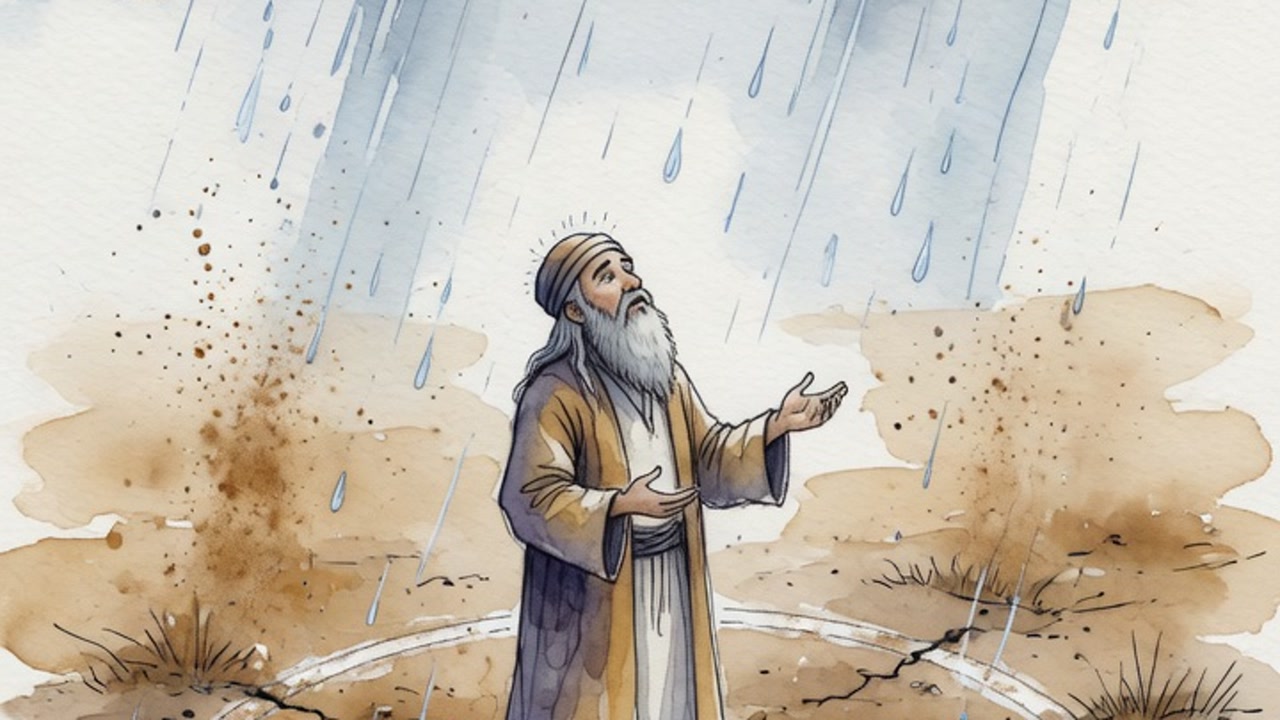
Dust coated the cisterns. Children licked cracked lips and looked at their mothers, who looked at the sky, which gave nothing. The people went to Honi the way a town goes to the one person still willing to argue with heaven.
 Click for full size
He took a stick and drew a circle in the hard ground. He stepped inside it. He said he would not leave until rain fell. Not a polite request. A claim with a line around it.
Rain Inside the Ring
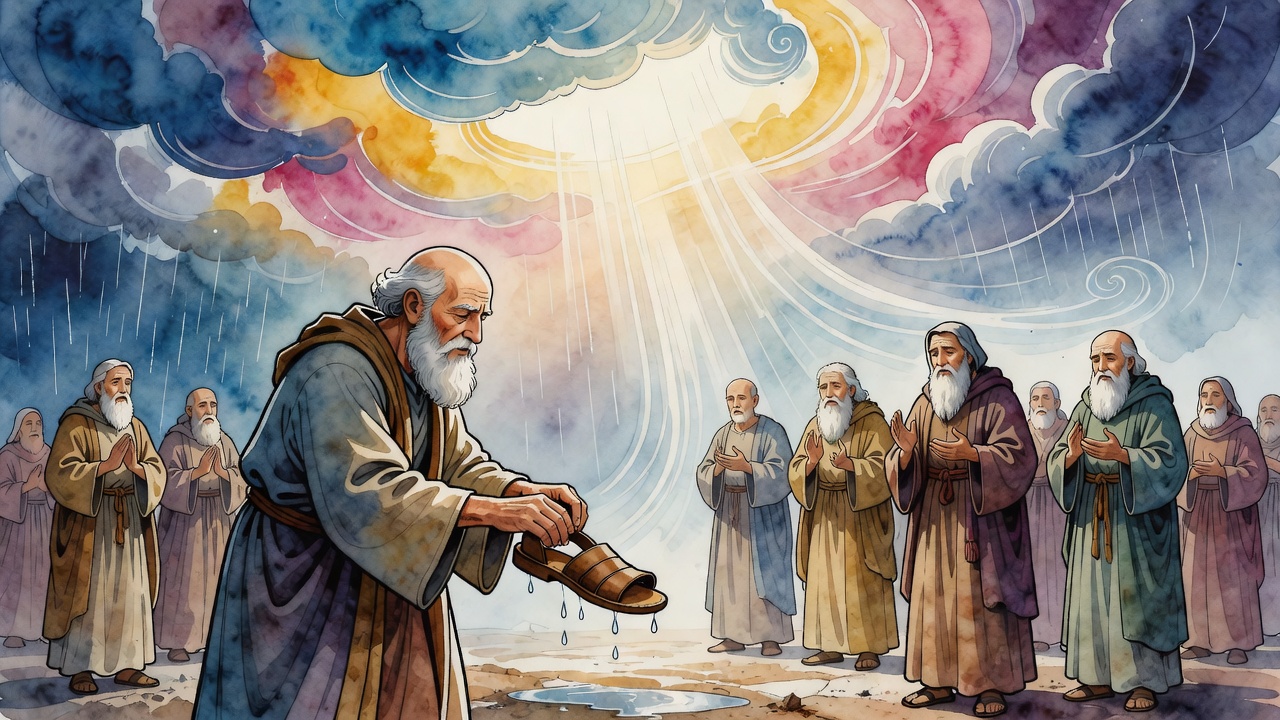
The first drops came fast enough that someone laughed out of shock. Then the rain thickened, and the circle became a dark wet ring in a field that had forgotten water. They called him Honi ha-Me'agel, Honi who draws the circle, as if the name itself were a tool that could be lifted again.
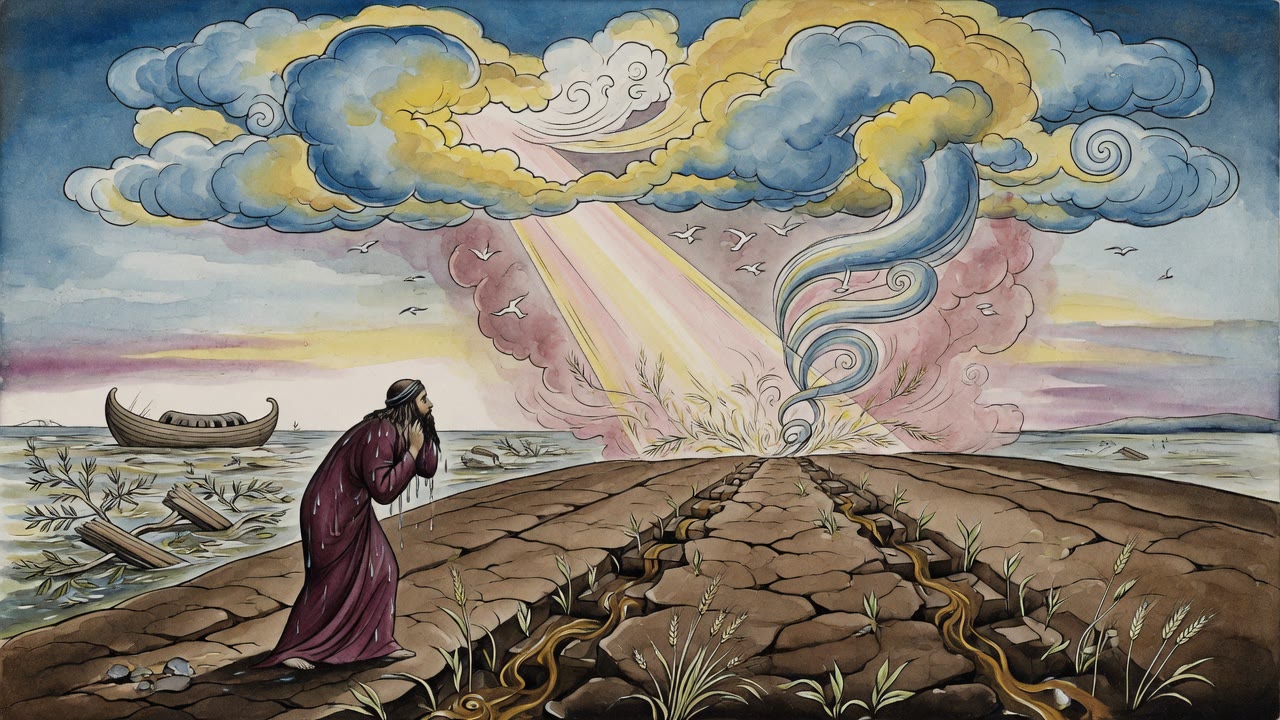
He had forced a conversation. Later ages would argue whether a man may press God that hard. In the moment of thirst, the argument lost to the sound of water on dry soil. Women held out jars. Men watched the cracks in the earth darken and close like mouths that had finally been fed.
Honi stayed in the ring until the blessing was unmistakable. Only then did he step out, mud on his sandals, face turned up into weather that had answered him as if heaven kept a private appointment.
Five Words and Forty Days
Elsewhere students watched two men pray before Rabbi Eliezer. One poured out long petitions until the room grew restless. The other finished in a few plain sentences and sat down. The students scolded the short prayer for haste, then the long prayer for excess.
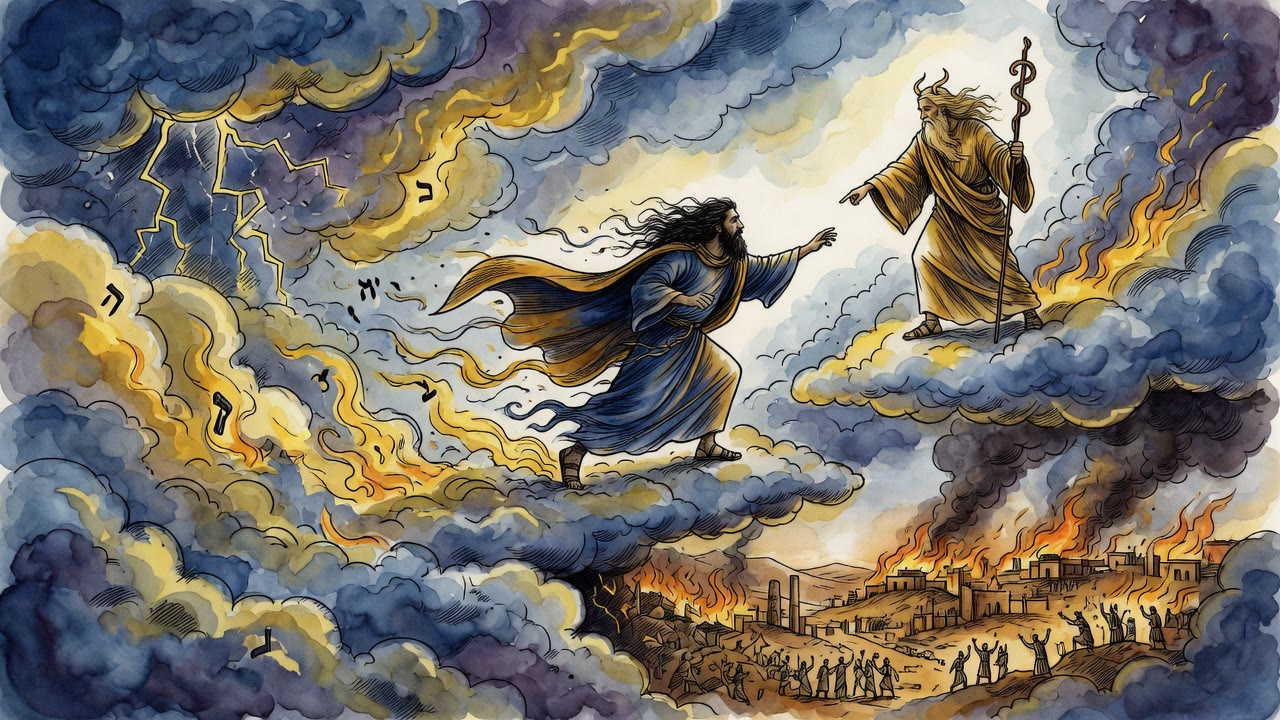
Rabbi Eliezer answered both with Moses. When Miriam was struck, Moses prayed five words: "El na, refa na la," please God, heal her, please (Numbers 12:13). Heaven answered. After the Golden Calf, Moses stayed on the mountain forty days and forty nights without ceasing (Deuteronomy 9:25). Heaven answered that too.
Length is not the scale. The heart is. Honi's circle was short in words and long in nerve. It was not empty noise, and it was not measured in hours of recitation. It was a body that refused to step out until the sky moved. A town that had grown used to dry wind learned that a single stubborn prayer can outweigh a month of polished formulas.
The Carob Planter
Years later Honi walked a field and saw a man planting a carob tree. The tree bears fruit only after seventy years. Honi asked whether the planter expected to eat from it. The man said his fathers planted for him, and he planted for those who would come after.
Honi had once made the sky answer in an hour. Now he faced a patience that works in generations. He could force rain. He could not force the fruiting of a carob. The stick that drew a circle could not hurry wood.
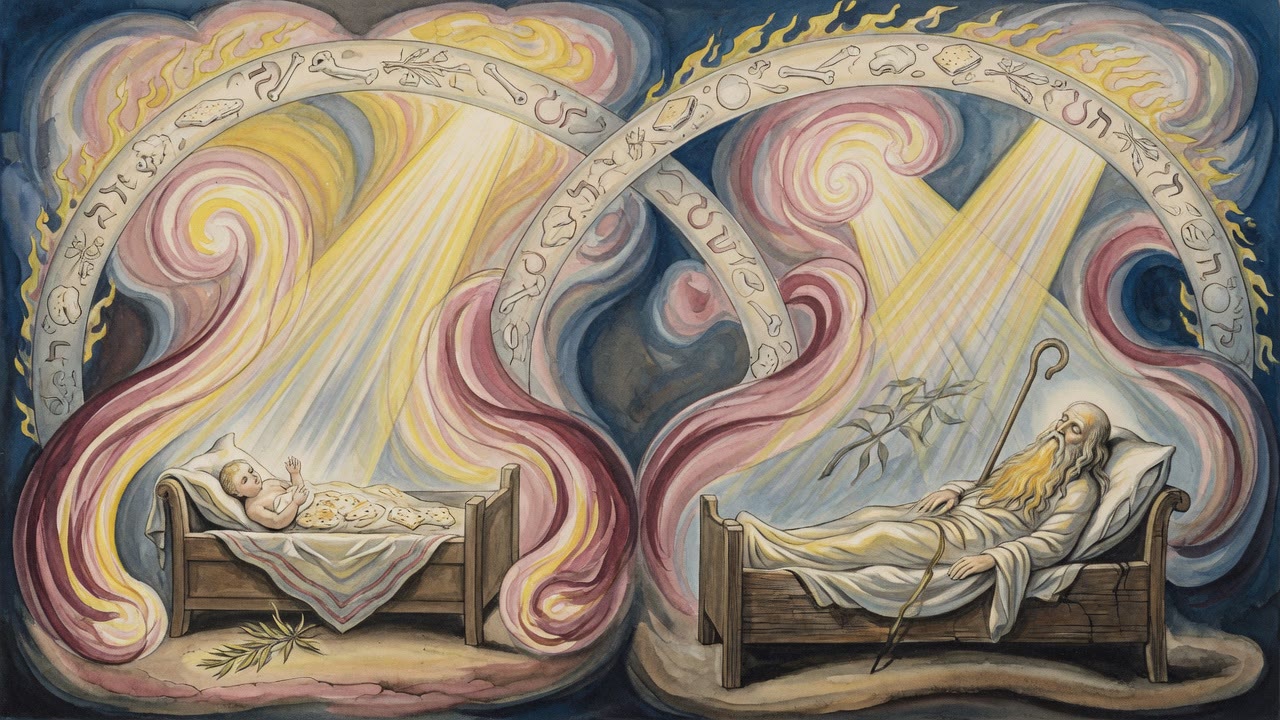
He lay down. Sleep took him, and a hedge grew around him as if the field itself had decided to keep a secret. Seventy years passed in a silence no drought had ever matched. When he woke, a man was picking fruit from the tree. It was the grandson. The she-ass Honi had known had left foals grazing in a world that had moved on without asking his leave.
He touched the bark. It was older than his last clear memory of his own son's face. Time had kept the appointment the carob planter trusted, and Honi had slept through every year of it.
A Name No One Claims
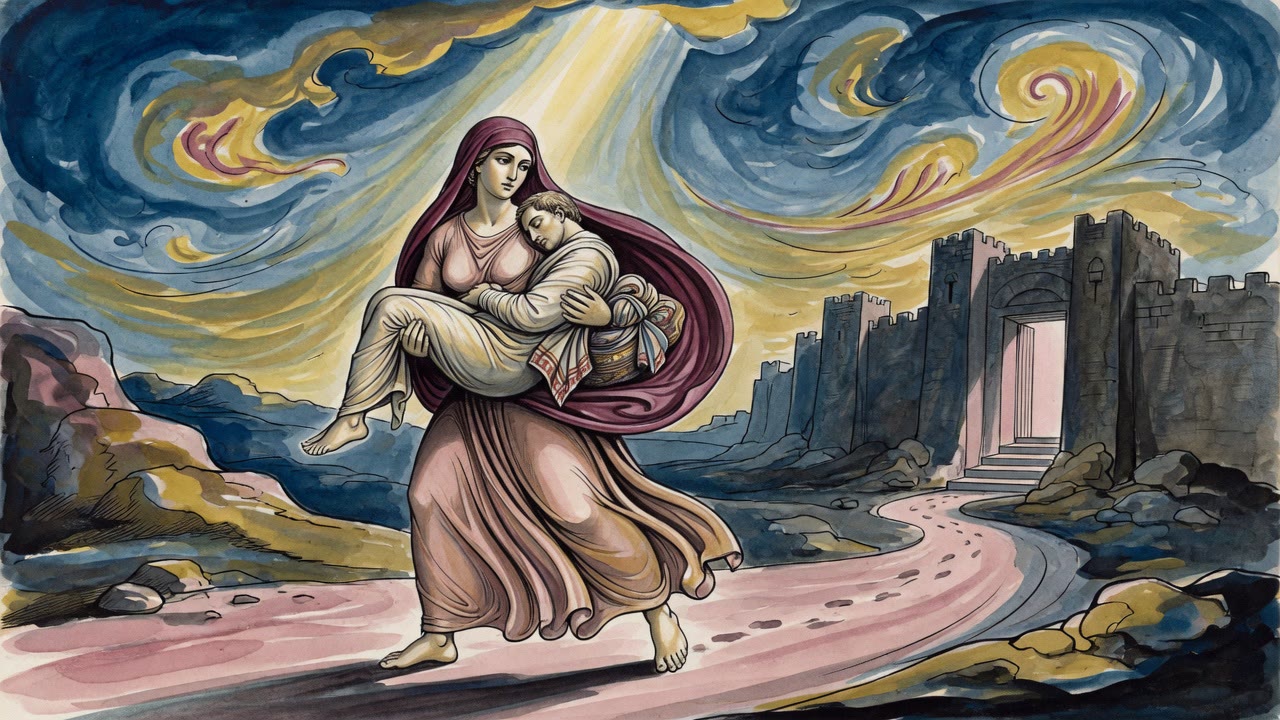
He went back to town looking for his son and found only the grandson. His son was dead. At the study house they still spoke the name Honi, but faces turned blank when he claimed it. The man who had drawn a circle against drought had become a rumor that would not recognize its own body.
He sat among scholars who quoted his miracles as if they were someone else's property. No one offered him a seat as master. No one rose. The rain-maker had outlived his own generation and discovered that power over weather does not guarantee a place at the table of the next age.
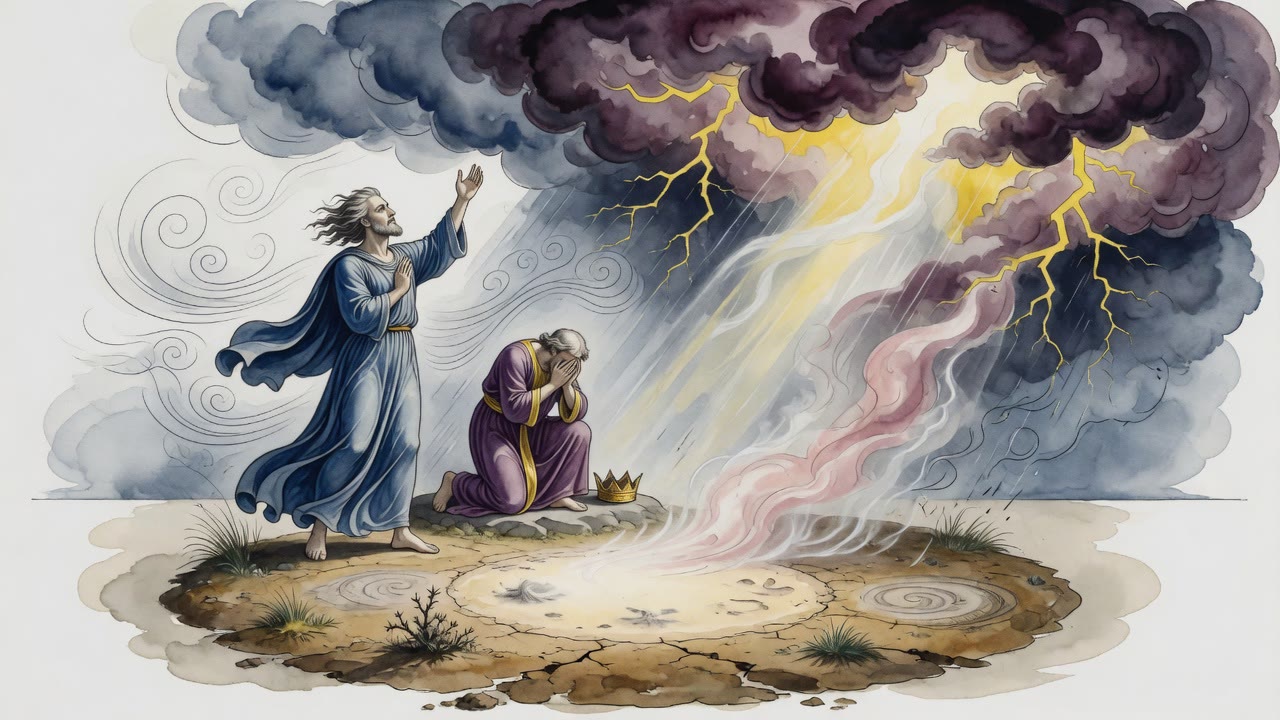
Prayer, the tradition insists, can climb down to a bed and still count. It can also climb so high it leaves the pray-er stranded above his own century. From synagogue to field to house to pillow to the still heart, there is no floor beneath which prayer becomes impossible. Honi had prayed from the center of a circle drawn in dust. He got rain, then silence, then a death that answered the second prayer as cleanly as the first. He asked God to take his life, and God heard him. The hedge that had guarded his sleep could not guard him from waking into a town that no longer knew his face.
← All myths