Parshat Bereshit6 min read

How God Crowned the Hebrew Letters as Kings of Creation

God does not speak the world into being. He engraves each letter, crowns it, and enthrones it as king over a planet, a month, and a limb of the body.

Curated by Arthur · Told by Maggid ·
Table of Contents
  1. The King Who Carved Instead of Spoke
  2. Seven Doubled Letters and the Shadows They Rule
  3. Each Crown Bound to a Planet and a Gate of the Flesh
  4. The Simple Letters Enthroned Over the Months
  5. The Holy Palace Set Precisely in the Center
How God Crowned the Hebrew Letters as Kings of Creation Click for full size

The King Who Carved Instead of Spoke

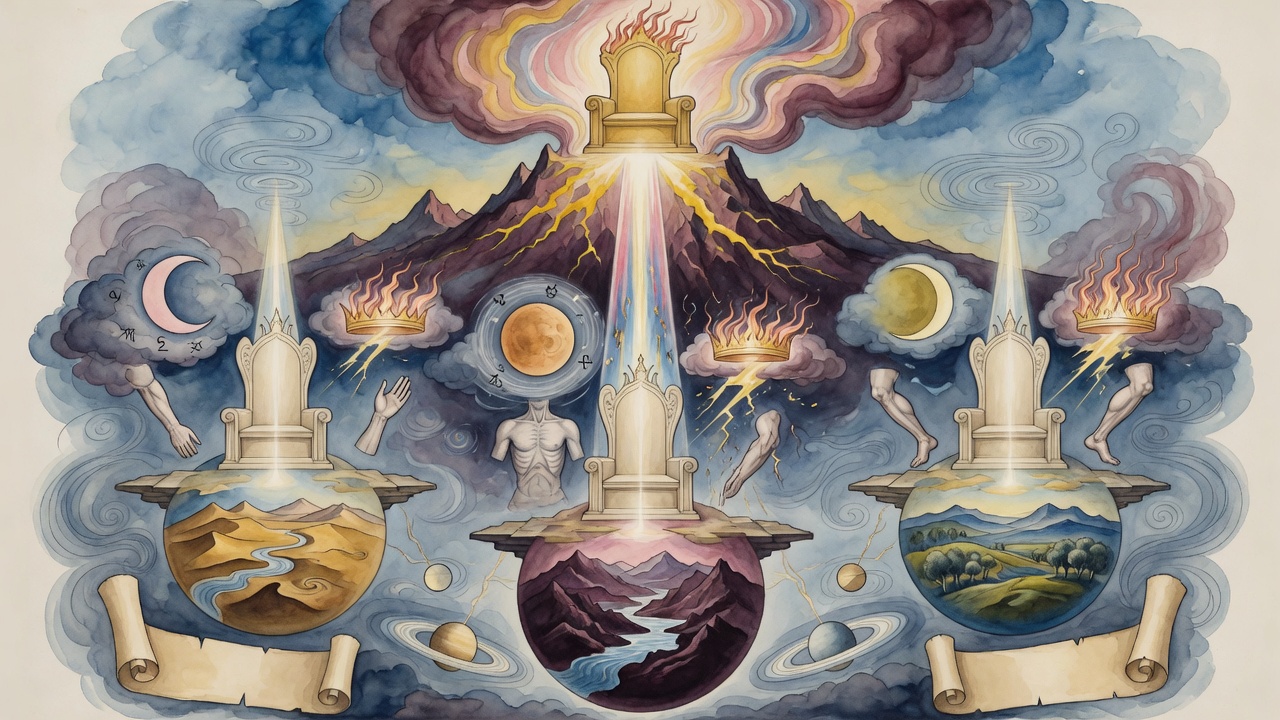
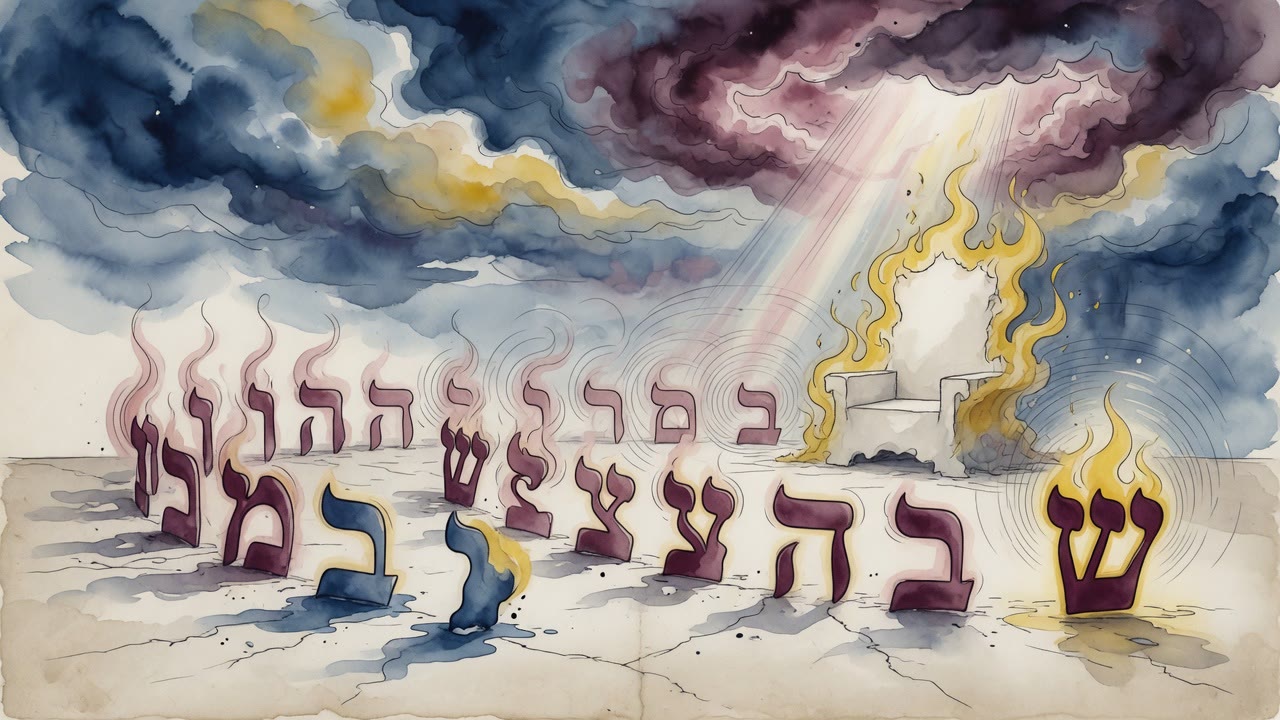
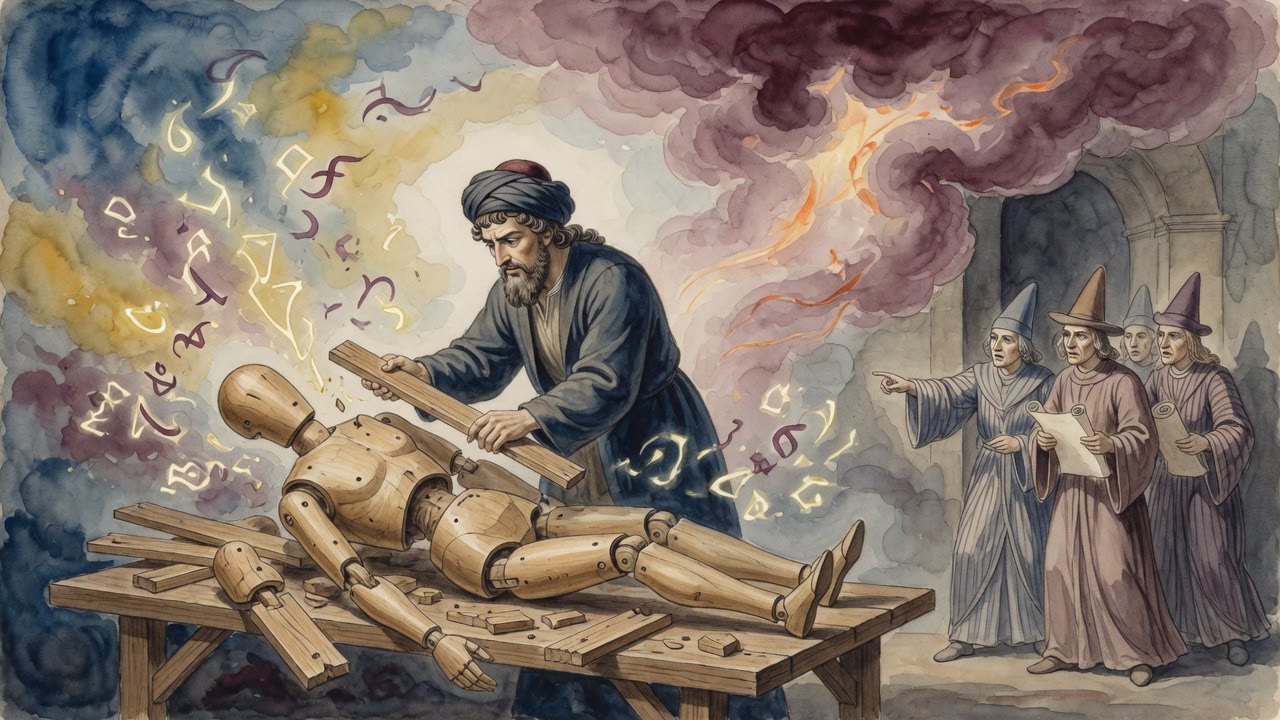
Before there was a mouth to repeat it, God did not speak the world into being. He carved it. He took twenty-two letters and set them against the dark, and He engraved them, and He hewed them, and He weighed each one in His hand. He permuted them until the same few shapes could name every thing that would ever exist. Then He did something stranger than speech. He bound a crown upon each letter, seated it on a throne, and made it king over one province of creation.

Seven of the letters He loved for their doubleness. Bet, Gimel, Dalet, Kaf, Peh, Resh, and Tav could each be spoken two ways, hard on the tongue or soft, a stone or a breath. Seven and not six. Seven and not eight. Because each carried two sounds, God set each to rule two things at once, a gift and the shadow that gift throws.

Seven Doubled Letters and the Shadows They Rule

To Bet He gave Wisdom, and behind Wisdom He hung Folly. To Gimel He gave Wealth, and behind it Poverty. Dalet He crowned over Seed, and its shadow was Desolation. Kaf He set over Life, and the shadow could only be Death. Peh ruled Dominance and its underside Subjugation. Resh held Peace, and behind Peace waited War. And Tav, last of the seven, He crowned over Grace, with Ugliness bound to its back like a twin.

No king among them ruled a single face. Each held its blessing and its ruin at once, so that no creature below could ever grasp the one without feeling the weight of the other.

Each Crown Bound to a Planet and a Gate of the Flesh

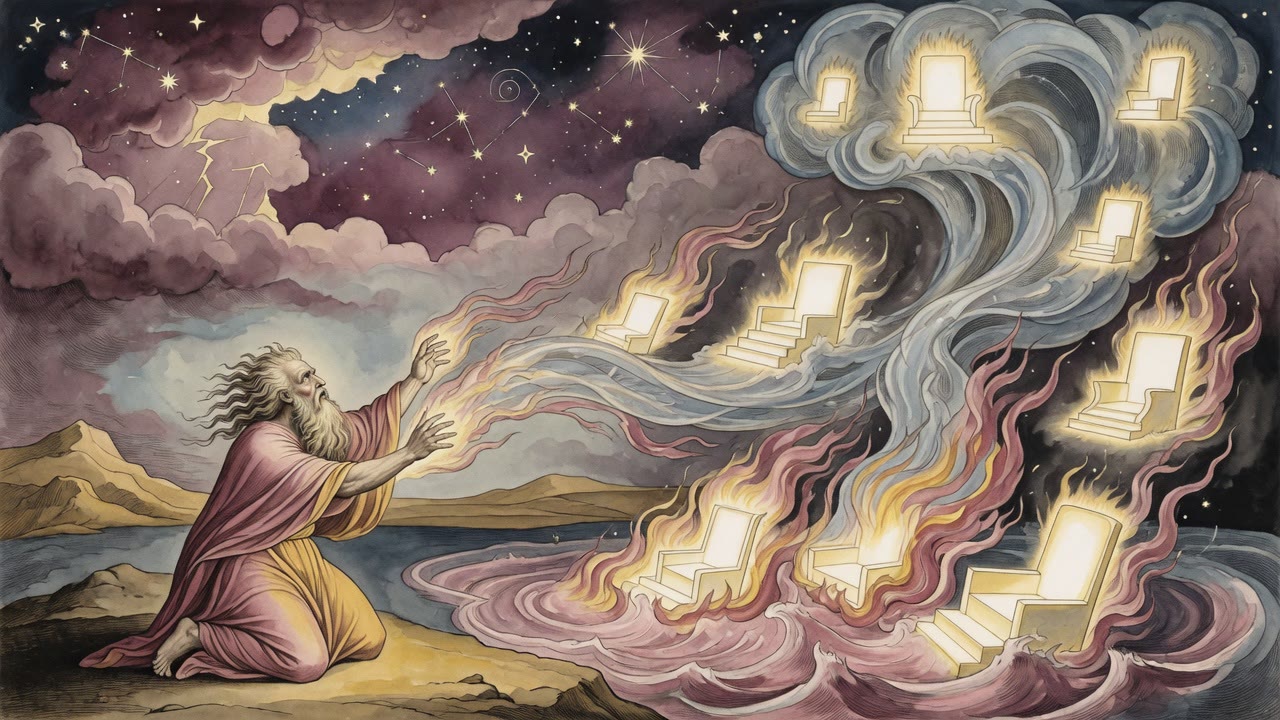
Then God cast the seven doubled kings upward, and where they fell they became the seven wanderers of the sky: Saturn, Jupiter, and Mars, the Sun, Venus, Mercury, and the Moon. He rolled them a second time, and they dropped into time and became the seven days that turn and return, labor and rest chasing each other without end.

He was not finished with the seven. He pressed them into a body. Two eyes He opened, and two ears, and two nostrils, and one mouth. "Seven gates in the soul," He said over them, "male and female," and through these seven a person would take in the whole world and give back their own voice to it. A planet, a day, a gate. The same crowned letter ruled the far sky, the passing week, and the small dark opening in a face.

The Simple Letters Enthroned Over the Months

The rest of the letters God kept simple, single-sounded, and these He made kings over the twelve months and the twelve signs that wheel above them. He came to Chet and told it, "You are king over sight." He bound a crown to it and combined it with the others, and with it He formed Cancer in the heavens, the month of Tamuz in the year, and the right hand in the body, the hand that gives. To Tet He said, "You are king over hearing," and crowned it, and out of it made Leo, and the month of Av, and the left kidney, where a person hoards their strength. To Yud, smallest of all the letters, barely a mark, He gave the largest thing. "You are king over action," He said, and from Yud came Virgo, the month of Elul, and the left hand.

He went on. He crowned Lamed king over coition, the joining of male and female, and set it as Libra, the scale that hangs balanced, and Tishrei, the month of turning and return, and the gall bladder deep in the body. Nun He made king over smell, that oldest and most sudden sense, and from it formed Scorpio, and the month of Cheshvan, and the coiled intestines. And Samekh He crowned over sleep, and made it Sagittarius, and Kislev, the month whose nights hold the festival of lights, and the maw of the stomach that grinds on in the dark while the sleeper knows nothing. Over each one He said, "male and female," the way a person cannot be made from one side alone.

The Holy Palace Set Precisely in the Center

When every letter wore its crown and sat on its throne, the kings began to strain against one another. Wisdom pulled against Folly. Peace leaned toward War. The planets dragged at the months, and the months at the limbs, and the whole engraved world threatened to fly apart along the seams God had cut into it.

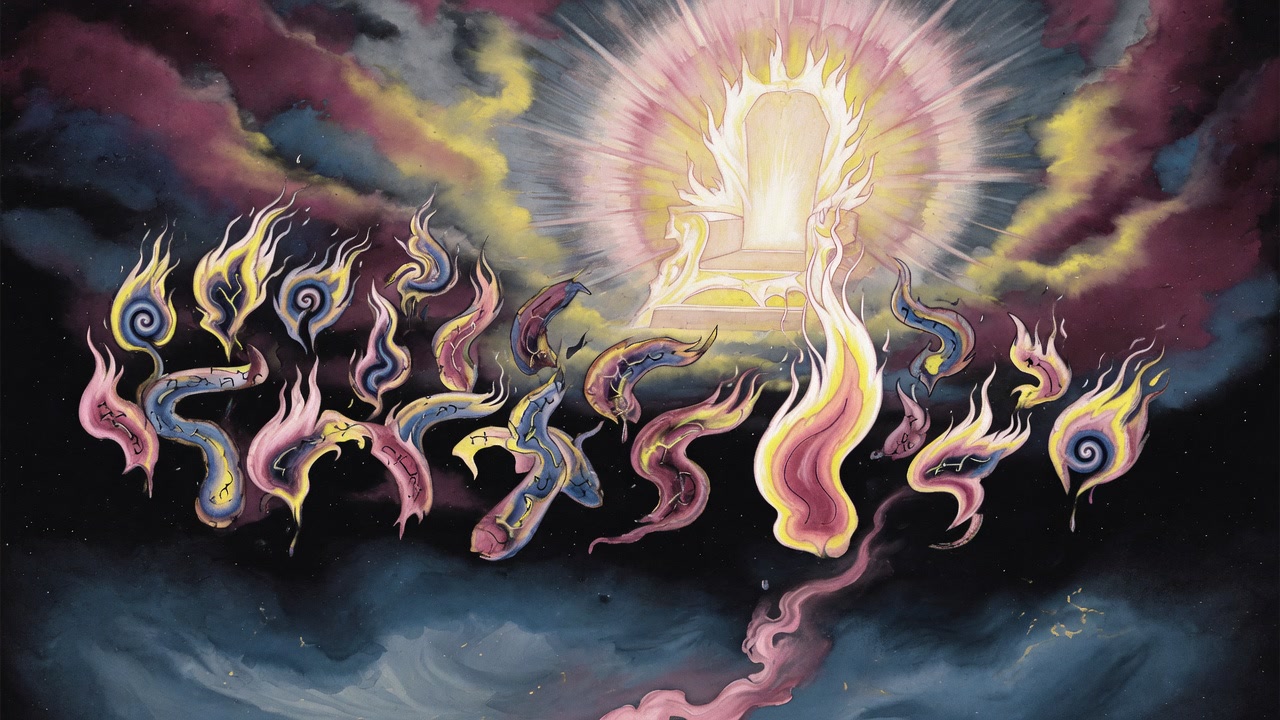
So He fixed the six directions and named them. Up and down. East and west. North and south. And in the middle of the six He set the Holy Palace, and it bore the weight of all of them at once, the still point around which the crowned letters turned without ever tearing free.

A person who lies still and takes their own measure can find the whole coronation inside their own skin. The eyes and ears and nostrils are seven crowned gates. The right hand and the left, the kidney, the gall, the gut, the stomach that works through sleep, each one a letter wearing a crown, each one answering to a sign in the sky and a month in the year. The heavens, the calendar, and the living flesh turned out to be one alphabet, and every letter of it was a king.


← All myths
From the tradition

Sources

4 sources

The texts behind this telling. Some cards carry a translation of the source; others are our own retelling of it, and each card says which. Every card links out to the original.

Sefer Yetzirah Gra Version 4:4Sefer Yetzirah Gra Version

Retold in our words. Read the original at the link below.Sefaria-hosted English translation · CC-BY

Within its ancient wisdom, we find a particularly intriguing concept embodied in the "Seven Doubles."

These aren't just any letters; they're the Hebrew letters Bet, Gimel, Dalet, Kaf, Peh, Resh, and Tav – often remembered by the mnemonic "BGD KPRT" (בגד כפרת). What makes them special? They possess a unique duality, each capable of producing two distinct sounds, representing two sides of the same coin.

The Sefer Yetzirah (the World of Formation) Gra Version 4, attributed to the Vilna Gaon, explores the essence of these letters, revealing their connection to profound concepts. These are: Wisdom, Wealth, Seed, Life, Dominance, Peace, and Grace. These are the foundations, the building blocks.

Here’s where it gets really interesting. Each of these concepts has its opposite, its "transpose," as the text puts it. It’s not just about having something good; it's about understanding that its opposite exists, too. The transpose of Wisdom is Folly. The transpose of Wealth is Poverty. The transpose of Seed is Desolation. The transpose of Life is, inevitably, Death. The transpose of Dominance is Subjugation. The transpose of Peace is War. And finally, the transpose of Grace is Ugliness.

It's a stark reminder that nothing exists in a vacuum. Light cannot be understood without darkness, joy without sorrow. This understanding of duality is crucial for working through the complexities of life. It’s a constant dance, a push and pull between opposing forces.

So, where does this leave us? The Sefer Yetzirah doesn't just present these opposing forces and leave us hanging. It offers a sense of grounding, a center. It speaks of "Up and down/ East and west/ North and south/ And the Holy Palace precisely in the center/ and it supports them all."

This "Holy Palace," a metaphor for the Divine Presence, acts as the anchor, the point of equilibrium amidst the chaos of opposing forces. It's the still point in the turning world, the place where we can find balance and perspective. It’s the understanding that even with all these opposing forces, there is something that holds it all together.

The Sefer Yetzirah suggests that by acknowledging these dualities and seeking that central, grounding force, we can begin to understand the interplay of existence. It is this search for the center that brings true meaning to life.

Full source
Sefer Yetzirah Gra Version 4:7Sefer Yetzirah Gra Version

Retold in our words. Read the original at the link below.Sefaria-hosted English translation · CC-BY

The Sefer Yetzirah (the World of Formation), or Book of Creation, a foundational text of Jewish mysticism, offers a glimpse into this intricate cosmic design. And within it, the concept of the "Seven Doubles" – BGD KPRT (בגד כפרת) – plays a crucial role.

BGD KPRT might look like just a string of Hebrew letters. But each letter represents a sound, a force, a pathway. These are the seven letters that, in Hebrew grammar, can be pronounced with either a hard or soft sound, giving them a "double" nature.

The text emphasizes, “Seven and not six, seven and not eight.” Why this precision? It highlights the unique and essential nature of these seven forces. They are complete, self-contained. We are urged to "Examine with them and probe with them," to truly understand their power. We must "Make each thing stand on its essence, and make the Creator sit on His base." This is about grounding ourselves in the fundamental principles of creation, anchoring our understanding in the divine foundation.

So, what exactly do these Seven Doubles govern? The Sefer Yetzirah tells us they are the forces behind the structure of reality itself.

It says that through these letters, God "engraved them, He carved them, He permuted them, He weighed them, He transformed them, and with them He formed…" What did He form?

Seven planets in the Universe, Seven days in the Year, and Seven gates in the Soul, male and female. The vastness of space, the rhythm of time, and the very architecture of our being – all connected through these seven doubled letters. The seven planets, as understood in ancient cosmology, are listed: Saturn, Jupiter, Mars, Sun, Venus, Mercury, and Moon. These celestial bodies were believed to exert a powerful influence on earthly affairs, each embodying specific energies and qualities.

Then we have the seven days of the week, a cycle that governs our lives, dictating our rhythms of work and rest, activity and contemplation.

And finally, the "Seven gates in the Soul, male and female." These are our sensory portals: two eyes, two ears, two nostrils, and the mouth. Through these gateways, we experience the world, receive information, and express ourselves. They are the points of connection between our inner and outer realities.

The duality inherent in the "Seven Doubles" is reflected in this very idea of male and female – the complementary forces that drive creation and sustain life.

The Sefer Yetzirah is not just an ancient text; it's a living map of the universe, a guide to understanding the profound connections that link the cosmos, time, and ourselves. By contemplating the Seven Doubles, we can begin to glimpse the hidden language of creation and unlock the deeper mysteries of our own existence. It invites us to see the universe not as a collection of separate things, but as an intricately woven tapestry, with each thread connected to the whole.

Full source
Sefer Yetzirah Gra Version 5:9Sefer Yetzirah Gra Version

Retold in our words. Read the original at the link below.Sefaria-hosted English translation · CC-BY

Sefer Yetzirah Gra Version turns to The Letter Lamed and How It Shapes Time.

Here, we find the Hebrew letters themselves taking center stage, acting almost like divine building blocks. Each letter isn't just a symbol; it's a force, a king, ruling over different aspects of existence.

The Sefer Yetzirah tells us that He – referring to the divine – made Lamed king over "coition." Now, this isn’t just about the physical act, but about connection, union, and the potential for creation. He bound a crown to it, signifying its importance, and combined it with other forces to form Libra in the Universe – that balanced, harmonious sign we associate with justice. In the year, it corresponds to Tishrei, the month of the High Holy Days, a time of reflection and new beginnings. And within the soul, it governs the gall bladder, that often-overlooked organ. Male and female. A reminder of the inherent duality, the balance, that makes up everything.

Next up, we have the letter Nun (נ), made king over "smell." Smell! It's so primal, so evocative, immediately transporting us to memories and emotions. Again, the divine binds a crown to it. Through Nun, we get Scorpio in the Universe – intense, transformative. In the year, it's Cheshvan, the month following the holidays, often seen as a time of introspection. And within the soul, it rules the intestines. Male and female. connection – how our sense of smell, our emotional intensity, and even our gut are all linked.

Finally, the letter Samekh (ס) is made king over "sleep." Sleep! That essential state of rest and rejuvenation, where the conscious mind takes a break and something deeper can emerge. He bound a crown to it. Through Samekh, we get Sagittarius in the Universe – adventurous, optimistic. In the year, it’s Kislev, the month that holds Chanukah, the festival of lights. And in the soul, it governs the kivah, often translated as the "stomach" or "maw." Male and female. It's a powerful image – sleep, adventure, light, and our very core, all connected through this one letter.

So, what does it all mean? This isn't just a random assignment of letters to constellations and organs. The Sefer Yetzirah is hinting at a deeper, more profound interconnectedness. It's suggesting that the universe, the annual cycle, and our very selves are all expressions of the same divine energy, channeled through these fundamental building blocks. It is all connected.

Full source
Sefer Yetzirah Gra Version 5:8Sefer Yetzirah Gra Version

Retold in our words. Read the original at the link below.Sefaria-hosted English translation · CC-BY

How Hebrew Letters Map the Human Body is the question behind this passage from Sefer Yetzirah Gra Version.

Let’s unravel this a bit.

The verse reads, "He made the letter Chet (ח) king over sight/ And He bound a crown to it/ And He combined one with another/ And with them He formed/ Cancer in the Universe/ Tamuz in the Year/ And the right hand in the Soul/ male and female."

So, the letter Chet, associated with the sound "Ch," isn't just a letter. It’s the ruler of sight, connected to the zodiac sign Cancer, the Hebrew month of Tamuz (a summer month), and the right hand in the soul. What does it mean to bind a crown to it? It suggests elevating, sanctifying, and recognizing its power. The right hand, in Kabbalistic thought, often symbolizes giving, action, and loving-kindness.

Next, we move on to the letter Tet (ט): "He made the letter Tet king over hearing/ And He bound a crown to it/ And He combined one with another/ And with them He formed/ Leo in the Universe/ Av in the Year/ And the left kidney in the Soul/ male and female."

Tet, sounding like "T," governs hearing. It's linked to Leo, the constellation of the lion, the Hebrew month of Av (another summer month, often associated with mourning but also inner strength), and the left kidney in the soul. The kidney, often overlooked, is seen in some traditions as connected to inner strength and processing emotions. The left side, in contrast to the right, may represent receiving, introspection, or judgment.

Finally, we arrive at the letter Yud (י): "He made the letter Yud king over action/ And He bound a crown to it/ And He combined one with another/ And with them He formed/ Virgo in the Universe/ Elul in the Year/ And the left hand in the Soul/ male and female."

Yud, the smallest letter, yet perhaps the most significant, is king over action. It’s tied to Virgo, the month of Elul (a month of reflection and preparation for the High Holy Days), and the left hand in the soul. The left hand, as we mentioned, can symbolize receiving or judgment. Elul, as a time of introspection before the new year, aligns perfectly with the idea of assessing our actions and preparing for change.

What’s truly striking here is the interconnectedness. The Sefer Yetzirah isn’t just listing correspondences; it's suggesting a deep, resonant relationship between the macrocosm (the universe) and the microcosm (the soul). The letters act as conduits, linking these realms.

Why male and female? This recurring phrase reminds us that creation is inherently dualistic, a dance of opposing yet complementary forces. Everything contains both masculine and feminine energies, a balance necessary for wholeness.

The Sefer Yetzirah offers a glimpse into a worldview where everything is connected, where the letters of the alphabet are not just symbols but living forces, shaping our reality. It invites us to contemplate the profound interconnectedness of the universe and our place within it. What does it mean to see the world through the lens of such profound connection? How does understanding these ancient teachings change the way we perceive ourselves and our role in creation? Perhaps, by understanding the building blocks, we can better understand the building itself.

Full source