How Moses Grew Greater Than the Man Who Sheltered Him
An angel met Moses at the lodging place and sought to kill him. Zipporah took a stone. Circumcision blood bought her husband back.
Table of Contents
 Click for full size
He Asked Yithro for Leave
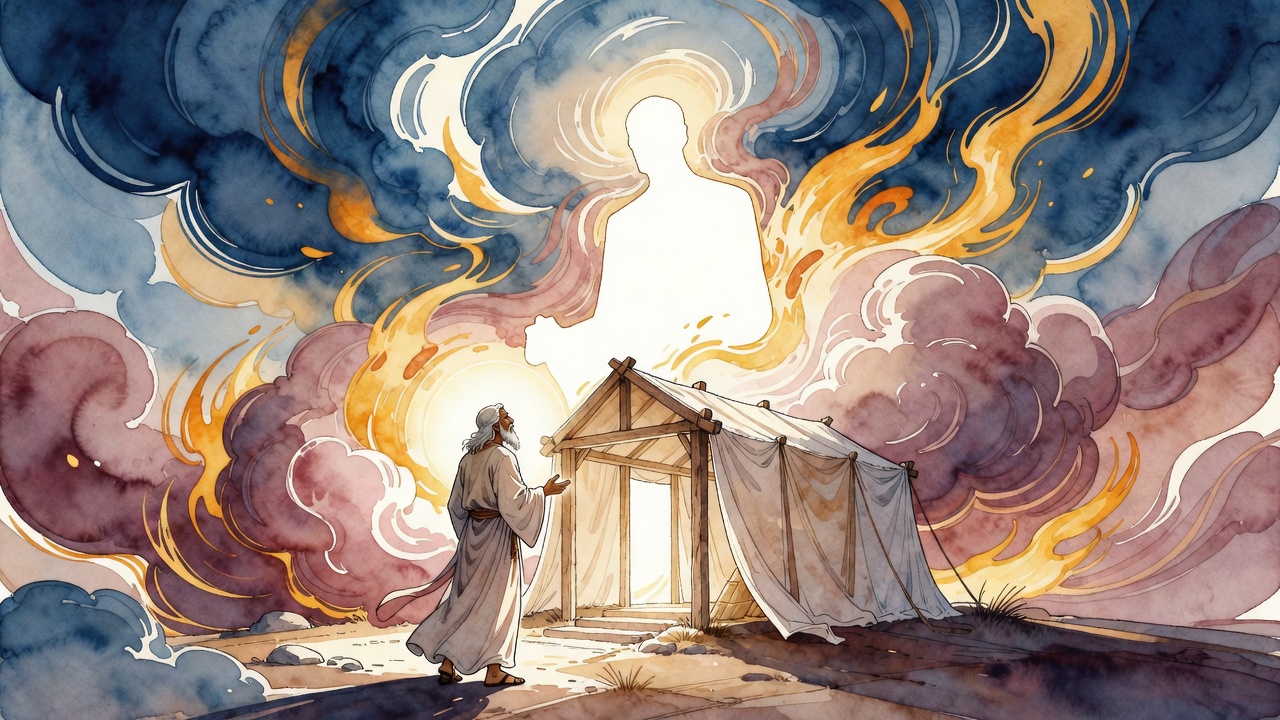
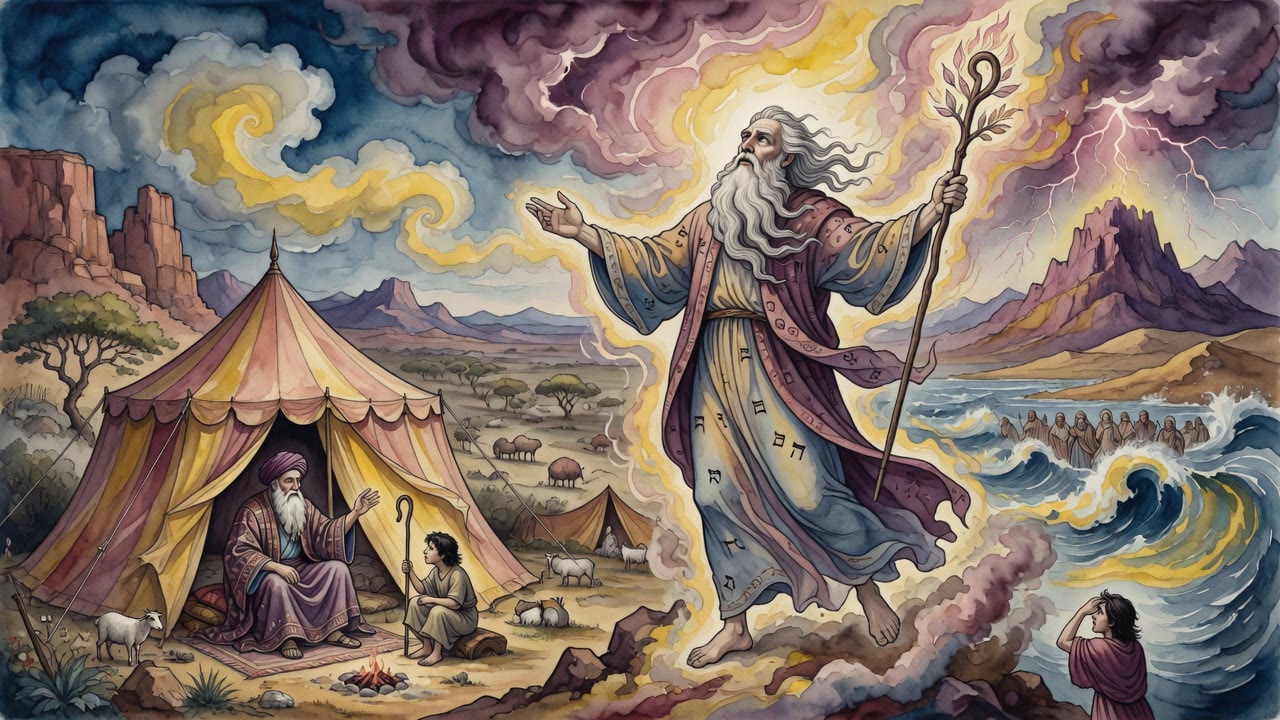
Moses went back to Yithro with the staff in his hand and a warrant still hanging over his name in Egypt. He had arrived in Midian with nothing. The priest of Midian had sheltered him, given him a wife, given him sons, given him a name to stand under. When people asked who Moses was, he said he was Yithro's son-in-law, and he prided himself in that.
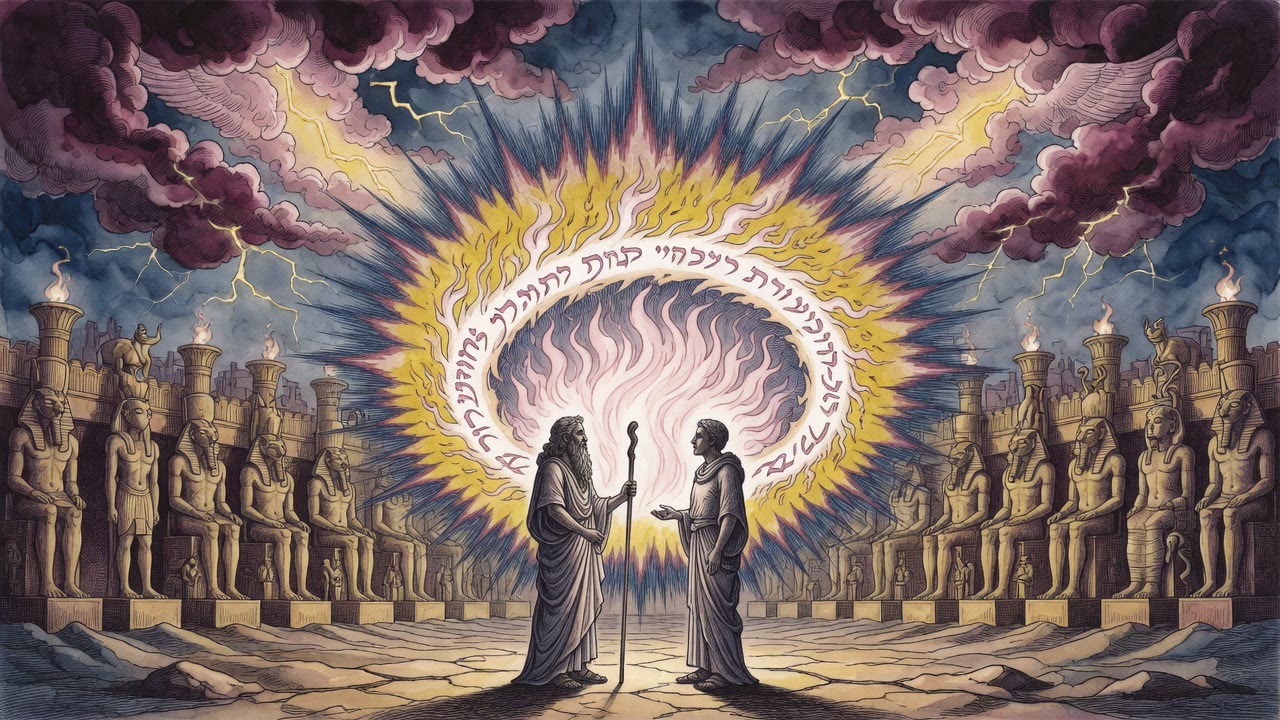
He had already argued with God about his mouth. "I am heavy of speech and of a deep tongue." God had answered without softening. "Who appointed the mouth of man, and who appointed the mute, or the deaf, or the open-sighted, or the blind? Have not I, the Lord?" Still Moses asked to send someone else. God gave him Aaron as interpreter and sent him anyway.
Before that sending, God had made him drop the staff. It became a serpent. Moses fled from it, then seized the tail, and it was a staff again. He put his hand into his bosom and drew it out white as snow, then put it back and drew out living flesh. Signs enough for Egypt. He still went to Yithro first.
He stood in that house, the younger man claiming the older man's name, and said, "I will now go and return to my brethren who are in Egypt, and see if they still live."
Yithro said, "Go in peace."
The Ass, the Staff, and the Road
Moses took his wife Zipporah and his sons and made them ride upon the ass. He took the staff with which the signs had been done. God spoke to him in Midian. "Go, return to Egypt, for all the men who sought to kill you are dead." He said also, "Israel is My son, My firstborn. Tell Pharaoh that. If he refuses, I will kill his son, his firstborn."
They started. The staff rode in Moses' hand. The uncircumcised child rode on the ass. Moses had the greater errand in his mouth and the smaller obedience still undone.
The Angel at the Lodging Place
It was on the way, at the place of lodging, that the Angel of the Lord met him and sought to kill him.
The attack did not come from Pharaoh. It came from the road God had just ordered him onto. Moses, who had been told that the men who wanted him dead in Egypt were already dead, went down under an angel in a rented room.
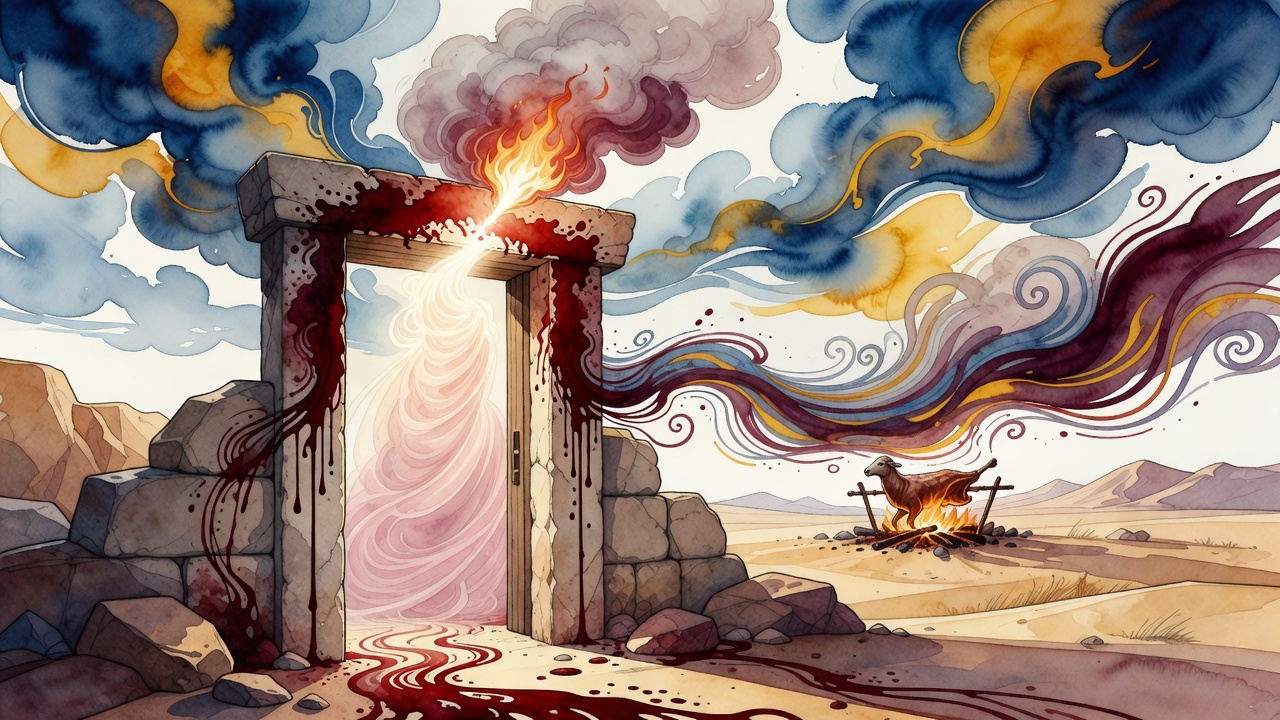
Zipporah took a stone. She circumcised the foreskin of her son. She approached the angel with the blood and said, "On account of the blood of this circumcision let my husband be given back to me."
The angel desisted. She said, "But for the blood of this circumcision my husband would have been condemned to die."
The man who had prided himself as Yithro's son-in-law was bought back by Yithro's daughter and a flint. The household that had sheltered him was still the household that kept him alive.
Aaron Met Him at the Mountain
God said to Aaron, go meet Moses in the desert. Aaron went and met him at the mountain on which the glory of the Lord had been revealed, and he kissed him. Moses showed Aaron all the words and all the signs. The heavy mouth had a speaker now. The staff was still in his hand. The blood of the circumcision was still on the child.
Then the plagues. Then the sea. Then a mountain in fire. Moses grew. The borrowed name could not hold him anymore.
Yithro Named Himself by Moses
Years later Yithro came to the camp in the wilderness, bringing Moses his wife and sons. People asked him, "Who are you?"
He did not say, I am the priest of Midian. He said, "I am Moses' father-in-law."
The man who had sheltered a fugitive now took his standing from the fugitive. Moses had gone out from that house as the lesser name. He had come through an inn where an angel tried to kill him and a Midianite woman saved him with a stone. He had stood in front of Pharaoh with a mouth God had appointed. He had become the greater name in the family that once gave him cover.
Yithro walked into the camp under that name and did not ask for the old one back.
← All myths