Miriam Stood From Afar to Watch the Basket on the Nile
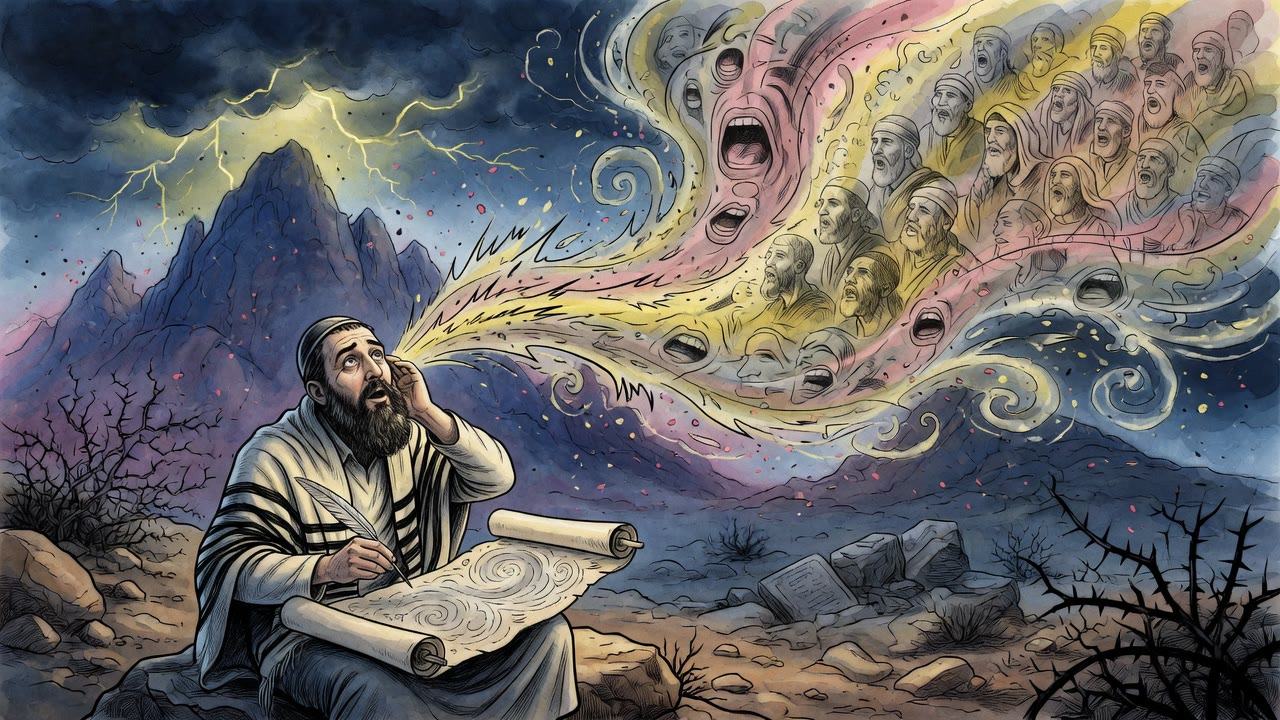
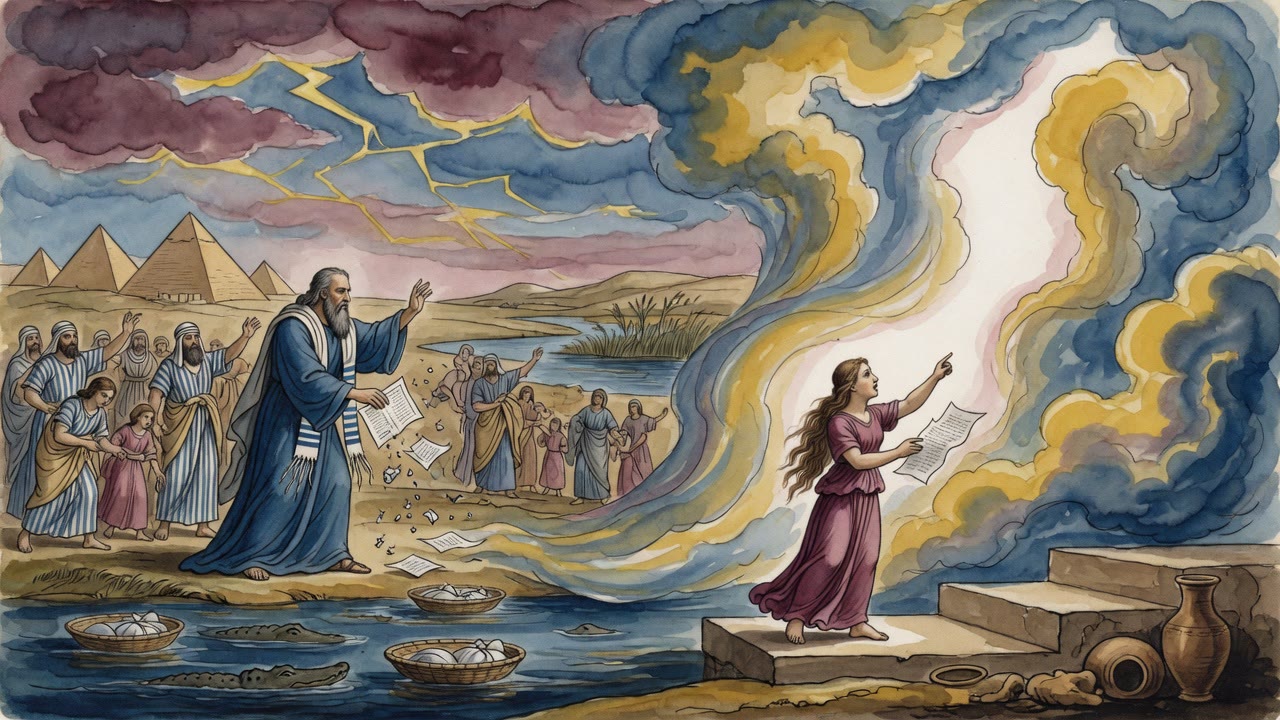
A girl plants her feet on the riverbank and watches her brother's basket drift, while her father's question still rings: where is your prophecy now?
Table of Contents
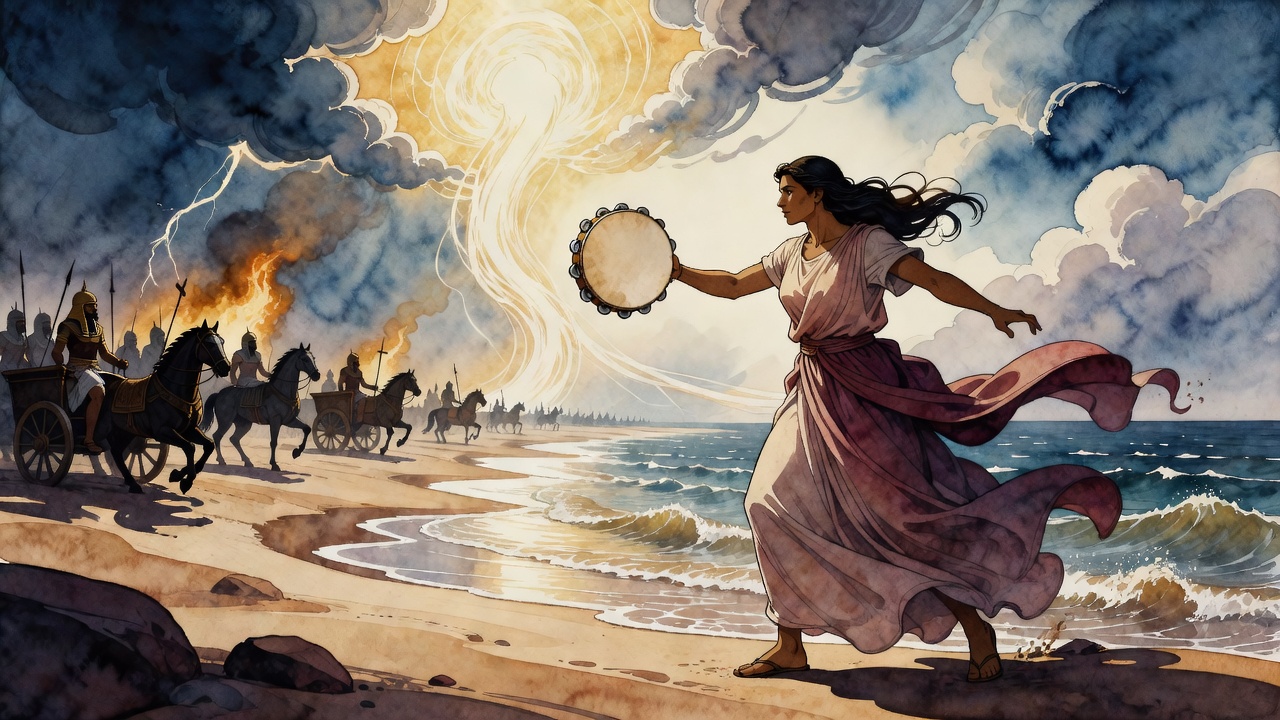
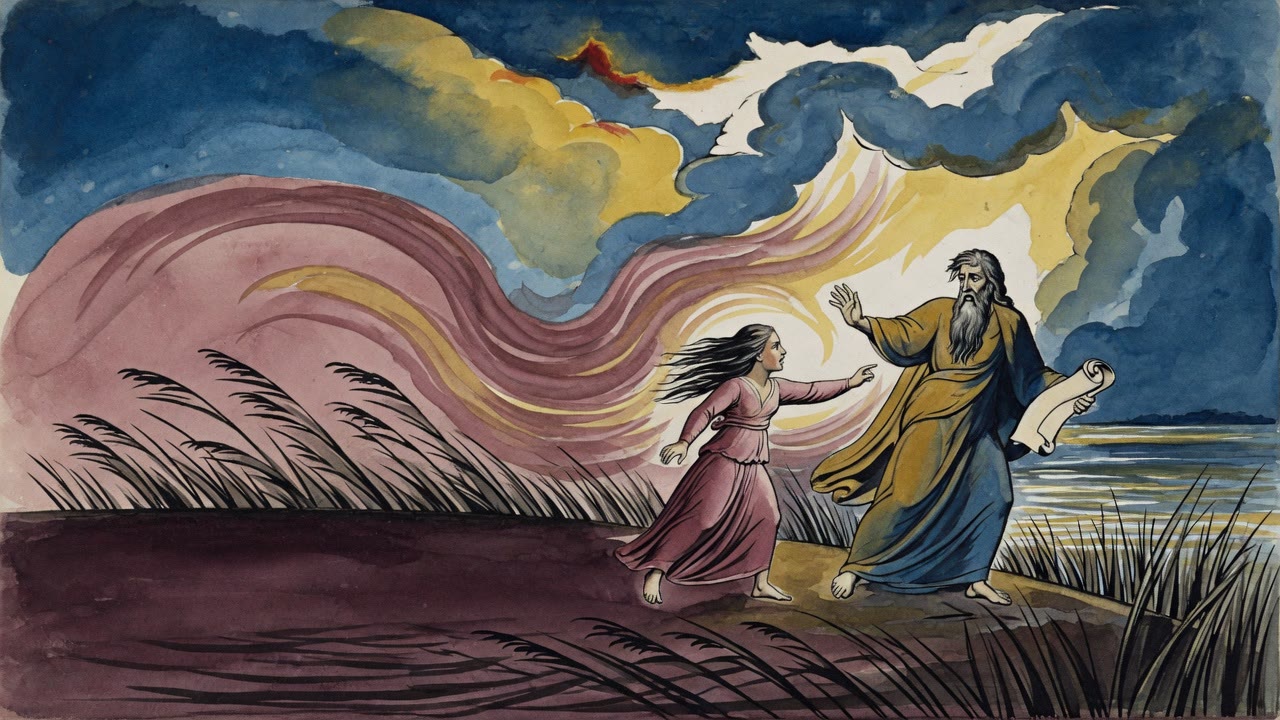
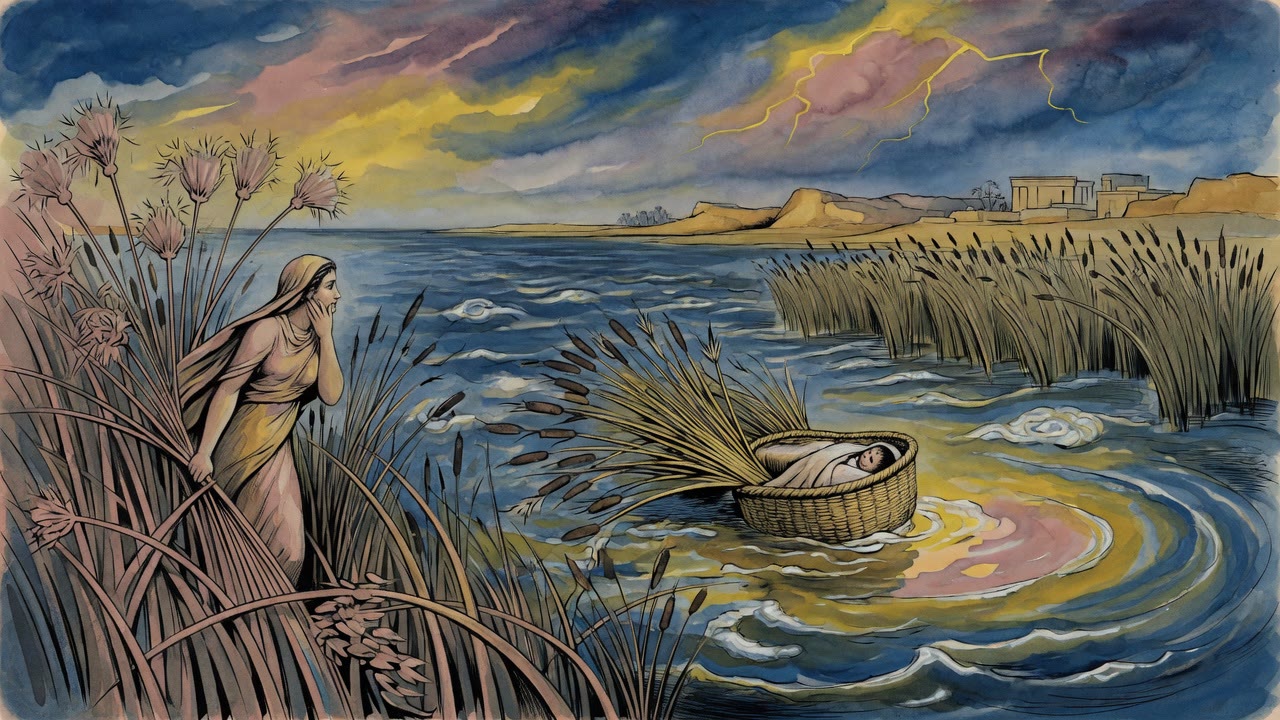
The reeds came up to her shoulders. Miriam pushed through them quietly, the way her mother had taught her to move when soldiers were near, and she planted her bare feet in the mud at the edge of the water and went still. Out on the current, the little basket turned. Pitch sealed its seams, so it rode high. Her baby brother lay inside it, and the Nile was carrying him away from her, slow and certain, toward whatever the morning had decided.
 Click for full size
She did not run after it. She did not cry out. She stood from afar to know what would be done with him (Exodus 2:4), and she held the place she had chosen as if her body itself were an answer.
The Question Her Father Threw at Her
The answer was for her father. Before the baby was born, before there was any basket or any river, Amram had heard his daughter say a thing no child should be able to say. She had told him he would father a son, and that son would carry Israel out of Egypt. She had said it with the flat certainty of someone reporting weather, and Amram had believed her enough to act on it.
He had needed convincing first. Pharaoh's decree said every boy born to the Hebrews was to be drowned in the river, and Amram, rather than feed sons to the water, had walked away from his wife Yocheved and ended the marriage. If there were no children, none could be taken. It was Miriam who argued him back. A girl had stood in front of her grieving father and told him his choice was worse than Pharaoh's, because Pharaoh only condemned the boys while Amram was condemning the girls along with them, and unborn children besides. So he returned to his wife. So the boy was conceived.
Then the boy was born, and could not be hidden, and the day came when Yocheved set him in the basket and gave him to the river. And Amram turned to his daughter with the wreckage of his hope in his voice and asked her: my daughter, where is your prophecy now? The grandson he had been promised was floating toward Egyptian soldiers who hunted boys exactly like him. From where Amram stood, the vision had drowned before the child did.
Why She Would Not Move
Miriam did not argue this time. She went to the river and took up her position and refused to leave it, and the refusal was the whole of her reply. Her father read failure in the basket. She read something else, and she staked her certainty on a patch of riverbank, watching, waiting for the proof to surface.
The way she stood was itself the proof. There is a particular weight in the word for how she stood there, a planting of the feet that scripture saves for charged moments. The same standing belongs to a vision of the Lord standing over the altar (Amos 9:1). It belongs to the night the Lord came and stood near a sleeping boy and called his name until he woke (1 Samuel 3:10). It belongs to the command given near the end, when Joshua was told to come and stand and receive what he would carry after his teacher was gone (Deuteronomy 31:14). To stand, in those moments, is to be a person God has chosen to address. Miriam standing in the reeds was standing in that company. The girl in the mud was not merely watching her brother. She was holding a post.
The Distance That Meant More Than Distance
And she held it from afar. The phrase sounds like simple geography, a sister keeping back so the soldiers would not link her to the basket. It carries more. To watch from afar is the posture of the Spirit, the same far distance from which the Lord appears and is found (Jeremiah 31:2). Miriam set herself at a distance and kept her eyes on the water, and the distance was not retreat. It was the exact stance of someone receiving more than her eyes could see.
So she stayed. The basket drifted. Reeds clicked against each other in the wind, and downriver something moved, a flutter of fine linen, attendants, a daughter of the house of the man who had ordered the drowning. Miriam did not flinch toward home. She knew what would be done with him, or she trusted it, which in her was the same thing, and she waited for the river to hand her father back his question with an answer he could not refuse.
The Word That Outlasted the Doubt
The basket reached the bathing place. A woman lifted the child from the water. He cried, and a princess looked down at a Hebrew baby she was forbidden to keep and decided to keep him anyway. And out of the reeds came a girl who had been standing there the whole time, with a question ready and a plan behind it: shall I find a Hebrew woman to nurse the child for you? The woman she fetched was Yocheved. The mother got her own son back, paid wages to raise him, and a girl's prophecy stopped being a thing her father doubted and became a thing the river had confirmed.
Years later the title arrived in full. When Israel stood on the far shore of a different water and the sea had closed over Pharaoh's chariots, a woman took up a drum and led the singing, and she is named outright as a prophetess (Exodus 15:20). The name was not new. It had been earned long before, by a girl in the reeds who would not abandon her post while her brother floated past, who answered her father's doubt with her feet, and who stood from afar until the distance proved her right.
← All myths