5 min read

If God Withdrew His Gaze the World Would Cease

Rabbi Simcha Bunam refused to call the world a finished pot on a shelf. He saw beams still going up and plaster still wet in corners nobody visits.

Curated by Arthur · Told by Maggid ·
Table of Contents
  1. The Gaze That Holds the Furniture of Being
  2. Not a Finished Vessel
  3. The Wheel That Turns Roles
  4. What Holds When Nothing Feels Solid
If God Withdrew His Gaze the World Would Cease Click for full size

The Gaze That Holds the Furniture of Being

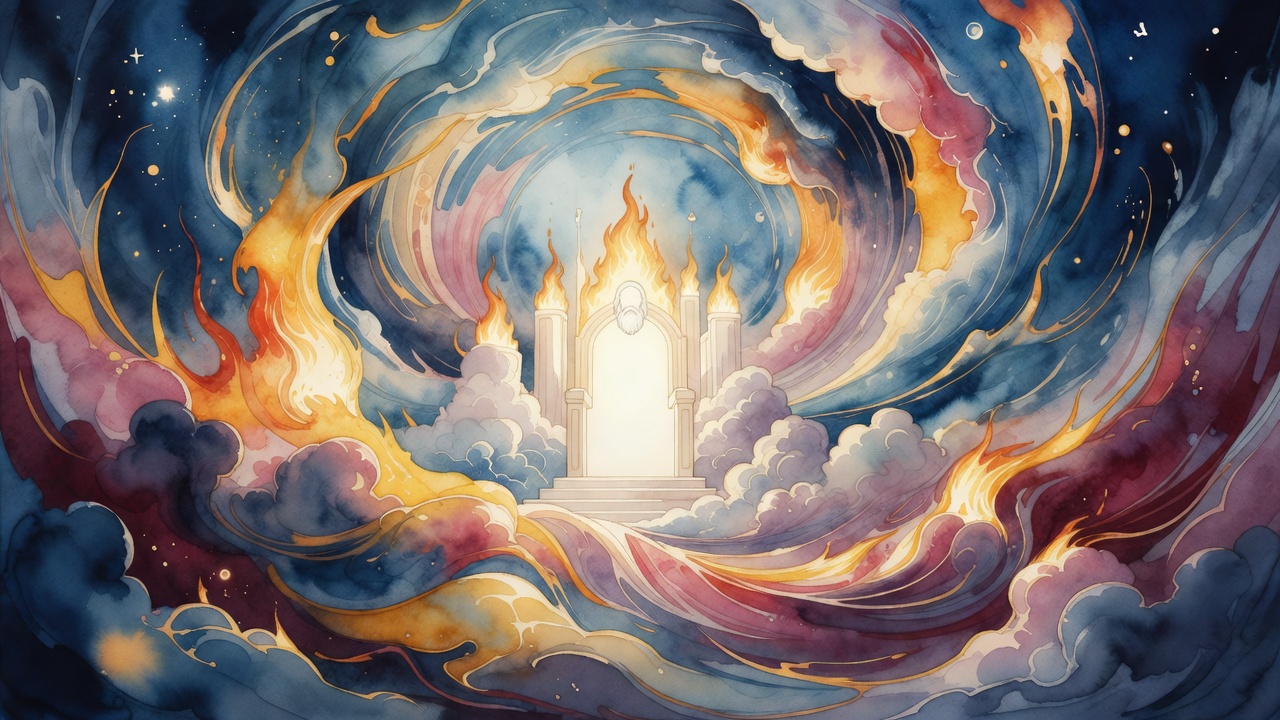
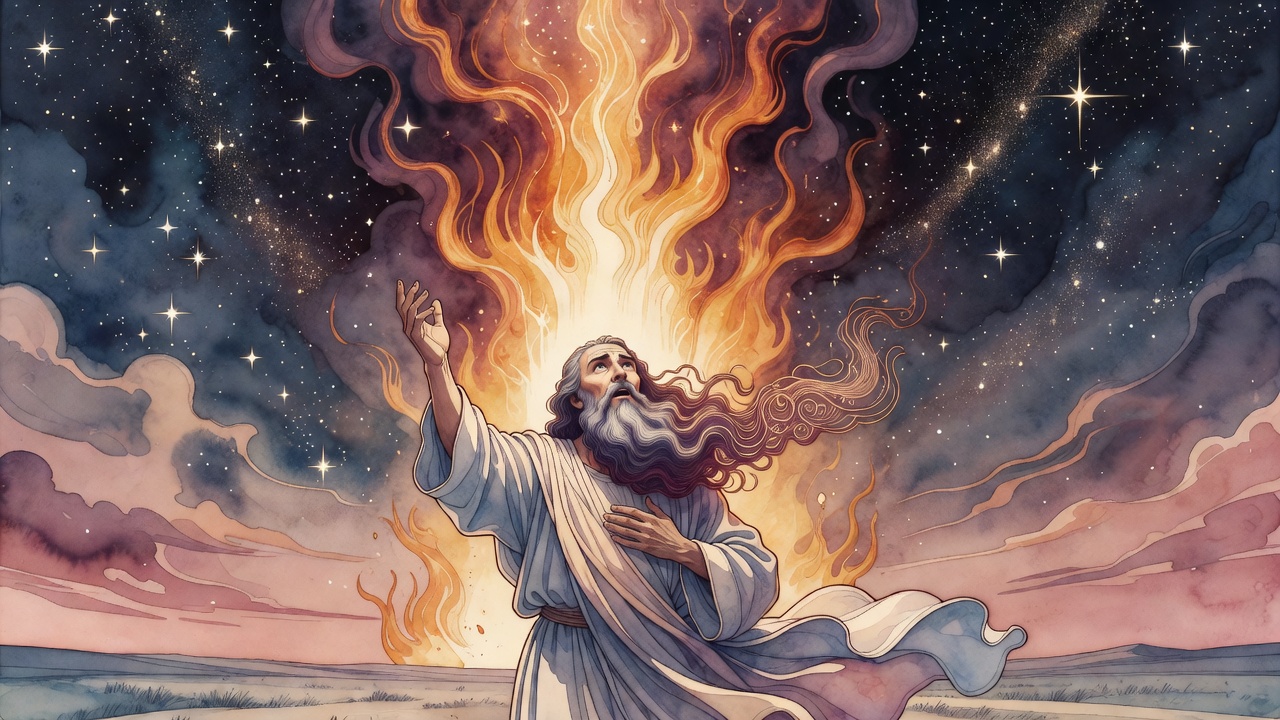
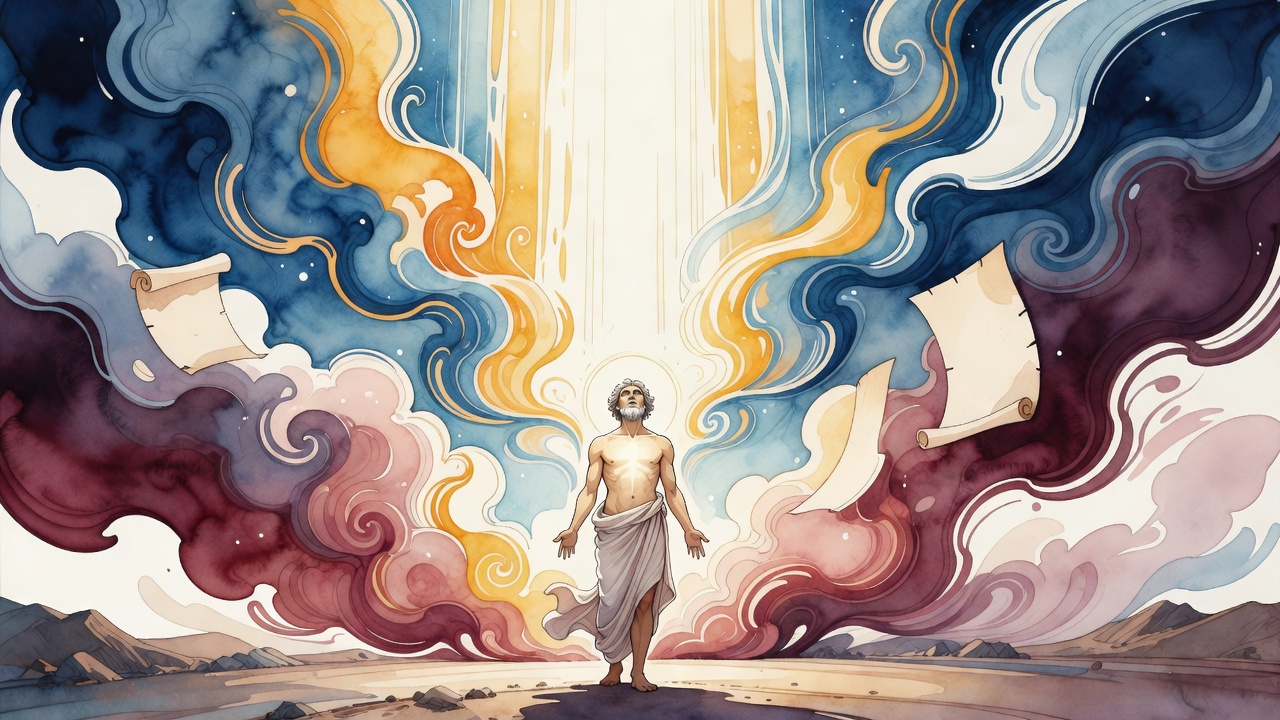
Withdraw the glance for a moment, said the masters of Or Yakar, and the world does not fade politely. It ceases. Tables. Mountains. The breath in a child's chest. The debt you meant to pay tomorrow. Gone the way a dream is gone when the sleeper sits up and cannot find the room he was just standing in. God does not only start things. God keeps them. Attention is the beam that holds the roof, and the roof is everything that has a name.

This is not a pair of eyes in a face. It is the refusal of the Infinite to look away from what It spoke into place. Creation without continued care is a potter walking out of the shop while the clay is still wet. The pot collapses inward. The shelf forgets it was ever asked to hold a shape. A man who thinks the world runs on yesterday's permission has not heard this teaching. Yesterday's permission died at sundown. Morning is a new look.

Not a Finished Vessel

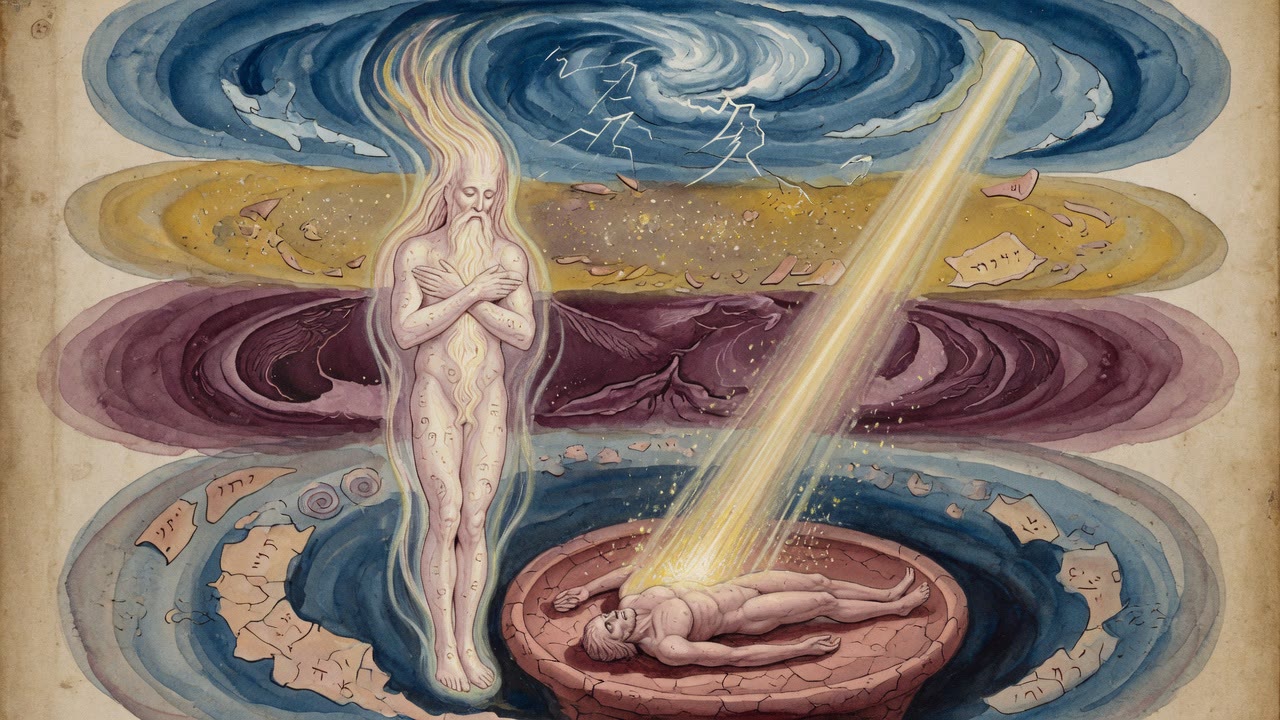
Rabbi Simcha Bunam of Przysucha would not let anyone treat the universe as pottery already fired and set in a cabinet. The world is under construction. Always. Beams still being raised. Plaster still wet in corners no one visits. If the work of renewal stopped, even for a breath, everything would slide back toward tohu and vohu, the unordered waste before the first day learned how to answer.

The Baal Shem Tov said the same in another key: the world is renewed daily. Morning is not a habit. Morning is a decision repeated by a will that does not tire the way human will tires. A man who wakes is not riding the residue of Genesis. He is held again, personally, in a gaze that could have chosen otherwise and did not.

Unfinished is not failure. Unfinished is the condition that lets a human being matter. A closed system needs no partners. An open one does. The crack in the vessel is where the next hour's light is asked to enter.

The Wheel That Turns Roles

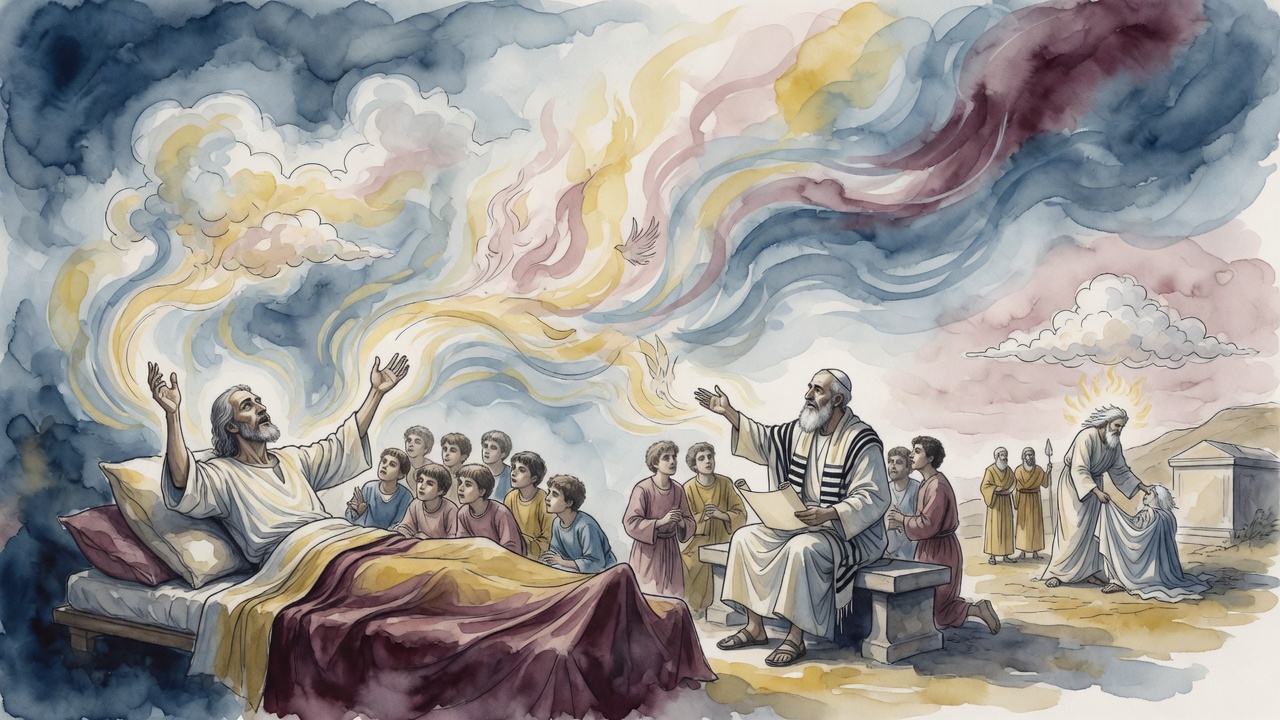
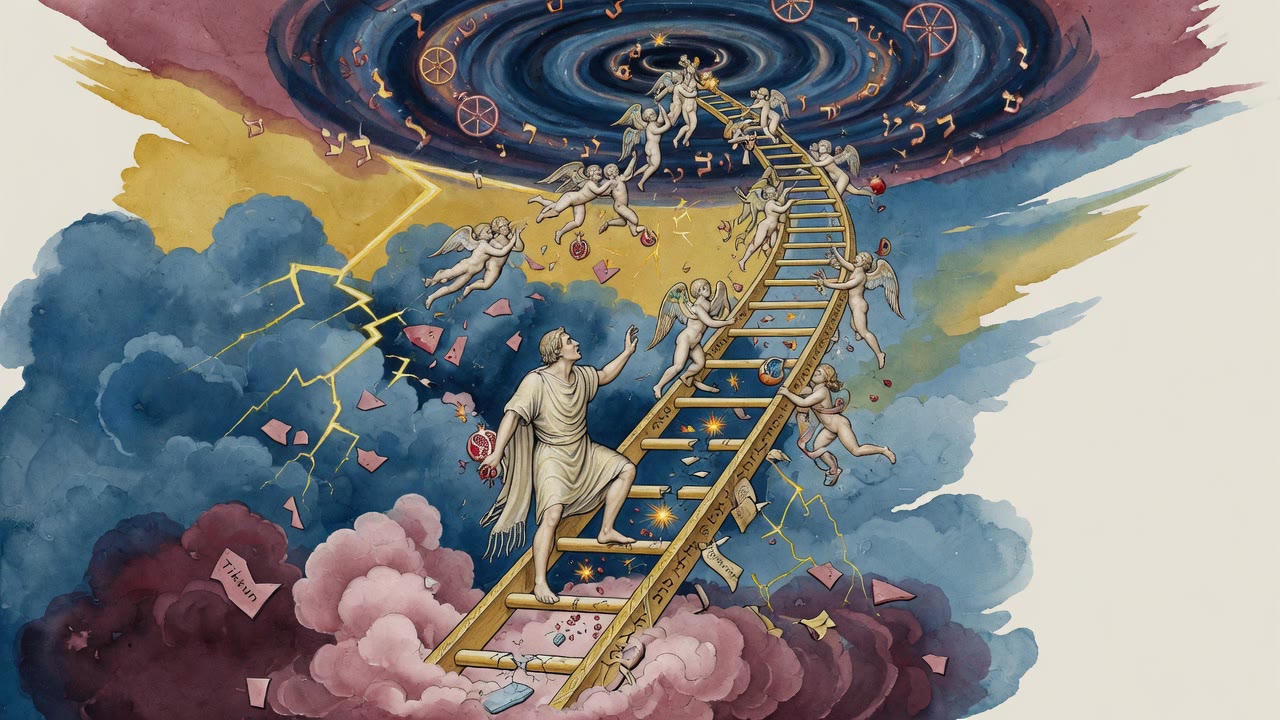
Rabbi Nachman of Bratslav saw creation as a wheel. Up becomes down. Left becomes right. Head becomes foot. Man becomes angel and angel becomes man. Status is not a throne bolted to the floor of heaven. It is a spoke passing through light and shadow, raising the low, lowering the high, refusing to let anyone mistake a season for an identity.

"Every valley shall be raised and every mountain made low," said the prophet. The wheel is that verse in motion, not as poetry only, but as physics of spirit. Ecclesiastes counted seasons for every purpose under heaven. Nachman heard the counting as rotation. A time to rise. A time to be brought low. A time to discover that the one who served is now served, and the one who commanded is learning how to ask.

The gaze that sustains the wheel does not freeze anyone at the top for comfort's sake. It keeps the turning possible. Without the gaze, there is no wheel. Without the wheel, there is only the lie of permanent rank.

What Holds When Nothing Feels Solid

Even a market stall depends on this. Coins, weights, the agreement that bread will still be bread an hour from now. If the gaze lifted, there would be no bargain left to break, no thief left to catch, no righteous person left to wonder why the wicked prosper for a season on the turning wheel.

A person who feels the floor give way is not always wrong about the floor. These teachings do not promise that clay never trembles. They promise that the trembling is still inside a look that has not left. If the look left, there would be no one left to feel abandoned, no mouth left to name the fear, no night left to be long.

So the work of a day is double. Receive the renewal that arrived without your earning it. Add a stitch to the unfinished cloth where your hands can reach. The wheel will turn whether a man notices or not. The question is whether he turns with it as a partner or as loose cargo banging in the hold.

At night the gaze does not sleep. The cisterns of being stay full because Someone is still paying attention. A lamp left burning in a window is a poor image for this, and still the poor image helps: the house of the world remains a house only while the Watcher watches.


← All myths

From the tradition

Sources

3 sources

The texts behind this telling. Some cards carry a translation of the source; others are our own retelling of it, and each card says which. Every card links out to the original.

Or YakarOr Yakar

Retold in our words. Read the original at the link below.Sefaria-hosted English translation · CC-BY

It suggests that the entire universe, everything we know, exists only because God is actively, constantly, paying attention. for a second.

A sixteenth-century Kabbalistic text, Or Yakar, puts it starkly: If God's gaze were withdrawn for even a moment, all of existence would simply… cease. Poof. Gone. Like a dream fading upon waking.

This idea of God’s "gaze" (if we can even use such a human term for the Divine) being the paramount requirement for the world to continue. It's more than just creation, it's sustenance.

What does it mean, this "gaze?" It’s not like God has literal eyes. Well, the concept hints at something deeper. It suggests that the existence of everything around us depends on God's continued interest in the world and all its creatures. It's not enough that God created the universe in the first place; God has to care about it, moment after moment.

This tradition suggests that God is no such artist. God is constantly engaged, pouring divine attention and energy into every single atom.

This idea is both comforting and, perhaps, a little daunting. Comforting because it means we are never truly alone, never truly forgotten. Daunting because it places a profound responsibility on us. If God's attention is what sustains the world, then how do we, as inhabitants of that world, contribute to or detract from that divine attention?

Are we living in ways that reflect and honor God's continued interest in us and in creation? Or are we behaving in ways that might, metaphorically speaking, cause God to avert the divine gaze?

Because if everything truly hinges on that constant, loving attention, then perhaps our own attention – to the world, to each other, and to the Divine – is more powerful than we ever imagined.

Full source
Siah Sarfei Kodesh 2:17Chassidic Literature

Retold in our words. Read the original at the link below.Sefaria-hosted English translation · Public Domain

Maybe that's not a bug, but a feature of the entire universe. Is anything truly ever finished?

Rabbi Simcha Bunam of Parsischa, a Hasidic master from the late 18th and early 19th centuries (1765-1827), had a fascinating take on this. He suggested that the universe God created isn't like a pottery vessel, something you mold, fire, and then poof, it’s complete. Instead, it's perpetually under construction. It requires continuous work, unceasing renewal.

Why? Because according to Rabbi Simcha Bunam, the unfinished nature of Creation isn't a flaw. It's a necessity. It’s the very thing that keeps us going. In Siah Sarfei Kodesh (2:17), we find this idea echoed.

We find a similar idea in Midrash (rabbinic interpretive commentary) Ribesh Tov (2:24), where the Ba'al Shem Tov, the founder of Hasidism himself, taught that the world is renewed daily. It’s not a one-time event, but an ongoing process.

Imagine if that renewal stopped. Imagine if the forces that sustain existence paused, even for a second. According to this teaching, the whole thing would unravel. The universe would revert to tohu vavohu – that primordial chaos described in Genesis.

Scary thought. But maybe it’s also empowering. If the world needs constant renewal, and we are reborn every morning, that means we have a role to play. We are active participants in this ongoing act of creation. We aren’t just passive observers, but partners with the Divine.

So, the next time you feel overwhelmed by the sheer amount of work to be done, remember that "unfinished" might be precisely where you're supposed to be. Maybe it's in that striving, that constant effort to improve and renew, that we truly find meaning. Maybe the point isn't to reach some mythical state of "done," but to embrace the beautiful, messy, and utterly vital process of becoming.

Full source
Sihot ha-Ran 40Sichot HaRan (Rabbi Nachman)

Retold in our words. Read the original at the link below.Sefaria-hosted English translation · Public Domain

Maybe, just maybe, you're part of something much bigger: a cosmic wheel.

The idea of a "wheel of creation" isn't some new-age concept. It's a powerful image found in Jewish mystical thought, particularly in the teachings of Rabbi Nachman of Bratslav. He paints a picture of all creation as a constantly rotating wheel, forever turning and transforming.

What does that actually mean? Think of it this way: everything is in a cycle. Up becomes down, left becomes right, and, incredibly, man becomes angel, and angel, man. Head becomes foot, and foot head. It’s all part of the same underlying reality, constantly interchanging, raising the low, lowering the high, all spinning on this great wheel. This comes to us from Sihot ha-Ran 40.

It’s a mind-bending idea. We tend to think of things as fixed, as having a defined role. But Rabbi Nachman's vision suggests something far more fluid. He sees a universe where boundaries blur, where transformation is the only constant.

What could have inspired such a radical image? Well, the Torah itself hints at this cyclical nature. Remember the verse from (Isaiah 40:4): "Let every valley be raised and every mountain made low"? It's a powerful image of leveling, of things being brought into balance through constant change. And then there's (Ecclesiastes 3:1): "To everything there is a season, and a time for every purpose under heaven." A time to rise, a time to fall. A time to be born, a time to die. The great wheel turns.

Rabbi Nachman takes these ideas and runs with them, creating a dynamic and almost dizzying vision of creation. It's a vision that challenges our assumptions about who we are and what our place is in the universe. Are we forever stuck in one role, one identity? Or are we capable of transformation, of becoming something completely different?

The wheel keeps turning. And maybe, just maybe, that’s the point. Maybe the beauty and the challenge of life lie in embracing that constant change, in accepting that everything is interconnected and in flux. What does the wheel of creation mean for you?

Full source