Iron Floated on the Jordan Before Moses Came
The ax head slipped and the Jordan kept it. The student had borrowed the blade and had no silver to quiet a lender.
Table of Contents
 Click for full size
The Borrowed Iron Sank
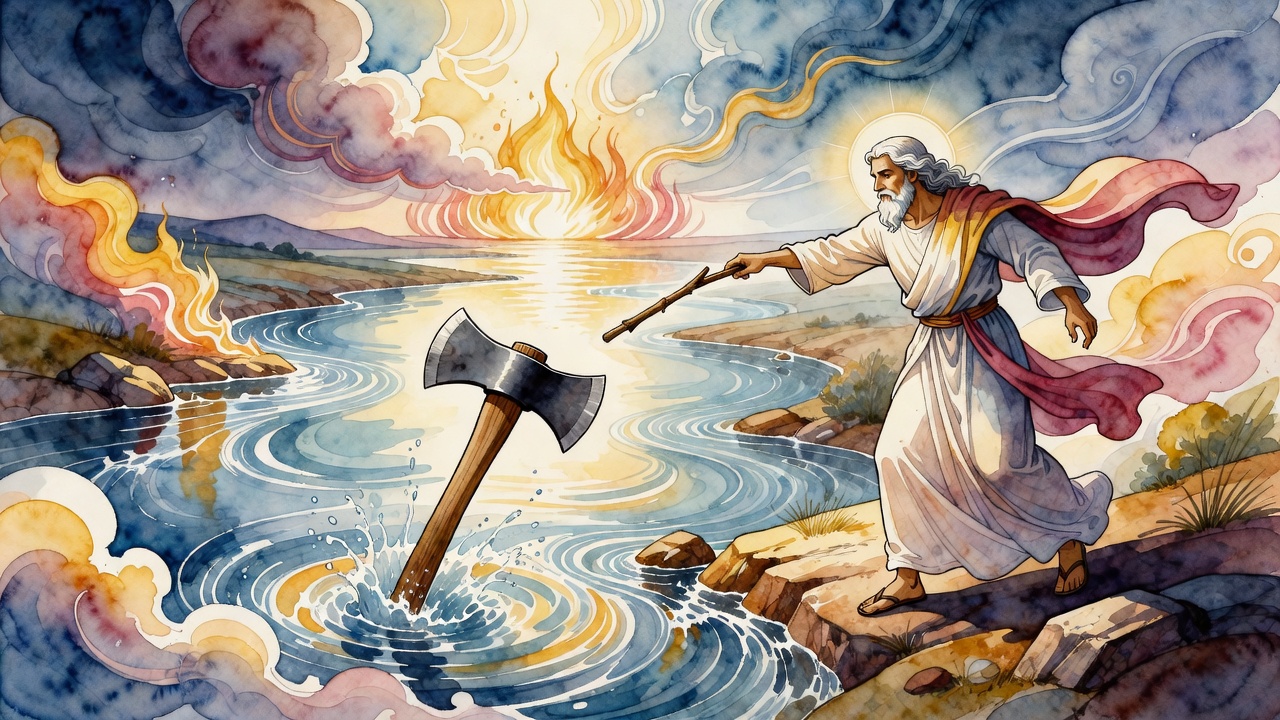
One of the disciples of the prophets was felling a tree by the Jordan when the iron slipped. The ax head hit the water and went down. He could see the place. He could not reach it.
He cried out, "Alas, master, it was borrowed!" (2 Kings 6:5).
Poverty made the loss a crisis. A poor student has no second blade and no silver to quiet a lender. The river kept the iron the way rivers keep stones. He stood on the bank with an empty haft in his hand and a debt he could not pay.
Elisha Cut a Stick
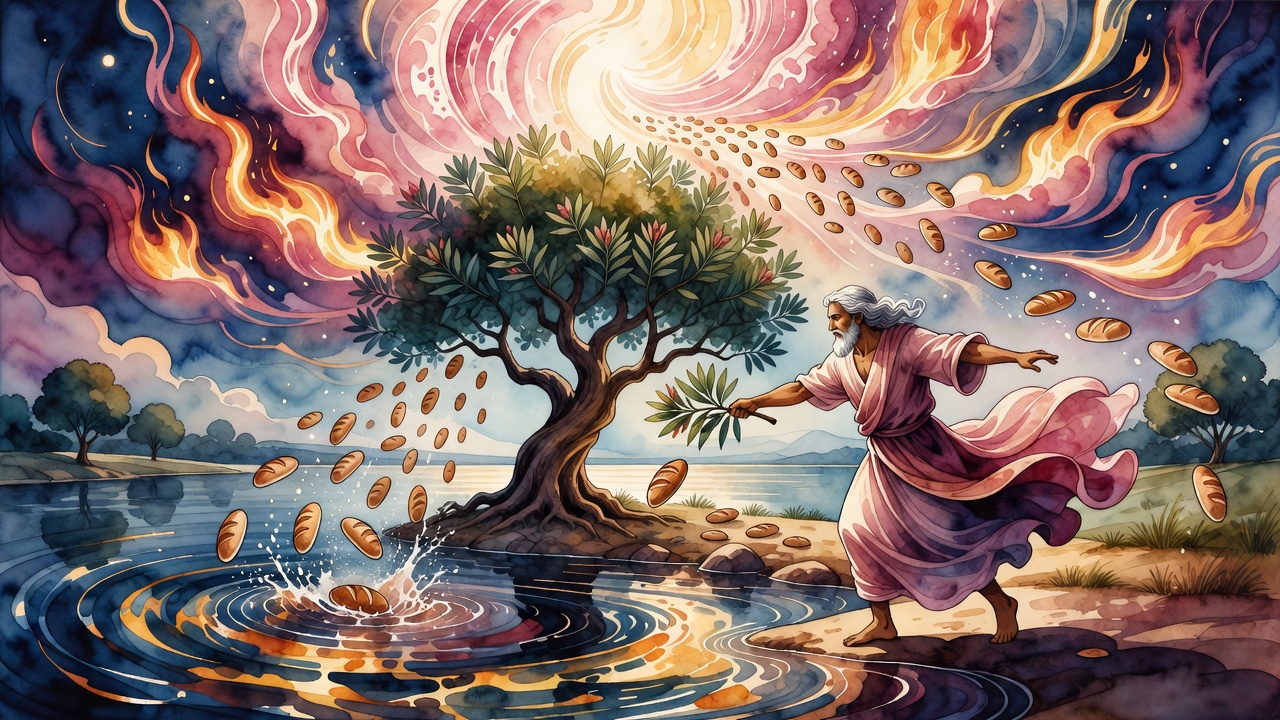
Elisha asked where it fell. The man showed him the place. Elisha cut a stick, threw it on the water, and the iron floated (2 Kings 6:6).
Iron is heavier than water. The stick went in. The blade came up. The student put his hand on the wet metal and lifted a tool he could not have replaced. No sea split. No mountain smoked. A borrowed edge returned to a hand that needed it for work.
He went back to the tree. The haft and the head met again. Chips flew. The lender would never know how close the tool had come to staying on the riverbed.
Moses Threw Wood at Marah
Long before that riverbank, Moses stood over bitter water. Israel had just finished singing on the far side of a sea, and the first drink they found was undrinkable. The people complained. Moses cried out to God. God showed him a tree. He cast the wood into the water, and the waters turned sweet (Exodus 15:25).
A camp that had been ready to break drank. Children put their mouths to what had been poison an hour before. Wood does not rewrite water. It did that day.
Moses watched the color change and did not give a speech. He had a nation to move and a spring that had just agreed to be a spring. Behind him, in another century, a poor student would lift wet iron from a river. The smaller miracle would look like a household errand. The larger one had already been a people drinking what they could not drink.
He Rose While the Dark Was Still Deciding
Before dawn Moses was already on his feet for the second tablets (Exodus 34:4). The first pair had broken. The camp was still asleep. He took the stone and went up while the dark was still deciding whether to leave.
Jacob had done this at Bethel after the ladder, up early with oil in his hand (Genesis 28:18). Joshua would rise early to leave Shittim toward the Jordan (Joshua 3:1). Samuel rose early to meet Saul (I Samuel 15:12). At the morning watch the Lord looked toward Egypt through fire and cloud (Exodus 14:24).
Marah's wood belonged to that hour. So did Elisha's stick. Men who get up while the dark is still arguing with the light are the men who throw wood into water that should not obey wood.
The Torah Took His Name
Moses devoted his life to Torah. The Torah is the Lord's, whole and restoring the soul (Psalms 19:8). Malachi still says "the Torah of Moses, My servant" (Malachi 3:22), because he spent himself on it. A life poured into a work can rename the work without stealing it from heaven.
He came down with the second tablets against his chest. The camp woke to a man who had not waited for morning to get permission. Years later a borrowed ax would rise for a student of Elijah. Moses had already thrown wood into water that should not have obeyed wood, and the people had drunk.
The student at the Jordan was not a nation. He was one poor man with a borrowed blade. The same school of wonder covers both: wood enters water, water yields, a tool returns, a people drinks, a name sticks to a book the man did not write.
← All myths