6 min read

Ishmael Exchanged the Threshold of His House

Near death under desert thorns, Ishmael cried to Abraham's God. Years later Abraham left a coded message at the tent door, and the son understood.

Curated by Arthur · Told by Maggid ·
Table of Contents
  1. The Well Made at Twilight
  2. Three Years and an Oath
  3. The Woman in the Doorway
  4. Half a Wise Man

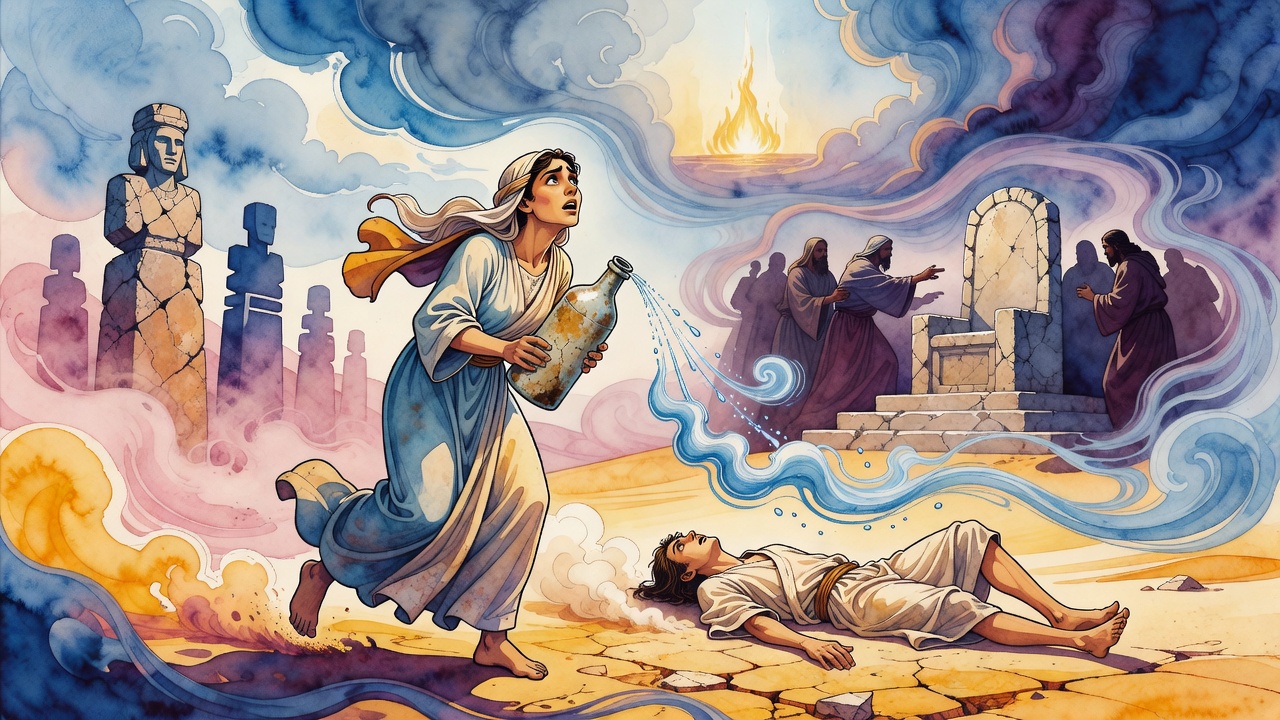
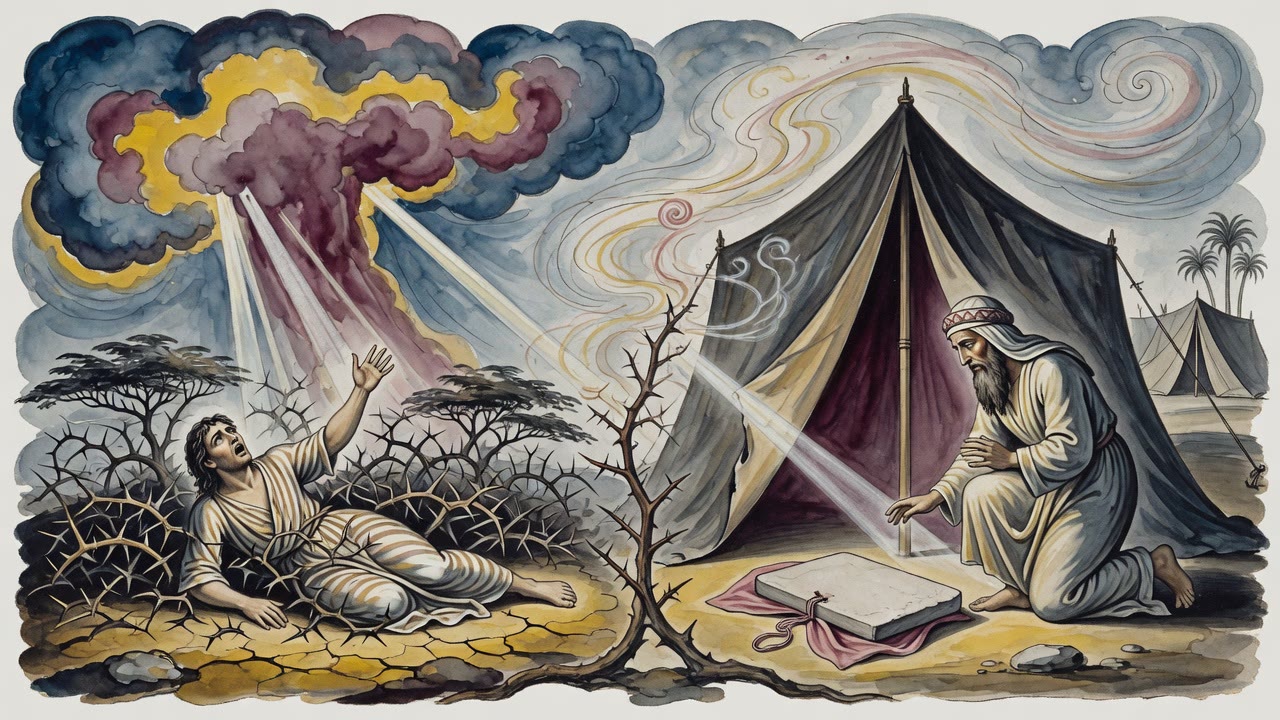
The skin had been empty since the middle of the morning, so Hagar put the boy down under the thorns and walked off far enough that she would not have to watch him finish.
Ishmael Exchanged the Threshold of His House Click for full size

They had been wandering for weeks by then, and the wandering had not only been across ground. Out there she had gone after other gods, the kind the prophet calls vanity and a work of delusion, and there is nothing like thirst for making a person try every door in the dark. So the boy had grown up on the wrong side of that. He was lying under a bush with sand in his throat and a mother sitting a bowshot away with her back to him, and whatever name he called now would be the one he actually believed in.

He called on the God of his father Abraham. Not a new god picked up on the road. The one from the house he had been thrown out of.

The Well Made at Twilight

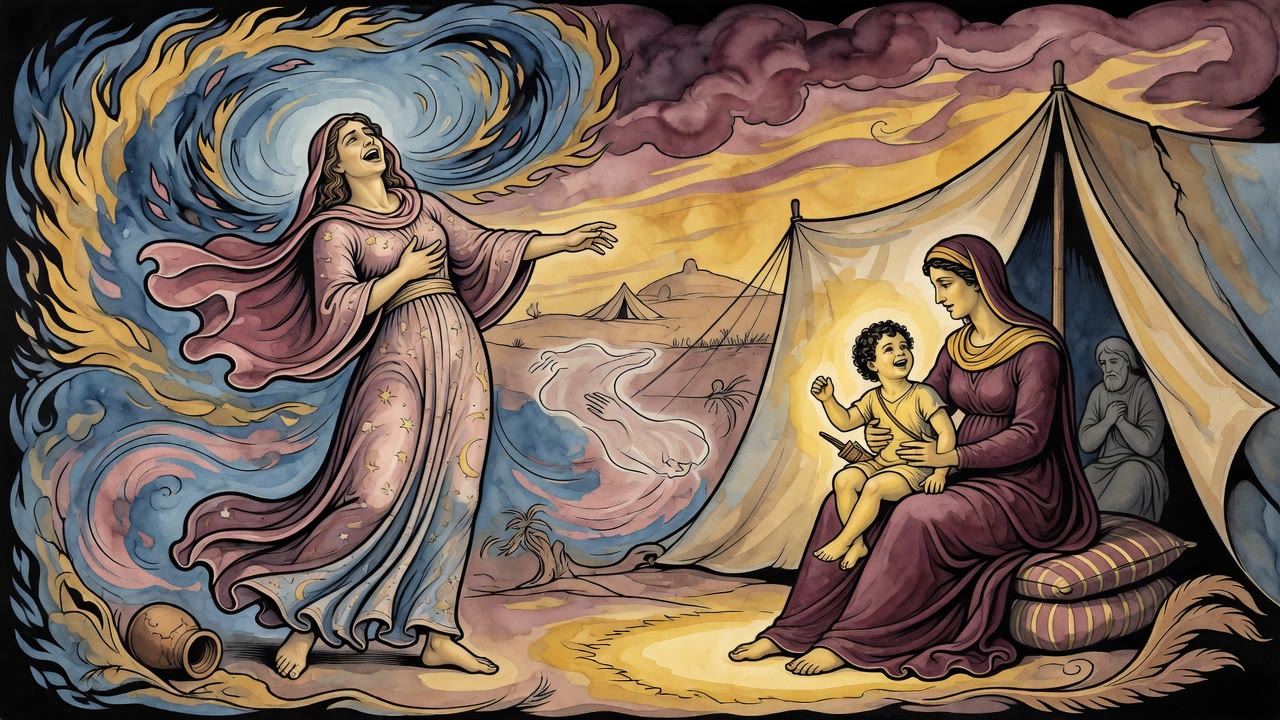
God heard the voice of the boy where he was, in the place he was in and not in the place he should have been, and a well opened in the sand. It was not new either. It had been made at twilight on the sixth day, before the first Sabbath came down, and it had been waiting since then for somebody to need it exactly this much. They drank until they could not drink more. They filled the skin. Then they walked on to Paran, where there was running water in the wadis, and there they stopped and stayed.

Three Years and an Oath

Ishmael grew up and married a woman out of Moab called Ayeshah, and three years went by, and in the third year Abraham could not stand it any longer and went out to see his son.

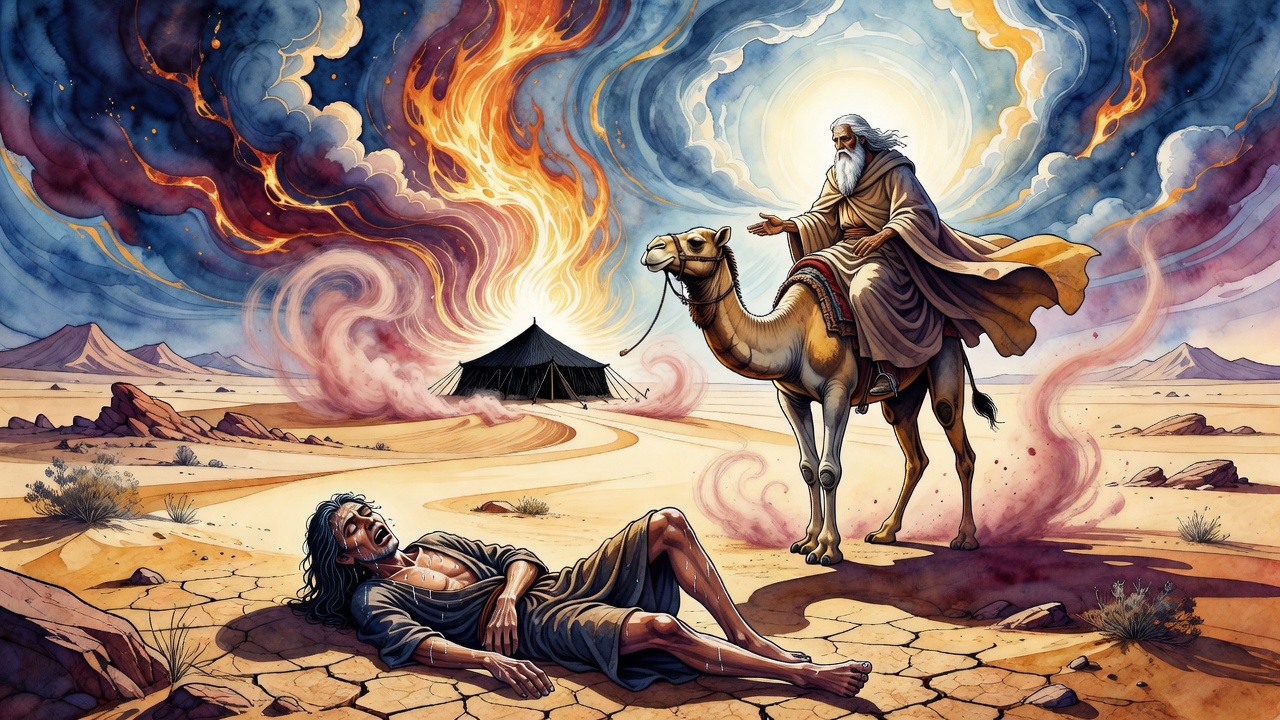
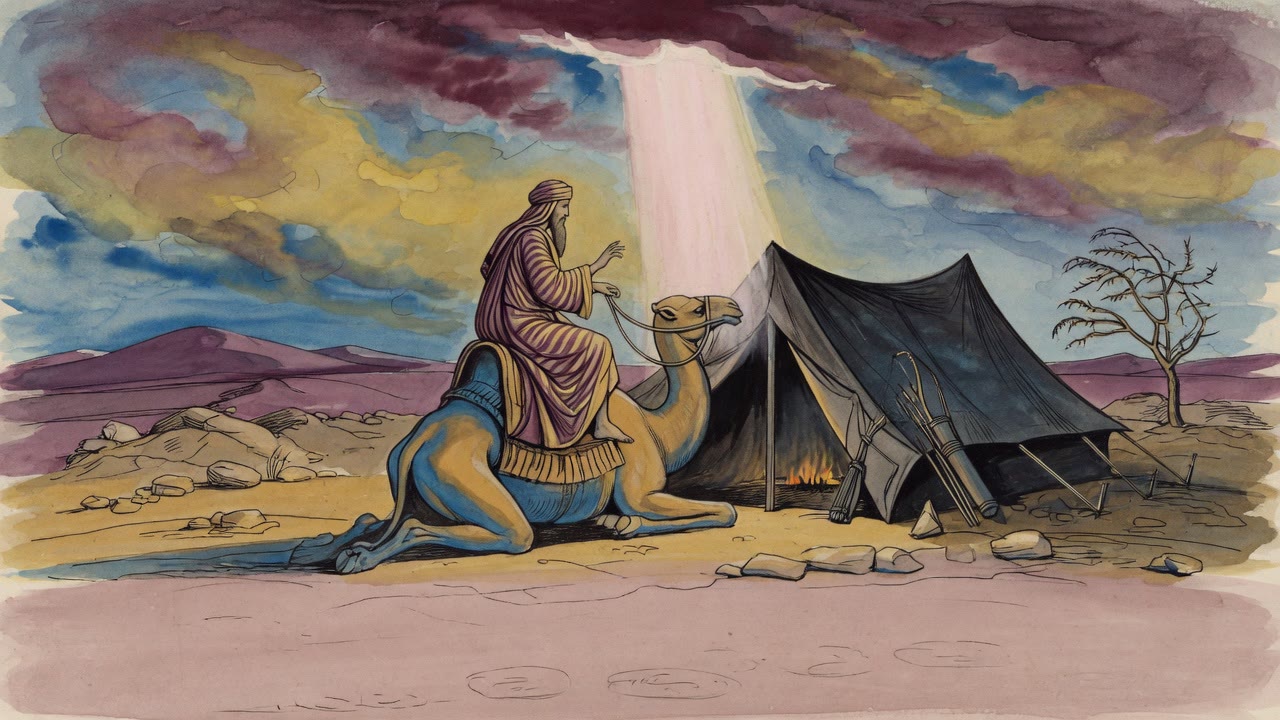
He had sworn to Sarah that he would not get down off the camel anywhere inside Ishmael's territory. That was the price of the trip. He could go and look, but the boy his wife had driven into the desert was not going to have him under his roof, and so an old man rode a long way across open country in order to arrive as, technically, a man passing through.

The Woman in the Doorway

Ishmael was out with his mother after dates when Abraham came up to the tent, so the person who came to the entrance was his wife.

Abraham asked her for bread and water. He had ridden a long way and he was an old man and he was sitting up on a camel in the sun in front of her, and the request was the smallest one a traveler can make. She told him she had none. She had it, and she said she had none, and then she stood in the doorway and waited for him to leave.

He did not argue with her, because there was nothing to argue about, and he did not come down off the camel, because he had sworn not to. He looked past her at the inside of his son's house for as long as he was allowed to.

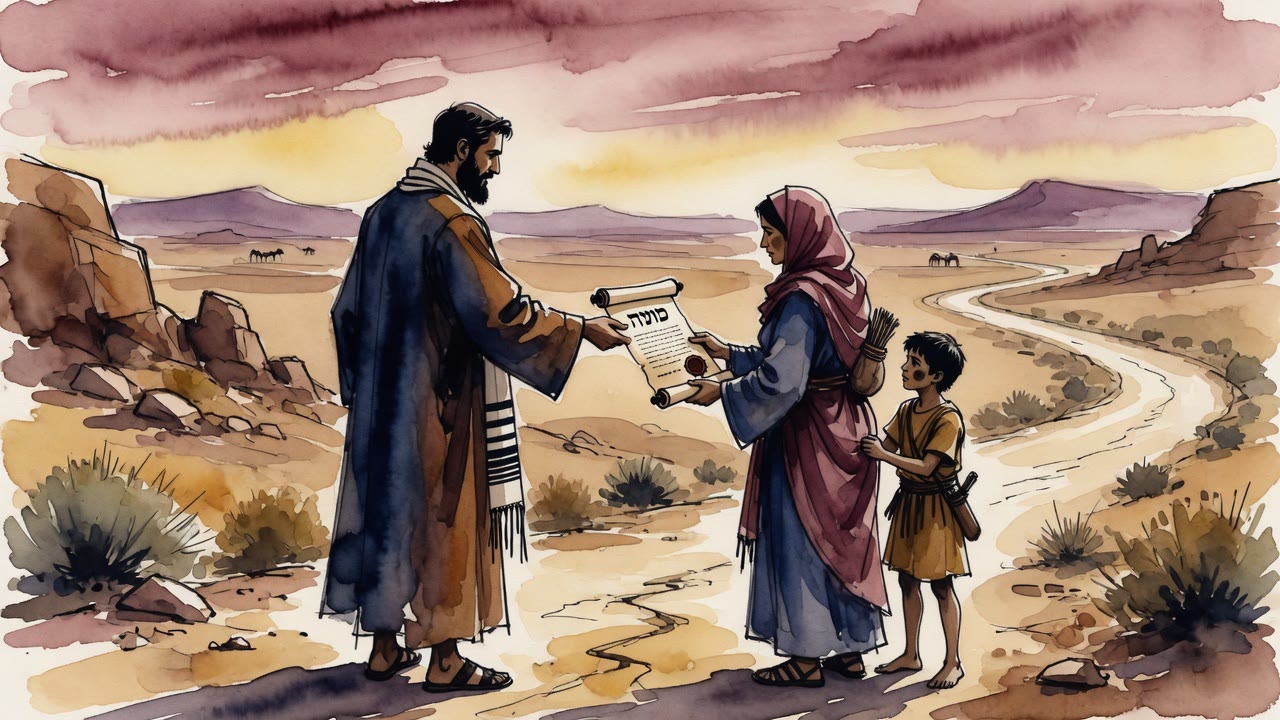
Then he gave her a message. "Tell Ishmael this. Exchange the threshold of thy house, for it is not good for thee." He turned the camel and rode back the way he had come, and she watched him go and did not think about the sentence again until her husband came home.

Half a Wise Man

Ishmael came in with dates on his hands and his mother behind him. His wife told him about the old man on the camel who had wanted bread, and how she had sent him off, and then she repeated the strange thing he had left behind, probably as a joke about a plank of wood.

Exchange the threshold of thy house, for it is not good for thee.

He stopped where he stood. He had not seen his father in three years, and had not been spoken to by him in longer, and here was a sentence that had come across the desert on the back of a camel and had been carried into the tent by the one person in the world it was about. The threshold is what stands in the door of a man's house and decides who gets in. His father had been thirsty in front of it. A son of a wise man is half a wise man, and he did not need any of it said twice.

He sent her away. Not in a rage, and not with an explanation she would have accepted, but that day, and for good.

Hagar went back to her own father's house and brought him a second wife from there, a woman named Fatimah, and the tent had a different door after that. Abraham had not set one foot on the ground the whole time. He had ruled the household from the height of a saddle, and his son had obeyed a sentence he never heard his father say.

Ishmael stood in that new doorway himself in the evenings, on the one strip of ground his father was not permitted to touch.


← All myths
From the tradition

Sources

2 sources

The texts behind this telling. Some cards carry a translation of the source; others are our own retelling of it, and each card says which. Every card links out to the original.

Pirkei DeRabbi Eliezer 30:6Pirkei DeRabbi Eliezer

Retold in our words. Read the original at the link below.Pirke de Rabbi Eliezer, trans. Rabbi Gerald Friedlander, London (1916) · CC-BY

Hagar's desperate wanderings with her son. "And she departed and wandered," the passage begins, referencing (Genesis 21:14). But Pirkei DeRabbi Eliezer interprets "wandering" here as a slide into idolatry. Why? Because, as (Jeremiah 10:15) says of idols, "They are vanity, a work of delusion." It's a powerful connection, suggesting that spiritual thirst can lead us down dangerous paths.

Lost and near death, Ishmael cries out to God beneath the thorns of the wilderness, begging not to die of thirst. He calls upon "the God of my father Abraham," a direct appeal to the covenant. And God hears him. "For God hath heard the voice of the lad where he is," (Genesis 21:17) tells us, and a well, one of those created at twilight according to tradition, opens for them. They drink, refill their bottle, and find their way to the wilderness of Paran, finding streams of water and settling there, as (Genesis 21:21) states: "And he dwelt in the wilderness of Paran."

The story doesn't end there. Ishmael marries a woman from Moab named Ayeshah. Three years later, Abraham, yearning to see his son, journeys to Ishmael's dwelling. He's sworn to Sarah not to dismount his camel within Ishmael's territory, so he remains a visitor. He finds Ishmael absent, out fetching dates with his mother. Abraham asks Ayeshah for bread and water, but she refuses, claiming she has none.

Abraham, in a veiled message, tells her to tell Ishmael: "Exchange the threshold of thy house, for it is not good for thee." What does this cryptic message mean? It's a powerful metaphor.

When Ishmael returns and hears the story, he understands immediately. "A son of a wise man is like half a wise man," the text notes. This proverb highlights Ishmael's intelligence and understanding. He realizes that Abraham is advising him to divorce Ayeshah. The "threshold" represents the wife, the entrance to the home.

Ishmael's mother then arranges for him to marry Fatimah, a woman from her own father's house.

What are we to make of this story? It's a story of divine intervention, of a father's love, and of the importance of choosing the right partner. It shows us that even in the most desolate of circumstances, hope and redemption are possible. The well in the desert is not just a source of water; it’s a symbol of God's unwavering presence, even in the face of our mistakes and wanderings. And sometimes, the wisdom of a parent, even delivered through a coded message, can guide us towards a better path.

Full source
Pirkei DeRabbi Eliezer 32:11Pirkei DeRabbi Eliezer

Retold in our words. Read the original at the link below.Pirke de Rabbi Eliezer, trans. Rabbi Gerald Friedlander, London (1916) · CC-BY

The story begins with a heartbreaking reality: Rebecca was barren for twenty long years. Finally, Isaac, her husband, takes her to a place steeped in significance: Mount Moriah. This is the very place where Isaac himself had been bound, ready to be offered as a sacrifice by his father, Abraham – a story of ultimate faith and divine intervention. They return to that site, heavy with memory, and together they pray for a child.

"And Isaac entreated the Lord," the Torah tells us (Genesis 25:21). And the Holy One, blessed be He, answered their prayers. But the story doesn’t end there. Oh no. It gets… complicated.

As we learn in Pirkei DeRabbi Eliezer, the children within Rebecca’s womb were already at odds, "contending with one another like mighty warriors," as (Genesis 25:22) puts it. A battlefield within, a struggle for dominance even before birth. Rebecca, understandably, is deeply troubled. The time of her confinement draws near, and her soul is "nigh unto death owing to her pains."

Distressed, Rebecca seeks answers. "And she went to inquire of the Lord" (Genesis 25:22). She returns to that sacred place, the site of Isaac's near-sacrifice. What happens next is truly fascinating.

According to Pirkei DeRabbi Eliezer, Jacob, still in the womb, reached out and grabbed onto the heel of Esau, trying to pull him back, to make him fall. "And after that came forth his brother, and his hand had hold on Esau's heel," (Genesis 25:26) the Torah says. It’s more than just a birth story; it’s a symbolic foreshadowing of their future relationship, of the struggles and tensions that would define their lives and the destinies of their descendants.

But there’s more to this heel-grabbing than meets the eye. Our text suggests a profound connection to the future. "Hence thou mayest learn," it states, "that the descendants of Esau will not fall until a remnant from Jacob will come and cut off the feet of the children of Esau from the mountain of Seir." This passage connects the birth narrative to a prophetic vision of ultimate justice. It evokes imagery from the Book of Daniel (2:45) – "Forasmuch as thou sawest that a stone was cut out of the mountain without hands."

And finally, a verse from Deuteronomy (32:35) is invoked: "Vengeance is mine, and a recompence, at the time when their foot shall slide."

What does it all mean? This brief passage from Pirkei DeRabbi Eliezer weaves together themes of prayer, struggle, divine intervention, and prophecy. It paints a portrait of Rebecca's agonizing pregnancy not just as a personal ordeal, but as a microcosm of the larger conflicts that would shape the history of two nations. And it leaves us pondering the enduring questions of justice, inheritance, and the complex relationship between brothers.

Full source