Hagar Lost the Water When She Turned Back
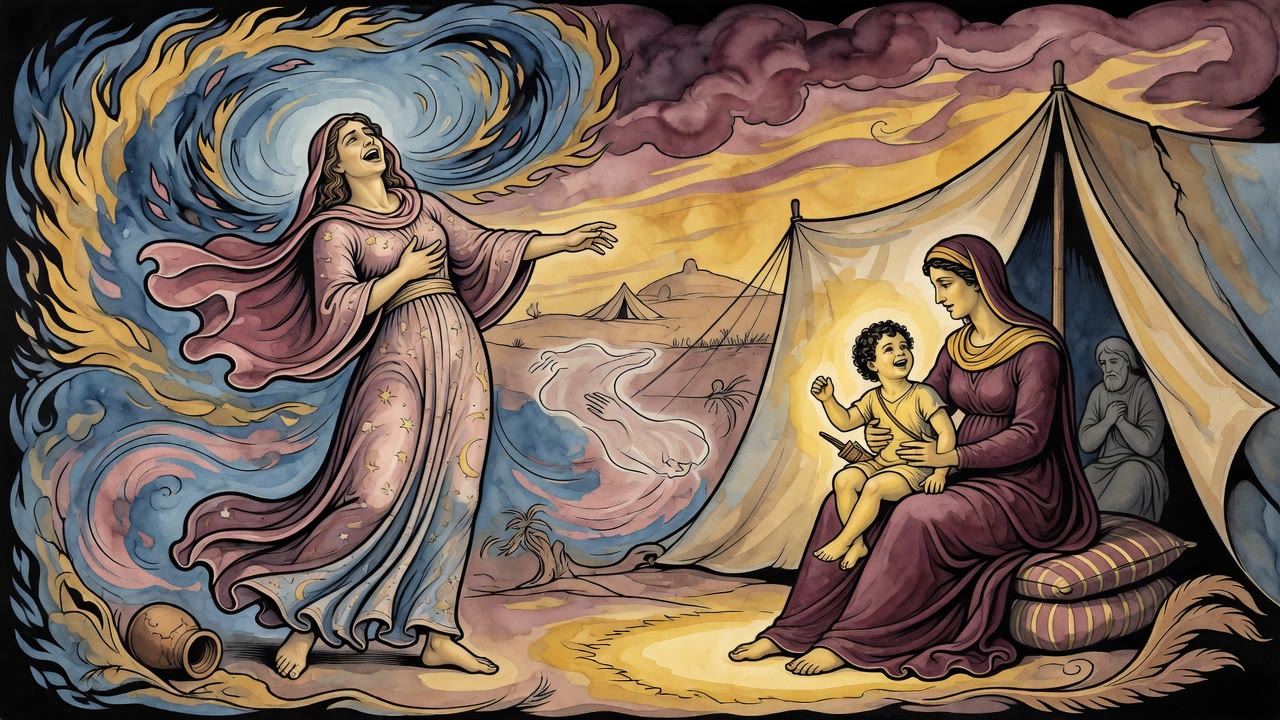
The bottle should have been empty days ago. It lasted on Abraham's merit until Hagar's heart went back to Egypt. Her son was seventeen when he fainted.
Table of Contents
The bottle should have been empty by the second day. Hagar felt its weight against her hip and kept walking, because the water had not failed, and she did not yet ask why.
 Click for full size
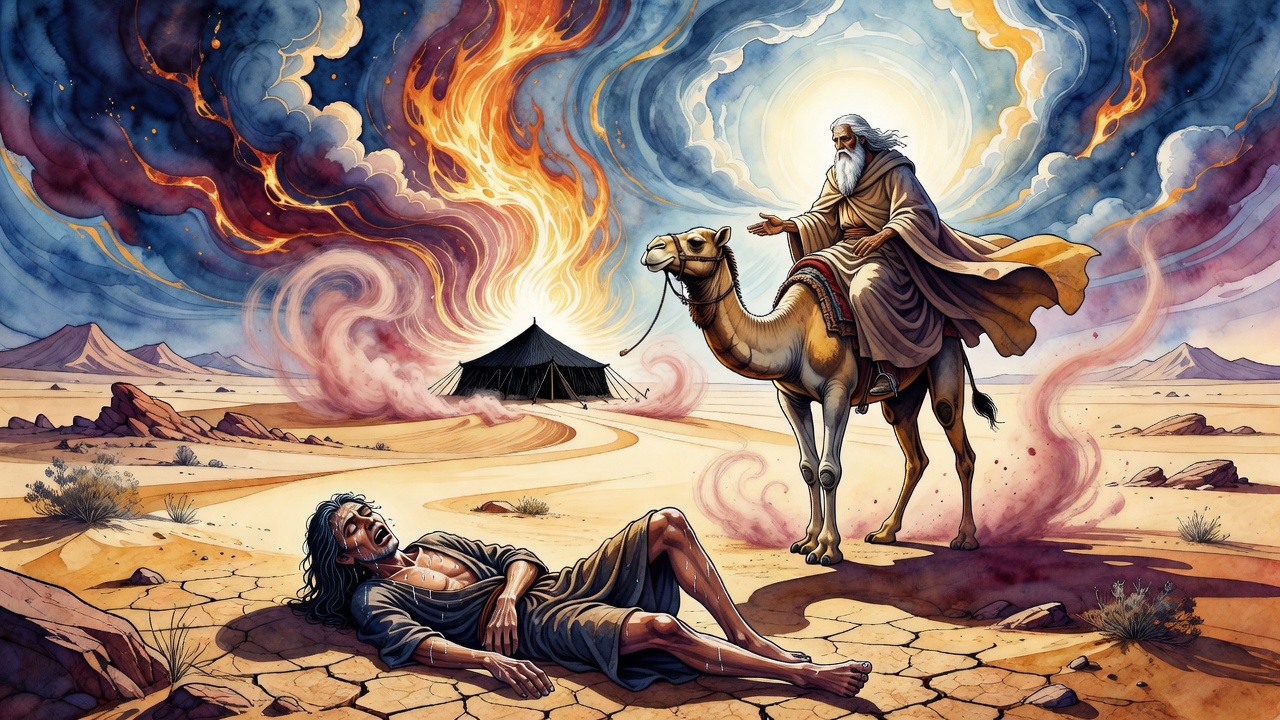
Ishmael walked beside her, seventeen, too tall for her arms. The last track of Abraham's camp thinned behind them. Sand got into the straps. The sun sat on their heads like a hand.
The Bottle That Rode on Merit
By the merit of Abraham the water did not fail. Every swallow should have lowered the level. It did not. Hagar drank. The boy drank. The skin stayed heavy, as if a second seal sat inside the first.
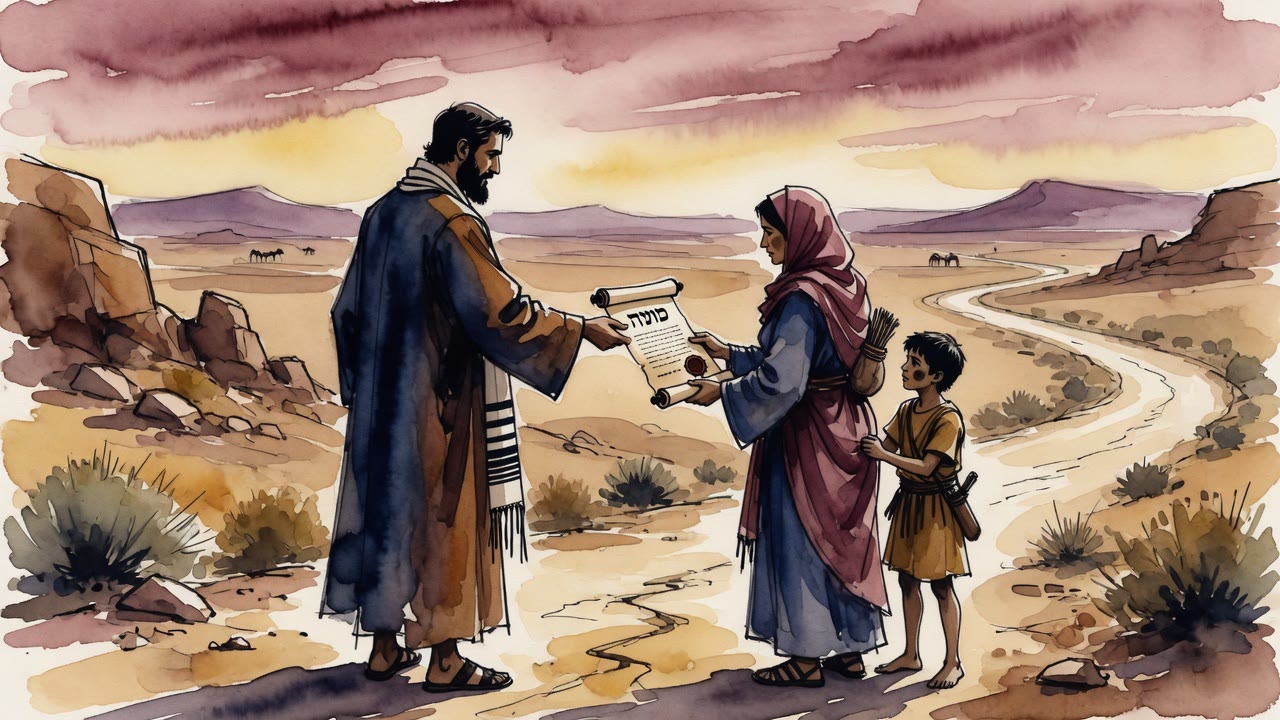
Abraham had sent them out with bread and this bottle. He had not sent a well. The righteousness that had smashed the figures in a father's shop and argued for cities of the plain was still working, quietly, on an Egyptian woman's hip.
Ishmael did not talk much. His mouth was already dry from heat, not yet from lack. He watched the bottle the way a man watches a last door.
She Turned Toward Her Father's Gods
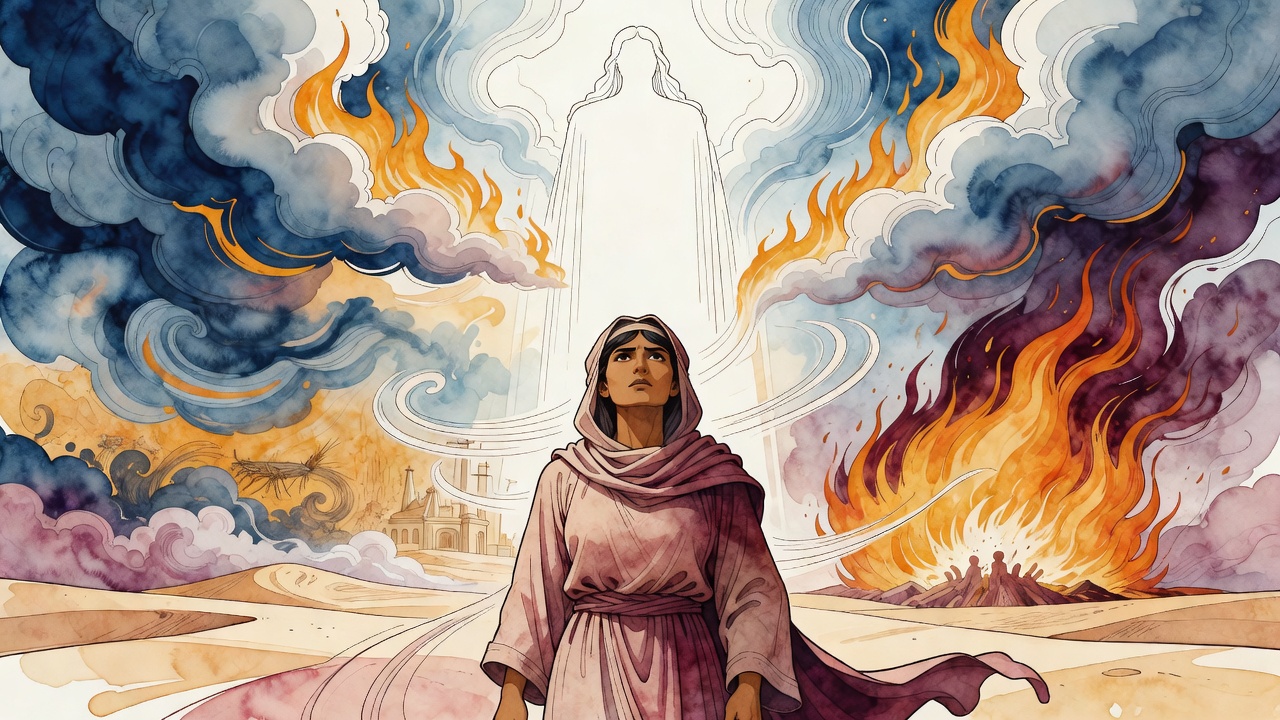
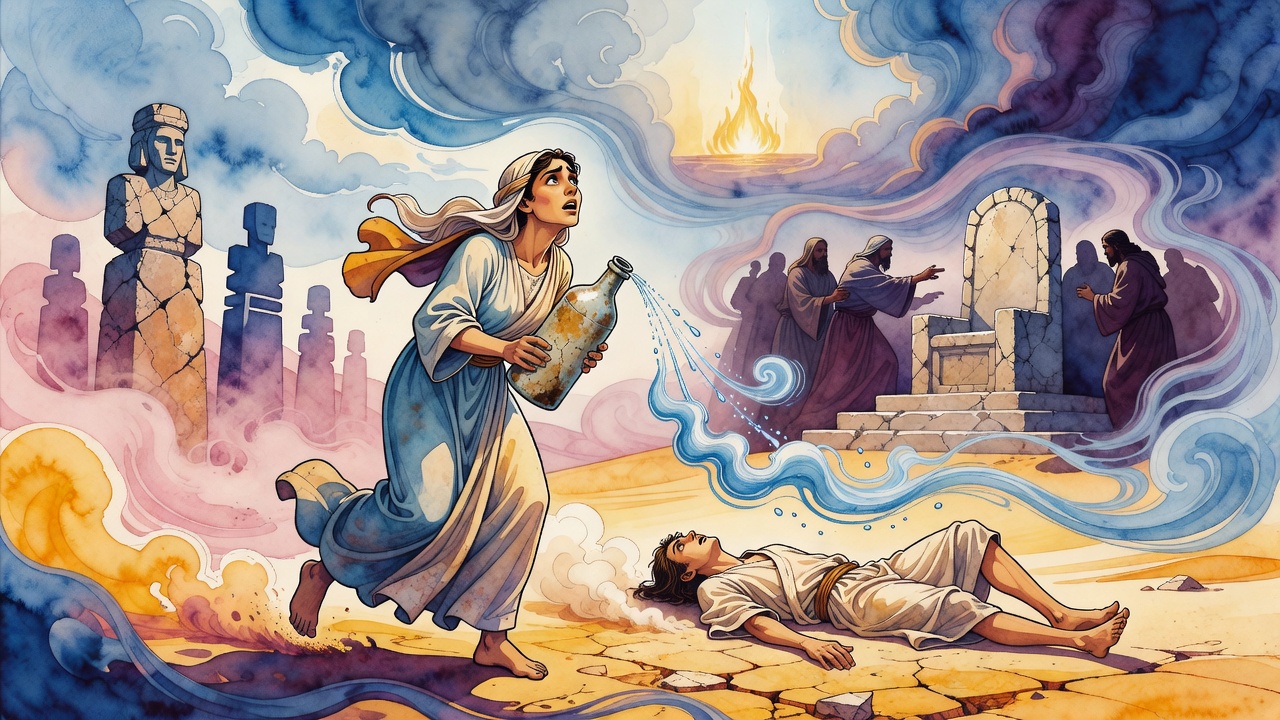
They reached the entrance to the wilderness, where the last goat-track ends and the unowned land begins. Hagar stopped. The old names of her father's house came back into her mouth. She had left that house. She had watched Abraham break the idols that stood in it. At the edge of the wild those figures stood up again in her mind, and she began to go astray after them.
Forthwith the water was spent.
She tipped the bottle. Nothing. She shook it. Nothing. Ishmael looked at her as if she had done a trick and failed it. The merit that had carried them would not follow her back to gods Abraham had already unmade.
Seventeen Under a Shrub
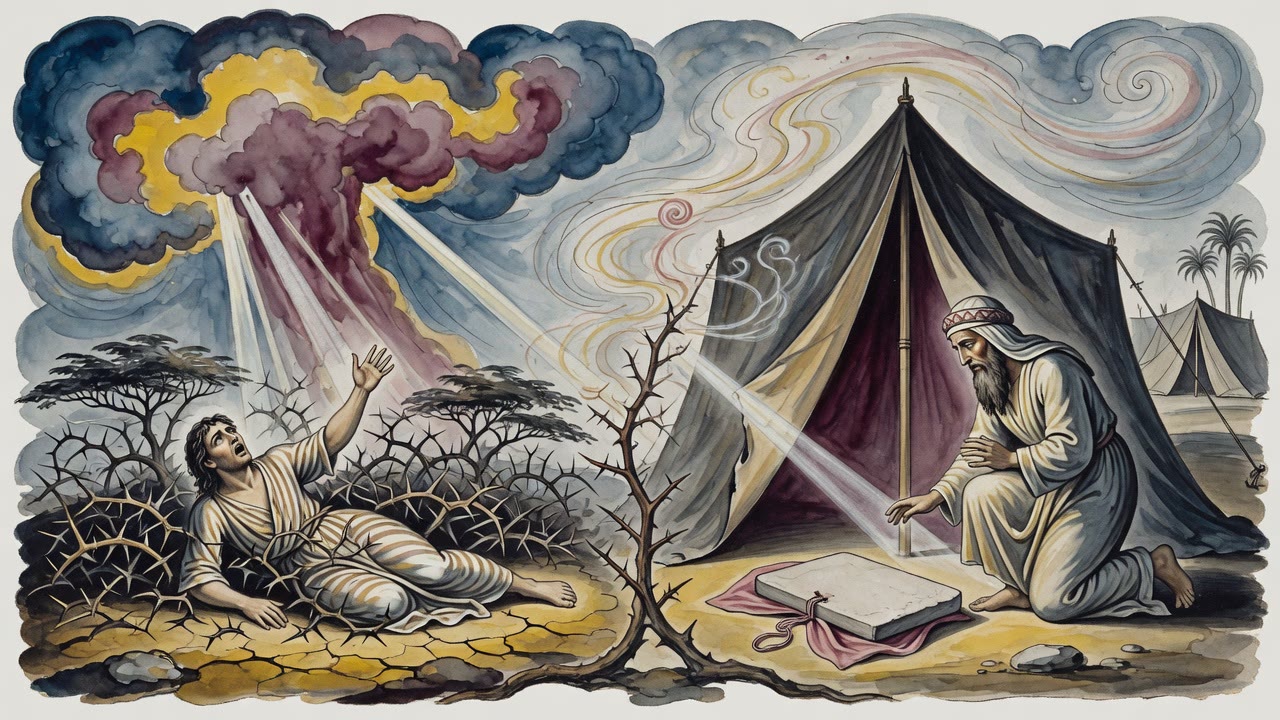
Ishmael's soul grew faint with thirst. His mouth cracked. His knees went. Hagar got him under a shrub because the shrub was the only shade the ground would give. Then she walked a bowshot off and sat down with her back to him, because she would not watch a seventeen-year-old body shut down.
She lifted her voice. The boy under the bush had left Abraham's table that morning. He was dying of a dryness his mother had bought at the edge of the track.
The God who hears answered. Her eyes opened to a well that had been there. She filled the bottle from it and put it to Ishmael's mouth. He drank, coughed, drank again. The well did not say the first bottle had been wrong to fail. It only kept him alive.
Two Claimants on the Road to Moriah
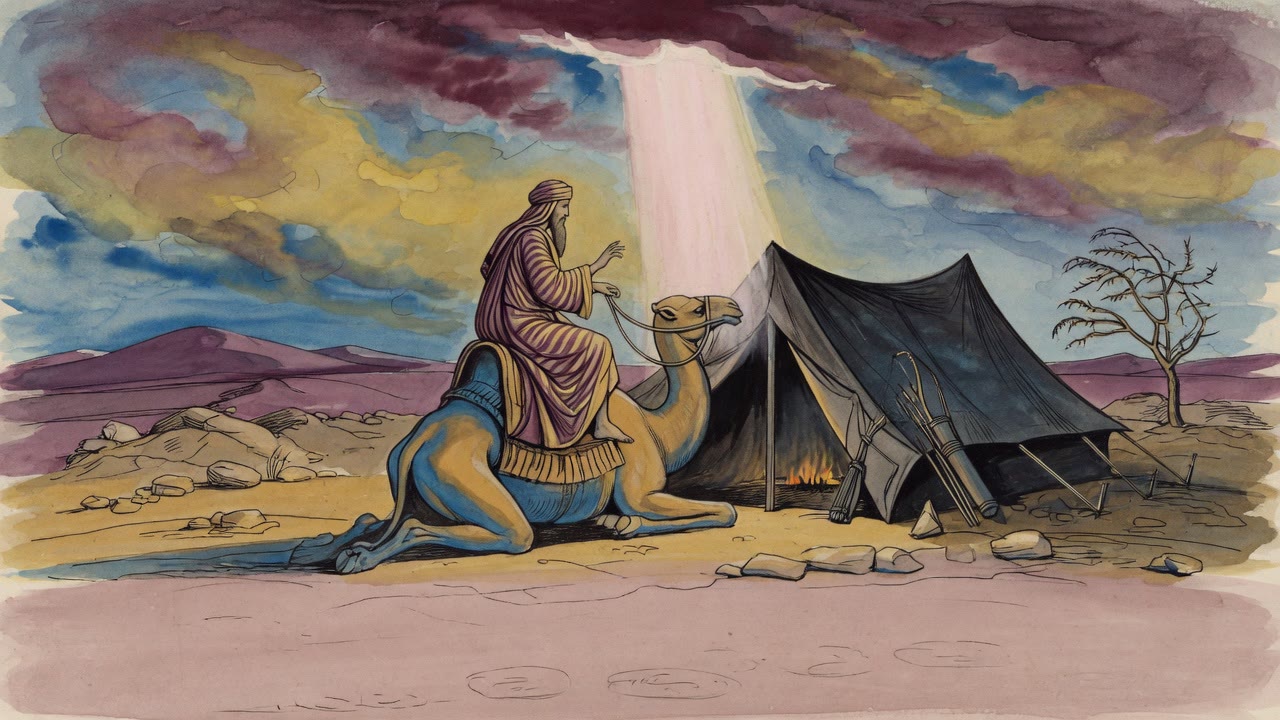
Years later Isaac was thirty-seven, and Ishmael was fifty. Abraham rose early, split wood, and took Isaac toward the mountain. On that road Eliezer, the servant who had run the house by day and by night, faced Ishmael over the estate.
Ishmael spoke as firstborn. "Now that Abraham will offer Isaac his son for a burnt offering, I am the elder. I will inherit."
Eliezer did not soften it. "He has already driven you out like a woman divorced from her husband. He sent you to the wilderness. I serve him day and night. I shall be the heir."
They were writing a deed from a death that had not happened yet. Abraham was still climbing. The knife was still in his belt. The two men below did not look up.
Neither This One Nor That One
The Holy Spirit answered them. "Neither this one nor that one shall inherit."
The mountain was not a courthouse. The third voice tore both claims. Ishmael stood with birth order in his hand and nowhere to spend it. Eliezer stood with years of service and the same empty palm.
Above them a father walked with fire and a knife. A ram was already in the thicket, though no one on the road could see it yet. The bottle from the first desert was long since dry. The well had saved a life. It had not written a will.
← All myths