5 min read

Israel Demanded Spies After God Already Praised the Land

God called the land good, expansive, full of milk and honey. Israel still begged to send spies. The king's son who insisted on seeing the bride lost her.

Curated by Arthur · Told by Maggid ·
Table of Contents
  1. The Bride Already Praised
  2. Ten Voices and a Forty-Year Sentence
  3. Who Still Enters After the Revolt
  4. Trust Was the Real Border

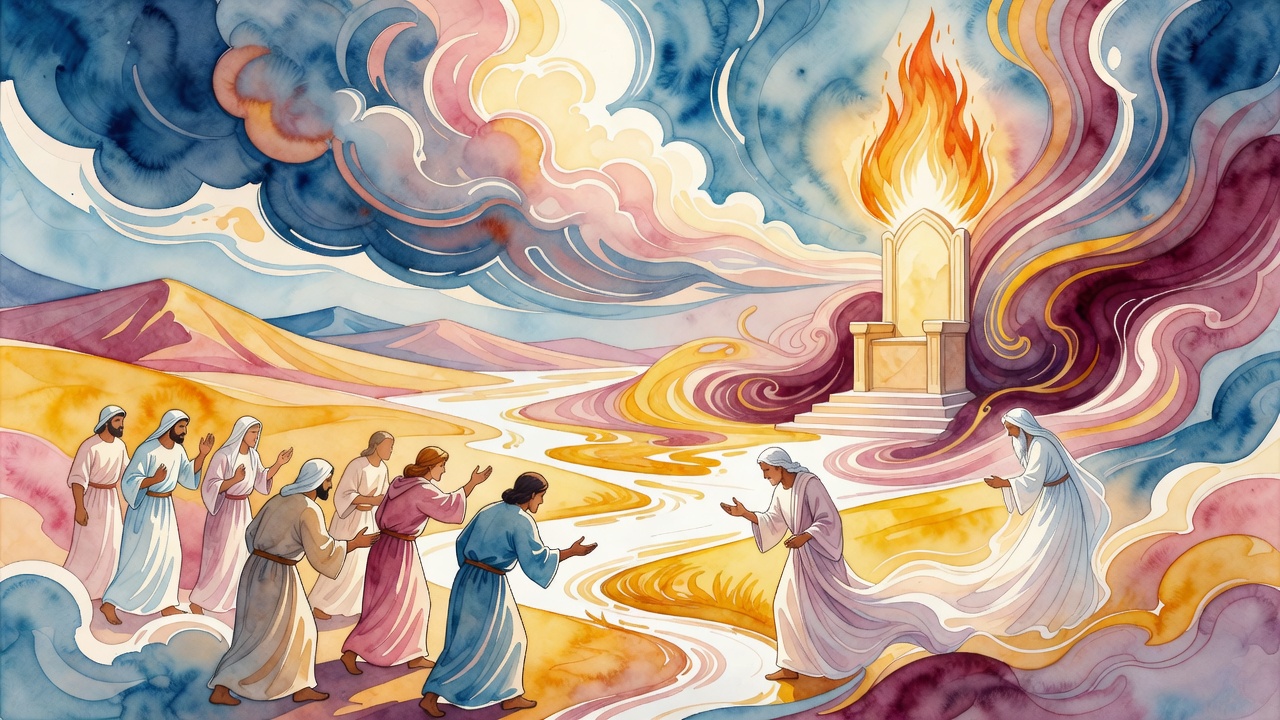
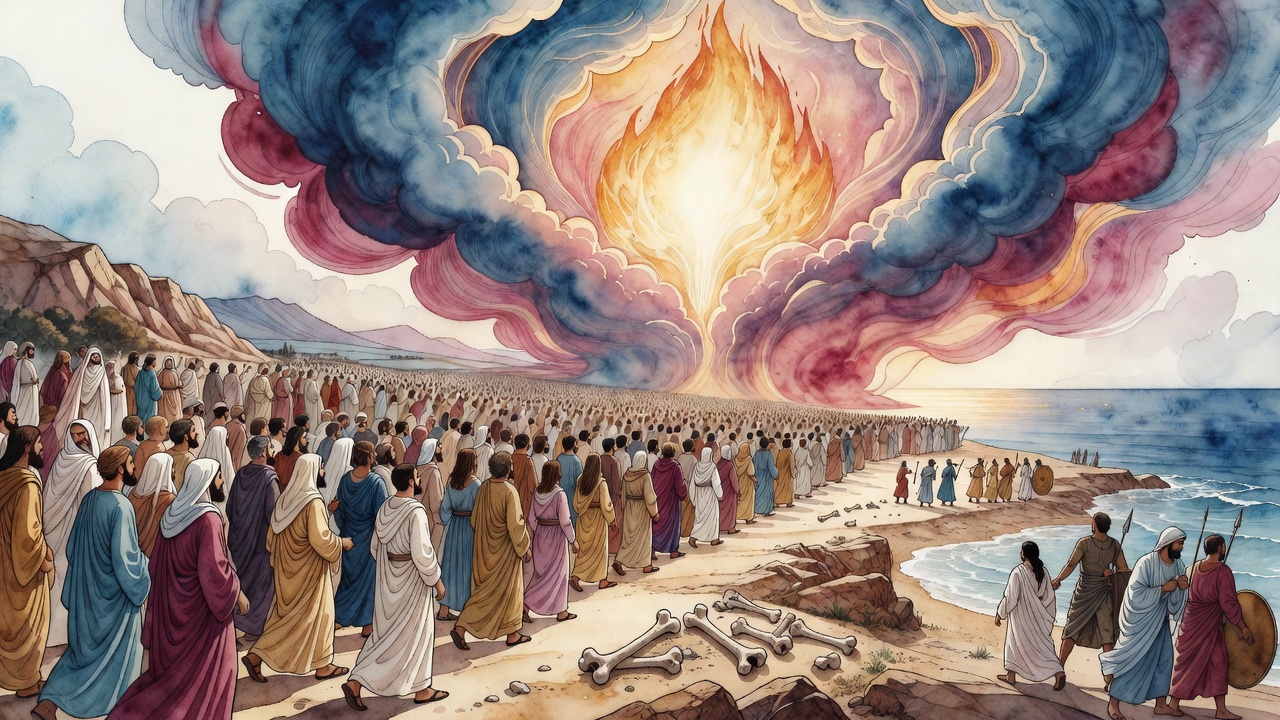
God had already named the land with his own mouth. A good land. A land that drinks rain. A land flowing with milk and honey (Deuteronomy 8:7) (Exodus 3:8). He set it before them and said go up and conquer (Deuteronomy 1:21).

Israel Demanded Spies After God Already Praised the Land Click for full size

Israel answered like shoppers who distrust the merchant even after the gift is free. Let us send men before us. Let them spy. The request sounded careful. Midrash calls it unbelief wearing a scouting report.

The Bride Already Praised

Rabbi Yehoshua pictures a king who arranges a marriage for his son to a woman beautiful, well-born, and wealthy. The king describes her. The son still demands to see her himself. If the king refuses, the son will assume she is ugly. So the king allows the viewing and vows the son will never have her. She will go to the grandson instead.

That is the desert at the border. God praised. The people insisted on eyesight over promise. The generation that forced the inspection lost the marriage. Their children would take the land their parents treated like a suspect product.

Even with the Ark seeking a resting place ahead of them (Numbers 10:33), they wanted human reconnaissance more than divine lead. Ezra later named the disease. They refused to heed and did not remember the wonders (Nehemiah 9:16-17). Psalm language is colder. They did not believe in God (Psalm 78:22).

Ten Voices and a Forty-Year Sentence

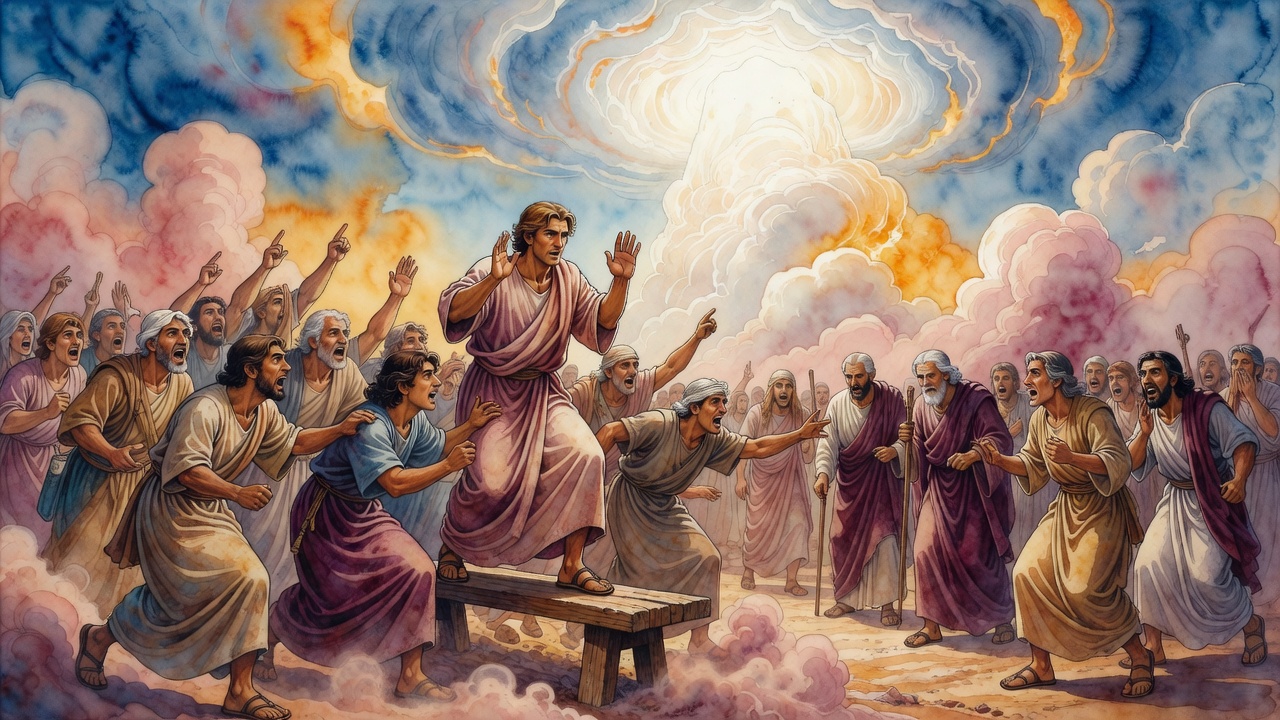
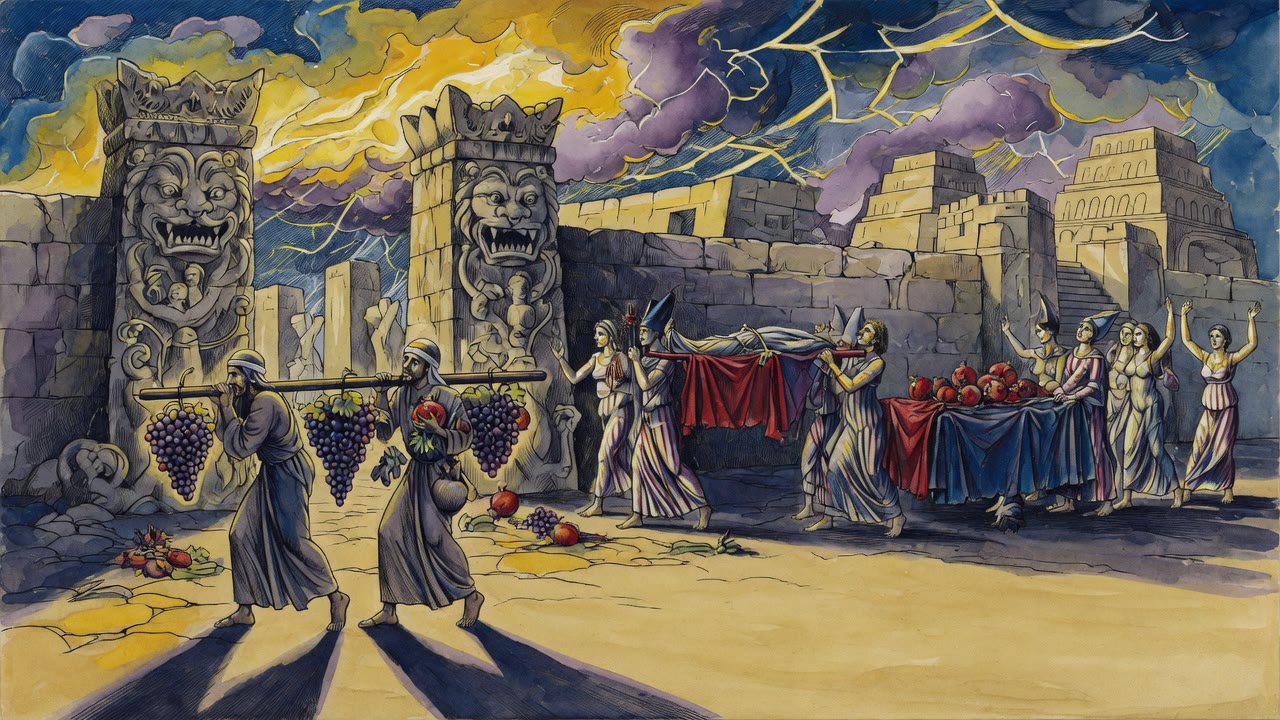
The spies walked. Fear came back taller than the fruit. A land that eats its inhabitants. Cities fortified to heaven. The camp broke. Night became a factory of tears that heaven would later match with years. The drama is not that Canaan had giants. The drama is that promise had already been spoken and the people still hired doubt as a guide.

Moses could not undo a request God had permitted as a test the people themselves designed. Permission is not approval. Sometimes heaven lets you take the road that will educate your grave. The grapes were heavy enough to prove goodness and still the report chose terror. Ten mouths outweighed two. The camp preferred the majority of panic to the minority of trust.

Children listened from tent doors while adults mourned a future they had not yet lost. The decree was already forming in that noise.

Who Still Enters After the Revolt

The decree hit those twenty and above who joined the bad counsel (Numbers 32:11). Midrash works the edge cases with a hard hand. A youth under twenty without signs of maturity could still enter even if the camp's noise had surrounded him. A youth under twenty who had matured and joined the counsel would not enter. Some punished young men still lived past sixty. They lost the land without losing every year of life. Justice here is not a single blade. It is a set of doors.

Morning and night become a parable of who is fair before the king. A noblewoman and her maidservant argue about beauty and love. Morning will tell. The World to Come is that morning. The desert generation learned an earlier version. Some would see the land. Some would only see graves between Egypt and the river.

Age, counsel, and choice braided into a sentence no one could call random. Heaven counted more carefully than the spies had counted walls.

Trust Was the Real Border

The Jordan was not the first border. Trust was. God had praised the land the way a father praises a match. Israel answered with a committee. The king's son got his look and lost his bride. The people got their scouts and lost forty years.

Children born after the tears would walk where their parents only mapped fear. The land did not become less good because adults refused it. The adults became less free because they demanded proof after the promise. Every sunrise after that night counted a year off a sentence the people had written with their own mouths.

Scouting can be wisdom when danger is unknown. Here the danger was known and the goodness was sworn. The sin was not curiosity. It was the decision that God's praise required a second opinion from ten frightened men.

The Ark still moved. Manna still fell. The marriage was postponed to a generation that had not asked to inspect what God had already called beautiful. Later readers still stand at that border with the same temptation. Treat a gift like a lawsuit. Send spies into a promise. Midrash answers with a king, a bride, and a son who saw too late that sight without trust is only a way to lose what was already yours.

Canaan kept its milk and honey. The first generation kept its graves. Between them stretched a school of sand where trust was the only exam that mattered, and most of the class had already failed out loud.


← All myths

From the tradition

Sources

2 sources

The texts behind this telling. Some cards carry a translation of the source; others are our own retelling of it, and each card says which. Every card links out to the original.

Bamidbar Rabbah 16:7Bamidbar Rabbah

Retold in our words. Read the original at the link below.The Sefaria Midrash Rabbah, 2022 · CC-BY

Like checking the price tag after you’ve already won the lottery.

Well, according to Bamidbar Rabbah 16, part of the larger collection of Midrashic (rabbinic interpretive commentary) literature called Bamidbar Rabbah (a running commentary on the Book of Numbers), it wasn't God's idea at all. God had already sung the praises of the Land of Israel. (Deuteronomy 8:7) tells us, “For the Lord your God is bringing you to a good land.” And (Deuteronomy 11:10-11) describes it as a land that "drinks water from the rain." Even back in Egypt, in (Exodus 3:8), God declared, "I have descended to deliver them… and to bring them up from that land to a good and expansive land, to a land flowing with milk and honey."

So why the reconnaissance mission?

Bamidbar Rabbah suggests it was the Israelites themselves who requested it. When they arrived at the borders, God said, "See, the Lord your God has placed the land before you; go up and conquer" (Deuteronomy 1:21). But instead of trusting, the people approached Moses, as described in (Deuteronomy 1:22), saying "Let us send men before us, and they will spy the land for us."

Ezra, in (Nehemiah 9:16-17), laments this very thing: "They did not heed your commandments. They refused to heed and did not remember Your wonders." Even with the Ark of the Covenant leading the way, scouting a resting place for them (Numbers 10:33), they still doubted. (Psalm 78:22) says it plainly: "Because they did not believe in God." And further, "They refused to follow His Torah" (Psalm 78:10). It was a crisis of faith, a failure to trust in God's promise.

Rabbi Yehoshua offers a powerful analogy. The king assures his son of her qualities, but the son, lacking trust, insists on seeing her for himself. The king is understandably hurt. If he refuses, the son might assume she's undesirable. So, the king relents, allowing him to see her, but vows that the son will never have her. Instead, she will be given to his grandson.

This, according to the Midrash, is what happened with God and the Israelites. God declared the land was good, but the people didn't believe. So, God allowed them to send spies, but swore that that generation would not enter the Promised Land. As (Numbers 14:23) states, "They will not see the land regarding which I took an oath to their fathers, and all those who scorned Me will not see it," but it would be given to their children.

How often do we, despite promises and assurances, choose doubt over faith? How often do we demand proof, even when it’s already been offered? And what are the consequences of that lack of trust? The story of the spies serves as a powerful reminder: sometimes, the greatest obstacle to our blessings is our own lack of belief.

Full source
Bamidbar Rabbah 16:23Bamidbar Rabbah

Retold in our words. Read the original at the link below.The Sefaria Midrash Rabbah, 2022 · CC-BY

Bamidbar Rabbah turns to Hell and Its Gates of However.

” It's a promise, a defiant assertion of God's ultimate plan despite the current circumstances. But who is included in that future? Who gets to see the glory?

(Numbers 32:11) comes into play, discussing who among those who left Egypt would actually enter the Promised Land. The text specifies "from twenty years old and above." But what about those younger? The Midrash (rabbinic interpretive commentary) explores this, exploring the nuances of age and accountability. If someone was under twenty and hadn't yet shown signs of physical maturity (two hairs, as the text delicately puts it), they were included, regardless of whether they participated in the rebellious counsel. However, if they were younger than twenty but did have those two hairs and were part of the bad counsel, they wouldn't enter.

Here's a fascinating twist: even those who were punished despite being under twenty didn't die young. The text emphasizes that they lived past sixty. It's as if they were held to a different standard of justice, a modified sentence. They wouldn’t enter the land, but they were spared premature death, a death that might otherwise have been connected to the punishment of karet, premature death.

What does this tell us? It suggests a profound understanding of divine justice, one that considers both individual responsibility and mitigating circumstances. It's not a simple equation; there's nuance, compassion, and a recognition of human development.

The Midrash then shifts gears, posing the eternal question: "What is 'between the righteous and the wicked, between one who serves God and one who does not serve Him' (Malachi 3:18)?" It's a query that resonates across generations. How do we truly discern the difference?

To illustrate this, the text offers a powerful analogy: a noblewoman and her Kushite maidservant. The maidservant boasts of being fairer and more loved by the king. The noblewoman wisely replies, "Morning will come and we will know who is fair and who the king loves."

This resonates with (Isaiah 21:12), "The sentry said: The morning comes and also night." The Midrash interprets "morning" as the World to Come, Olam Ha-Ba (the World to Come). It's a time of ultimate clarity, when true worth and divine favor will be revealed. As (Malachi 3:18) states, "You will return and see the difference between the righteous and the wicked."

It's a comforting thought, especially when faced with the seeming injustices of the world. Sometimes, the difference isn't immediately apparent. Sometimes, the wicked seem to prosper while the righteous struggle. But the “morning” is coming.

Finally, the passage touches on the concept of atonement and forgiveness. Quoting (Psalms 62:10), "Men are vanity; men are an illusion," Rabbi Ḥiyya, in the name of Rabbi Levi, explains that all the vanities that Israel performs throughout the year are weighed on the scales during the month of Tishrei. The Holy One, blessed be He, forgives them under the constellation of mozenayim (Libra), the scales, during this time. This ties directly into (Leviticus 16:30), "For on this day he shall atone for you, to purify you."

So, what's the takeaway from all this? Even in the midst of punishment and uncertainty, there's hope for redemption, a promise of ultimate justice, and the possibility of forgiveness. The journey through the desert may be long and arduous, but the "morning" is coming, a time when all will be revealed, and when atonement can be found. Maybe, just maybe, that's the most important thing to remember when we feel like we're wandering in our own personal deserts.

Full source