Israel Slaughtered the Lamb on the Sabbath Itself
On the fourteenth of Nisan, when the day falls on Shabbat, Israel holds the knife while two laws collide and only one may rule the hour.
Table of Contents
 Click for full size
The Knife and the Seventh Day
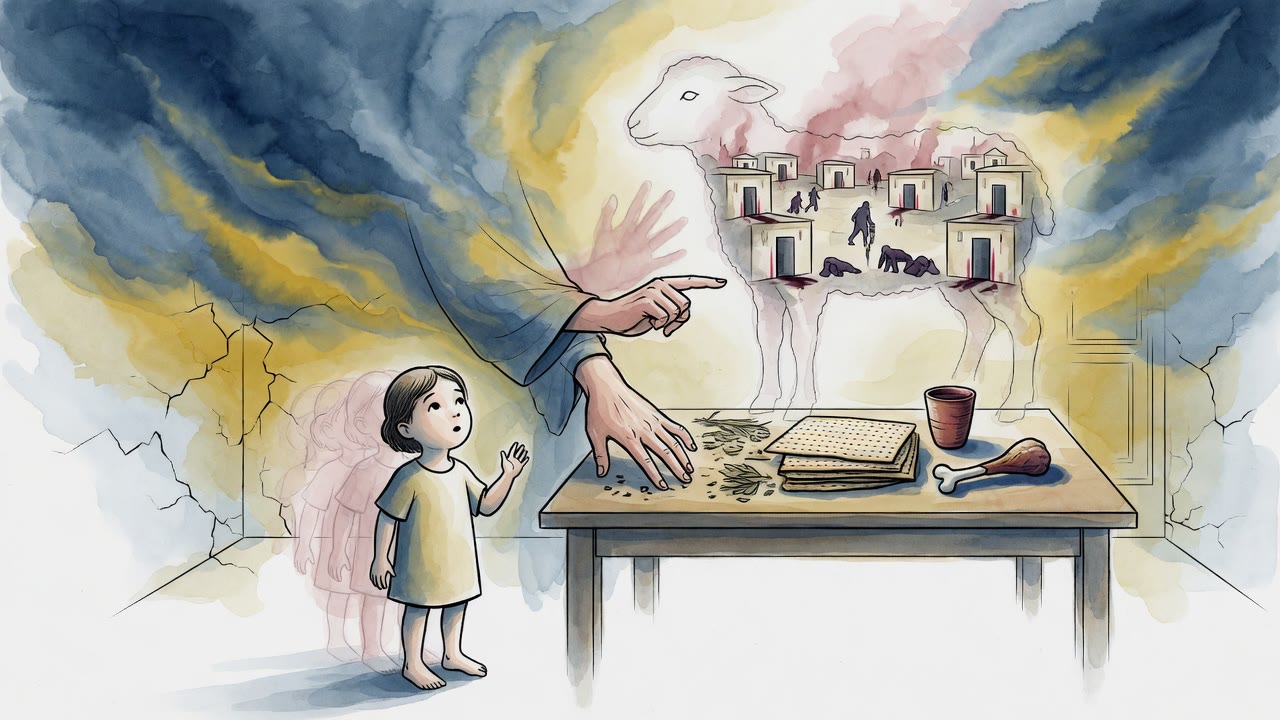
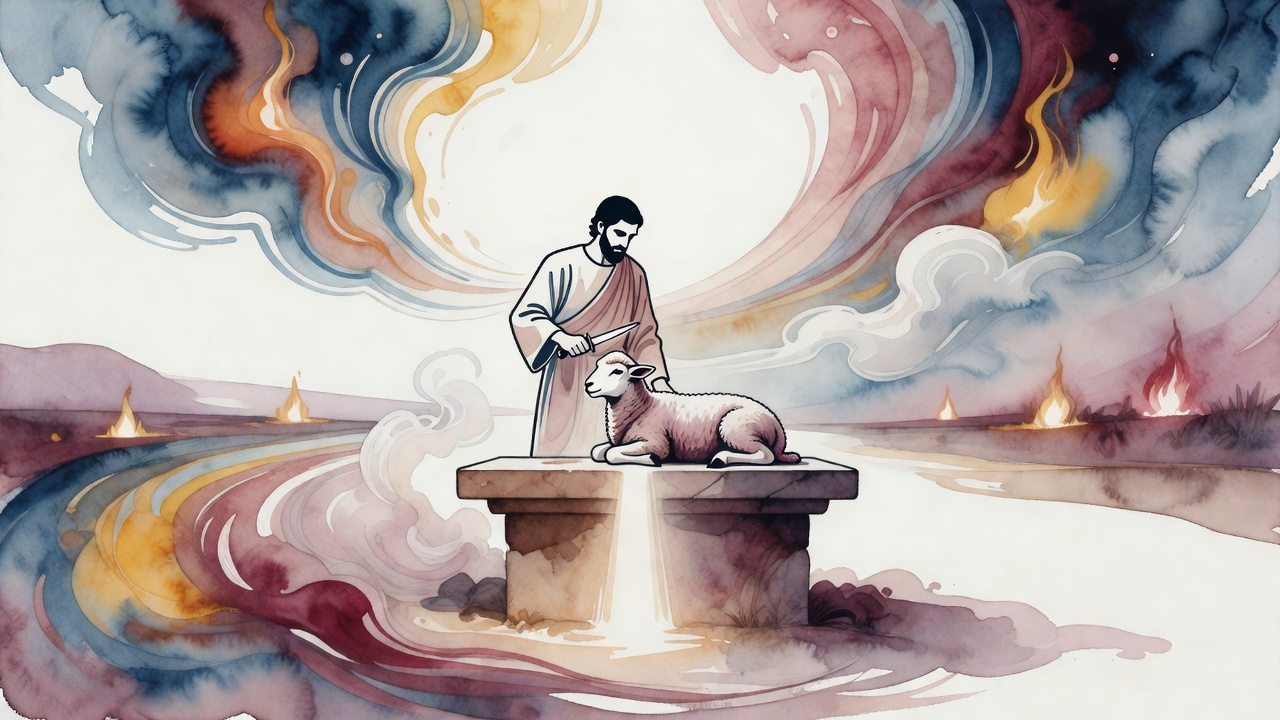
Blood wanted the knife. The Sabbath wanted rest. On the fourteenth of Nisan the two claims met in one courtyard, and no one could pretend the collision was abstract (Exodus 12:6). The Pesach (פסח) lamb had been chosen days earlier. Its wool still smelled of the pen. Its life still belonged to the clock of the festival. Children pressed against their fathers' legs. Priests moved with the practiced speed of men who had rehearsed this fear every year the calendar threatened to land on Shabbat.
Ordinary slaughter on Shabbat is labor that can cost a life (Exodus 31:14). The men who held the knives knew the warning by heart. They also knew the appointed time would not move for their fear. Between those two sentences the afternoon heat sat like a second law. Someone whispered that they should wait a day. Someone else whispered that waiting a day would make them miss the night that Egypt still remembered in their bones.
Four Days of Keeping
The lamb had not been grabbed at the last hour. Scripture said it would be for a keeping, and the keeping meant inspection: four days of eyes on legs, eyes, and fleece for blemish before the cut. The fourteenth was the day of slaughter, not a soft window to drift earlier and call it done (Numbers 9:5). A household that tried to slaughter on the tenth to avoid a hard calendar would fail the keeping and fail the day.
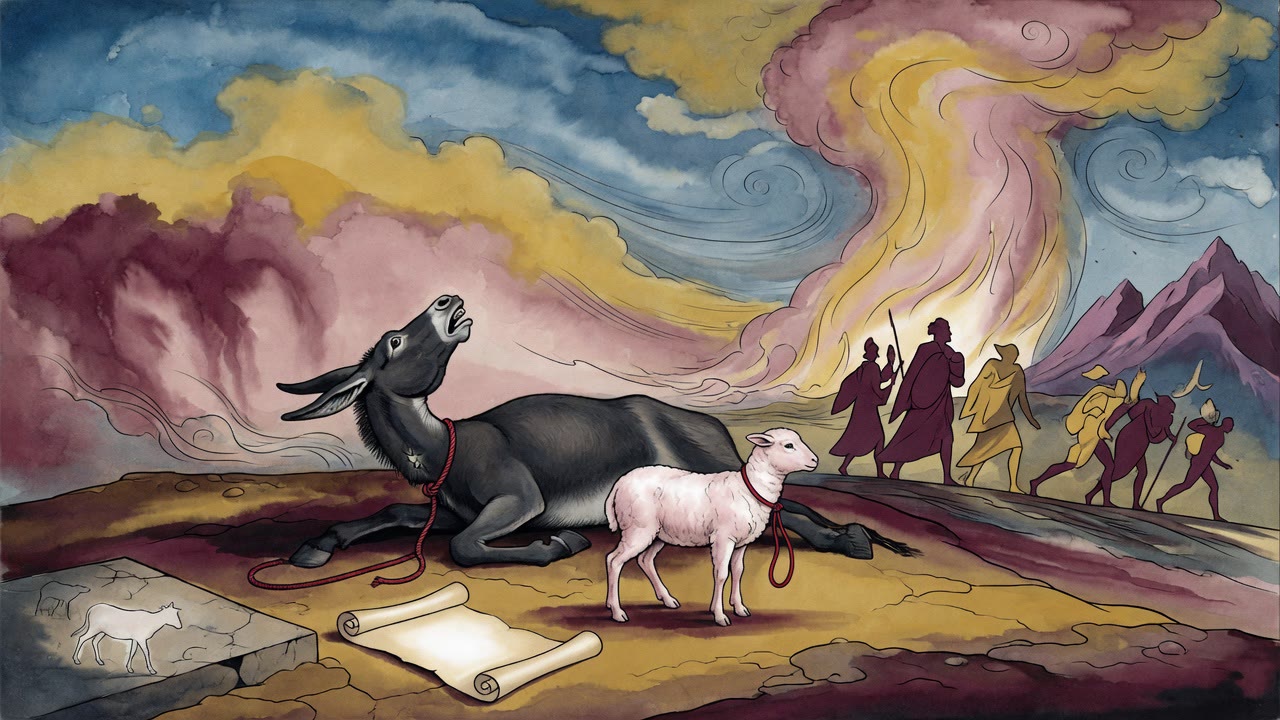
In the chamber of lambs the Temple kept no fewer than six inspected animals ready, enough for a Sabbath pressed against festival days, constantly replenished so the schedule could never claim poverty as an excuse. The keeping led up to the knife. It did not swallow the knife's day. Inspectors ran hands along flanks. A white mark here, a limp there, and the animal left the count. Only the clean ones waited for the hour between the evenings.
Between the Two Evenings
Ben Betheira named the window with a dual word: ben ha'arbayim (בין הערביים), between the evenings. The first evening was the sun past its height, day beginning to fall. The second was true night. The slaughter lived in the long span between them, not in a thin strip of twilight that would leave no time to roast before dark.
So the afternoon became the battlefield. Families pressed toward the courts. Knives flashed where rest usually sealed hands. Smoke already imagined itself rising from clay ovens. The question did not wait for a quiet study hall. It stood in the blood and the heat: does the Pesach override the Sabbath, or does the Sabbath cancel the offering? A young man held the rope and felt his palm sweat for more than the animal's strength.
The Appointed Time Wins
R. Yoshiyah tested both edges. If the death-warning for Sabbath profanation covered even this slaughter, then "they shall slaughter it" would mean only weekdays, and whenever the fourteenth fell on Shabbat the offering would vanish. That reading died against another verse: Israel shall offer the Pesach in its appointed time (Numbers 9:2). Appointed time means the set day, even when that day is the Sabbath.
The Sabbath still restrains other labors. The fixed festival sacrifice pushes aside only what blocks its hour. The warning of death for ordinary work remains. The one sacred cut of the night stands. The men lowered the knives because the day demanded it, not because rest had been erased from the world. They did not light new fires for convenience. They did not haul wood for sport. They did the one act the calendar had nailed to that hour, and then they stepped back into the gravity of Shabbat as far as the offering allowed.
One Lamb, Whole Assembly
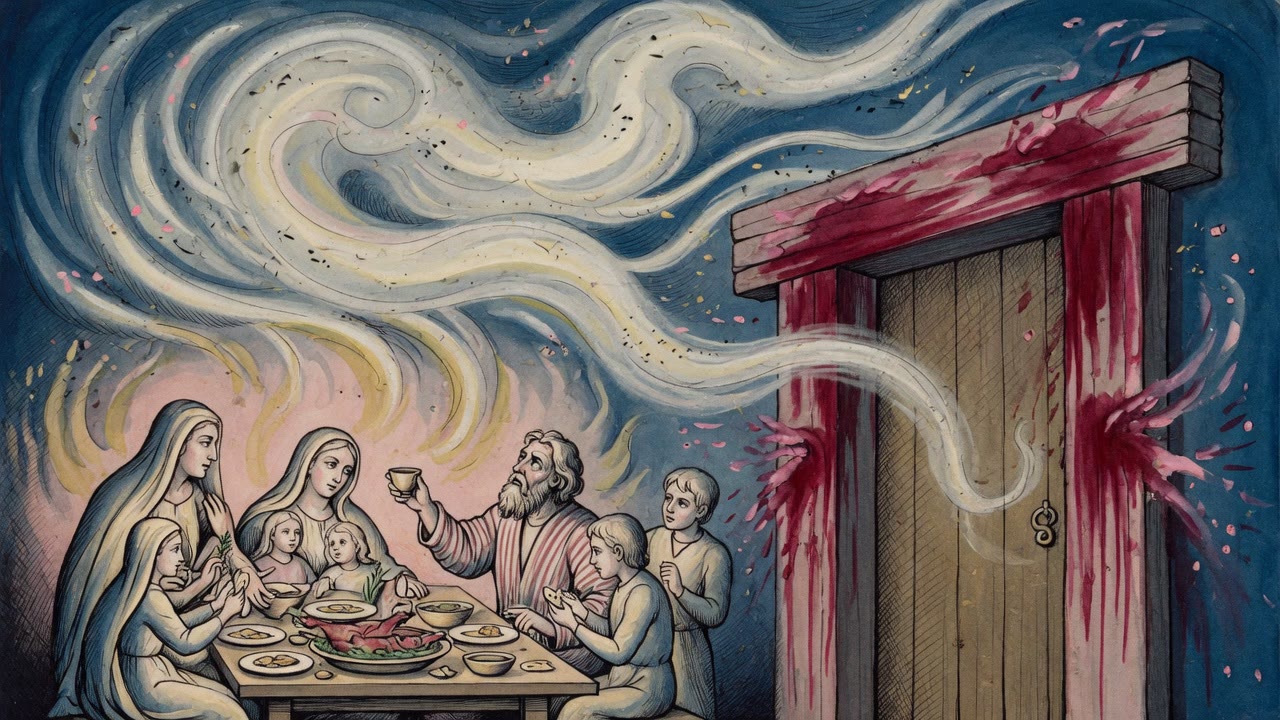
Even the phrasing of the assembly pressed into the scene. The entire congregation shall slaughter it, Scripture says, as if one act can carry a people. If the whole nation shared a single lamb, the obligation would still stand. The blood on doorposts in Egypt had already taught that a household could be sealed by a shared mark. Now the Temple courts repeated the claim under a harder clock: many hands, one appointed time, one law that refuses to slip to a safer weekday.
When the cut came, the sound was small and the consequence was national. Night would still require roasting. Matzah would still require haste in the memory if not in the feet. The Sabbath would still be holy. The people walked home carrying both truths in the same arms: rest that can kill if ignored, and a festival hour that can override rest when God has fixed the day.
← All myths