3 min read

Jacob Paid One Son as Tithe and the Count Held

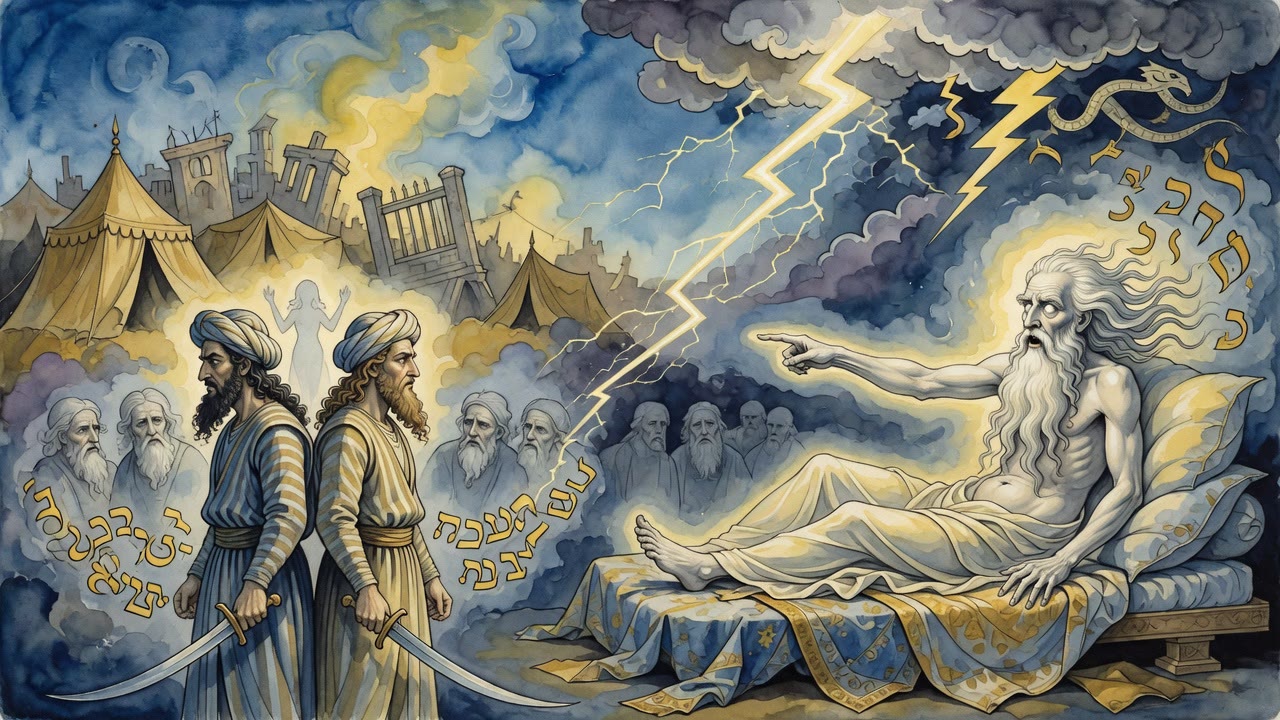
A challenger claimed Jacob tithe of Levi failed the math of fourteen sons. Rabbi Meir removed four firstborns and left ten, so one son was exactly a tenth.

Curated by Arthur · Told by Maggid ·
Table of Contents
  1. Fourteen Names and One Vow
  2. What Cannot Be Tithed Twice
  3. Basket on the Shoulder
  4. Havu, Appoint for Yourselves
  5. The Ledger That Closed Clean

A Kuthean set his finger on the tally of Jacob house and smiled the smile of a man who thinks he has caught a patriarch cheating God. Dust hung in the study light. Students leaned in. A vow made at Bethel was about to be tried like a case in court.
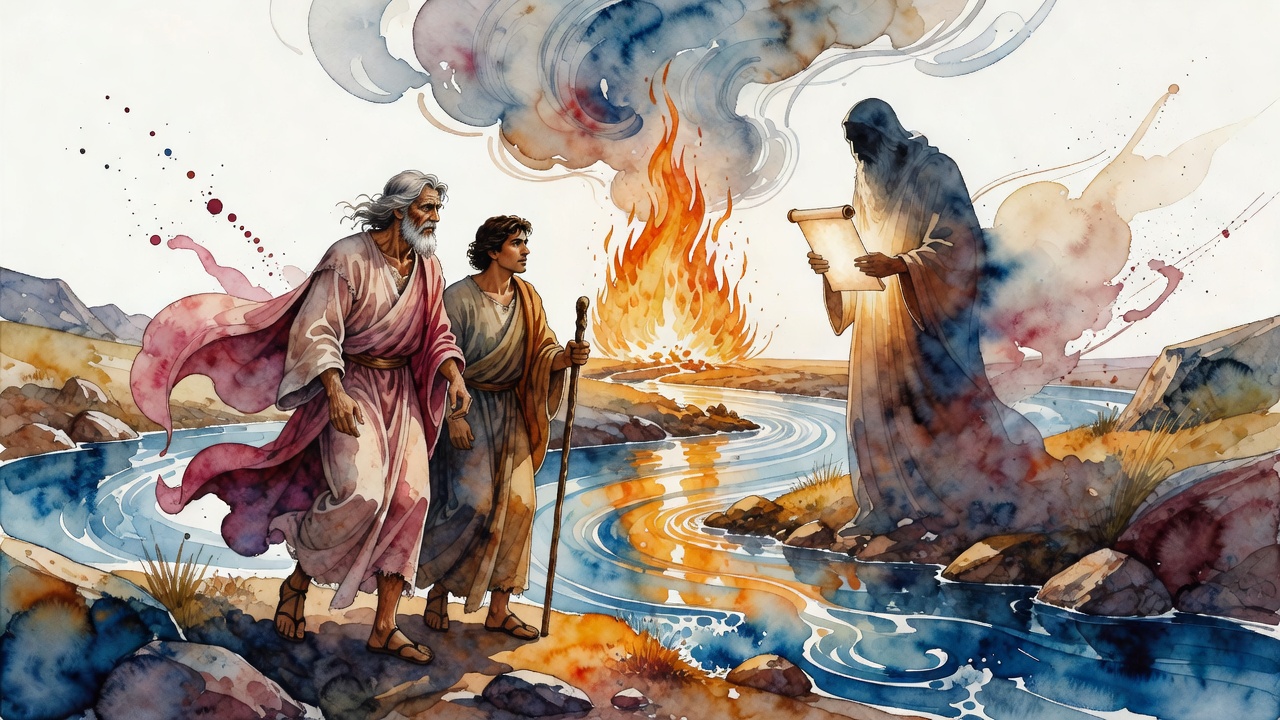
Jacob Paid One Son as Tithe and the Count Held Click for full size

Fourteen Names and One Vow

Jacob had vowed a tenth of all God would give him (Genesis 28:22). Tradition said he paid it in sons, dedicating Levi to the service of heaven. The challenger counted fourteen, the twelve plus Ephraim and Manasseh, and demanded a tithe larger than one. Levi alone, he said, could not satisfy the math.

He spoke as if holiness were a merchant scale. Rabbi Meir did not raise his voice. He removed the names that were already holy. He spoke as a man rearranging stones until a wall stands true.

What Cannot Be Tithed Twice

Four mothers stood in Jacob tents: Leah, Rachel, Bilhah, Zilpah. Each had a firstborn already sacred by birthright. You do not tithe what is already consecrated. Subtract the four. Fourteen becomes ten. A tenth of ten is one. Levi fits the vow without remainder.

The Kuthean smile died. Jacob had not underpaid heaven. He had paid exactly. Students wrote the numbers down as if they were a recipe for integrity. Outside, a levite walked past without knowing his tribe had just been defended by arithmetic.

Basket on the Shoulder

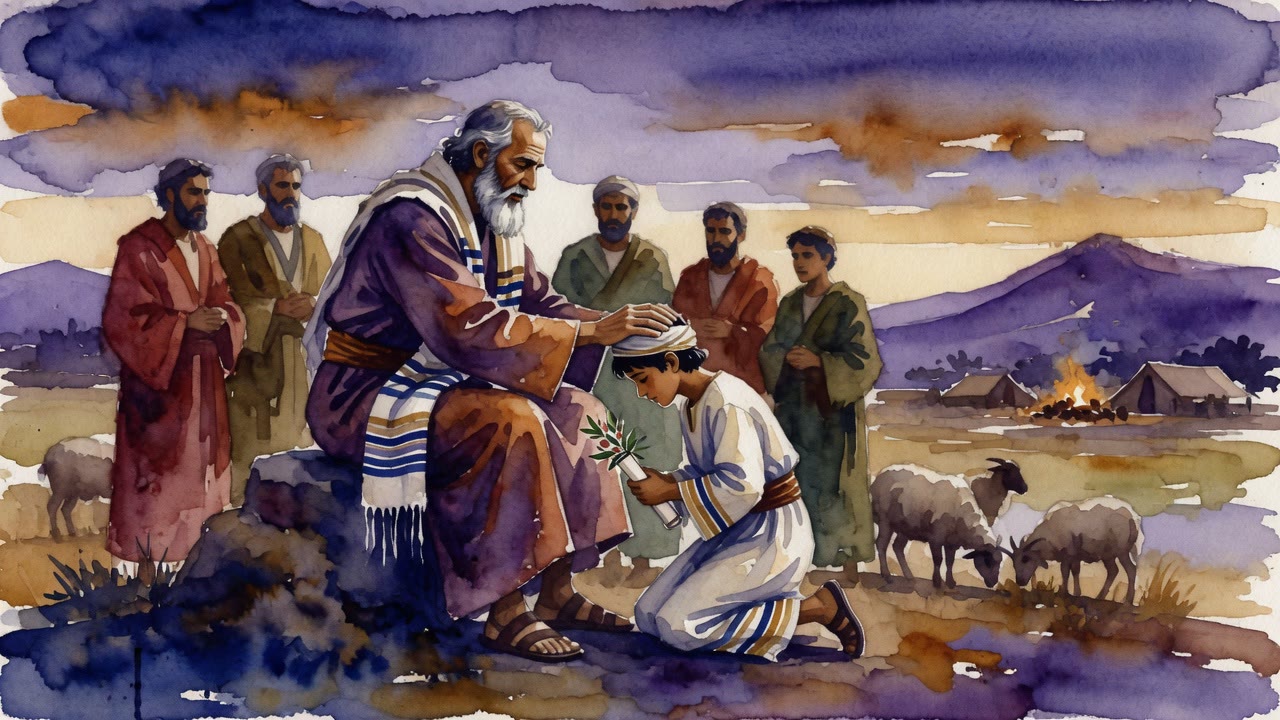
Generations later a farmer climbed toward the sanctuary with first fruits on his shoulder and a formula in his mouth. "An Aramean would destroy my father." The declaration retold Jacob danger and God rescue before any fruit touched the altar. Some men stumbled over the old words in public.

Embarrassment grew so sharp that people began skipping the offering. The sages ordered one fluent voice to lead and the rest to answer. Participation without humiliation. Jacob story stayed in every mouth that could say the response.

Havu, Appoint for Yourselves

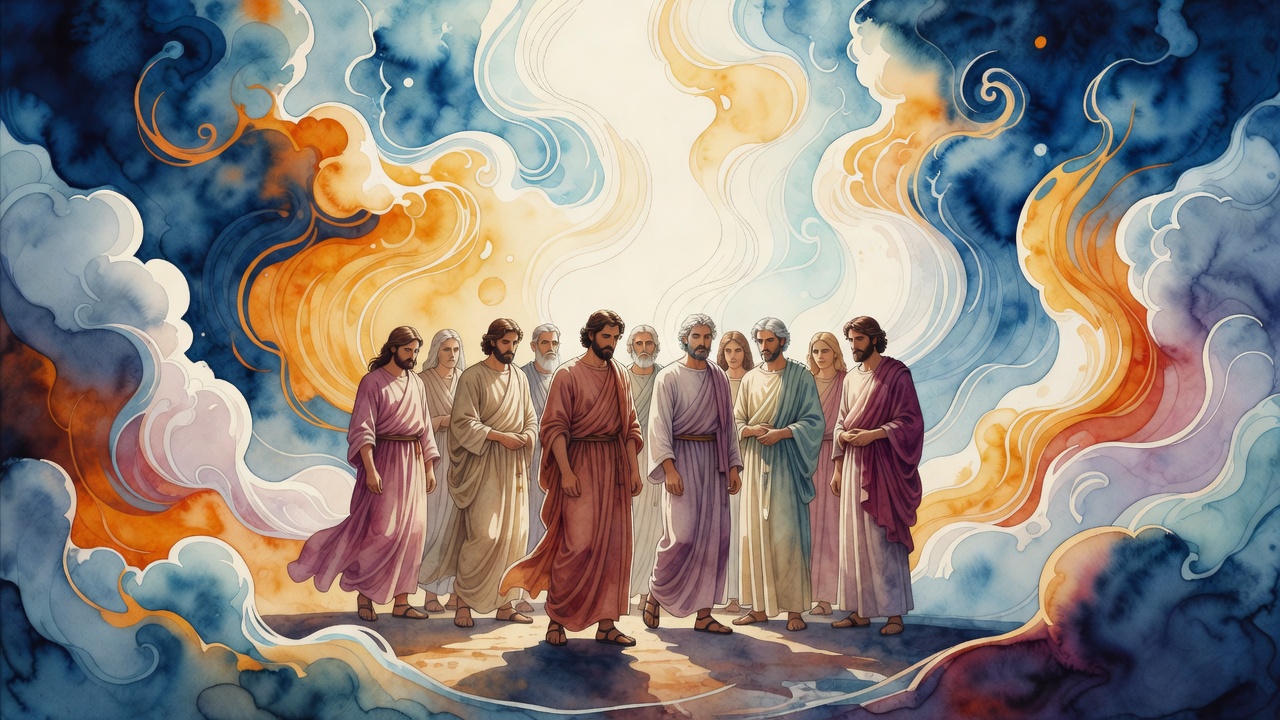
When Moses told Israel to appoint wise, discerning, known men (Deuteronomy 1:13), the word havu pressed the people to give leaders from their own knowledge of character. Leadership, like a tithe, is a deliberate setting-apart of what already belongs to a higher use.

Levi was that setting-apart in flesh. Judges and elders would be that setting-apart in judgment. Havu means give. Give your best. A people that can count a tithe cleanly can appoint a bench cleanly.

The Ledger That Closed Clean

Jacob slept at Bethel under a ladder and woke to a vow. He died in Egypt under a son hand and left a tribe that owned no ordinary field because it owned the service. Between those nights the math of holiness held. One in ten. One name.

The Kuthean went home without his scandal. Israel kept counting carefully, because a vow that survives arithmetic is a vow that can still bind. Jacob had paid. The count held.


← All myths
From the tradition

Sources

3 sources

The texts behind this telling. Some cards carry a translation of the source; others are our own retelling of it, and each card says which. Every card links out to the original.

Exempla of the Rabbis, No. 32Exempla of the Rabbis (Gaster, 1924)

Retold in our words. Read the original at the link below.The Exempla of the Rabbis, Moses Gaster (1924) · Public Domain

This dispute from the Exempla of the Rabbis turns on a problem of arithmetic in the patriarch Jacob's household. A Kuthean, one of the Samaritans whom the rabbis regularly cast as challengers to received tradition, raises a question against Jacob's righteousness. According to the account in Genesis, Jacob vowed to set apart a tenth of all that God gave him, and the tradition understood that he fulfilled this vow with his sons, dedicating Levi to God as the tithe of the tribes.

The Kuthean's objection is that the count does not work cleanly. If one reckons the sons as numbering fourteen, by adding Joseph's two sons Ephraim and Manasseh to the twelve, then a true tithe of one in ten would require setting aside more than one, and Levi alone would not satisfy the obligation for the remaining sons. The challenge is meant to catch the patriarch in an arithmetic that falls short of the law he himself accepted.

R. Meir's reply restores the count by removing those who are not eligible to be tithed in the first place. The firstborn sons, he explains, are already sacred to the Lord by virtue of their birthright and cannot be counted among the candidates for the tithe, since one cannot tithe what is already consecrated. There were four mothers in Jacob's house, Leah, Rachel, Bilhah, and Zilpah, and the firstborn of each is exempt. Deducting these four from the fourteen leaves exactly ten sons subject to the tithe, and a tithe of ten is precisely one. Levi, therefore, was sufficient, and Jacob's tithe was exact.

Full source
Sifrei Devarim 301:3Sifrei Devarim

Retold in our words. Read the original at the link below.Sifrei by Rabbi Shraga Silverstein · CC-BY

The ritual of bringing bikkurim, the first fruits, required every Israelite farmer to recite a specific formula, a declaration of gratitude and remembrance.

The Sifrei Devarim, a collection of legal interpretations on the Book of Deuteronomy, tells us that originally, people recited the formula themselves if they could. But if someone struggled, they would repeat it after someone else. A beautiful, communal moment.. at first.

Here's the thing: it became clear that some people were uncomfortable. The fear of stumbling over the words, of being seen as less knowledgeable, led to something unexpected. People started avoiding bringing their bikkurim altogether! The embarrassment was outweighing the joy of the offering.

So, what did they do? They ordained that one person, someone who knew the formula well, would recite it on behalf of everyone. Those who didn't know it were instructed to simply respond, "and you shall answer." This idea of "answering" is key. It signifies a response to another, a participation in the communal declaration, even if they weren't reciting the whole thing themselves.

It maintains the collective ritual while ensuring everyone feels included and comfortable. No one is left behind, and the offering continues.The verse they were reciting included the phrase, "An Aramean would destroy my father." (Deuteronomy 26:5). Whoa, heavy stuff! What's that all about?

The text clarifies that this refers to Jacob, our patriarch. We are reminded that Jacob went down to Aram – the land of his uncle Lavan – seemingly to his own destruction. Now, Jacob wasn't actually destroyed, of course. He eventually left Aram with his wives, children, and flocks. But Scripture, according to the Sifrei Devarim, holds Lavan the Aramean accountable as if he had destroyed Jacob, because that was his intention. Lavan's intent was so malevolent that it's considered, in a spiritual sense, as if he had carried out the act. The impact of our thoughts and desires can be just as significant as our actions.

Perhaps it's a reminder to be mindful of the impact we have on others, both through our actions and our intentions. And maybe, just maybe, it's also a lesson in creating inclusive communities where everyone feels valued and supported, regardless of their individual abilities. After all, aren't we all just trying to find our place in the grand story?

Full source
Sifrei Devarim 13:1Sifrei Devarim

Retold in our words. Read the original at the link below.Sifrei by Rabbi Shraga Silverstein · CC-BY

1: (Devarim 1:13) "Havu for yourselves": "Havu" connotes "counsel," as in (II Samuel 16:20) "Havu counsel for yourselves," (Shemoth 1:10) "Havah, let us plot (i.e., take counsel) against it."

Full source