Jacob Went Back Alone for the Small Jars
Jacob ferries his family, then turns back for jars worth almost nothing. Alone in the dark a man wrestles him until dawn.
Table of Contents
 Click for full size
Why He Was Alone
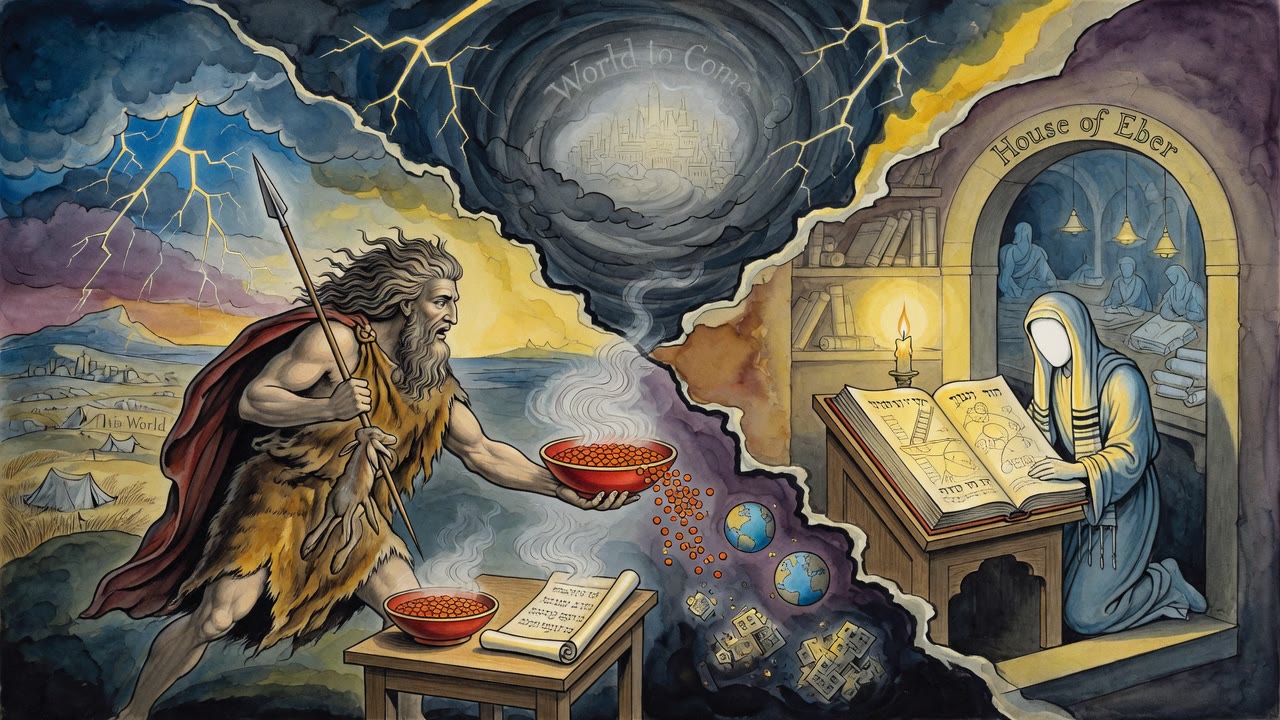
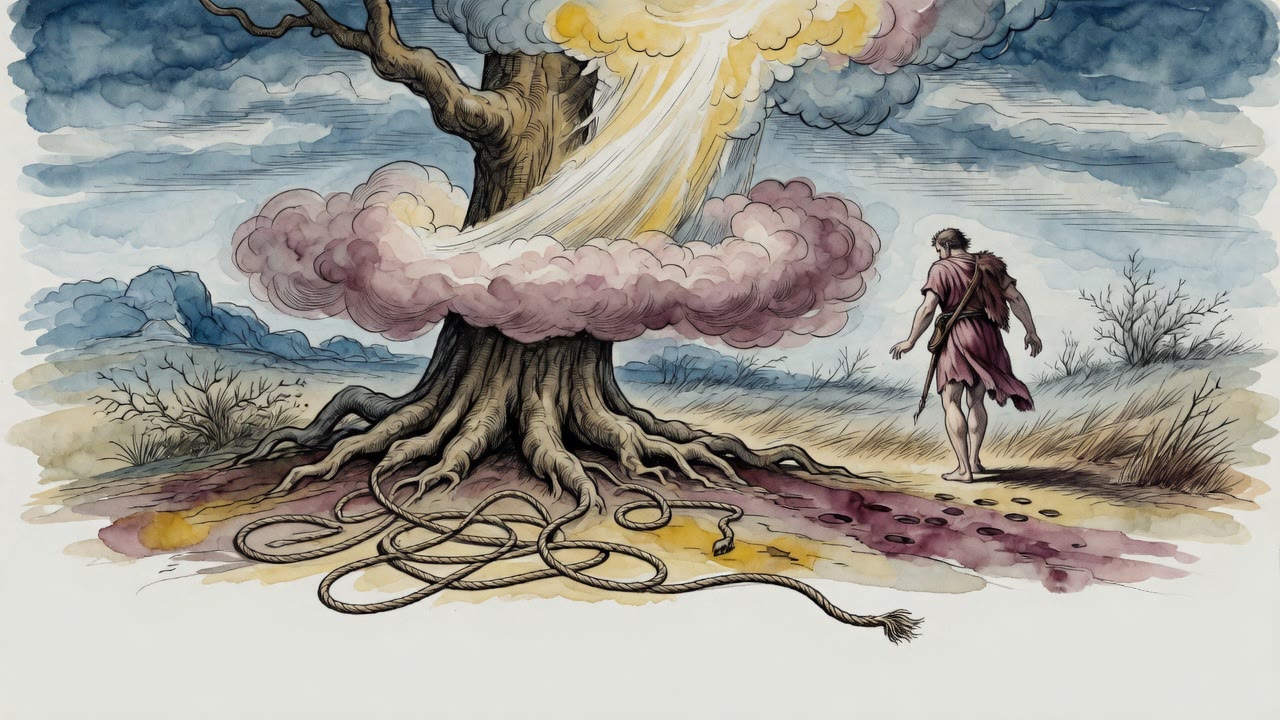
Jacob turned back after the river crossing for jars worth almost nothing. The family was already on the other side. The dark still held the ford. Rabbi Eleazar offers the homely reason later generations would need: he lingered to retrieve little containers no thief would bother to steal, and so he was left alone.
From this the sages drew a striking lesson about the righteous. The possessions of the righteous are dearer to them than their own bodies. Not out of greed, but for the opposite reason. Because they never reach out their hands toward what is stolen, every honest item they own is precious to them, earned clean and kept clean.
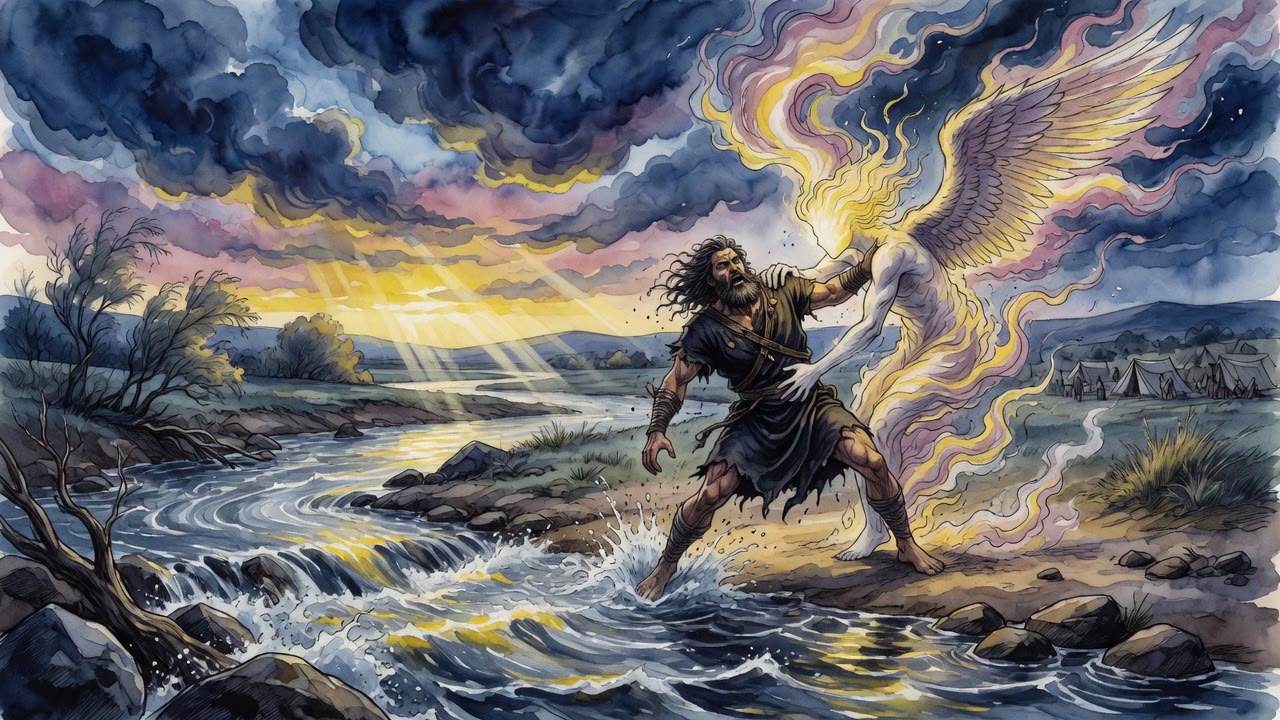
The same verse yields a second teaching. A man wrestled with him until the breaking of dawn, all through the dark hours, alone. Rabbi Yitzchak read this as a warning: a disciple of the wise should not go out by himself at night, when danger and suspicion both lie in wait. Other rabbis sought the same lesson elsewhere. Boaz winnowing barley at the threshing floor at night. Abraham rising early in the morning rather than setting out in darkness. Jacob himself later sending Joseph to check on his brothers in daylight. Across these verses runs one quiet piece of wisdom: the careful person measures even the hour at which he walks the road.
Jacob measured poorly that night, or measured by a different scale. Clean jars mattered enough to walk back alone. The midrash will not mock him for it. It turns the errand into a doctrine of honest property, then into a warning about darkness, then into the wrestling that only solitude made possible. Sometimes the small thing you refuse to abandon is the door into the night that renames you.
With My Staff I Crossed This Jordan
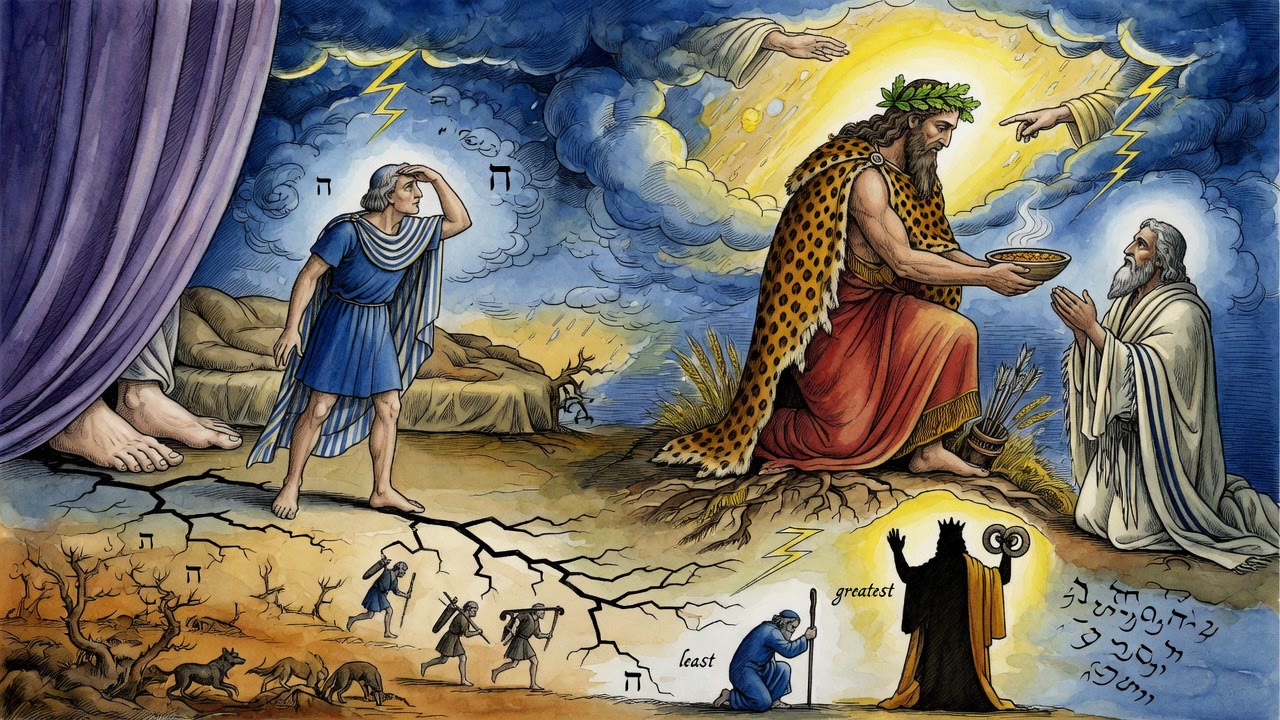
When Jacob stood at the edge of the Jordan, terrified of his brother Esau, he prayed with a strange phrase. For with my staff I crossed this Jordan. The rabbis heard in those words more than a memory of one frightened man. They heard the whole future of his children.
Search the Torah, the Prophets, and the Writings, they taught, and you will find the same truth repeated three times. Moses recorded Jacob's words. Joshua recorded that Israel crossed the Jordan on dry ground, and that Israel is none other than Jacob the elder, living on in his descendants. The Psalms sang that the river itself turned back before the God of Jacob. The nation that walked across on dry land did so leaning on the merit of one ancestor.
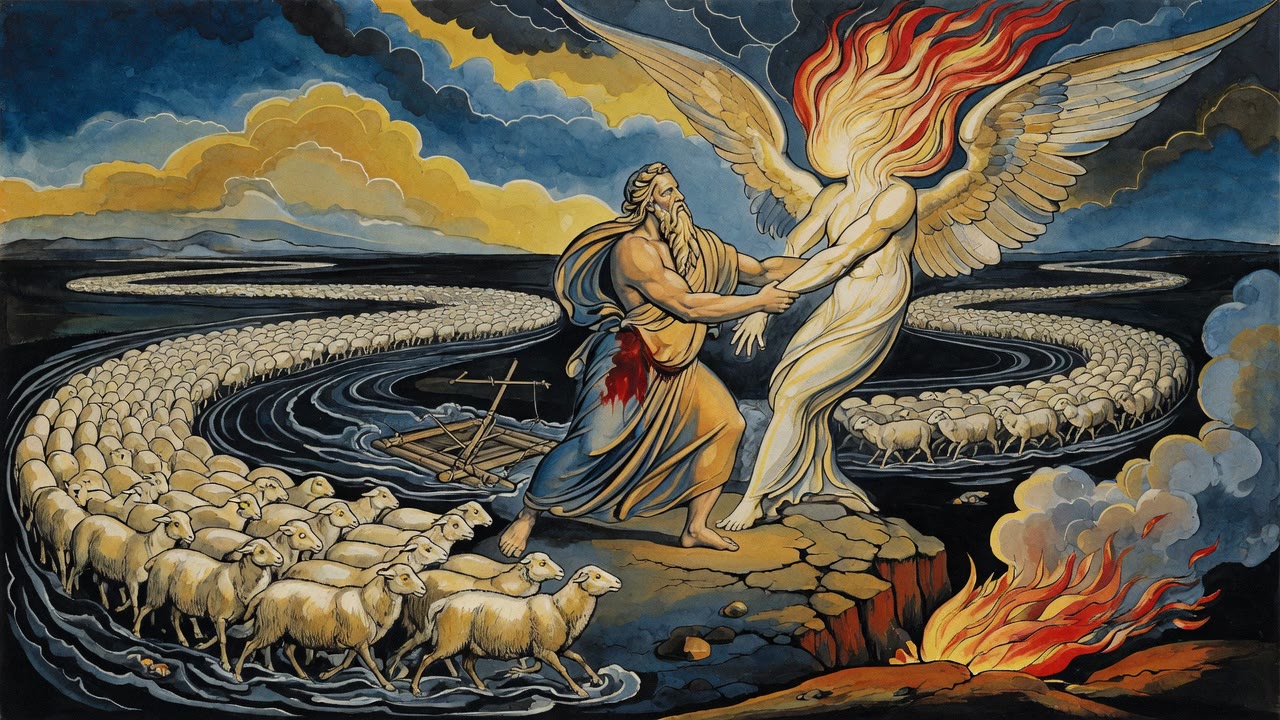
Rabbi Levi added a vivid scene. At the hot springs of Tiberias the Jordan boils up wildly. There, in his fear, Jacob rushed in for cover, and Esau slammed the way shut behind him, trapping him against the torrent. So the Holy One carved out a hidden passage from another side and let him slip free. The promise was already being kept that day, the same promise spoken later through Isaiah: when you pass through the waters, I am with you (Isaiah 43:2).
Staff, river, hidden passage. The images stack until a single frightened man becomes a national crossing. Children of Jacob would one day step onto dry ground and not know they were walking on his old prayer. The staff that looked like poverty was already a key.
Promised, and Still Afraid
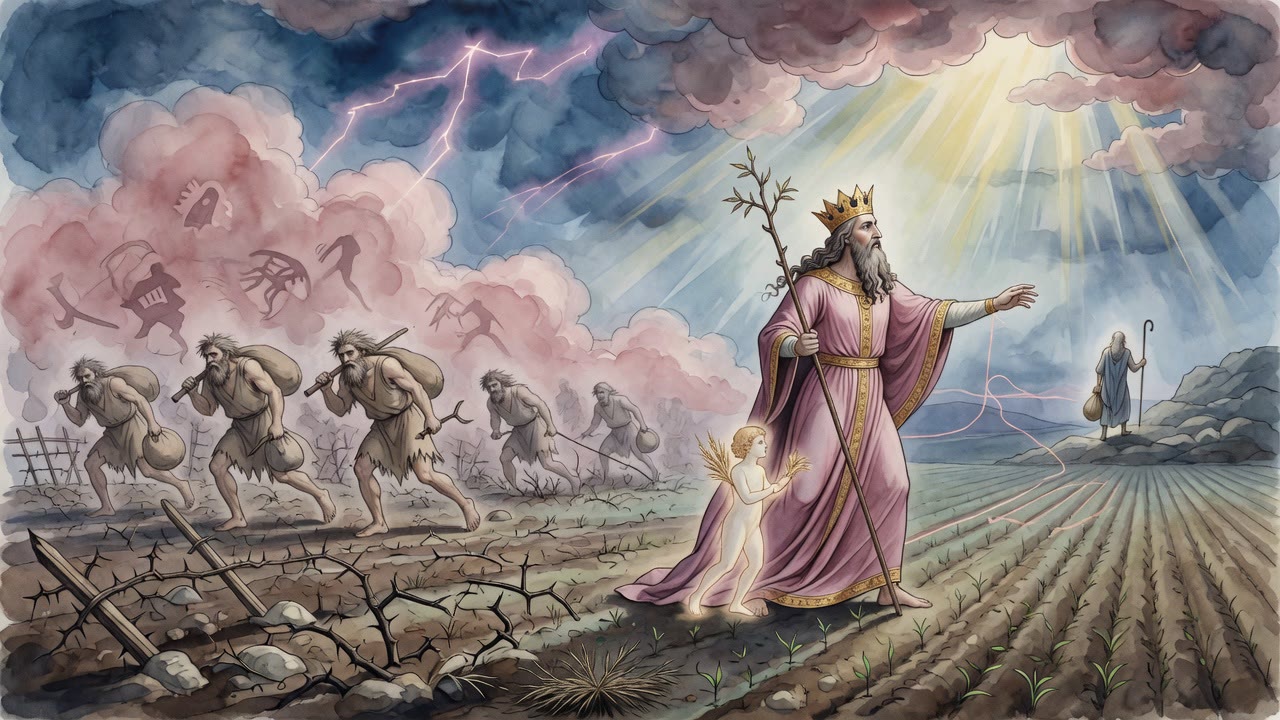
God had promised Jacob, in plain words, Behold, I am with you (Genesis 28:15). And still, when Esau drew near, Jacob trembled. The midrash pairs him with Moses, the chosen one among the prophets, who also heard I will be with you (Exodus 3:12) and who also knew fear, for God had to tell him at the border of Bashan, Do not fear him (Numbers 21:34), and you do not reassure a man who is not already afraid.
From this the sages draw a hard and honest lesson. There is no guaranteed safety for the righteous in this world, even when the promise comes from God's own mouth. A vow may yet be undone by sin. The road still holds dangers. The lodging-place can turn deadly. Jacob himself answered Behold, I am with you with a cautious if God will be with me, because he understood that a promise is not a contract immune to human failure.
This fear became a strange inheritance of strength. In the days of Haman, Israel stood on the edge of annihilation, and they steadied themselves by leaning on the wisdom of the old patriarch. If our father Jacob, who held a divine assurance in his hands, still shook with fear, they reasoned, then surely we have every reason to tremble and pray. Their fear drove them to repentance rather than despair.
Fear, then, is not always failure. In Jacob's line it can be the engine of return. A man with a promise still shakes. A nation with a history of promises still prays. The midrash refuses the cheap comfort that chosen people sleep easily. It offers instead a usable tremble.
Dawn on a Hip
The wrestling did not wait for a better hour. In the dark by the ford, a man seized Jacob and would not let go until the sky began to pale. Jacob's hip took the mark of that night. The small jars he had refused to abandon sat somewhere in the dust while a body more precious than any vessel was tested until morning.
He limped into the day with a new name waiting and an old fear still warm in his chest. The promise had not been cancelled by the tremble. The tremble had not been cancelled by the promise. Both walked with him toward the brother with four hundred men, and toward every later crossing where a staff, a jar, and a prayer still matter.
← All myths