Jacob Faces Esau's Four Hundred Crown-Binders
Jacob split the camp in two, then held God to His own law. You forbid taking a mother bird with her young. Will You allow it against my wives and children?
Table of Contents
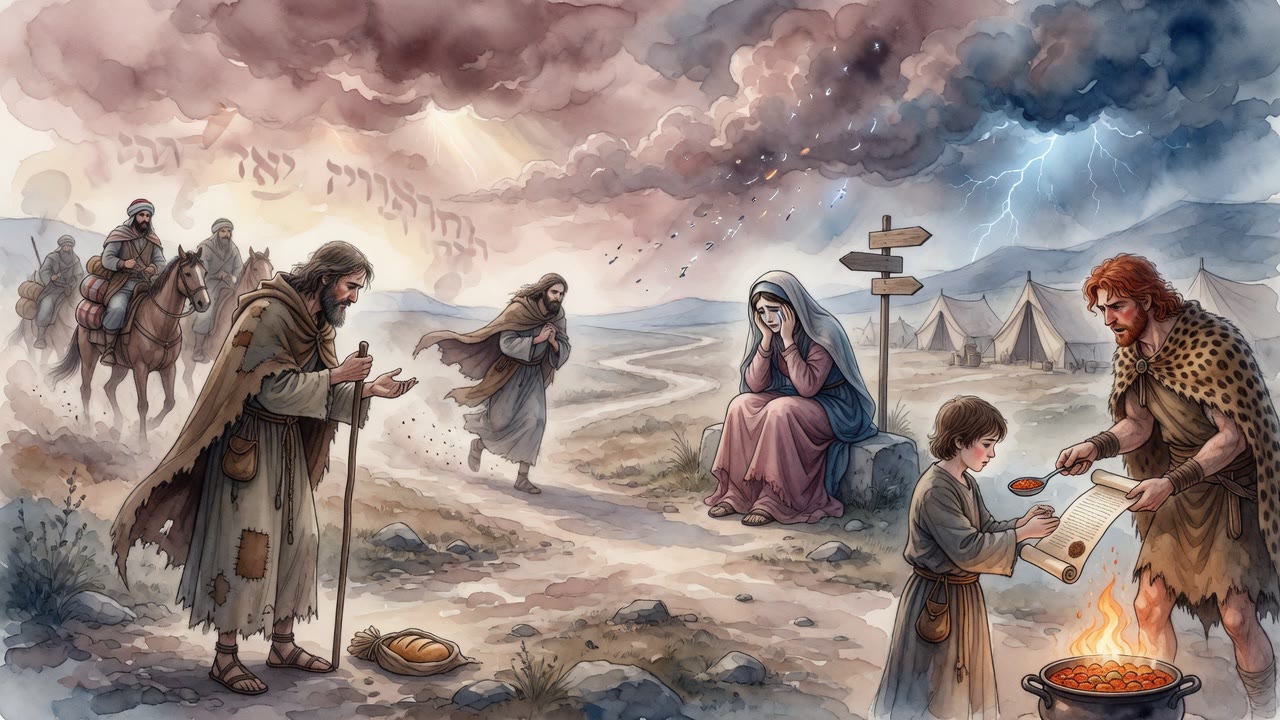
The messengers came back to Jacob with a count that did not sound like ordinary soldiers. "Four hundred men are with him," they said of Esau.
 Click for full size
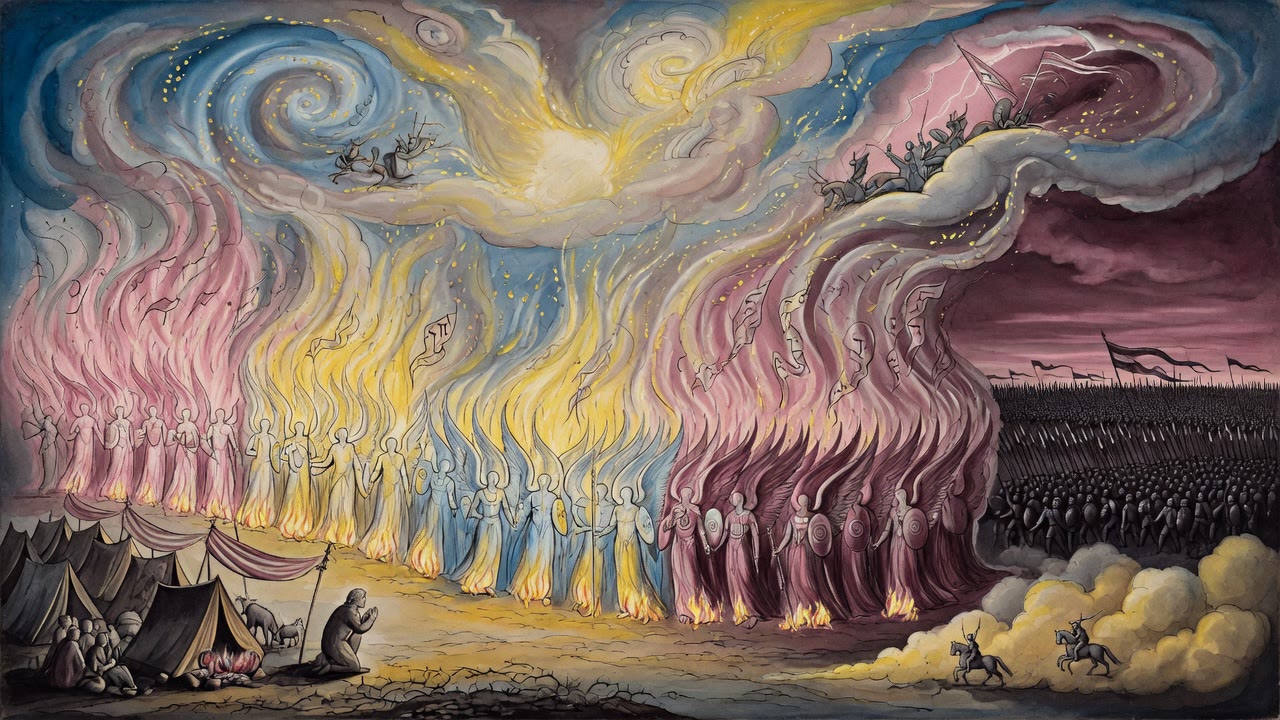
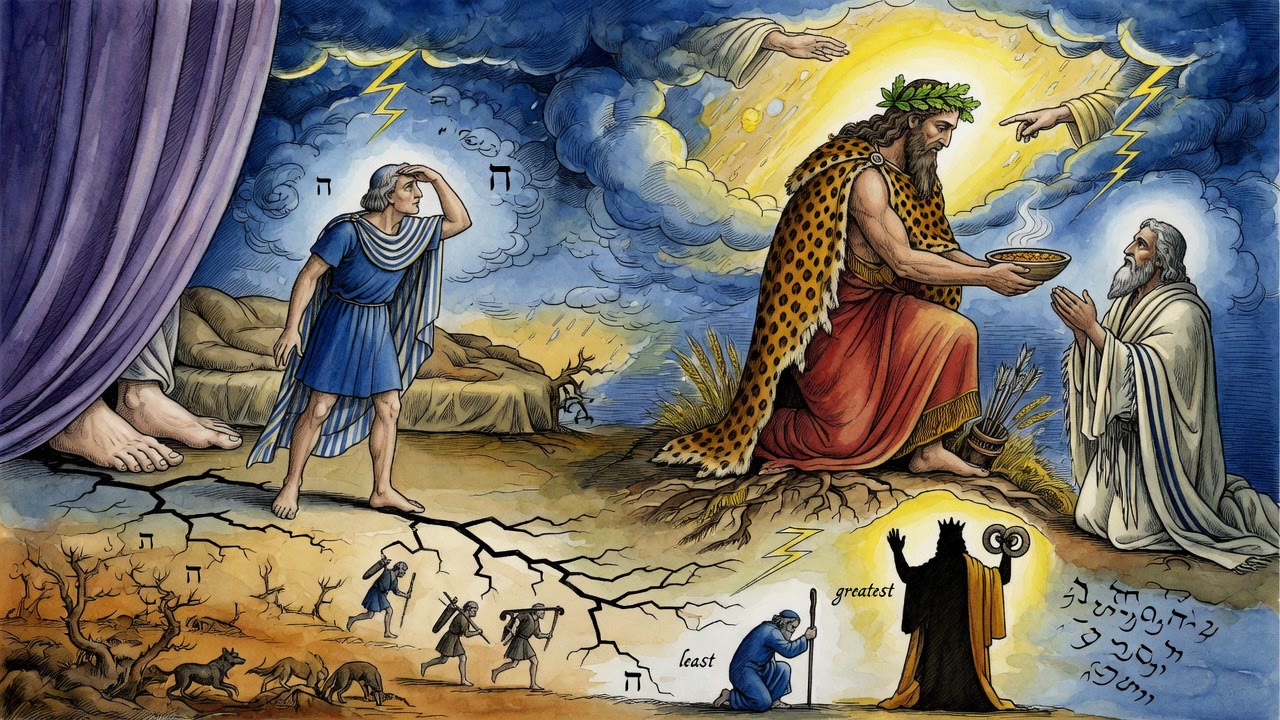
Four hundred is not a vast army. It is something sharper. These were binders of crowns, men of rank who set diadems on kings. Esau was not riding as a brother with a hunting party. He was coming as a sovereign with a retinue of the mighty (Genesis 32:7).
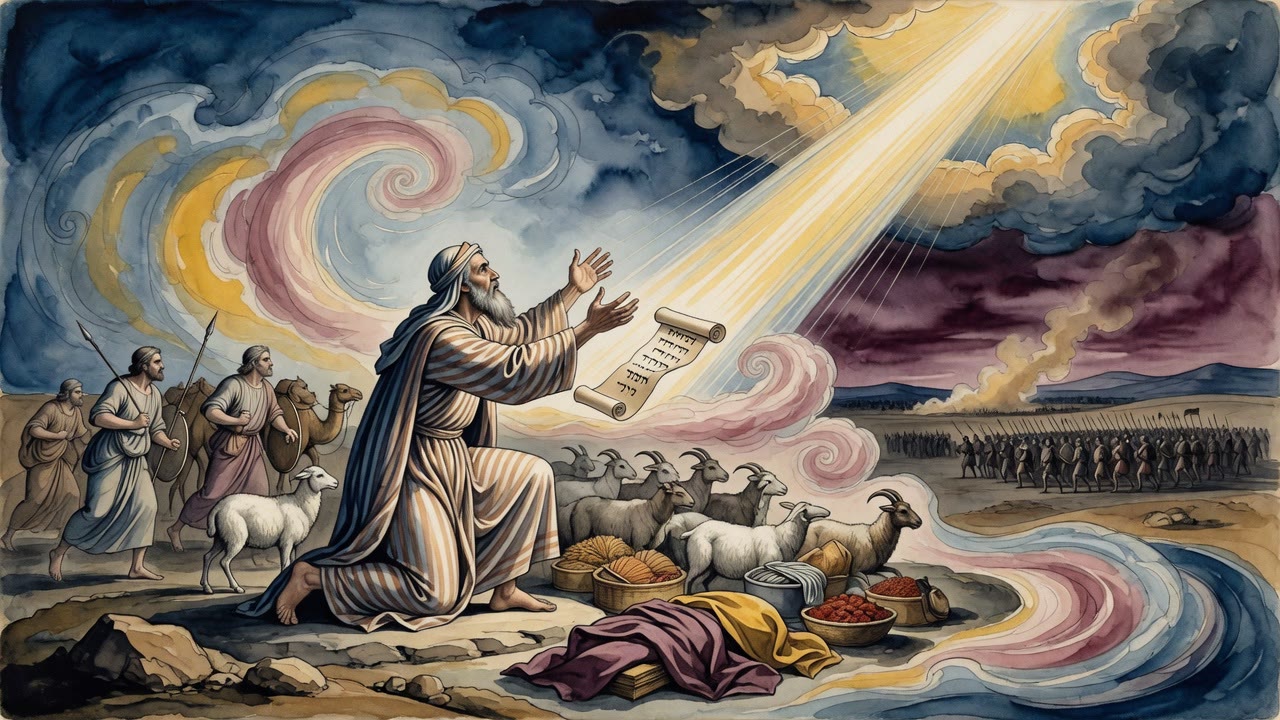
Jacob was greatly afraid. The man who had wrestled blessings from Isaac and prospered under Laban now measured himself against a host of crown-binders, and the dread was real. He did not freeze. He split sons and wives into two camps so that if Esau fell on one, the other might still run. Flocks and herds went forward as gifts. He arranged the meeting the way a man arranges a last defense.
The Prayer With Two Faces
At the ford of the Jabbok he cried a single trembling line: "Deliver me, I pray, from the hand of my brother." The word achi holds more than kinship. When Isaac sent Jacob toward Paddan-aram, Esau's hatred did not sleep. He dispatched a hired pursuer on the road, and that man's name was Achi. Jacob's plea asked deliverance from the brother and from the agent sent to overtake him on the way.
He pressed further. "Lest he come and smite me, the mother with the children." Then he lifted Heaven's own law as a shield: You wrote that one must not take the mother together with the young. If You forbid such cruelty to a bird in its nest, will You permit it against Your servant and his little ones (Genesis 32:12)? He bound the Holy One to mercy already written, and made the Torah itself his wall.
He had made himself small in prayer before that. I am too small for all the kindnesses You have shown Your servant. Fear of cancelled mercy rode beside fear of four hundred crowns.
The Night That Wrenched the Thigh
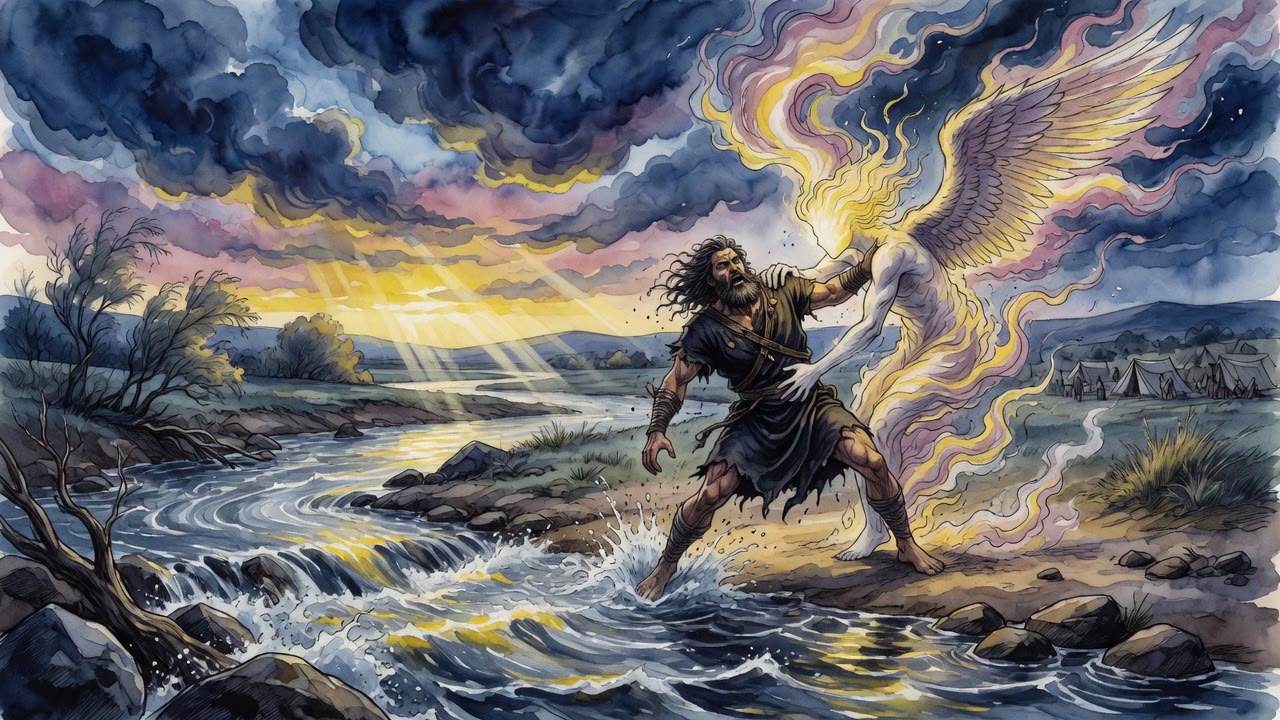
Alone after the camps were sent across, Jacob wrestled until daybreak. The stranger touched the hollow of his thigh and put it out of joint. Jacob would not release him without a blessing. The man who feared four hundred crown-binders spent the dark hours locked with a force that left him limping into daylight, a new name spoken over a body that would not let go.
Fear of Esau had split the household. The night at the ford split his body. Both were real. Neither cancelled the other. He crossed back toward the people he had sent ahead, dragging a leg that remembered the struggle with every step.
The Sun That Rose for Him
"And the sun rose for him." Does the sun rise for one man alone? It rises on righteous and wicked together. That morning the same light did two works. For others it was ordinary heat, even flame. For Jacob, limping from the night-long struggle, those rays came as medicine for the thigh the angel had wrenched (Genesis 32:32).
Years before, fleeing toward Haran, the sun had set early for his sake at Beth-El, plunging him into sudden night so that he might dream on a stone pillow. Now, returning as one who had striven with the divine and with men, the light that once dimmed to give him rest blazed to give him healing. Heaven keeps accounts in daylight. The same sun that bowed to his need at his going out greeted him at his coming home.
Toward the Brother
He still had to bow seven times before Esau. The crown-binders still rode somewhere on the road. The prayer against brother and Achi still hung in the air. But he crossed the last stretch with a thigh the dawn had begun to mend and a name changed in the dark, a man who had measured dread without surrendering the camps or the children.
When Esau ran to meet him, the four hundred did not become the slaughter Jacob had pictured. The gifts still went forward. The limp still told the story of a night no crown-binder had fought. Four hundred binders of crowns could unnerve a patriarch. The hired name behind achi could double the fear. The dawn that rose "for him" answered both with a body that could walk again into the meeting he could not avoid.
He had divided the camps so one might live if the other fell. He crossed the ford so neither would fall without him. That is what great fear looked like in Jacob: not flight from the road home, but a man who arranged every living soul he loved and then stayed to wrestle alone.
← All myths