Jacob Bargained With Heaven Before Esau Came
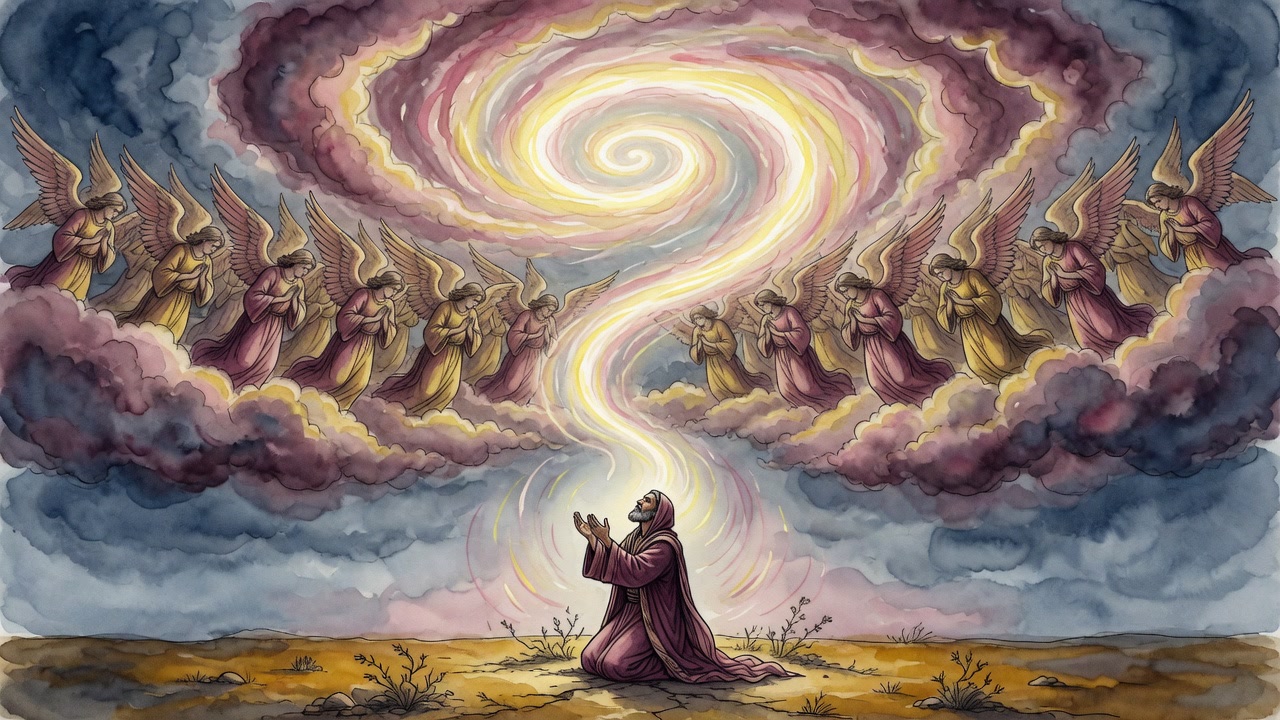
Before Esau's four hundred, Jacob prayed, sent gifts, and readied for war. He cited a future Torah law so God would not kill mothers with sons.
Table of Contents
 Click for full size
Three Plans in One Camp
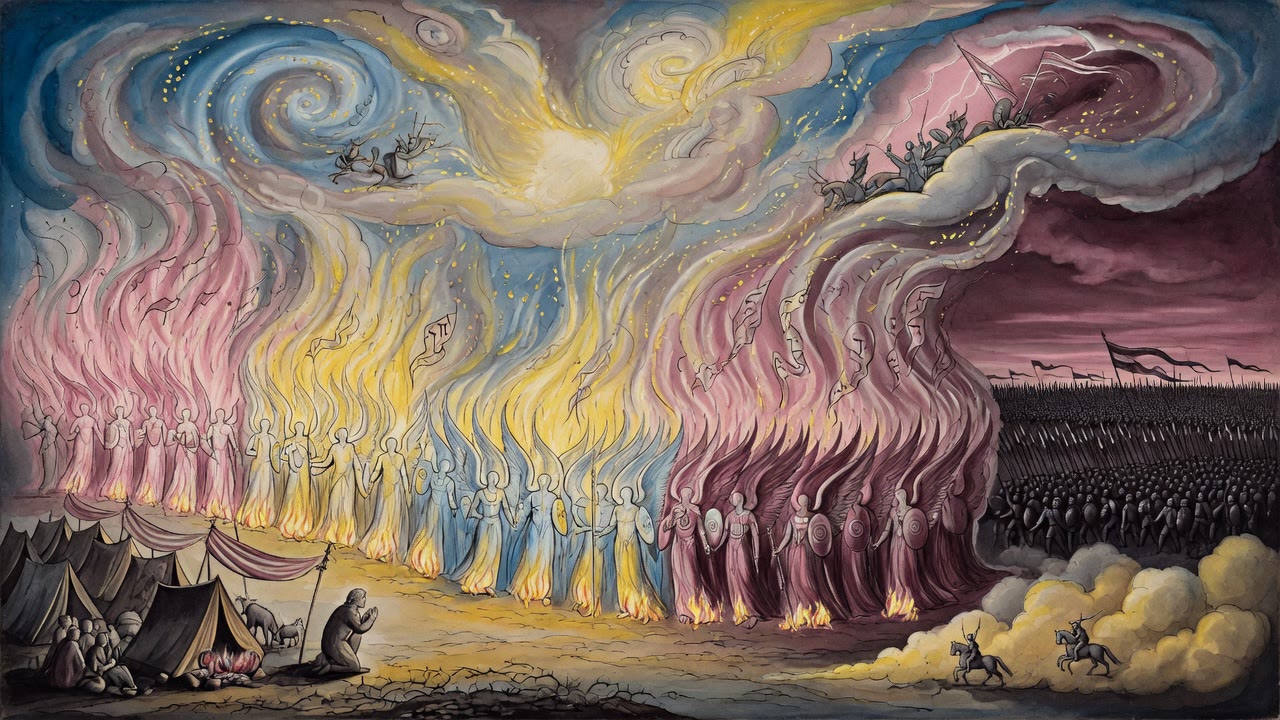
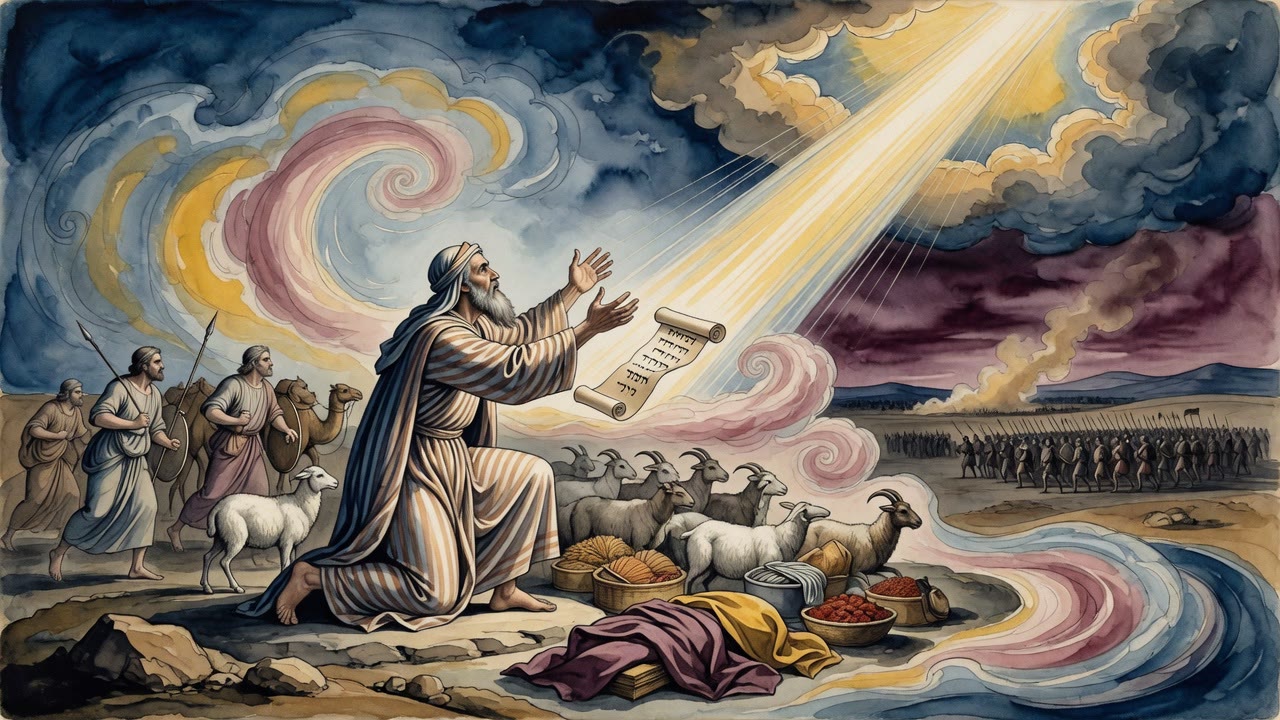
Wives blamed Jacob for uprooting them from Laban's house into Esau's reach. Tents filled with fear and accusation. Jacob answered with three movements at once. Prayer. Gifts. Preparation for war. Hope alone was not a strategy. Strategy alone was not a prayer. He split the camp so that if one half fell, the other might live, then turned his face upward before he turned it toward the road where four hundred men marched.
"O Thou God of my father Abraham, and God of my father Isaac," he began, "God of all who walk in the ways of the pious. I am not worthy of the least of all the mercies, and of all the truth, which Thou hast showed unto Thy servant." Humility first. Then memory. "As Thou didst not suffer Laban to execute his evil designs against me, so also bring to naught the purpose of Esau, who desireth to slay me."
A Law Not Yet Given
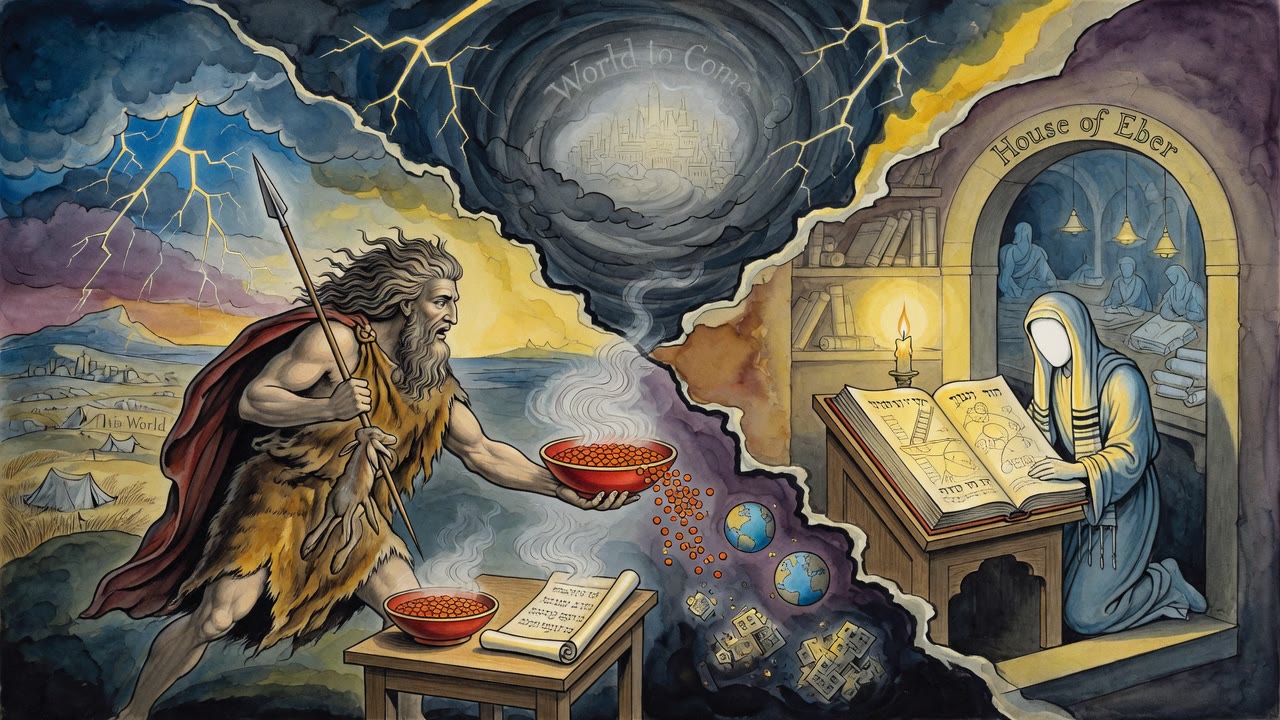
Jacob reached for a Torah that had not yet thundered at Sinai. "In Thy Torah which Thou wilt give us on Mount Sinai it is written, And whether it be cow or ewe, ye shall not kill it and her young both in one day." If Esau murdered children and mothers in one stroke, who would remain to receive and read that Torah? Survival of the family became, in the prayer, survival of the future audience of revelation.
He called in the old promise. Merits of fathers. Children like the sand of the sea. The argument was daring. A man on the run used tomorrow's commandments as today's defense brief. Heaven, in the legends, is not offended by the boldness. Heaven is addressed as a partner who has already spoken and must now be consistent.
Terror for Kings, Mercy for the Trusting
Another prayer names the God who stirs up wars and causes them to cease, who exalts and brings low. "O may my prayer be acceptable unto Thee, that Thou mayest turn to me with Thy mercies." He asks that terror of his sons be impressed on the hearts of kings and their peoples, and that all who trust in God be delivered. The request sounds harsh until the math of the night is counted. Massacre is the other option on the table.
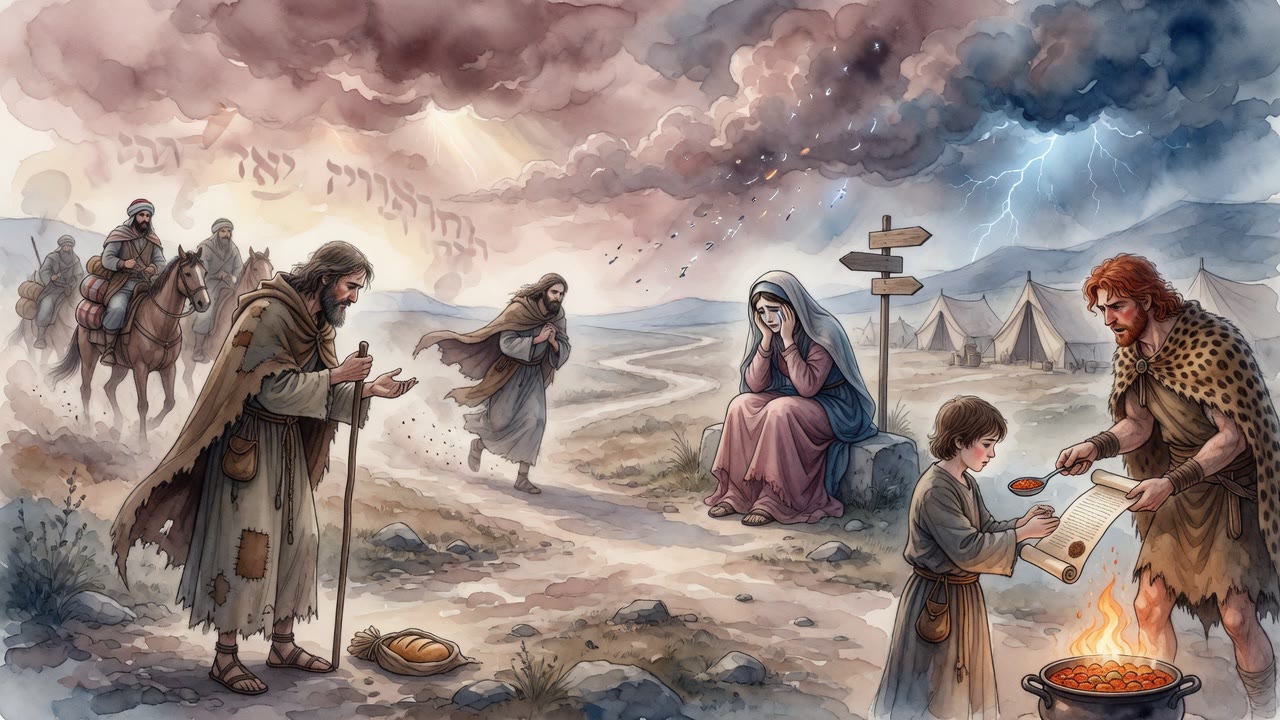
Gifts moved down the road in waves. Droves of animals. Spaces between droves. Softening speech designed to arrive before the man himself. War tools stayed ready if the soft path failed. Jacob refused the purity of a single tactic. He stacked prayer, bribe, and blade the way a desperate steward stacks every jar before a siege.
Morning After the Bargaining
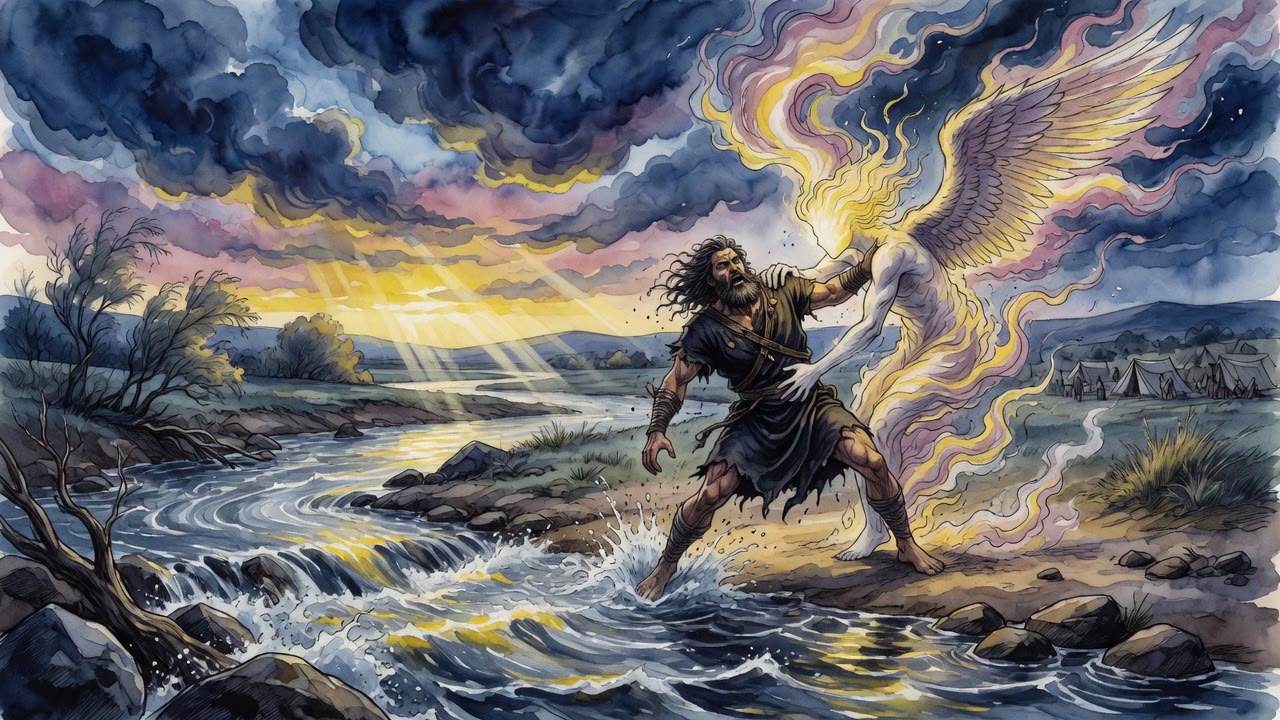
Night would still bring a wrestler at the ford, a hip out of joint, a name changed to Israel. The legends hold the prayer as the inner war that matches the outer one. Before a hand gripped him in the dark, he had already gripped heaven with law not yet given and promises already old. Esau would weep and embrace in the morning the brother he had meant to kill. The four hundred would not become a graveyard of mothers and sons on one day.
Jacob limped into the reunion carrying a hip wound and a successful brief. The Torah he had cited in advance would one day forbid what he had begged heaven to prevent. A people not yet born had been used as leverage to keep that people possible. Bargaining, in this house of fathers, is also a form of faith.
Droves on the Road
Goats first, then ewes, then camels, spaces between so that each wave of gift could speak before the next arrived. Servants carried scripts of soft speech. Jacob stayed last, the prize and the risk. He had dreamed ladders and wrestled wages from Laban. This night he prepared to wrestle something that might not be human at the ford. The prayer about mother and young in one day sat in his mouth beside the older promise of sand-like children. If both failed, knives would have to do what words could not.
Wives and children crossed the stream in the dark. Jacob remained alone long enough for a stranger to seize him until dawn. The hip wound would limp into every later blessing of Israel. The name Israel would rename the man who bargained. When Esau finally ran to meet him, the four hundred did not become a harvest of corpses. Tears replaced the plan of murder for a moment history still argues about. Jacob's gifts were accepted. His prayer had already spent its boldest coin, a Torah not yet carved, used as shield for children not yet a nation. The bargain held long enough for the story to continue.
← All myths