Parshat Vayishlach6 min read

The Angel of Esau Begged Dawn to Release Him

Jacob pinned Esau's guardian until the choir hour. The wicked obey their hearts. Jacob ordered his own heart to hold.

Curated by Arthur · Told by Maggid ·
Table of Contents
  1. The Lion Before the Dog
  2. Who Speaks to the Heart
  3. The Herdsman's Quarrel
  4. What the Grip Bought

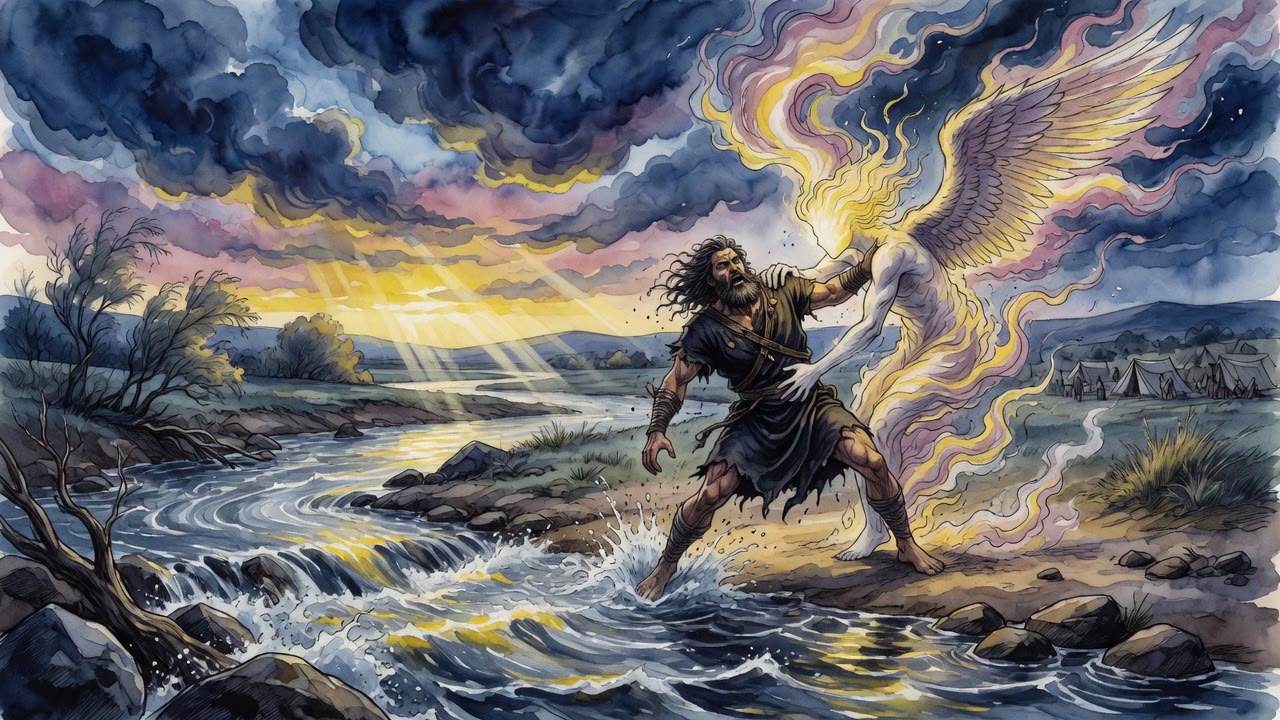
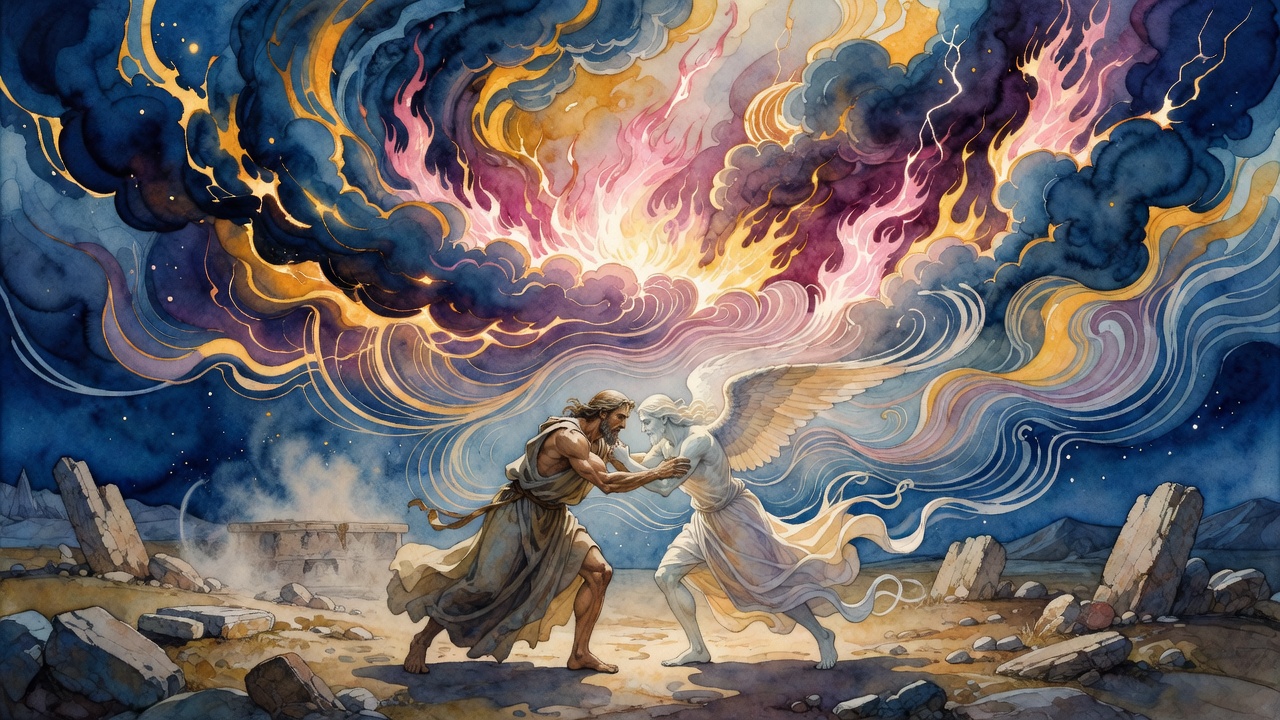
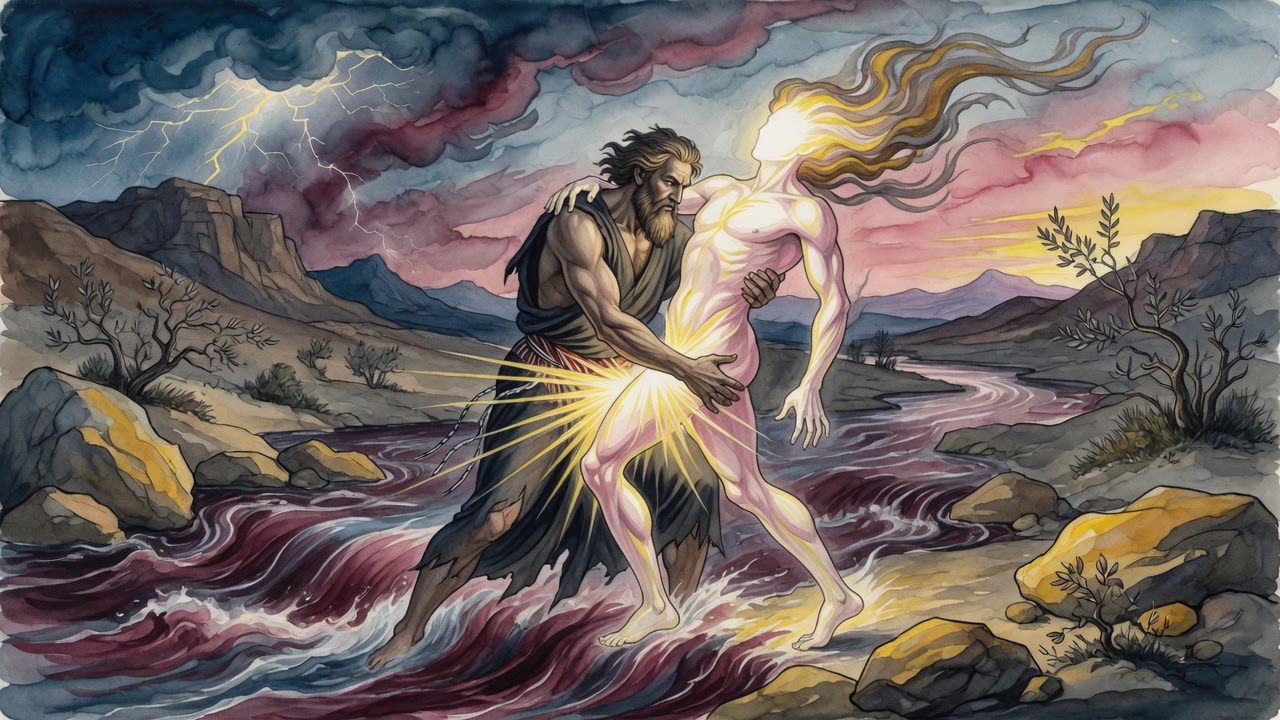
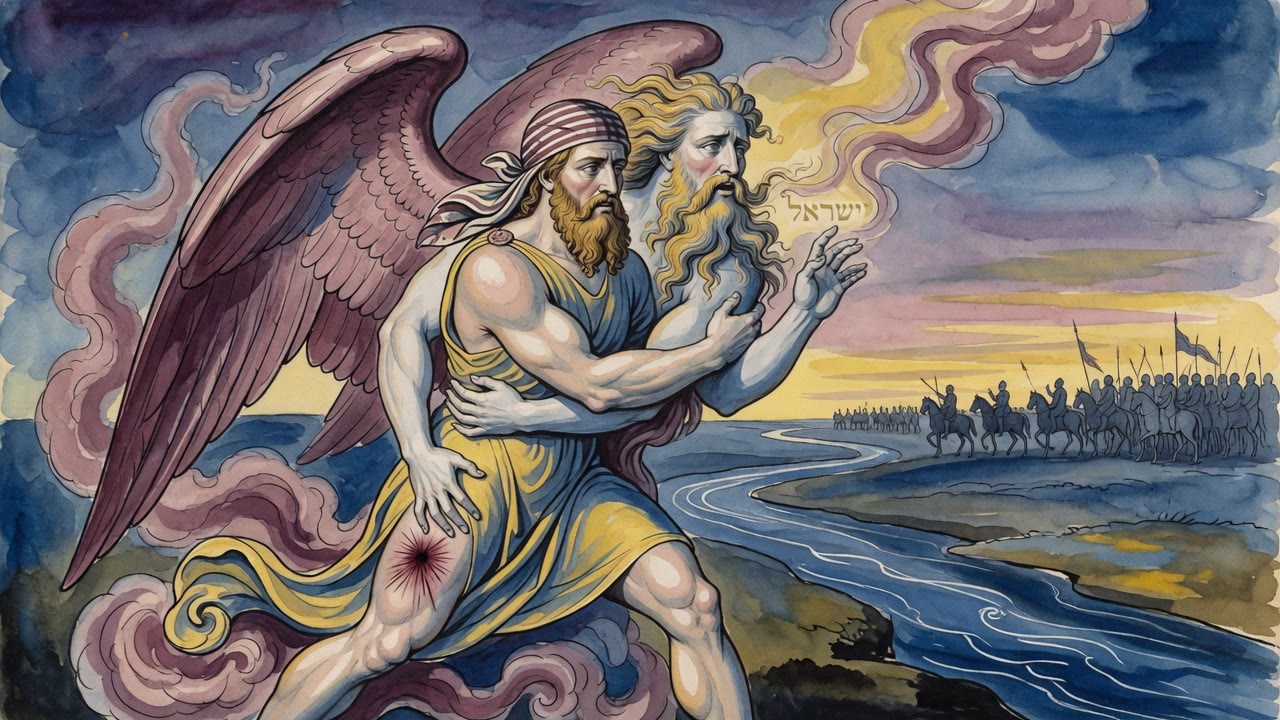
Jacob locked his arms around a stranger at the ford of the Jabbok and would not open them. Dust rose. Bones ground. The river kept its cold counsel. "A man wrestled with him" (Genesis 32:25). The man was no herdsman and no bandit. He was the guardian of Esau, and he had come in the shape of the brother Jacob still feared to meet at dawn.

The Angel of Esau Begged Dawn to Release Him Click for full size

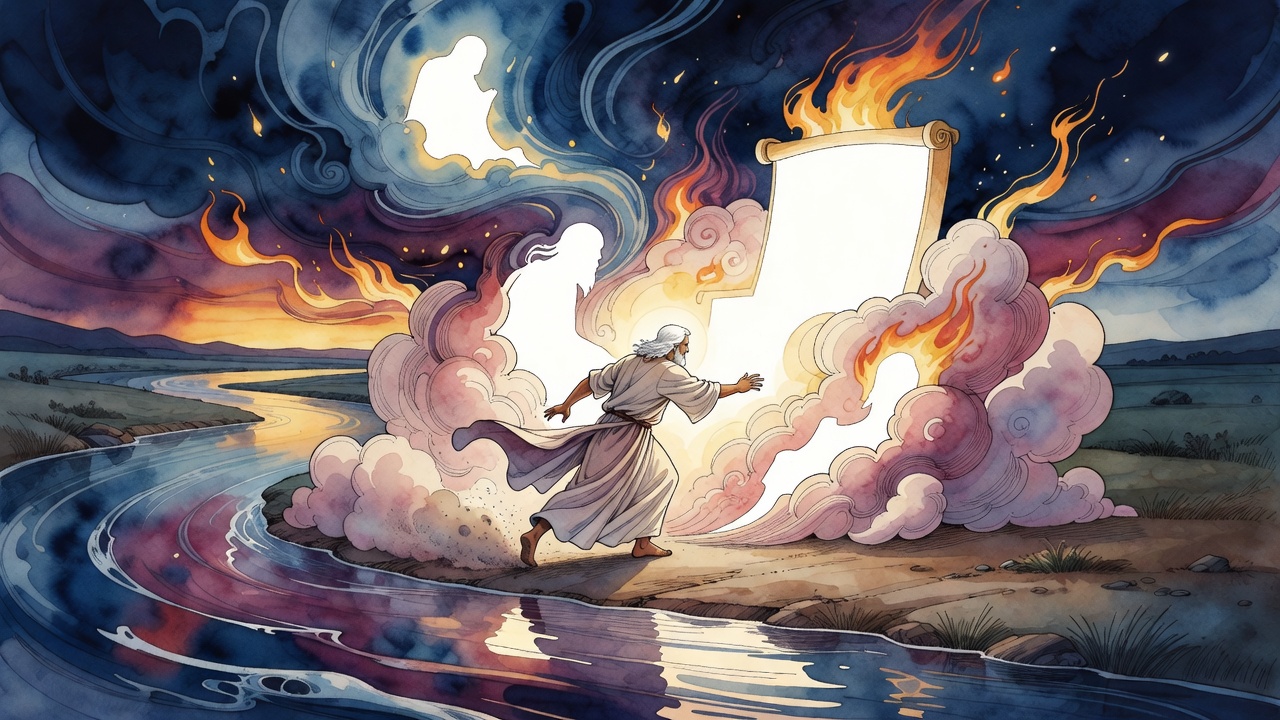
Night stretched. The stranger tried to twist free. Jacob held. When the east grayed, the angel's voice cracked with a need that sounded almost human. "Release me, as dawn has broken" (Genesis 32:27). The hour of lauding had arrived. Heaven's choir would not wait for a messenger stuck in a mortal's grip. That plea settled the match. The one who begs to leave is not the one who rules the field.

The Lion Before the Dog

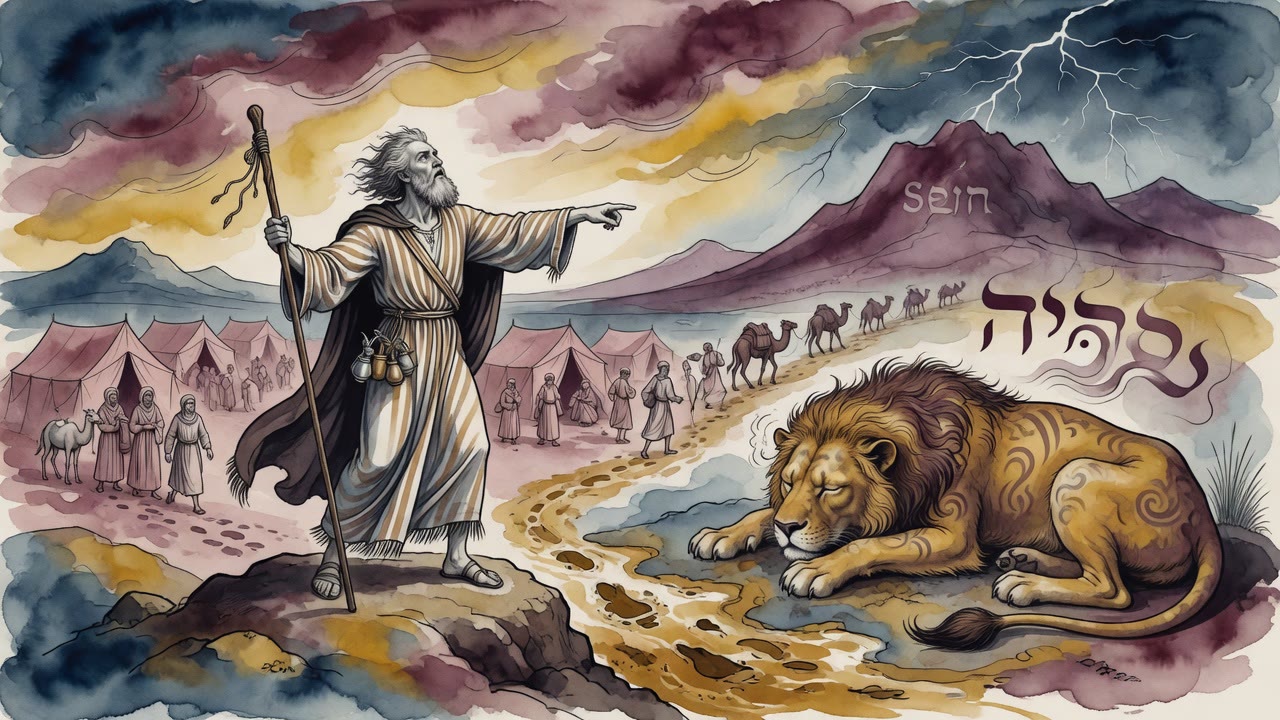
A king kept a lion as a pet and a wild dog at the gate. He set the lion against his own son. The son prevailed. Later, when the dog lunged, the son could answer without trembling. I overcame the lion. Shall I fear the dog?

So the Holy One set Esau's angel against Jacob in the dark. When the nations would rise against Israel, Heaven would answer them from that night. Your guardian could not stand against their father. How will you stand? The wrestling match was not sport. It was a rehearsal for every border Israel would later cross with Esau's children watching from the ridge.

Jacob later told Esau, "I have therefore seen your face like seeing the face of an angel" (Genesis 33:10). He had already met the face behind the face. The brother at the road was not the first Esau of the night. The first Esau had begged for dawn.

Who Speaks to the Heart

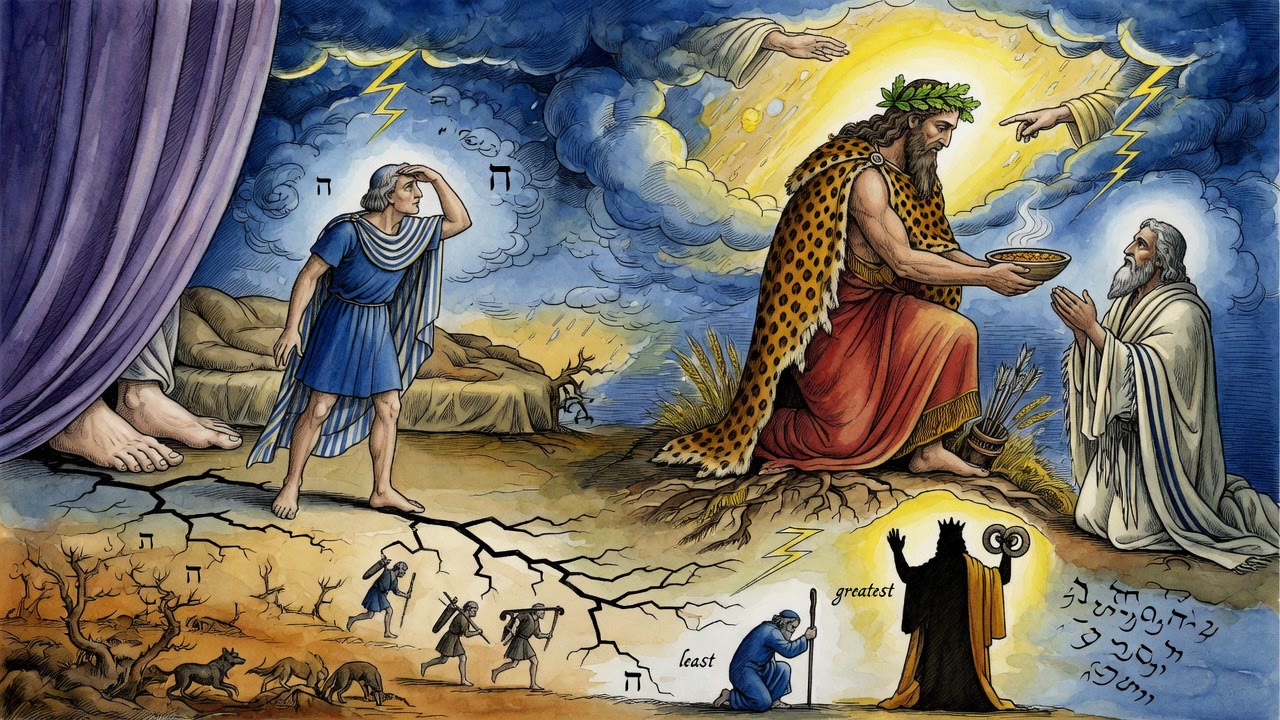
The wicked do not speak to their hearts. Their hearts speak through them. "The scoundrel says in his heart" (Psalms 14:1). "Esau said in his heart" (Genesis 27:41). "Haman said in his heart" (Esther 6:6). The heart issues orders. The mouth only delivers them. Murder ripens in silence long before the hand moves.

The righteous reverse the chain. Hannah spoke to her heart. David said to his heart. Daniel placed a resolve in his heart. They give commands to the organ that usually commands them. At the Jabbok, Jacob lived that reverse. His body wanted rest. His fear wanted flight. His heart, if left alone, would have opened its arms and let the angel climb back to the choir. Jacob ordered the heart to hold. The grip obeyed the order.

God Himself models the same sovereignty. "The Lord said to His heart." The Creator does not drift on impulse. He addresses the seat of will and binds it with a double oath after the flood. "I will not continue" for Noah's children, and "I will not continue" for those still unborn. A heart that receives speech can keep a covenant. A heart that only issues speech becomes a tyrant in the chest.

The Herdsman's Quarrel

Some say the angel came dressed as a herdsman and started a petty fight over flocks, as if the night were only about sheep and water rights. The quarrel was bait. Jacob answered as a man who protects what is his. The angel answered as a force that tests what is claimed. Under the costumes, the real question never changed. Who dominates whom when heaven and a patriarch refuse to release the other?

Morning would bring Esau with four hundred men. The night brought Esau's power in a single body. Jacob limped out of the dark with a new name forming on the horizon and a hip that would never forget the cost of holding on. The blessing he forced was not a trophy. It was a receipt. Heaven paid for the hours it could not retrieve its messenger.

What the Grip Bought

Esau would still kiss and still threaten. Nations would still mass on the roads. The heart would still try to seize the mouth of the wicked. None of that erased the riverbank. A man had pinned a guardian until the choir's hour pressed against the stranger's throat. Israel would walk into history with that proof in its bones. The dog at the gate is loud. The lion already lost.

Jacob crossed at dawn with the limp and the name and the knowledge that his heart had taken orders for one long night. The angel climbed late to the lauding. The brother waited ahead with a face Jacob already knew. Between them lay the only fact that mattered. Release had been requested. Release had been delayed. Dominion had declared itself in the dust.

At the ford the stones were wet and sharp. Jacob's heel slipped once and he recovered by hauling the angel sideways into the shallows. Water slapped both pairs of legs. The stranger's breath came in the rhythm of someone late for an appointment he cannot miss. Lauding has a clock. Mortality had become that clock's enemy.

Esau would arrive with four hundred. The night's Esau arrived alone and still almost won the argument of fear. Jacob's old name meant grasping a heel. His new work was grasping a messenger until speech broke. Between heel and messenger the people called Israel began to take shape as a grip that outlasts a night.

When the blessing finally tore free from the angel's mouth, it did not erase the limp. Gifts that cost nothing teach nothing. The hip remembered so the heart would not forget who had given orders in the dark.


← All myths

From the tradition

Sources

2 sources

The texts behind this telling. Some cards carry a translation of the source; others are our own retelling of it, and each card says which. Every card links out to the original.

Shir HaShirim Rabbah 6:3Shir HaShirim Rabbah

Retold in our words. Read the original at the link below.The Sefaria Midrash Rabbah, 2022 · CC-BY

It's one of those biblical scenes that's both epic and deeply mysterious. Who was this "man" Jacob wrestled with all night? And what does this strange encounter really mean? Our journey begins in Shir HaShirim Rabbah, a collection of rabbinic interpretations on the Song of Songs. It picks up on the passage in Genesis (32:25) that simply states, "A man wrestled with him." But who dominated whom? That's the question Rabbi Berekhya, quoting Rabbi Ḥelbo, grapples with. We're left wondering, was it Jacob who overpowered the angel, or the other way around?

The clue, according to this midrash (rabbinic interpretive commentary), lies in the angel's plea: "Release me, as dawn has broken" (Genesis 32:27). The angel needed to be released, explaining that the time for his "lauding" – his prayers and praises – had arrived. This suggests Jacob held the upper hand.

So, in what form did this angel appear? Rabbi Ḥama bar Ḥanina offers a fascinating idea: the angel came as the guardian angel of Esau, Jacob's brother. Jacob later tells Esau, "For I have therefore seen your face like seeing the face of an angel" (Genesis 33:10). Jacob recognized something of the angelic in his brother's presence.

The midrash beautifully illustrates this with a parable. A king with a pet lion and a wild dog sets the lion against his son. Why? So that if the dog attacks, the son can say, "If I overcame the lion, surely I can overcome the dog!" Similarly, when other nations confront Israel, God reminds them: "Your guardian angel couldn't withstand their ancestor, how can you hope to overcome them?" This wrestling match becomes a symbolic representation of Israel's strength, divinely protected even against angelic forces.

But there are other interpretations, too. Rabbi Huna suggests the angel appeared as a herdsman, leading to a comical, almost petty squabble over whose flocks should cross first. "Cross mine, and I'll cross yours!" the angel says. Or maybe, "Cross yours, and I'll cross mine!" The exact phrasing seems to be up for debate, reflecting the playful give-and-take often found in midrashic discussions.

There's even a version where Jacob, after crossing his livestock, returns to check if he’s forgotten anything – a good habit, we learn, inspired by our patriarch. And that's when the wrestling begins. The angel, disguised as a herdsman, accuses Jacob of trying to steal livestock. We even hear a story of Rabbi Ḥiyya the Great and Rabbi Shimon ben Rabbi who, inspired by Jacob's diligence, returned to check their silk fabric after leaving Tyre!

The Rabbis offer another take: The angel appears as a common thief! He crosses Jacob’s flocks in the blink of an eye – almost too fast. Jacob, suspicious, accuses the angel of being a sorcerer, wrapping a woolen scarf around his neck as protection. "Wizardry is not effective at night!" he declares.

Rabbi Huna adds a dramatic twist. The angel, perhaps frustrated, reveals his true nature, placing a finger on a rock and causing it to burst into flames. But Jacob isn't intimidated. "With this you seek to frighten me?" he retorts. "I am constituted entirely from it!" alluding to the verse in Obadiah (1:18): "The house of Jacob will be fire."

Rabbi Ḥanina bar Yitzḥak offers a different perspective, focusing on divine intervention. God reminds Esau's guardian angel that Jacob comes armed with the merits of his ancestors: "His merit, the merit of his father, the merit of his mother, the merit of his grandfather, and the merit of his grandmother." The angel realizes he's outmatched and "saw that he could not overcome him" (Genesis 32:26).

Rabbi Levi explains that the angel saw the Shekhinah, the Divine Presence, standing over Jacob. Just like a robber who surrenders when he sees the king protecting his son, the angel submitted before Jacob.

Finally, the midrash touches on the lasting impact of this struggle. "He touched the socket of his thigh" (Genesis 32:26). According to Rabbi Levi, this represents the righteous men, women, prophets, and prophetesses who would descend from Jacob – and also the "generation of persecution," those who suffered after the destruction of the Temple. The dislocation of Jacob's thigh (vateka) is interpreted in different ways: Rabbi Eliezer says it was smoothed, while Rabbi Berekhya, quoting Rav Asi, says it was fractured like a fish, lengthwise. Rabbi Naḥman bar Yaakov suggests it was simply dislocated, just as the soul can be alienated.

So, what does this all mean? Is it a literal wrestling match? A symbolic representation of Israel's resilience? A divine lesson in humility? Perhaps it's all of the above. This midrash invites us to confront the text, to wrestle with its meanings, and to find our own understanding of this enduring story.

Full source
Bereshit Rabbah 34:10Bereshit Rabbah

Retold in our words. Read the original at the link below.The Sefaria Midrash Rabbah, 2022 · CC-BY

Bereshit Rabbah, a collection of rabbinic interpretations of the Book of Genesis, tackles this very question, and it turns out, it's a battle as old as time.

The passage starts with a powerful idea: "The Lord said to His heart." What does it mean that God speaks to His own heart? The Midrash (rabbinic interpretive commentary) contrasts this with the wicked, who, it says, are controlled by their hearts. They can't control their base instincts. "The scoundrel says in his heart" (Psalms 14:1); "Esau said in his heart" (Genesis 27:41); "Haman said in his heart" (Esther 6:6). It's always the heart calling the shots for them.

The righteous? Ah, that's a different story. Their hearts are subject to them. They're able to overcome their evil inclinations, the yetzer hara (the evil inclination). "Hannah was speaking to her heart" (I (Samuel 1:1)3); "David said to his heart" (I Samuel 27:1); "Daniel placed in his heart" (Daniel 1:8). The righteous are portrayed as dictating to the heart what to do, not the other way around.

Then comes a fascinating repetition: "I will not continue…and I will not continue." Why say it twice? The Midrash sees this repetition as emphasis, a powerful commitment. It's like God is declaring an oath. The Rabbis say it means, "I will not continue" for the present children of Noah, "and I will not continue" for future generations. It's a double promise.

But Rabbi Ḥiyya the Great offers a rather bleak assessment: "Wretched is the dough whose baker attests in its regard that it is inferior – 'as the inclination of man’s heart is evil from his youth.'" Abba Yosei HaTorati chimes in, "Wretched is the leaven whose maker attests that it is inferior, as it is stated: 'For He knows our inclination; mindful that we are dust' (Psalms 103:14)." And the Rabbis add, "Wretched is the sapling whose planter attests that it is inferior, as it is stated: 'The Lord of hosts, who planted you, spoke evil of you' (Jeremiah 11:17)." It's a harsh analogy – comparing humanity to flawed ingredients.

The text then dives into a discussion between Antoninos, a Roman official, and Rabbi Yehuda HaNasi, often simply called "Rabbi," a key figure in the compilation of the Mishnah (the earliest code of rabbinic law). Antoninos asks a profound question: When is the evil inclination implanted in a person? Before birth, or at birth?

Rabbi initially says before birth. But Antoninos counters with a sharp argument: if the evil inclination were present in the womb, the fetus would dig its way out! Rabbi concedes, agreeing with the verse "As the inclination of man's heart is evil from his youth [neurav]" (Genesis 8:21). Rabbi Yudan clarifies that ne'erav is similar to the word ninar, meaning "from the moment that he pushes out to emerge from his mother’s womb."

Antoninos doesn't stop there. He asks: when is the ruach, the spirit, embedded in a person? Rabbi initially says after birth. But Antoninos, again, objects. He uses the analogy of meat: if left unsalted for three days, it putrefies. A fetus, he argues, must possess the spirit of life to avoid decay. Rabbi agrees, citing (Job 10:12): "You granted me life and kindness, and Your command [ufkudatekha] preserved my spirit." The implication? God placed the soul when He deposited me [hifkadetani] in my mother's womb.

So, what are we left with? A complex picture of human nature. We have the potential for both immense good and, let's face it, immense not-so-good. The key, it seems, is to recognize the power of that inner voice, that yetzer hara, and strive to be the one in control. It's a lifelong journey, a constant conversation with our own hearts. And maybe, just maybe, that's the whole point.

Full source