Jacob Wrestled the Angel Until Dawn and Limped Away as Israel
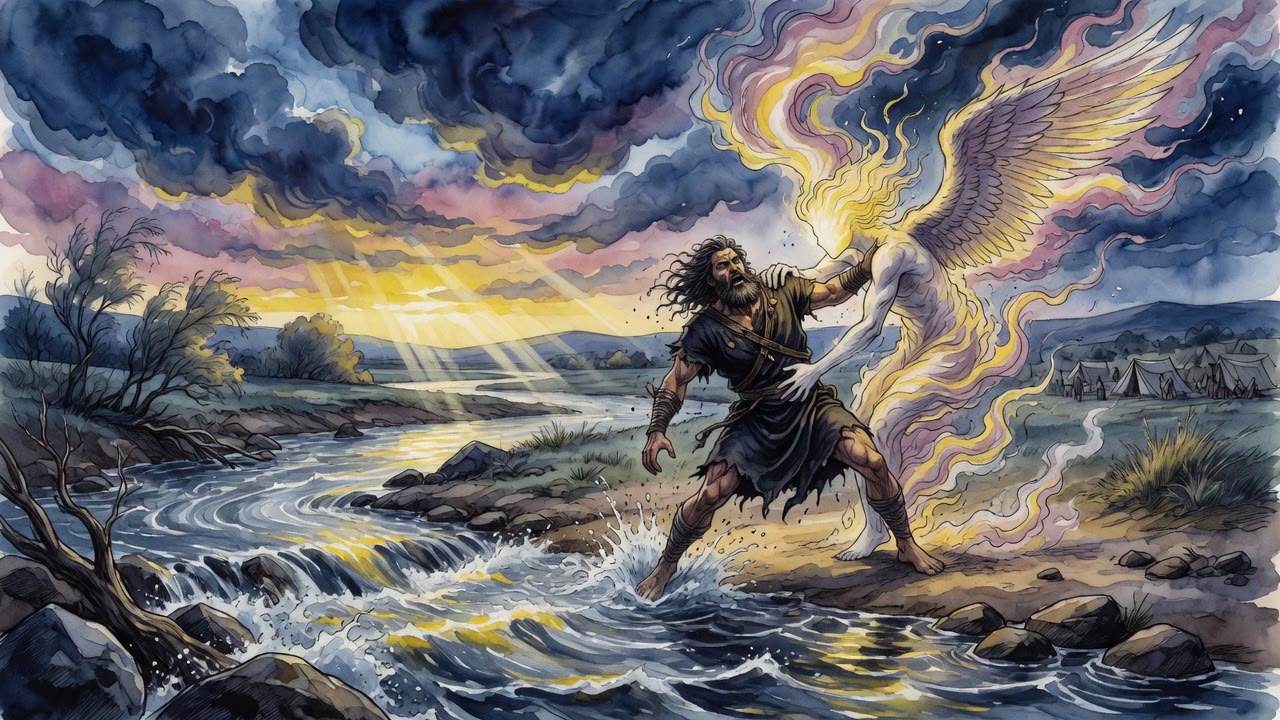
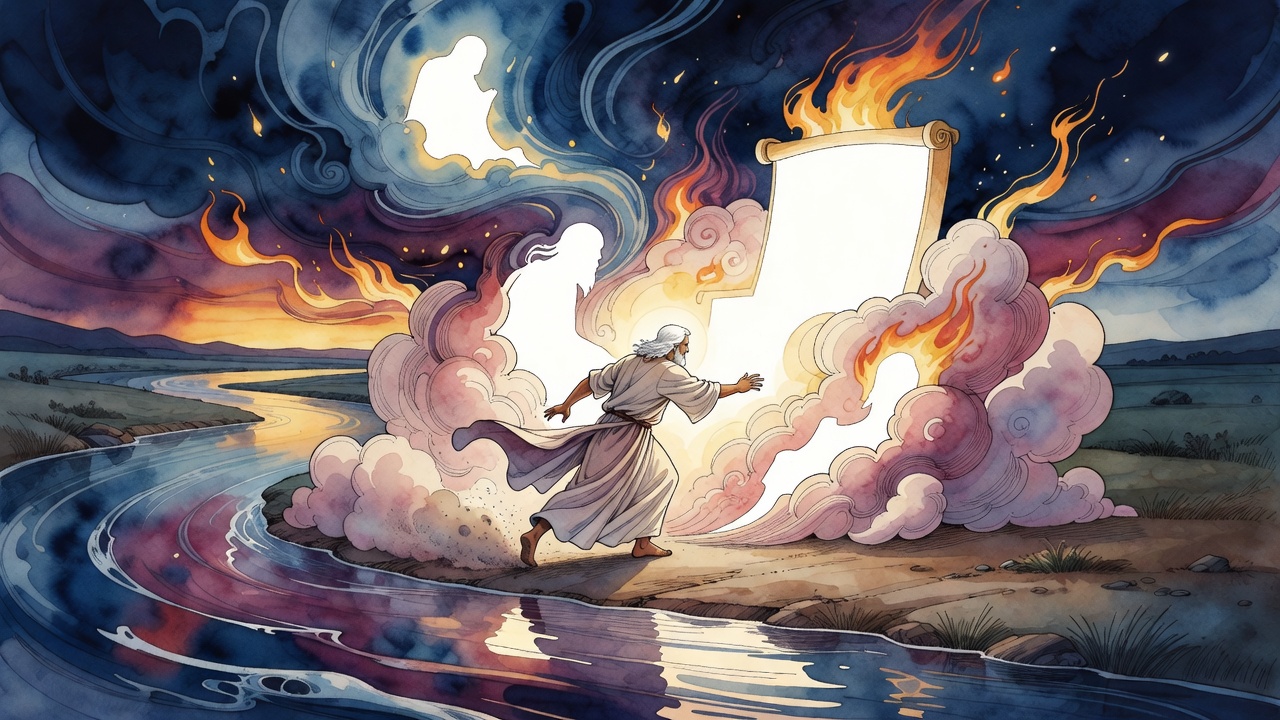
The camps were already across the water. Jacob stayed on the near bank. A man took hold of him in the dark and would not name himself.
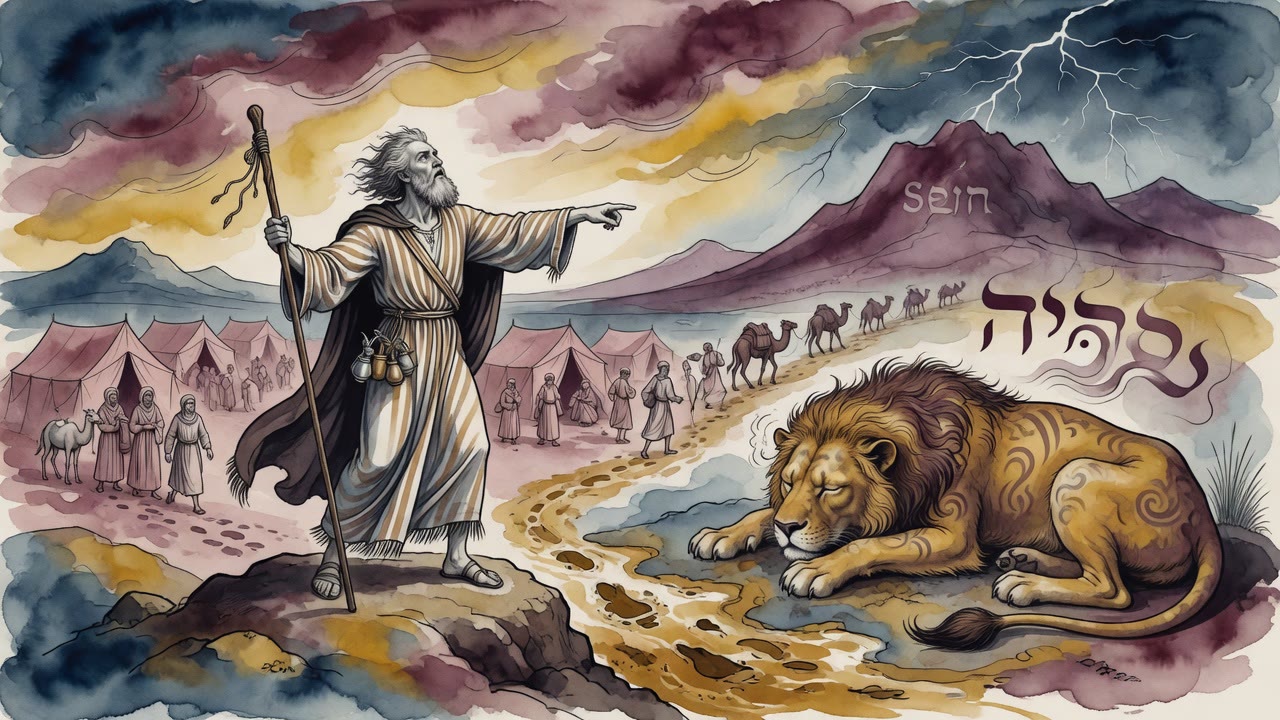
The messengers came back with a number that sat in Jacob's mouth like iron. Esau was coming to meet him with four hundred men (Genesis 32:7). Jacob sent the last of the camps across the ford of the Jabbok. Wives. Children. Flocks. He remained on the near bank alone.
 Click for full size
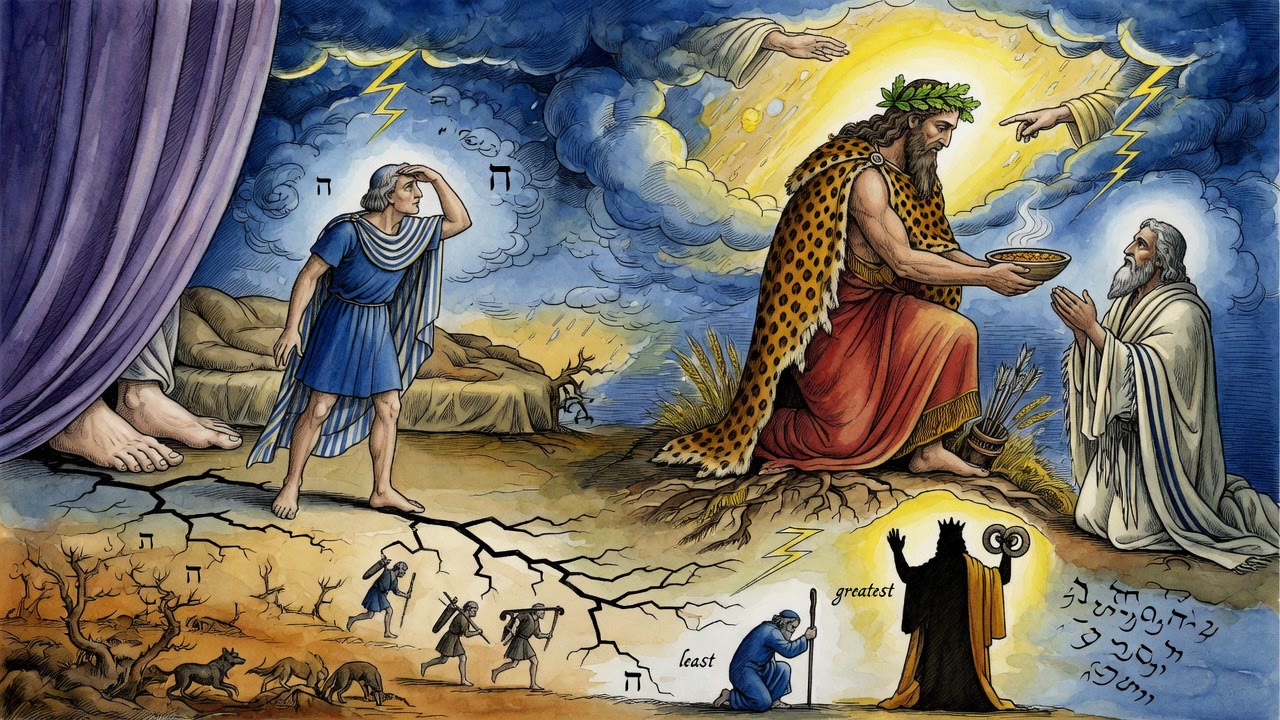
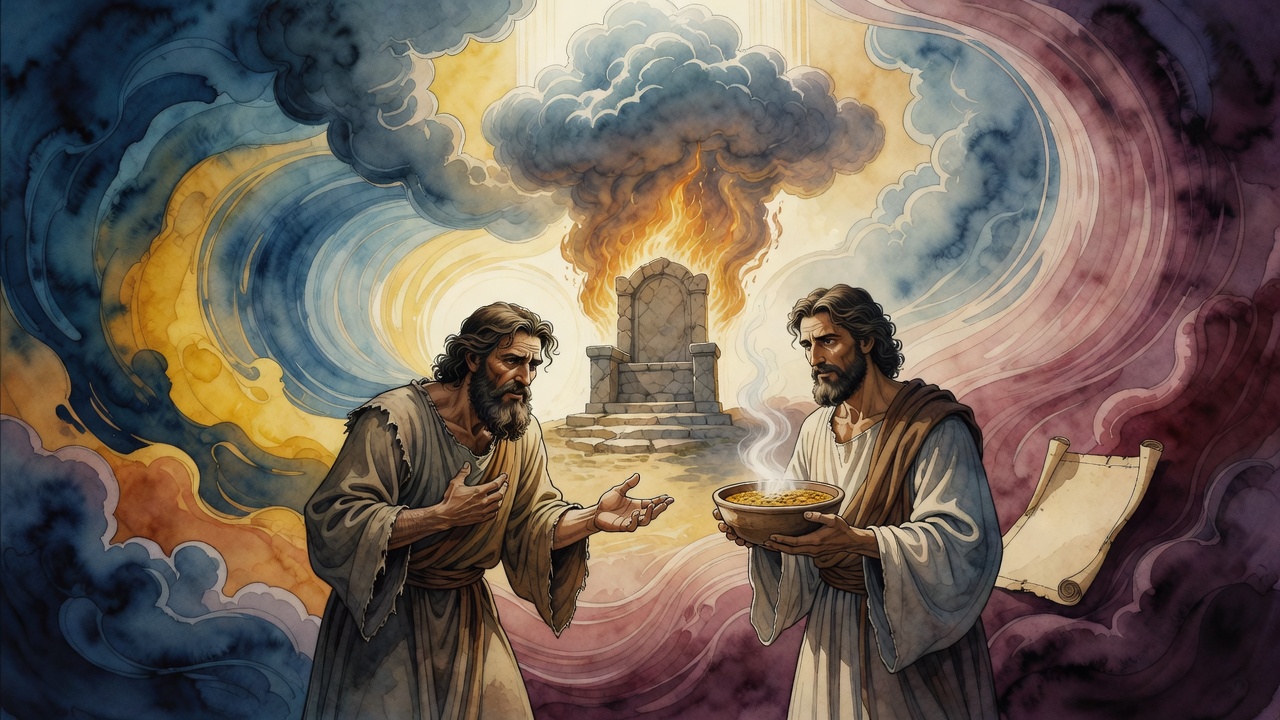
He was greatly afraid, and he was distressed (Genesis 32:8). Afraid that he might be killed. Distressed lest he be forced to kill. He had set up a pillar as tall as the peak of Tiberias. He had lifted a stone the way a man pulls a stopper from a bottle. His sons gathered rocks with that same force in their arms. Power was not the shortage. He prayed anyway. "Deliver me, I pray thee, from the hand of my brother, from the hand of Esau" (Genesis 32:12).
A man took hold of him in the dark.
Let Me Go
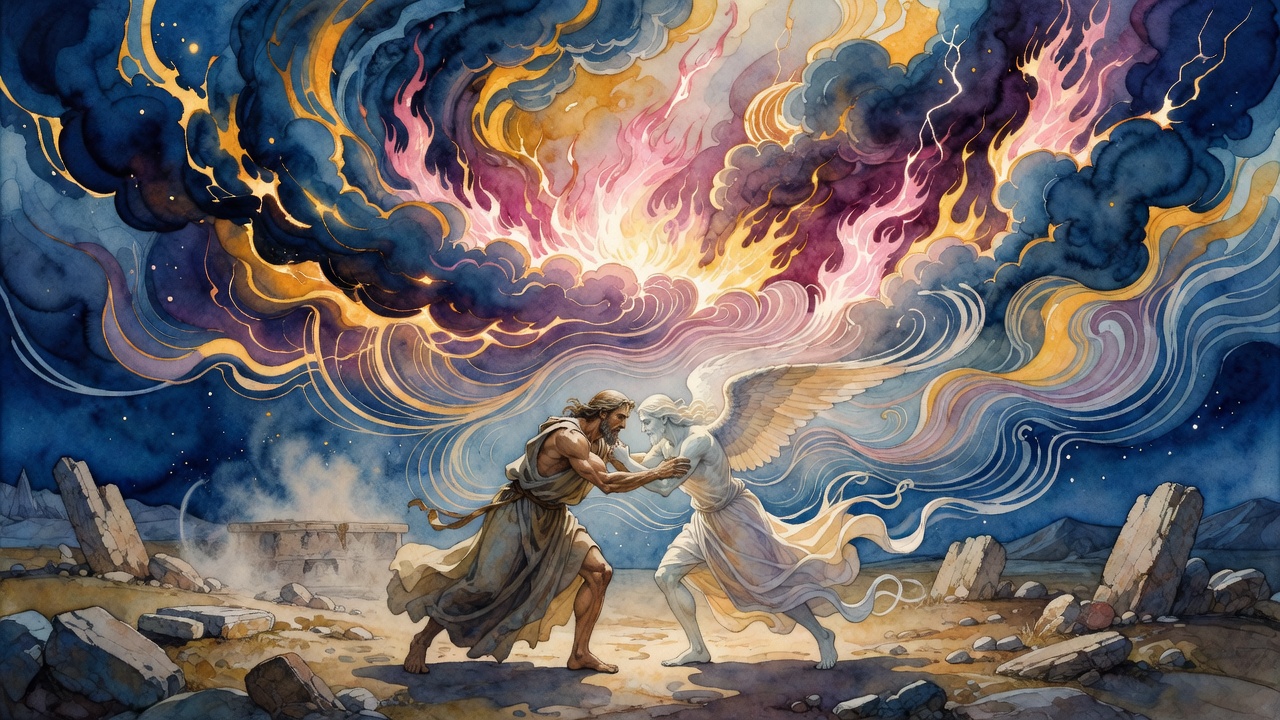
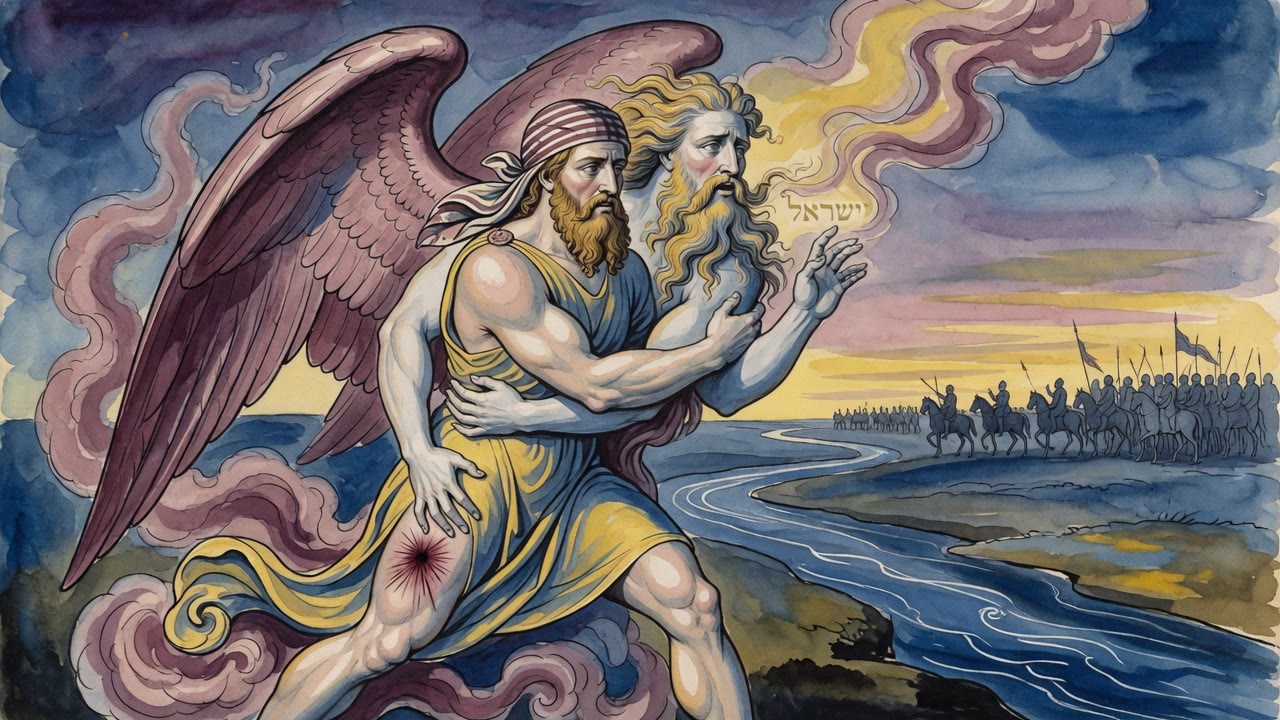
They wrestled until the east began to thin. Dust. Breath. The river at their ankles. Jacob drove a shoulder into the stranger's chest and felt something that was not quite muscle push back. The stranger was strong, then the stranger was tired, and still Jacob would not open his hands. His fingers locked behind a neck that did not sweat like a man's. He would not be the one who let go first.
"Let me go," the angel said, "for the day breaketh" (Genesis 32:26).
"I will not let thee go until thou hast blessed me."
The blessing came. Jacob still held.
"Let me go," the angel said again.
"I will not let thee go until thou tellest me what thy name is."
The Name They Shared
The angel named himself Israel, and he called Jacob by that same name, like his own. Man and messenger shared a name at the edge of dawn. Jacob tried to throw him down onto the wet stones. The angel's fingers found the hollow of the thigh, the gid ha-nasheh (גיד הנשה). He lifted the sinew out of its place. Jacob's hip went from a pillar to a thing that would not hold him. The flesh went slack, like the fat of the dead.
Jacob's leg would not take his weight the way it had an hour before. The angel was gone into the light. The new name stayed. So did the limp.
From that injury his children would not eat the sinew of the hip upon the hollow of the thigh (Genesis 32:32). The body of a people would keep a night of struggle in the body of its animals.
A Limp Into Morning
Jacob limped away from the ford with a name that was not the one he had carried at dusk. Israel: the one who wrestles and prevails. The hip still burned. Esau's four hundred had not vanished because a messenger had spoken in the dark.
He arranged gifts. He arranged people. He still had to walk toward the brother with the army. The blessing extracted under the night sky had not canceled the dust on the road. It had only made him into a man who could hold and release, demand a name, and then limp.
He crossed toward the camp with the sun on his bad side. Each step told the truth the new name tried to hide. The hip dragged. He set the bad foot down as if the ground might open. Victory that costs, and a body that would not let him pretend the night had never happened.
Marble Where a Kiss Landed
When the meeting came, Esau ran and put his arms around him. He leaned in as if to kiss. The word "and he kissed him" is dotted in the scroll, a small mark that the mouth was not clean (Genesis 33:4). Esau tried to bite. Jacob's neck hardened like marble. Teeth found no blood.
They both wept. Esau because the neck would not yield. Jacob because he feared the next bite. Four hundred men waited for a signal that did not come.
Jacob still had to walk, limping, toward a man who had sworn his death. To share a name with an angel is not to become an angel. The dawn name rode into a roadside hug that solved nothing forever and still kept murder from that hour.
← All myths