5 min read

Esau Bit Jacob and Found a Tower of Marble

At the reunion Esau falls on Jacob's neck to suck blood; the neck turns to ivory, and Jacob sees his brother's face like the angel of the night.

Curated by Arthur · Told by Maggid ·
Table of Contents
  1. Teeth Behind the Kiss
  2. The Night That Named Him
  3. Face Like an Angel
  4. Tower for Later Exiles
  5. What Leaves the Field
Esau Bit Jacob and Found a Tower of Marble Click for full size

Teeth Behind the Kiss

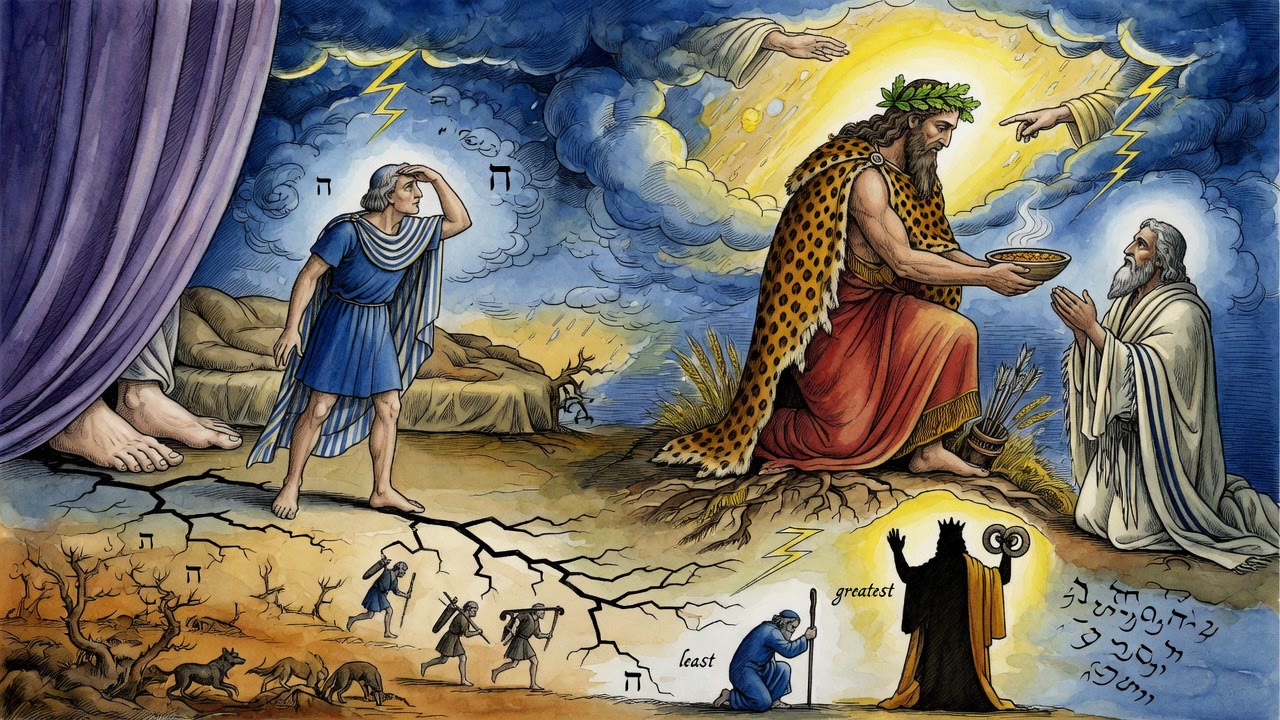
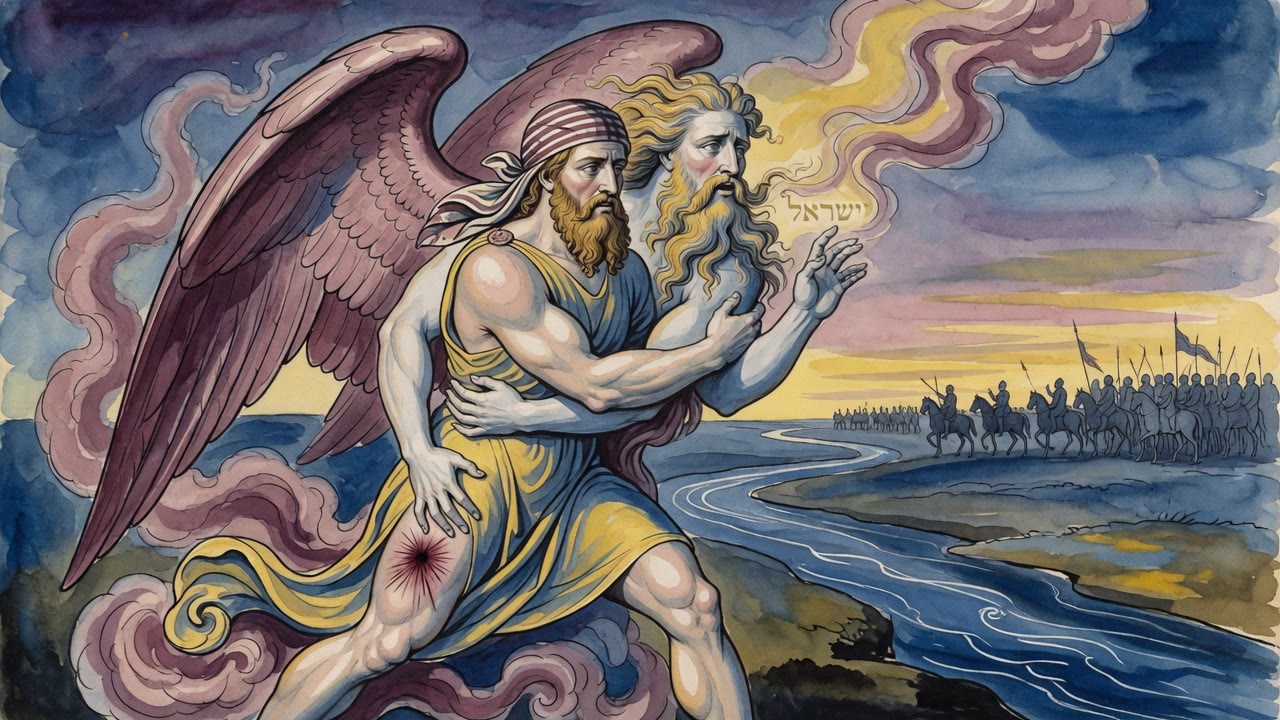
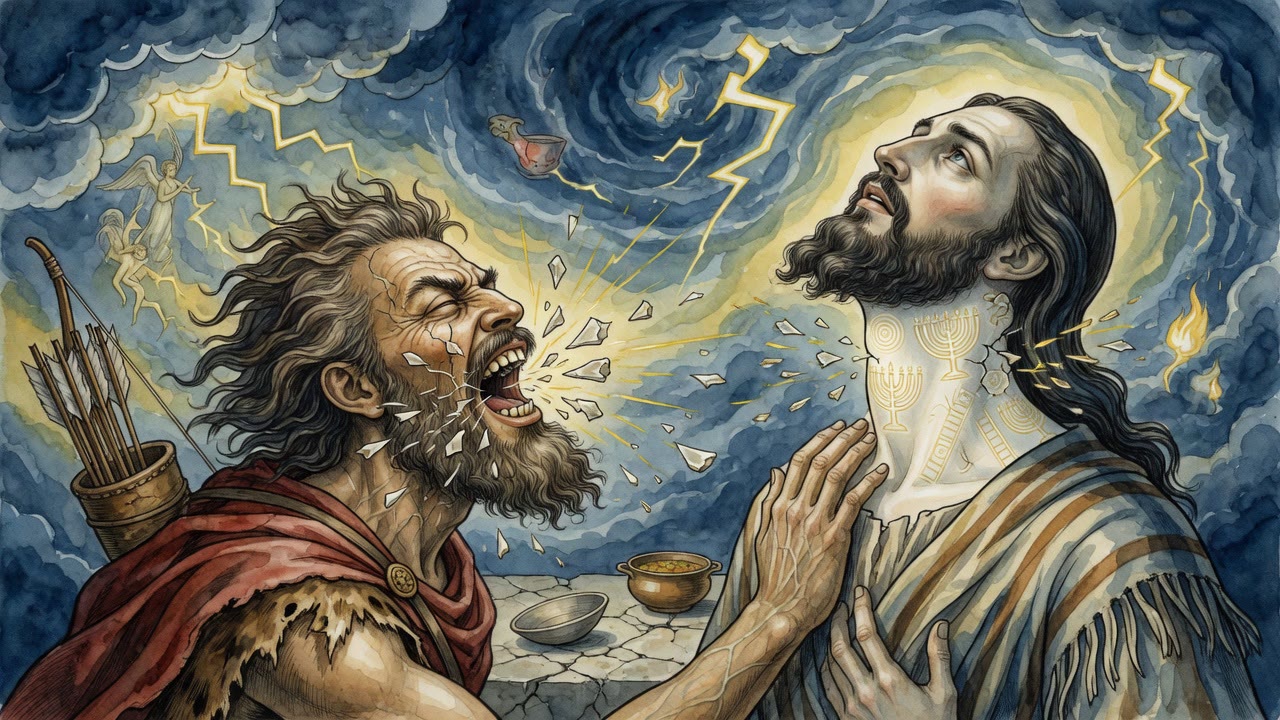
Esau ran to meet Jacob, embraced him, fell on his neck, kissed him, and they wept (Genesis 33:4). The letters of vayishakehu, and he kissed him, sit one stroke from vayishachehu, and he bit him. Esau had already decided the method. He would not kill Jacob with bow and arrow. He would suck his blood with his mouth.
The teeth closed. Jacob's neck hardened into ivory, unyielding as marble. "Your neck is as a tower of ivory" (Song of Songs 7:5). The tower held. Esau's bite dulled. When he realized his mouth would not puncture what it had bitten, the kiss turned to rage. He gnashed his teeth. "The wicked will see it and be grieved; he will gnash with his teeth and melt away" (Psalms 112:10). The tears the Torah records were Jacob's tears of pain and Esau's tears of thwarted hunger, weeping for opposite reasons in the same embrace. Four hundred men waited in the dust while two brothers made a sound that looked like love from a distance.

The sheep and goats Jacob had set as gifts still moved between the camps like a soft wall. Esau's men watched the animals more carefully than they watched the tears. Jacob's wives and children had already bowed in order. The marble in his neck did not show. Only the limp and the careful space he kept after the failed bite told the truth of the morning.

The Night That Named Him

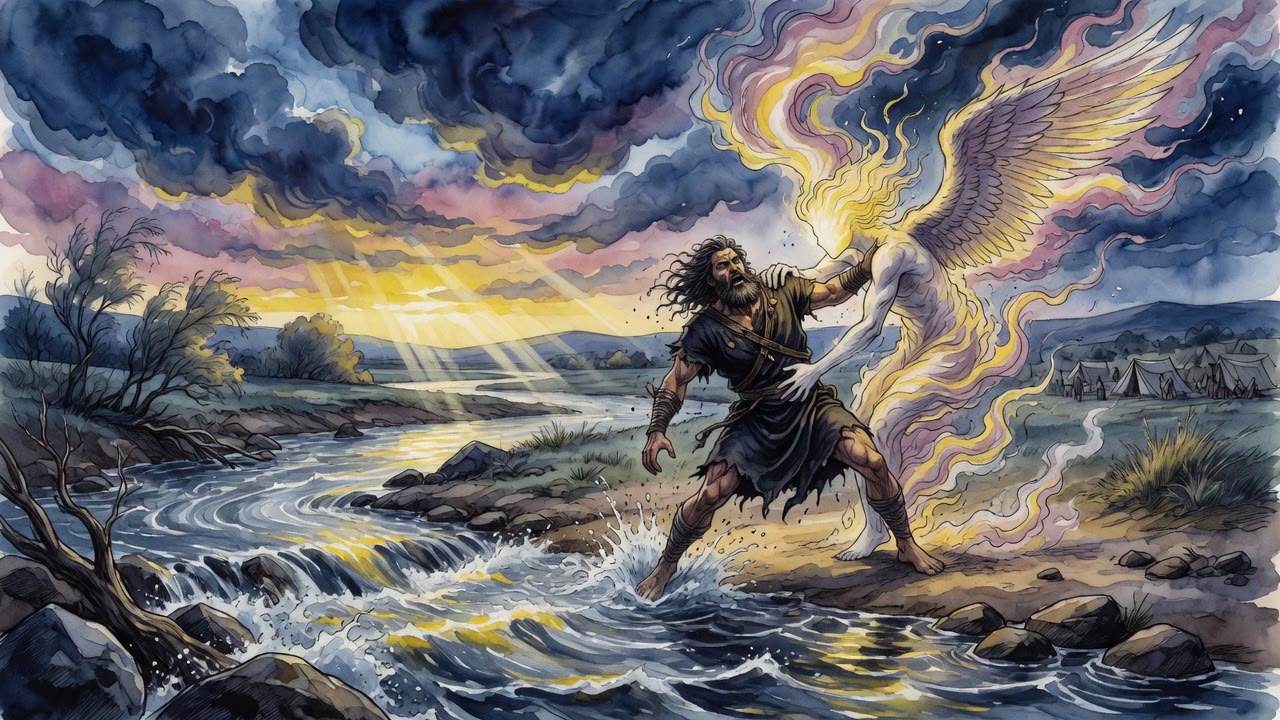
The night before, at the Jabbok, Jacob had wrestled until daybreak and come away limping (Genesis 32:32). The angel renamed him. "Your name shall no more be called Jacob, but Israel, because you are magnified with the angels of the Lord and with the mighty, and you have prevailed with them." Plurals. Angels, not one. The mighty, humans too, Laban and Esau outlasted. Yisra-El, he who struggles with God. Yashar-El, the upright one of God. Sar-El, prince with God. The new name crowns a life of struggle, not a single match.

The Torah will keep calling him both Jacob and Israel. The frightened brother crossing the ford stays inside the prince who limps into morning. The name promotes. It does not erase. Hip and new name arrive together, so no one can claim the crown came without a wound.

Face Like an Angel

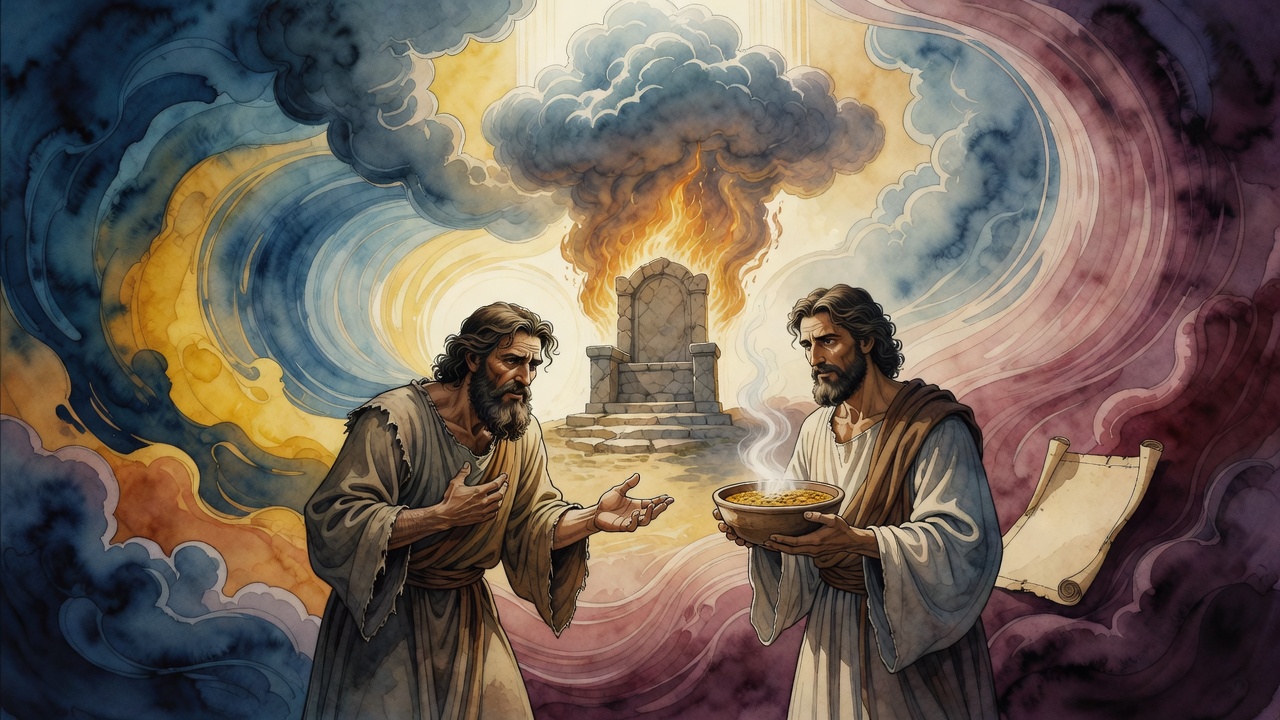
In the light Jacob said the line that still startles. "I have seen the look of your face, and it is to me as the vision of the face of your angel." He looked at Esau and saw the face of an angel. Which angel? The guardian prince of Esau himself, the sar he had fought in the dark. Reconciliation arrived as recognition. He had wrestled the pattern before he met the flesh. The four hundred men still stood in the field. The scowl was still a scowl. Under it Jacob saw what he had already prevailed against.

Esau, for his part, met a brother whose hip remembered heaven. Both faces were changed. The bite failed on marble. The greeting still had to be spoken with a mouth that had meant blood. Jacob did not pretend the teeth had been a joke. He named the angel in the face and kept his distance measured in flocks and space.

Tower for Later Exiles

The tradition treats the embrace as a parable for every hug Israel would receive in exile. Some embraces are covers for bites. The tower of ivory is the Torah itself, which keeps teeth from the blood. Jacob does not need to out-muscle every Esau in the street. He needs a neck that will not yield when the kiss is a weapon.

The limp remains. History will stage the strong man uppermost and the limping man in the shadows. The sources refuse to end the pageant there. The wound is not the last word. For this morning on the road, the marble is enough. Esau weeps because hunger failed. Jacob weeps because love and injury arrived in the same arms. Exile will repeat the choreography with empires in Esau's costume and a people whose neck must keep turning hard without turning heartless.

What Leaves the Field

They separate with gifts and distance. Israel walks forward under two names. Esau returns to Seir with teeth that learned ivory. No midrash pretends the brothers became soft. The scene ends on pressure held: bite blocked, face recognized, name expanded, limp accepted. That is more honest than a reunion speech.

Later generations who meet an empire's smile will remember the almost-identical letters. Kiss and bite share a spine. Discernment is a neck that turns to marble without turning to stone forever. Jacob still weeps. He still speaks of angel faces. He still limps. He is still, somehow, walking, and the tower that saved his throat goes with him as law and as memory of a mouth that failed.

Jacob's hands still smelled of the flock he had driven ahead as tribute. Esau's hands still knew the bow he had left unstrung for a mouth that failed. Between tribute and teeth the morning settled into a colder peace. No song rises. Only the sound of animals and the scrape of a limping step turning south while Seir waits for its hunter to come home empty of blood and full of a new frustration.


← All myths

From the tradition

Sources

3 sources

The texts behind this telling. Some cards carry a translation of the source; others are our own retelling of it, and each card says which. Every card links out to the original.

Bereshit Rabbah 78:9Hebraic Literature (1901)

Retold in our words. Read the original at the link below.Project Gutenberg eBook #14368, Hebraic Literature · PD-US-pre-1929

When Esau came back from the hunt and saw that Jacob had taken the blessing, he plotted his revenge quietly. The sages, reading the reunion years later in Genesis 33, noticed that Esau said something chilling before the brothers met: "I will not kill Jacob with bow and arrow. I will suck his blood with my mouth."

Then came the moment the Torah describes. "Esau ran to meet him, and embraced him, and fell on his neck, and kissed him, and they wept" (Genesis 33:4). The sages taught that the word vayishakehu, "and he kissed him," should be read as vayishachehu, "and he bit him," letters almost identical, intention nothing alike.

The moment Esau's teeth closed on Jacob's throat, the neck of Jacob hardened into ivory, unyielding as marble. The Song of Songs is the prooftext: "Your neck is as a tower of ivory" (Song of Songs 7:5). Esau's teeth struck the tower and dulled.

When he realized his mouth would not puncture what it had bitten, his kiss turned to rage. He gnashed his teeth in frustration. This, the sages said, is exactly what the Psalmist describes: "The wicked will see it and be grieved; he will gnash with his teeth and melt away" (Psalms 112:10). The tears the Torah mentions were Jacob's tears of pain and Esau's tears of thwarted hunger, weeping for opposite reasons at the same embrace.

The tradition treats the scene as a parable for every embrace Israel would receive in exile. Some embraces are covers for bites. The tower of ivory is the Torah itself, which keeps the teeth from reaching the blood.

Full source
Targum Pseudo-Jonathan on Genesis 33:10Targum Pseudo-Jonathan on Genesis

Retold in our words. Read the original at the link below.The Targum of Jonathan ben Uzziel, trans. J. W. Etheridge, London, 1862 · Public Domain

"I have seen the look of your face, and it is to me as the vision of the face of your angel." Targum Pseudo-Jonathan preserves Jacob's most startling line to his brother (Genesis 33:10). He looked at Esau and saw the face of an angel.

Which angel? The rabbis read this against the backdrop of the wrestling at the Jabbok the night before. Jacob had just fought an angel who, in some traditions, was the very sar, the guardian prince, of Esau himself. Now, looking at Esau's actual face in the morning, Jacob saw the ghost of last night's opponent.

Reconciliation as recognition

This is one of the richest ideas in Jewish spiritual thought: you cannot reconcile with a person until you have wrestled with their angel. Every human being has a deeper spiritual reality, a pattern or essence that stands for them in the heavenly court. To truly meet a person is to meet that pattern, not just their surface.

Jacob wrestled Esau's angel in the dark and prevailed. The next morning, when he met Esau in the flesh, he could see past the scowl and the four hundred soldiers to the brother underneath. Esau, for his part, could see the changed man his brother had become. Both faces were transfigured.

The takeaway: seeing a person truly means seeing what they carry, not only their flesh but their angel.

Full source
Targum Pseudo-Jonathan on Genesis 32:29Targum Pseudo-Jonathan on Genesis

Retold in our words. Read the original at the link below.The Targum of Jonathan ben Uzziel, trans. J. W. Etheridge, London, 1862 · Public Domain

"Your name shall no more be called Jacob, but Israel." Targum Pseudo-Jonathan adds a line the plain text only implies (Genesis 32:29): the new name was given "because you are magnified with the angels of the Lord and with the mighty, and you have prevailed with them."

Notice the plurals. Angels, not one, but many. The mighty, humans too, presumably Laban and Esau, both of whom Jacob has now outlasted. The new name is a crown on a whole life of struggle, not just one night's fight.

What does Israel mean?

The rabbis offered several readings. Yisra-El, "he who struggles with God." Yashar-El, "the upright one of God." Sar-El, "prince with God." All three are true, and the Targum's language, magnified, prevailed, includes all three.

The most important thing about the new name is what it does not erase. Jacob is not renamed in the way Abram became Abraham, permanently, with no going back. The Torah will keep calling him both Jacob and Israel for the rest of the book of Genesis. He is both. The frightened brother crossing the Jabbok is still inside the prince who emerges at dawn.

The takeaway: the new name does not replace the old one. It promotes it.

Full source