Jacob Wept After One Kiss at Rachel's Well
The shepherds stared when Jacob kissed Rachel at the well. He had arrived with empty hands. Eliezer had come with ten loaded camels.
Table of Contents
 Click for full size
The Kiss the East Could Not Bear
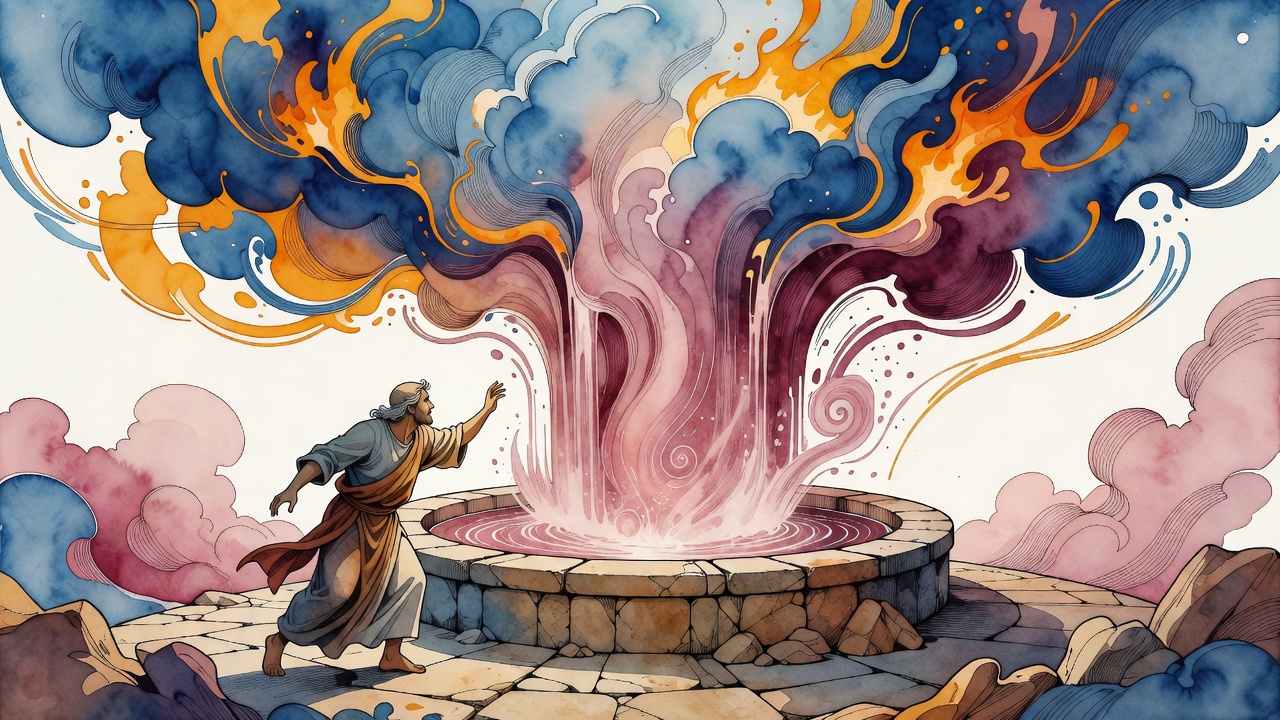
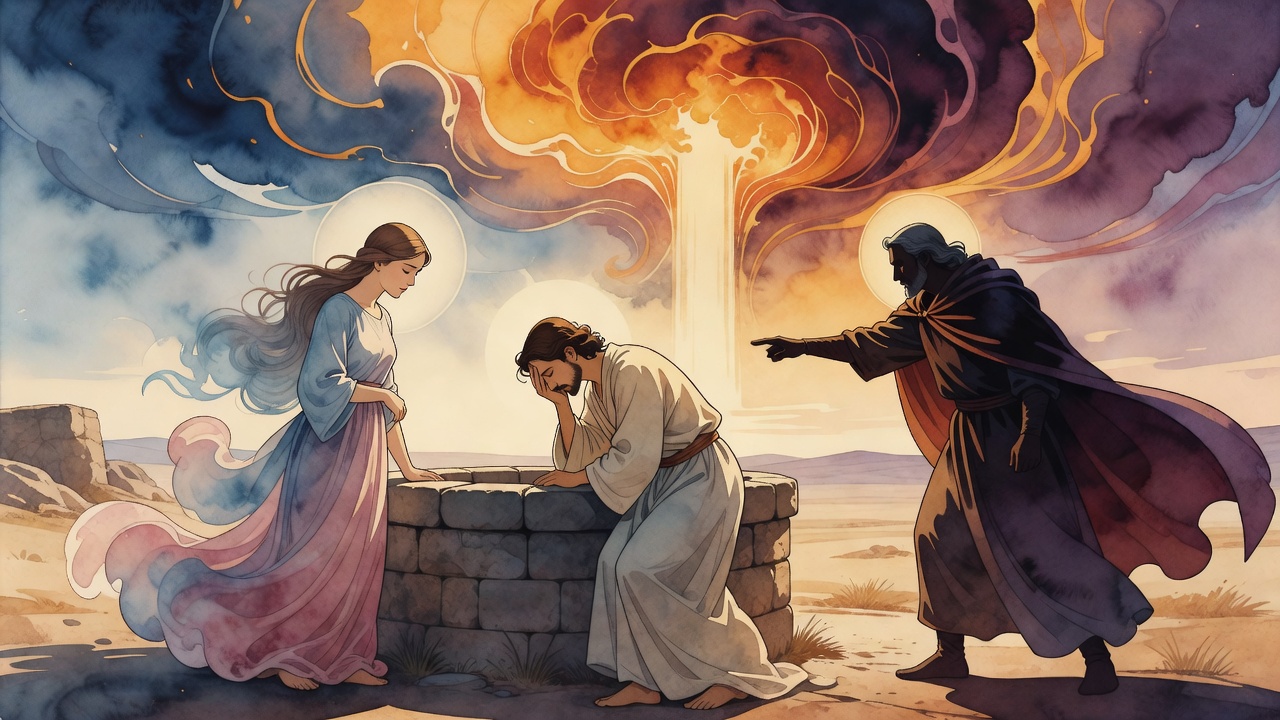
He kissed her. The well was between them a moment before, the stone still on its mouth, the flocks waiting, and then Rachel was there and Jacob moved faster than the East allowed.
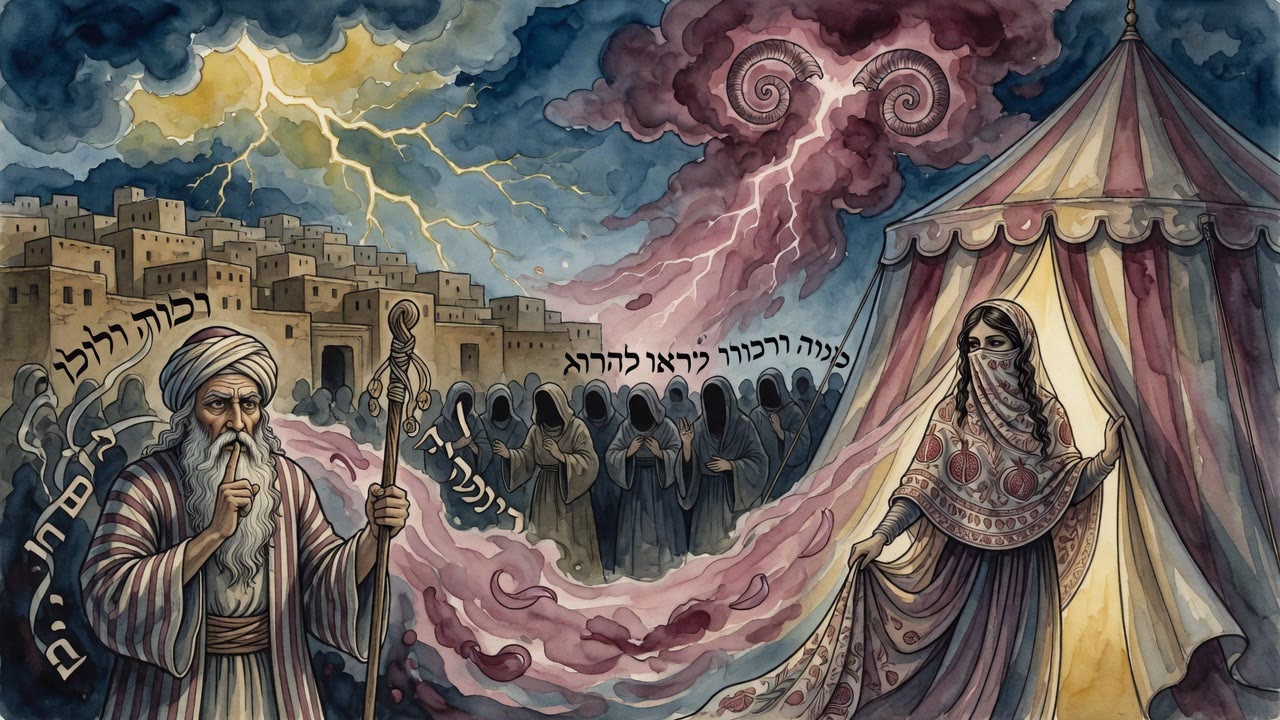
After the Flood the land had learned a tighter chastity. Onlookers went quiet in the wrong way. Stares. A murmur. The kiss that felt like arriving home looked like a grab.
He wept. One kiss, and the East had already priced it.
Empty Hands and a Coming Grave
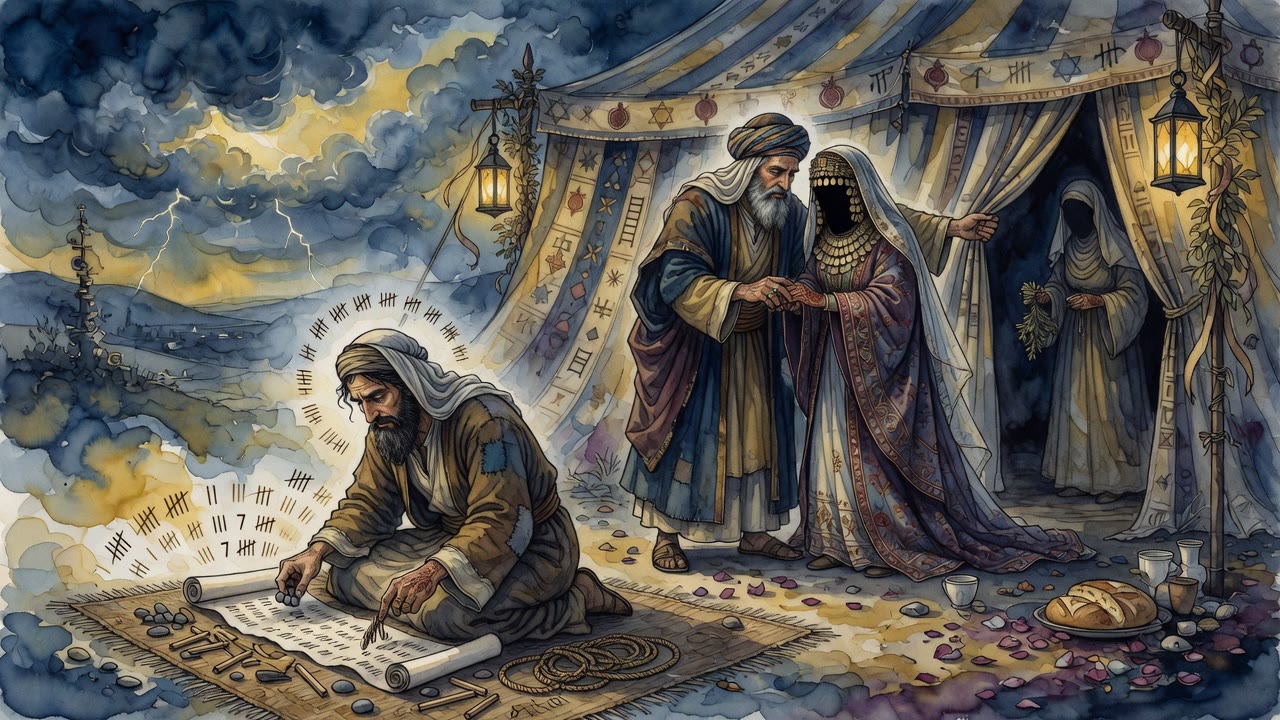
He wiped his face and the tears kept coming. Embarrassment was only the top of them. Under it sat comparison. Eliezer, servant of Abraham, had once come to this same country with ten camels loaded for a bride-search. Jacob stood empty-handed before the woman who would hold the center of his years. He did not even have a ring.
Under that, worse. A knowledge he could not put down: she would not be buried beside him. The grave was already a road, and he felt it in the first hour, at a well, with shepherds still watching his mouth.
He rolled the stone from the well's mouth with a strength the shepherds had not expected. Water ran for her flock. That was his first payment into a long debt of service. The scandal of the kiss and the usefulness of his arms arrived in the same hour. Haran would take both and invoice him for years. The East had already begun its count.
Years Written in Wool
He stayed. He worked. He married Leah and Rachel. He built flocks that looked like wages written in living wool. Uncle Laban's bargains shifted the way shadows shift at noon. Wages promised became wages revised. Spotted and speckled animals multiplied under Jacob's care until Laban's sons muttered that the nephew was draining the house.
Haran had eyes. Those eyes had counted a kiss as scandal. They counted sheep with the same precision. Jacob learned that in this land love would be audited.
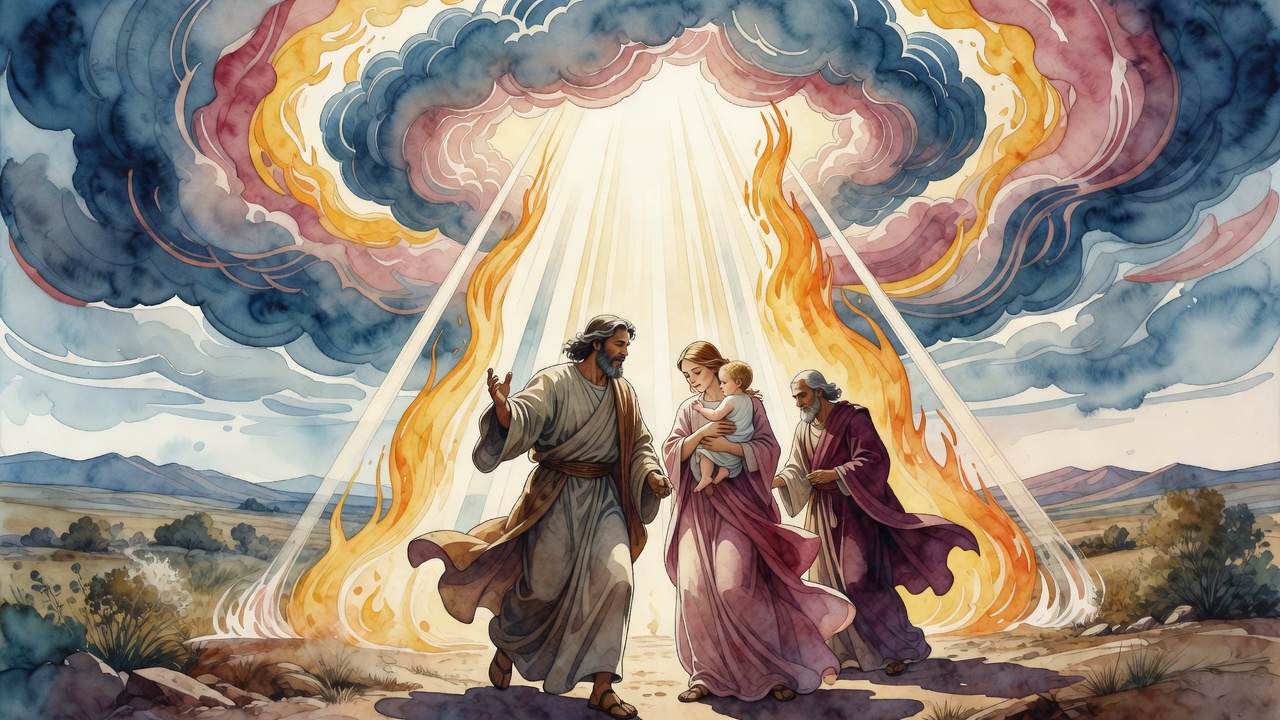
When the day came to leave for the land of his fathers, he took wives, children, and the animals he had earned, and he went without a farewell parade. Laban was not ready to bless an exit. Laban was ready to chase. The man who had once watched a kiss with provincial outrage now watched empty pens with a merchant's fury.
A Week's Road in a Day
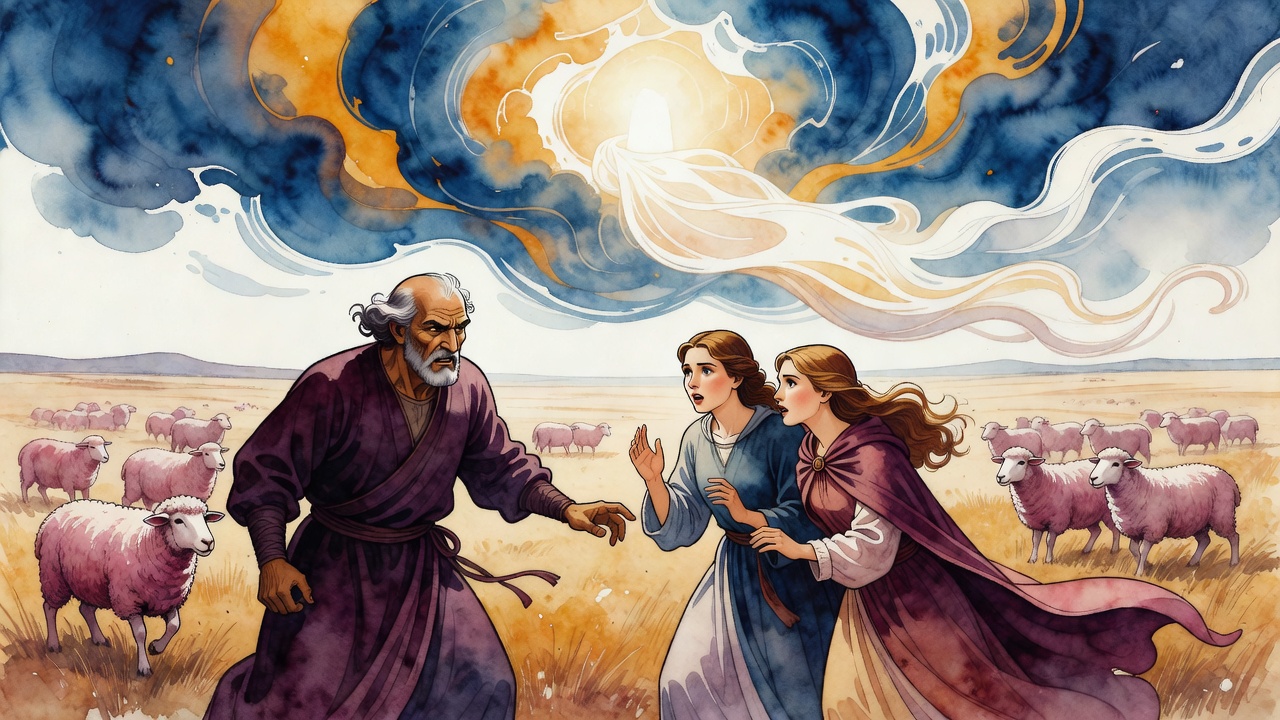
A journey that had taken Jacob a week, Laban covered in a single day. The road that had been slow under wives and children and flocks became a straight heat under one man's anger. At the mountain of Gilead the uncle caught the nephew. He found Jacob deep in prayer, giving thanks to God, and the sight did not soften him. Gratitude on Jacob's lips looked like theft on Laban's ledger.
Jacob looked up from the prayer and saw his wife's father breathing hard from the ride. The empty-handed man at the well had become a father of tribes. The distance between them had collapsed to a day's heat.
Laban's Mouth Opened Like a Trap
"Why did you run off without telling me?" Laban demanded. "You have carried away my daughters like captives taken with the sword" (Genesis 31:26).
The speech was theater and threat braided together. He claimed power to hurt, then admitted that the God of Jacob's father had spoken to him the night before, warning him not to touch Jacob for good or for evil. Heaven had already set a fence around the chase. Laban still needed to perform outrage while a dream had already disarmed his hand. He wanted Jacob to know the only reason he was not doing harm was that God had stopped him.
Idols would be sought in saddlebags. A heap of stones would mark a boundary. None of that erases the first heat of Gilead. Protection did not cool the confrontation. It only kept the heat from becoming blood. Jacob's tears at the well had been practice. The uncle who could cross a week's road in a day when pride was at stake had been watching from the start.
← All myths