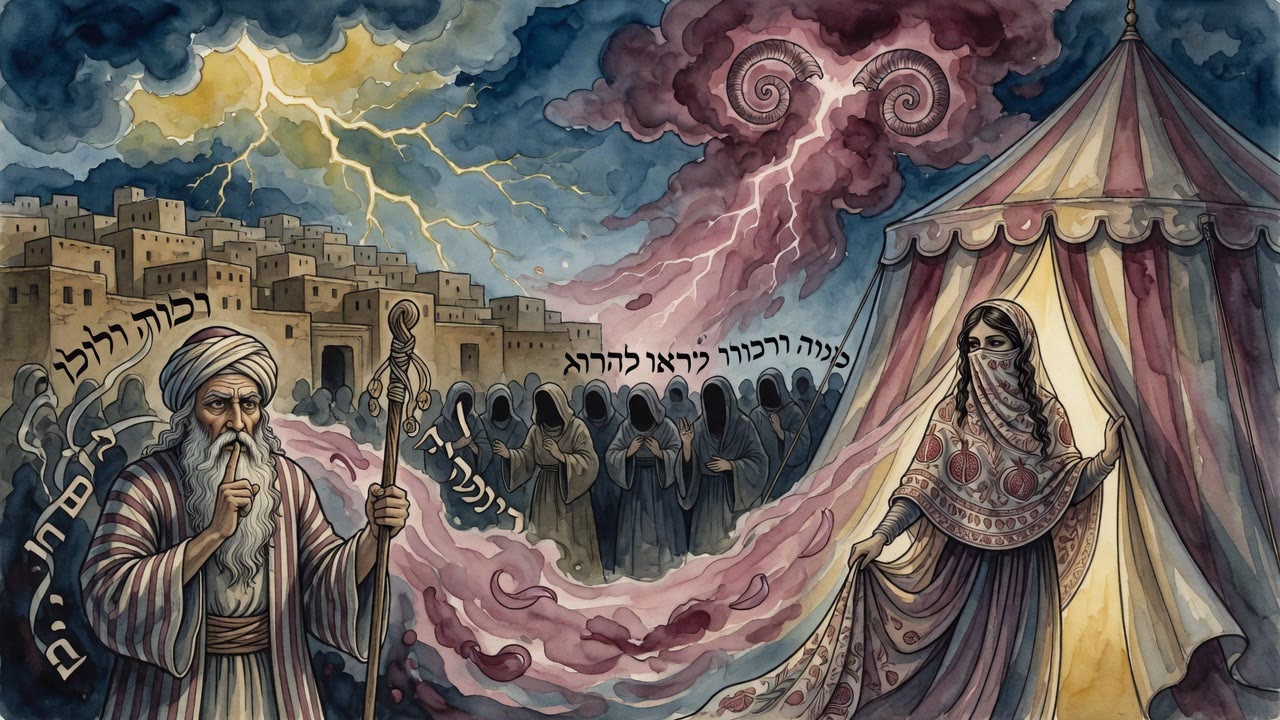
Jacob Refused to Leave Laban Without Permission to Go Home
Treasure turned up at Jacob's feet the day he asked to go, and Laban called it divination. He had walked into Haran with a staff. He would not sneak out.
Table of Contents
 Click for full size
Send Me Away
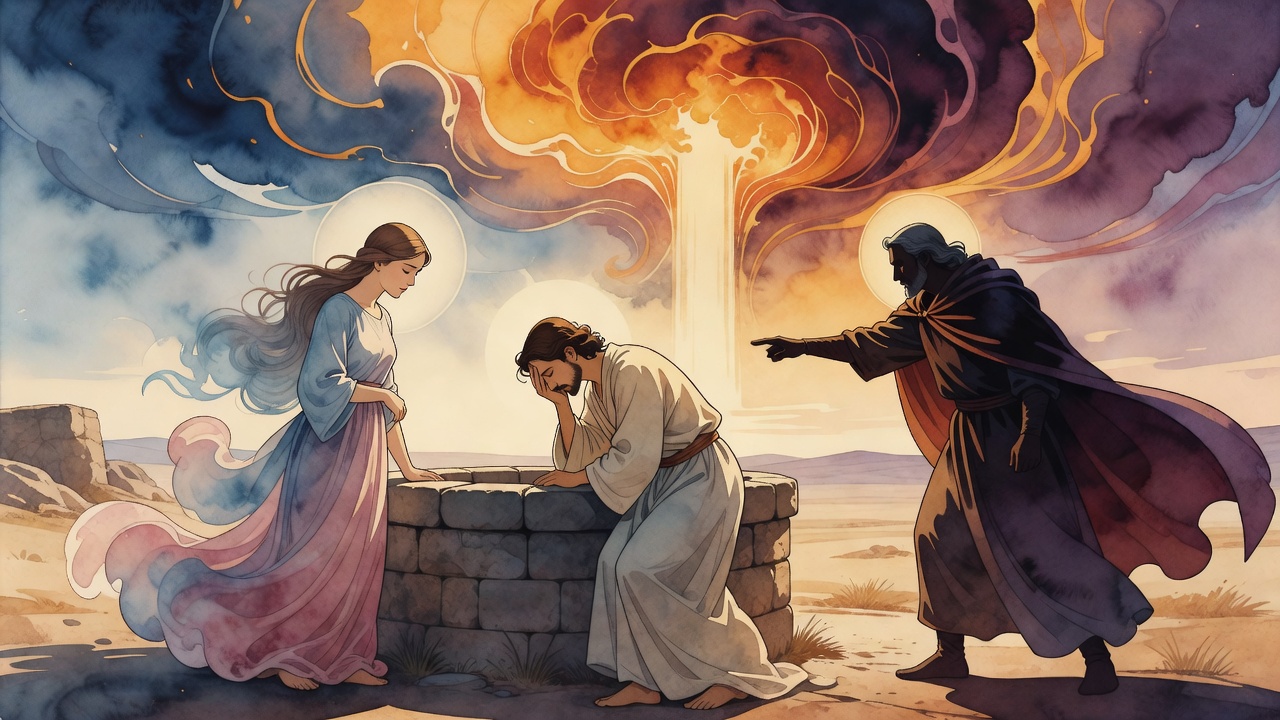
When Rachel bore Joseph, Jacob turned to Laban and spoke a sentence he had never spoken over any other son. "Send me away." If the old man refused, Jacob warned, he would walk without leave.
Laban stared. Through all those births he had kept the shepherd in Haran. Why now? Jacob answered with a future only he could feel in the infant's weight. This one would one day exact payment from Esau the wicked. The child who would stand against the brother of blood had entered the world. The exile had done its work.
"I have learned by divination," Laban said. That same day treasure had turned up at Jacob's feet, an omen of luck clinging to the man who tended sick and barren stock. Rabbi Berekhyah noted that Laban read signs while Jacob neither knew nor cared. The Lord had blessed Laban on Jacob's account. Blessing was enough.
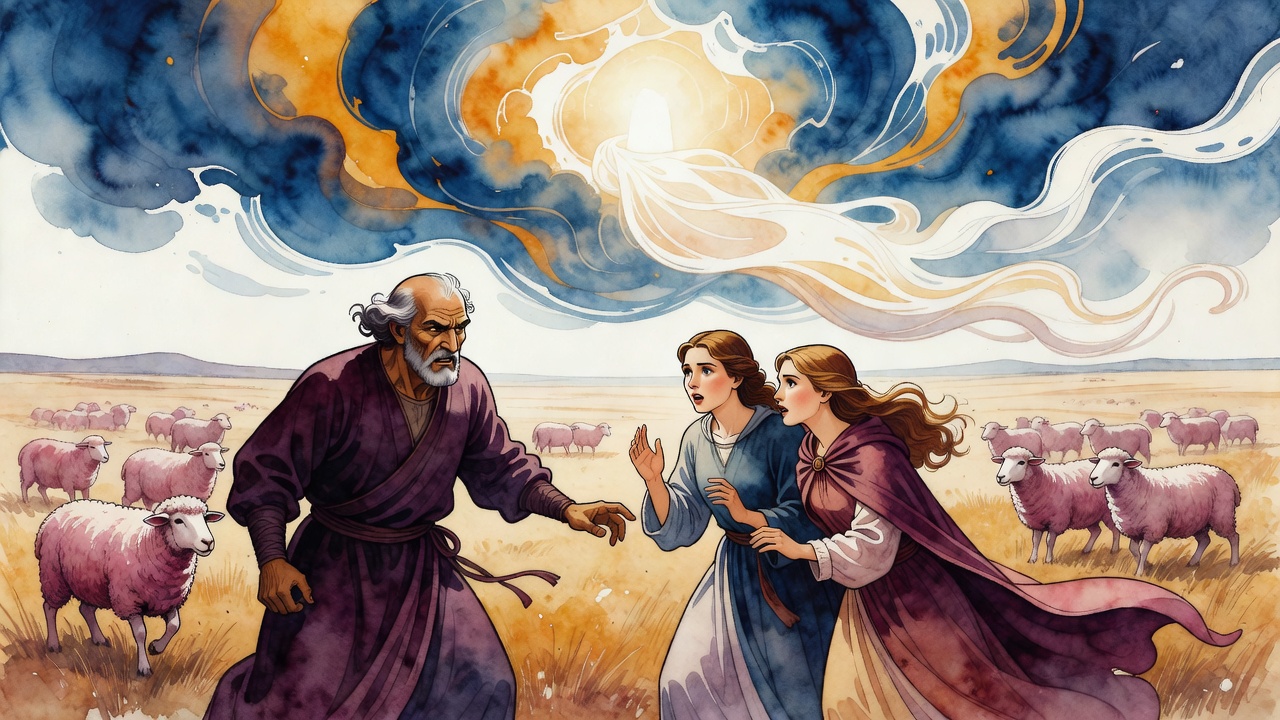
They struck a wage, spotted to one, speckled to the other. Jacob pastured what remained, which Resh Lakish said meant the old, the barren, the sick. He took a rod of white poplar. Rabbi Hoshaya taught that Jacob fashioned a figure of life; as he formed it, the flock bore, and he lacked only the power to breathe a soul into them. When Laban broke faith and changed the wage again and again, Jacob called Rachel and Leah out to the field, not into the house. The leave he wanted would not be stolen in a corridor.
Permission in the Hand
Years earlier, when Jacob fled his father's house with nothing but a staff, he had lifted his eyes and made the psalm his own. "I cried out to You, O Lord; You are my refuge." He wanted one thing above all, a return to the Land of Israel.
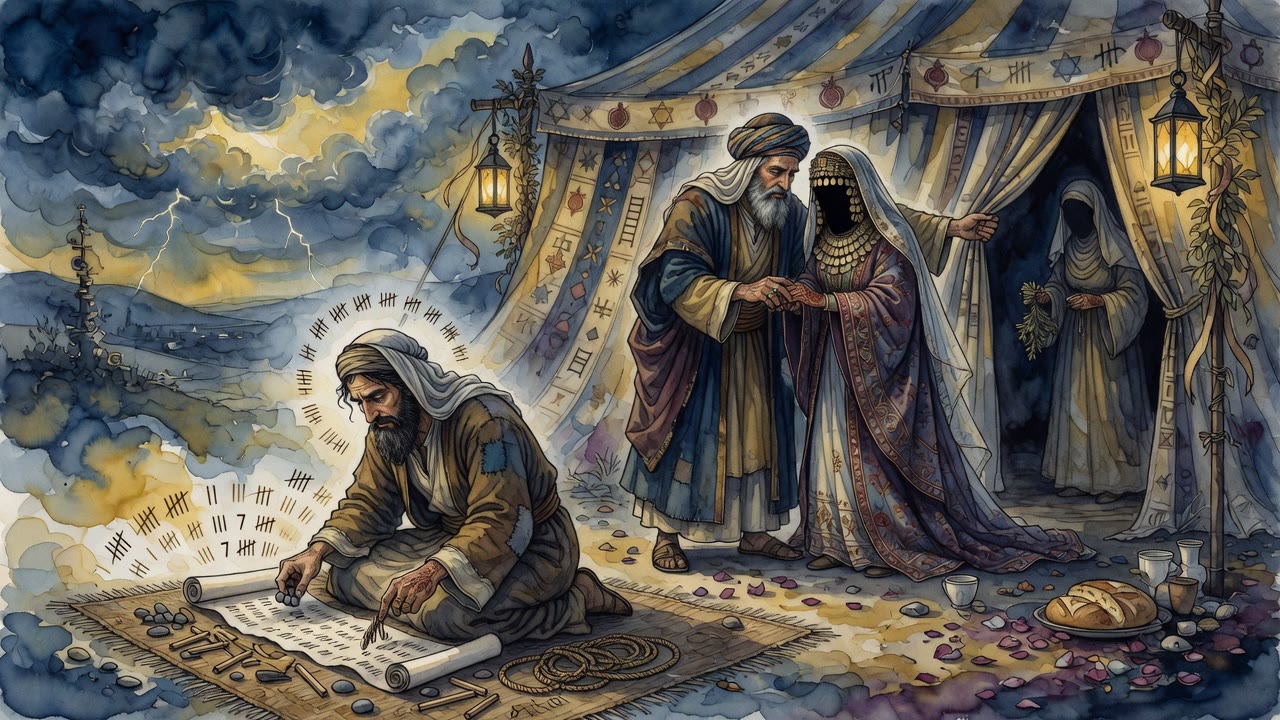
The Holy One, blessed be He, answered before the cry finished. "Behold, I am with you," He promised at Beth El, and the promise traveled every year of exile in Haran. Still Jacob would not slip home the way he had fled. "With permission I went out," he reasoned, "and if I do not take permission, I will not return." He would not sneak past a gate into the land of the covenant.
Heaven met him exactly there. "Permission you are seeking? The permission is already in your hand. Return to the land of your fathers. Did you come down to Haran for any purpose but the tribes? Behold, they are yours. Carry them home."
The staff that left empty returned thick with sons. The leave was not Laban's to grant alone. It was Heaven's, and Heaven had already spoken.
Arise, Go Up to Bethel
Later still, after the road and the fear of Esau and the settling that softens a man, God spoke again. "Arise, go up to Bethel" (Genesis 35:1). The command was not mere travel. It was a summons to the center.
The masters asked where a worshiper points the heart. One outside the Land turns toward the Land. One inside the Land turns toward Jerusalem. One in Jerusalem turns toward the Temple. One in the Temple turns toward the House of the Holy of Holies. Every heart leans toward one still point.
Rabbi Abin the Levite opened the word talpiyyot in the Song of Songs, the tower of David built for talpiyyot. What is it? The hill, the tel, toward which all mouths, piyyot, turn in prayer. Rabbi Judah the Levite added that the Temple is called "before," for all faces, panim, turn toward it.
So the Holy One pressed Jacob. All the world streams toward My house. Every mouth and every face yearns for that place. Jacob, will you alone hold back? Rise. Go up to the house of God.
The House That Outlasts Laban
Laban's divination had clung to Jacob's heel. The poplar rods had drawn spotted life from barren ewes. None of that was the destination. The destination was a stone that had been a pillow and would become a pillar, a place where the heart learns its direction even when the body is far away.
Jacob left Haran with permission already written in the promise of Beth El. He climbed later because the whole world was climbing with him in prayer, and Heaven would not let the carrier of the tribes sleep short of the house.
The man who would not steal a return would not neglect an ascent. Send me away, he had said to Laban. Arise, go up, Heaven answered, and the road that began with speckled flocks ended at the hill where every mouth still turns.
Field and flock had been the wage of exile. Bethel was the wage of return. Between them stood a man who asked leave of Heaven before he asked leave of any father-in-law with a forked tongue.
← All myths