Parshat Vayetzei5 min read

Jacob's Well Rose for Twenty Years in Haran

Fleeing Esau, Jacob dreamed at the foundation stone, reached Haran in a blink, and found a well that rose by itself for twenty years.

Curated by Arthur · Told by Maggid ·
Table of Contents
  1. Face Down on the Foundation Stone
  2. Water That Climbed Alone
  3. Idols That Became Cups
  4. Twenty Years of Rising Water
  5. Wages of Spotted Flocks
Jacob's Well Rose for Twenty Years in Haran Click for full size

Face Down on the Foundation Stone

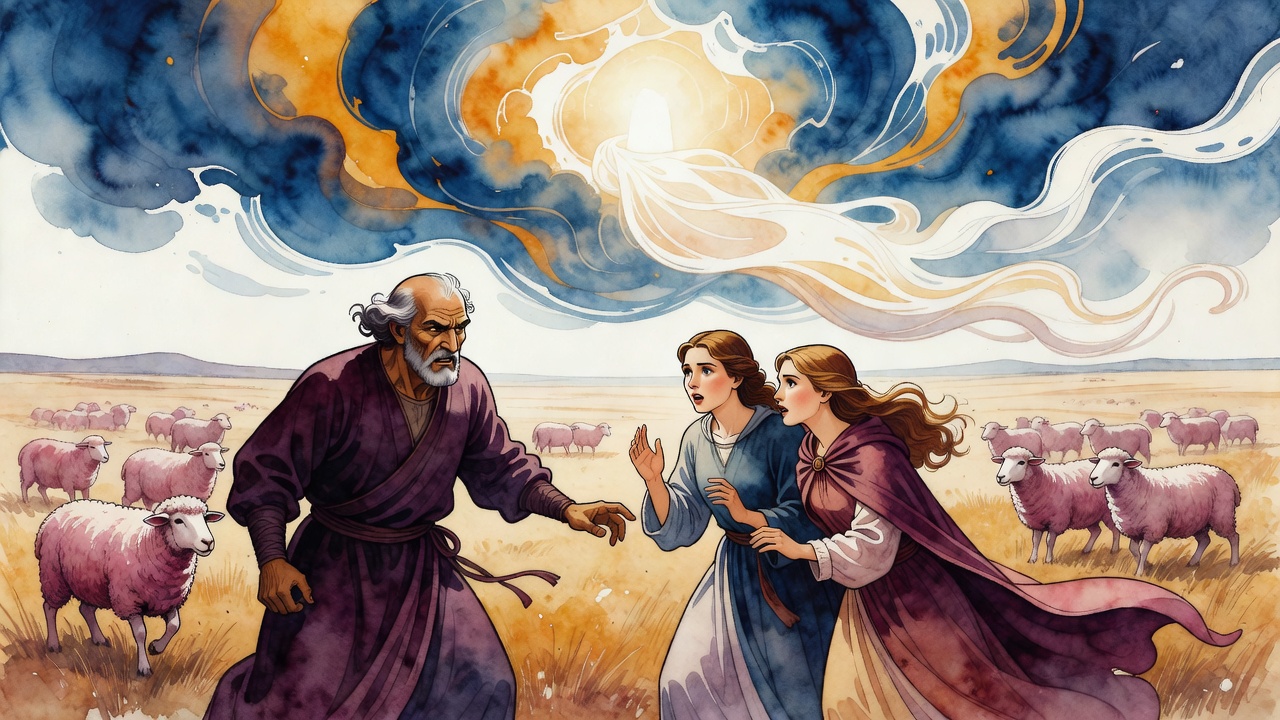
Jacob fled Esau with a stone for a pillow and woke into a ladder of angels (Genesis 28:12). "Surely the Lord is in this place, and I did not know it!" (Genesis 28:16). Bethel received its name from a man who had been running too hard to notice holiness under his head. He fell on his face before the foundation stone, the rock some say creation itself pushed up from, and vowed. If God brought him back in peace, he would offer thanksgiving and burnt offerings on that ground (Genesis 28:20).
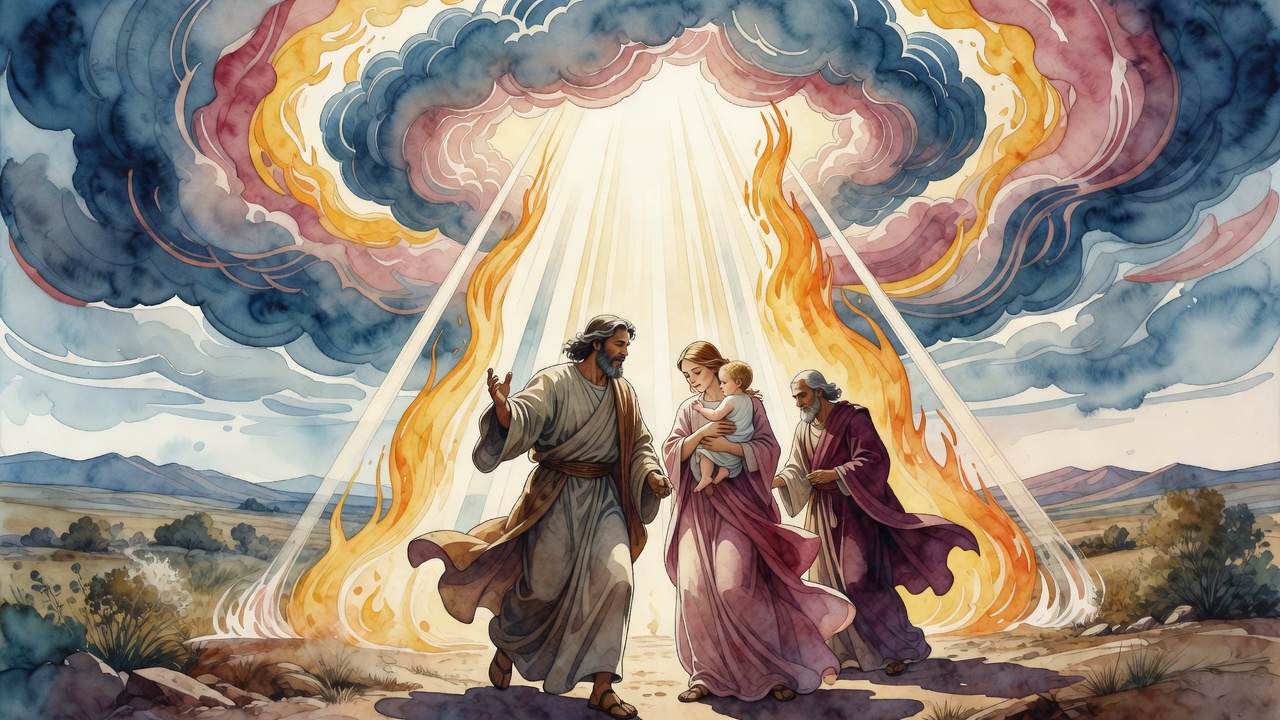
Then the road shortened past nature. "In the twinkle of an eye he came to Haran." Feet that had just learned fear learned speed. The vow stayed behind on the stone. The man who made it arrived among the children of the east already carrying a debt of return.

Water That Climbed Alone

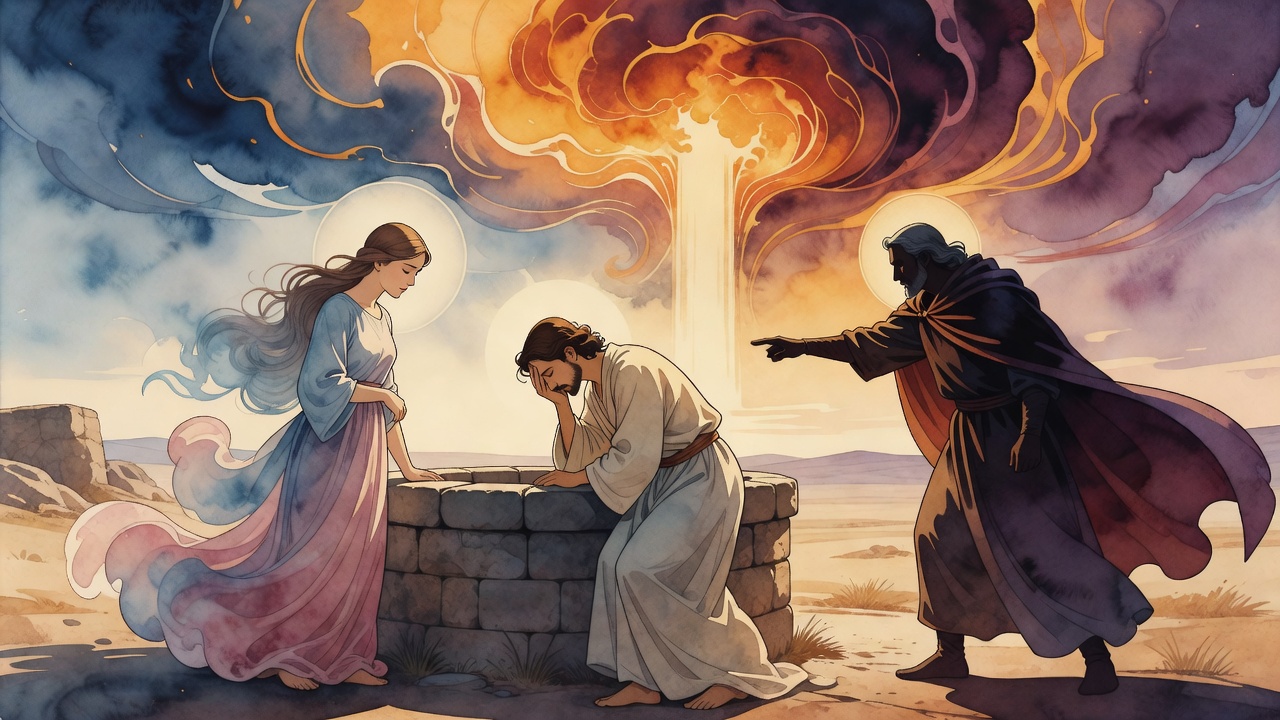
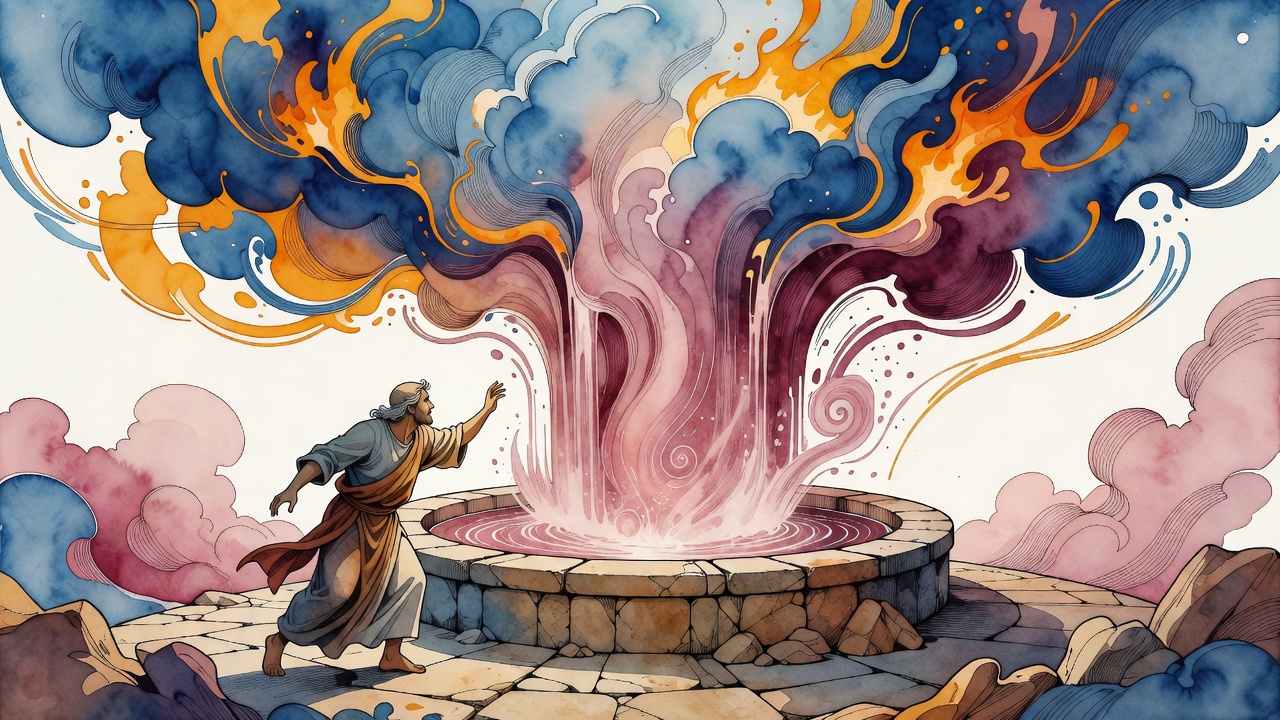
At Haran a well performed a daily miracle. For the fifth and final wonder of each day, water rose to the top without rope or bucket. For the entire twenty years Jacob lived under Laban, the well kept rising. Meeting a young woman at a new city's well was already an omen of favor. Jacob met Rachel there, as Eliezer had met Rebecca, as Moses would meet Zipporah, as patterns of destiny prefer wet stone and drawn water.

Love and labor entangled at once. Seven years. Another seven. Flocks that bred against Laban's tricks. The well that refused to make him haul every drop became a quiet ally in a household that measured kinship by deception.

Idols That Became Cups

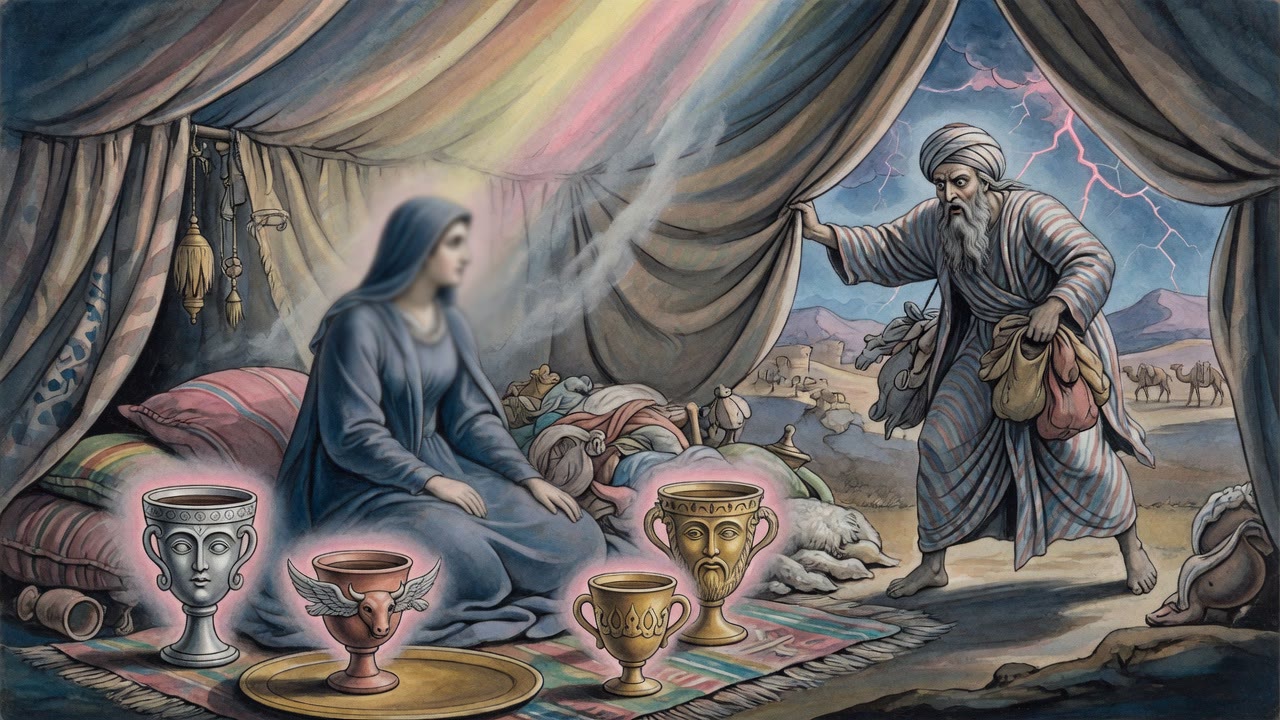
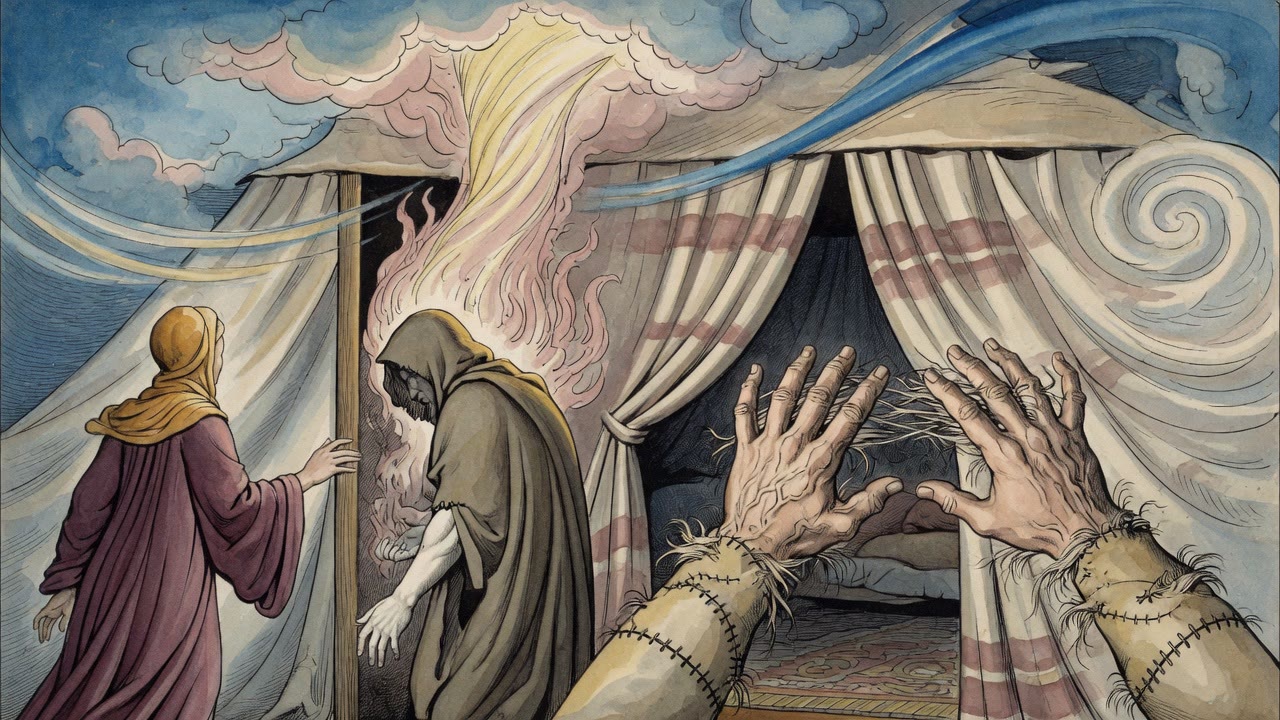
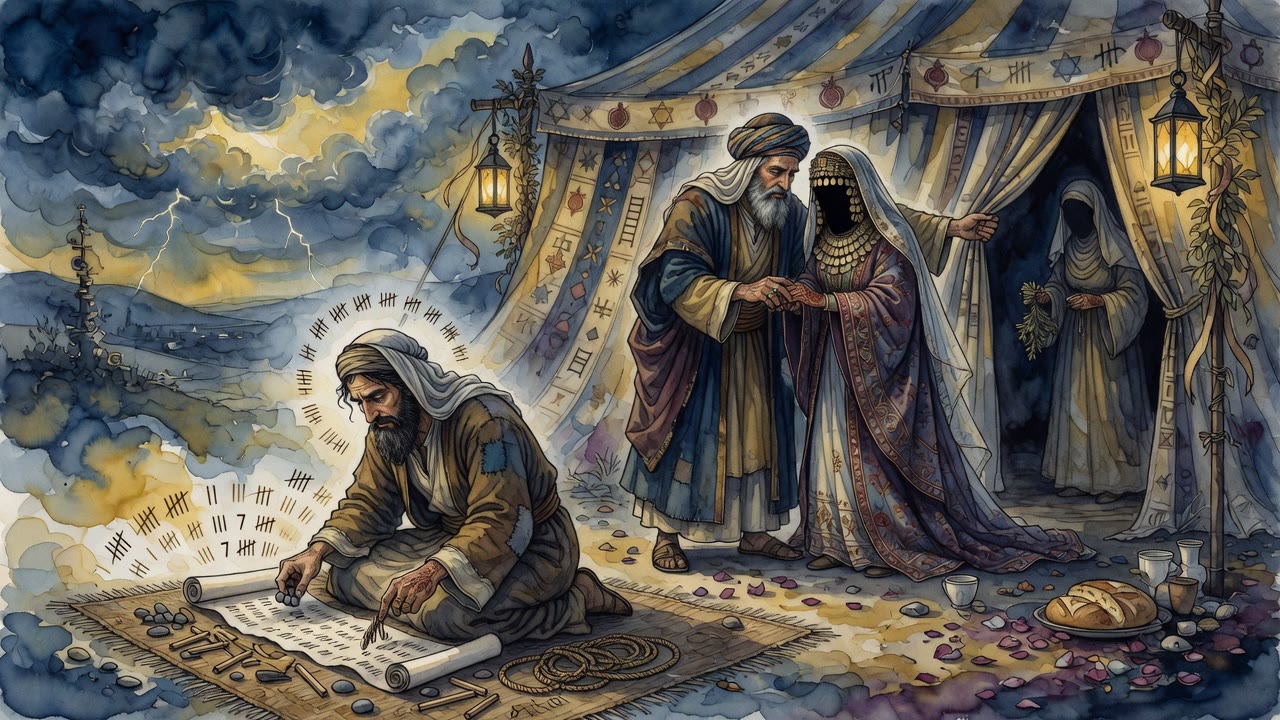
When Jacob finally fled homeward, Laban hunted the teraphim, the household gods Rachel had taken. He searched Jacob's tent, which was also Rachel's, then Leah's, then the handmaids'. He saw Rachel feeling about and reentered. A miracle turned the idols into ordinary drinking vessels. Laban's hands closed on clay that would not confess. He left without his gods and without proof.

Grandchildren, the legends say, shamed him for saying "my gods" in his old age. The man who had traded daughters like wages still spoke of statues as property. Heaven protected Rachel's theft with a transformation too plain to prosecute. Jacob, who had once vowed pure offerings at Bethel, left Haran with wives, children, flocks, and a father-in-law empty-handed of both idols and arguments.

Twenty Years of Rising Water

The well's daily climb matched the length of the exile it watered. Not one year of convenience. Twenty years of a private flood timed to the hour. Jacob had asked only to return in peace. He received also a spring that rose to meet him, a wife found in the omen's place, and a exit past Laban's search. Bethel's stone still waited for the offerings. Esau still waited on the road home. Between vow and fulfillment stood water that refused to stay at the bottom of a shaft.

Haran never owned him. The well made that clear every evening when the surface climbed without human strain. A fugitive became a camp. A camp became a people-in-seed. The foundation stone behind him and the rising water beside him were two ends of the same promise, one dry, one wet, both stubborn.

Wages of Spotted Flocks

Laban's bargains shifted like sand. Wages named one day vanished the next. Jacob answered with rods at the watering troughs and a patience that outlasted tricks. The well that rose without ropes was the one kindness the household did not control. Each evening the water climbed as if to remind the hired son that heaven still knew his count of years. Rachel's tears over barrenness, Leah's eyes in a marriage won by swap, the handmaids' children added to a camp that was becoming twelve, all drank from the same rising surface.

When the flight came, household gods rode in a saddle while the true God turned them into cups under a searcher's palm. Jacob pointed to twenty years of heat by day and frost by night. Laban pointed to stolen teraphim and a grief that sounded like piety and felt like lost property. The foundation stone far to the west still held an unpaid vow. Esau still waited with four hundred. The well, finished with its twenty-year service, stayed in Haran as the family moved toward a reckoning. Rising water had been enough for exile. Homecoming would need other miracles.

Rachel's laughter was still years away when the well first rose for him. Leah's eyes learned a marriage that began as a swap under dark wedding veils. The camp counted sons the way other men count coin. Through all of it the water climbed on schedule, a clock of mercy in a place famous for moving goalposts. Jacob learned to read heaven's punctuality against Laban's delays. Twenty years of that lesson made him rich enough to leave and scarred enough to limp toward a brother later.


← All myths

From the tradition

Sources

3 sources

The texts behind this telling. Some cards carry a translation of the source; others are our own retelling of it, and each card says which. Every card links out to the original.

Pirkei DeRabbi Eliezer 35:9Pirkei DeRabbi Eliezer

Retold in our words. Read the original at the link below.Pirke de Rabbi Eliezer, trans. Rabbi Gerald Friedlander, London (1916) · CC-BY

Our ancestor Jacob knew that feeling well. He was a man on the run, with a destiny he couldn’t fully grasp.

Let's rewind a bit. Jacob, fleeing from his brother Esau's wrath, finds himself in a desolate place. He rests his head on a stone, and has that famous dream of the ladder reaching to heaven, angels ascending and descending (Genesis 28:12). When he wakes, he's filled with awe, declaring, "Surely the Lord is in this place, and I did not know it!" (Genesis 28:16). This place, of course, becomes Bethel, the House of God.

What happened after that incredible dream?

Pirkei DeRabbi Eliezer, a fascinating early medieval text that weaves together biblical narrative and rabbinic interpretation, gives us a glimpse. It tells us that Jacob, after his dream, “fell upon his face to the ground before the foundation stone.” This wasn't just any stone; it was the very foundation stone of the world, some traditions say, the place from which creation itself sprang!

And what does Jacob do? He prays. He pours out his heart to the Holy One, blessed be He. He makes a vow, a promise: “If Thou wilt bring me back to this place in peace, I will sacrifice before Thee offerings of thanksgiving and burnt offerings, as it is said, ‘And Jacob vowed a vow, saying’” (Genesis 28:20). He's promising to return and give thanks if he makes it back safely.

Now, here's where the story takes a surprising turn. The text continues, "There he left the well, and thence he lifted up his feet, and in the twinkle of the eye he came to Haran." In the blink of an eye! The text even references two verses to emphasize this: "And Jacob went on his journey, and came to the land of the children of the east" (Genesis 29:1); and "And Jacob went from Beer-Sheba, and went to Haran" (Genesis 28:10).

It's as if he was supernaturally transported. One minute he’s at Bethel, the next he’s hundreds of miles away in Haran, ready to meet his uncle Laban and begin a whole new chapter of his life.

Why the sudden burst of speed? Perhaps it was divine assistance, a sign that his prayer was heard. Or maybe it symbolizes the inner transformation Jacob underwent after his encounter with the Divine. He was no longer just Jacob; he was Jacob touched by the presence of God, Jacob carrying a sacred mission.

The Pirkei DeRabbi Eliezer concludes this section with a powerful affirmation: "And the Holy God is sanctified in righteousness" (Isaiah 5:16). And the angels respond, "Blessed art Thou, O Lord, the Holy God." It’s a reminder that even in Jacob’s whirlwind journey, God's holiness and righteousness are constant.

So, what do we take away from this? Maybe it's that even when life feels like a blur, when we're rushing from one place to another, one challenge to the next, we can still find moments of connection with the Divine. We can still pause, like Jacob, and offer our prayers, our vows, our gratitude. And who knows? Maybe, just maybe, we'll find ourselves moving faster than we ever thought possible, guided by a force greater than ourselves.

Full source
Legends of the Jews 6:112Legends of the Jews

Retold in our words. Read the original at the link below.The Legends of the Jews by Louis Ginzberg (1909) · Public Domain

Fleeing his brother Esau's wrath, he journeys to Haran. He's alone, probably scared, and definitely uncertain about his future. But then, something extraordinary happens. He arrives at a well.

This wasn't just any well. Oh no. This well, according to the Legends of the Jews, had a secret. It performed a daily miracle! For the fifth and final miracle of each day, the water would rise all the way to the top. No ropes, no buckets, no strenuous effort needed.

It wasn't just a one-day wonder. For the entire twenty years that Jacob lived in Haran, the well continued its miraculous display.

There's more to this story than just convenient hydration. According to tradition, specifically meeting a young maiden upon arriving in a new city was considered an auspicious omen. A sign of good fortune to come. Like something out of a movie. But the stories we tell…they often hold deeper truths.

And who does Jacob meet at this miraculous well? Rachel. The woman who would become one of his greatest loves.

The text points out that Eliezer, Moses, and Saul each had similar encounters that led to success. It’s a pattern, a trope even, suggesting a divine hand at play.: Eliezer finding Rebecca for Isaac, Moses meeting his future wife Zipporah at a well in Midian. These weren't just random encounters; they were pivotal moments that shaped the destinies of individuals and nations.

As we find in these stories, first impressions matter. Meeting young women at the well set the tone for everything that followed.

So, what does this all mean? Are we destined to meet our fate at a literal well? Probably not. But perhaps these stories remind us to be open to the possibilities that come our way, especially when we find ourselves in unfamiliar territory. Maybe, just maybe, the universe is trying to tell us something, guiding us toward our own version of that miraculous, overflowing well – and the people we're meant to meet there.

Full source
Legends of the Jews 6:158Legends of the Jews

Retold in our words. Read the original at the link below.The Legends of the Jews by Louis Ginzberg (1909) · Public Domain

The familiar story centers on Jacob working for Rachel's hand, being tricked into marrying Leah, and eventually leaving Laban to return to his homeland. But what about those little details.. like the stolen idols?

Laban, not one to let bygones be bygones, really laid into Jacob as he was leaving. According to Legends of the Jews by Louis Ginzberg, Laban really went for the jugular, ending his rant with a pointed accusation: "And now, though thou wouldst needs be gone, because thou sore longedst after thy father's house, yet wherefore hast thou stolen my gods?"

It’s tense, emotions are running high, and suddenly..Laban's own grandchildren chime in! "We are ashamed of thee, grandfather," they supposedly said, "that in thy old age thou shouldst use such words as 'my gods.'"

Laban, undeterred, begins his search. He hunts through all the tents, starting with Jacob's, which, interestingly, also served as Rachel's. Ginzberg points out that Jacob always lived with his favorite wife. A small detail, perhaps, but it speaks volumes about the dynamics within that family.

Finding nothing in Jacob's (and Rachel's) tent, Laban moves on to Leah's tent and then to the tents of the two handmaids. And then, he notices something. Rachel, in her tent, is "feeling about here and there." Suspicion ignited, Laban re-enters her tent.

This is where things get really interesting. He's about to find the teraphim (household idols), the objects of his search, when...a miracle occurs! The teraphim are transformed into ordinary drinking vessels! Laban, completely unaware of the divine intervention, is forced to abandon his search.

It makes you wonder: what was the significance of these teraphim? Why did Rachel steal them? Were they just valuable objects, or did they hold some deeper spiritual or cultural significance? We don't get a complete answer here. What we do have is a brief glimpse into the anxieties of a family and a moment when the divine seems to act in a surprising and somewhat whimsical way.

This short passage reminds us that even in the grand narratives of the Bible, there are often hidden stories, small moments of intrigue, and glimpses of a world where the line between the ordinary and the miraculous is wonderfully blurred. What other hidden stories are waiting to be uncovered?

Full source