Parshat Vayetzei5 min read

Laban Ran to Jacob Already Knowing Everything

Rachel warned that her father was cunning, yet Laban already knew Jacobs strength, birthright, and blessing before he kissed him.

Curated by Arthur · Told by Maggid ·
Table of Contents
  1. The Stone on the Mouth of the Well
  2. The Warning Before Romance
  3. What Laban Had Already Heard
  4. A Host Who Collects Stories
  5. The Bargain Already Tilted
  6. The Guest Who Thought He Was the Hunter
Laban Ran to Jacob Already Knowing Everything Click for full size

The Stone on the Mouth of the Well

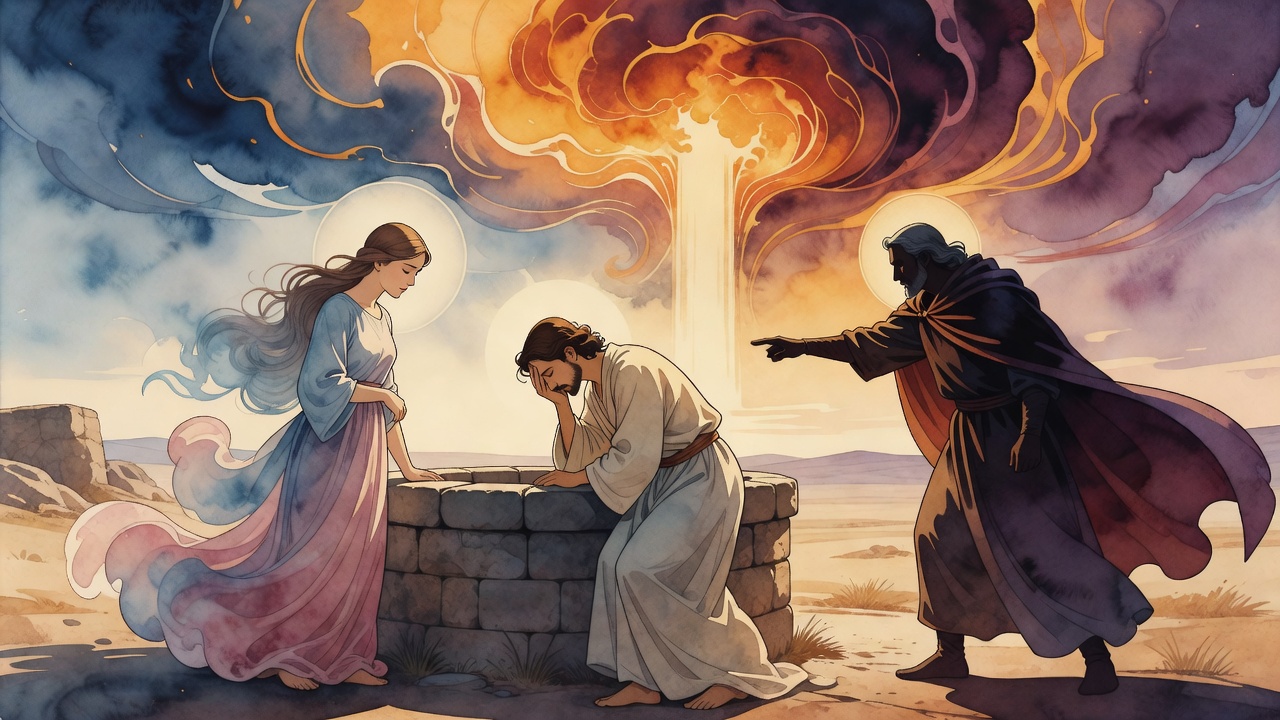
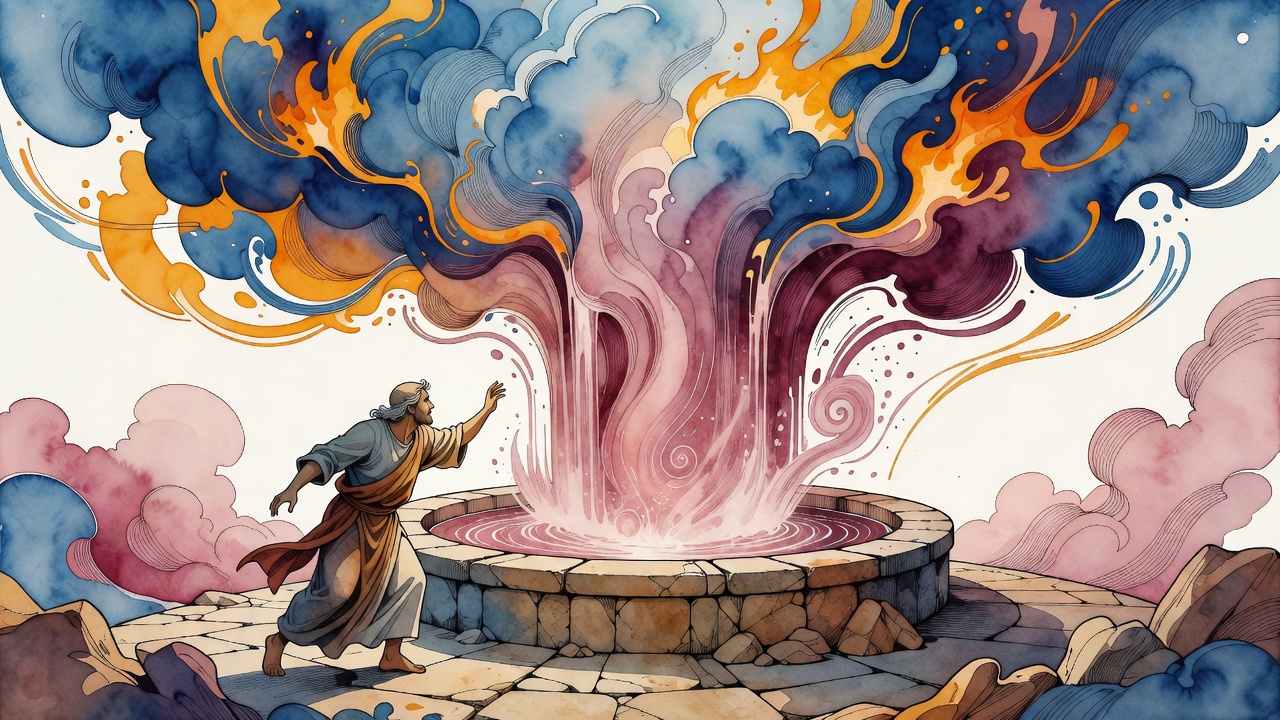
Jacob reached Haran with the road still folded behind him and found a well in a field. Three flocks lay beside it. A great stone sat on its mouth. Shepherds waited for a full gathering before anyone rolled the weight. In this family, wells were never only water. Abraham's servant had once met a bride at a well. Now the grandson stood at another well with dust on his shoulders and a future wife still somewhere on the path with her father's sheep.

When Rachel came, Jacob moved the stone as if strength were a greeting. He watered the flock. He kissed her. He wept. The stone that had required a crowd yielded to one man who had already wrestled a blessing out of a blind father and a long flight.

The Warning Before Romance

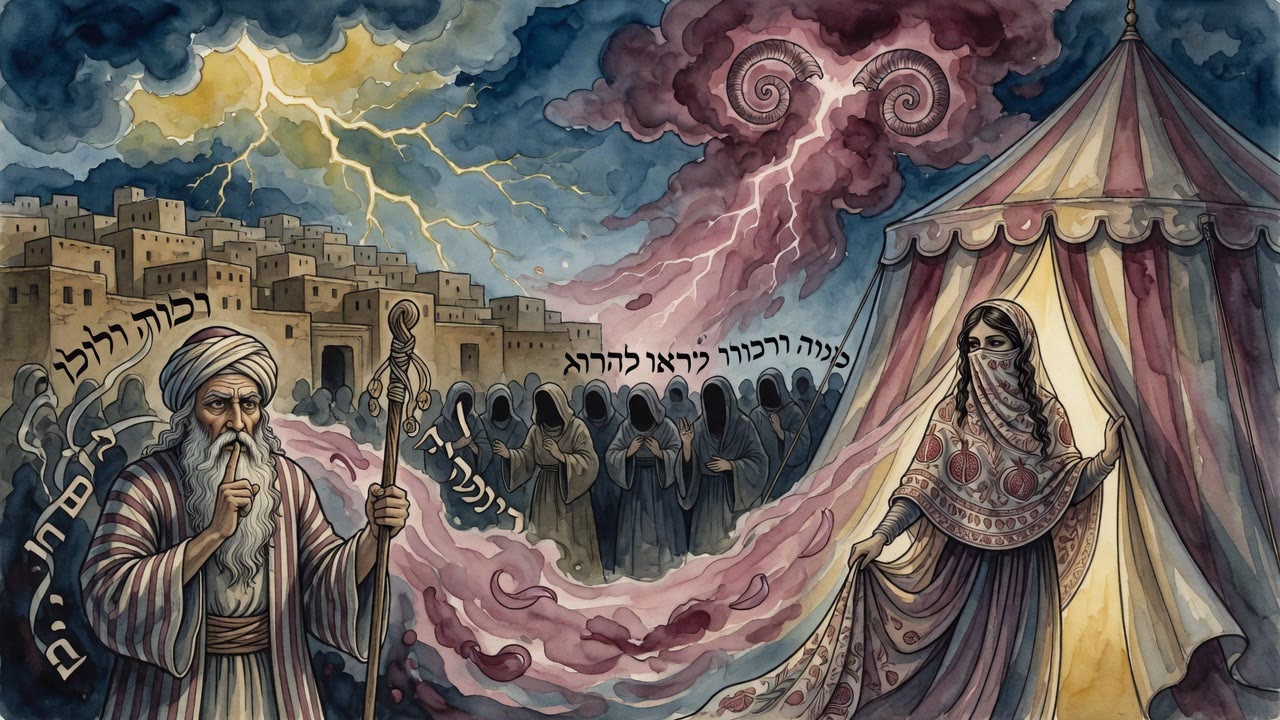
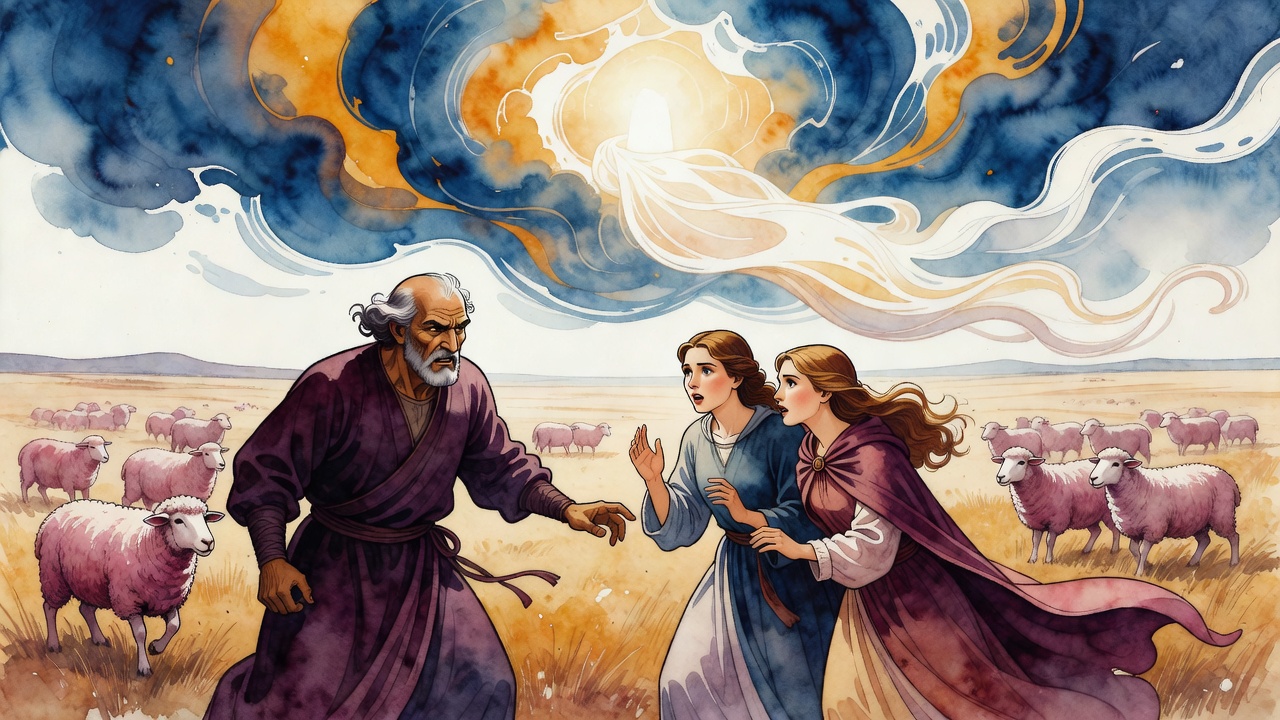
He told her he was her father's kinsman and that he had come to marry one of Laban's daughters. Rachel's answer was not a song. Thou canst not dwell with him, for he is a man of cunning. She named the house before the house could name him. Jacob answered with confidence born of recent victories over older forces. He had taken a birthright. He had worn skins. He had seen a ladder. He believed he could live with a trickster.

Rachel loved him and still told the truth. Love that refuses to warn is only flattery.

What Laban Had Already Heard

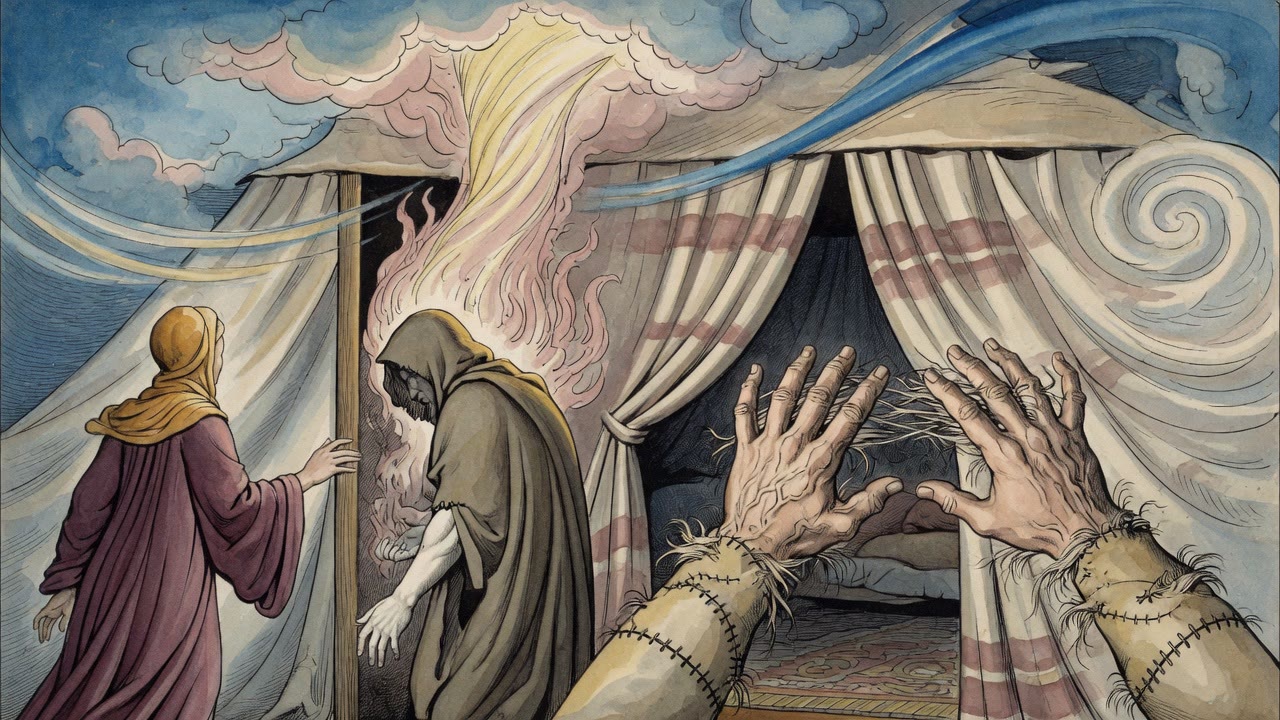
Laban heard that Jacob had arrived and ran. The plain verse looks like eagerness. The Aramaic opens the dossier he carried in his head. He knew Jacob's strength. He knew Jacob's piety. He knew Jacob had taken the birthright and the order of blessing from Esau's hand. News travels faster than camels when the news is useful. Laban did not run toward a poor nephew. He ran toward a strong nephew with a reputation for winning contests that other men lose.

The kiss at the meeting was a measurement. Arms can feel a man's muscle while a mouth says welcome.

A Host Who Collects Stories

Laban brought him into the house and listened for confirmation of every rumor. A man who already knows the birthright story does not need long to plan how such a man might be milked for labor. Seven years can be spoken as love's price when the speaker intends to swap daughters in the dark. Rachel's warning sat in the room like a third person no one introduced.

Jacob still stayed. He had fled one danger into another and called it family because the blood was shared and the well had opened under his hands.

The Bargain Already Tilted

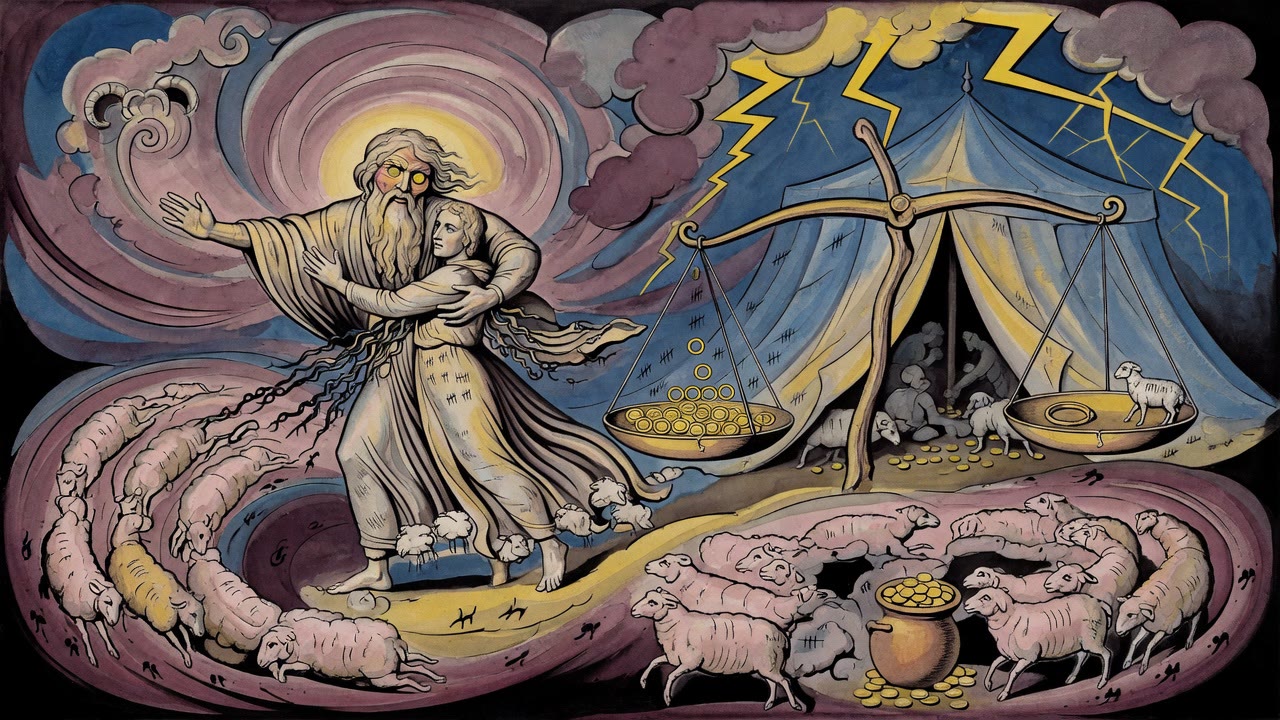
From the first hour the scales were wrong. Jacob thought he was the clever guest. Laban knew he was hosting a man famous for cleverness and intended to be cleverer. Rachel knew both men and stood between them with open eyes. The great stone had moved. The harder weights, years and switches and wages changed ten times, had not yet been rolled into place.

Haran received Jacob as a story it already understood. That is why the embrace felt warm and the future would feel cold.

The Guest Who Thought He Was the Hunter

Jacob had reasons for confidence. He had outmaneuvered Esau once with a bowl and once with skins. He had seen angels on a ladder. He had rolled a stone that usually needed a team. Rachel's warning sounded, to his ears, like caution from someone who had not watched him win. He told himself that a man who could live with God's fear could live with Laban's tricks.

Laban smiled and measured. A host who already knows the birthright story knows the guest's appetite for long games. He would offer wages that looked like love, nights that switched brides, flocks that changed color under mottled sticks, and accusations that turned stolen gods into a search of tents. The first run to the well was the opening move of a twenty-year match. Jacob entered it as if he were still the clever one from Beersheba.

Rachel watched both men and carried the hardest knowledge: she loved the guest and understood the host. The great stone on the well had been a simple weight. The weights inside Laban's house were made of years. By the time Jacob fled with wives, children, and disputed flocks, he would understand that Rachel had not been timid. She had been accurate. You can kiss a kinsman at a well and still be walking into a snare that knows your whole biography before you speak your name.

At the table that first evening Laban asked questions he already knew the answers to, because hearing Jacob confess the birthright in his own voice was worth more than rumor. Jacob told enough to seem open and not enough to seem afraid. Between them Rachel poured water and watched the two calculators smile. The well stone lay outside in the dark, rolled aside. The heavier stone, Laban's will, had not moved an inch.


← All myths

From the tradition

Sources

3 sources

The texts behind this telling. Some cards carry a translation of the source; others are our own retelling of it, and each card says which. Every card links out to the original.

Targum Pseudo-Jonathan on Genesis 29:2Targum Pseudo-Jonathan on Genesis

Retold in our words. Read the original at the link below.The Targum of Jonathan ben Uzziel, trans. J. W. Etheridge, London, 1862 · Public Domain

When Jacob arrived in Haran after his kefitzat ha-derekh, the folding of the road, he came to a well in a field (Genesis 29:2). Three flocks of sheep lay beside it, and a great stone sat on its mouth.

The Targum Pseudo-Jonathan preserves the mundane detail because in this family, wells matter. Abraham's servant had met Rebekah at a well (Genesis 24:11). Isaac had dug wells and defended them (Genesis 26:18). Moses would meet Zipporah at a well (Exodus 2:15). In the Hebrew Bible, wells are where providence finds its people. You go to a well tired and thirsty and dusty, and you go home married.

The stone on the mouth of the well is the obstacle. It is too heavy for a single shepherd. It requires the full assembly, all the flocks gathered, before the community can roll it off. That rule makes sense: a single shepherd drawing water from an uncovered well would empty it before the others arrived. The stone is a communal lock. It opens only when the whole town is present.

So the three flocks lying beside the well are not lazy. They are waiting their turn. They are waiting for the full quorum. Jacob is about to meet the rule of the place. And then he is about to break it.

The takeaway: every Jewish marriage begins at a well, because marriage is the meeting point where private thirst and communal rules collide. The stone and the flocks and the shepherds are all part of the lesson.

Full source
Targum Pseudo-Jonathan on Genesis 29:12Targum Pseudo-Jonathan on Genesis

Retold in our words. Read the original at the link below.The Targum of Jonathan ben Uzziel, trans. J. W. Etheridge, London, 1862 · Public Domain

The Torah tells us Jacob told Rachel he was her kinsman (Genesis 29:12). The Targum Pseudo-Jonathan fills in a conversation between them.

Jacob explained to Rachel that he had come to live with her father to marry one of his daughters. Rachel's response was not romantic. It was a warning. Thou canst not dwell with him, for he is a man of cunning. Rachel knew her own father. She had grown up watching Laban bargain, scheme, and trap. She loved Jacob enough, on the first day of meeting him, to tell him to turn around.

Jacob's reply is startling in its confidence. I am more cunning and wiser than he; nor can he do me evil, because the Word of the Lord is my Helper.

Two claims packed into one sentence. First: Jacob will match Laban's shrewdness with shrewdness of his own. He has already outmaneuvered Esau twice, over the birthright and the blessing. He knows how to operate inside a family of tricksters. Second and more important: his real defense is the Memra, the Word of God, who promised at Bethel to keep him in every place he went (Genesis 28:15). Jacob is not relying on his wits. He is relying on the covenant.

Rachel runs home. She does not tell her father that Jacob is wise. She tells him that Rebekah's son has come. That is enough to send Laban running out.

The takeaway: Rachel warned Jacob on day one about twenty years of pain. He walked into the house anyway, because he knew Who was walking in with him.

Full source
Targum Pseudo-Jonathan on Genesis 29:13Targum Pseudo-Jonathan on Genesis

Retold in our words. Read the original at the link below.The Targum of Jonathan ben Uzziel, trans. J. W. Etheridge, London, 1862 · Public Domain

In the plain Torah, Laban hears that Jacob has arrived and runs to meet him (Genesis 29:13). The Targum Pseudo-Jonathan unpacks exactly what Laban had already heard. And the list is long.

Laban knew about Jacob's strength and piety. He knew that Jacob had taken the birthright and the order of blessing from Esau's hand. He knew that the Lord had revealed Himself to Jacob at Bethel. He knew about the stone Jacob had rolled off the well with one arm. He knew that the well had risen to the brink.

So when Laban ran out to embrace his nephew, he was not meeting a stranger. He was meeting a man whose miracle file had already arrived in Haran ahead of him. And Laban, the scheming uncle, immediately started calculating. A man who rolls stones, a man whose prayers summon water, a man who talks to God on the road, this is a free laborer with divine productivity. Keep him in the house. Chain him with marriage. Extend the contract.

Every embrace and every kiss the Targum describes is sincere The first reading and strategic beneath. Laban is not lying about being glad. He is glad. He is glad the way a merchant is glad when an unusually valuable commodity walks through the door.

This is why Jacob will end up working fourteen years for two wives and another six for the flock. Laban saw the ledger before he saw the nephew. The Targum makes the setup explicit so that when the trickery lands, no one is surprised.

The takeaway: when the world embraces a person of unusual spiritual power, check whose arms are around them. Some hugs are investments.

Full source