6 min read

Jethro Proved a Nearer Friend to Israel Than Esau or Ishmael

The exiles begged their guards for one thing. Take us past our uncle's country. They are our brothers. They will give us water.

Curated by Arthur · Told by Maggid ·
Table of Contents
  1. The Column Asked to Be Taken to Their Uncle
  2. Salt Bread and Wet Skins
  3. I Opened a Well for Your Mother
  4. The Priest Who Sent Bread the Other Way
  5. Saul Halted an Army for Them
  6. What Friendship Cost Obadiah
Jethro Proved a Nearer Friend to Israel Than Esau or Ishmael Click for full size

The Column Asked to Be Taken to Their Uncle

Nebuchadnezzar's soldiers marched them out of the ruins with their hands tied behind their backs.

They were coupled together with iron, one man's chain running to the next man's, and they were driven along the road without clothes, the way animals are moved to a market. The road to Babylon ran past the country of the sons of Ishmael, and somebody in the column worked out where they were and started begging the officers.

"Have pity. Take us over to our brothers. Those are the sons of Ishmael out there. That is our uncle's house."

The officers agreed. It cost them nothing to walk a chain gang a little to one side.

Salt Bread and Wet Skins

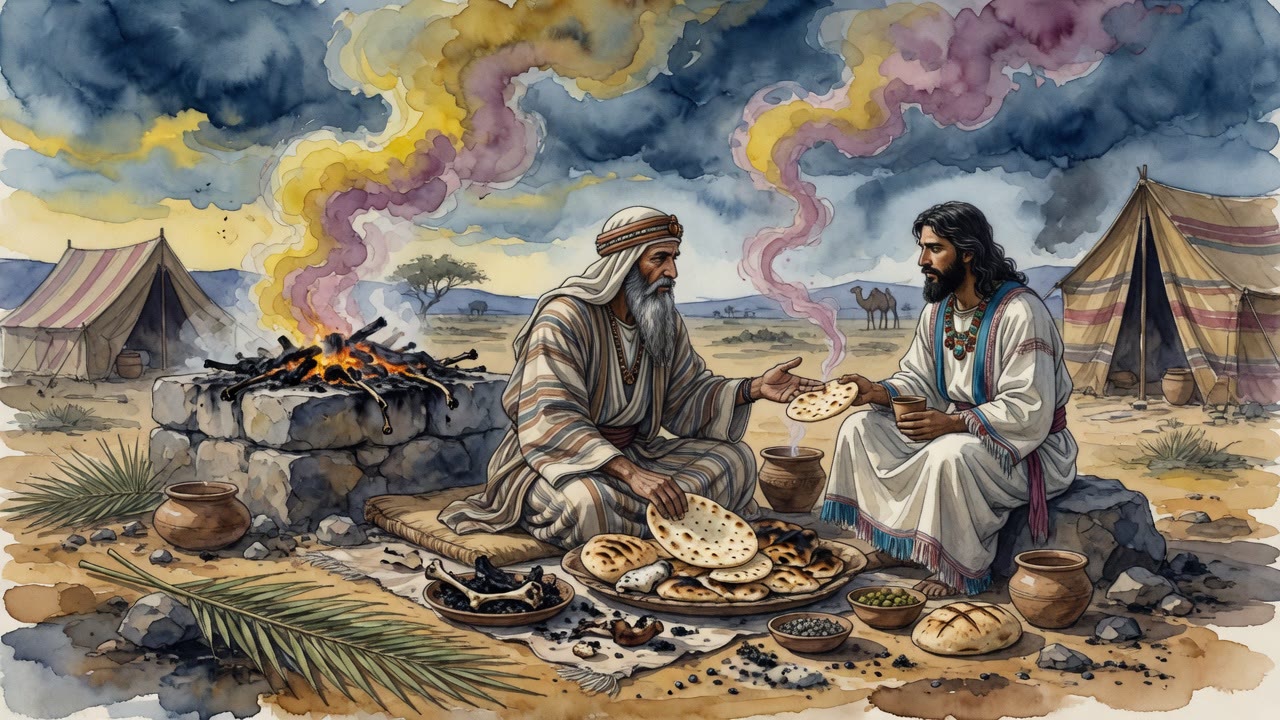
The sons of Ishmael came out to meet them and they came out carrying food, and the sight of it went through that column like water itself.

Bread. Meat. And hanging at the tent doors, skins for water, the outsides of them dark and dripping, because someone had dipped every one of those skins in a trough and hung them up wet.

The bread was salted. The meat was salted harder. "Eat first," the hosts said, "and we will bring the water after," and the men who had walked from Jerusalem in chains ate what was put in front of them because they could see the skins swinging on their cords ten paces away.

Then the hosts came back and said they were very sorry. There did not seem to be any water.

The Israelites got their teeth into the skins anyway. What was inside them was air, warmed all day in the sun, and it went down into their bodies and they died there on the ground in front of their cousins' tents.

I Opened a Well for Your Mother

Heaven answered Dedan for that, and the rebuke has a memory in it.

"Is this the way a man treats his uncle's sons? Anyone on any road brings out water to a thirsty man, and you had been told they were running from a drawn sword and a bent bow and the ruin of a war. And when your own father's mother sat down in the desert with a boy she thought was dying, who opened her eyes and put a well in front of her?"

The proverb tells Israel not to forsake its own friend or its father's friend. Its own friend is the One who called Israel's brother and friend. Its father's friend is Abraham. And if Israel is ever tempted to walk away from that friend, the houses of its actual brothers are standing there to be looked at.

Better a nearer neighbor than a brother far off. The proverb is older than that road, and after that road it stopped being an observation and became a verdict.

The Priest Who Sent Bread the Other Way

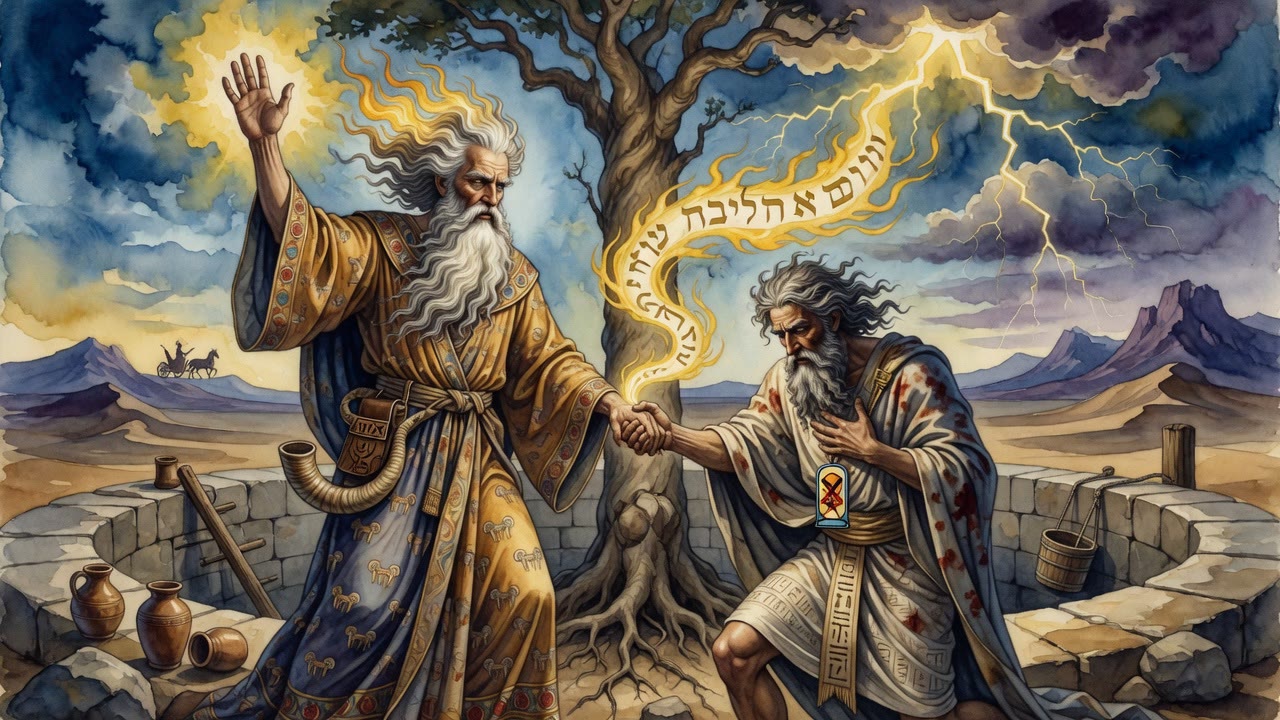
The nearer friend has a name. Jethro ran a household of idols in Midian and he still comes out ahead of Israel's own blood in every line of the comparison.

Esau's descendants took the women of Zion by force. Jethro heard that a stranger had watered his daughters at a well and sent word back down the hill. "Why did you leave the man out there? Call him in, so he can eat bread." He fed the fugitive at his own table, and then he gave him Zipporah, his own daughter, in marriage.

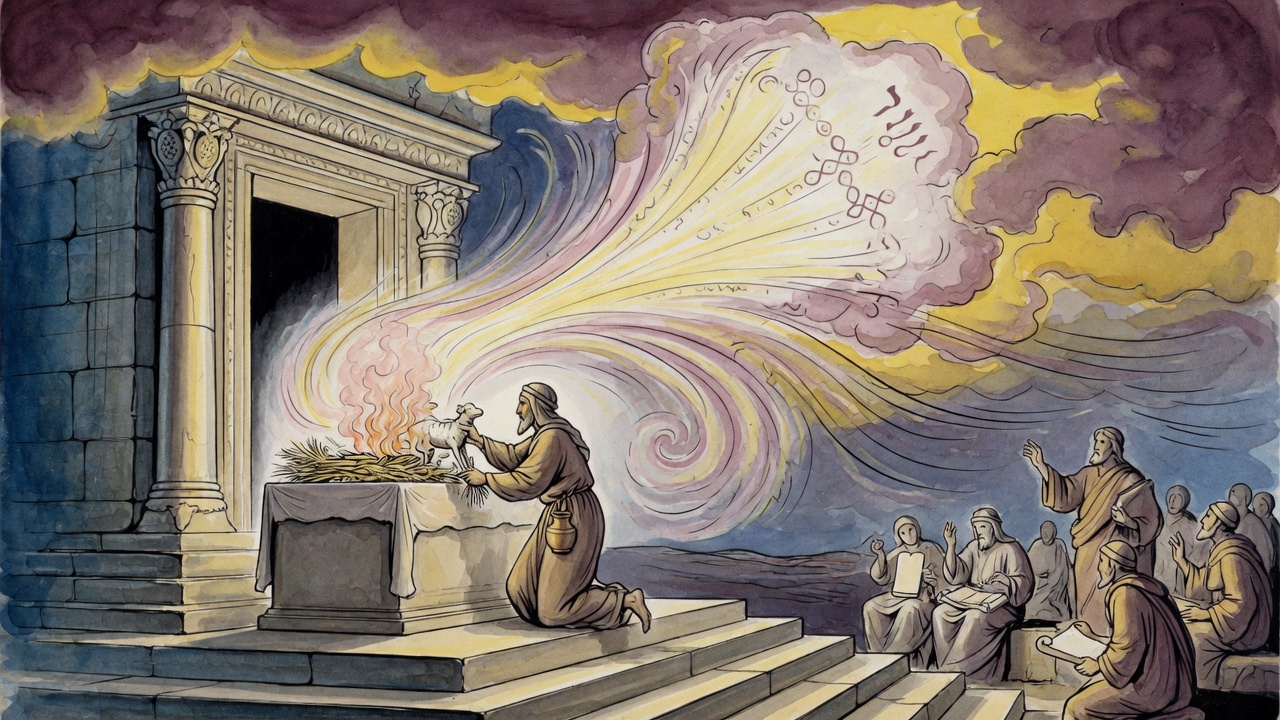
Esau's line ate God's people the way a man eats bread. Esau did not fear God, and it is said so in the plainest words the Torah uses. Jethro is the man who told Moses to appoint judges who fear God and hate a bribe. Esau's heirs put an end to the offerings in Jerusalem. Jethro walked into the camp in the wilderness carrying a burnt offering and sacrifices for a God he had spent his whole life not serving.

And when the reports came out of Egypt, the two of them heard the same reports. Esau's people heard that Israel was in trouble in the wilderness and attacked the stragglers at the back of the column. Jethro heard, and came.

Saul Halted an Army for Them

The account was still open generations later, when Saul was sent to wipe out Amalek and found the Kenites camped in among them.

He stopped the whole operation to send them a message. "Get out. Move away from the Amalekites so I do not destroy you with them, because you showed kindness to the children of Israel when they came up out of Egypt."

They were Jethro's people, and the kindness in question was a bed, a flock, and a meal for a wanted man four hundred years earlier. They picked up their tents and walked out of the valley before the swords came down. The blood kin had failed on the road to Babylon. The Midianite stayed.

What Friendship Cost Obadiah

The other way to be a near neighbor is expensive.

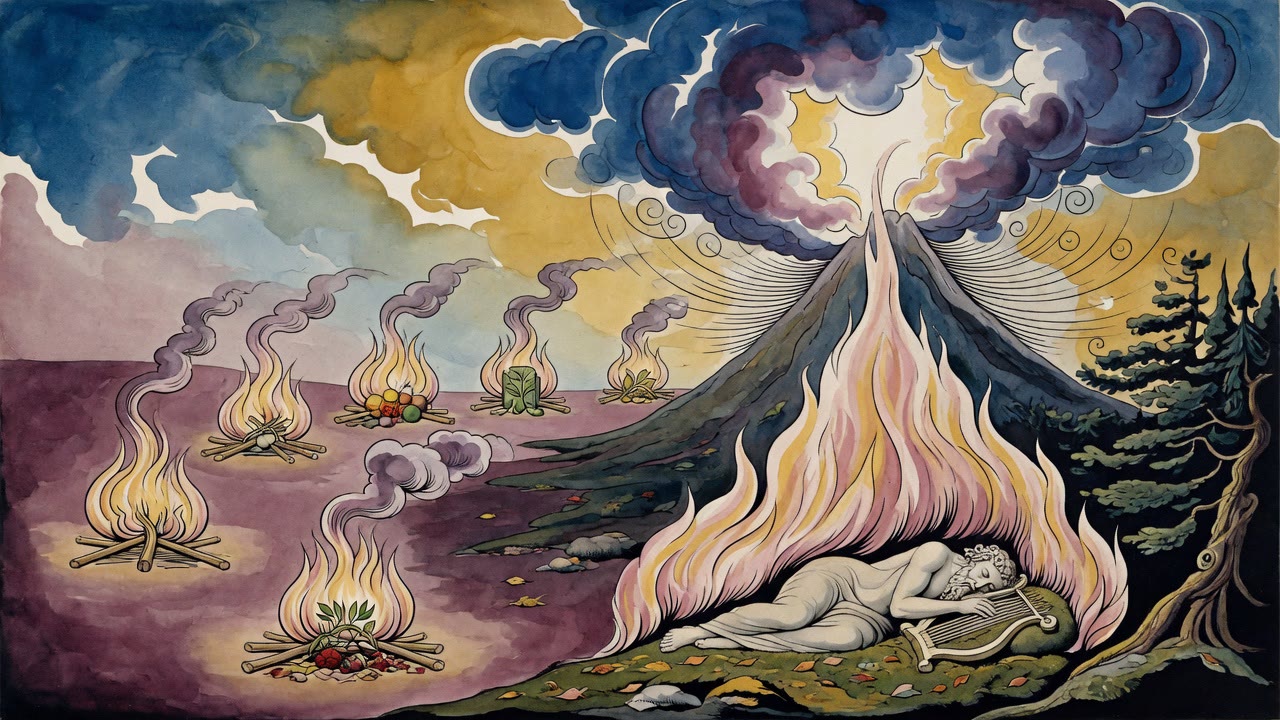
Obadiah ran Ahab's household and feared God enormously, which was a dangerous combination in that house. When Jezebel started killing prophets, he hid a hundred of them in caves and fed them out of his own money, and when his own money ran out in the famine he went and borrowed from Joram, Ahab's son, at interest, and kept feeding them.

Joram took the interest. Heaven put the question about him in one line. He has lent at interest and taken increase, and shall he live.

Years later Jehu drew a bow at full strength and put an arrow between Joram's shoulders. It came out at the heart and Joram went down into the floor of his own chariot.

A doctor tells one household to feed the patient anything he wants, and warns the next household to watch every mouthful. The first patient is dying either way. The second one is expected to live, which is why he gets the rules. The fences around money in the Torah are that second kind of instruction, and Obadiah is the man who took a loss inside them so that other men would eat.


← All myths
From the tradition

Sources

3 sources

The texts behind this telling. Some cards carry a translation of the source; others are our own retelling of it, and each card says which. Every card links out to the original.

Midrash Tanchuma, Yitro 5Midrash Tanchuma

Retold in our words. Read the original at the link below.Townsend 1989 translation of Midrash Tanhuma, S. Buber Recension · CC-BY

18:1). Scripture says elsewhere: Thine own friend and thy father’s friend forsake not; neither go into thy brother’s house in the day of thy calamity; better is a neighbor that is near than a brother far off (Prov. 27:10). Thine own friend is the Holy One, blessed be He, who called Israel brother and friend, as it is said: For My brethren and friends’ sakes (Ps. 122:8). Thy father’s friend is Abraham, as is said: The seed of Abraham my friend (Isa. 41:8). Forsake not implies that if you would forsake God, remember what happened to the house of your brothers, Ishmael and Esau.

Neither go into thy brother’s house in the day of thy calamity. R. Joshua the son of Levi said: When the wicked Nebuchadnezzar exiled the Israelites to Babylon, they bound their hands behind them; and coupled them together with iron chains and led them naked, like beasts. As they were passing the territory of the Ishmaelites, they said to the officers in charge: Be kind and merciful to us and take us to our brethren, the sons of Ishmael, our uncle. They did so. The Ishmaelites went out to meet them, bearing salty bread and briny meat. They brought along empty water bags which they had dipped into water and hung at the doors of their tents. When the Israelites beheld the bags, they felt reassured, for they believed the bags were filled with water. The Ishmaelites said: “Eat the bread first and we will bring you the water.” After they had eaten the bread, the Ishmaelites came and said to them: “We are unable to find any water.” The Israelites thereupon bit into the bags, causing warm air to rush into their stomachs, and they perished. Hence it is said: The burden upon Arabia. In the thickets in Arabia shall ye lodge, O ye caravans of Dedanites. Unto him that is thirsty bring ye water! The inhabitants of the land of Tema did meet the fugitive with his bread. For they fled away from the swords, from the drawn sword, and from the bent bow, and from the grievousness of war (Isa. 21:13–15). What is meant by The burden upon Arabia? It means that a heavy burden would be imposed upon the sons of Arabia. He (God) asked them: Is this the way the Dedanites treat their kinsmen and welcome their uncle’s sons? Usually when a man comes from a highway, they bring bread and water to him, as it is said: Unto him that is thirsty bring ye water (Isa. 21:14), but ye, the inhabitants of the land of Tema, did meet the fugitives with bitter bread. Did you not know that they were fleeing from the drawn sword, and from the bent bow and from the grievousness of war? When your father suffered from thirst in the desert, I disclosed the well of water to him, as is said: And God opened her eyes, and she saw a well of water (Gen. 21:19), yet now you do such a thing. Hence, Better is a neighbor that is near than a brother far off.

Better is a neighbor that is near refers to Jethro, who was more friendly to Israel than Esau, the brother of Jacob. It is written concerning Jethro: And Saul said unto the Kenites: “Go, depart, get you down from the Amalekites, lest I destroy you with them; for ye showed kindness to all the children of Israel, when they came up out of Egypt.” So the Kenites departed from among the Amalekites (I Sam. 15:6).

You find that everything written in praise of Jethro is mentioned to the discredit of Esau. In reference to Esau it is written: They have ravished the women in Zion (Lam. 5:11), but about Jethro it says: And he gave Moses, Zipporah, his daughter (Exod. 2:21). Concerning Esau it is written: Who eat up My people as they eat bread (Ps. 14:4), while of Jethro it is said: Call him that he may eat bread (Exod. 2:20). It is written about Esau: And he feared not God (Deut. 25:18), but about Jethro it is written: And thou shalt provide out of all the people, able men, such as fear God (Exod. 18:21). It is stated about Esau that he abolished the sacrifices (when Rome destroyed the Second Temple), but of Jethro it is said: And Jethro, Moses’ father-in-law, took a burnt-offering and sacrifices (ibid., v. 12). Esau heard of their troubles and attacked them, as it is said: Because of the striving of the children of Israel, and because they tried the Lord (ibid. 17:7), and it is written elsewhere: And Amalek came. However, when Jethro heard about Israel’s goodness, he joined them, as it is said: Now Jethro heard.

Full source
Midrash Tanchuma, Mishpatim 9Midrash Tanchuma

Translation of the source text.Midrash Tanchuma -- Torat Emet · Public Domain

"If you lend money to My people" (Exodus 22:24). This is what Scripture says: "He who has not put out his money at interest" (Psalms 15:5). Come and see: anyone who has wealth and gives charity to the poor and does not lend at interest, it is reckoned for him as though he had fulfilled all the commandments, as it is said, "He who does these things shall never be moved" (Psalms 15:5). And who was this? This was Obadiah, who was a wealthy steward of Ahab, as it is said, "And Ahab called Obadiah, who was over the household; now Obadiah feared the LORD greatly" (1 Kings 18:3). And he sustained the prophets from his own property throughout that famine, and he borrowed at interest from Jehoram son of Ahab. Obadiah fulfilled, "He who has not put out his money at interest." But Jehoram, who lent at interest, the Holy One, blessed be He, said: He is still alive until now; let Jehu come and kill him, as it is said, "He has given out at interest and taken increase; shall he then live? He shall not live" (Ezekiel 18:13). And it is written, "And Jehu drew his bow with his full strength and struck Jehoram between his arms, and the arrow went out at his heart, and he sank down in his chariot" (2 Kings 9:24), because he had pressed him hard and stretched out his arms to take the interest, to fulfill what Ezekiel said, "He has given out at interest and taken increase; he shall not live."

And in Jerusalem too there were people who lent at interest, as it is said, "Your silver has become dross" (Isaiah 1:22). And what was done to them? "Rejected silver they are called, for the LORD has rejected them" (Jeremiah 6:30); therefore "your silver has become dross." And it is written, "They shall cast their silver into the streets, and their gold shall be as an unclean thing" (Ezekiel 7:19). Why? Because they transgressed the Torah, as it is said, "You shall not give him your money at interest" (Leviticus 25:37).

When Solomon built the Temple, he stood in prayer and said: Master of the universe, if a person prays for wealth in this House, and You know that he will be ruined by his wealth, do not give it to him; but if You see that the wealth is good for him, give it to him, as it is said, "Then render to each whose heart You know according to all his ways, for You alone know the hearts of all the children of men" (2 Chronicles 6:30). For in this world the wicked are rich and they dwell in tranquility, because the Holy One, blessed be He, pays them in this world for the few good deeds in their hand, as it is said, "And He repays those who hate Him to their face" (Deuteronomy 7:10). And it is written, "When the wicked spring up like grass" (Psalms 92:8). But in the time to come, the Holy One, blessed be He, opens His storehouses to the righteous, His servants, in the Garden of Eden. And the wicked who consumed interest gnaw their own flesh with their teeth and grieve, as it is said, "The fool folds his hands and eats his own flesh" (Ecclesiastes 4:5). And he says: Would that we had been laborers and carried loads on our shoulders, as it is said, "Better is a handful with quietness than two handfuls with toil" (Ecclesiastes 4:6).

And the poor are the people of the Holy One, blessed be He, as it is said, "For the LORD has comforted His people and will have compassion on His afflicted ones" (Isaiah 49:13). The way of the Holy One, blessed be He, is not like the way of flesh and blood. In the way of flesh and blood, a rich man who has poor relatives hates them and does not acknowledge them, as it is said, "All the brothers of a poor man hate him; how much more do his friends keep far from him" (Proverbs 19:7). But the Holy One, blessed be He, with all His wealth and honor, shelters and has compassion on the poor, as it is said, "For the LORD has founded Zion, and in her the afflicted of His people take refuge" (Isaiah 14:32).

"You lend to My people." David said before the Holy One, blessed be He: Master of the universe, "May he be enthroned in God's presence forever" (Psalms 61:8); set Your world in order with equality, the rich and the poor. He said to him: If so, "Appoint mercy and truth, that they may preserve him" (Psalms 61:8); if all were rich or all were poor, who would be able to do kindness?

"You shall not be to him as a creditor" (Exodus 22:24). If you have lent to him, do not press him. Do not look upon his field and vineyard, or his house, and say to him: Take a hundred thousand from me and do business and sign over to me your field and your vineyard and your house; and tomorrow he loses, and you take his vineyard. From here you learn that anyone who lends at interest does not fear the Holy One, blessed be He, as it is said, "Take no interest from him" (Leviticus 25:36). Do not lay interest upon him.

Our Rabbis taught: These transgress a negative commandment: the lender, the borrower, the guarantor, the witnesses, and the scribe. Therefore all of them are flogged. And from where do we know that the borrower is flogged? As it is written, "You shall not exact interest from your brother" (Deuteronomy 23:20). To what is interest comparable? To one whom a snake bit; he did not feel it, to say who bit him, and he did not know until it swelled up upon him. So too interest: he does not feel it until it swells up upon him. "If you take your neighbor's garment in pledge" (Exodus 22:25). The Holy One, blessed be He, says to him: If he owes you, you too owe Me, as it is said, "When they sin against You, for there is no man who does not sin" (1 Kings 8:46).

Full source
Midrash Tanchuma, Mishpatim 3Midrash Tanchuma

Translation of the source text.Midrash Tanchuma -- Torat Emet · Public Domain

"And these are the judgments" (Exodus 21:1). Rabbi Abbahu said in the name of Rabbi Yose ben Zimra: Every place where it says "these," it nullifies what came before; "and these" adds to the latter and is praise for the former. With this understanding you may interpret them all. And here too, "And these are the judgments," which adds praise to the former, as it is said, "There he set for them a statute and a judgment" and so forth (Exodus 15:25), "before them," and not before the nations of the world.

From where do we know that Israelite litigants who have a case one with another, who know that the nations judge that case as Israelite law judges it, are forbidden to resort to them? Scripture teaches, "which you shall set before them" (Exodus 21:1): before Israel, and not before the nations of the world. For whoever forsakes the judges of Israel and goes before the nations of the world has first denied the Holy One, blessed be He, and afterward denied the Torah, as it is said, "For their rock is not like our Rock, even our enemies being judges" (Deuteronomy 32:31). To what may the matter be compared? To a sick man whom the physician came to visit. He said to the members of the household: Feed him and give him to drink whatever he wishes; withhold nothing from him. He went in to another and said to the members of the household: Be careful that he not eat such-and-such a thing and not drink such-and-such a thing. They said to him: To this one you said to eat whatever he wishes, and to this one you say he shall not eat? He said to them: The first sick man is not destined for life; therefore I said withhold nothing from him; whether he eats or does not eat, he will die. But this one, who is destined for life, I said he shall not eat such-and-such a thing, so that he not aggravate his illness. So too with the statutes of the nations, as it is said, "For the statutes of the peoples are vanity" (Jeremiah 10:3). And it is written: "And I also gave them statutes that were not good, and judgments by which they could not live" (Ezekiel 20:25). But to Israel I gave commandments and good statutes, as it is said, "And you shall keep my statutes and my judgments, which a person shall do and live by them" (Leviticus 18:5).

"And these are the judgments." The Holy One, blessed be He, said to Israel: If you carry out the judgment and do not resort to the nations of the world, I will build for you the Temple, and the Sanhedrin will sit in it, as it is said, "And I will restore your judges as at the first" and so forth (Isaiah 1:26). And it is written: "Zion shall be redeemed with judgment" and so forth (Isaiah 1:27). And it is written: "Thus says the LORD, Keep judgment and do righteousness, for my salvation is near to come" and so forth (Isaiah 56:1).

Full source