5 min read

Moses Asked Why and Heaven Named the Fathers

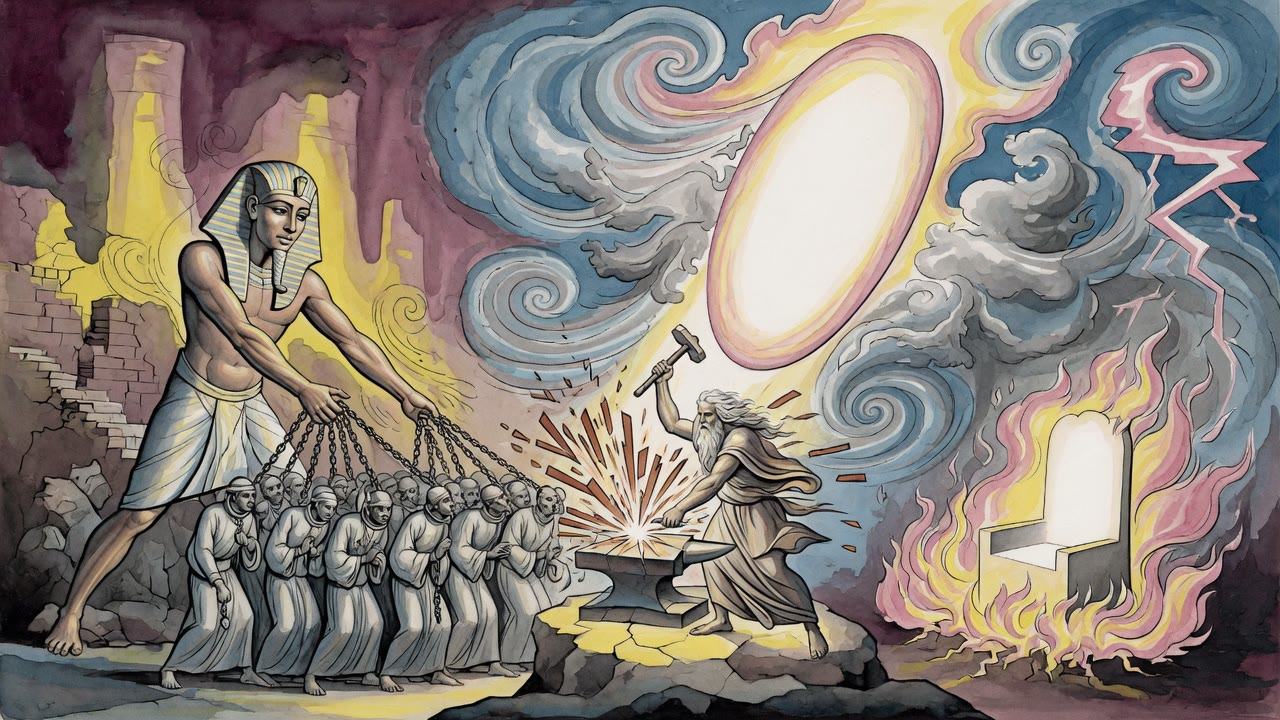
Pharaoh answered the first demand by making the brick quotas crueler. Abraham had paid four hundred shekels to bury Sarah and never said a word.

Curated by Arthur · Told by Maggid ·
Table of Contents
  1. The Question That Risked Everything
  2. Alas for Those Who Are Gone
  3. Do Not Speak the Name as a Spell
  4. Ordinance of the Passover
  5. Friend Nearer Than a Distant Brother
Moses Asked Why and Heaven Named the Fathers Click for full size

The Question That Risked Everything

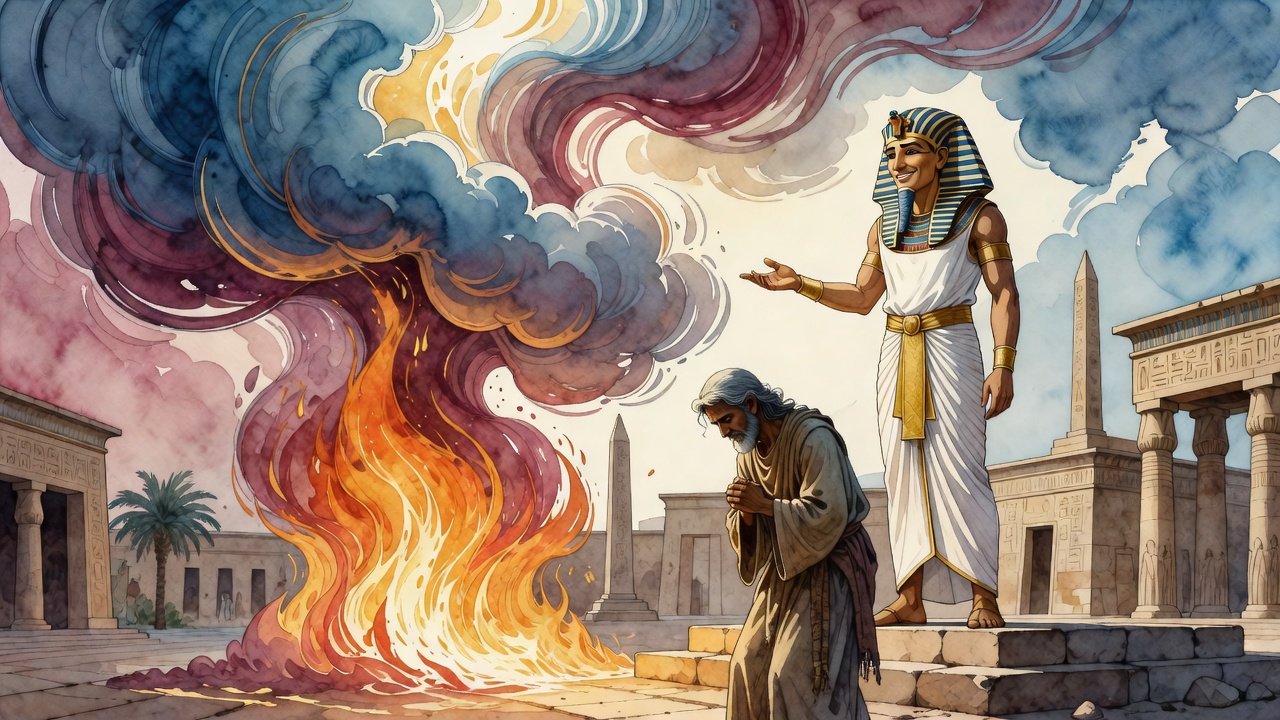
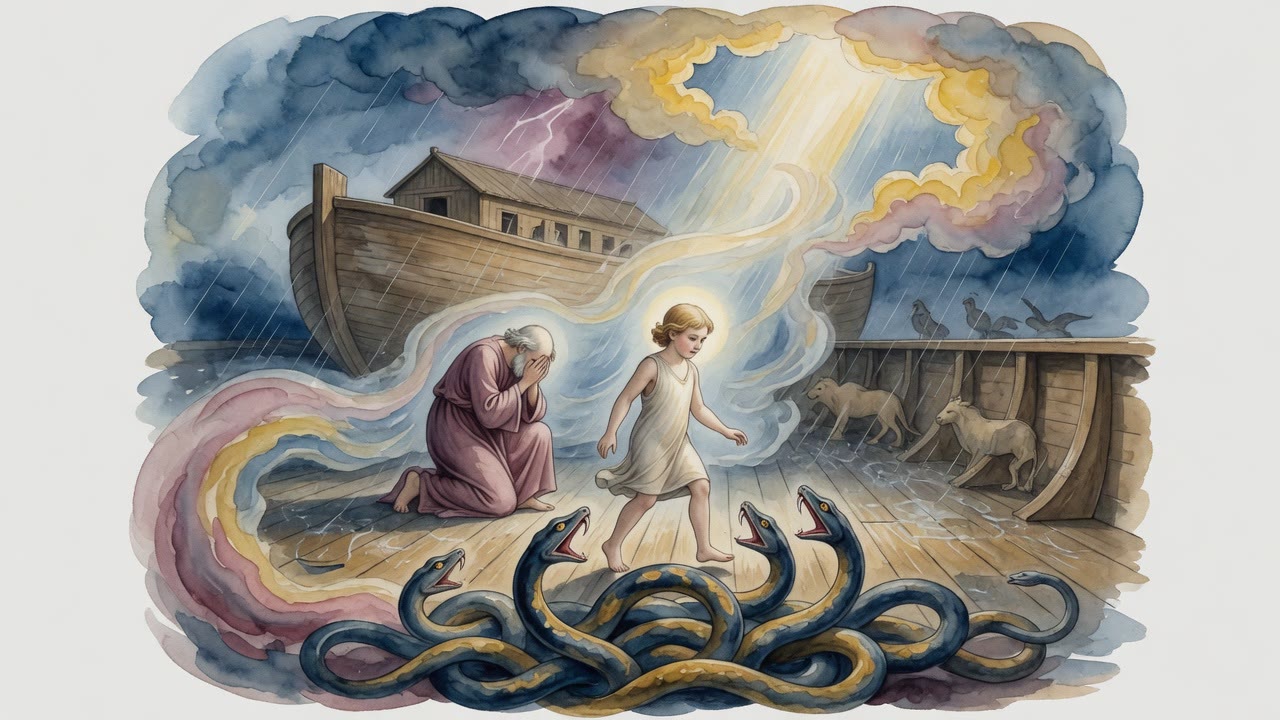
Moses returned to the Lord and said, "Lord, why have You dealt ill with this people?" (Exodus 5:22). After he spoke in the Name, Pharaoh only made the brick quotas crueler. Moses did not whisper. He put a charge against Heaven's management of the rescue. A lesser man who said such a thing to a greater man would already be guilty. Moses said it to God.

Midrash Tanchuma lets the offense stand so the answer can cut. Heaven does not crush the prophet for the question. Heaven answers with the dead who never asked it.

Alas for Those Who Are Gone

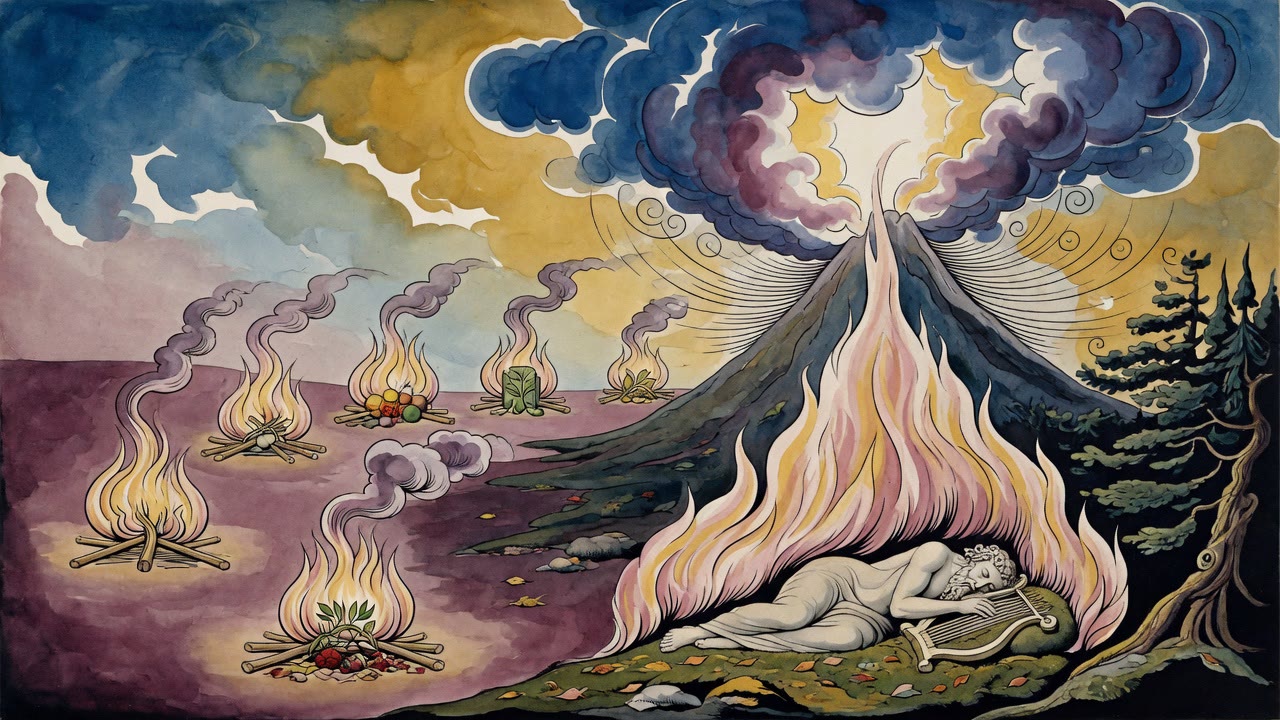
The Holy One said, "Alas for those who have perished and are not found." He appeared to Abraham, Isaac, and Jacob as God Almighty and never disclosed to them the Name He opened to Moses, yet they never criticized His ways. Abraham was told to walk the land, then could not bury Sarah until he paid four hundred shekels, and he did not dispute. Isaac dug wells that enemies stopped, and he did not accuse. Jacob fled from a brother and served for wives under a cheating father-in-law, and he did not renounce the promise.

Moses received a fuller Name and still said, "Why have You dealt ill?" The midrash is not shaming curiosity. It is ranking trust. The fathers held less revealed speech and more quiet. The redeemer held more revealed speech and a mouth that risked the courtroom of Heaven. Both are inside Israel's story. Only one is rebuked by comparison to the other.

Do Not Speak the Name as a Spell

Before that confrontation Tanchuma lists those who have no share in the world to come: the one who denies resurrection from the Torah, the one who denies Torah from heaven, the heretic, and the one who whispers a verse over a wound as if Scripture were a charm, "for I am the Lord that heals you" (Exodus 15:26). Abba Saul adds the one who pronounces the Divine Name as it is written.

Ben Azzai said God did not set His own Name into the creation verse until after "In the beginning He created." Rabbi Simeon son of Eleazar said Moses himself waited through twenty-one words of "Give ear, O heavens" before proclaiming the Name (Deuteronomy 32:1-3). The Name is not a key you jangle for power. It is weight you approach after deeds and after words that prepare the air.

Ordinance of the Passover

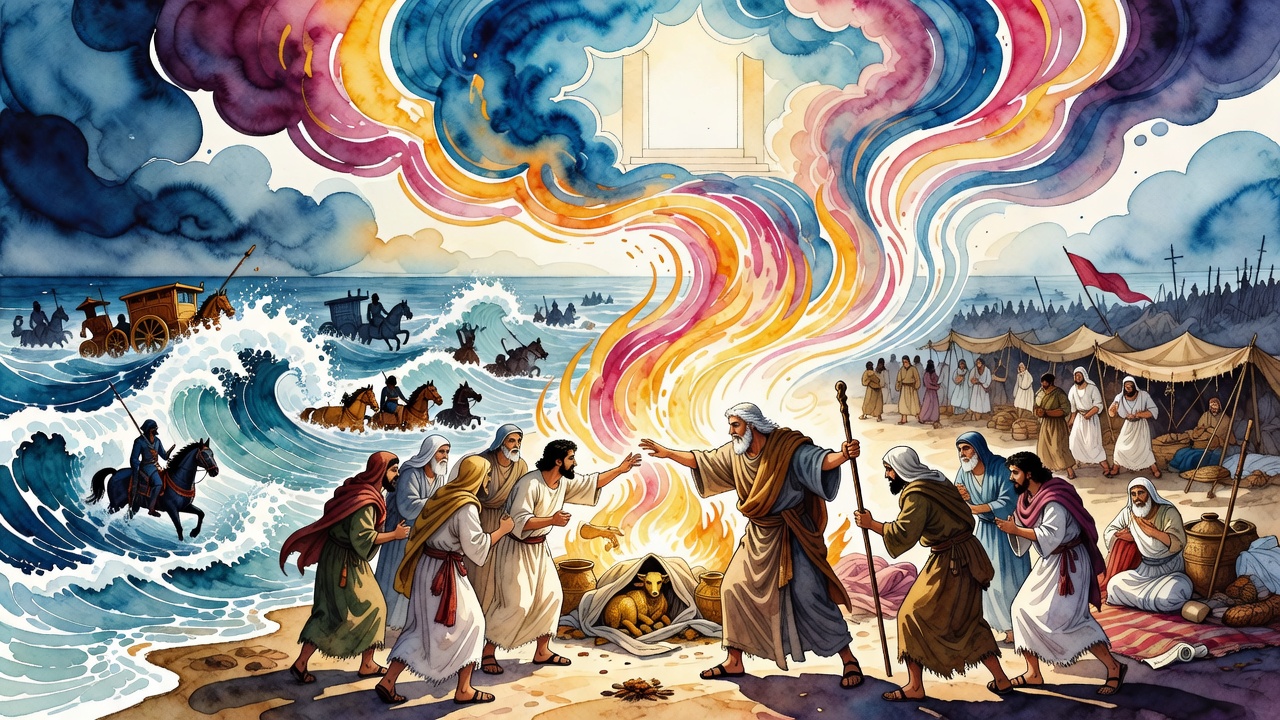
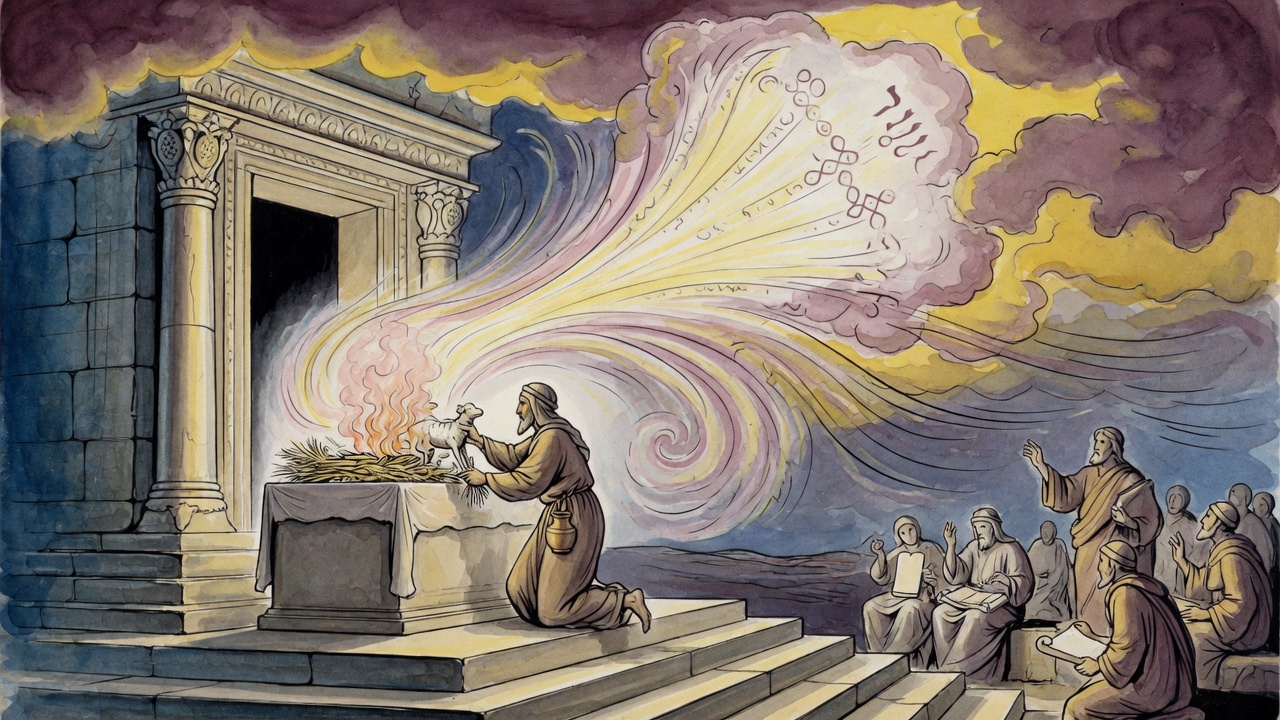
Later, when the rescue is near, "This is the ordinance of the Passover" (Exodus 12:43). General rule first, then the particular: no alien shall eat of it. The midrash stretches the ban to the renegade and the gentile, maps hired servants and sojourners, and ties uncircumcision to disqualification from the lamb and from terumah. One house shall it be eaten, yet blood was on the houses where they ate. The tension trains a people who almost left Egypt as a mob to leave as a people under law.

Moses's earlier "why" meets this later "thus." Question without ordinance becomes despair. Ordinance without a prophet who will stand in the fire becomes cold procedure. Tanchuma keeps both.

Friend Nearer Than a Distant Brother

When Jethro comes, Scripture is read through Proverbs. "Your own friend and your father's friend forsake not" (Proverbs 27:10). Your friend is the Holy One, who called Israel friend and brother. Your father's friend is Abraham. Forsake not means remember what happened to the houses of Ishmael and Esau when brotherhood failed. A near neighbor in loyalty beats a far brother in blood when calamity falls.

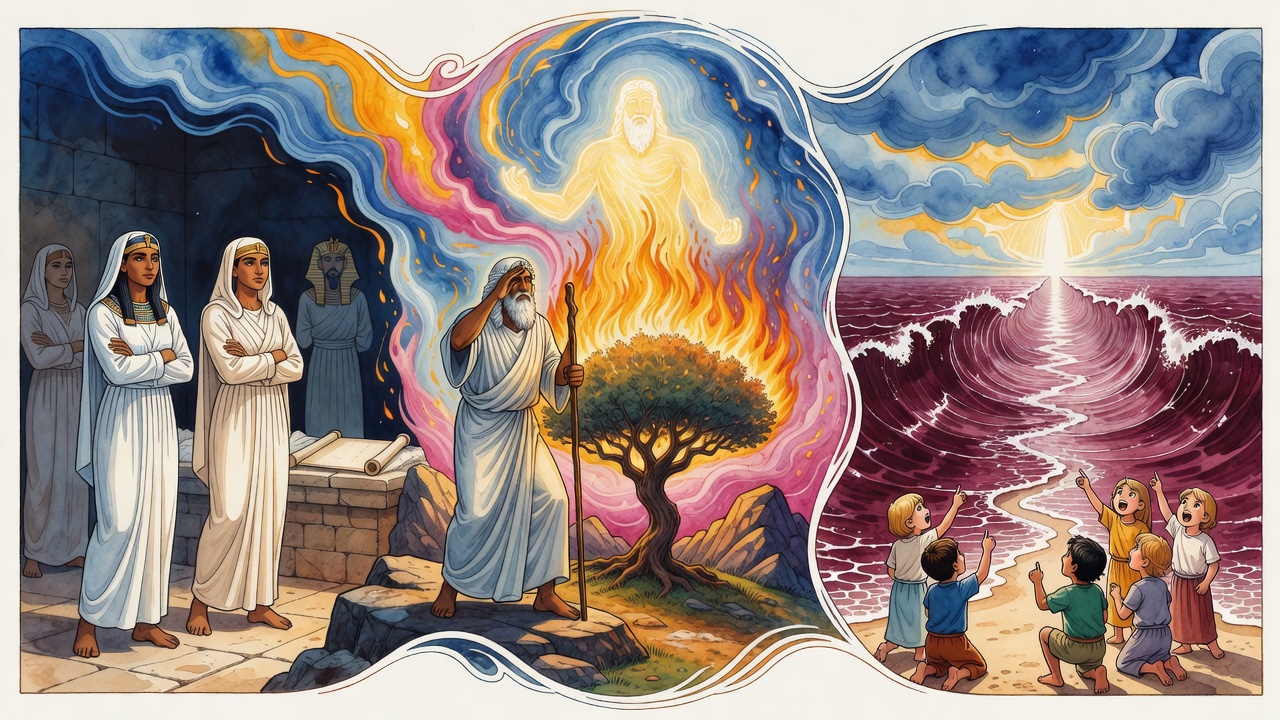
Moses, who dared to ask why, also knew how to go out to a father-in-law who once gave him shelter. The God who compared him to the silent patriarchs still used him to redeem. The Maggid will not flatten the tension. Bold speech, forbidden charms, Passover fences, and chosen friends are one school of loyalty under pressure.

Hear Pharaoh's laugh when straw is cut and the brick count stays. Hear Moses turn that laugh upward as an indictment. Hear Heaven answer not with soft comfort but with the names of three men who bought graves, re-dug wells, and slept on stones without rewriting the covenant as a complaint form.

Hear the warning against using holy words as medicine labels. The Name that redeems Egypt is the same Name you may not pronounce as a trick over a cut. Approach is everything. Order is everything.

Hear the Passover table refuse the uncircumcised mouth and the alien claim. Rescue is not a public buffet. It is a sealed meal for a people under mark and law. Then hear Jethro's arrival as the friend who is kept when brothers of blood become houses of calamity. Keep the question. Keep the silence of the fathers. Keep the ordinance. Keep the friend.

Israel needs both the prophet who will not swallow a worsening decree without speech and the fathers who swallowed famine and cheated wages without divorcing the promise. Tanchuma refuses to delete either type. It only ranks them when Moses must hear why fuller revelation does not license freer accusation.


← All myths
From the tradition

Sources

3 sources

The texts behind this telling. Some cards carry a translation of the source; others are our own retelling of it, and each card says which. Every card links out to the original.

Midrash Tanchuma, Vaera 1Midrash Tanchuma

Retold in our words. Read the original at the link below.Townsend 1989 translation of Midrash Tanhuma, S. Buber Recension · CC-BY

And God spoke unto Moses, and said unto him: “I am the Lord; and I appeared unto Abraham, unto Isaac, and unto Jacob” (Exod. 6:2). May our masters teach us the punishment that is inflicted upon the man who speaks the Divine Name (i.e., the Tetragrammaton) as it is written? Thus do our masters teach us: The following have no share in the world-to-come: those who maintain that the concept of the resurrection of the dead is not derived from the Torah, that the law did not descend from heaven, the epicurean (heretic), and the one who utters (words of magic) over a wound while reciting the verse I will put none of the diseases upon thee, which I have put upon the Egyptians; for I am the Lord that healeth thee (Exod. 15:26). And Abba Saul added: One who pronounces the Divine Name as it is written will likewise have no share in the world-to-come.

Proof of the seriousness of the profanation of the Divine Name is contained in the following. Ben Azzai declared: The Holy One, blessed be He, did not mention His own name, as though that were possible, until He first spoke the words In the beginning He created (Gen. 1:1). Only then did He add the word God. And R. Simeon the son of Eleazar stated: Moses did not mention the Divine Name until he had spoken the twenty-one words Give ear, ye heavens, and I will speak, etc. (Deut. 32:1). Only then did he say: For I will proclaim the name of the Lord. Since, as you know, He did not reveal His name to the patriarchs, why did he disclose it to Moses? He did so because he had been chosen to redeem Israel, as it is written above in reference to this matter: And Moses returned unto the Lord and said: “Lord, wherefore hast thou dealt ill with this people?” (Exod. 5:22).

If a man should dare say to a person more important than himself, “Why did you treat me so badly?” he would be held guilty of a serious offense, yet Moses said: For since I came to Pharaoh to speak in Thy name, he hath dealt ill with this people (ibid., v. 23). The Holy One, blessed be He, said to Moses: Alas for those who have perished but are not to be found! I revealed myself to Abraham, Isaac, and Jacob as the Lord Almighty, but I never disclosed to them that My name is YHWH, as I did to you, yet they never criticized My ways. To Abraham I said: Arise, walk through the land in the length thereof (Gen. 13:17), yet though he searched for a burial place for Sarah, and was unable to obtain one until he paid four hundred shekels of silver for it, he did not disparage My ways. I told Isaac: Sojourn in this land …for unto thee, and unto thy seed, I will give all these lands (ibid. 26:3), but even when he sought water to drink and was unable to find any, And the herdsman of Gerar strove with Isaac’s herdsmen, saying: “The water is ours” (ibid., v. 20), he did not criticize My ways. I told Jacob: The land whereon thou liest, to thee will I give it, and to thy seed (ibid. 28:13), yet when he sought a place to pitch his tent, and could not obtain any land until he purchased it with a hundred lambs, he found no fault with My words.

However, on the very first mission I assigned to you, you asked Me, “What is your name?” and now you say: For since I came to Pharaoh to speak in Thy name, He hath dealt ill, etc. Therefore, Now shalt thou see what I will do to Pharaoh (Exod. 6:1). That is, you will participate in the struggle with Pharaoh, but you will not witness the war against the thirty-one kings, that Joshua, your disciple, will wage in vengeance against them. From this verse you may learn that Moses was punished by being forbidden to enter the land. Hence it is written: And God said unto Moses that He would requite him with Divine Justice. But He said unto him: “I am the Lord” (ibid., v. 2), thereby indicating that Divine Mercy demands that I redeem the Israelites and bring them into the land. Hence it is written: And I appeared unto Abraham, unto Isaac, and unto Jacob as God Almighty (ibid., v. 3).

Full source
Midrash Tanchuma, Bo 10Midrash Tanchuma

Retold in our words. Read the original at the link below.Townsend 1989 translation of Midrash Tanhuma, S. Buber Recension · CC-BY

And the Lord said unto Moses and Aaron: “This is the ordinance of the passover” (Exod. 12:43). There are chapters of the Torah in which a general statement is made at the beginning of the chapter, and a particular statement is made at its end. And ye shall be unto me a kingdom of priests (Exod. 19:6) is a particular statement, while the verse These are the words which thou shalt speak unto the children of Israel (ibid.) is a general statement. This is the statue of the law (Num. 19:2) is a general statement, while the verse That they bring thee a red heifer (ibid.) is a particular statement. This is the ordinance of the Passover (Exod. 12:43) is a general statement, whereas There shall no alien eat thereof (ibid.) is a particular statement. Whenever a general statement is followed by a particular one, the general statement does not include more than is contained in the particular. This is the ordinance of the Passover. This passage deals with the Passover in Egypt. How then do we know about Passover in subsequent generations? Scripture informs us of this in the verse According to all the statutes of it, and according to all the ordinances thereof, shall ye keep it (Num. 9:3). There shall no alien eat thereof (Exod. 12:43) alludes also to a renegade Jew and a Gentile. Every man’s servant that is bought for money (ibid., v. 44). (The verse states:) Every man’s servant. Does this mean that the servant of a woman or of a child is excluded? Scripture says: That is bought for money, which implies (every servant that was purchased).

A sojourner and a hired servant shall not eat thereof, no matter who owns him (ibid., v. 45). A sojourner refers to an alien who is not an idolater, but who commits other forbidden acts. A hired servant alludes to one who serves idols. Hence, just as the words a sojourner and a hired servant, etc., mentioned in the chapter on the paschal lamb disqualify an uncircumcised man from eating the paschal lamb, so does the phrase A sojourner and a hired servant used with reference to the terumah teach us that an uncircumcised man is disqualified from eating the terumah (the priest’s share of the crop).

In one house shall it be eaten (ibid., v. 46). However, it is written elsewhere: Upon the houses wherein they shall eat it (ibid. v. 7). From this verse we learn that the paschal lamb may be eaten in two places. How am I to interpret the phrase In one house? It may be interpreted to mean (that it may be eaten) by one group of people. How does it happen then that one may eat the paschal lamb in two places? For example, if men are seated inside a house when a beam splits above their heads, they are compelled to go outside to eat it, and if they are outside when it commences to rain, they are forced to go inside. Hence they may eat it in two places. If this (is so), what is meant by Thou shalt not carry forth aught of the flesh abroad out of the house (ibid., v. 46)? This means you may not carry it out from the group. Thou shalt not carry forth aught of the flesh refers to the meat on the outside of the bone and not to that which is within the bone (i.e., the marrow). Neither shall ye break a bone thereof (ibid.) indicates that you shall not break the bone of the paschal sacrifice, but that (does not apply) to the bones of any other sacrifices of less sanctity. It is not a transgression of the commandment: Neither shall you break a bone thereof. All the congregation of Israel shall keep it (ibid., v. 47). Why is this said? Since Scripture states: Draw out, and take you lambs according to your families (Exod. 12:21), (it first appears that the paschal lamb can be brought [to the Temple] only by a family group. Nevertheless) this verse informs us that the Passover offering of subsequent generations may be brought by mixed groups.

And when a stranger shall sojourn with thee, and will keep the Passover to the Lord (ibid., v. 48). Does this mean that a stranger who is converted should offer a paschal sacrifice at the first opportunity? Yes, for Scripture says: And he shall be as one that is born in the land (ibid.). Therefore, just as one born in the land offers his sacrifice on the fourteenth day, so the proselyte should do so on the fourteenth day. If he is converted, however, between the two Passovers, he should offer the sacrifice on the second Passover. Let all his males be circumcised, and then let him come near and keep it (ibid.). This refers to the circumcision of free males and the circumcision of slaves, (the absence of which) prevents him (from offering the paschal sacrifice). If one wishes to perform the two rituals, the commandment of circumcision and the commandment of the paschal lamb, which takes precedence? Let all his males be circumcised is stated first, and that is followed by And let him come near and keep it. One law shall be to him that is home-born (ibid., v. 49). This verse declares that the home-born and the convert are equal with regard to all the commandments inscribed in the Torah.

Full source
Midrash Tanchuma, Yitro 5Midrash Tanchuma

Retold in our words. Read the original at the link below.Townsend 1989 translation of Midrash Tanhuma, S. Buber Recension · CC-BY

18:1). Scripture says elsewhere: Thine own friend and thy father’s friend forsake not; neither go into thy brother’s house in the day of thy calamity; better is a neighbor that is near than a brother far off (Prov. 27:10). Thine own friend is the Holy One, blessed be He, who called Israel brother and friend, as it is said: For My brethren and friends’ sakes (Ps. 122:8). Thy father’s friend is Abraham, as is said: The seed of Abraham my friend (Isa. 41:8). Forsake not implies that if you would forsake God, remember what happened to the house of your brothers, Ishmael and Esau.

Neither go into thy brother’s house in the day of thy calamity. R. Joshua the son of Levi said: When the wicked Nebuchadnezzar exiled the Israelites to Babylon, they bound their hands behind them; and coupled them together with iron chains and led them naked, like beasts. As they were passing the territory of the Ishmaelites, they said to the officers in charge: Be kind and merciful to us and take us to our brethren, the sons of Ishmael, our uncle. They did so. The Ishmaelites went out to meet them, bearing salty bread and briny meat. They brought along empty water bags which they had dipped into water and hung at the doors of their tents. When the Israelites beheld the bags, they felt reassured, for they believed the bags were filled with water. The Ishmaelites said: “Eat the bread first and we will bring you the water.” After they had eaten the bread, the Ishmaelites came and said to them: “We are unable to find any water.” The Israelites thereupon bit into the bags, causing warm air to rush into their stomachs, and they perished. Hence it is said: The burden upon Arabia. In the thickets in Arabia shall ye lodge, O ye caravans of Dedanites. Unto him that is thirsty bring ye water! The inhabitants of the land of Tema did meet the fugitive with his bread. For they fled away from the swords, from the drawn sword, and from the bent bow, and from the grievousness of war (Isa. 21:13–15). What is meant by The burden upon Arabia? It means that a heavy burden would be imposed upon the sons of Arabia. He (God) asked them: Is this the way the Dedanites treat their kinsmen and welcome their uncle’s sons? Usually when a man comes from a highway, they bring bread and water to him, as it is said: Unto him that is thirsty bring ye water (Isa. 21:14), but ye, the inhabitants of the land of Tema, did meet the fugitives with bitter bread. Did you not know that they were fleeing from the drawn sword, and from the bent bow and from the grievousness of war? When your father suffered from thirst in the desert, I disclosed the well of water to him, as is said: And God opened her eyes, and she saw a well of water (Gen. 21:19), yet now you do such a thing. Hence, Better is a neighbor that is near than a brother far off.

Better is a neighbor that is near refers to Jethro, who was more friendly to Israel than Esau, the brother of Jacob. It is written concerning Jethro: And Saul said unto the Kenites: “Go, depart, get you down from the Amalekites, lest I destroy you with them; for ye showed kindness to all the children of Israel, when they came up out of Egypt.” So the Kenites departed from among the Amalekites (I Sam. 15:6).

You find that everything written in praise of Jethro is mentioned to the discredit of Esau. In reference to Esau it is written: They have ravished the women in Zion (Lam. 5:11), but about Jethro it says: And he gave Moses, Zipporah, his daughter (Exod. 2:21). Concerning Esau it is written: Who eat up My people as they eat bread (Ps. 14:4), while of Jethro it is said: Call him that he may eat bread (Exod. 2:20). It is written about Esau: And he feared not God (Deut. 25:18), but about Jethro it is written: And thou shalt provide out of all the people, able men, such as fear God (Exod. 18:21). It is stated about Esau that he abolished the sacrifices (when Rome destroyed the Second Temple), but of Jethro it is said: And Jethro, Moses’ father-in-law, took a burnt-offering and sacrifices (ibid., v. 12). Esau heard of their troubles and attacked them, as it is said: Because of the striving of the children of Israel, and because they tried the Lord (ibid. 17:7), and it is written elsewhere: And Amalek came. However, when Jethro heard about Israel’s goodness, he joined them, as it is said: Now Jethro heard.

Full source