Moses Convened the Angels to Judge the Egyptian Taskmaster
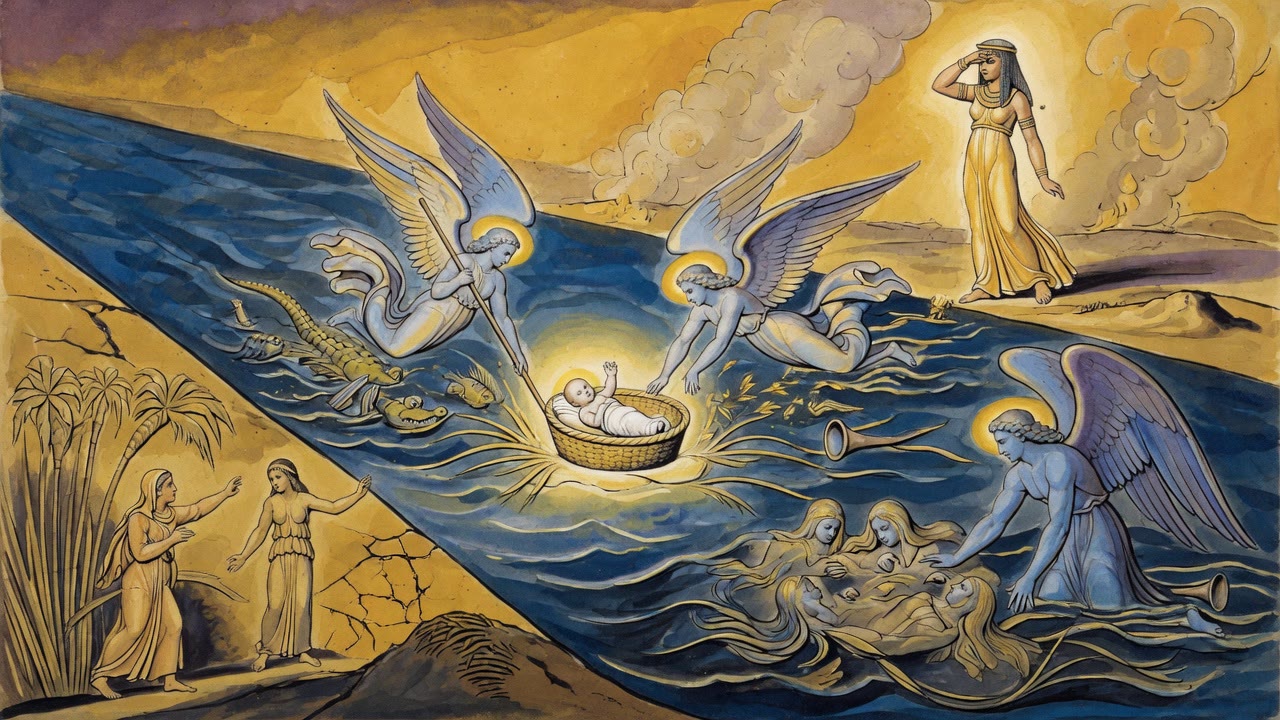
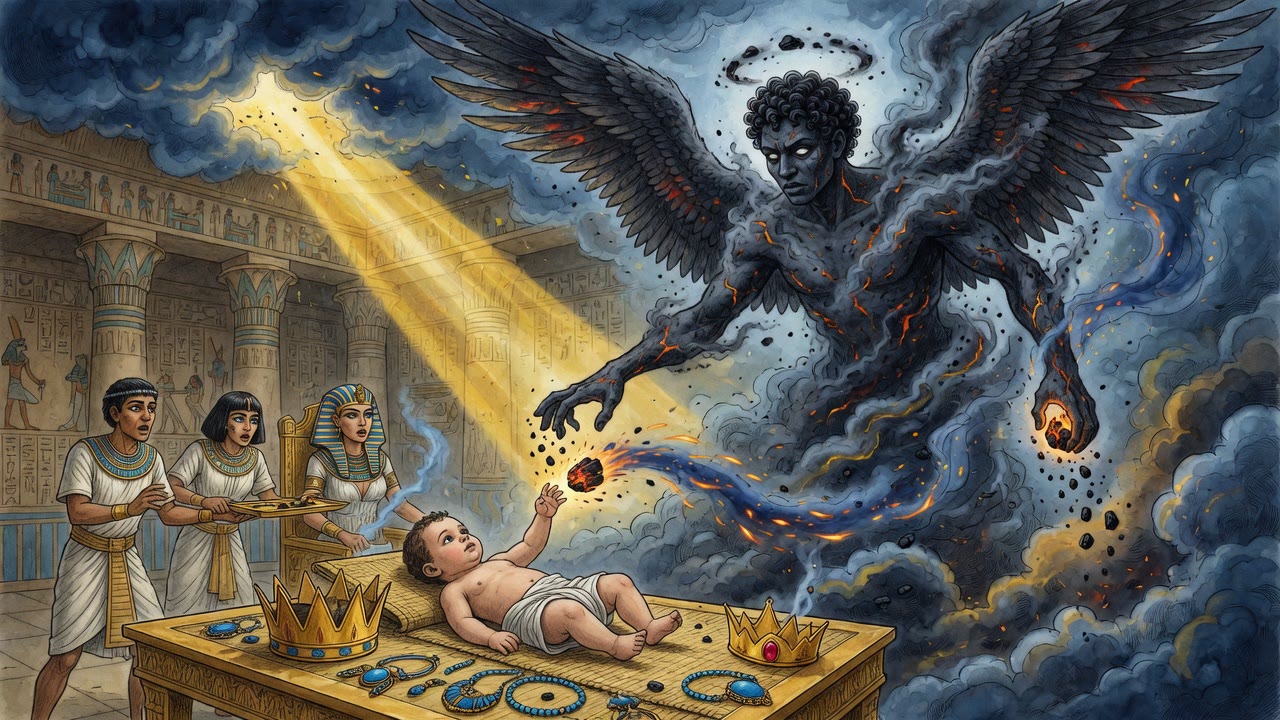
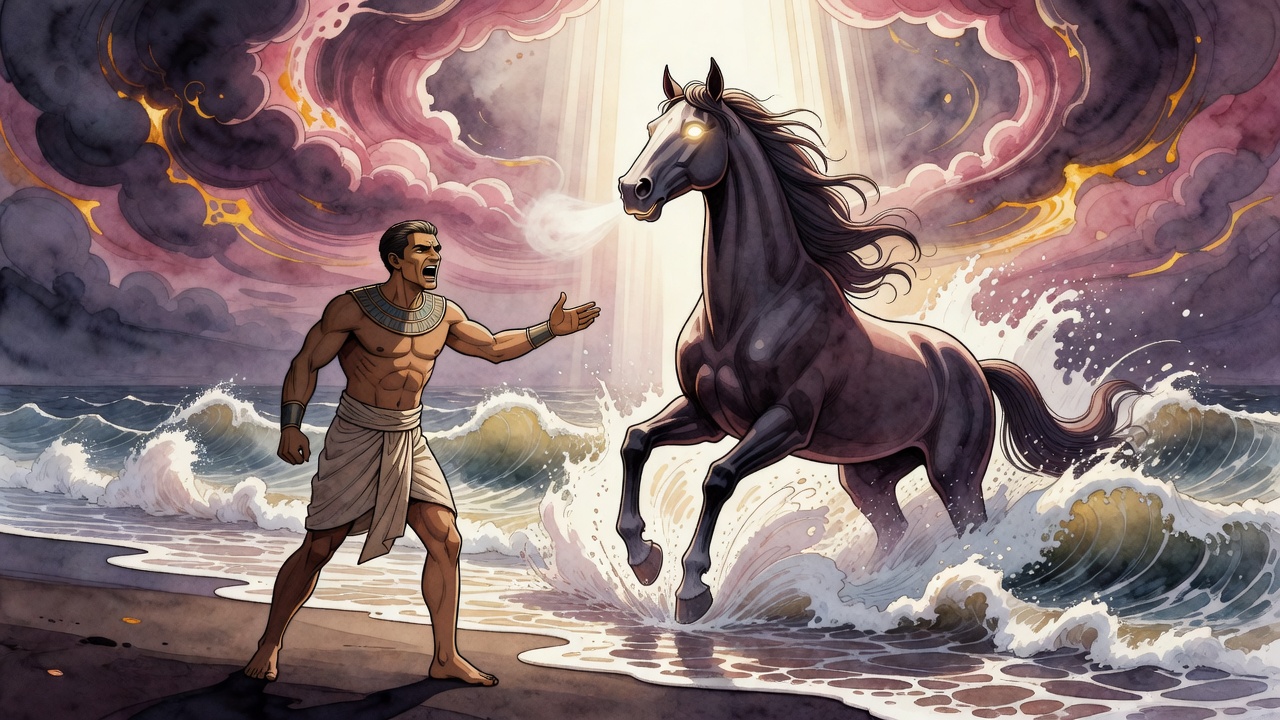
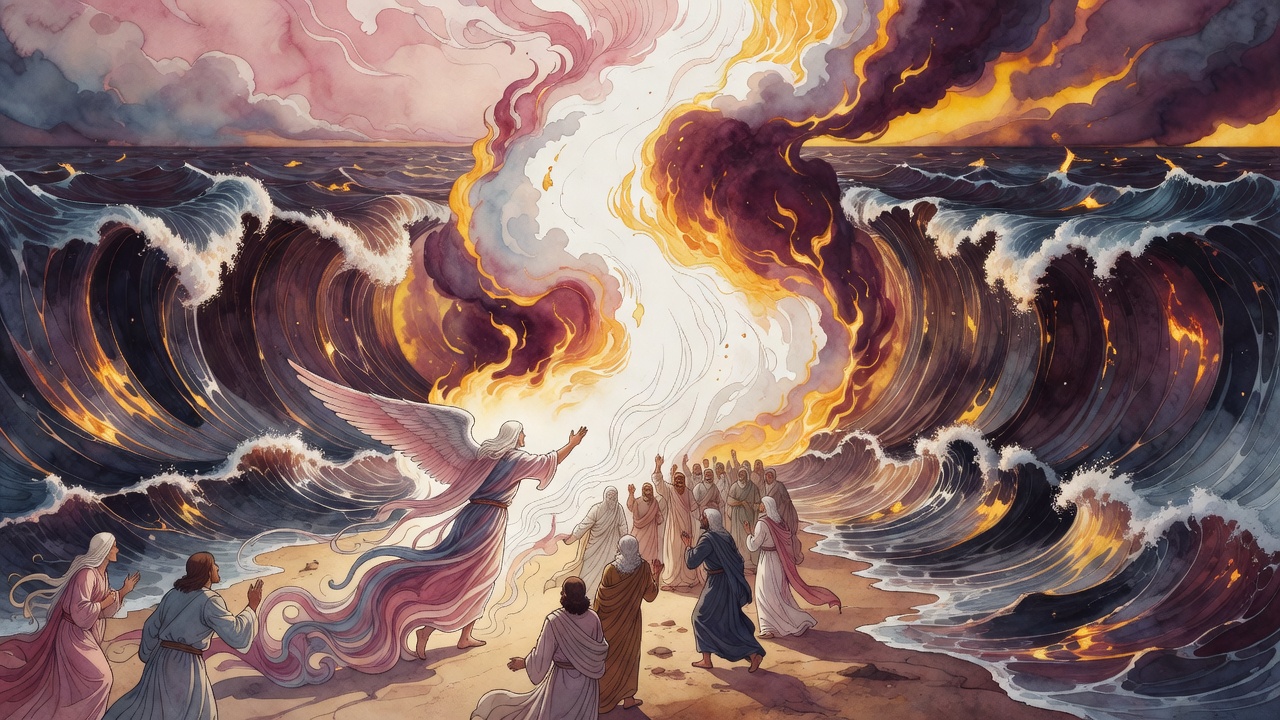
Seeing a taskmaster beat one of his own kin, Moses looked this way and that, gathering the angels into a court to weigh whether the man deserved to die.
Table of Contents
 Click for full size
The Taskmaster and the Kinsman in the Dust
The rod came down again, and the man in the dust did not cry out. He had learned that crying out only lengthened the beating. He was a Levite of the house of Kohath, which meant that the young prince watching from the edge of the brickfield was watching his own blood bleed into the clay.
Moses had walked out from the palace that morning to look on the burdens of his brothers, and this is what the burdens turned out to be. One of Pharaoh's taskmasters, a heavy man with a heavy arm, driving his stick down on a Hebrew who had slowed at the ovens. Moses knew the breed. He had watched them count bricks, dock rations, and break the slow ones so the fast ones would run. What he had not watched, until this morning, was one of them at work on a man who carried his own grandfather's name.
He Looked This Way and That
He looked this way, and he looked that way. Anyone at the ovens would have said the prince was making sure the field was empty before he did something he could not take back. The scroll even says it plainly, that he saw there was no man. But he was not searching for a man. There was no man in that field whose opinion he wanted. He was summoning the ones who keep no distance from a person about to spill blood, and they answered.
They came the way angels come, without footsteps, thickening the air around him until the brickfield seemed to lean inward and go quiet. A court, and he had convened it. Moses put the charge to them the way a judge lays it before a bench. This taskmaster, this arm rising and falling on a son of Kohath, was he a man fit to die?
One Angel Said Thus and Another Said Thus
They did not answer in one voice. One said thus, and another said thus, and the field held two verdicts in the air at once. One angel argued for the striker. The Hebrew still breathed. A court does not hang a man for a beating while the beaten man is standing, and if the arm stopped now the whole charge dissolved. Another angel argued back. The arm would not stop. It had risen too many mornings to lower itself at this one, and by evening there would be a body in the clay, a son of Kohath, and the court that waited politely for the body would be a court of cowards. A third weighed the taskmaster himself, his mornings and the ones still coming, and found nothing in him worth the sparing, no hour on which that arm would ever choose mercy on its own. Thus and thus it went, back and forth over the head of a prince standing very still.
The Name in His Mouth
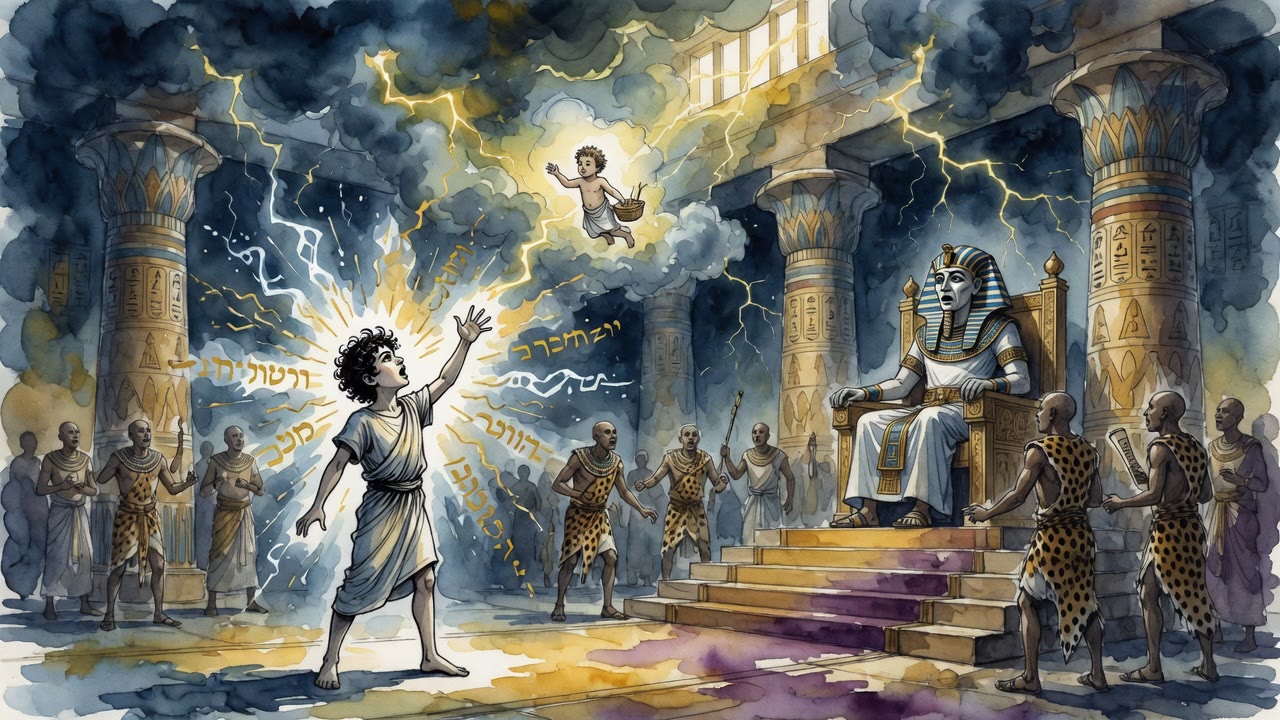
The verdict came down. Moses did not reach for a blade, because there was no blade on him that morning. The weapon was in his mouth. He spoke the Name that is not spoken, the letters that had made the world and could unmake a man, and the taskmaster who had been leaning his whole weight into the rod folded down into the clay he stood on and did not get up. It was finished in the length of a single spoken word. The rod lay in the dust beside a Levite who was, for the first time in a long time, no longer being struck.
He Hid Him in the Sand of the Sea
Moses buried the body in the sand. The scroll says so, that he hid the Egyptian in the sand, and there was more in that sand than a shallow grave. Israel, the prophet Hosea would one day say, is beyond counting as the sand of the sea. So the man who spent his mornings breaking the countless people went down into the sand, and the sand was the people, numberless and rising, closing over him. A taskmaster buried in the very multitude he had tried to hold down with a stick.
The Second Day and Dathan Threw It Back
He went out again the next day, and the trouble this time was between two of his own. Two Hebrews, fighting, and when Moses stepped in to part them the one in the wrong turned on him. This was Dathan, who would spend the rest of his life on the wrong side of Moses. He did not raise a fist. He raised the memory of the day before. "Do you mean to kill me," he said, "with the sword that is in your mouth, the way you killed the Egyptian yesterday?" He had named the weapon exactly. Not a blade. A word. And if Dathan knew, the palace would know by nightfall.
So Moses ran. From the justice he had handed down in the brickfield he fled, out of Egypt and into the long silence of Midian. But justice was the one thing he could not leave behind. He would walk straight into it again at a well in a strange country, driving off shepherds who crowded out the daughters of a priest, and he would keep walking into it for the rest of his life. Three times he gave his soul away for good, the sages say, and each time the thing he gave it for came to be called by his name. He gave it for the Torah, and it became the Torah of Moses. He gave it for Israel, and they became the people of Moses. He gave it for justice. The first payment came in a field of bricks, before a court no other eye could see, with a body sinking into sand that was already turning into a nation.
← All myths