Parshat Beshalach6 min read

Israel Demanded Egypt Back After the Sea Split

After the sea closed on Egypt, Israel listed five gifts and asked to return. They hid an idol in the camp, and Moses stopped them by force.

Curated by Arthur · Told by Maggid ·
Table of Contents
  1. Five Gifts and a Demand
  2. The Pledge at the Mountain
  3. Why the Long Road Existed
  4. The Angel and the Rear Guard
  5. What the Force Was For
Israel Demanded Egypt Back After the Sea Split Click for full size

Five Gifts and a Demand

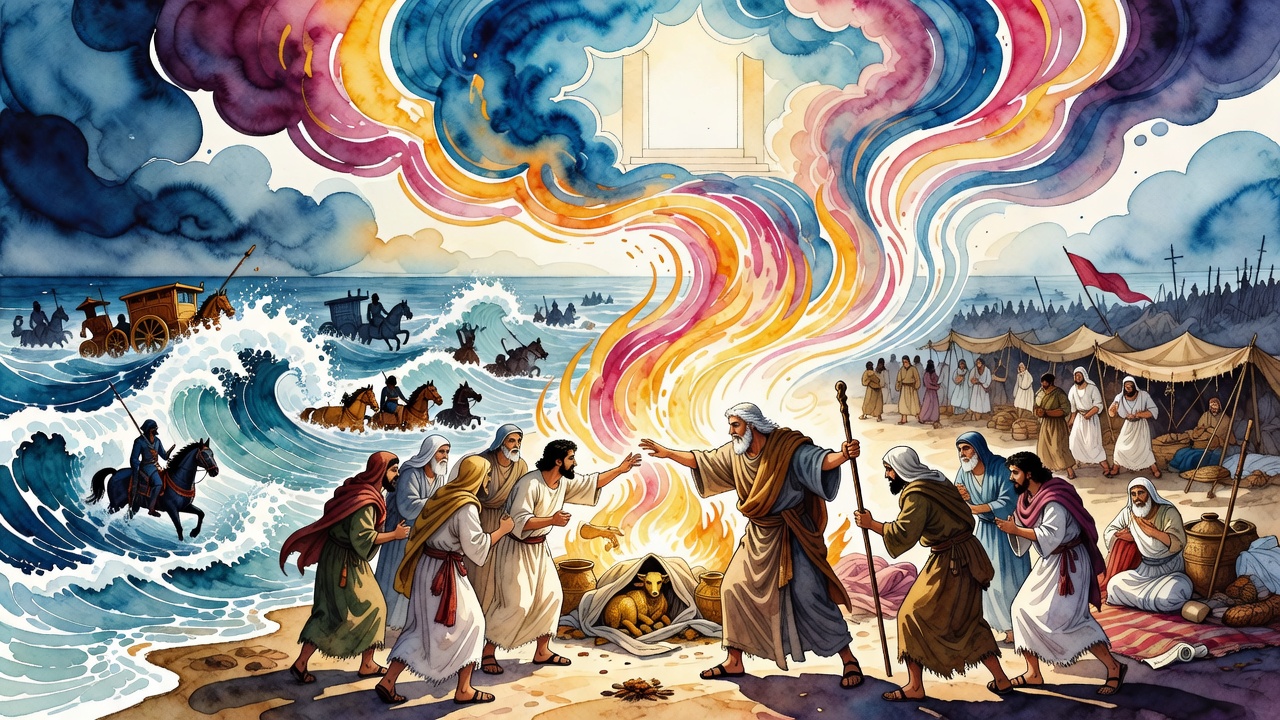
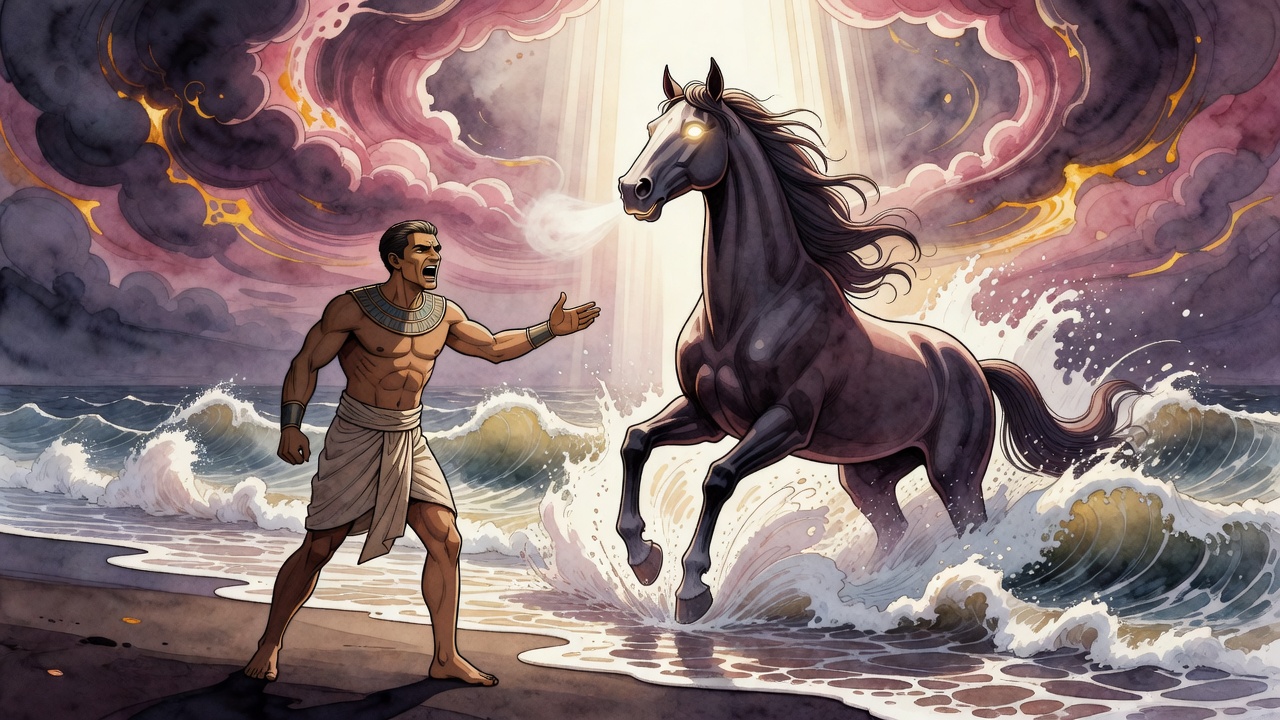
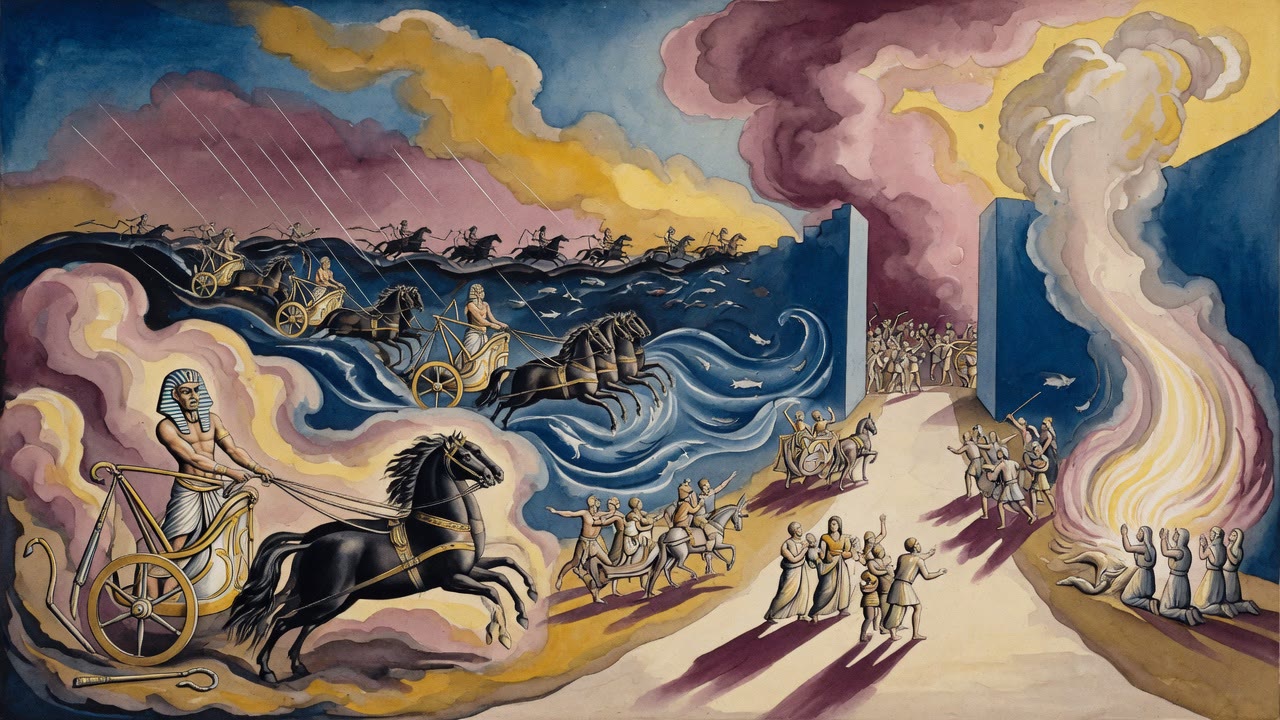
The sea had closed. Egyptian corpses rocked in the surf. Song still wet on Hebrew lips. Then the camp turned to Moses with an inventory that sounded like a completed transaction. Egyptian riches. Clouds of glory. A split sea. Vengeance on Egypt. A song. Five gifts received. Therefore, they said, let us go back.

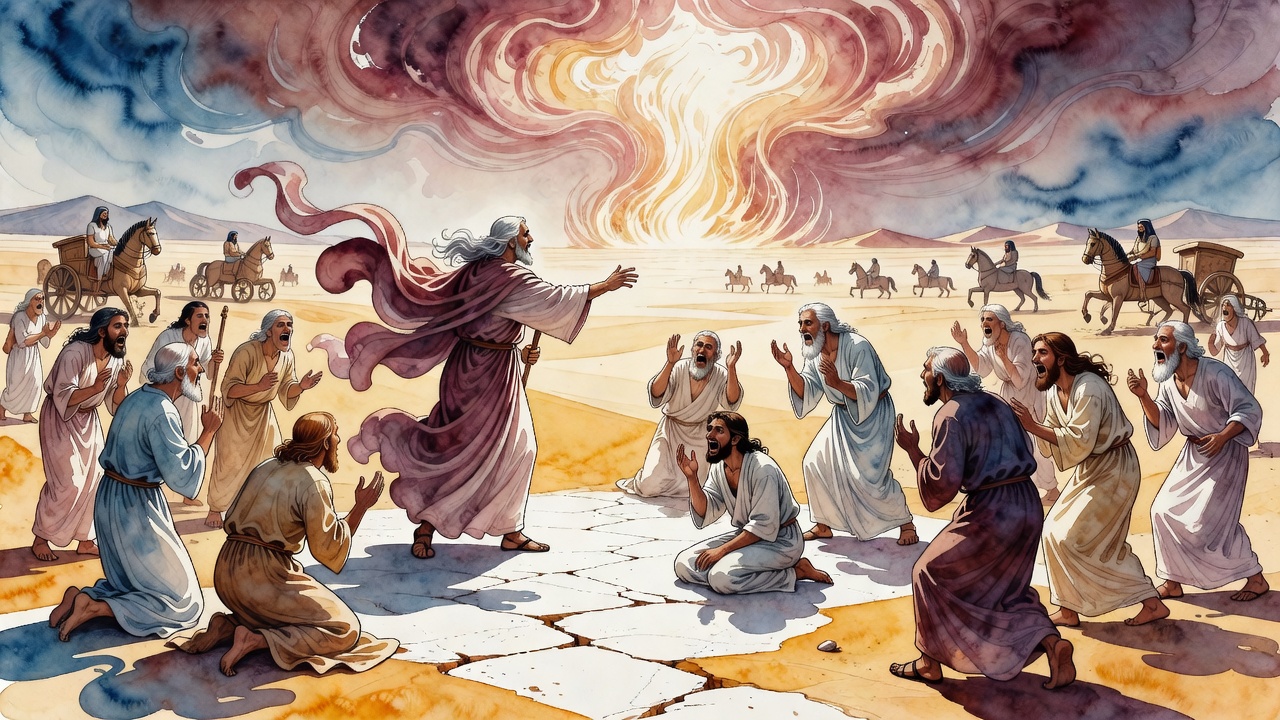
Freedom, in their mouths, had become a checklist. Check the boxes, reverse the march, resume the familiar bricks. Moses answered with the Eternal's word. "The Egyptians whom ye have seen to-day, ye shall see them again no more forever." The people shrugged at corpses. The Egyptians are dead, they argued. What exactly stops the road home?

Home, for them, still meant the house of slavery with better memories than the empty desert.

The Pledge at the Mountain

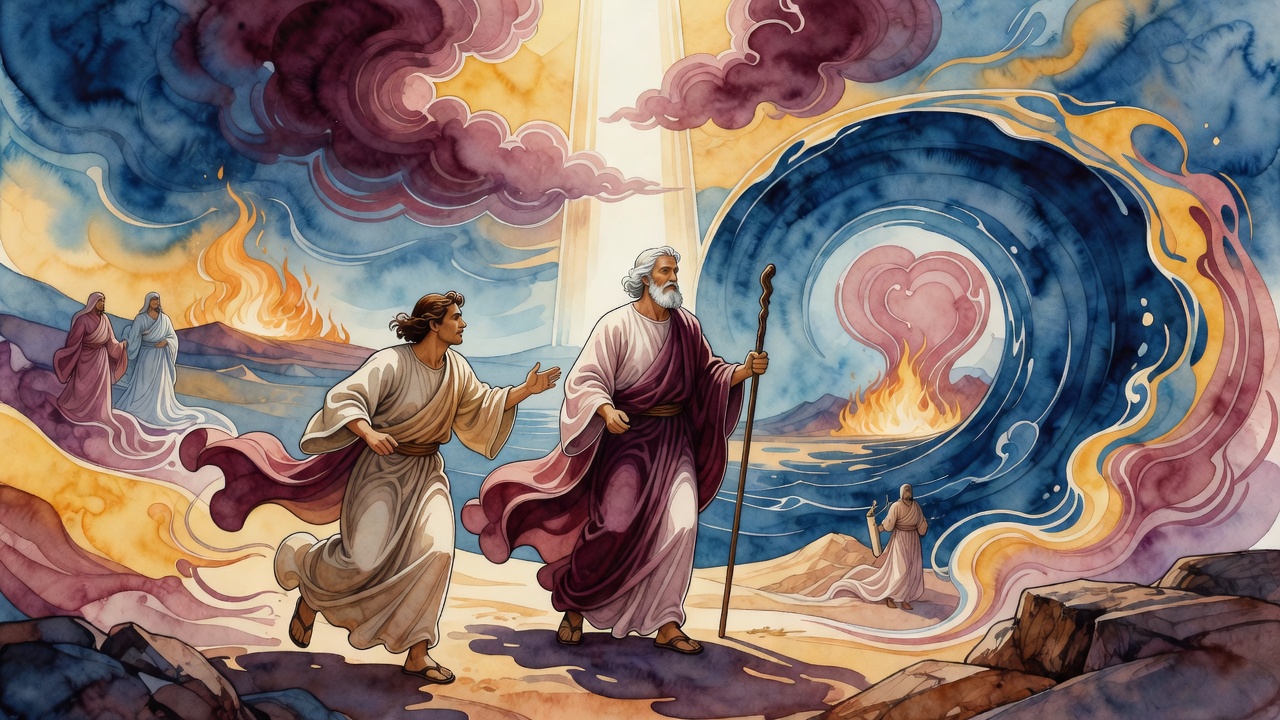
Moses named the other half of the deal. They had not been pulled out only to rearrange furniture in Goshen. "When thou hast brought forth the people out of Egypt, ye shall serve God upon this mountain." Sinai waited as a debt. The mountain was not optional scenery. It was the point.

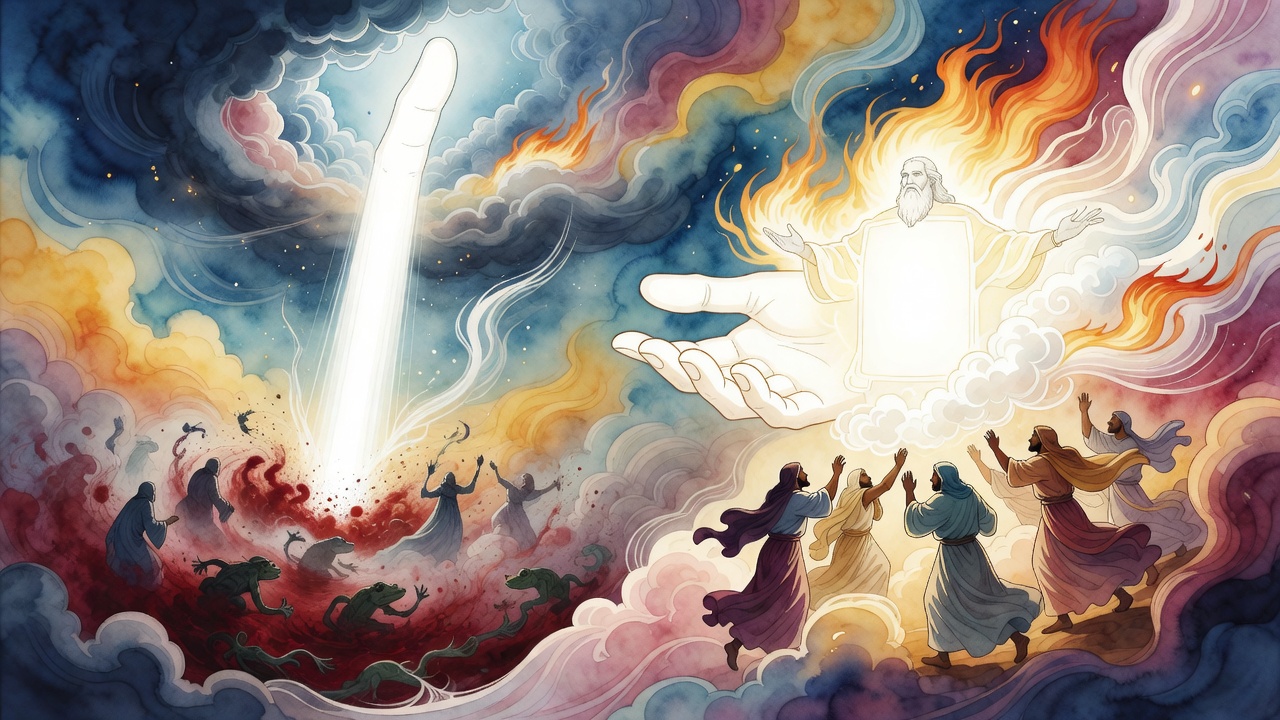
They were not moved. The will to return hardened. In the telling, an idol smuggled out of Egypt still traveled in the camp, hidden through plagues and water, now tugging hearts backward like a magnet under the sand. The object did not need to speak. It only needed to exist as a portable Egypt.

Moses, out of arguments, used force to stop a reverse exodus. The near-return counts as one of the ten testings in the wilderness. Miracle fatigue set in before the water from the rock, before the manna debates, before the golden calf's full blaze. The sea was not enough.

Why the Long Road Existed

Another strand of the tradition asks why God did not fling Israel straight along the Philistine highway. The short road ran through war-ready peoples. A nation fresh from slavery might see battle and choose Egypt again even faster. So the pillar led them a longer way, a route that spent their panic in stages rather than in one catastrophic glance at armored giants.

The demand to return after the sea proves the diagnosis. Give them a clear path back and some would take it while salt still crusted on their clothes. The wilderness was not only punishment or theater. It was a buffer against their own nostalgia for bondage.

Pharaoh had let them go. Their memories had not.

The Angel and the Rear Guard

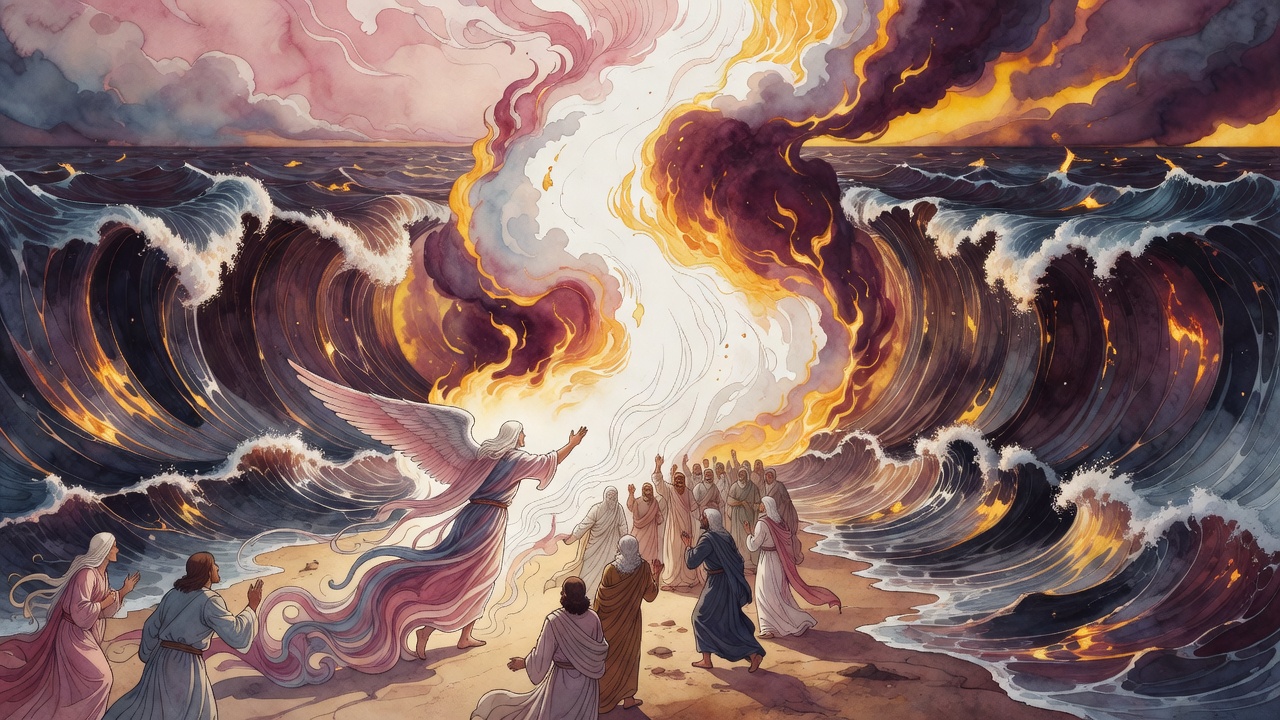
At the sea itself the angel of God had moved, shifting positions to guard the camp when Egypt pressed behind and water stood ahead. Exaltation and terror shared the same night. The cloud lit one side and darkened the other. Heaven choreographed protection while human hearts already drafted a retreat speech for the morning after victory.

That is the bitter timing. On the night they were exalted, some were already rehearsing Egypt. On the day of song, some were already counting how to unsay the song. Moses stood between a drowned army and a living people who missed their oppressors' kitchens more than they loved their own future.

The angel could block chariots. The angel could not block a hidden idol's pull.

What the Force Was For

When Moses restrained them, he was not bullying free citizens on a pleasure hike. He was holding a people to a mountain appointment they had already accepted in promise. The five gifts were real. They were not a receipt that canceled Sinai.

Egypt's dead floated as proof and still failed as persuasion. Some faiths break under scarcity. This revolt began under abundance, under loot and glory-cloud and a highway through water. The testing was not hunger yet. The testing was whether salvation would be treated like a market purchase now complete.

They did not go back. The idol's counsel lost that round. The longer road took them, stage by stage, toward a voice in fire. Behind them the sea kept its dead. Ahead of them the mountain kept its claim. Between sea and mountain Moses learned how quickly a redeemed camp can smell like a slave camp again when memory edits the whip out of the picture.

The song remained in the tradition. So did the almost-return. Both are true of the same week. Anyone who wants only the music without the mutiny is asking for a different people than the one God chose to drag, argue, feed, and marry at Sinai.

The complaint had a logic that still stings. If the oppressors are gone, why not reclaim the Nile's edge under a weaker Egyptian remnant? Why trade onions and certainty for a mountain of fire and a desert of unknown water? Moses heard the logic and named it sin anyway, because the departure was never a real-estate swap. It was a change of master.

Serving God on the mountain meant their bodies, calendars, and appetites would be rewritten. Returning to Egypt meant keeping the old appetites with a victory song as souvenir. The hidden idol preferred the souvenir plan. It had survived the night of blood by staying quiet. Now it spoke through human mouths that listed five gifts like a closed invoice.

Force from Moses looks ugly until the alternative is redrawn. A reverse march into Egypt after the sea would have turned the Exodus into a raid for loot. Heaven had not drowned chariots so Hebrews could rebrand Goshen as a free economic zone under the same sky of bondage. The longer road and the forceful stop were both braces on a people whose knees still bent Egyptian.

Cloud and angel could rearrange positions at the sea. They could not rearrange desire. That work took years of manna, water quarrels, and a calf that finally made the hidden idol's family resemblance obvious. The almost-return after the song is the first clear X-ray of that desire.


← All myths

From the tradition

Sources

3 sources

The texts behind this telling. Some cards carry a translation of the source; others are our own retelling of it, and each card says which. Every card links out to the original.

Legends of the Jews 1:73Legends of the Jews

Retold in our words. Read the original at the link below.The Legends of the Jews by Louis Ginzberg (1909) · Public Domain

It first appears it was all singing and dancing and unwavering faith. But the truth? Well, let's just say the Israelites weren't exactly model citizens.

In Legends of the Jews, that incredible moment when the Egyptians were swallowed by the sea wasn't enough to completely erase their doubts and complaints. No sooner had they witnessed this astonishing display of divine power than they turned to Moses with a list of…demands?

They basically said, "Okay, God got us out of Egypt to give us these five things: Egyptian riches, clouds of glory, a split sea, vengeance on the Egyptians, and a song. Now that we have those things, can we go back?"

Imagine! Moses, the man who'd just led them through the impossible, was met with this audacity. He tried to reason with them, reminding them of God's promise: "The Eternal said, 'The Egyptians whom ye have seen to-day, yes shall see them again no more forever.'" But they weren't buying it. "The Egyptians are dead," they argued. "So, what’s stopping us from going back?"

Moses, ever patient, reminded them of their commitment to serve God on Mount Sinai. "You must now redeem your pledge, for God said, 'When thou hast brought forth the people out of Egypt, ye shall serve God upon this mountain.'" But even that didn't deter them. They were determined to return to Egypt.

And here's the really wild part: they even had an idol with them, smuggled out of Egypt and kept hidden during the entire ordeal! This idol was leading them back to where they came from.

Moses, desperate, had to use physical force to stop them. Ginzberg, in Legends of the Jews, describes it as a "sinful transgression" that Moses barely managed to prevent.

This whole episode is considered the second of ten times the Israelites tested God in the wilderness. Ten times! You'd think witnessing miracles would be enough to instill unwavering faith, but human nature. It really makes you think. How often do we, even after experiencing incredible blessings, find ourselves longing for the familiar, for the things we know, even if they weren't ultimately good for us? Maybe the journey from slavery to freedom isn't just about physical liberation, but about a much deeper, more challenging shift in our hearts and minds. A shift that, even with the most miraculous interventions, can be a long and winding road.

Full source
Midrash Tanchuma, Beshalach 1Midrash Tanchuma

Translation of the source text.Midrash Tanchuma -- Torat Emet · Public Domain

"When he sent" (Exodus 13:17). This "sending" means escorting, as you say, "and Abraham went with them to send them off" (Genesis 18:16). And likewise it says, "and Isaac sent them off and they went" and so on (Genesis 26:31). And why did Scripture open with this expression? The mouth that said, "I will not let them go" (Exodus 5:2), turned back and said, "I myself will send you away." Therefore it opened with "and it was when he sent." And what was his reward? "You shall not abhor an Egyptian" (Deuteronomy 23:8). The mouth that said, "I do not know the LORD" (Exodus 5:2), turned back and said, "The LORD is the righteous one" (Exodus 9:27). And what was his reward? He gave them burial, as it is said, "You stretched out Your right hand, the earth swallowed them" (Exodus 15:12).

"And God did not lead them" (Exodus 13:17); He guided them, as you say, "You led Your people like a flock" (Psalms 77:21). And it says, "and He led them with a cloud by day" (Psalms 78:14). "By way of the land of the Philistines, for it was near" (Exodus 13:17): near was the matter that the Holy One, blessed be He, had said to Abraham. And further, for the way was near to return to Egypt. And further, near was the oath that Abraham swore to Abimelech, "if you deal falsely with me" and so on (Genesis 21:23), and his grandson had not yet come. And further, the first war was near to the second. Another interpretation: "for it was near," near it was that the Canaanites should inherit the land, as it is written, "and in the fourth generation they shall return here" (Genesis 15:16), and they did not yet have a fourth generation. And He led them around the wilderness for forty years. The Holy One, blessed be He, said: If I lead them by a straight way, now each and every one will take hold of a field and a vineyard and neglect the Torah; rather, I will lead them by way of the wilderness, and they will eat the manna and drink the water of the well, and the Torah will settle in their bodies.

And further, when the Canaanites heard that Israel was entering the land, they arose and burned the crops, and uprooted the trees, and cut down the saplings, and tore down the buildings, and stopped up the springs. The Holy One, blessed be He, said: I promised Abraham their father to bring them into a land full of all good things; behold, I will delay them in the wilderness forty years until the Canaanites arise and repair what they have ruined.

"And the children of Israel went up armed" (Exodus 13:18): one out of five. And some say: one out of fifty. And some say: one out of five hundred. Rabbi Nehorai says: By the Temple service, not even one out of five thousand! And when did the rest die? In the days of the darkness, when Israel was burying their dead, and the Egyptians sat in darkness, and Israel gave thanks and praise that their enemies did not see them and rejoice in their downfall.

Full source
Midrash Tanchuma, Beshalach 12Midrash Tanchuma

Retold in our words. Read the original at the link below.Townsend 1989 translation of Midrash Tanhuma, S. Buber Recension · CC-BY

For He is highly exalted (Exod. 15:1). He exalted me and I exalted Him. He exalted me in Egypt, saying: Israel is My son, My firstborn (Exod. 4:22), and I exalted him in Egypt, saying: Ye shall have a song as in the night when a feast is hallowed (Isa. 30:29). He exalted me at the sea: And the angel of God, who went before the camp (Exod. 14:19), and I exalted Him at the sea: I will sing unto the Lord (ibid. 15:1). He is exalted in this world and will be exalted in the world-to-come, as it is said: For the Lord of hosts hath a day upon all that is proud and lofty, and upon all that is lifted up, and it shall be brought low; and upon all the cedars of Lebanon that are high and lifted up, and upon all the oaks of Bashan; and upon all the high mountains, and upon all the hills that are lifted up; and upon every lofty tower, and upon every fortified wall, and upon all the ships of Tarshish, and upon all delightful imagery. And the loftiness of man shall be bowed down, and the haughtiness of men shall be brought low; and the Lord alone shall be exalted in that day. And the idols shall utterly pass away (Isa. 2:12–18).

Another comment on For He is highly exalted. He is exalted above all who exalt themselves. Everyone who exalts himself is punished by the very thing of which he boasted. Egypt was smitten by water because Pharaoh exalted himself because of the water.

It is written concerning the generation of the flood: Their bull gendereth, and faileth not; their cow calveth, and casteth not her calf. They send forth their little ones like a flock, and their children dance…. But they said unto God: “Depart from us; for we desire not the knowledge of Thy ways. What is the Almighty, that we should serve Him? What profit should we have, if we pray unto Him?” (Job 21:10–15). They said: We do not require even a drop of rain, for A mist went up from the earth (Gen. 2:6). The Holy One, blessed be He, said to them: Because you prided yourselves on possessing the good things I have lavished upon you, I shall exact punishment from you by means of those things; as it is said: And the flood was forty days upon the earth (ibid. 7:17), and all flesh perished.

R. Yosé the son of Durmaskis said: The heavenly beings watched the inhabitants of the lower spheres in order to behave as they did, and so the Holy One, blessed be He, opened the wells below and above to destroy them, as it is said: On the same day were all the fountains of the great deep broken up (ibid., v. 11).

With the very thing (by which) the men of the tower of Babel exalted themselves He punished them. They said: Come, let us build us a city (ibid. 11:4), and through it they were punished, as it is said: Come, let us go down, and there confound their language … so the Lord scattered them (ibid., v. 8).

The men of Sodom were punished with the very thing (by which) they exalted themselves. Concerning them it is written: As for the earth, out of it cometh bread, and underneath it is turned up as it were by fire. The stones thereof are the place of sapphires, and it hath dust of gold. That path no bird of prey knoweth, neither hath the falcon’s eye seen it; the proud beasts have not trodden it, nor hath the lion passed thereby (Job 28:5–8). They said: There is no reason why we should permit men to travel over our highways, for they deprive us of our food, silver, gold, precious stones, and pearls. Let us abrogate the law of unrestricted travel in our land. Therefore the Holy One, blessed be He, told them: Since you have become arrogant because of the good things I lavished upon you, I will cause you to be forgotten in the world, as it is said: He breaketh open a shaft away from where men sojourn; they are forgotten of the foot that passeth by; they hang afar from men (ibid., v. 4). It is written also: A contemptible brand in the thought of him that is at ease … the tents of the robbers prosper (ibid. 12:5). What happened to them for this? In whatsoever God hath brought into their hand (ibid., v. 6). Thus it says: Behold, this was the iniquity of thy sister Sodom: pride, fullness of bread, and careless ease was in her and her daughters; neither did she strengthen the hand of the poor and needy (Ezek. 16:49). Likewise it says; Before the Lord destroyed Sodom and Gomorrah they were like the garden of the Lord, like the land of Egypt (Gen. 13:10). But after that is written: And they made their father drink wine that night (ibid. 19:33). Where did they obtain the wine for the meal? The Omnipresent provided the wine for the meal, as it is said: And it shall come to pass in that day, the mountains shall drop down sweet wine, and the hills shall flow with milk, and all the brooks of Judah shall flow with waters; and a fountain shall come forth of the house of the Lord (Joel 4:18). Now, if the Holy One, blessed be He, provided for those who angered Him, surely He would do as much for those who performed His will.

Pharaoh likewise was punished through the very thing he boasted of: And he took six hundred chariots (Exod. 14:7). And therefore Pharaoh’s chariots and all his host hath He cast into the sea (ibid. 15:4).

Sisera similarly was punished by the very thing of which he boasted. Sisera gathered together all his chariots, even nine hundred chariots of iron (Judg. 4:13). For that reason they fought against him from heaven: The stars in their courses fought against Sisera (ibid. 5:20). And Samson, too, was punished by the Holy One, blessed be He, through the very thing in which he prided himself, as it is said: And Samson said unto his father: “Get her for me, for she pleaseth me well” (Judg. 14:3). Hence, the Philistines laid hold on him and put out his eyes; and they brought him down to Gaza (ibid. 16:21).

Similarly, Absalom was punished by the very thing with which he prided himself, as it is said: Now in all Israel there was none to be so much praised as Absalom for his beauty; from the soul of his feet to the crown of his head there was no blemish in him … and when he polled his head … now it was every year’s end that he polled it (II Sam. 14:25–26). R. Nehorai stated: He was a Nazirite, yet he cut his hair every thirty days, as it is said: Now at the end of the days he polled it. R. Judah maintained that he was a Nazirite throughout his life, yet he cut his hair every twelve months, as it is said: And it came to pass at the end of forty years that Absalom said unto the king: “I pray thee, let me go and pay my vow, which I have vowed unto the Lord in Hebron. For thy servant vowed a vow while I abode at Geshur in Aram, saying: If the Lord shall indeed bring me back to Jerusalem, then I will serve the Lord” (II Sam. 15:7–8).

Rabbi declared: He would cut his hair on the eve of every Sabbath as was customary with princes. Thus it says: And Absalom chanced to meet the servants of David. And Absalom was riding upon his mule, and the mule went under the thick boughs of a great terebinth, and his hair caught hold of the terebinth, etc. (II Sam. 18:9).

Similarly Sennacherib was punished with the thing of which he boasted, as is said: By thy messengers thou hast taunted the Lord, and hast said: With the multitude of my chariots am I come to the height of the mountains, to the innermost parts of Lebanon; and I have cut down the tall cedars thereof, and the choice cypresses thereof; and I have entered in his farthest lodge, the forest of his fruitful field. I have digged and drunk strange waters, and with the sole of my feet have I dried up all the rivers of Egypt (II (Kings 19:23)–24). Therefore, the angel of the Lord went forth, and smote in the camp of the Assyrians a hundred fourscore and five thousand, etc. (ibid., v. 35).

Their supreme commander was in charge of a hundred fourscore and five thousand men, and their lowliest officer was in charge of two thousand men, as it is said: How then canst thou turn away the face of one captain, even of the least of my master’s servants? and yet thou puttest thy trust on Egypt for chariots and horsemen (ibid. 18:24). It is also written: This is the word that the Lord hath spoken concerning him: The virgin daughter of Zion hath despised thee and laughed thee to scorn; the daughter of Jerusalem hath shaken her head at thee. Whom hast thou taunted and blasphemed? And against whom hast thou exalted thy voice? Yea, thou hast lifted up thine eyes on high, even against the Holy One of Israel (ibid., vv. 21–23).

Nebuchadnezzar was also punished with the thing of which he boasted, for it is said: And thou saidst in thy heart: “I will ascend into heaven, above the stars of God will I exalt my throne; and I will sit upon the mount of meeting, in the uttermost parts of the north; I will ascend above the heights of the clouds” (Isa. 14:13–15), but after that is written: Yet thou shalt be brought down to the netherworld, to the uttermost parts of the pit.

Similarly, retribution was exacted from Tyre by the very thing in which it prided itself. Thou, O Tyre, hast said: I am of perfect beauty. Thy borders are in the heart of the seas, thy builders have perfected thy beauty (Ezek. 27:3–4), and that is followed by: Behold, I am against thee, O Tyre, and will cause many nations to come up against thee, as the sea causeth its waves to come up (ibid. 26:3). And the prince of Tyre was likewise punished through the thing for which he had extolled himself. Son of man, say unto the prince of Tyre: “Thus saith the Lord: Because thy heart is lifted up, and thou hast said: I am a god, I sit in the seat of God, in the heart of the sea; yet thou art a man, and not God, though didst set thy heart as the heart of God, etc. (Ezek. 28:2). Hence, thou shalt die the deaths of the uncircumcised by the hand of strangers (ibid., v. 10). With whatever nations exalt themselves, retribution is exacted upon them. Hence it is said: For He is highly exalted.

Full source