Egypt's Chariots Drag Themselves into the Sea
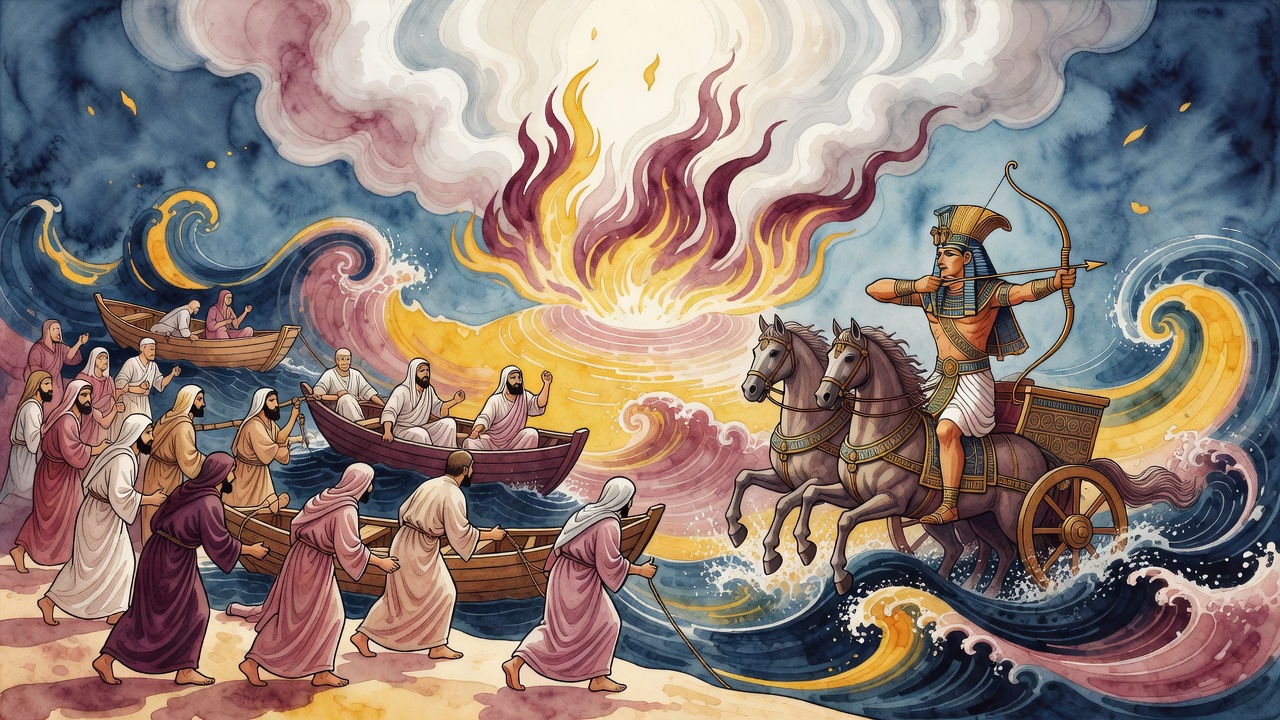
At the sea, fire burns chariot wheels while heavy labor returns on Egypt; clouds of glory still shelter the people who walk free.
Table of Contents
 Click for full size
Three Journeys Under a Canopy
They left Succoth, and the name meant more than a map pin. Booths. Shelter. Rabbi Akiva heard in it the cloud of glory already stretched over a freed people, a canopy against heat and arrow and despair. From that first shelter to the shore of the sea, Israel made three journeys. Redemption did not arrive as a single leap. It arrived as measured steps under a covering they did not weave.
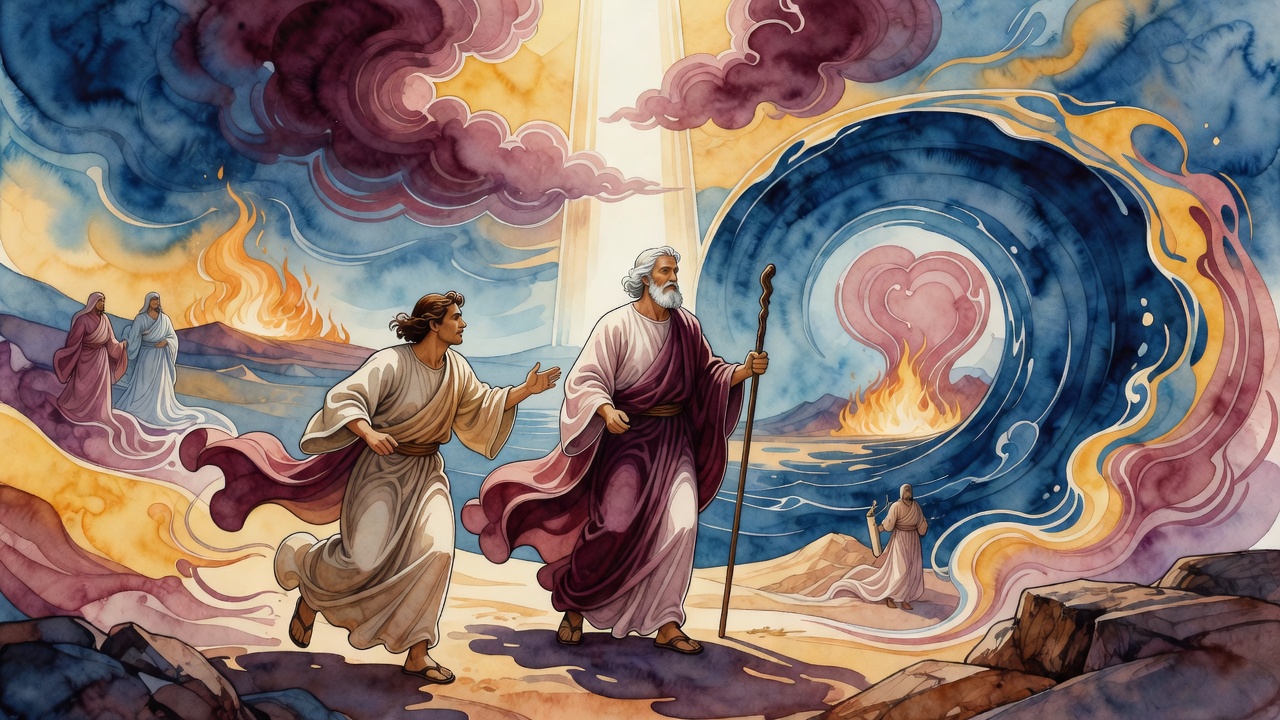
Moses walked ahead with a staff that had already tasted river and blood. Behind him, a nation still flinched at the sound of horses in memory. Children asked if the cloud was a tent. Mothers answered without theology: it is shade, keep walking.
The road tasted of salt before they saw water. Fear walked with them like a fourth companion, unpaid and loud.
A Palace Without Walls
When the people later grumbled that the wilderness was abandonment, heaven answered with an old royal image. A king who rides into desert does not find his own halls there. Israel, freed from Pharaoh, lay down under clouds of glory and received three servants of redemption: Moses for manna, Aaron for the surrounding clouds that struck snakes and smoothed mountains, Miriam for the well that followed. Smoke of cleared thorns rose so high that kings of east and west asked who was coming up from the wilderness like columns of smoke.
The road to the sea was already a corridor of care, even when fear made it feel like a trap. Manna did not taste like onions of Egypt. It tasted like dependence, which is harder to love and better to live on.
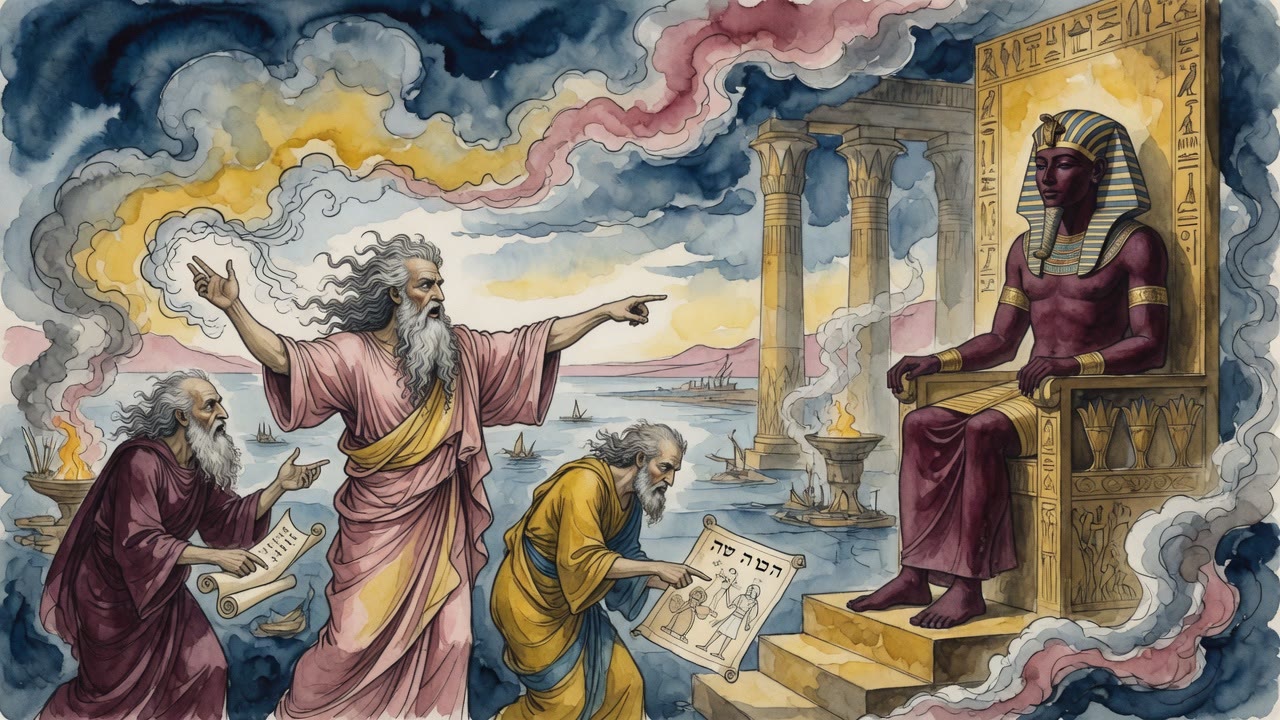
Pharaoh, hearing they had turned, thought the wilderness had caged them. He did not see the canopy. Oppressors often miss the coverings that are not made of their brick.
Wheels on Fire
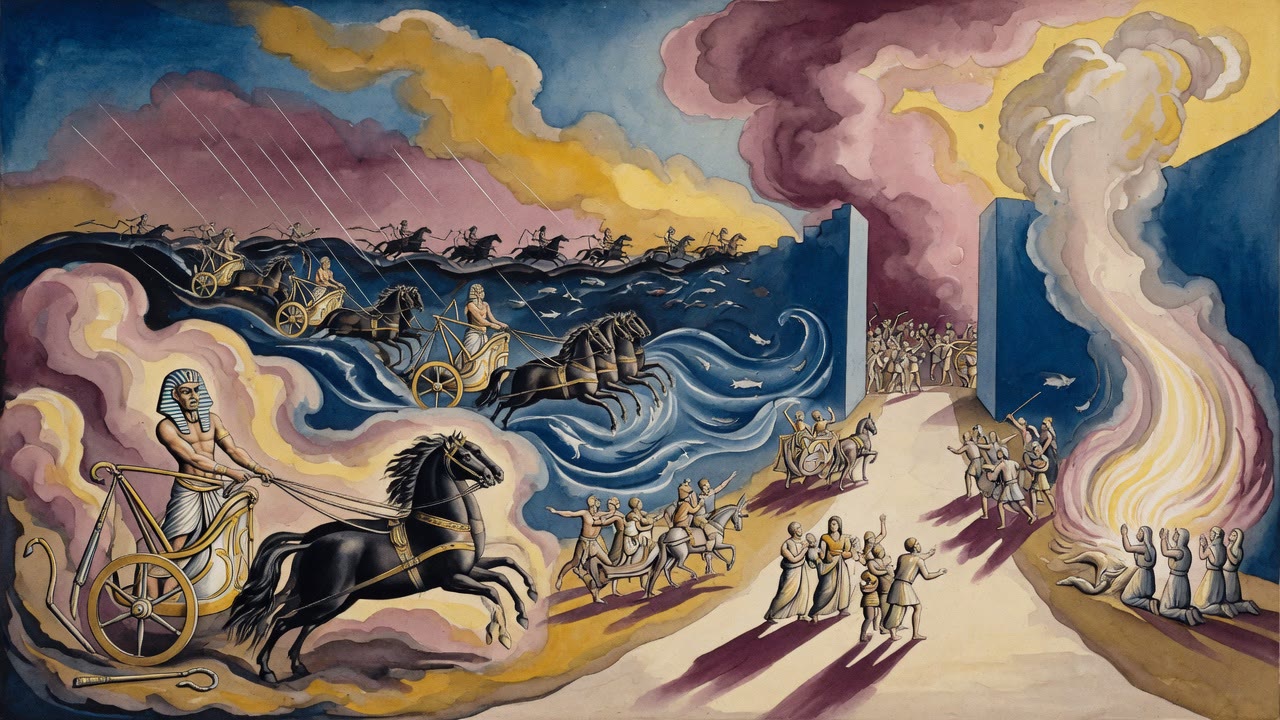
Egypt came anyway. Chariots poured into the lane between walls of water. Horses screamed. Drivers shouted the old confidence of empire. Then fire and thunder argued over the method of ruin. One voice said heavenly fire burned the wheels. Another said thunder tore the axles. Either way the chariots kept lunging forward against their drivers' will, loaded with silver, gold, jewels, and pearls that would become Israel's shore-plunder when the sea finished its work.
"He drove them heavily." Egypt had once decreed, "Let the labor be heavy." The same weight returned. Where mules had pulled chariots, chariots now dragged mules. Horses of fire beat animals back toward dry land while wheels shoved them into water again. A trap closed from both directions. Measure for measure wore the face of machinery gone mad.
Israel's rear ranks still felt Egypt's breath when the first wheels locked and screamed. A woman clutched a dough trough and watched a chariot rear as if the sea itself had grabbed the axle. A driver who had whipped Hebrew backs now whipped reins that no longer answered.
Destroying Angels in the Surf
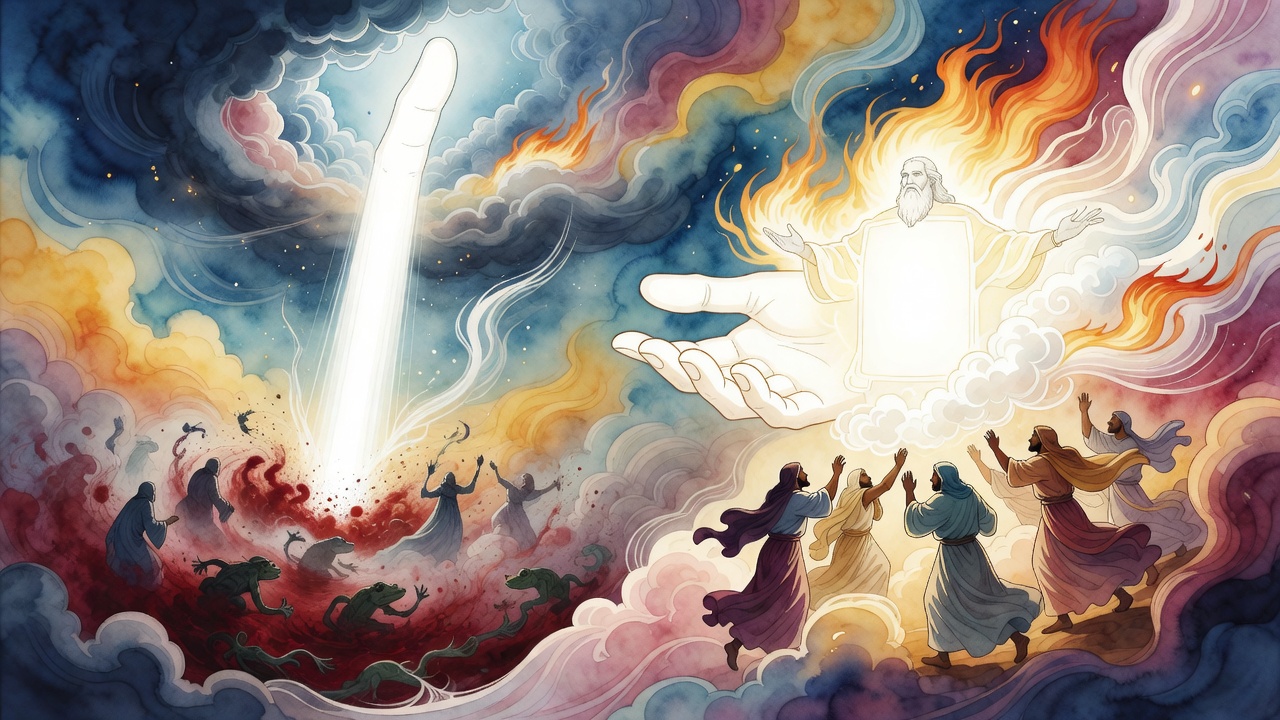
The water was not empty. Tradition stacks destroying angels into the surf by numbers that break ordinary counting, a storm of agents under one command. Pharaoh's pride met a sea that had learned Israel's cry. The same God who sheltered with clouds now struck with depth.
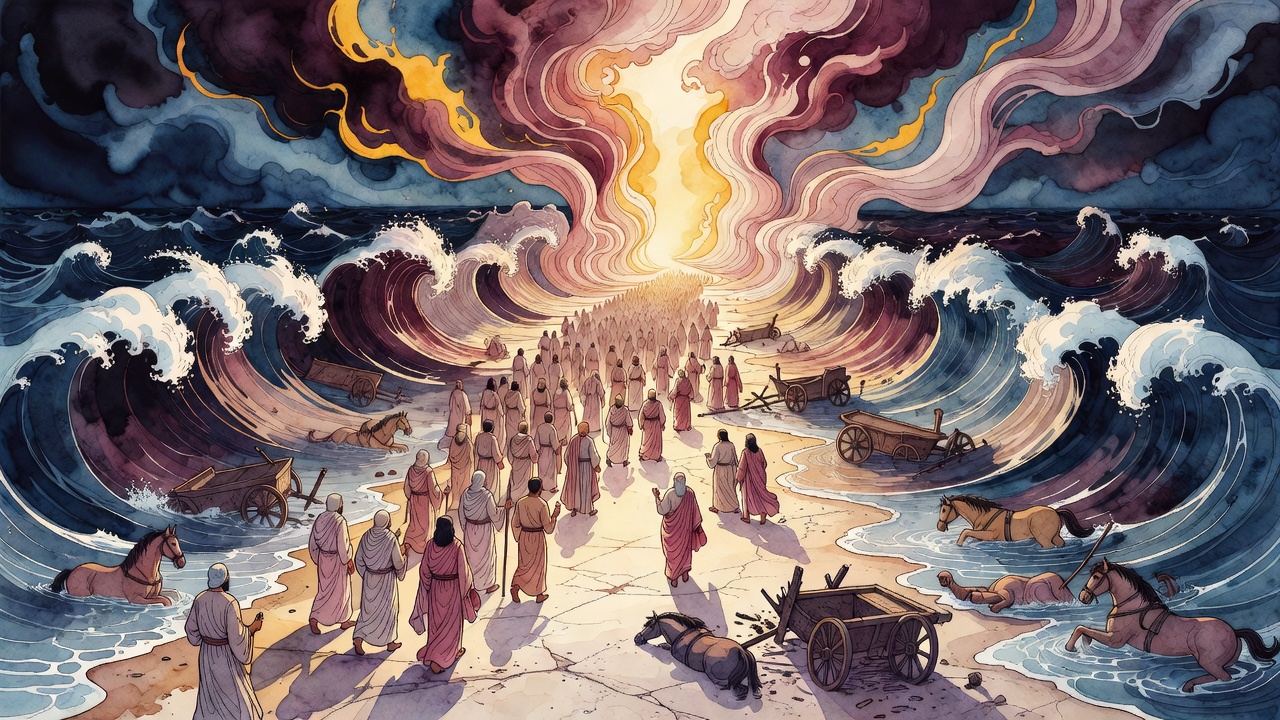
Israel stood on the far side with wet ankles and full hands, the wealth of oppressors washing up like a bitter gift. Song rose because bodies were still surprised to be alive. Miriam's voice cut the air clean. Moses' face held both triumph and the knowledge that freedom would need more than a drowned army to stay free.
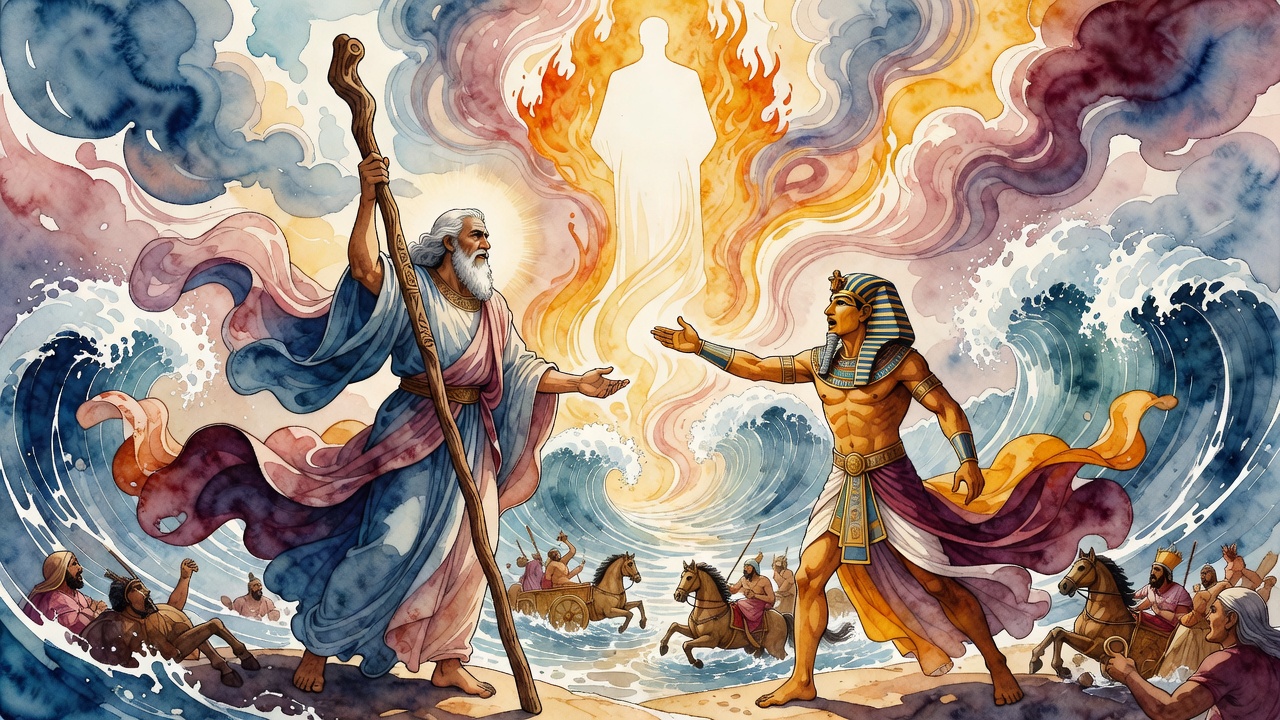
Moses stretched the staff because the moment demanded a human gesture joined to a divine strike. The canopy above did not lift to watch. It stayed, a ceiling of care while the floor of the world opened under the pursuers. Behind them the walls leaned in. The lane closed. Egypt's noise stopped mid-syllable.
What the Heavy Driving Taught
The Exodus does not end when feet leave Egypt. It clarifies when Egypt's own tools turn traitor. Heavy labor comes home to the mouth that ordered it. Wheels burn. Axles fail. Glory-clouds keep their post over a people who still have three days of journey, years of manna, and a habit of complaint ahead of them.
On the shore, a child picks up a jewel that once sat on an Egyptian horse-blanket. Somewhere under the water a chariot frame settles into mud. Between jewel and wreck runs the straight line of midah keneged midah, measure for measure, written not as a proverb first but as a night of fire on wood and iron.
The canopy that began at Succoth still hangs in memory over every later booth. The sea keeps the rest of the evidence. Moses looks back once, not to gloat, but to fix the image of wheels that would not obey their masters. Then he turns toward wilderness that is also a palace without walls, and the people follow under a cloud that refuses to leave them bare. Freedom learned its first full breath with salt on the tongue and treasure at the feet.
← All myths