Pharaoh Raced Near and Drew His Own Doom
Israel took three days to reach the shore. Pharaoh burned that same road into one day of rage. At the sea the water was already waiting.
Table of Contents
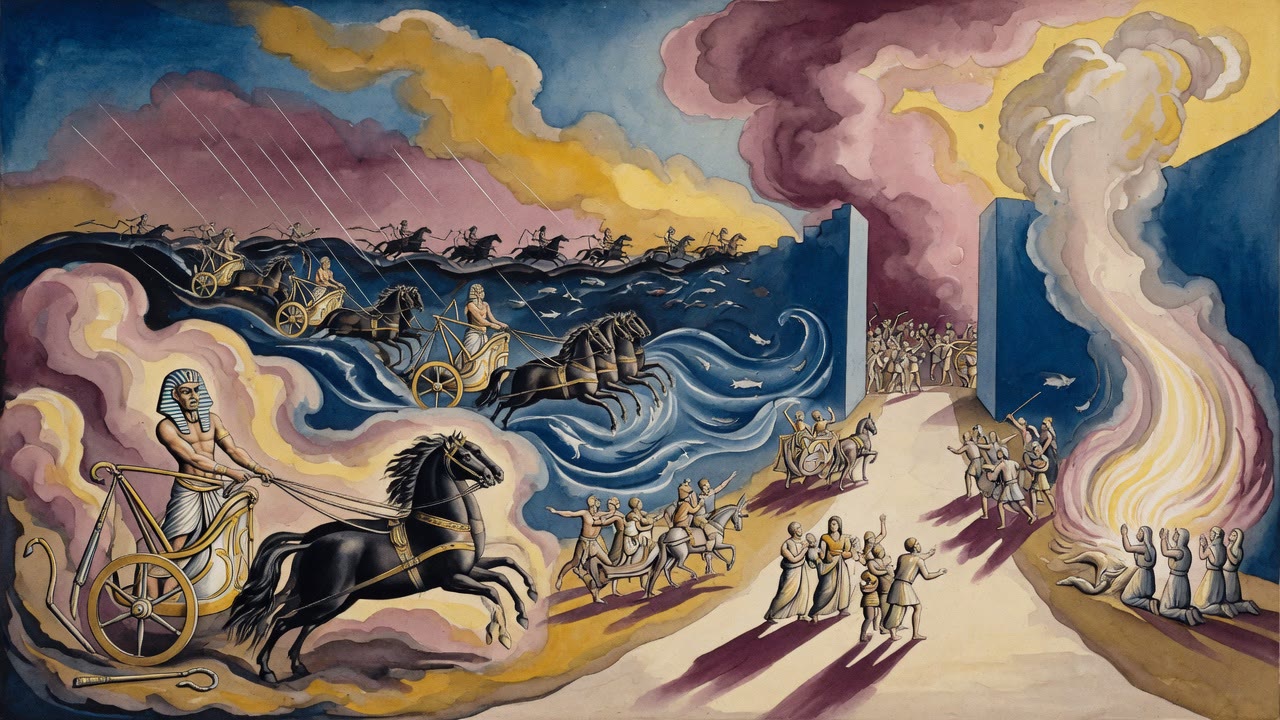
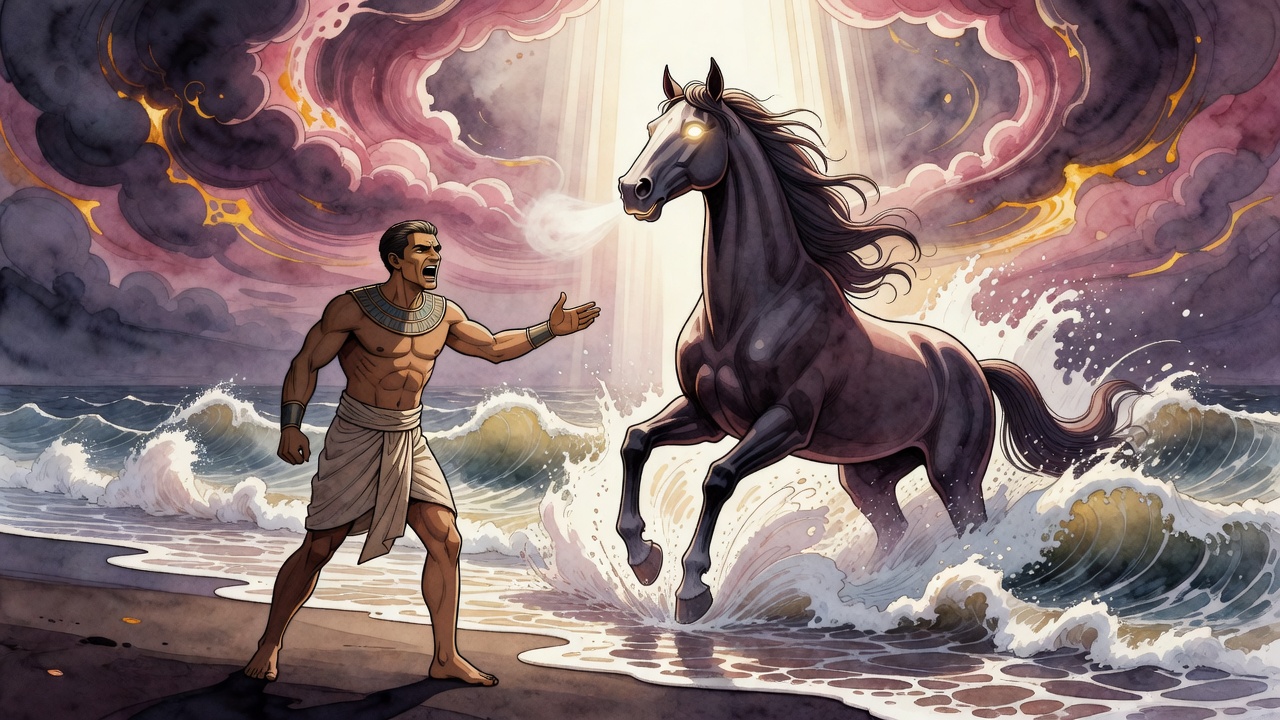
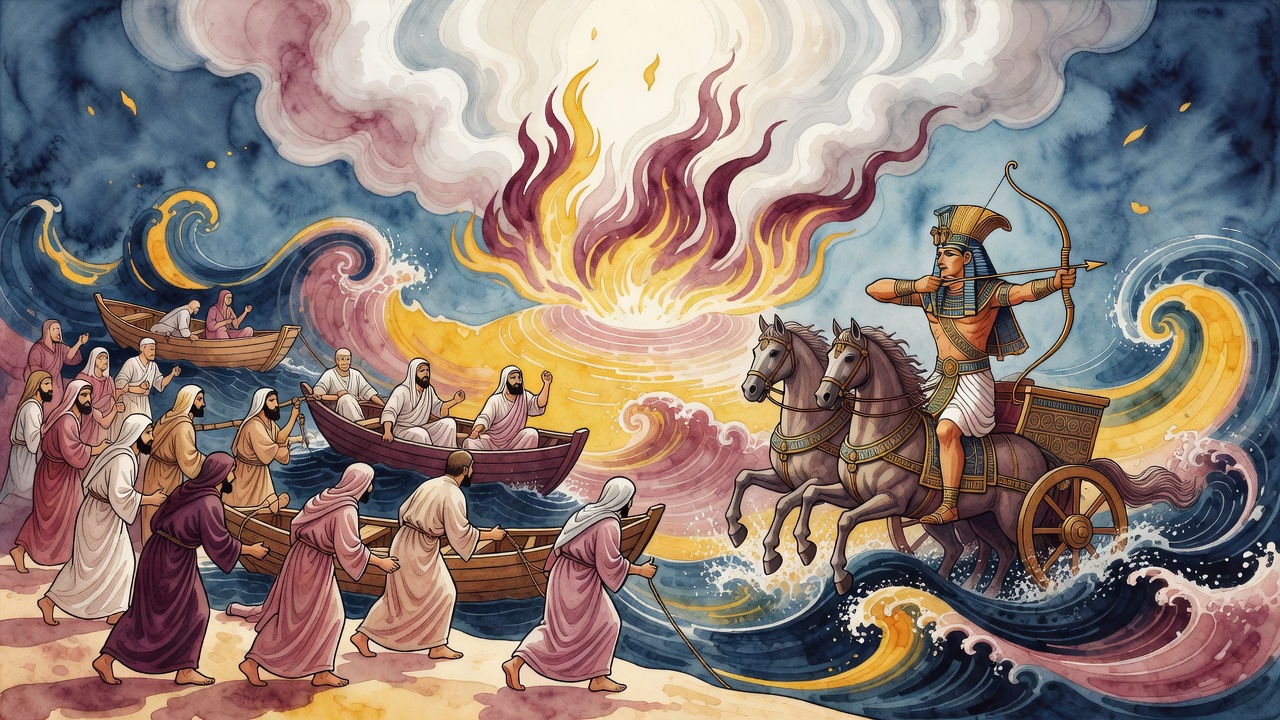
Pharaoh whipped the road. Israel had taken three days to reach this shore. The overseers had covered the same ground in a day and a half. He burned a single furious day into the dust and arrived so the seventh night of Passover could end with chariots under the morning watch.
 Click for full size
He did not only close distance on a map. He drew his own punishment near, hurrying toward a door that was already waiting in the water (Exodus 14:10).
The Army Moved as One Man
Ranks locked. Spears tilted like a single field of iron grain. Egypt traveled as one body, one tilt, one dust cloud.
Israel lifted its eyes and saw not a rumor of pursuit but the whole of Egypt leaning forward at once. Sand shook under hooves. Salt air filled lungs that once filled with brick dust.
His heart had been split, chase or not chase. Then it hardened, and the last push placed him where glory could be seen. He had started the oppression. Accounting begins with the one who opened the sin first. The men at Lot's door went blind before Sodom fell. The first hand on the whip is the first hand the water will claim.
Israel Took Up the Fathers' Craft
In that terror Israel reached for the only weapon it truly owned. They cried out to the Lord. Prayer. The old family trade.
Abraham had called on the Name and built altars in open country. Isaac had gone out to the field when evening came, and the talk he made there was prayer. Jacob had lighted on a place and found a ladder where he expected only dirt. A worm brings down a cedar with its mouth. Israel had no sword that would hold. It had a mouth.
Moses stood between the cry and the water, staff heavy in a hand that already knew seven days of refusal at a bush. His mouth was not the only mouth working. The camp remembered its craft. Sand shook. The army closed. The people lifted their voices before the chariot chose their backs.
The Sea Would Not Stand Against Him
"Stretch out your hand," God said. The sea will not resist. It is already a tool.
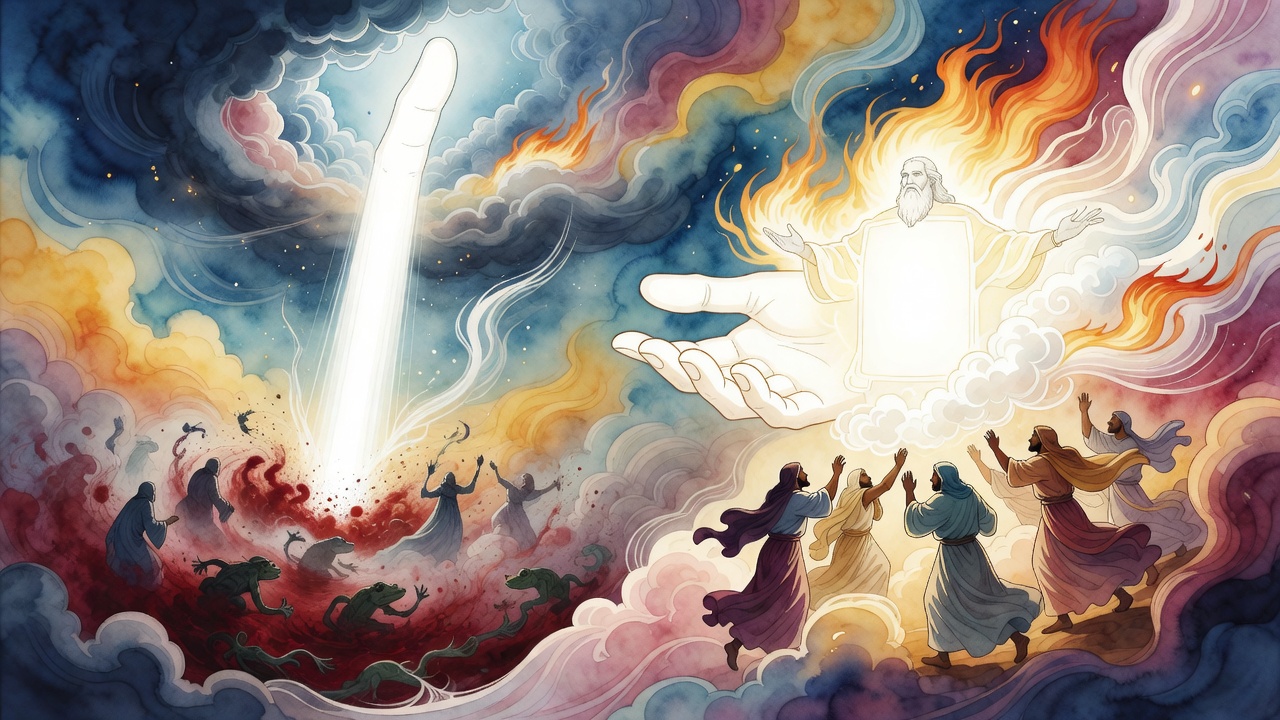
When the waters rolled back over horse and rider, the wheel turned. Egypt had planned to destroy Israelite children in the Nile. They chose water as a weapon. Water became their grave. A man digs a pit and falls into it. A stone comes back on the one who rolled it.
Pharaoh's first move against the children wrote the last line for the chariots. The one who sinned first tasted the answer first. Glory was not an abstract shine over the water. It was a plan coming home, visible to a nation that once thought rivers obeyed only Egypt.
By the measure a person measures, it is measured back. Jethro would say it later, when he heard what the water had done: the Lord is greater than all gods, because He paid Egypt in the very scheme Egypt devised.
After the Morning Watch
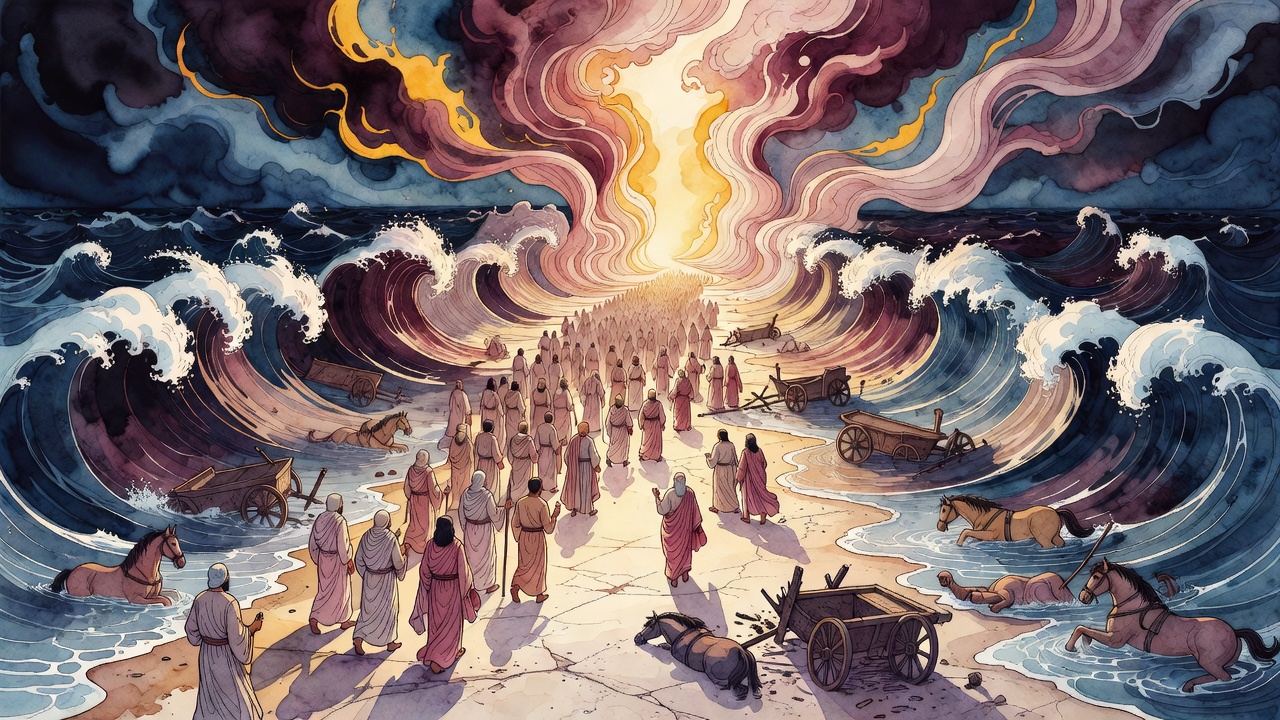
When the last wheel stopped turning under foam, the shore held bodies and silence. Israel stood on dry ground that had been water an hour ago. The craft of the fathers did not invent the split. It opened a mouth heaven was willing to answer.
Songs would come. First came the breath that realized the wall of water had chosen a side. Children asked if the water would move again. Parents answered with the only craft they trusted. They prayed. They walked. They did not build a monument to the chariots.
Speed had been Pharaoh's pride and Pharaoh's trap. A three-day journey crushed into one day of rage looks like power until the sea answers with a longer patience. Israel had hurried out of Egypt. Pharaoh had hurried into judgment. The difference was who wrote the destination.
On the far bank, wet ankles dried in rising sun. Pharaoh had drawn near. The doom had been walking toward him at the same pace. Prayer had drawn near on the other side of the sand. Between them the water kept the ledger, and closed it on the army that marched as one man into a grave of its own design.
← All myths